Eight things about weighing the world

DC·95 Deep Cuts
For 130 years, the kilogram was one metal lump

For 130 years, the kilogram was one metal lump

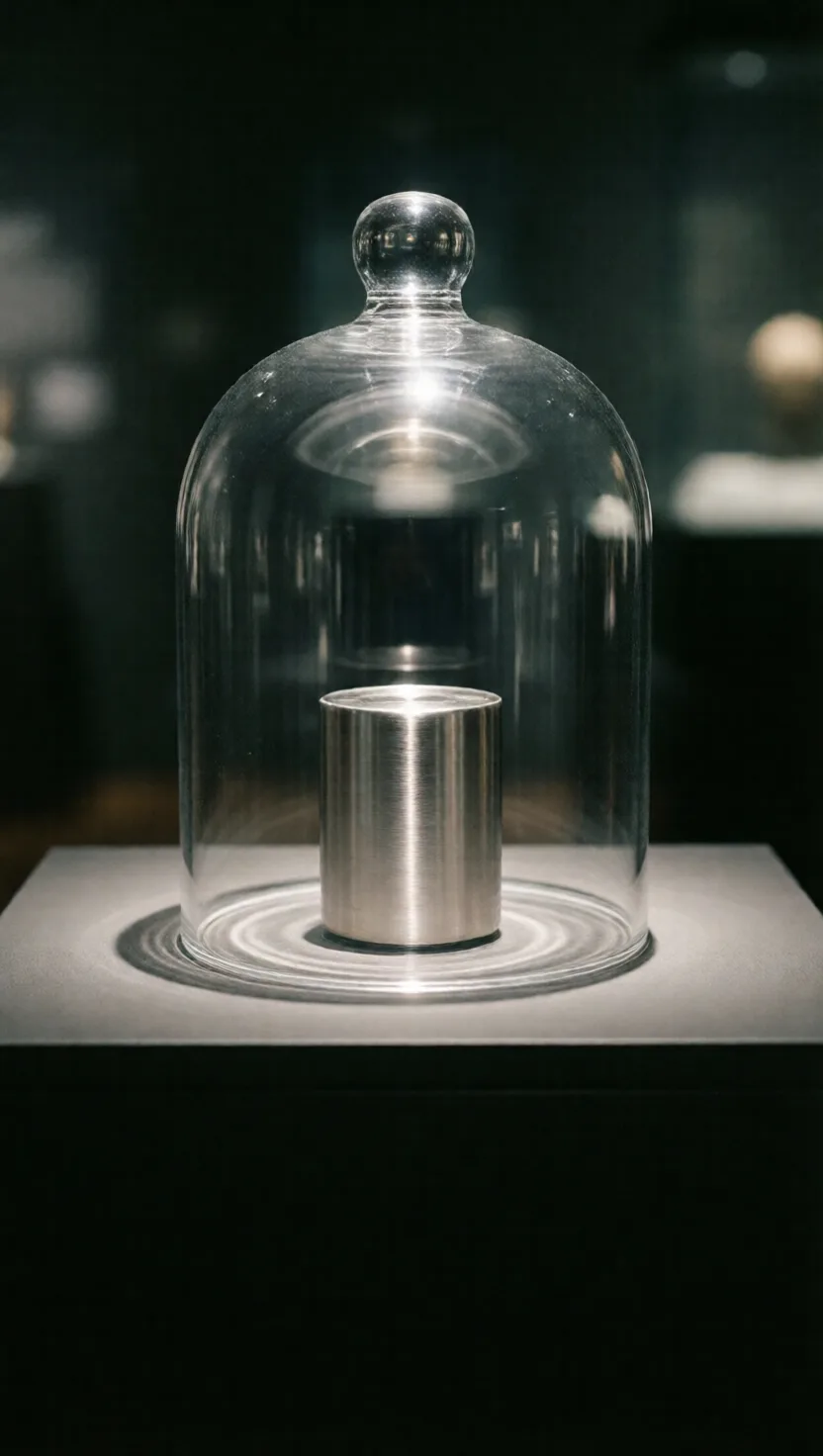
Until 2019 the kilogram was not a definition but an object: a shiny cylinder of platinum and iridium, about the size of a plum, locked in a vault near Paris under three nested glass bell jars. Every other kilogram on Earth was ultimately a copy of it. The trouble was that its mass drifted by tiny amounts no one could fully explain, so the world redefined the kilogram around an unchanging constant of physics instead, and quietly retired the little metal lump.
He weighed the whole Earth with two lead balls

He weighed the whole Earth with two lead balls

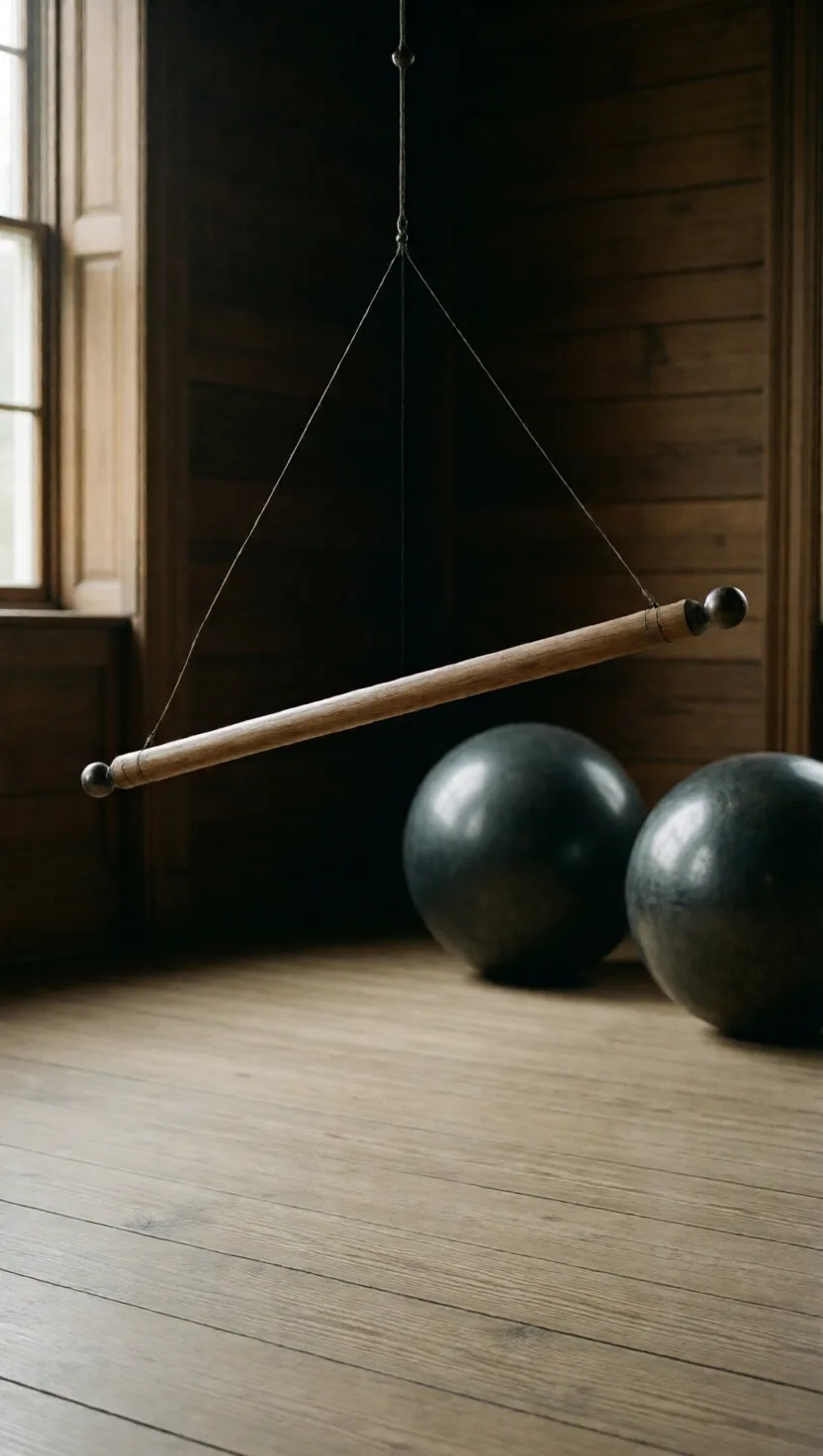
In 1798 Henry Cavendish weighed the planet without leaving his shed. He hung a slender rod with two small lead balls from a fine wire, then brought two massive lead spheres close. Their faint gravity twisted the wire by a hair's breadth, and from that twist he measured the strength of gravity itself - and so the density and mass of the whole Earth. His figure landed within about one percent of the value used today, some six thousand billion billion tonnes.
One small weight can weigh a whole sack of grain

One small weight can weigh a whole sack of grain

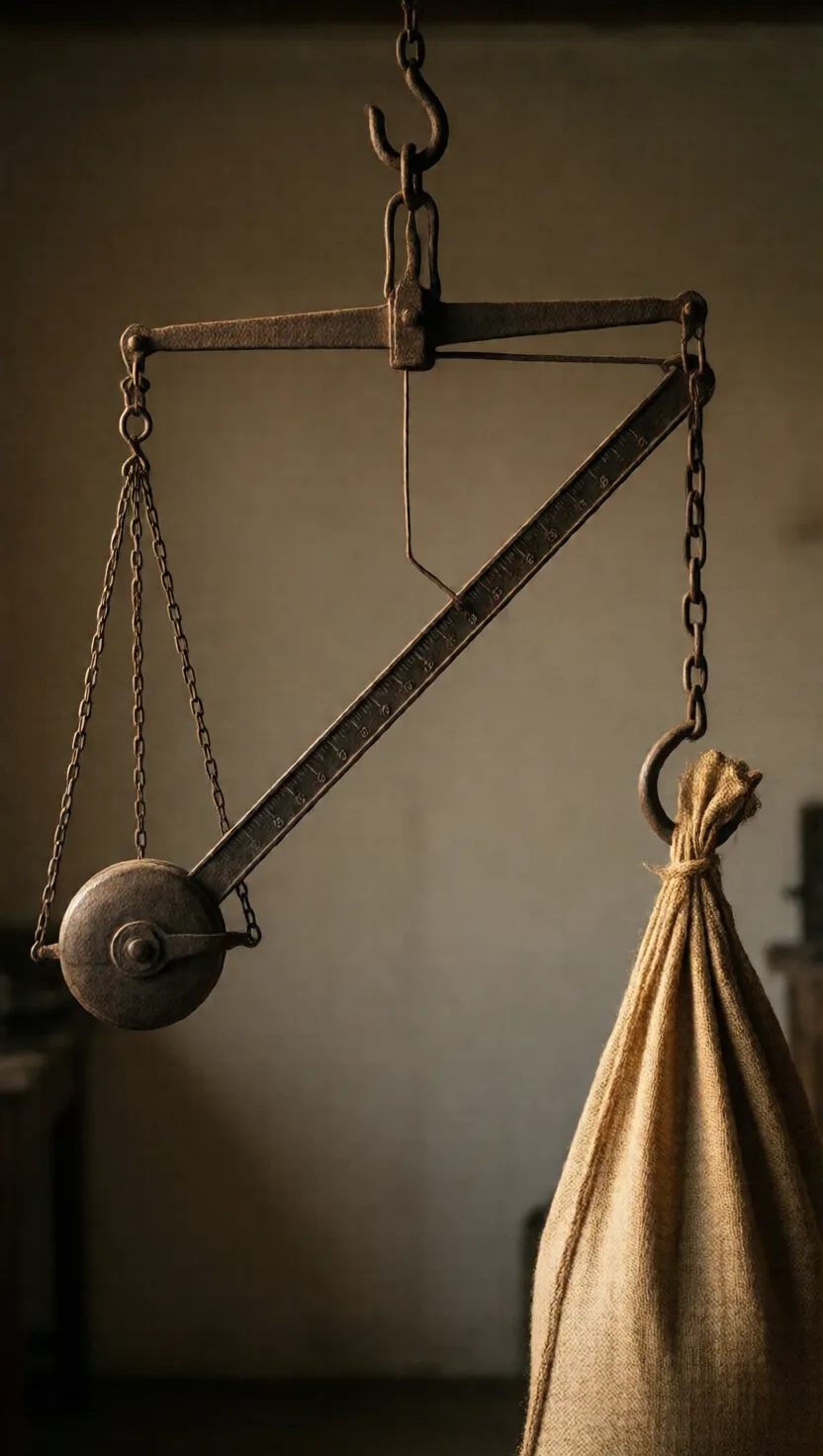
The steelyard, in use since Roman times, cheats the seesaw. Instead of matching a load with an equal pile of weights, it hangs the load on a short arm and balances it with a single small counterweight sliding along a long graduated arm. Pushed far enough out, a fist-sized weight can balance a sack of flour, because the extra leverage multiplies its reach. The trader carried just one weight and read the load from where it came to rest along the marked beam.
On this scale, where you place the weight can't matter

On this scale, where you place the weight can't matter

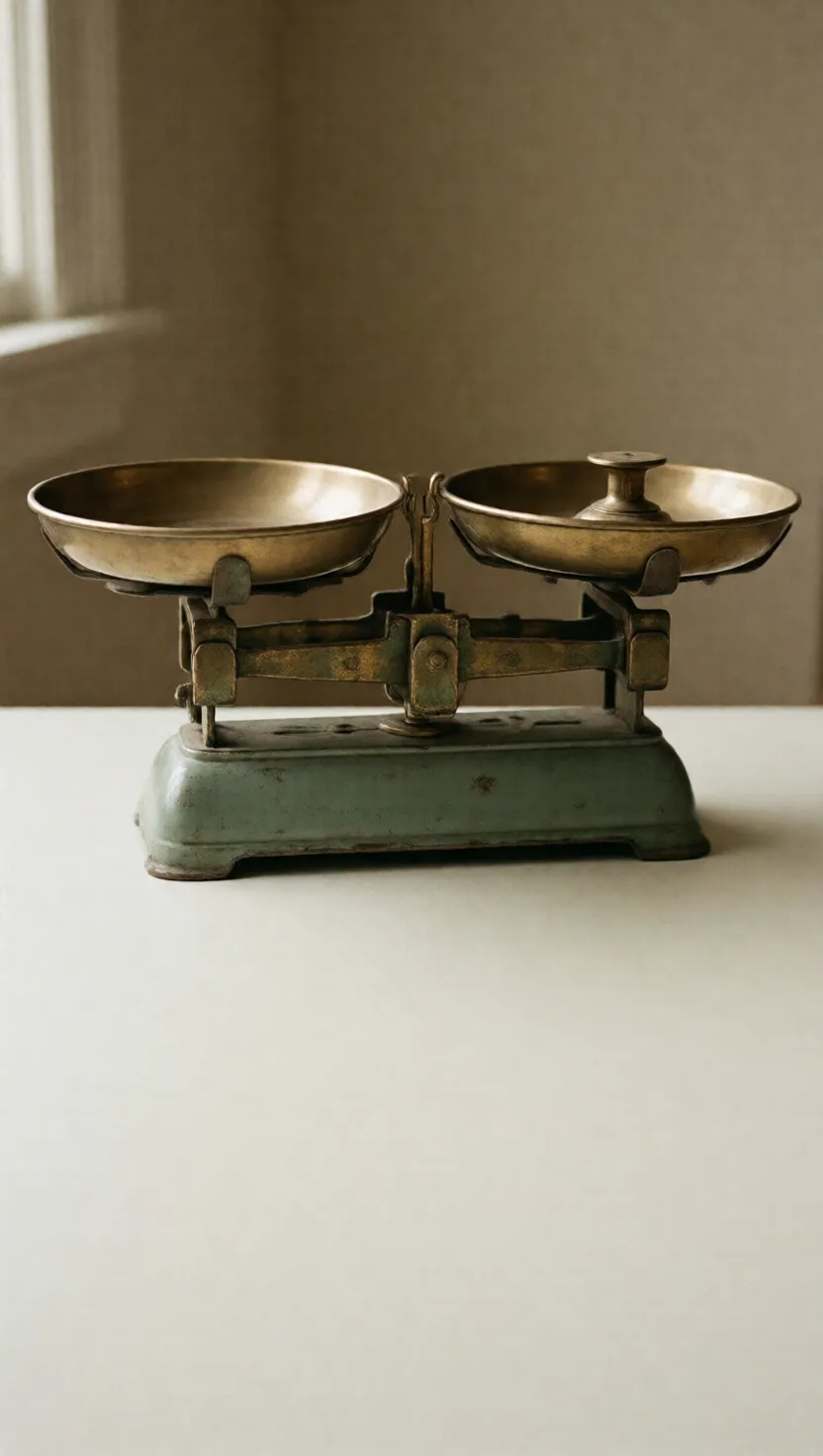
Put a weight at the very edge of a shop scale's pan, or dead in the centre, and it reads exactly the same - which feels like it should not be true. It is the trick of the Roberval balance, devised in 1669. Hidden beneath the two pans is a linked parallelogram of beams that keeps the pans level and cancels any twisting from an off-centre load, leaving only its straight downward pull. That counter-intuitive design is why the pans sit on top, and why grocers' scales worked so simply for centuries.
A balance still works on the Moon; a spring scale lies

A balance still works on the Moon; a spring scale lies

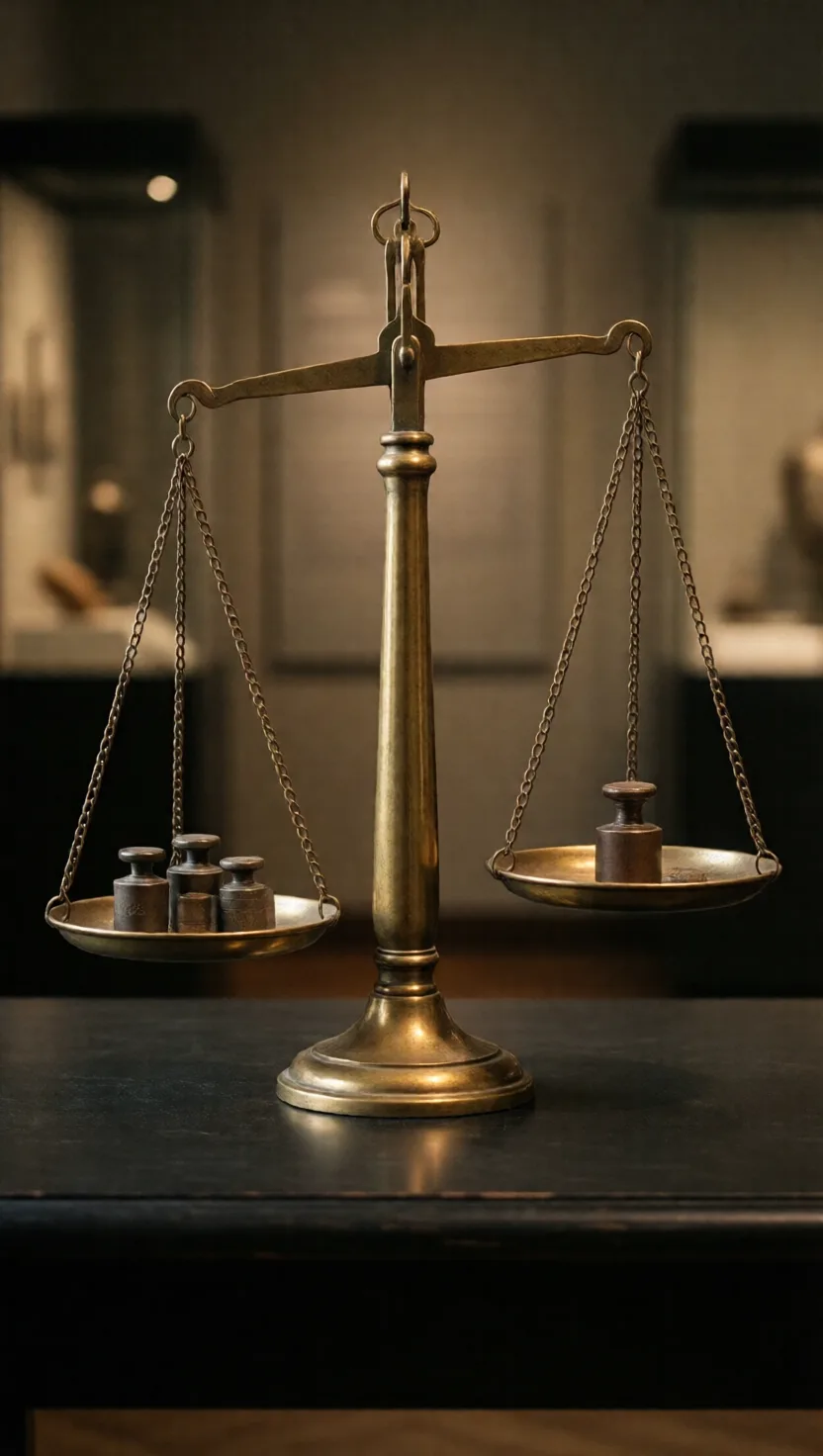
A two-pan balance and a spring scale seem to do the same job, but they measure different things. The balance pits your object against known weights, and since gravity tugs equally on both sides, it reads true mass anywhere - on the Moon it would still show the same figure. A spring scale instead measures pull: how hard gravity stretches its spring. Carry it to the Moon, where gravity is a sixth of Earth's, and the very same object would read just one-sixth as heavy.
The unit for bullets began as one grain of barley

The unit for bullets began as one grain of barley

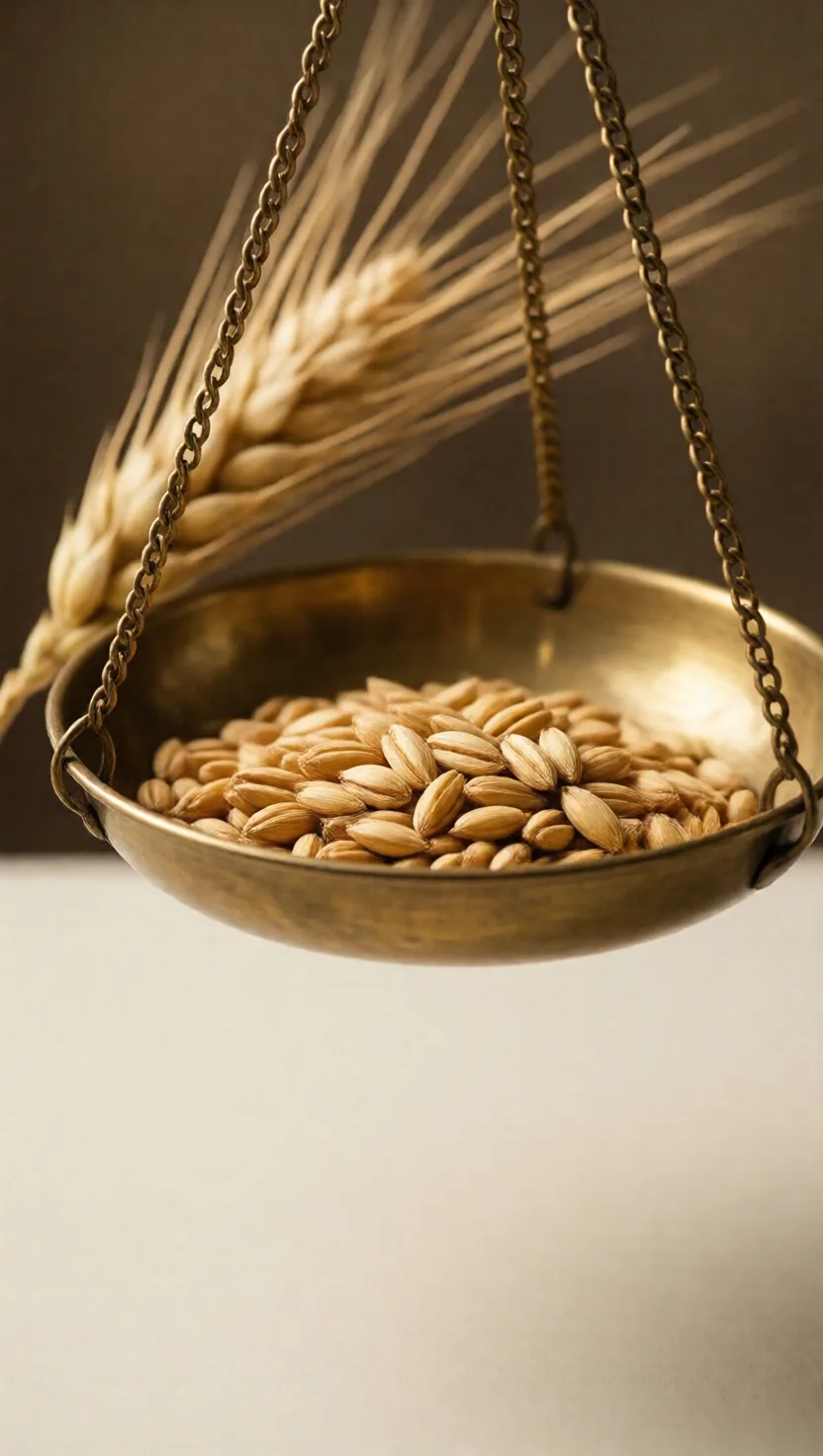
The smallest traditional weight in the English system is the grain - and it once meant exactly that, the weight of a single barleycorn taken from the middle of the ear. It is the one unit shared across the systems for everyday goods, for precious metals, and for the apothecary's medicines. Tiny as it is, it never quite died: ammunition is still rated in grains, so a box reading 115 grain describes the bullet, and old aspirin doses were counted the same way.
Bakers gave you 13 to dodge a beating

Bakers gave you 13 to dodge a beating

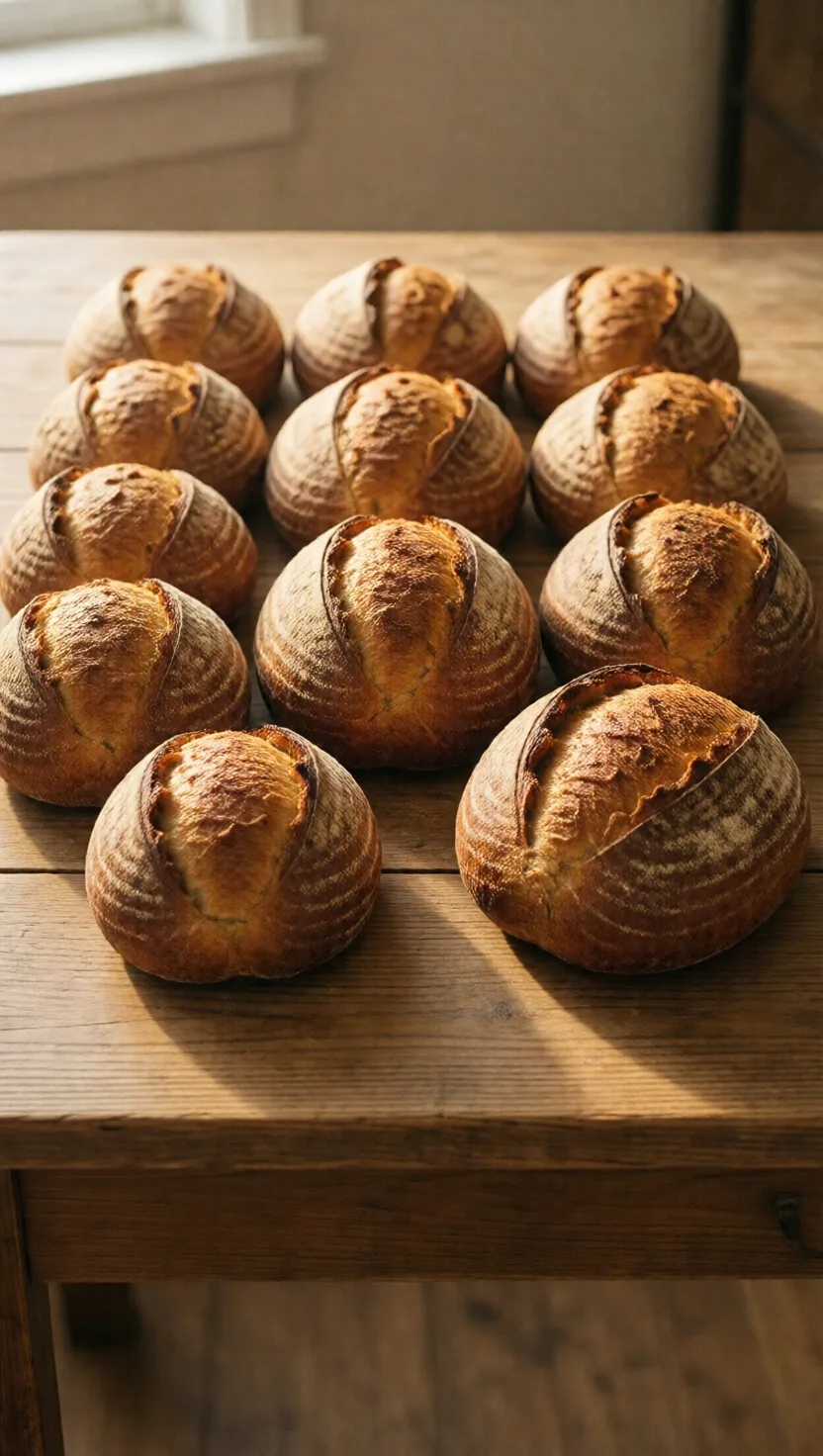
A baker's dozen is thirteen because of a medieval weight law. From 1266, English bakers had to sell bread by strict weight, and a short loaf could mean a fine, the pillory, or worse. But bread is unpredictable - rise and moisture vary from loaf to loaf - so an honest baker could fall short without meaning to. To stay safely above the legal weight, they threw in a thirteenth loaf with every twelve. Caution against the law, not generosity, gave us the extra.
This scale feels the weight of a pencil dot

This scale feels the weight of a pencil dot

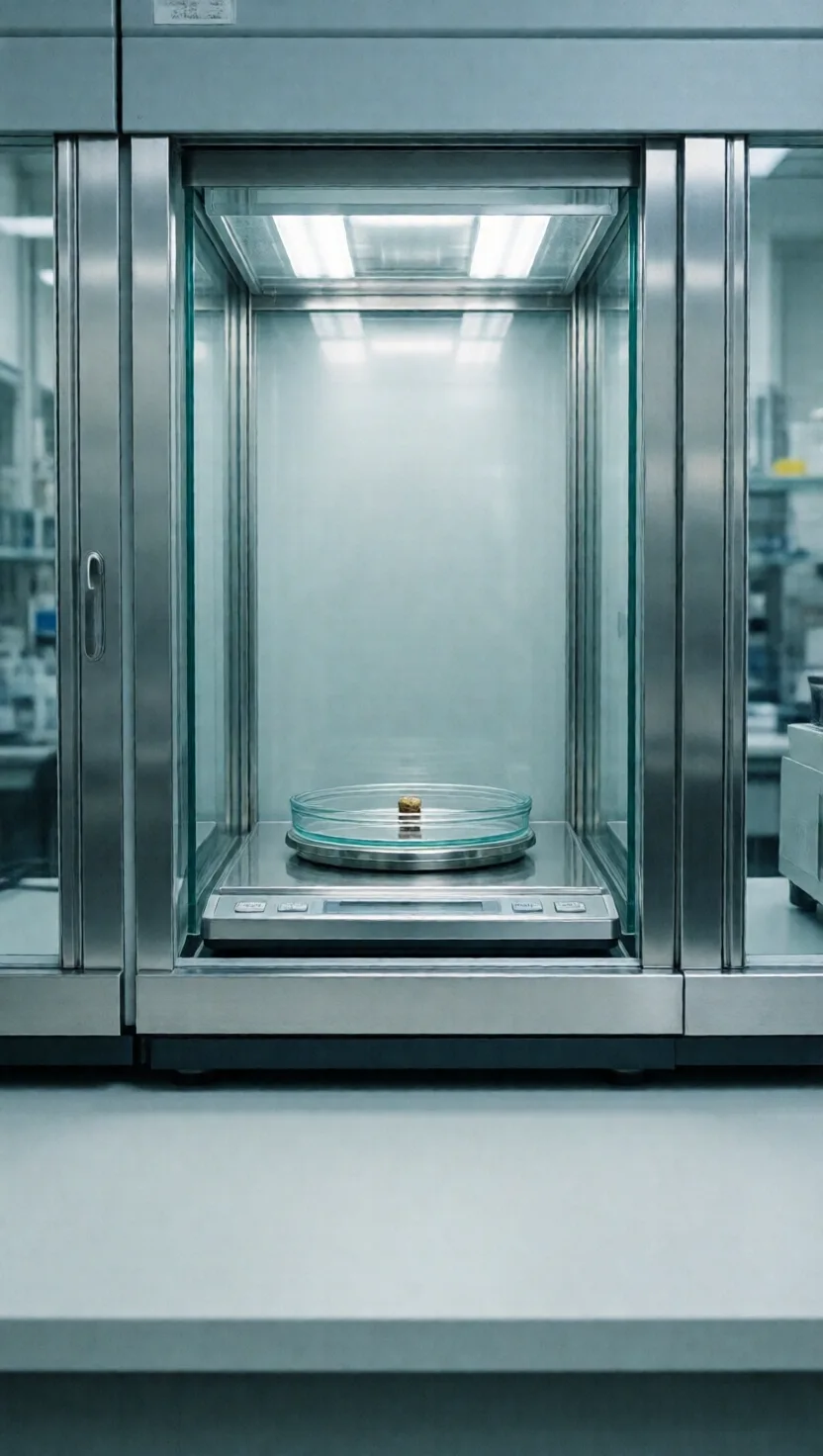
A laboratory analytical balance is so sensitive it reads to a ten-thousandth of a gram - fine enough to register a pencil mark, the oil from a fingerprint, or the moisture your hand leaves on the dish. At that level your breath is a gale and your body heat a furnace, so the pan sits sealed inside a little glass case with sliding doors. You wait for the draft to settle and the air to still before the last figures stop drifting and the reading finally holds.
tap →swipe ↑ for depthswipe ↓ to exit