Eight ways we learned to make fire

DC·60 Deep Cuts
The first match was lit by accident, in 1826

The first match was lit by accident, in 1826

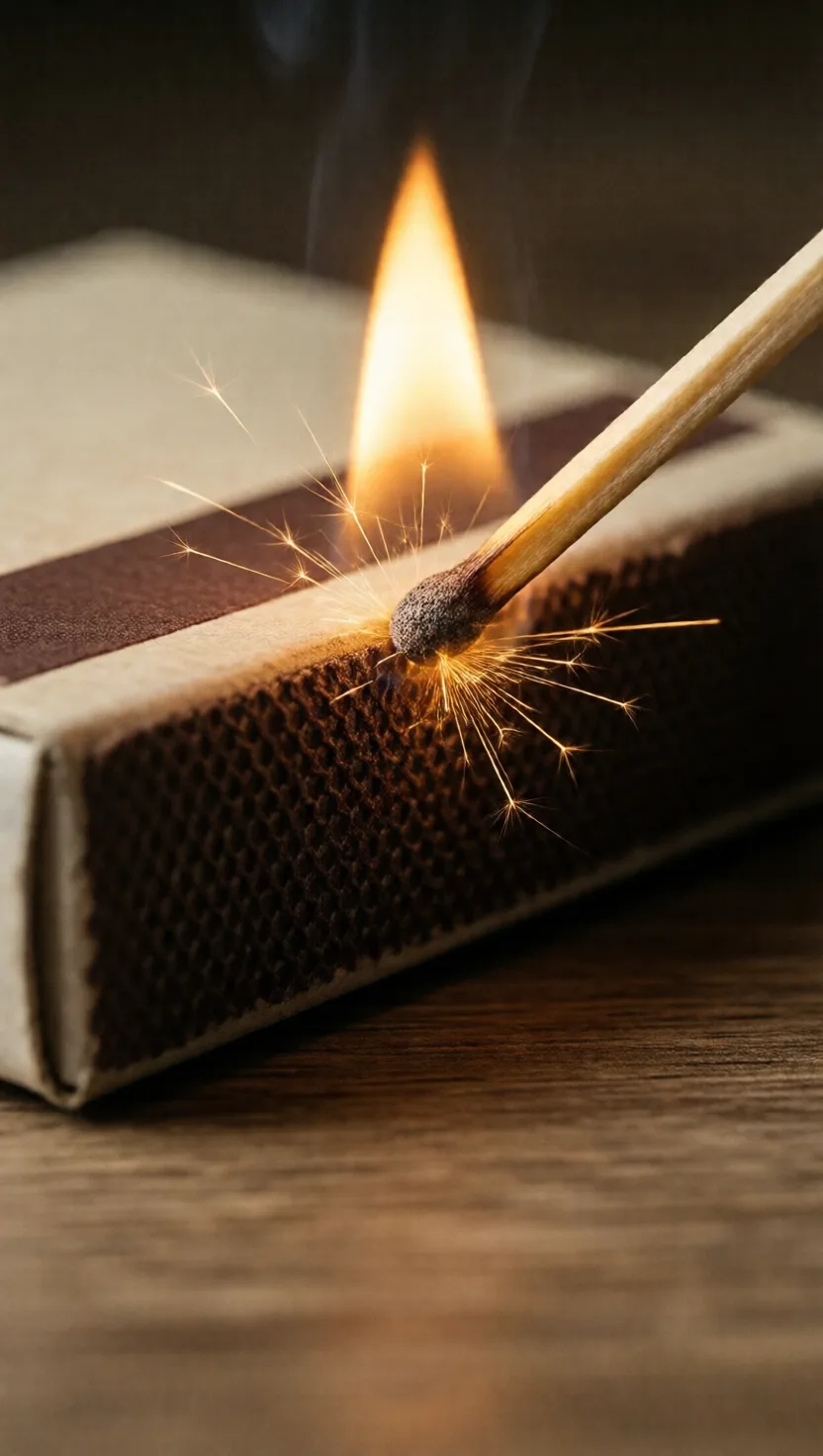
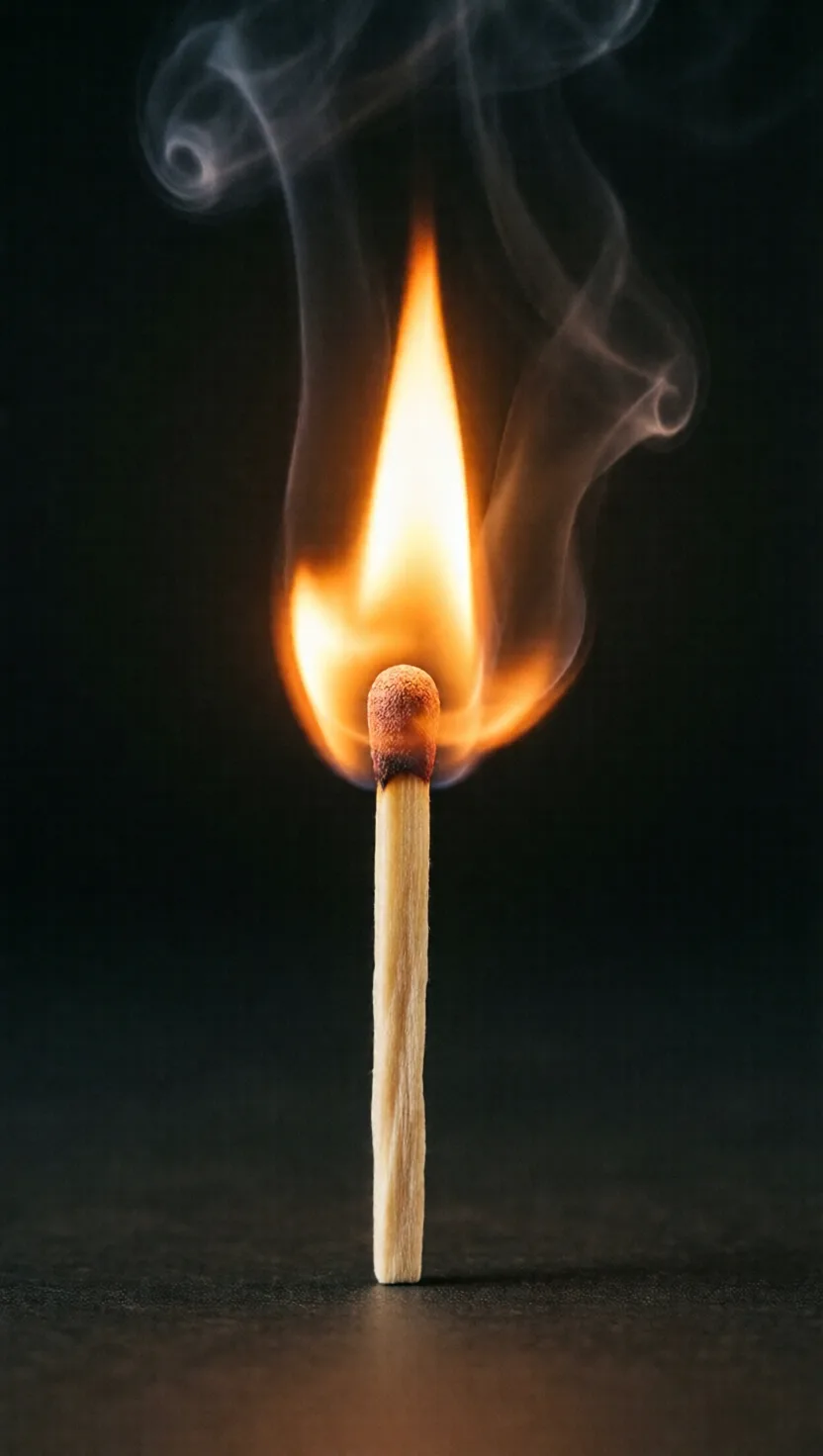
An English chemist mixing a firelighting paste scraped his coated stir-stick against the stone hearth, and it burst into flame. He turned the accident into the first friction match sold to the public, around 1827, as wooden splints tipped with potassium chlorate and antimony sulphide. He never patented it, saying the public should simply have it, so others copied and renamed the idea within a few years.
These match heads rotted the makers' jaws

These match heads rotted the makers' jaws

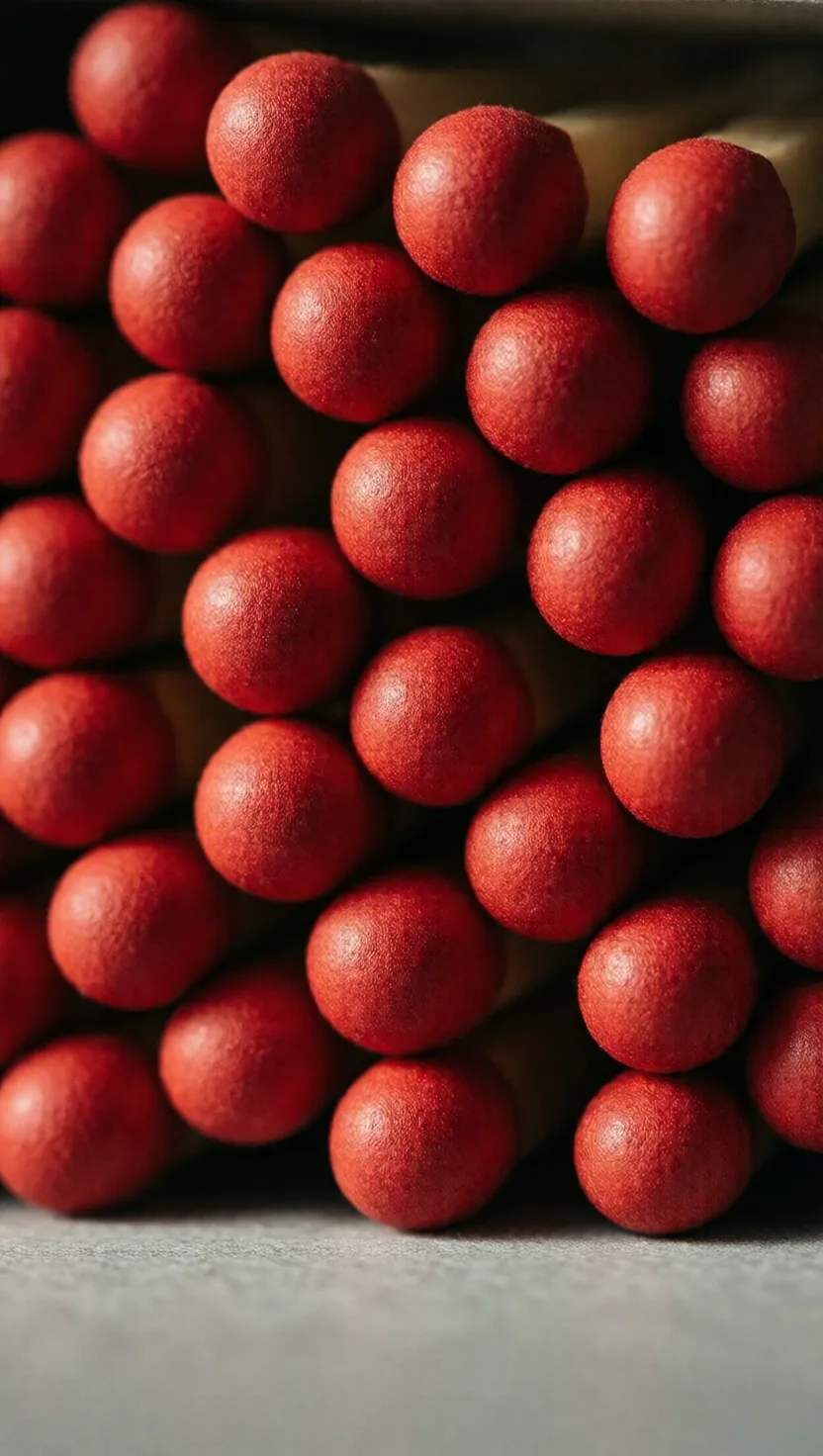
From the 1840s, match heads were tipped with white phosphorus, which ignites easily but gives off a poisonous vapour. Factory workers who dipped sticks all day breathed it in, and over months it killed the bone of the jaw, a disfiguring disease called phosphorus necrosis, or phossy jaw. The first case was recorded in 1839. White phosphorus matches were finally taxed out of existence in Britain by the Match Act of 1912.
A safety match is useless without its box

A safety match is useless without its box

A safety match splits the fire chemistry in two so it can't light by accident. The head carries the oxidiser, potassium chlorate, plus sulfur fuel, but no phosphorus. The phosphorus lives on the brown striking strip on the box, as the stable red form mixed with powdered glass. Friction flips a trace of red phosphorus to the reactive white form, which sparks the head. Red phosphorus needs about 240C to ignite, so it stays safe in the drawer.
This brass tube makes fire by squeezing air

This brass tube makes fire by squeezing air

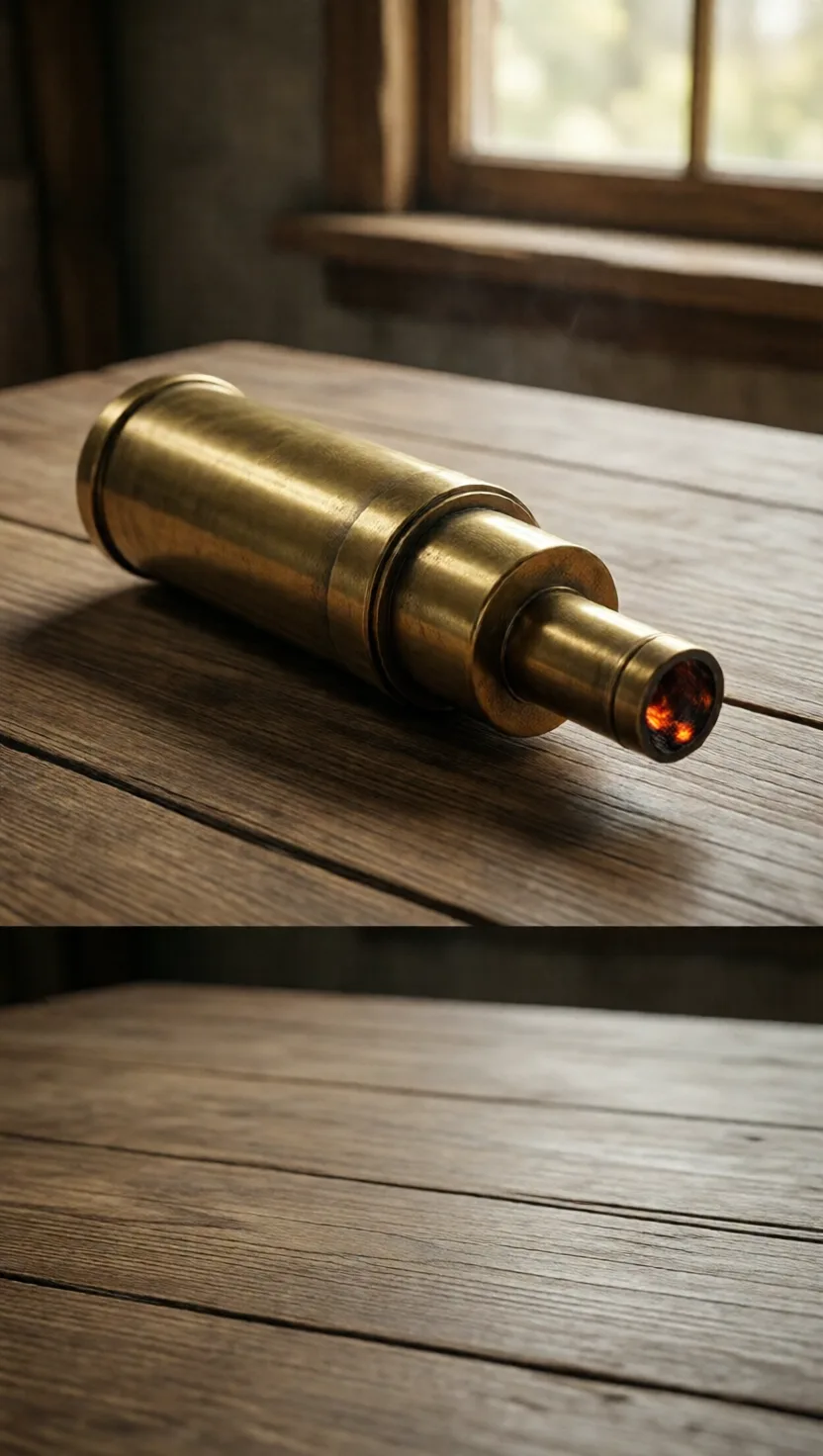
A fire piston needs no spark and no flame. You slam a tight-fitting plunger down a sealed cylinder so fast that the trapped air has no time to shed its heat, an adiabatic compression. Squeezing the air to roughly one twenty-fifth of its volume drives the temperature past 260C in an instant, hot enough to ignite a scrap of tinder in the tip. It is the same principle that fires a diesel engine, in your hand.
Those sparks are burning steel, not stone

Those sparks are burning steel, not stone

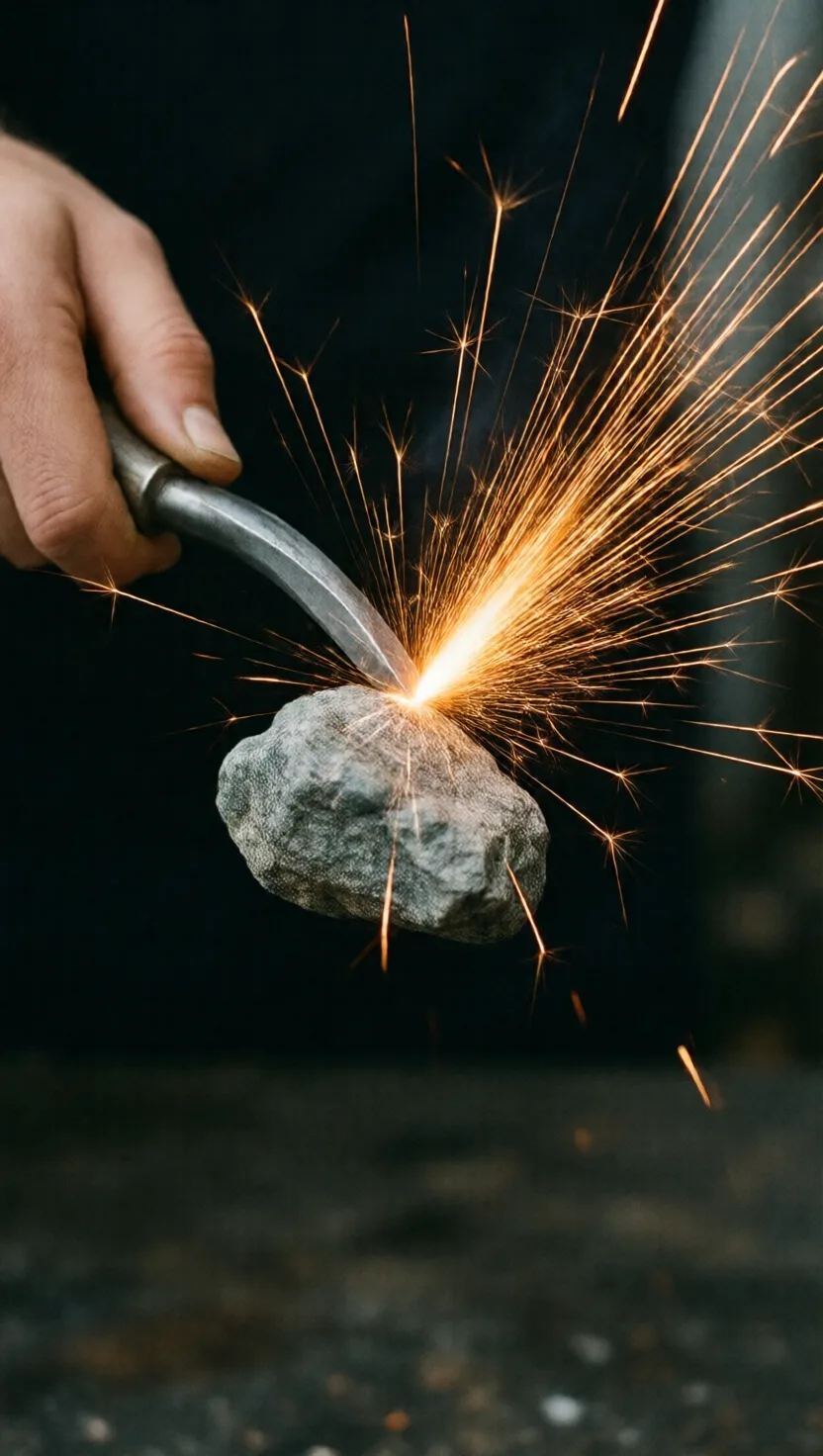
Strike a piece of flint against steel and the sparks you see are not the rock. The hard, sharp flint shaves off tiny curls of the steel, and because the slivers are so small and freshly exposed, their iron oxidises violently in the air, burning as they fly. The flint is just the blade. The fire comes from the metal, glowing white-hot for a fraction of a second as it streaks toward the tinder.
A modern fire steel sparks at 3,000C

A modern fire steel sparks at 3,000C

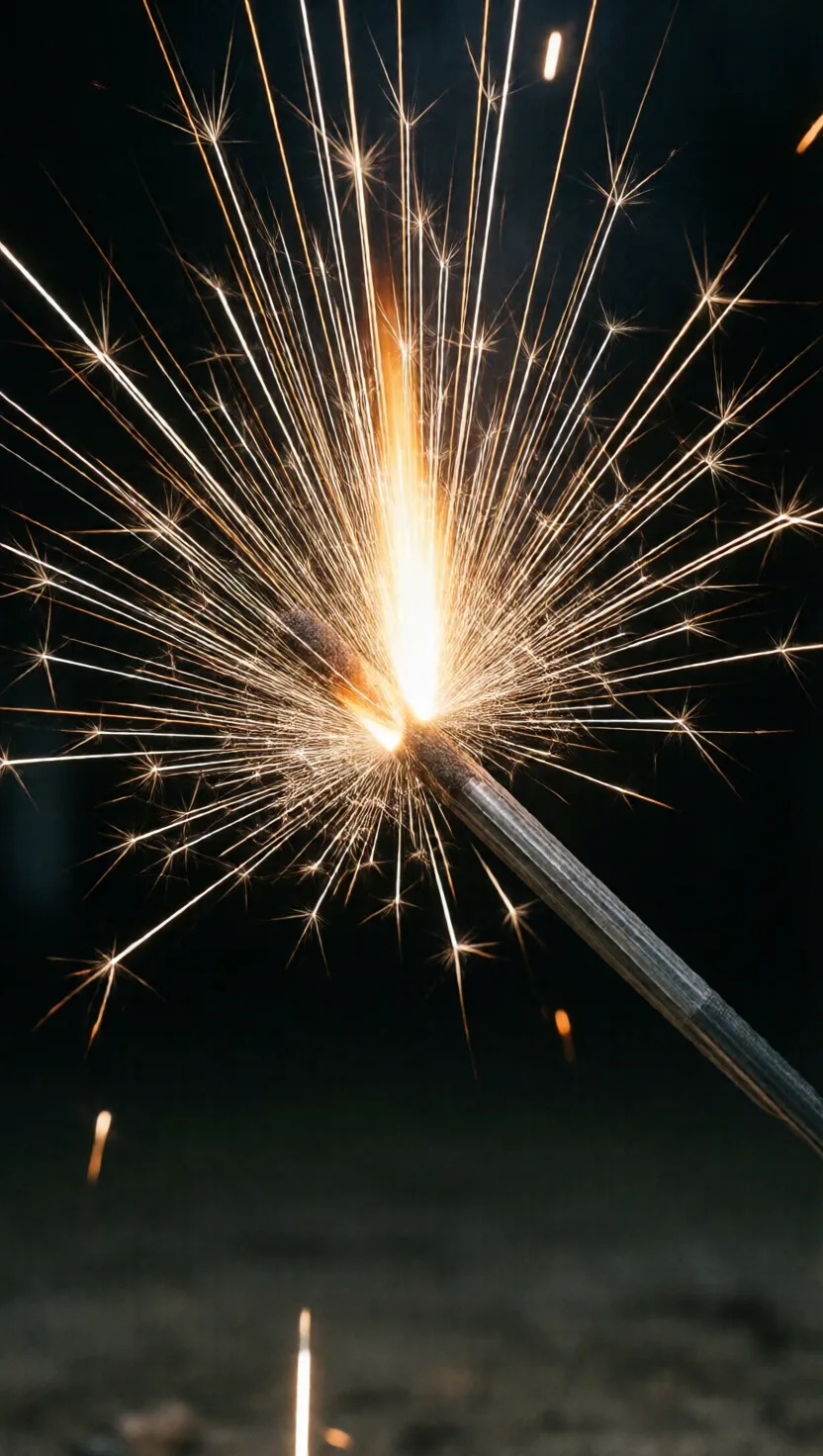
The grey rod in survival kits is not flint at all. It is ferrocerium, a soft synthetic alloy of iron and rare-earth metals like cerium, invented by an Austrian chemist in 1903. Cerium ignites at only about 150C, so when a scraper shaves off a shower of fragments, they flash into flame in mid-air at temperatures reaching 3,000C, far hotter than a flint spark and able to light tinder even when wet.
Scorched cloth catches a spark a flame can't

Scorched cloth catches a spark a flame can't

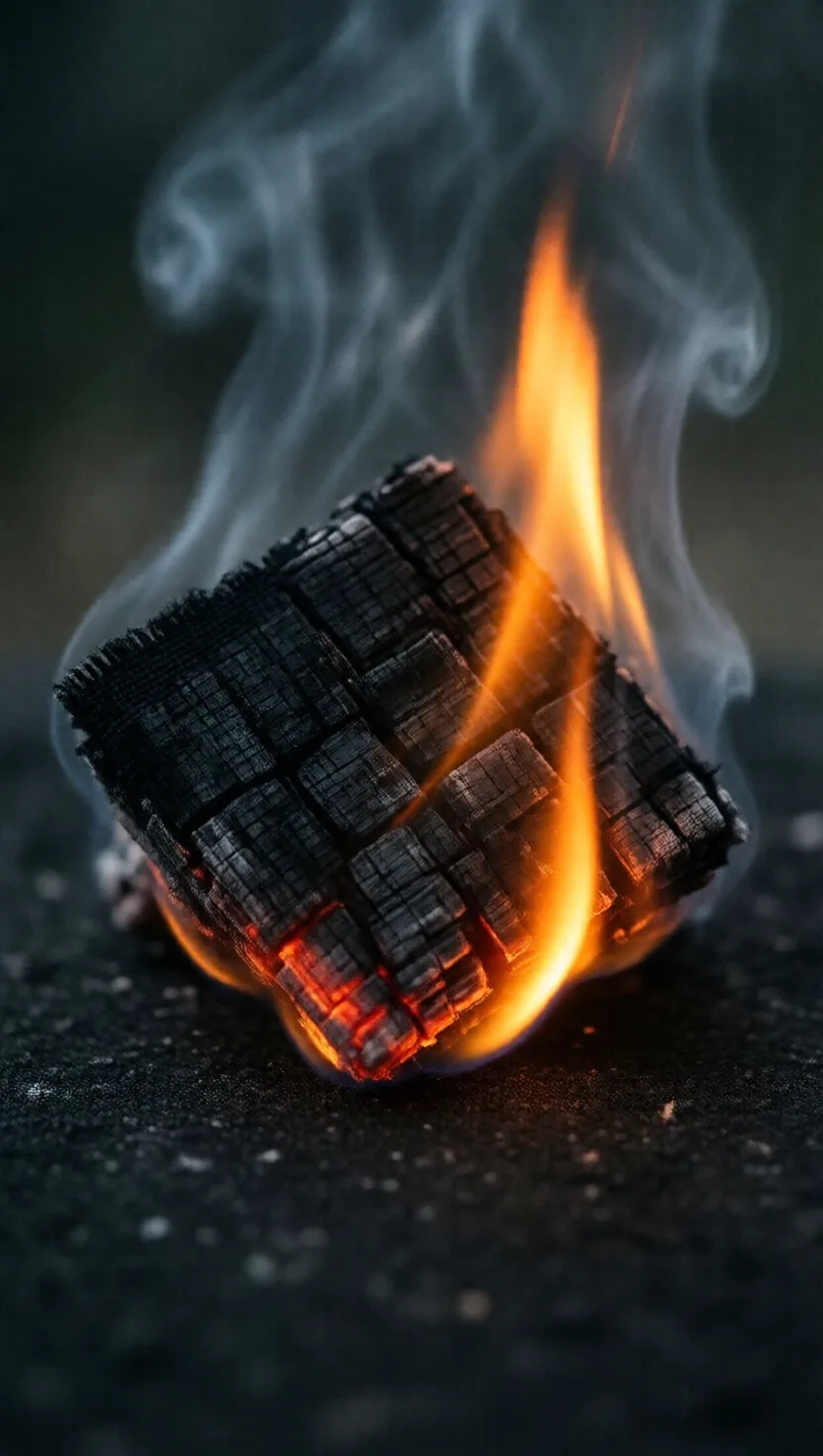
Char cloth is cotton cooked in a sealed tin with almost no air, so it chars instead of burning, leaving behind nearly pure carbon. That black cloth no longer flames, but it will grab a single weak spark and hold a glowing ember, smouldering at a few hundred degrees C until you breathe it into a fire. Its porous carbon catches a spark that would simply die on ordinary cotton, which is why every fire-striker kit carries some.
A lens can make fire from nothing but sunlight

A lens can make fire from nothing but sunlight

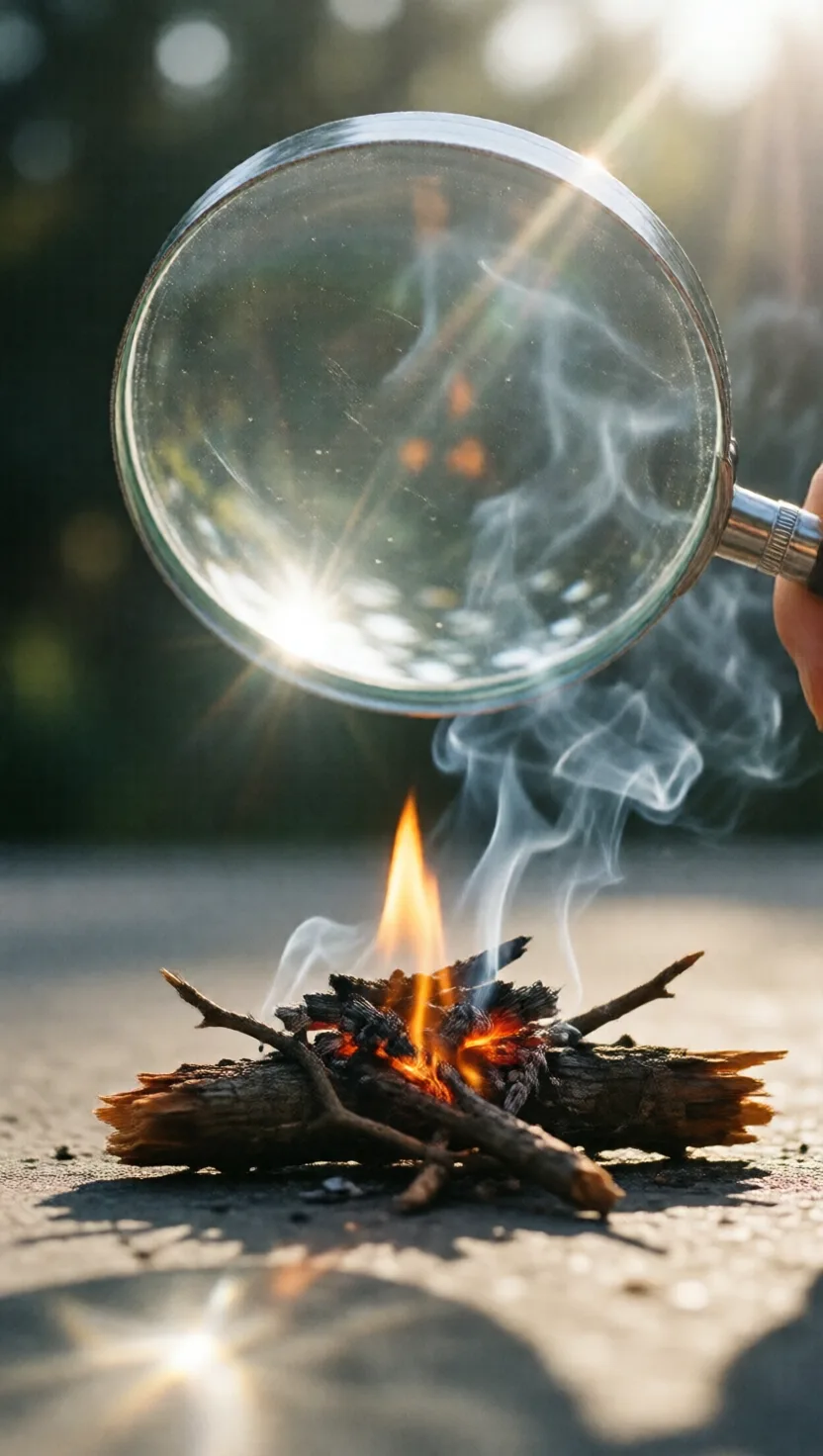
A burning glass starts a fire with no fuel of its own. A convex lens gathers parallel sunlight falling across its whole face and bends it to a single bright point, packing the energy of a wide beam into a spot millimetres across. That concentrated sunlight pushes tinder past its ignition point. The trick is ancient, and in the 1700s chemists used giant lenses this way to reach temperatures high enough to burn a diamond.
tap →swipe ↑ for depthswipe ↓ to exit