Eight things about wheels and the bicycle.

DC·41 Deep Cuts
The first bicycle had no pedals — you ran

The first bicycle had no pedals — you ran

The ancestor of the bicycle, Karl Drais's 1817 'running machine,' had two in-line wheels, a steerable front, and no pedals at all: you sat and pushed along the ground with your feet, gliding between strides. Drais built it after the catastrophe of 1816, the 'year without a summer,' when ash from the eruption of Mount Tambora chilled Europe, ruined the harvests, and left horses starving or slaughtered. He was looking for something to ride that didn't need feeding.
That huge wheel was the gearbox

That huge wheel was the gearbox

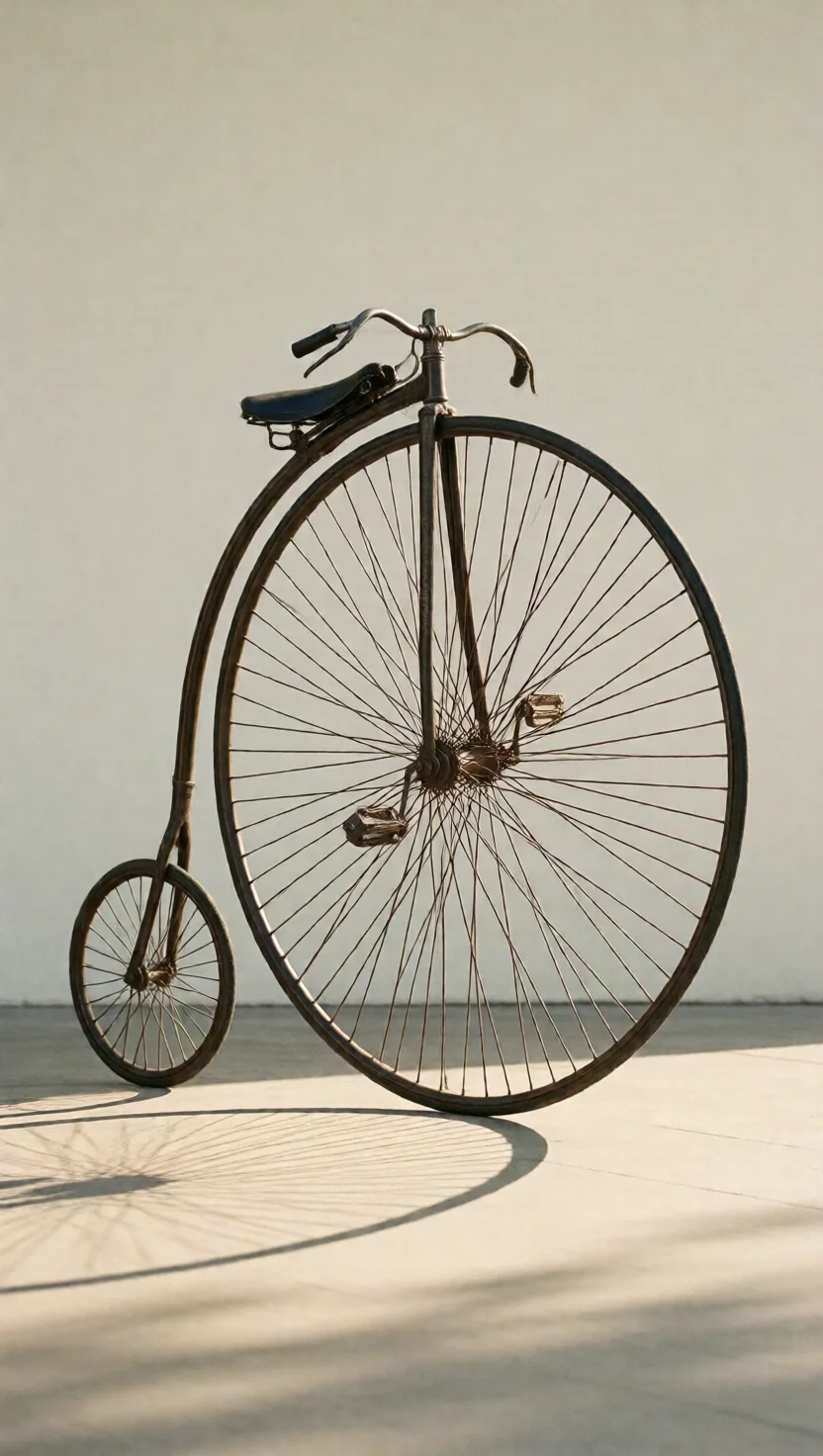
Before the chain drive, a bicycle's pedals were bolted straight to the hub of the front wheel — one turn of the legs, one turn of the wheel. The only way to go faster was a bigger wheel that rolled further per stroke, so makers built the front wheel as tall as the rider's leg could reach, up to about 1.5 metres across. The result, the penny-farthing, could cruise close to 20 km/h. That giant wheel wasn't decoration; it was the entire transmission.
A vet invented the air tyre for his son's trike

A vet invented the air tyre for his son's trike

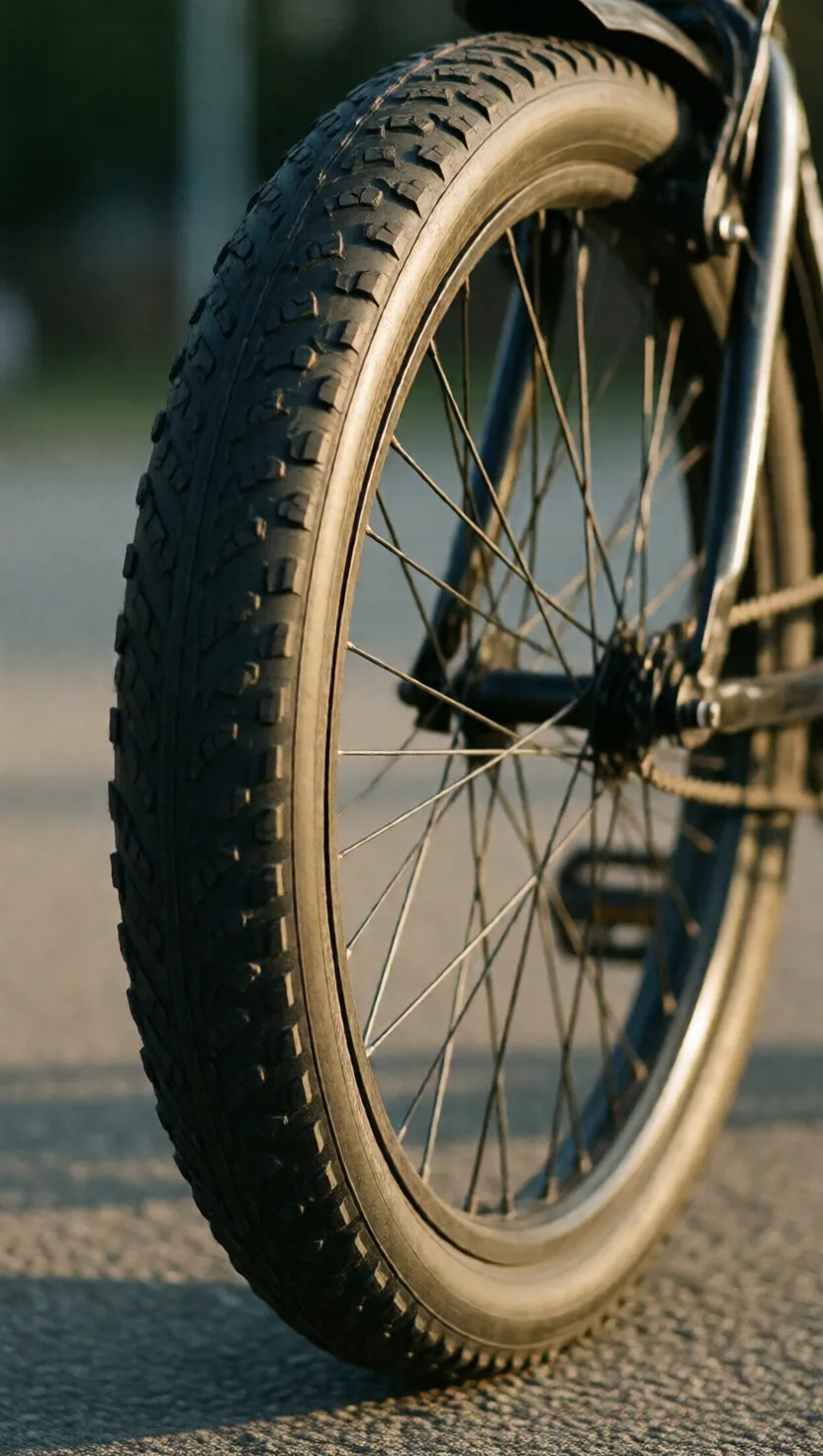
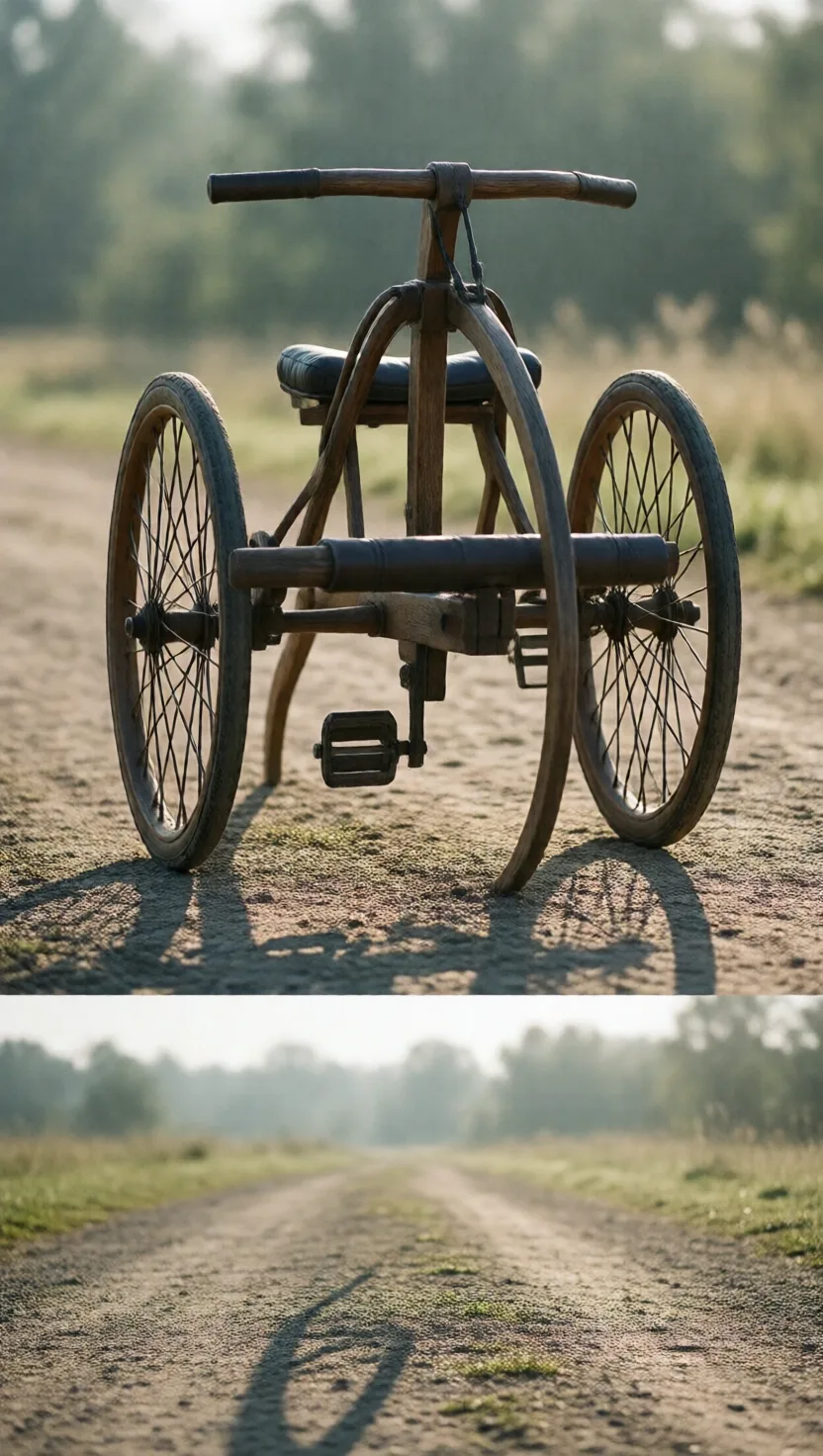
In 1888 a Belfast veterinary surgeon watched his young son rattle around on a tricycle with solid rubber wheels, and bound those wheels with air-filled rubber tubes to smooth the ride. The cushioned tyre was faster and gentler, and it arrived just as bicycles and the first motorcars were taking off. Another inventor had patented the very same idea back in 1847, but rubber was then too costly to make it pay, and the world quietly forgot it for forty years.
They knew the wheel — but only put it on toys

They knew the wheel — but only put it on toys

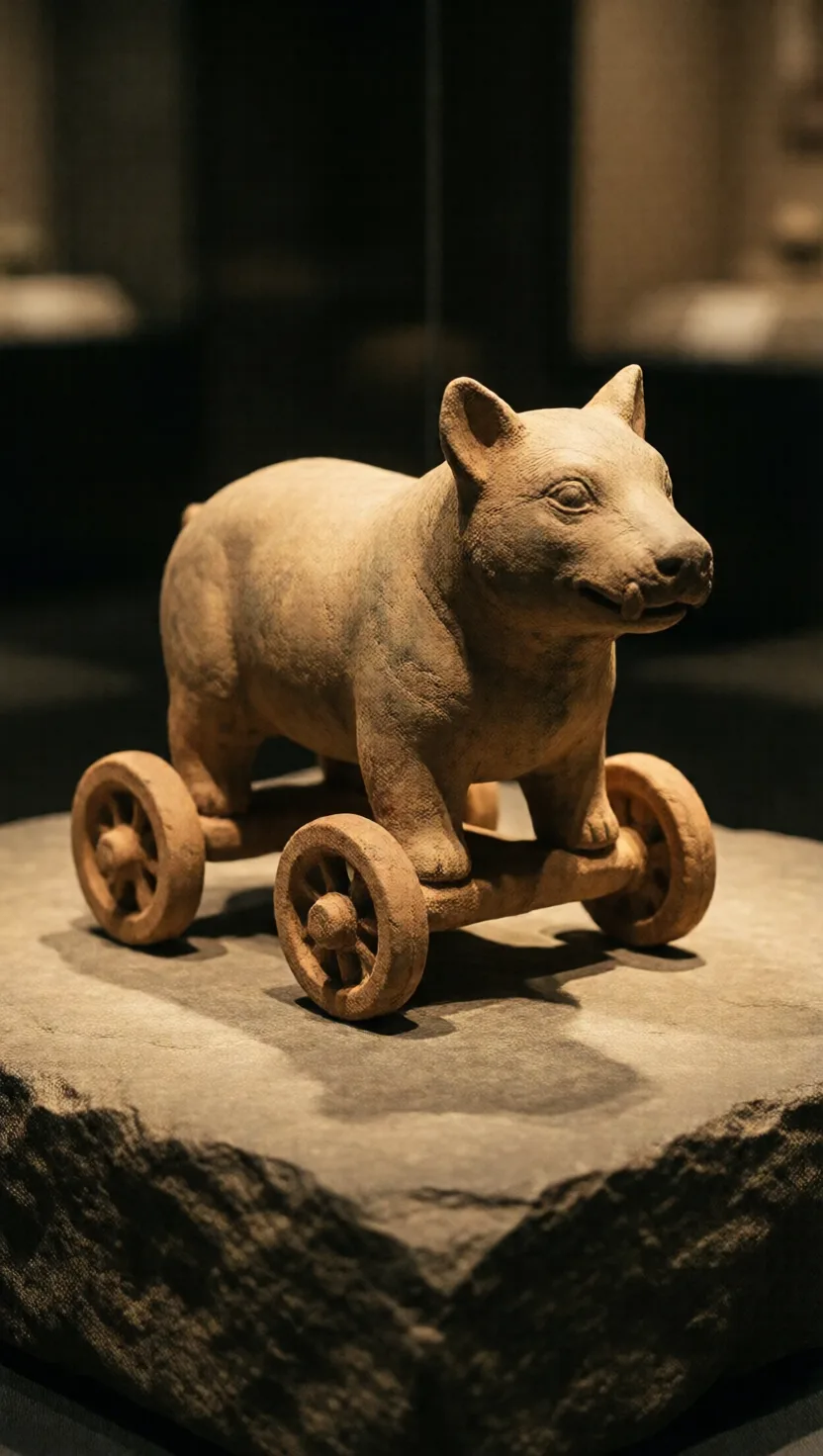
Wheeled transport never arose in the pre-Columbian Americas, but not for want of the idea. Archaeologists have found around a hundred small clay figurines — little dogs and jaguars rolling on four wheels with axles through their legs — across Mexico and Central America, clearly children's toys or offerings. The full-sized wheel never followed, because the Americas had no horses, oxen or other large draft animals to pull a cart, and rugged terrain besides. A wheel with nothing to pull it stays a toy.
Rome had ball bearings 1,500 years early

Rome had ball bearings 1,500 years early

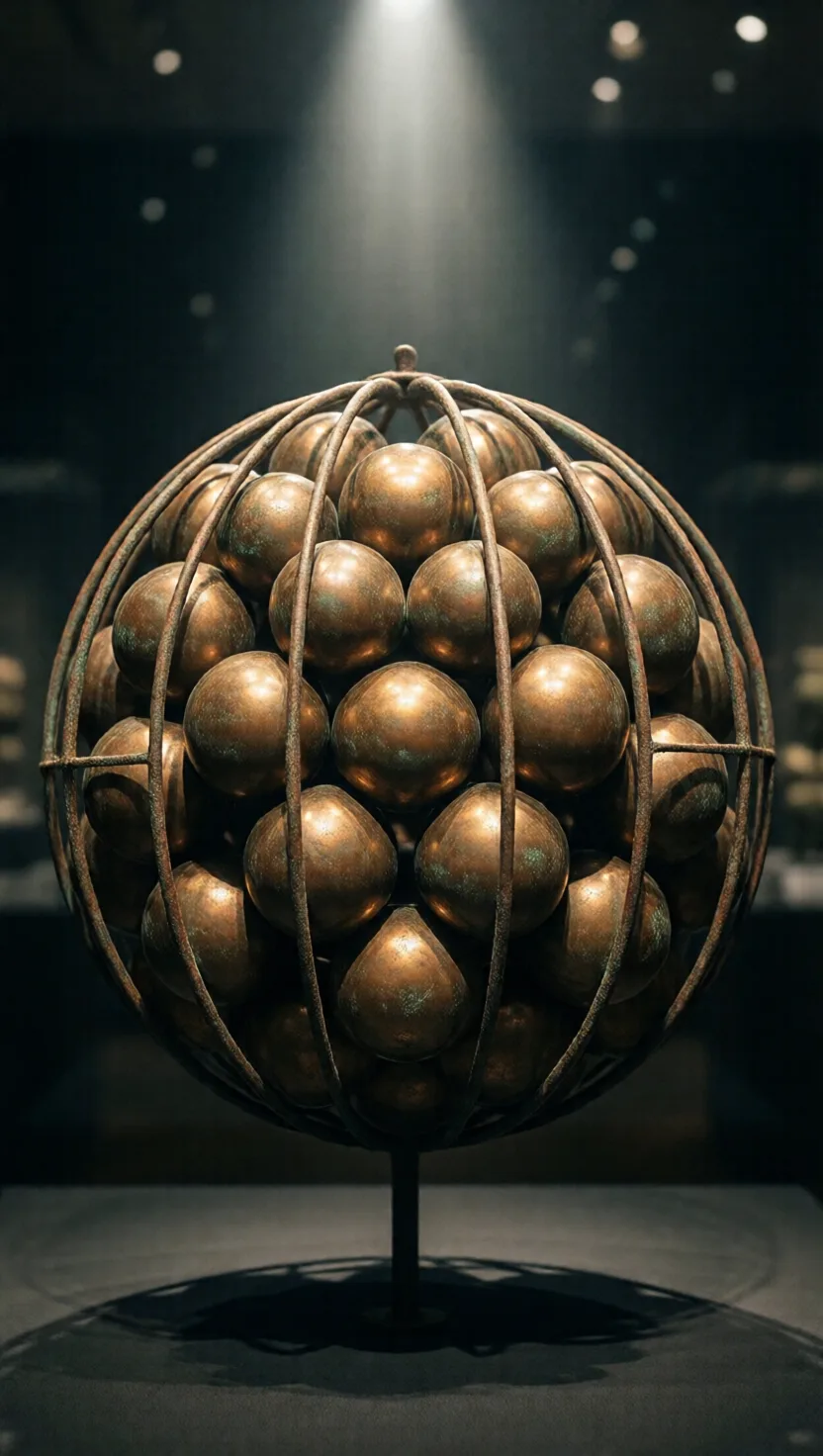
Ball bearings are usually credited to the Renaissance, sketched by Leonardo. But when Lake Nemi was drained in the 1930s, two enormous pleasure barges built for the emperor Caligula came up from the mud — and on one was a rotating platform riding on a ring of caged bronze balls, almost certainly built to turn a statue. It is the earliest known thrust ball bearing, working on exactly the principle of the bearings in every wheel hub today, fifteen centuries ahead of its time.
A bicycle's hub hangs from the spokes above it

A bicycle's hub hangs from the spokes above it

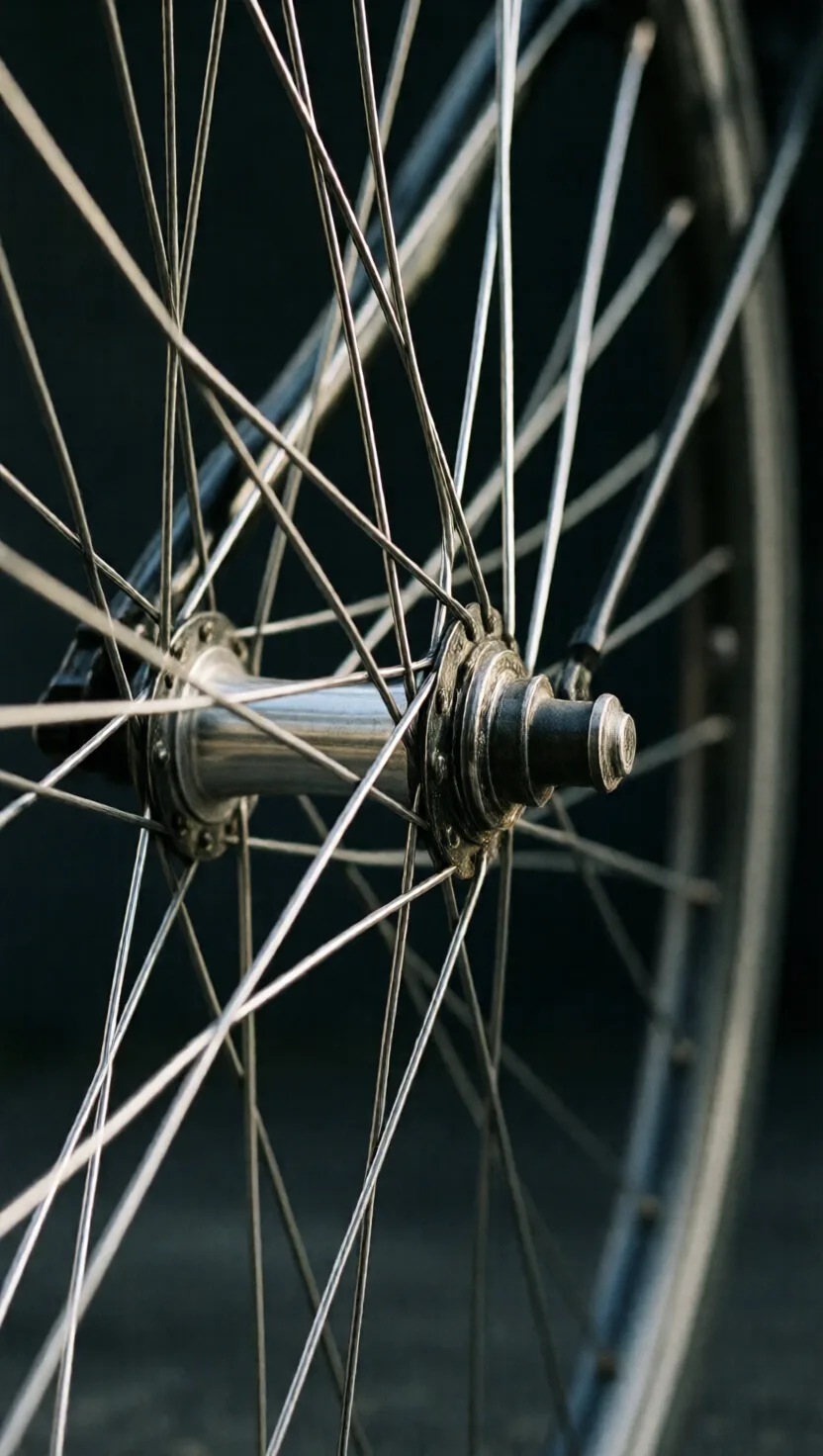
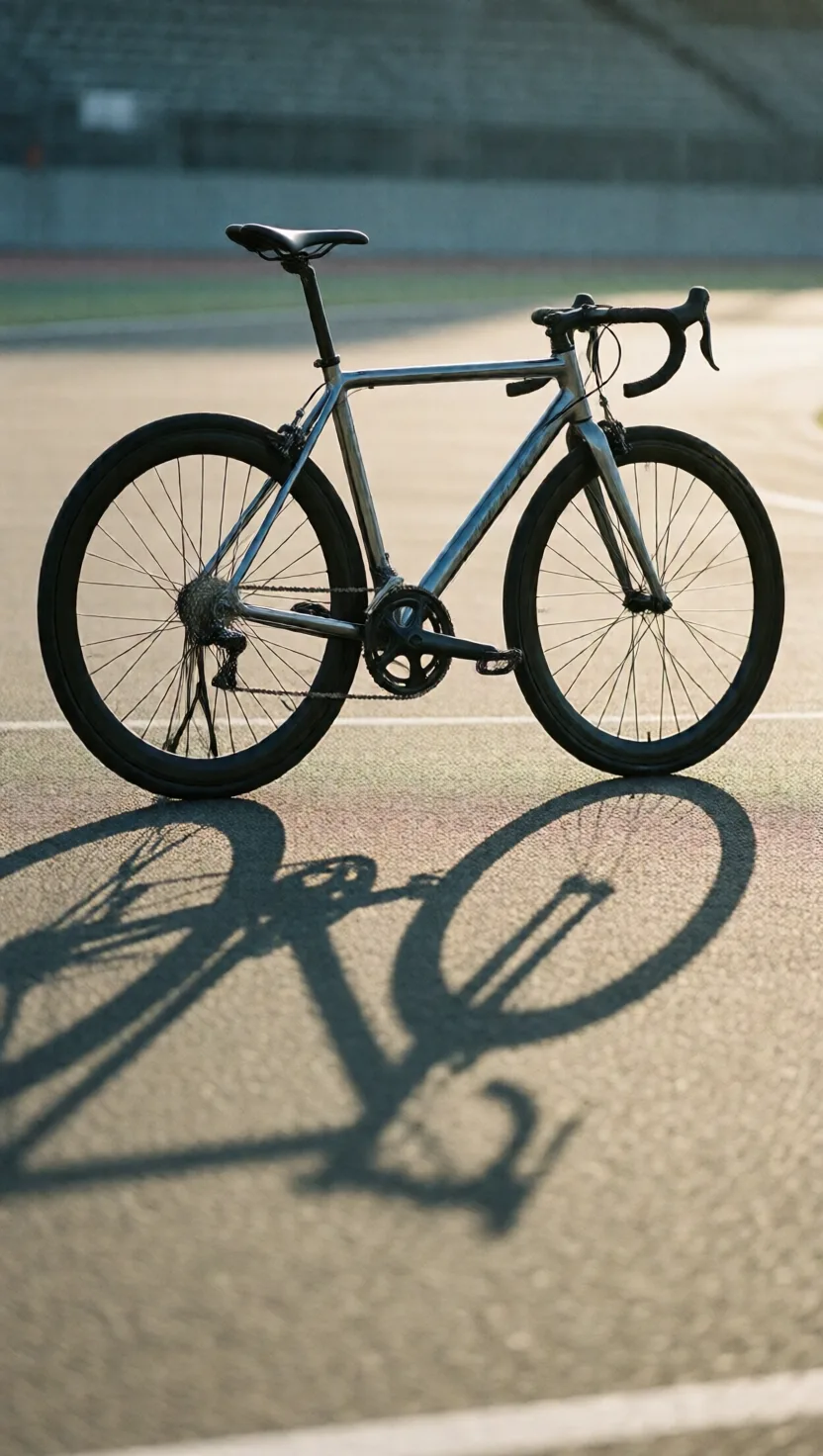
It looks as though a wheel's bottom spokes hold the rider up like little columns — but thin wire spokes would simply buckle under a push. A bicycle wheel works the opposite way: every spoke is pulled tight, so the hub effectively hangs from the spokes at the top of the wheel, while the rim, squeezed by all that tension, acts as a compression hoop. The load on the axle is carried by hanging, not by propping. The whole wheel is a structure held together by pull.
This bike was banned in 1934 for being too fast

This bike was banned in 1934 for being too fast

In 1933 a second-tier racer named Francis Faure lay back in a low, feet-forward 'recumbent' built by Charles Mochet and shattered the cycling hour record that had stood for nearly twenty years. The advantage was simple: a reclined rider punches a much smaller hole in the air. Upright-bike makers cried foul, and in 1934 the sport's governing body redefined a racing bicycle so as to outlaw the reclined position — a ruling still in force, which froze recumbent design for four decades.
A wheel's iron rim was put on red-hot, then shrunk

A wheel's iron rim was put on red-hot, then shrunk

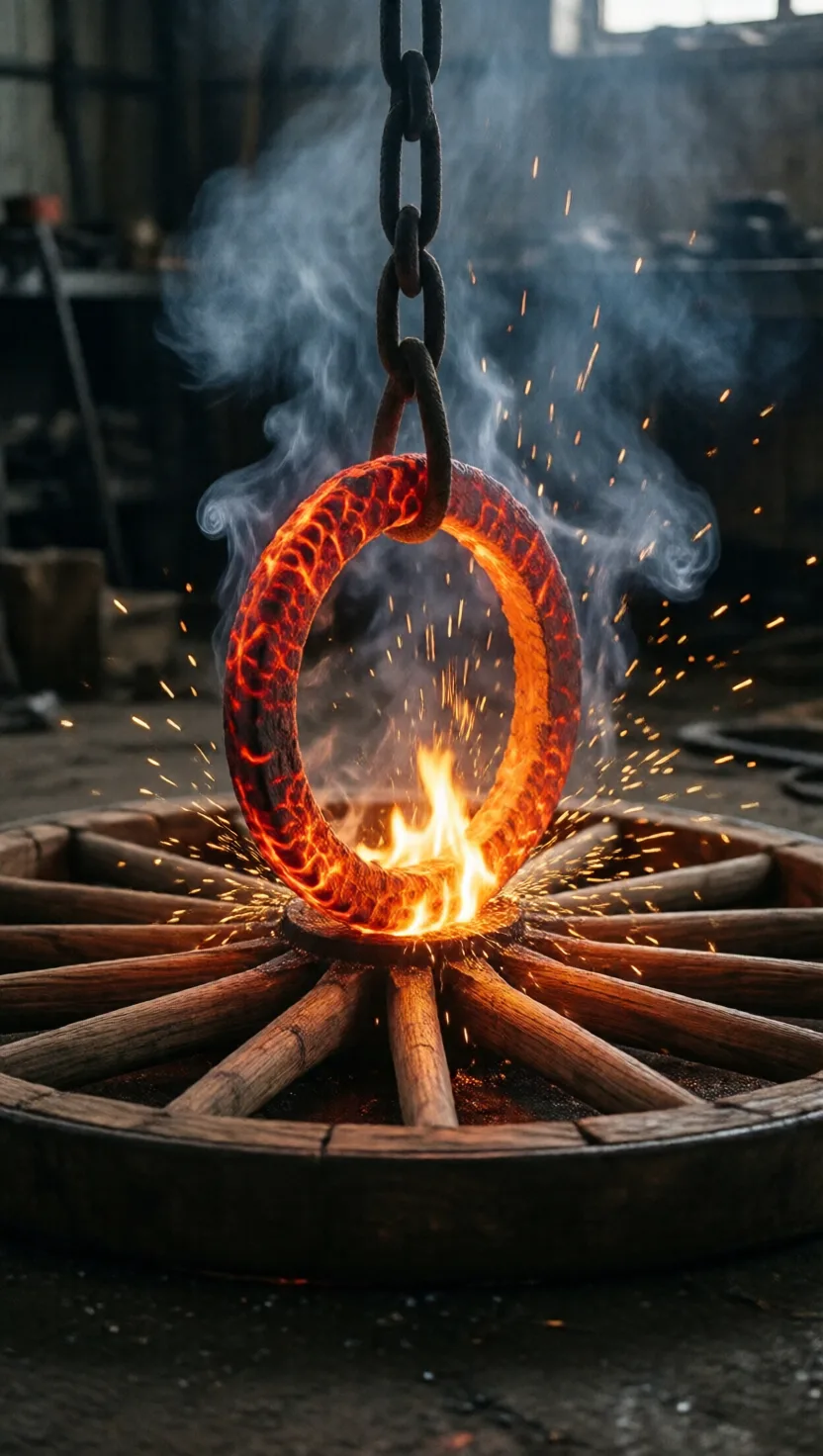
A wooden cartwheel was bound with an iron tyre deliberately made a little too small to fit. The wheelwright heated the iron hoop in a fire until it glowed and expanded just enough to drop over the rim, then doused the whole wheel with water. As the iron cooled it shrank hard, crushing the wooden segments tight together into one strong wheel and locking everything in place. The band held the wheel together by squeezing it — no glue, no bolts, just contraction.
tap →swipe ↑ for depthswipe ↓ to exit