Eight things hidden in a drop of latex

DC·37 Deep Cuts
Rubber starts as milk bleeding from a tree

Rubber starts as milk bleeding from a tree

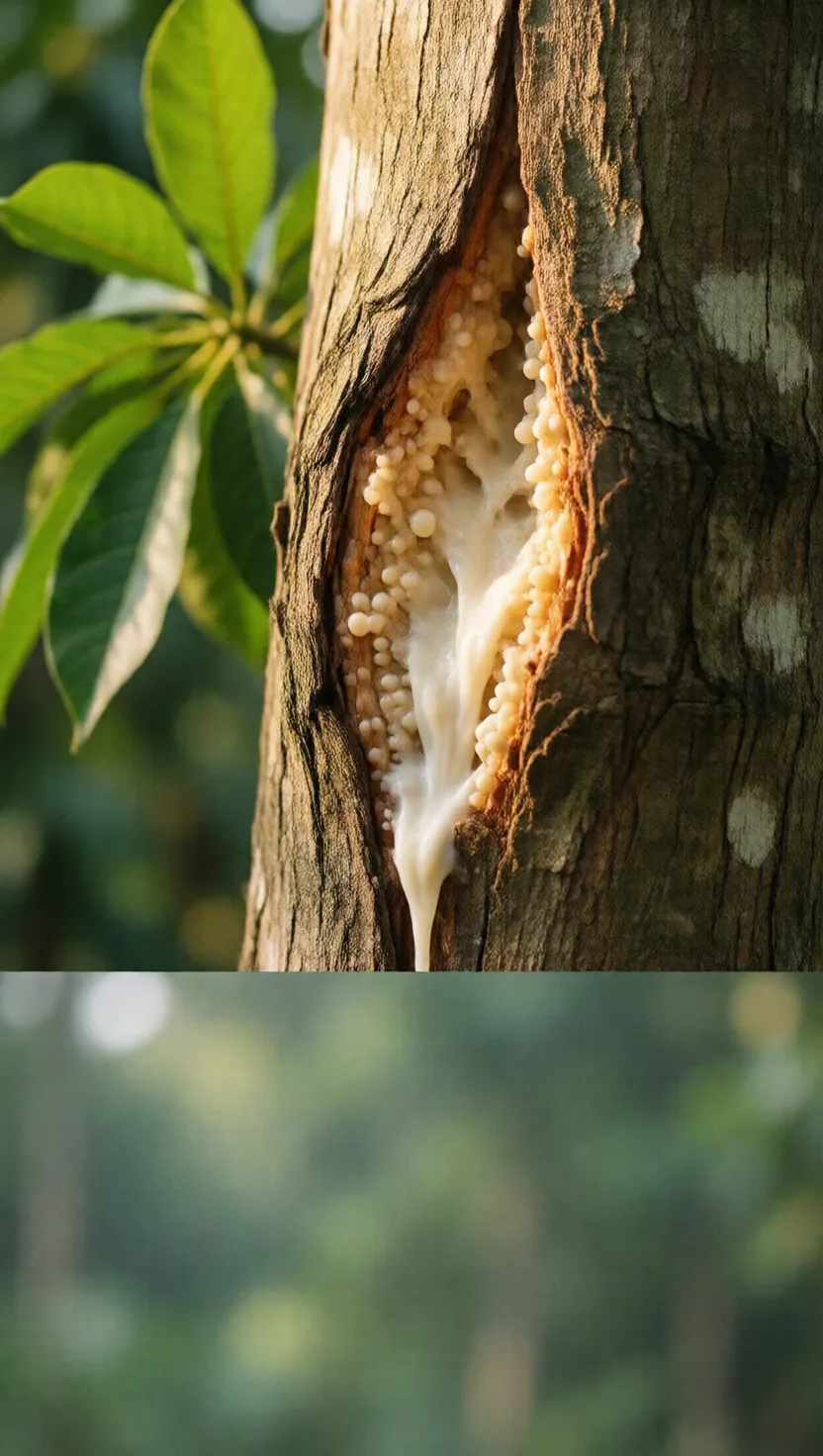
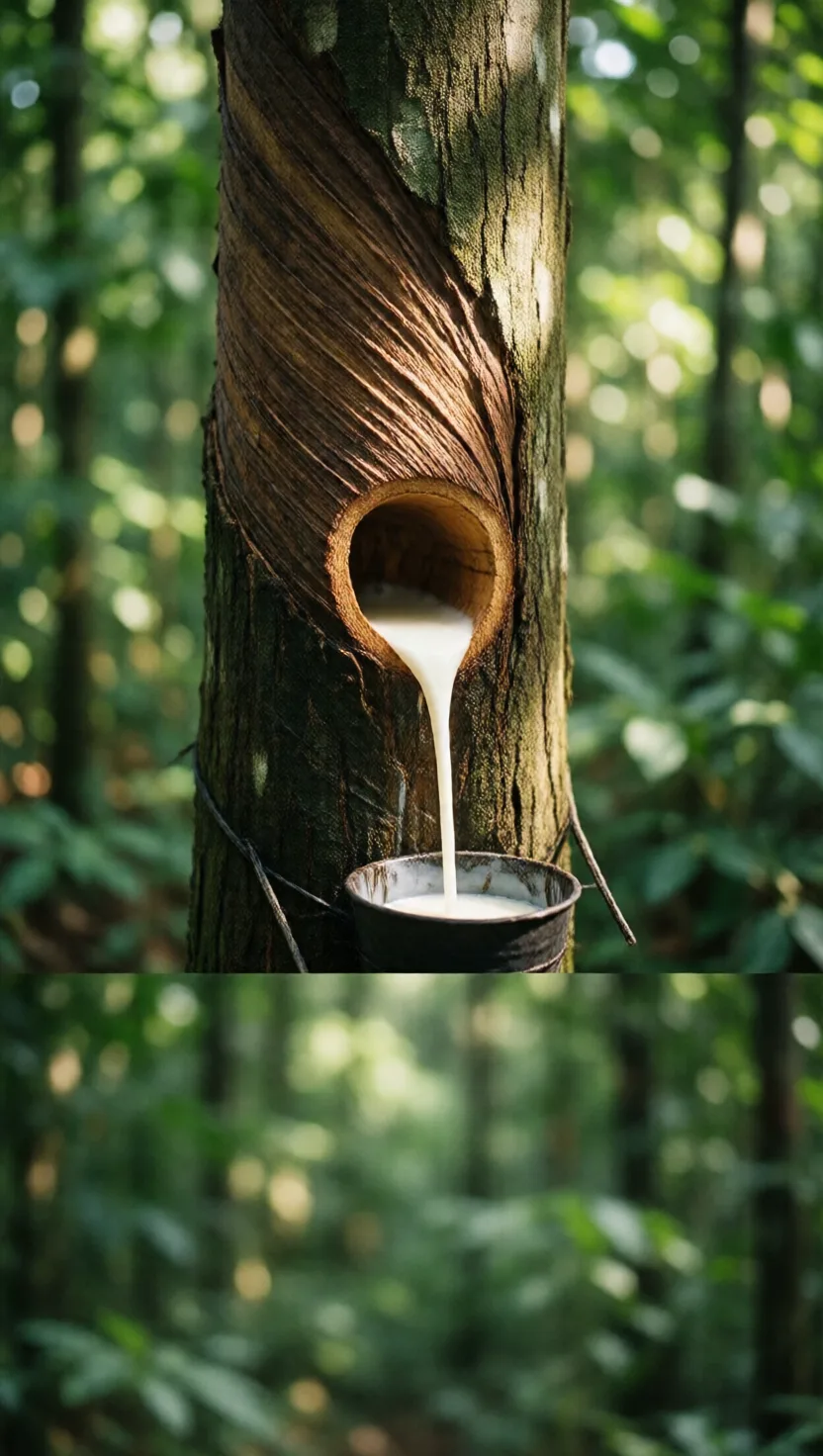
Natural rubber begins as latex, a milky fluid the rubber tree carries under pressure in fine tubes just beneath its bark. A tapper shaves a shallow diagonal groove, the white sap wells up and trickles down into a cup over a few hours, and the next day the cut is reopened a sliver lower. Done with care, a single tree keeps bleeding latex this way for decades without being killed.
Stretch a rubber band and it warms your lip

Stretch a rubber band and it warms your lip

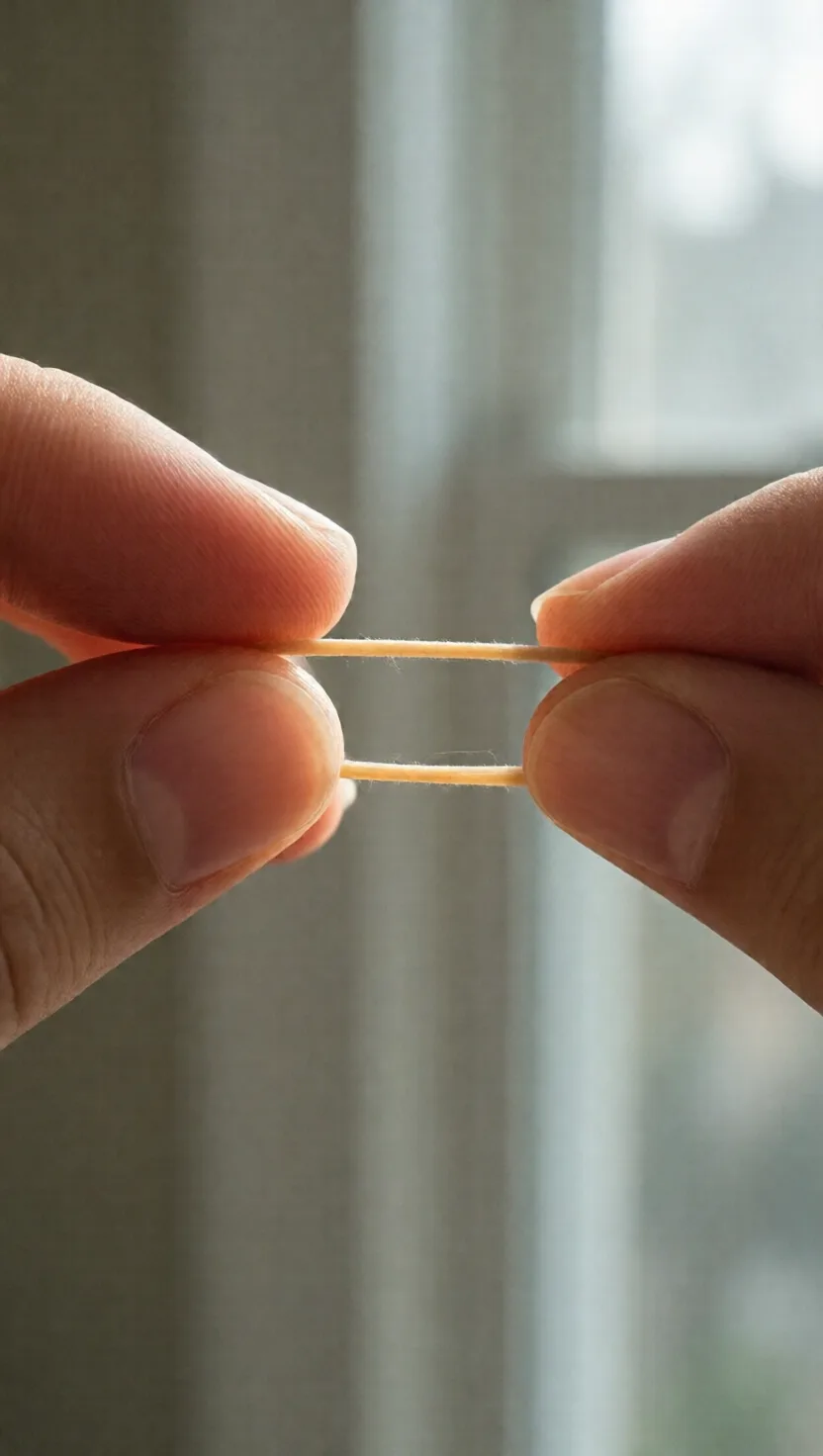
Rubber breaks the rules other materials follow. Press a stretched rubber band to your lip and it feels warm; let it snap back and it turns cool. Stranger still, a stretched band holding a weight will pull up and contract when you heat it, where metal would sag. The reason is disorder: rubber's tangled molecular chains resist being lined up straight, so stretching them releases heat, and warming a taut band makes it haul back toward its preferred tangle.
Raw rubber melts in summer and cracks in winter

Raw rubber melts in summer and cracks in winter

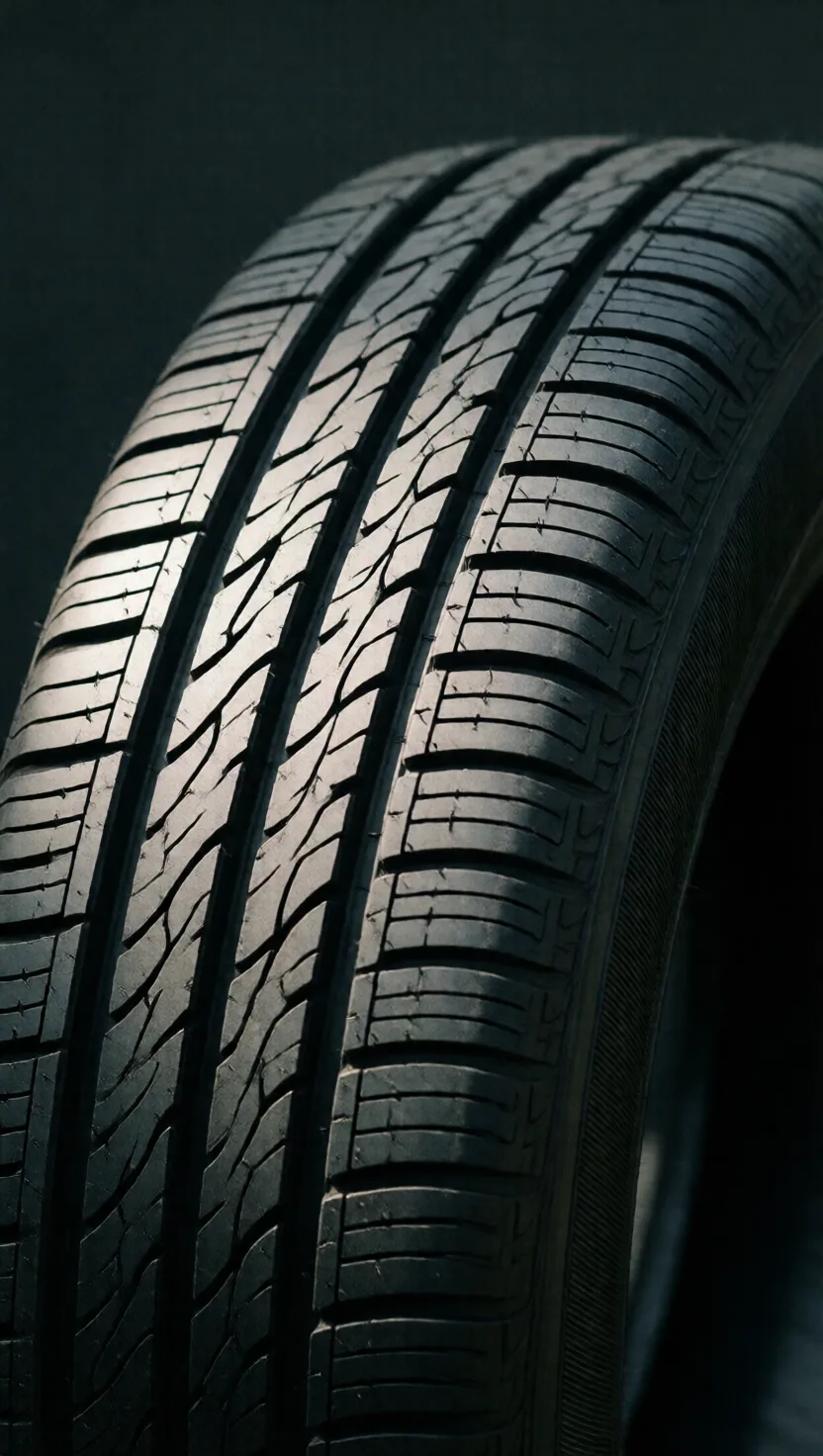
Untreated rubber is almost useless — sticky goo in heat, brittle in cold. The fix, found in 1839, is to cook it with a pinch of sulfur. The sulfur stitches the long rubber molecules together with tiny bridges, locking them into a springy web that holds its shape from a freezing road to a baking one. The process took the name vulcanization, after the Roman god of fire, and it is the reason a tire can exist at all.
People made bouncing rubber 3,500 years ago

People made bouncing rubber 3,500 years ago

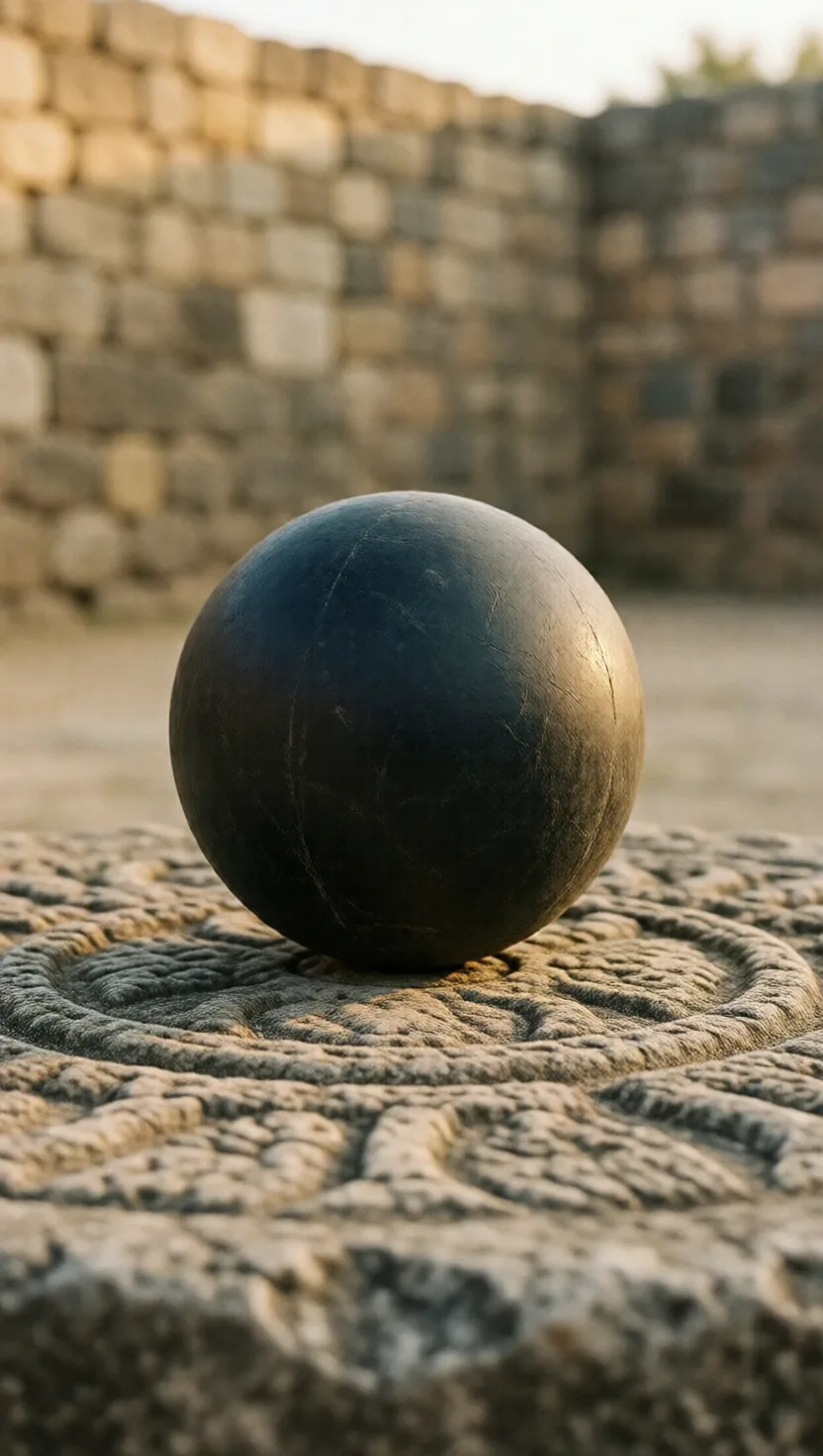
More than 3,500 years before modern chemistry, people in ancient Mexico were making springy rubber. They mixed tree latex with juice pressed from a morning-glory vine, which knits the molecules together — an early cousin of vulcanization — and rolled it into solid balls for a ritual ballgame. By changing the blend they could make a bouncier ball or tougher sandal soles. One of these peoples became known to their neighbours simply as the rubber people.
Rubber is named for rubbing out pencil

Rubber is named for rubbing out pencil

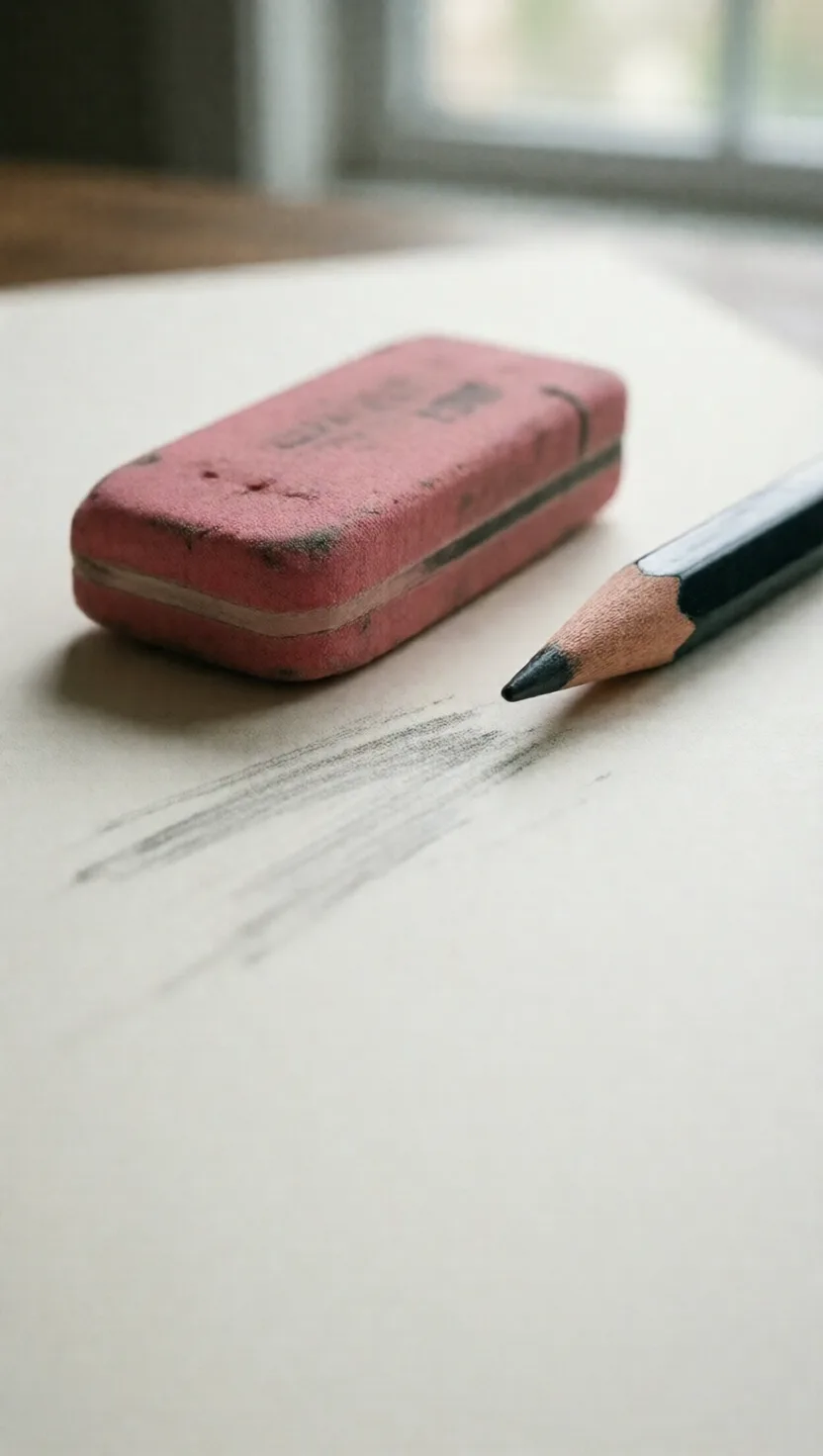
The material had no English name until people noticed a lump of the South American gum could rub away pencil marks far better than the breadcrumbs they had been using. In 1770 a chemist named it rubber for exactly that — its knack for rubbing things out. The name spread to the whole substance, and in Britain a pencil eraser is still called, simply, a rubber.
70,000 smuggled seeds ended a nation's monopoly

70,000 smuggled seeds ended a nation's monopoly

For decades Brazil alone held the world's rubber, guarding its wild trees and banning seed exports. In 1876 an Englishman gathered about 70,000 rubber-tree seeds, labelled them harmless botanical specimens, and shipped them to a London garden. Only a few thousand sprouted — but their seedlings were sent on to Asia, and within a generation Southeast Asian plantations were growing most of the world's rubber, collapsing Brazil's boom.
The first ocean cable was wrapped in tree gum

The first ocean cable was wrapped in tree gum

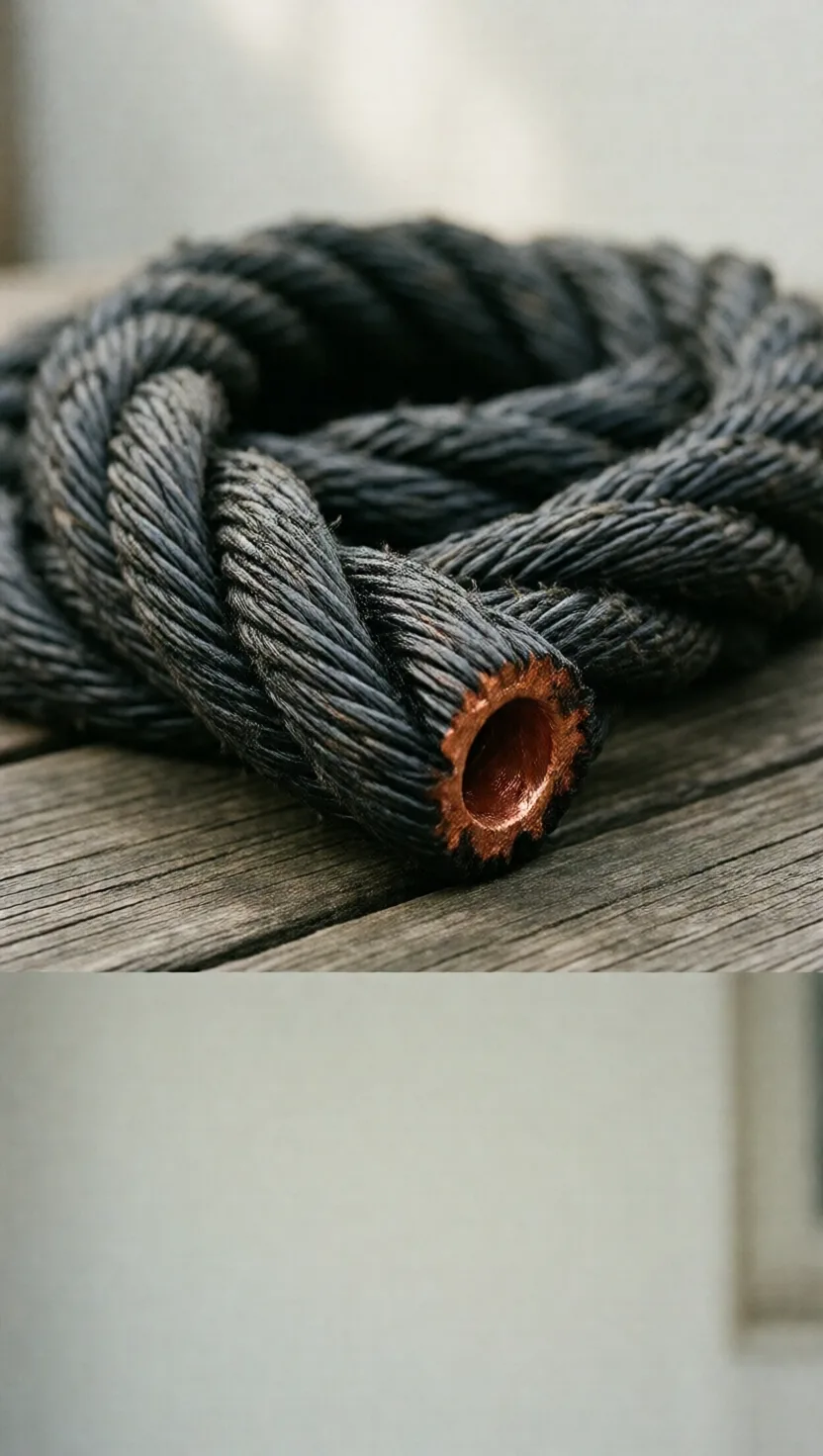
A cousin of rubber called gutta-percha comes from a different Southeast Asian tree and sets hard rather than springy. Warm it and it moulds like clay; cool it and it becomes a tough, waterproof, non-conducting shell — perfect for sealing wire on the cold seabed. It insulated the first telegraph cables laid across the Atlantic in the 1850s, wiring continents together. The same gum still fills the inside of a root canal today.
Chewing gum was once just chewable tree sap

Chewing gum was once just chewable tree sap

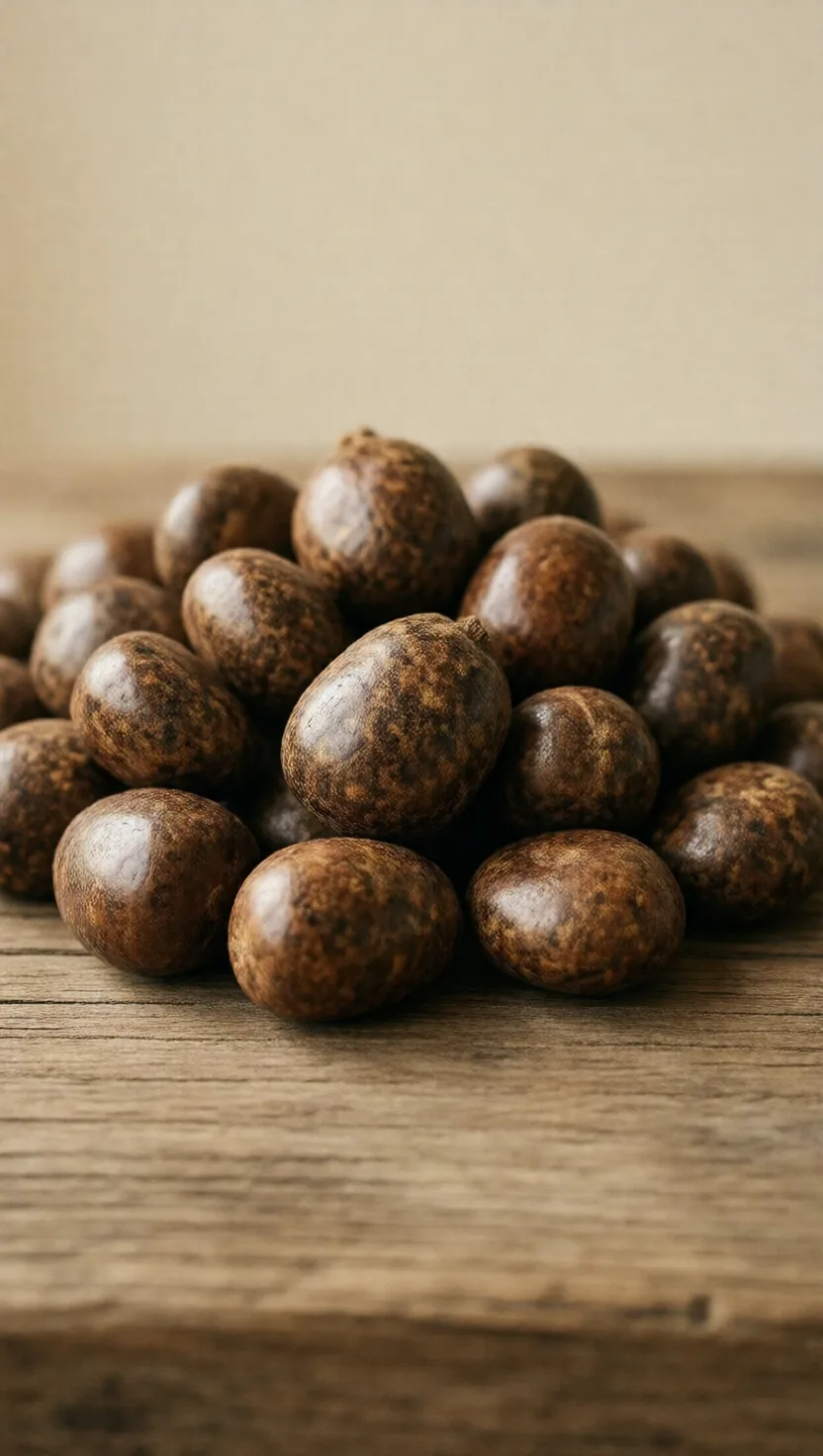
Modern chewing gum began as latex too. Chicle, tapped from the sapodilla tree, had been chewed in Mesoamerica for centuries. In the 1860s it was shipped north as a hoped-for cheap rubber substitute; it failed at that, but someone sweetened and flavoured the stretchy stuff instead, and the chewing-gum trade was born. For a long stretch of its history, every chew you bought was hardened tree sap.
tap →swipe ↑ for depthswipe ↓ to exit