Eight tricks a tree uses to live in the sea

DC·233 Deep Cuts
A mangrove sprouts its seedlings before they fall

A mangrove sprouts its seedlings before they fall

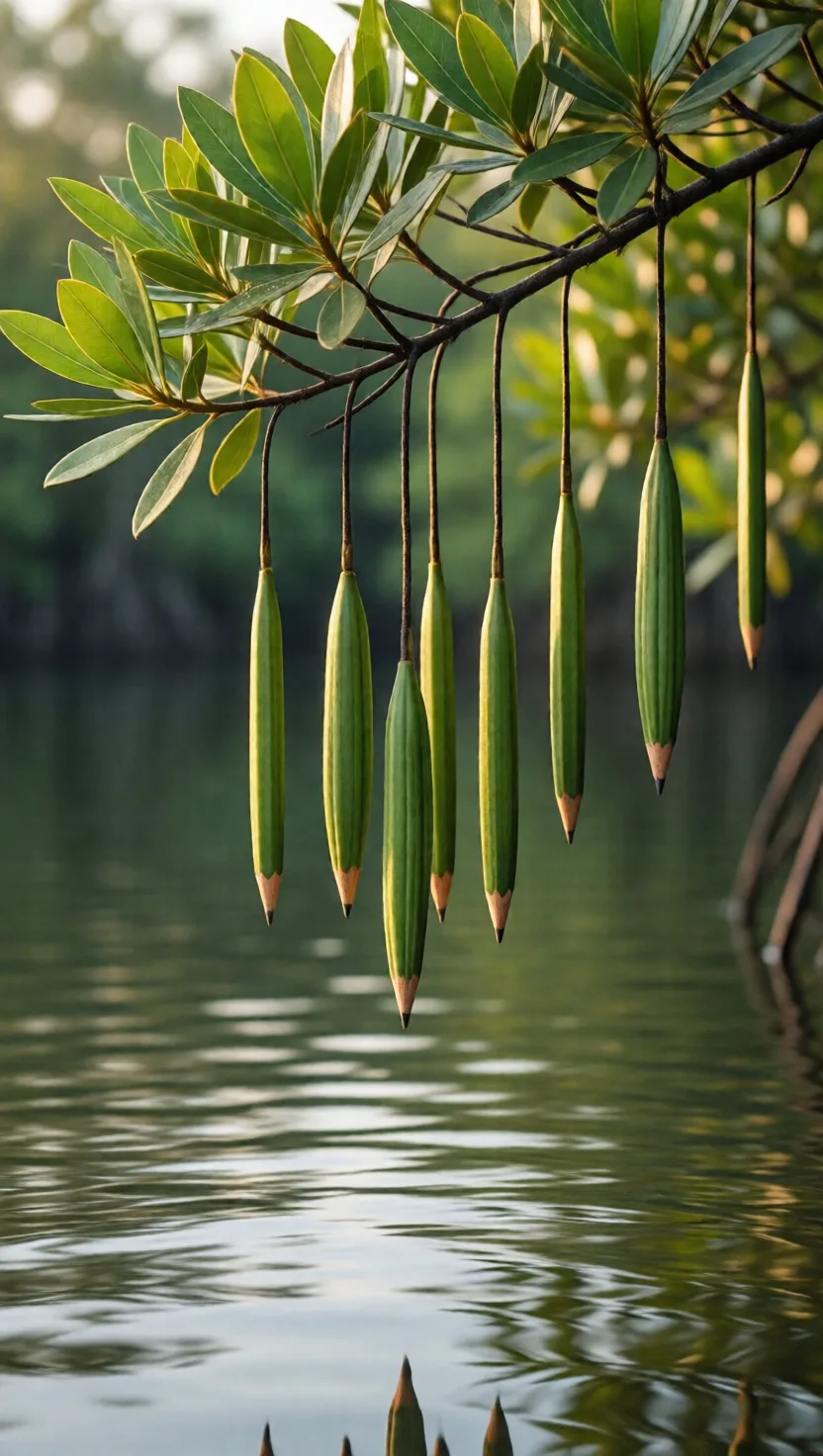
Mangroves skip the seed stage entirely. Rather than drop a dormant seed onto drowning mud, the parent tree grows the embryo right on the branch into a long, pencil-like seedling called a propagule, some of them over a foot long. When it finally lets go it can spear point-first into the mud and root within hours, or float off to settle far away, a young sapling already alive and growing before it ever leaves the tree.
Some mangroves breathe through roots above the mud

Some mangroves breathe through roots above the mud

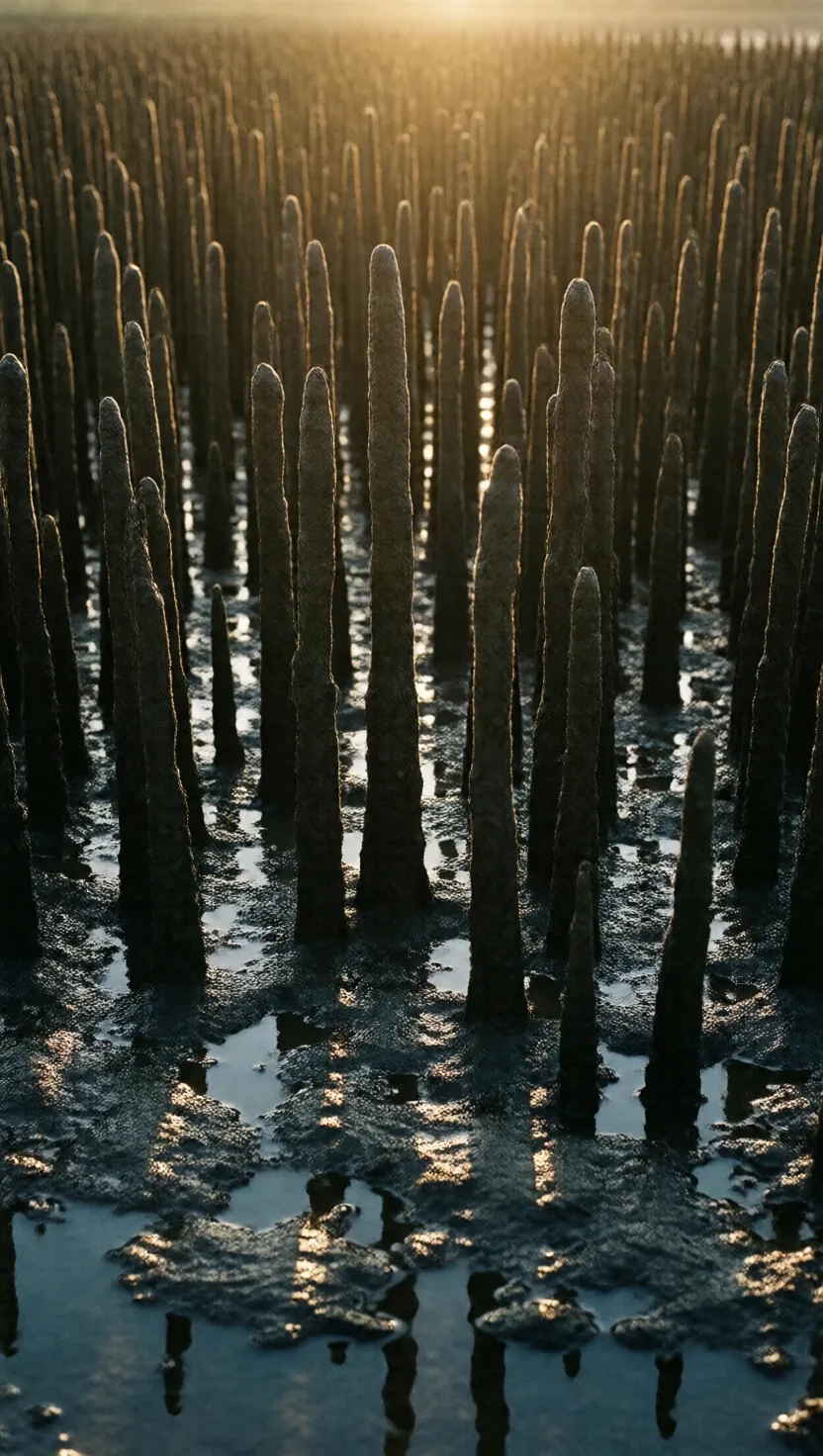
Waterlogged tidal mud holds almost no oxygen, so some mangroves grow lungs above it. Pencil-like roots called pneumatophores push straight up out of the mud, sometimes by the thousand around a single tree, their surfaces studded with tiny pores called lenticels. At low tide air seeps in through the pores and travels down spongy internal tissue to the buried roots; when the tide rises, the pores seal shut to keep the seawater out.
A mangrove leaf can sweat out crystals of salt

A mangrove leaf can sweat out crystals of salt

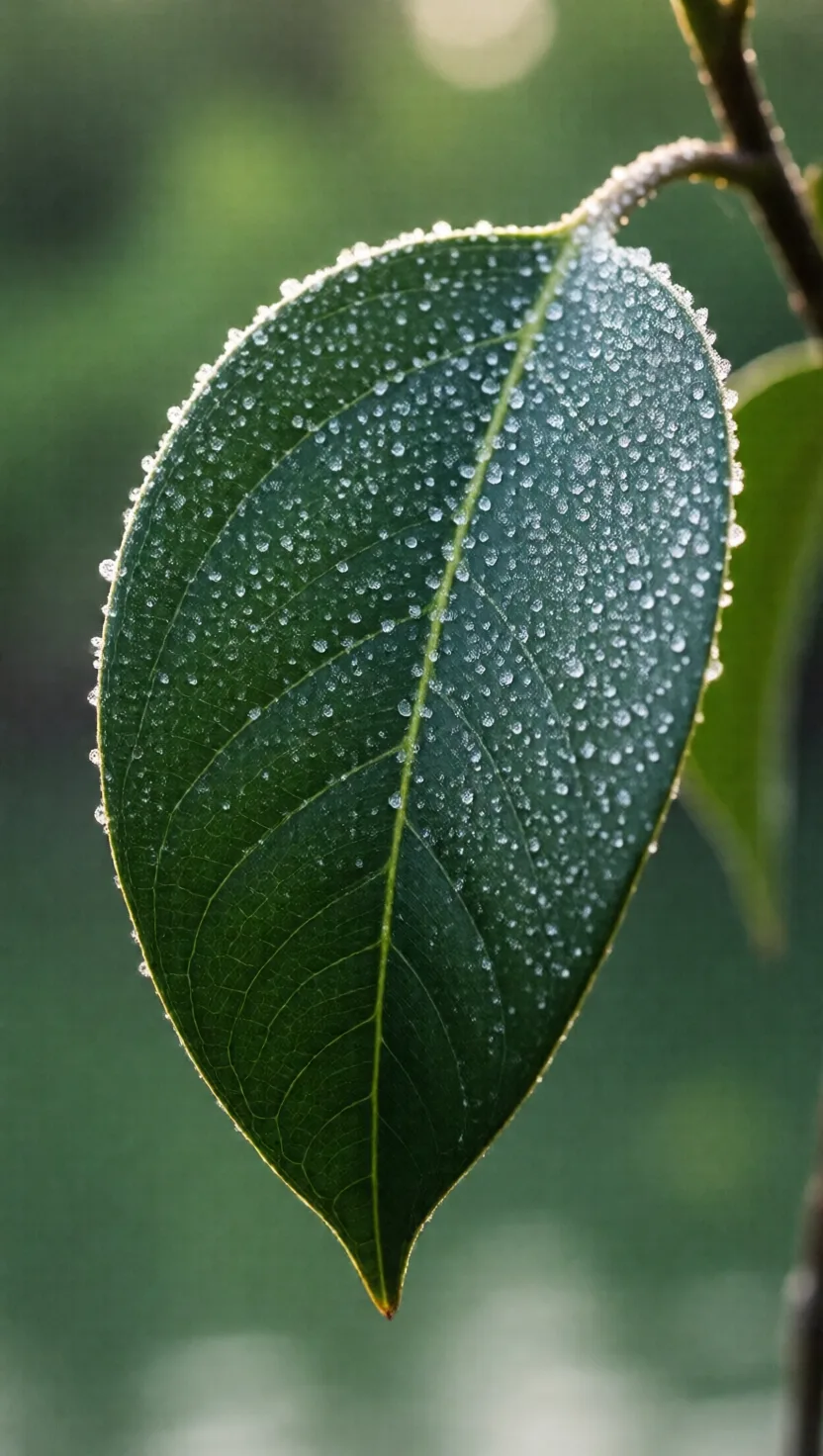
Some mangroves drink seawater and simply sweat the salt back out. Species like the grey mangrove run specialised salt glands in their leaves that pump sodium and chloride up to the surface, where the water evaporates and leaves behind tiny white crystals you can actually taste. A single leaf can crust over with them. It is one of several tricks that let these trees thrive in seawater carrying around 35 grams of salt in every litre.
Red mangrove roots filter the salt out of seawater

Red mangrove roots filter the salt out of seawater

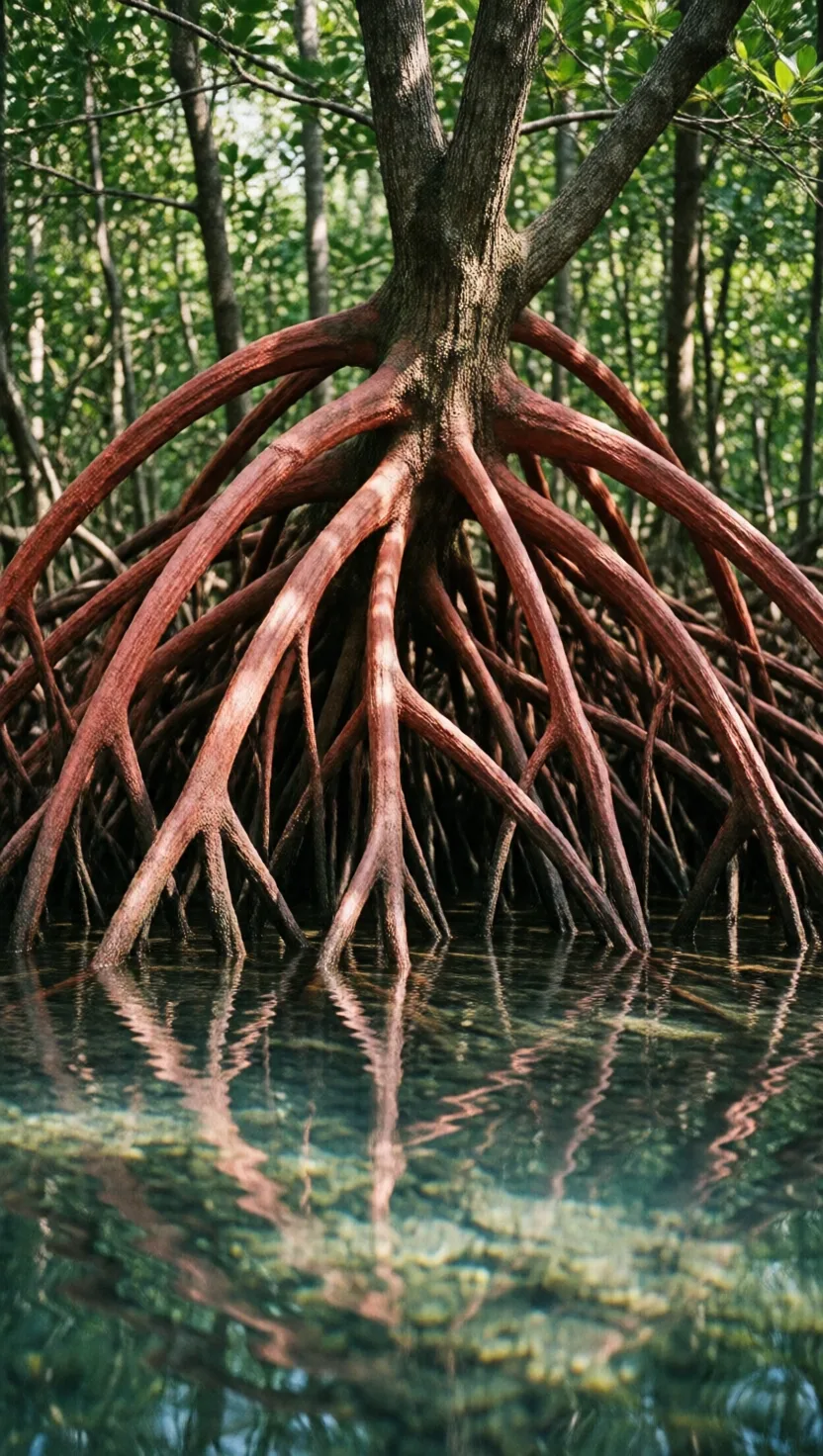
A red mangrove handles salt before the water even gets in. Its roots are sheathed in waterproof corky walls that behave like a reverse-osmosis filter: as the tree draws water upward, the membranes block more than 90 percent of the seawater's salt right at the root surface, so it is mostly fresh water that climbs into the trunk. The little salt that does slip through is shunted into ageing leaves, which the tree then drops.
A mangrove buries more carbon than a rainforest

A mangrove buries more carbon than a rainforest

Acre for acre, mangroves are among the planet's finest carbon vaults, and most of it isn't in the wood. It's locked in the deep, oxygen-starved mud their roots trap, where fallen leaves and stems barely rot and carbon stays buried for centuries. Amazon mangroves hold roughly 511 tonnes of carbon per hectare, about twice that of the famously carbon-rich rainforest just inland, and as much as three-quarters of it lies hidden below the waterline.
'Mangrove' is 70 unrelated trees, not one

'Mangrove' is 70 unrelated trees, not one

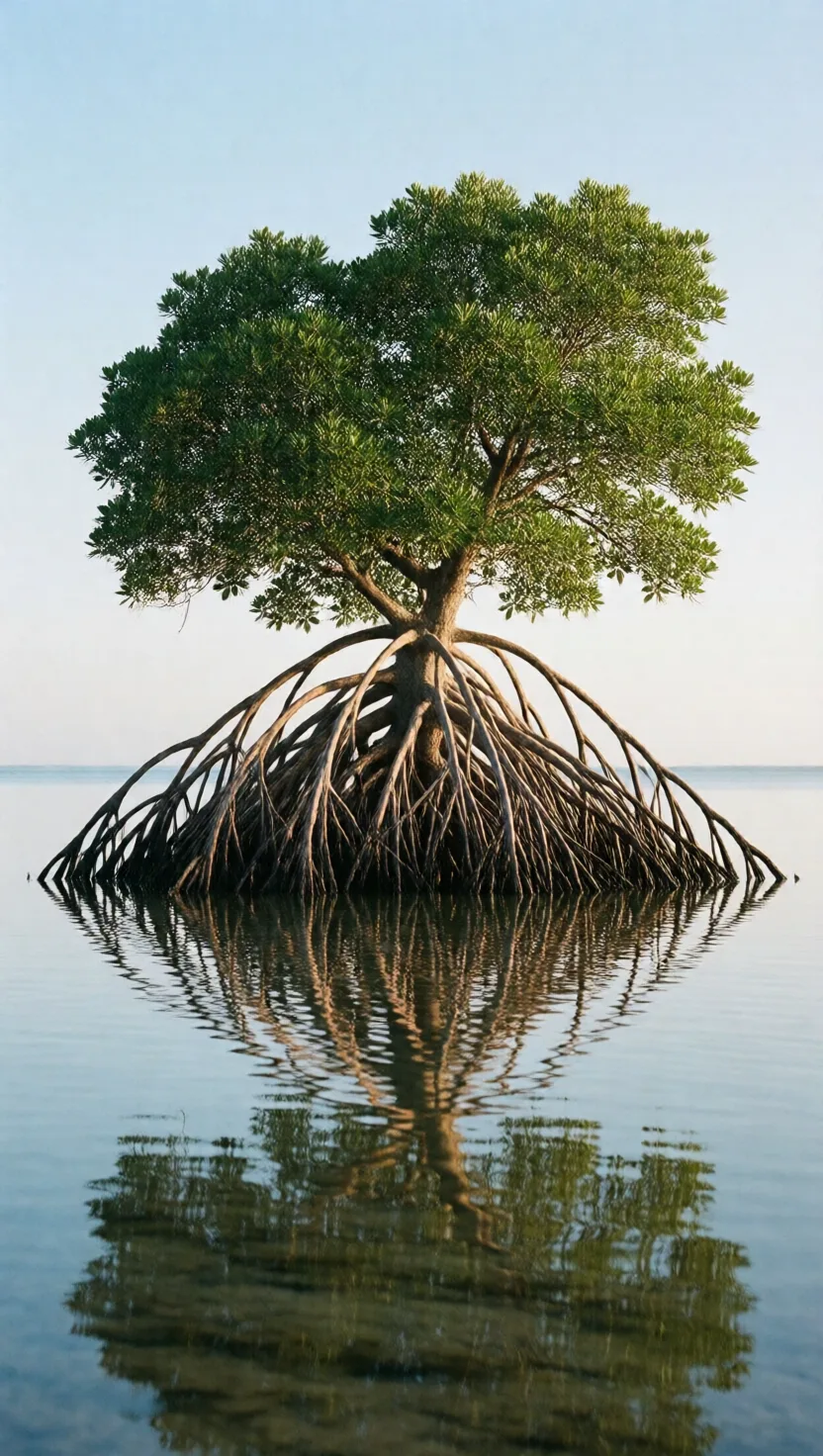
Mangrove isn't a family tree so much as a job description. About 70 'true mangrove' species share the same look and the same salt-beating tricks, yet they descend from some 16 plant families that aren't closely related at all. The mangrove way of life, all stilt roots, salt control and live-born seedlings, has evolved independently more than a dozen separate times, with plants as different as palms and peas arriving at the very same answers to the drowned, salty edge of the sea.
The largest mangrove forest has tigers that swim

The largest mangrove forest has tigers that swim

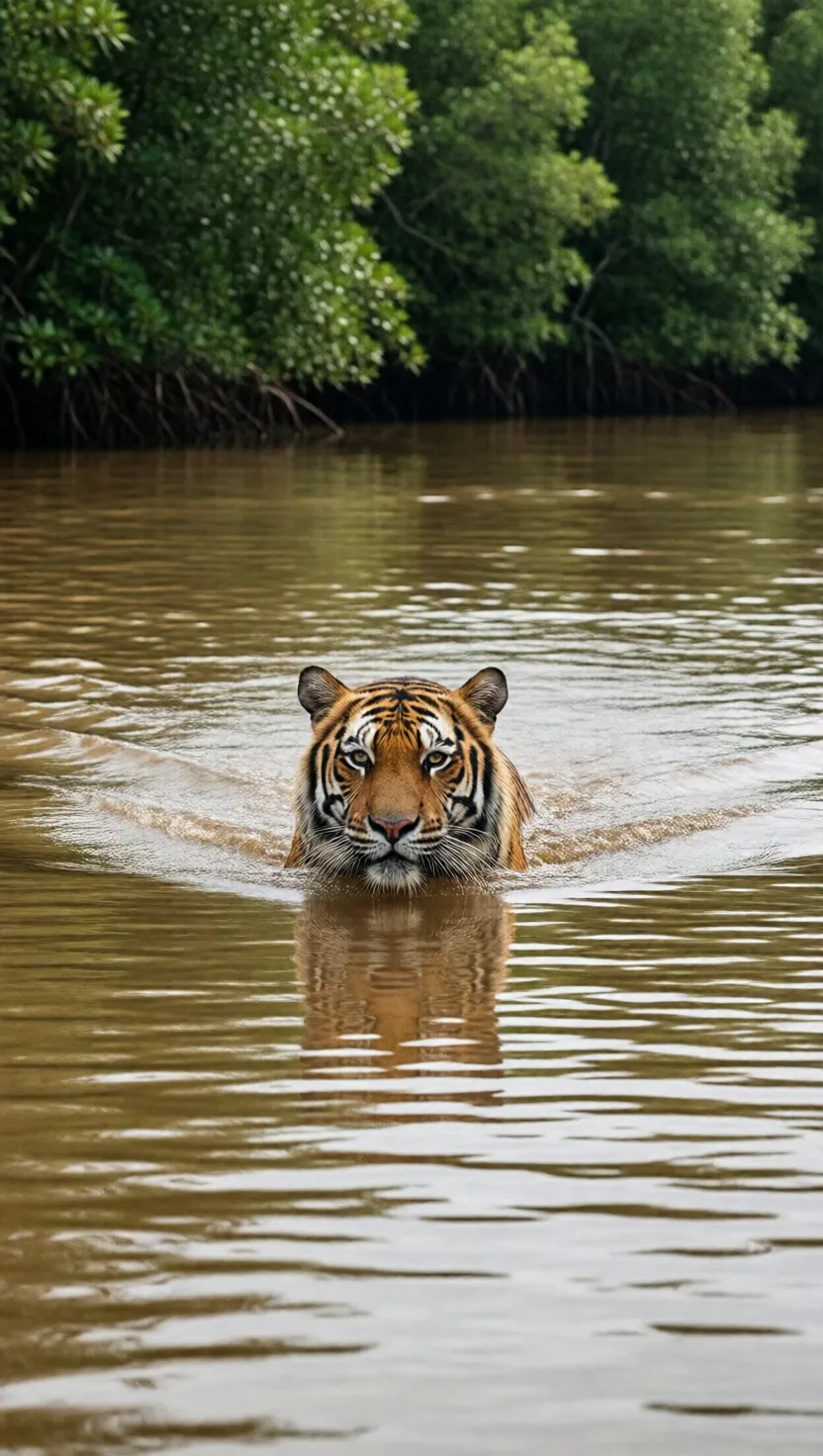
The world's largest mangrove forest, the Sundarbans, sprawls across about 10,000 square kilometres of river delta between India and Bangladesh, broken into hundreds of islands by tidal channels. Its Bengal tigers have turned half-aquatic to cope, swimming several kilometres at a stretch between islands to hunt deer, fish and crabs in the brackish maze. Few tigers anywhere else take so readily and so often to the water.
A belt of mangrove roots can swallow a wave

A belt of mangrove roots can swallow a wave

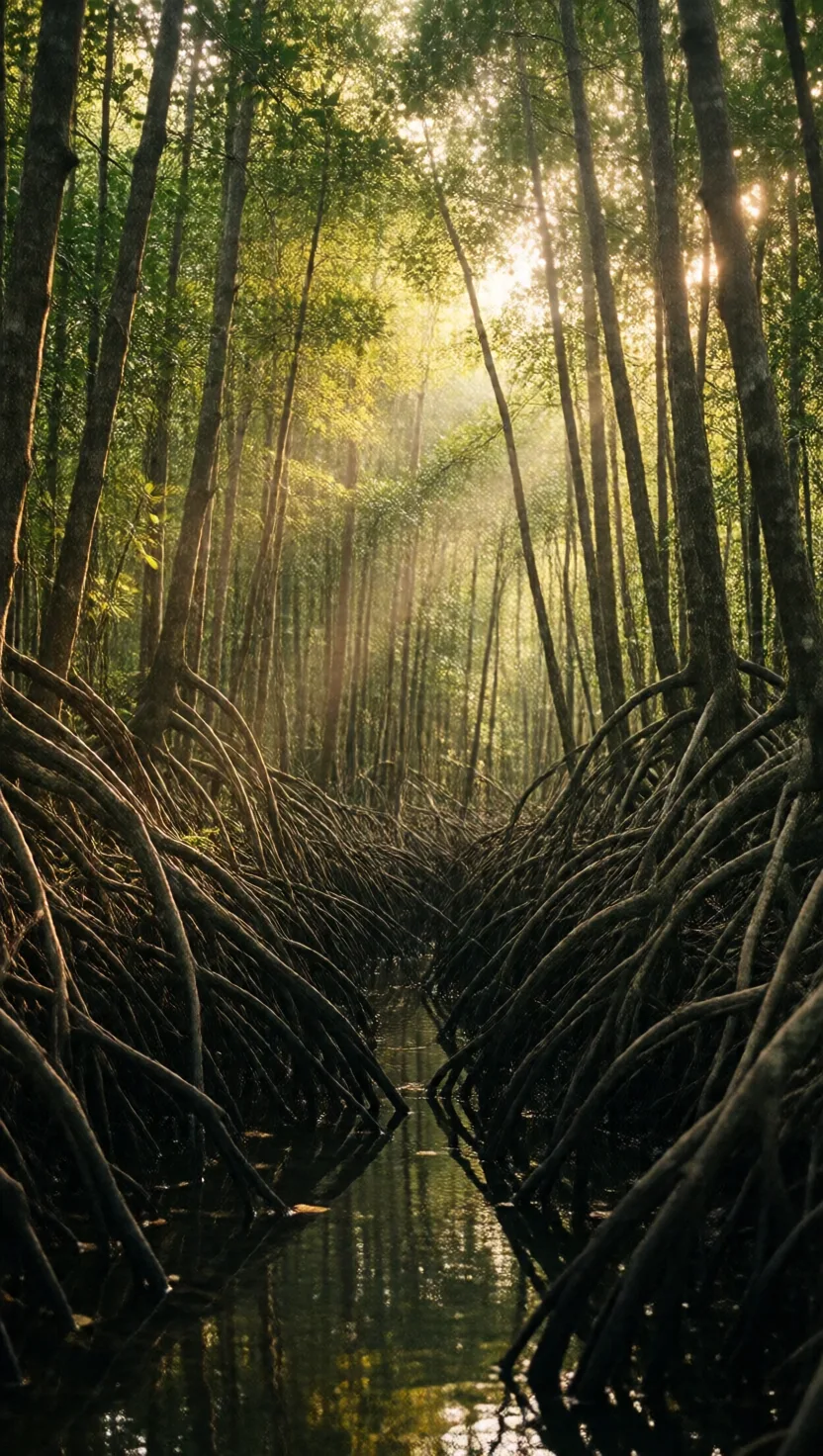
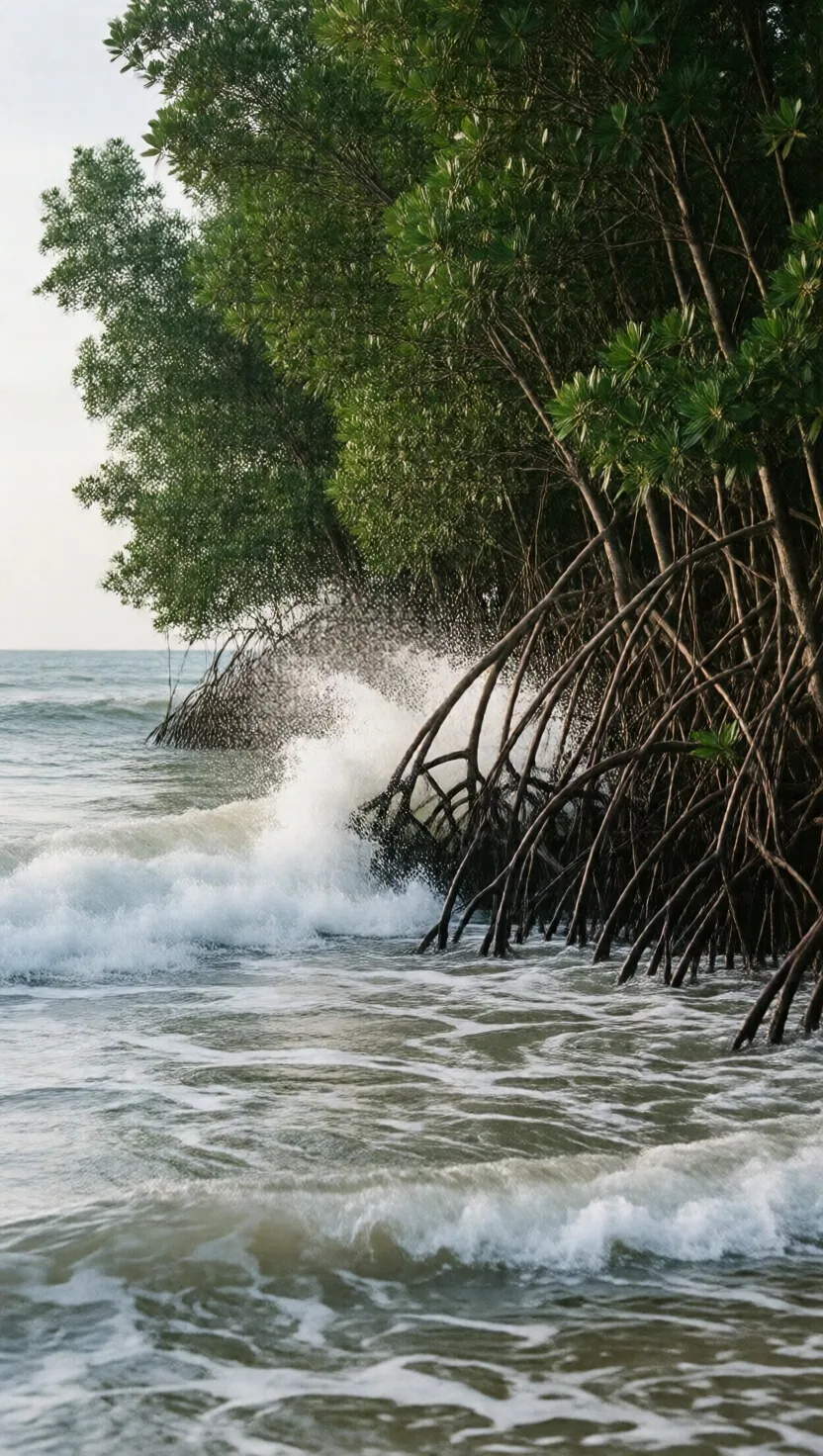
Mangroves are living seawalls. As waves push through the dense thicket of arching roots and trunks, the tangle drags hard on the moving water and bleeds off its energy: a band of mangroves just 100 metres wide can cut wave height by anywhere from 13 to 66 percent, and a kilometre of forest can shave tens of centimetres off a storm surge. Coastlines stripped of their mangroves flood far worse when a cyclone finally comes ashore.
tap →swipe ↑ for depthswipe ↓ to exit