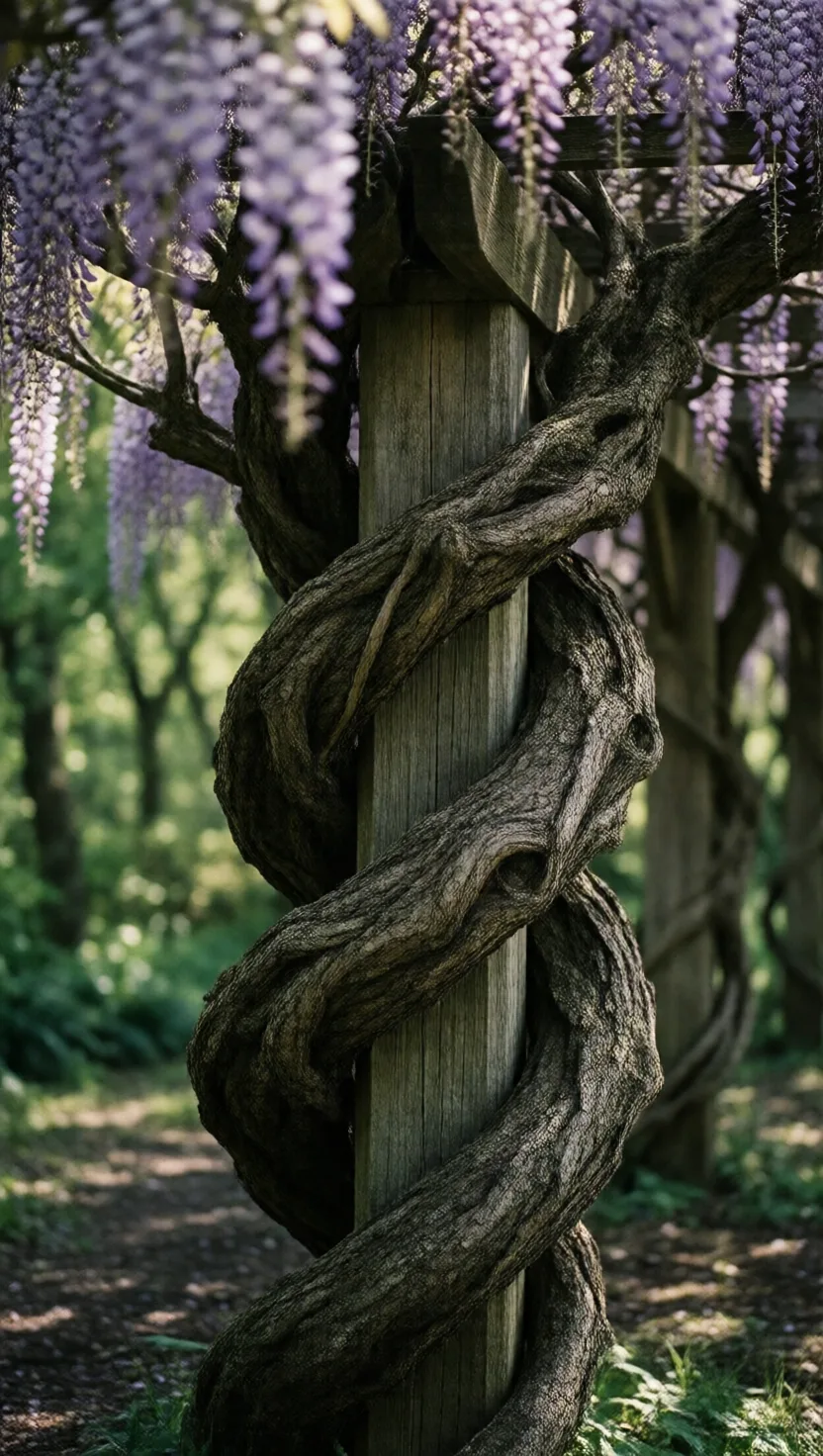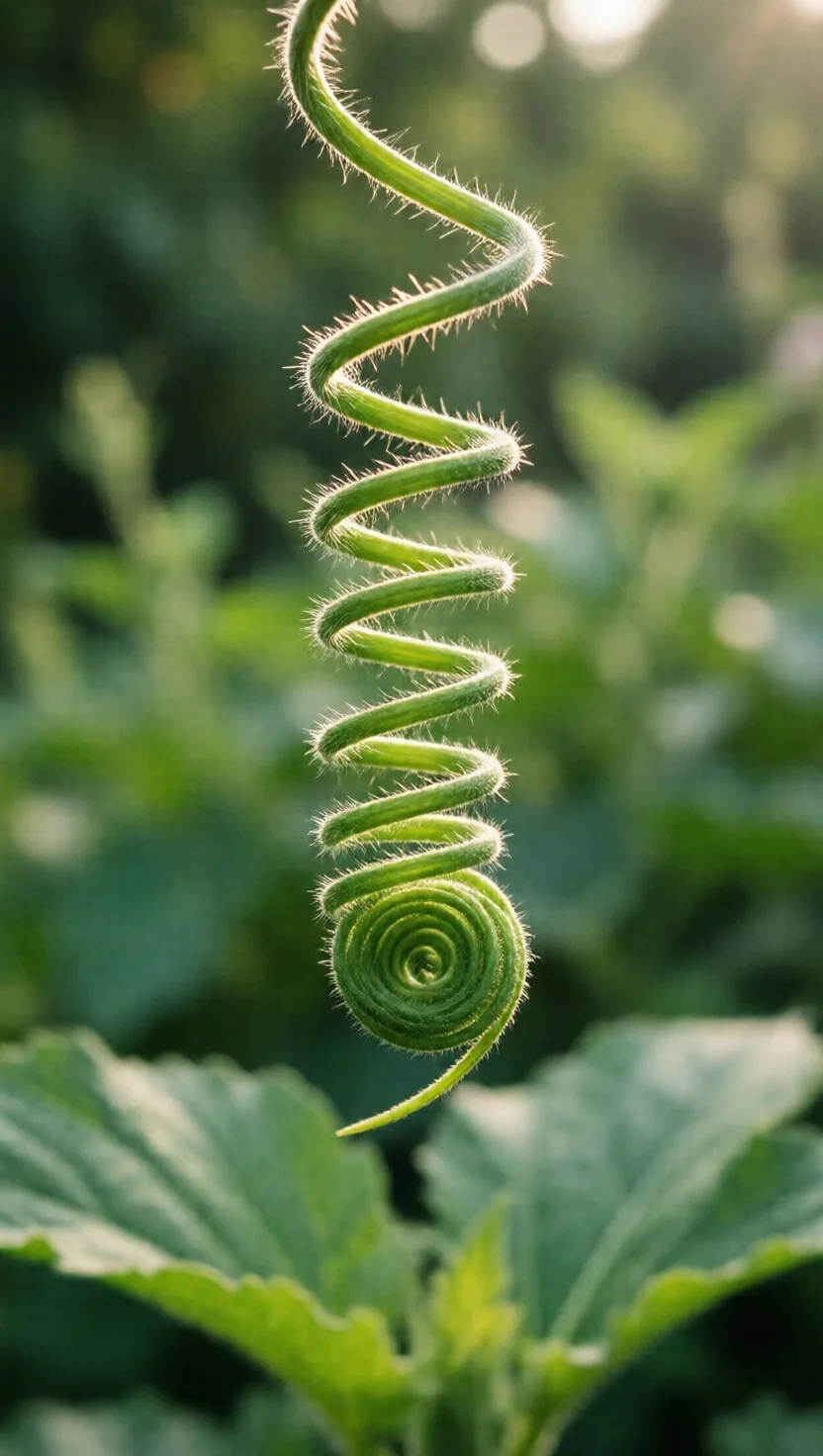
A pea tendril coils into a spring that reverses halfway
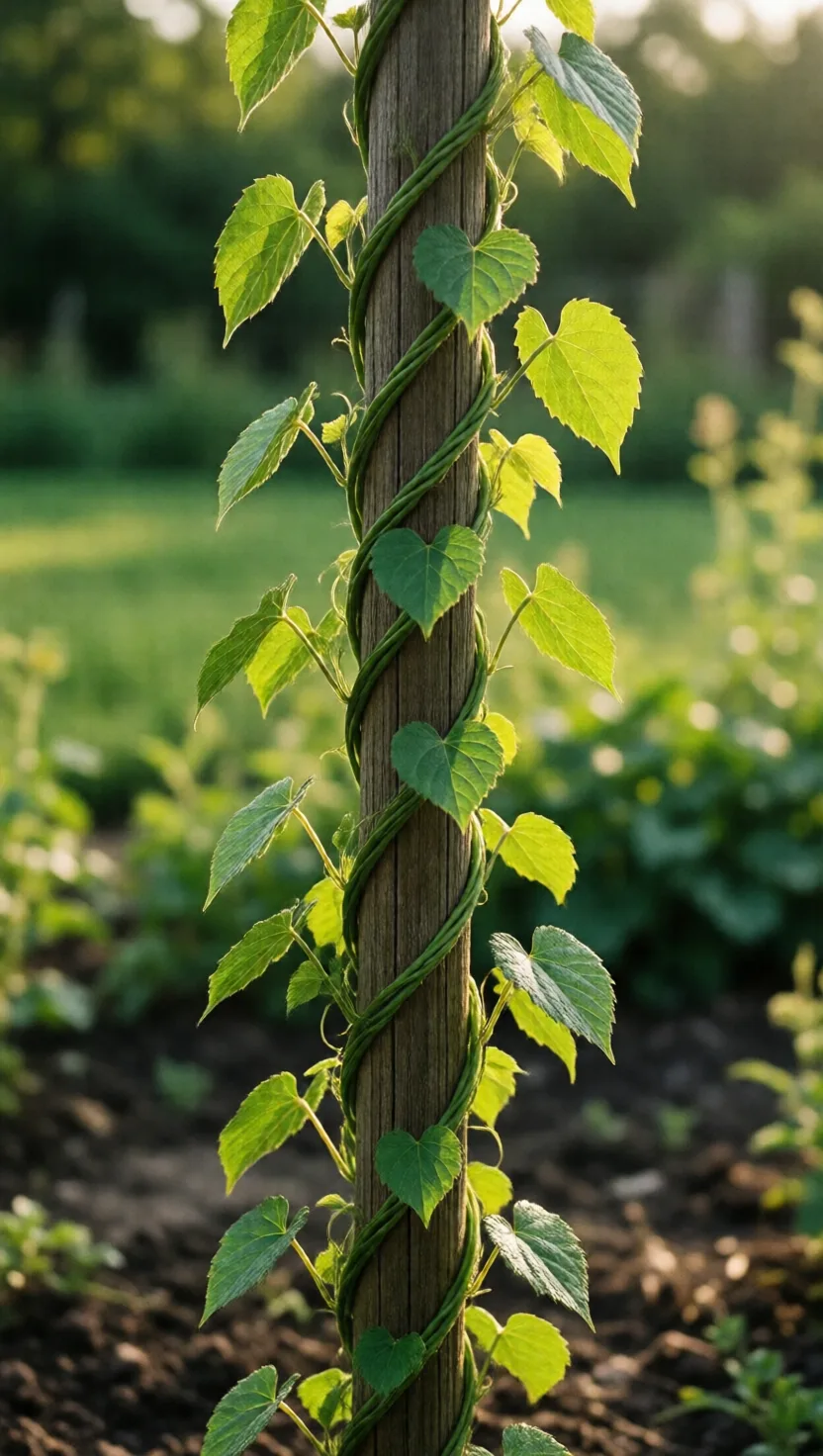
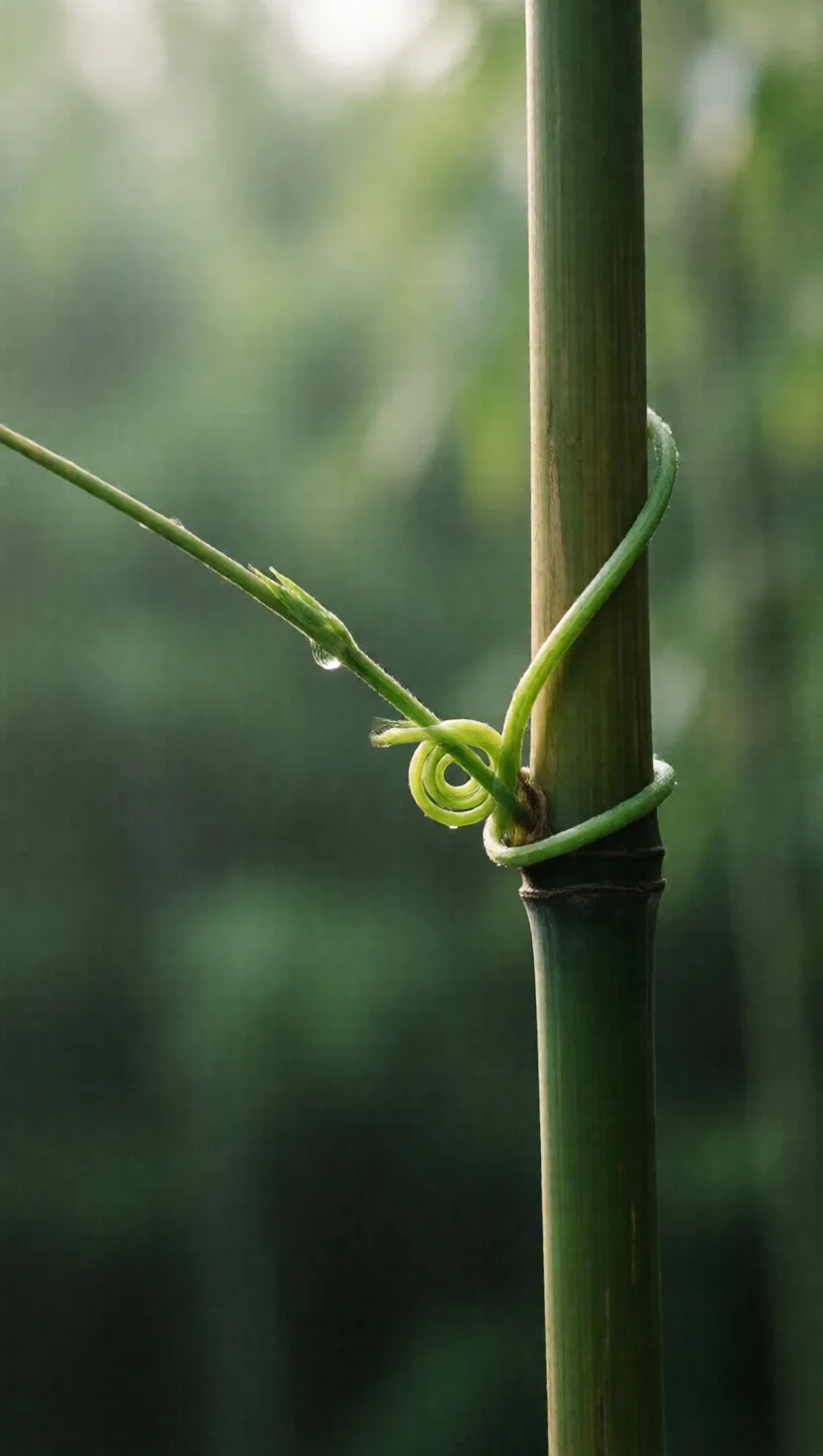
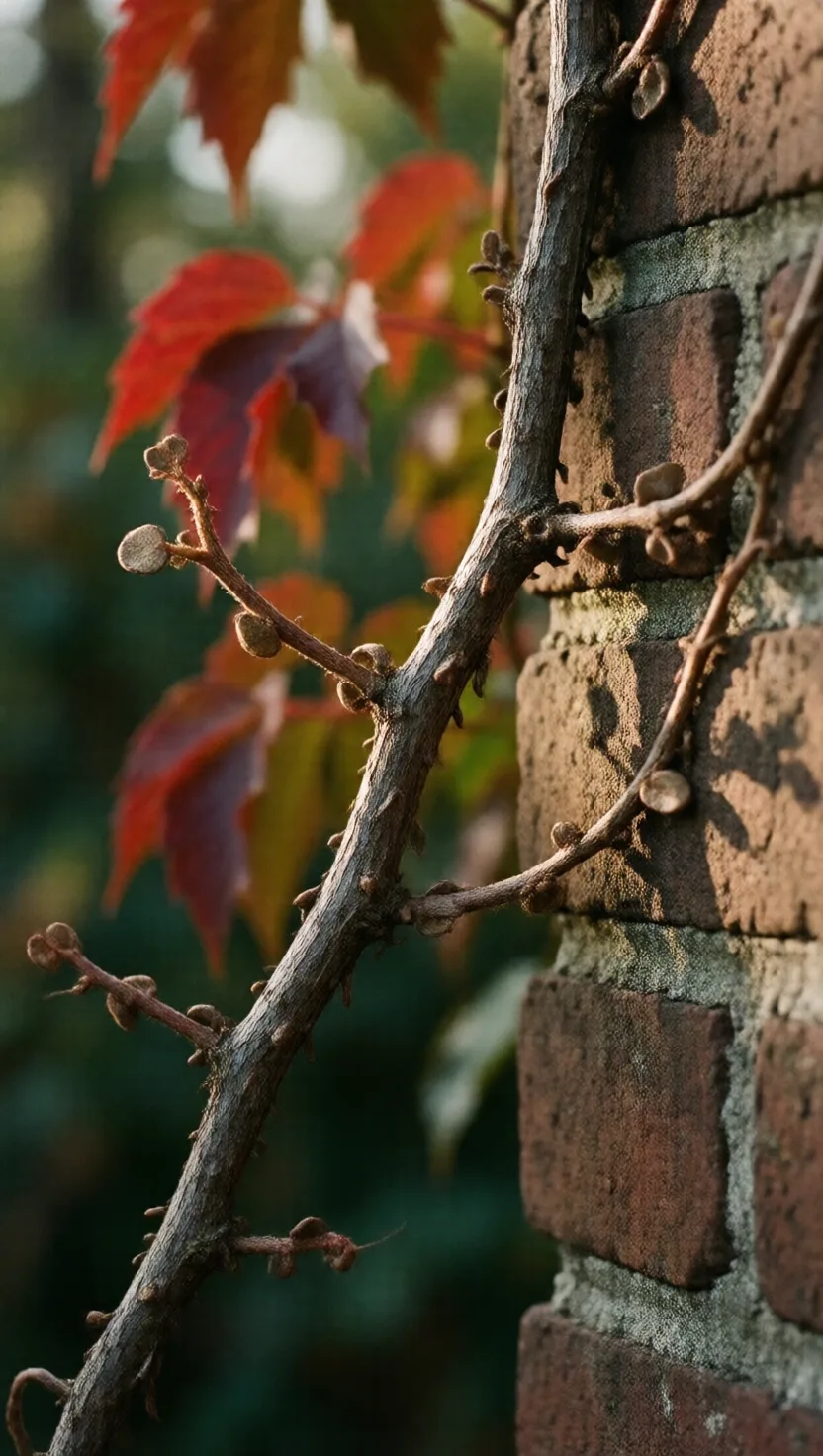
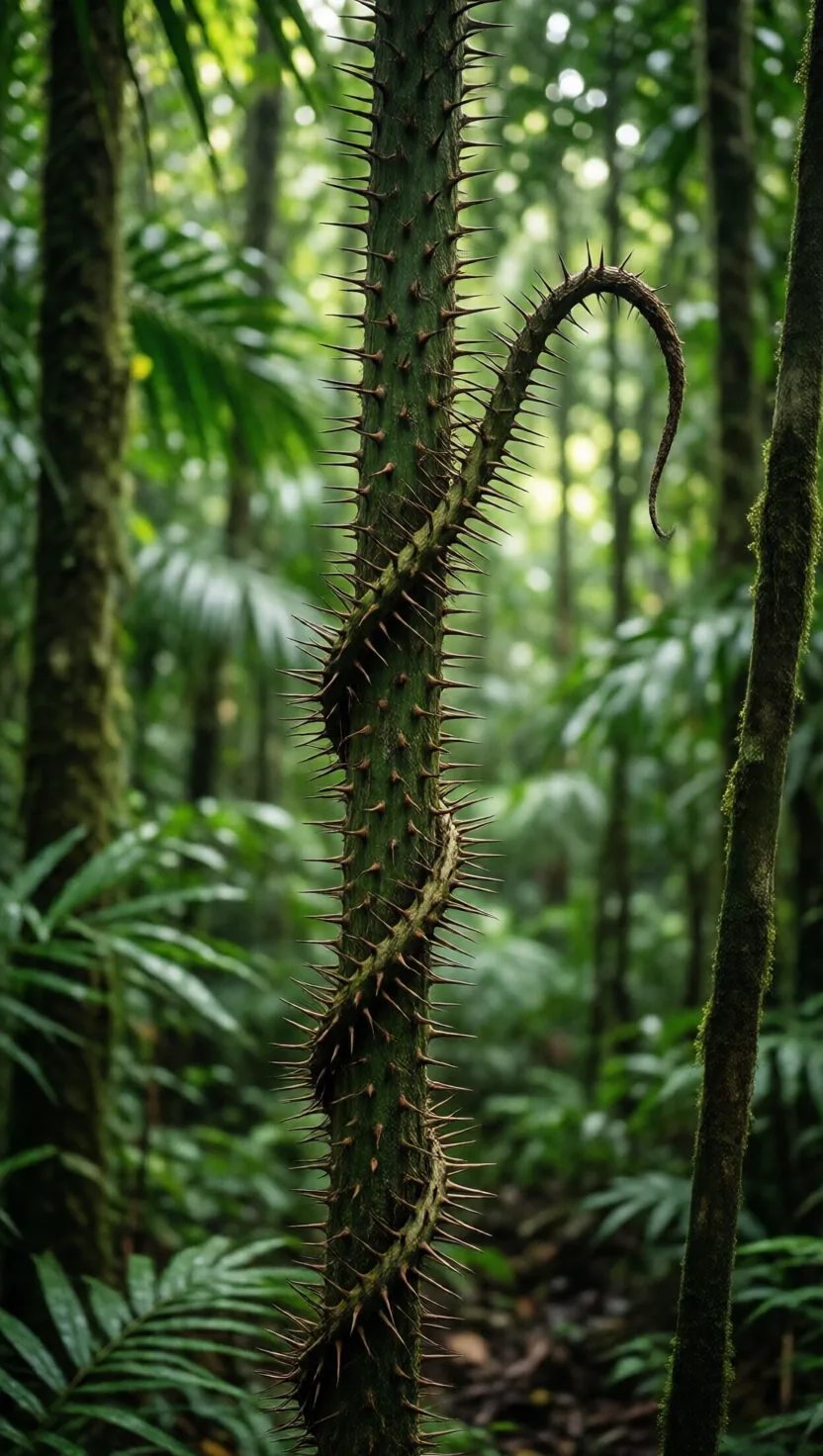
Once a climbing tendril has gripped a support at both ends, it cannot simply coil up — twisting the whole length would tear it apart. Instead it forms two opposite-handed helices that meet at a reversal point, called a perversion, leaving the net twist at zero. The result is a tiny double-handed spring that lets the plant ride out wind and tugging without snapping or unhooking. Darwin described it in 1865; physicists later showed it is simply the lowest-energy shape.