Eight things the anchor hides below the waterline

DC·221 Deep Cuts
The stockless anchor folds flat and pulls into the ship

The stockless anchor folds flat and pulls into the ship

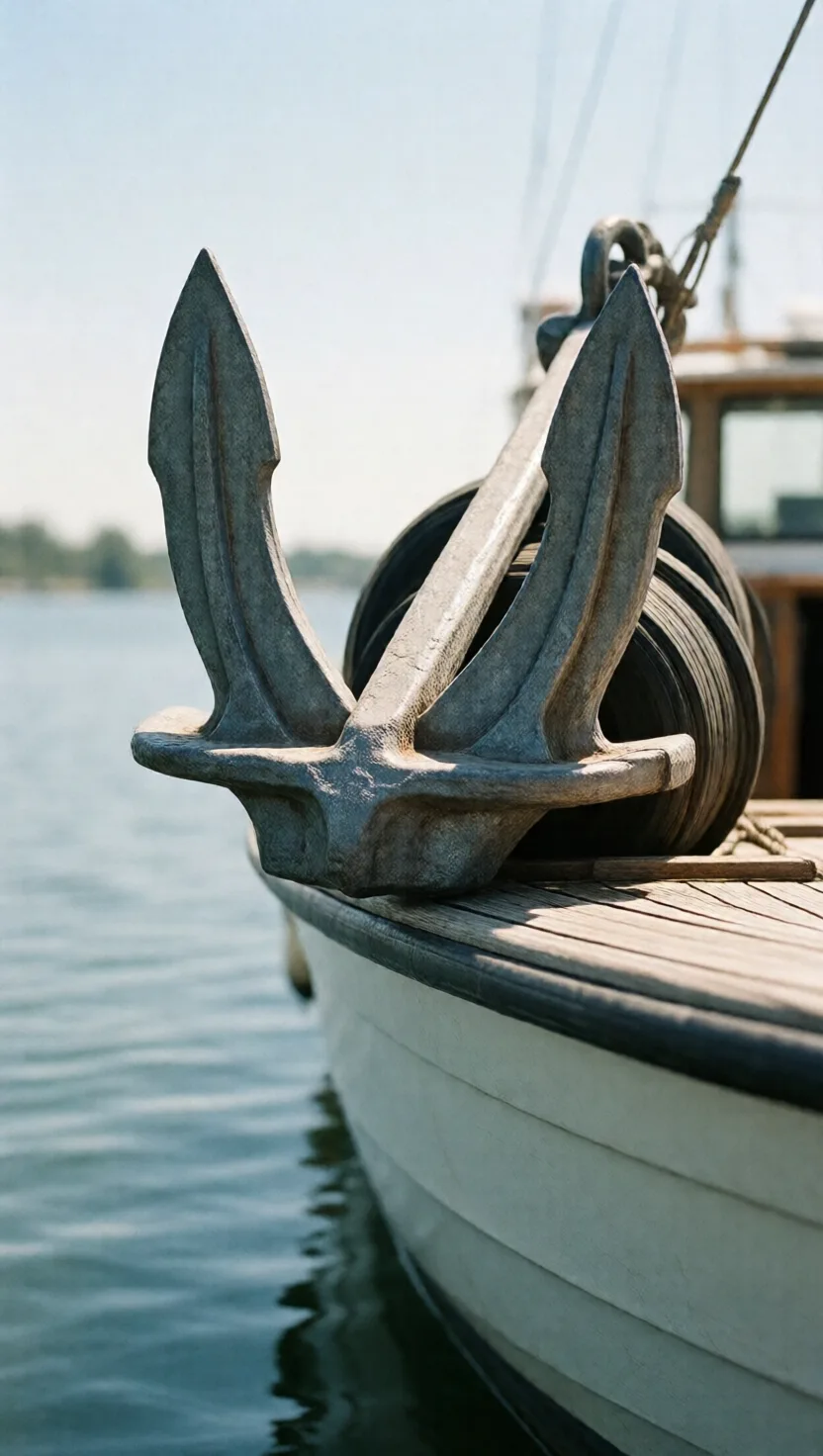
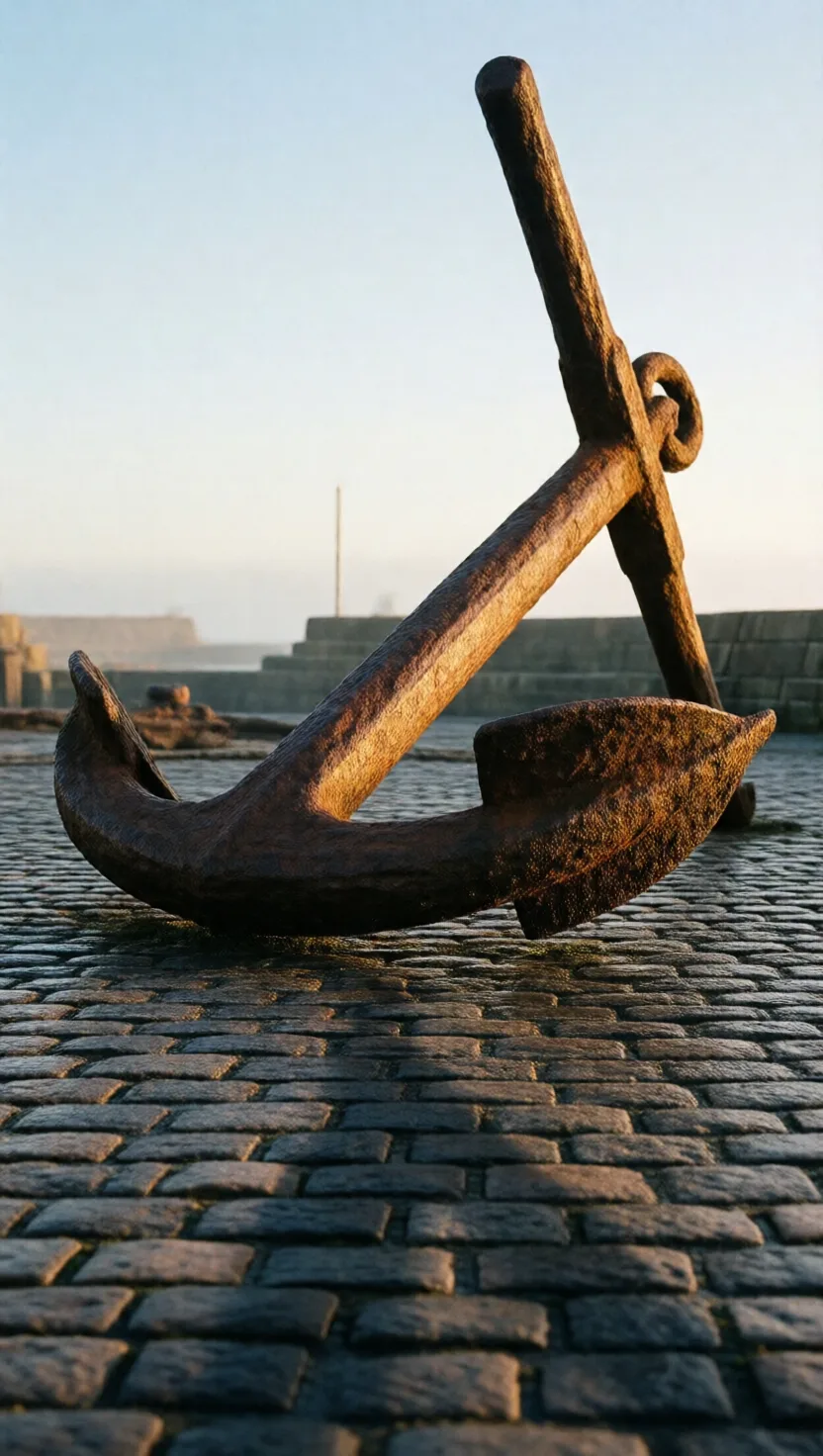
For thousands of years an anchor carried a 'stock' — a crossbar near the top — to roll it over so a fluke would bite the seabed. Then in 1821 came the stockless anchor: its flukes pivot on a hinge and tip down on their own, and with no crossbar in the way the whole thing can be hauled straight up into the hawsepipe and stowed flush against the bow. Easier to handle, it became the standard heavy anchor by the early 1900s.
An anchor grips by digging in, not by its weight

An anchor grips by digging in, not by its weight

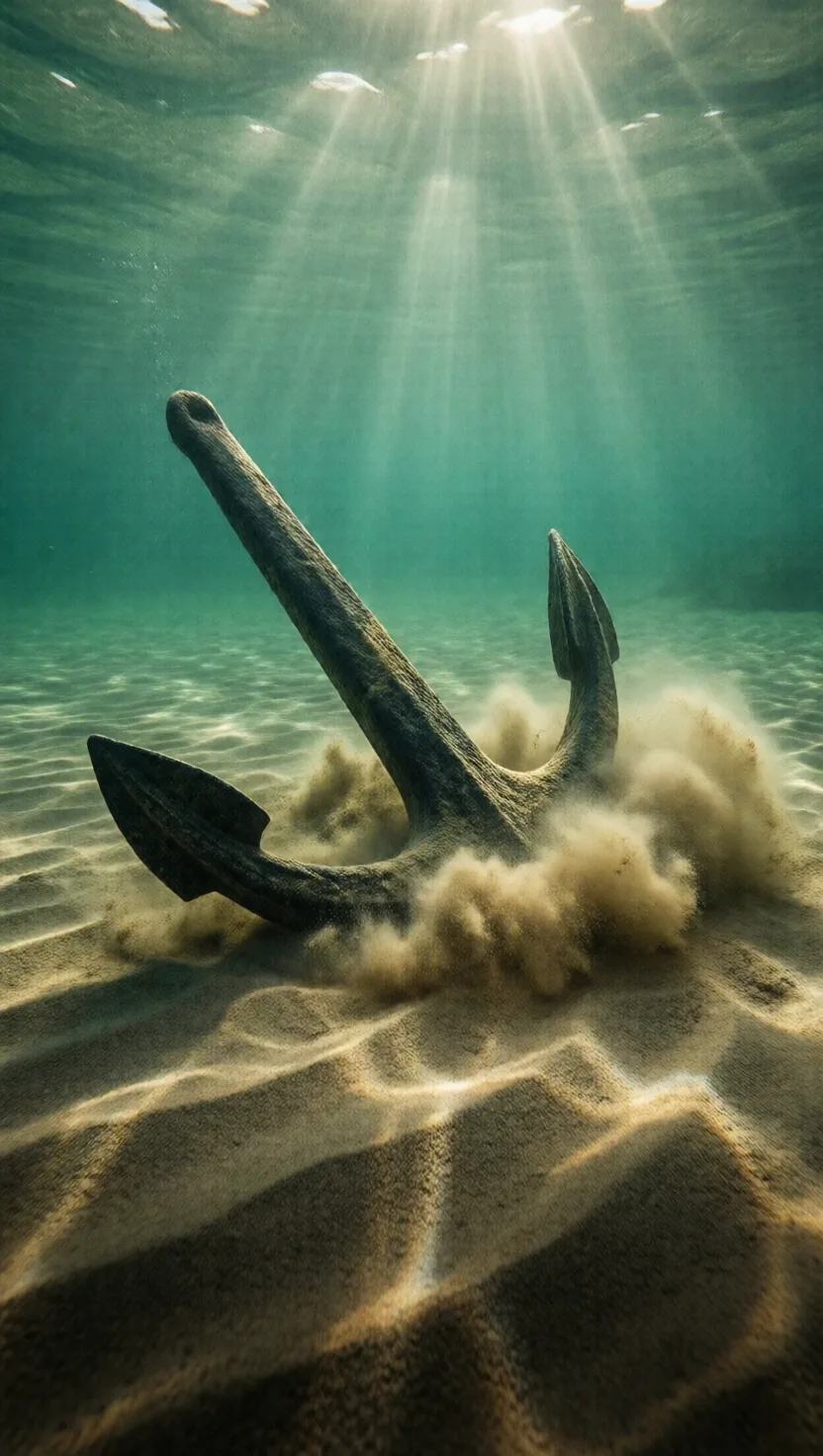
An anchor doesn't hold a ship by being heavy — it holds by burying itself. Once a fluke catches and drags below the surface, the seabed piled ahead of it and the suction around it do the real work, which is why a good anchor can hold something like 10 to 200 times its own weight in firm ground. Drop a dead weight of the same mass and the ship would simply drift; with no fluke to dig in, there is almost nothing to grip.
An anchor needs chain seven times the water's depth

An anchor needs chain seven times the water's depth

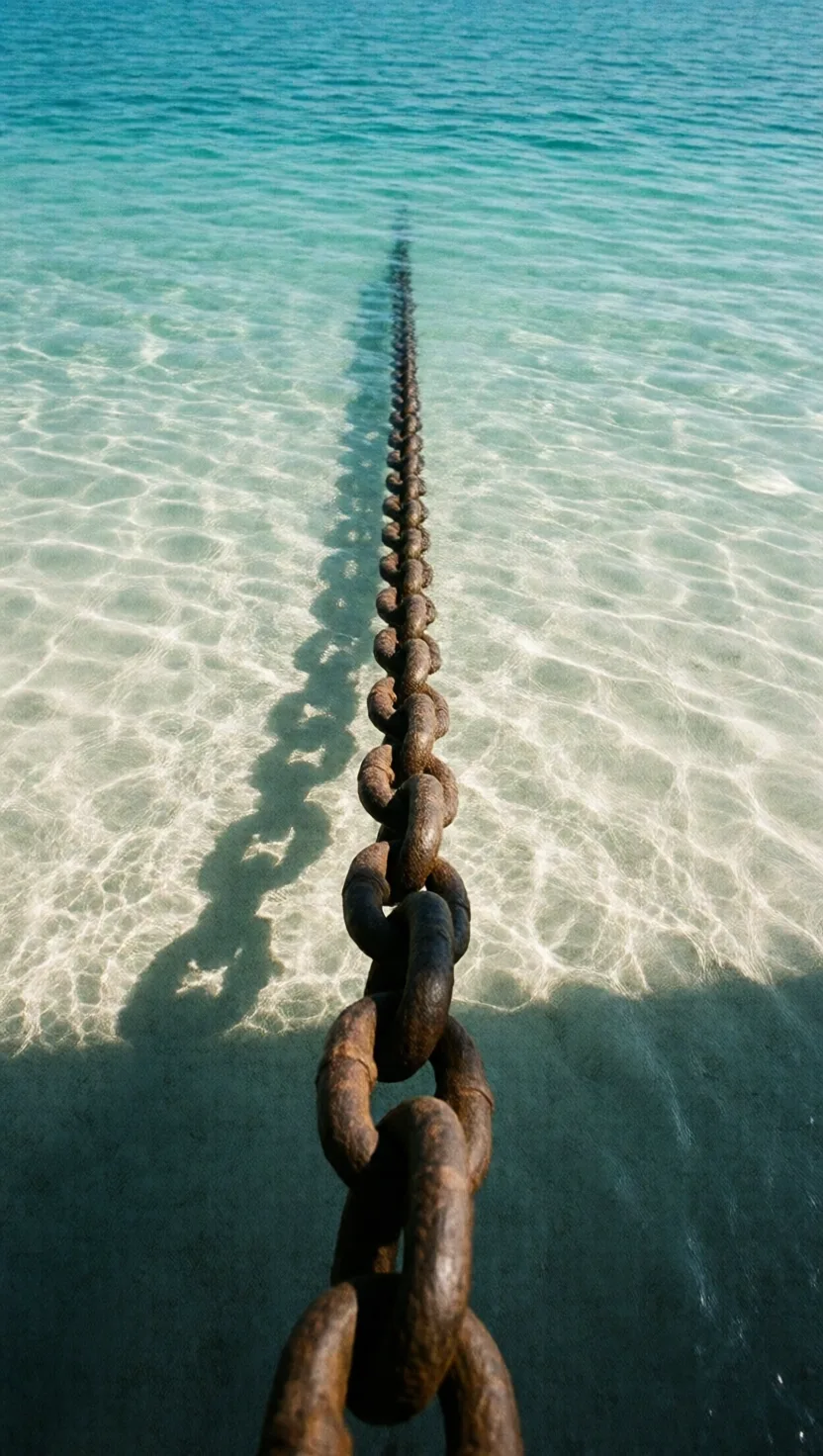
Letting out just enough chain to reach the bottom is how you lose a boat. Sailors pay out 'scope' — a length of chain several times the water's depth, classically about 7 to 1 — so the pull on the anchor stays nearly horizontal. A flat, sideways pull lets the fluke dig deeper and hold; a steep, upward pull would lever it straight back out of the seabed. The chain's own weight also sags into a curve that soaks up the tug of passing waves.
The mushroom anchor holds by sinking into mud

The mushroom anchor holds by sinking into mud

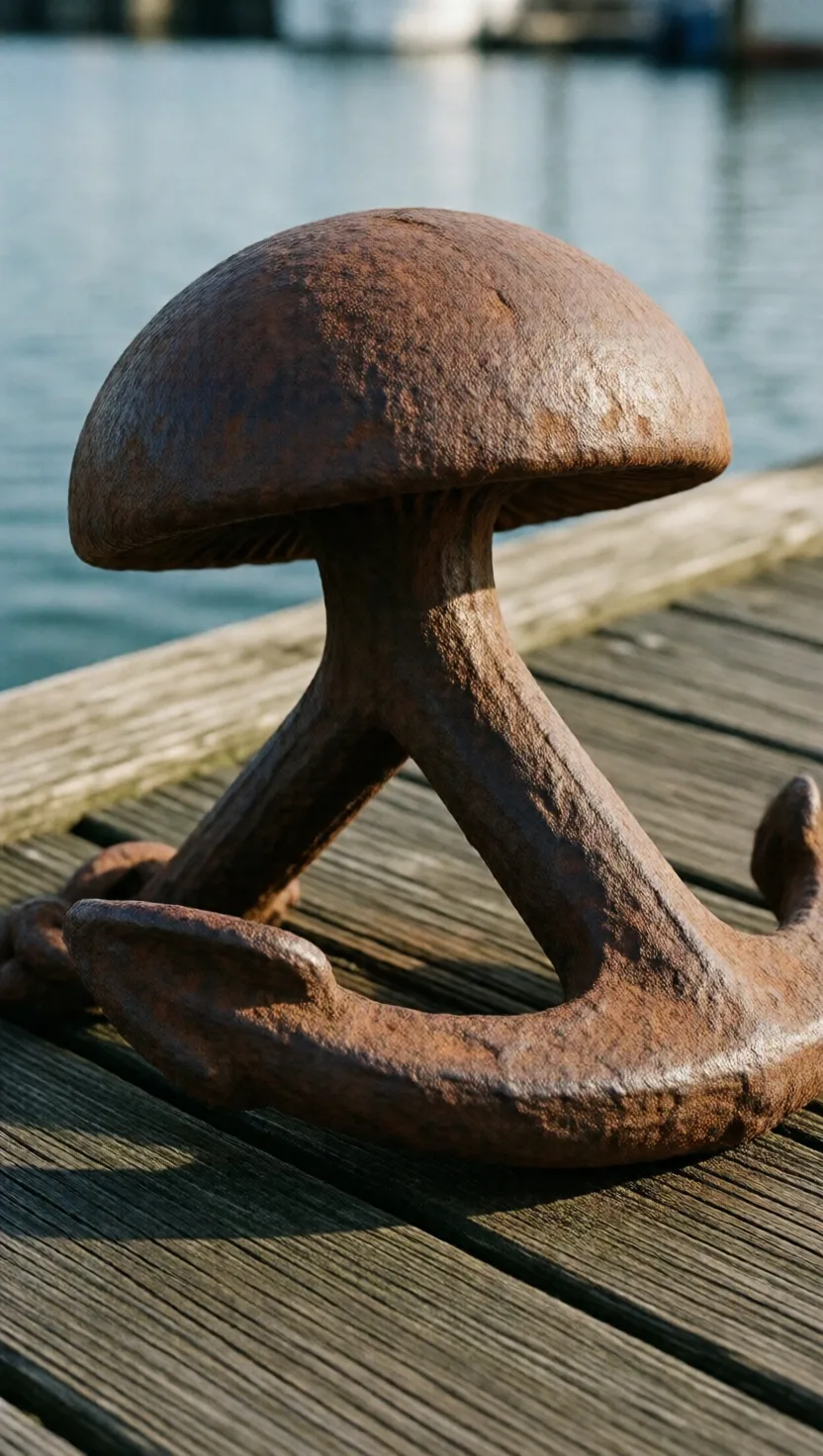
Shaped exactly like an upside-down mushroom, this anchor is built to be left in place for years. Its broad iron dome settles into a soft, muddy bottom and slowly works in until the silt above grips it with real suction — the longer it sits, the better it holds. That makes it the go-to for permanent moorings, buoys and anchored lightships. In rock or coarse sand, where it can't bury itself, it is nearly useless.
A flat war-built anchor out-holds ones twice its weight

A flat war-built anchor out-holds ones twice its weight

Designed in 1939 to drag stranded landing craft back off invasion beaches, the lightweight twin-fluke anchor was one of the first built to hold by shape rather than by mass. Two long, flat triangular flukes pivot off a bar at the base and slice deep into sand or mud, giving enormous grip for very little weight — so a small, easily carried anchor can hold a surprisingly large boat. It is now a favourite on small craft everywhere.
Anchor aweigh names the instant it leaves the seabed

Anchor aweigh names the instant it leaves the seabed

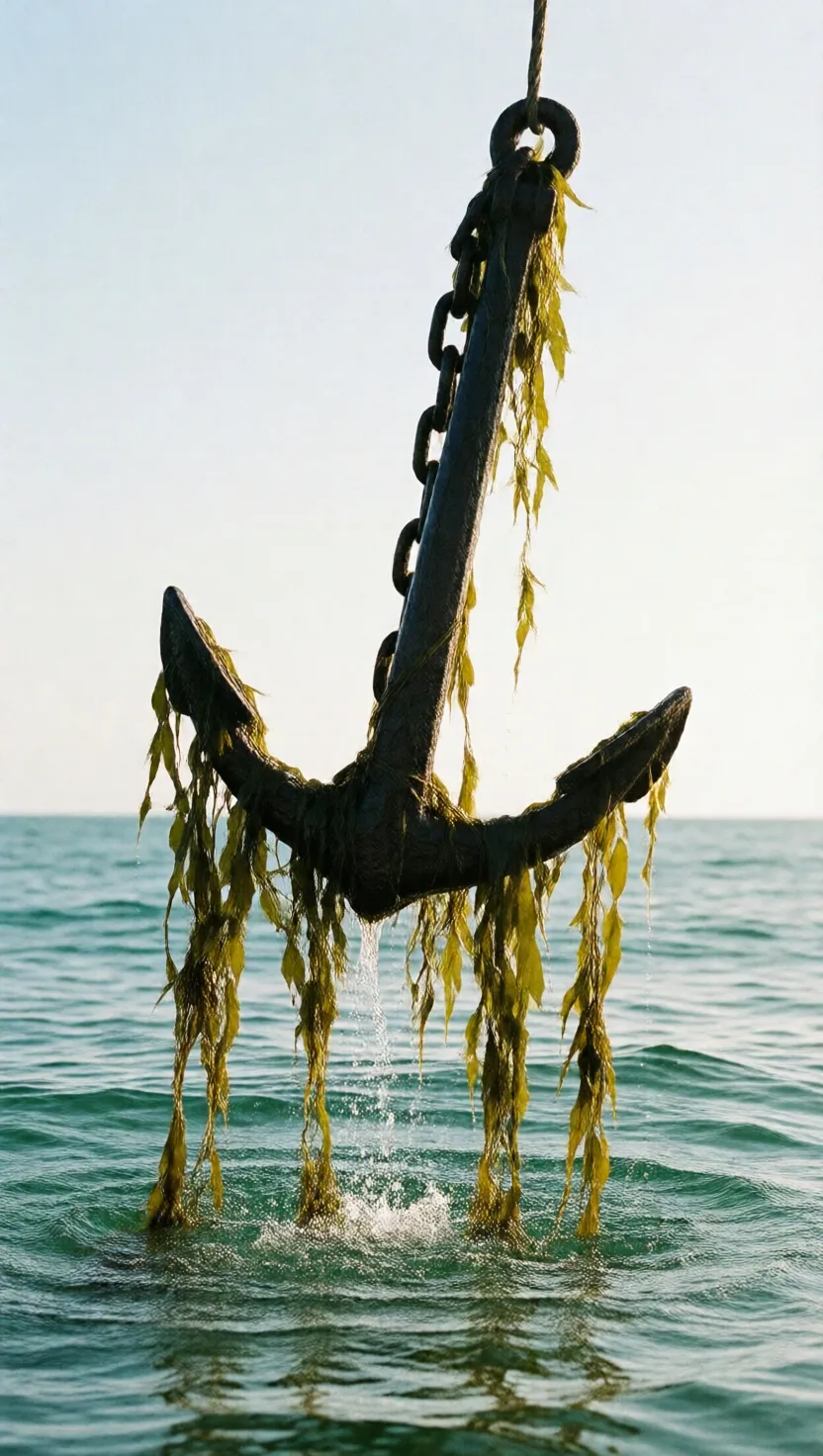
The old cry isn't 'anchors away' — it's 'aweigh', and it marks a precise moment. An anchor is aweigh the instant it breaks free of the bottom and hangs clear, its full weight now hanging on the chain. 'Weigh' here is the ancient sense of the word meaning to lift or bear a load, the same root as 'weight' itself. So to weigh anchor is literally to hoist it up; the ship is free to move the moment the anchor is aweigh.
A killick is an anchor that's just a lashed-up stone

A killick is an anchor that's just a lashed-up stone

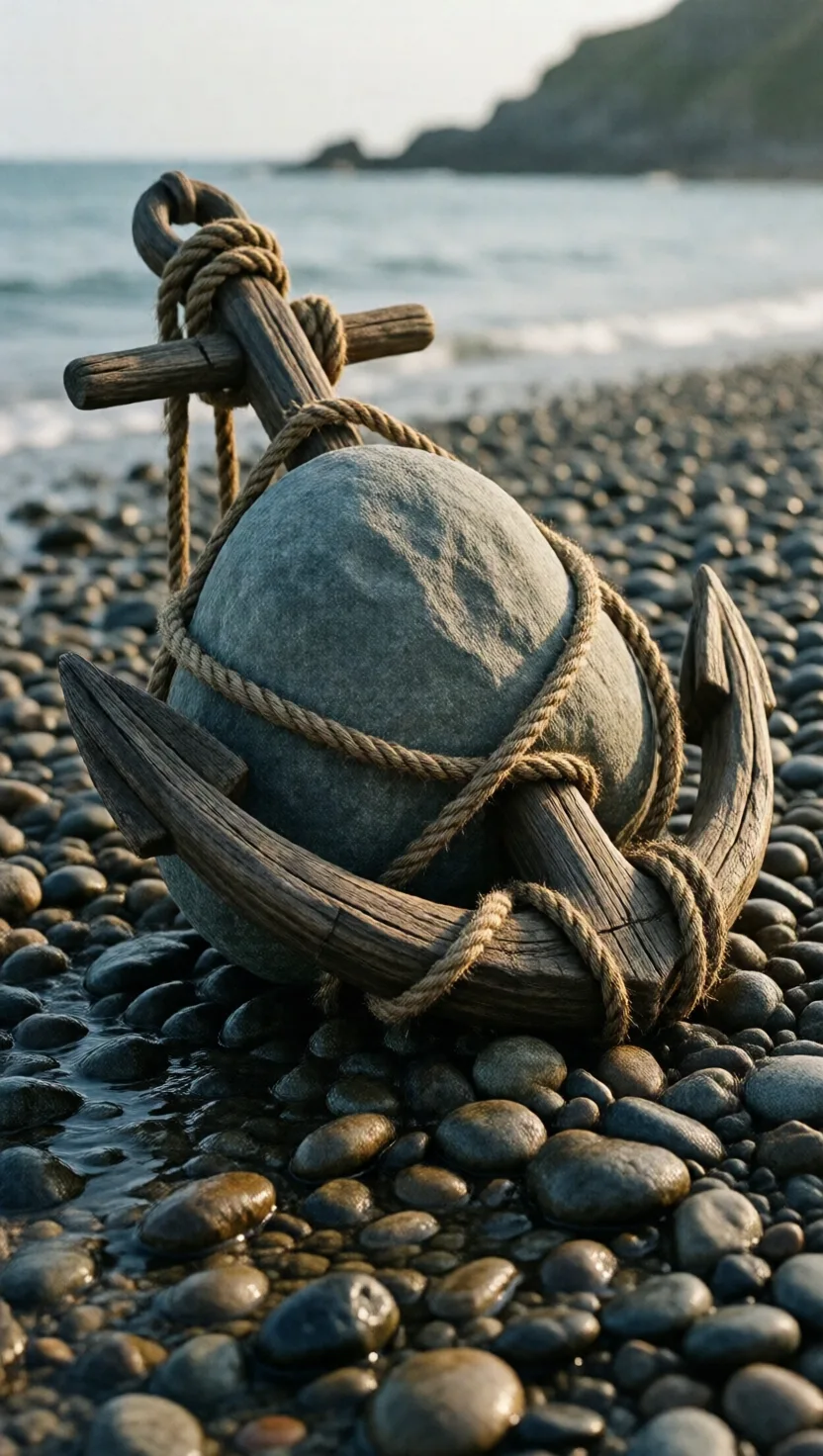
Before iron, small boats anchored with a killick — a heavy stone, often caged in a frame of splayed wooden arms that catch the bottom. The design is so simple and effective that versions are still used in places today. The word lingered in sailors' slang: in some navies a 'killick' even came to mean a junior leading rank, named after the small fouled-anchor badge once worn on the sleeve.
The fouled anchor: a sailor's dread turned proud badge

The fouled anchor: a sailor's dread turned proud badge

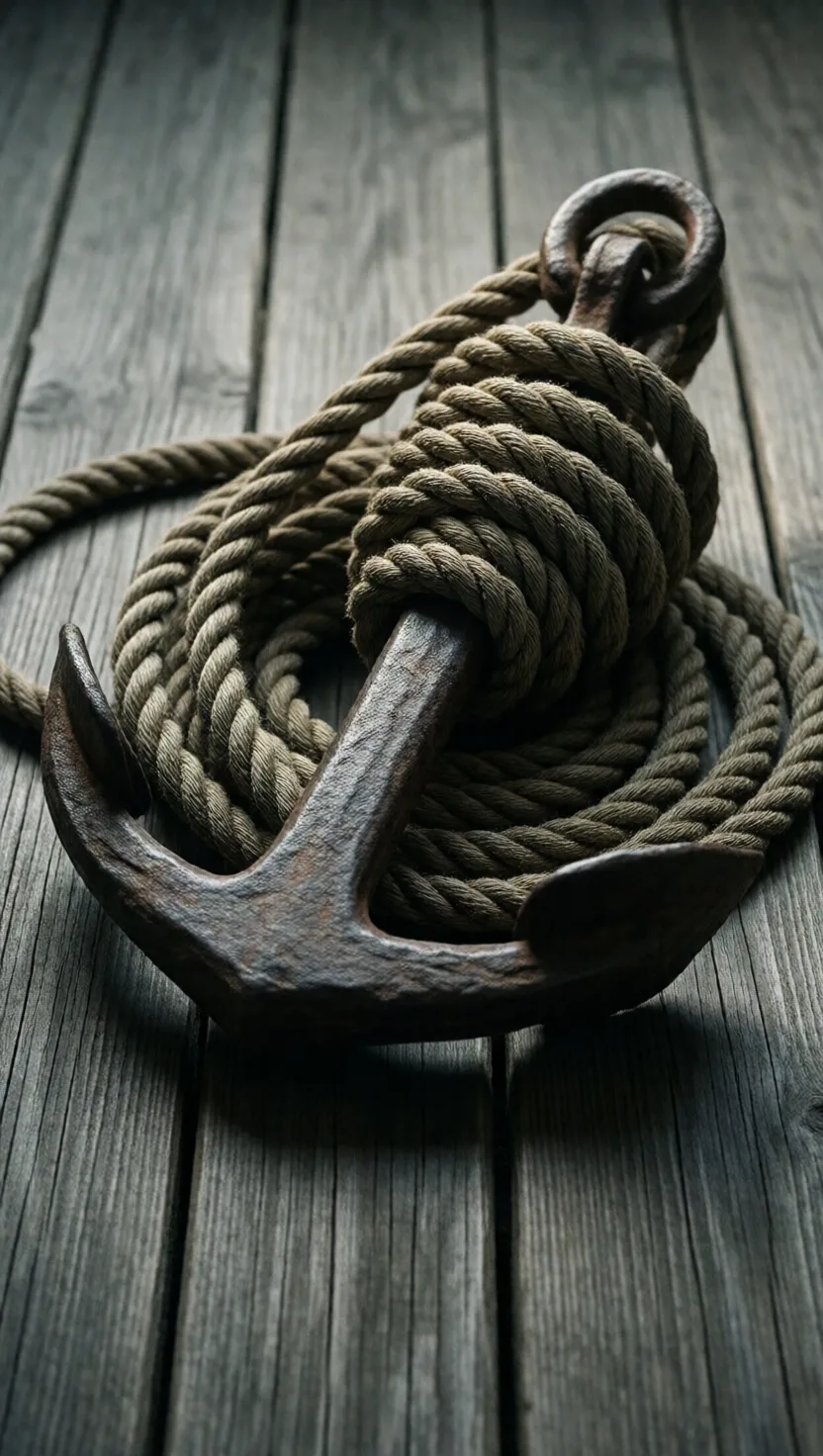
An anchor wrapped in its own rope or chain is called 'fouled', and at sea it's bad news — a tangled anchor is hard, sometimes dangerous, to raise. Yet that very image, the snarled anchor, has been a proud naval emblem for more than 500 years, adopted as an admiral's seal back in the late 1500s and still worn on badges and crests today. It's a symbol born, oddly, from the one thing every sailor hopes never happens.
tap →swipe ↑ for depthswipe ↓ to exit