Eight things about shells and the mollusks that build them

DC·22 Deep Cuts
The strongest natural material is a limpet's tooth

The strongest natural material is a limpet's tooth

Limpets graze algae off rock with a tongue-ribbon studded with rows of microscopic teeth. In 2015, University of Portsmouth researchers gripped slivers of one tooth under an atomic-force microscope and pulled until it broke, measuring a tensile strength of 3 to 6.5 gigapascals, edging past spider silk and rivaling the best carbon fiber. The strength comes from goethite, an iron mineral grown as nanofibers packed in soft protein, so fine the material does not weaken as it gets bigger.
A scallop watches you with 200 mirror eyes

A scallop watches you with 200 mirror eyes

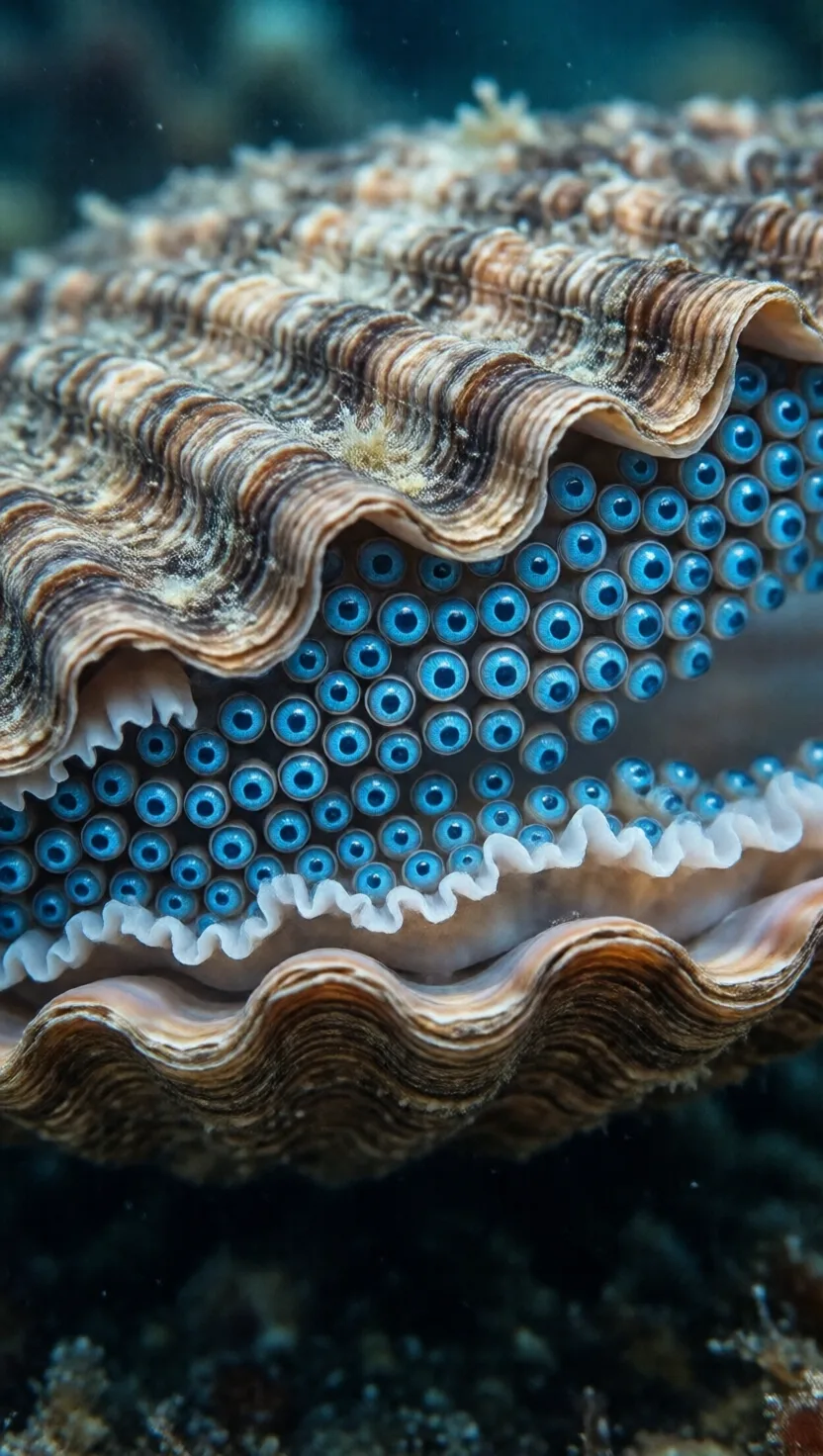
Along the rim of a scallop's mantle sit up to 200 tiny, brilliant-blue eyes. They do not focus with a lens, the way ours do. Each one uses a curved mirror, like a reflecting telescope, built from millions of flat square crystals of guanine tiled into a near-perfect mosaic and stacked 20 to 30 layers deep. The mirror bounces light back onto a double retina. Scientists only resolved the square-crystal structure in 2017.
A nautilus rises and sinks like a submarine

A nautilus rises and sinks like a submarine

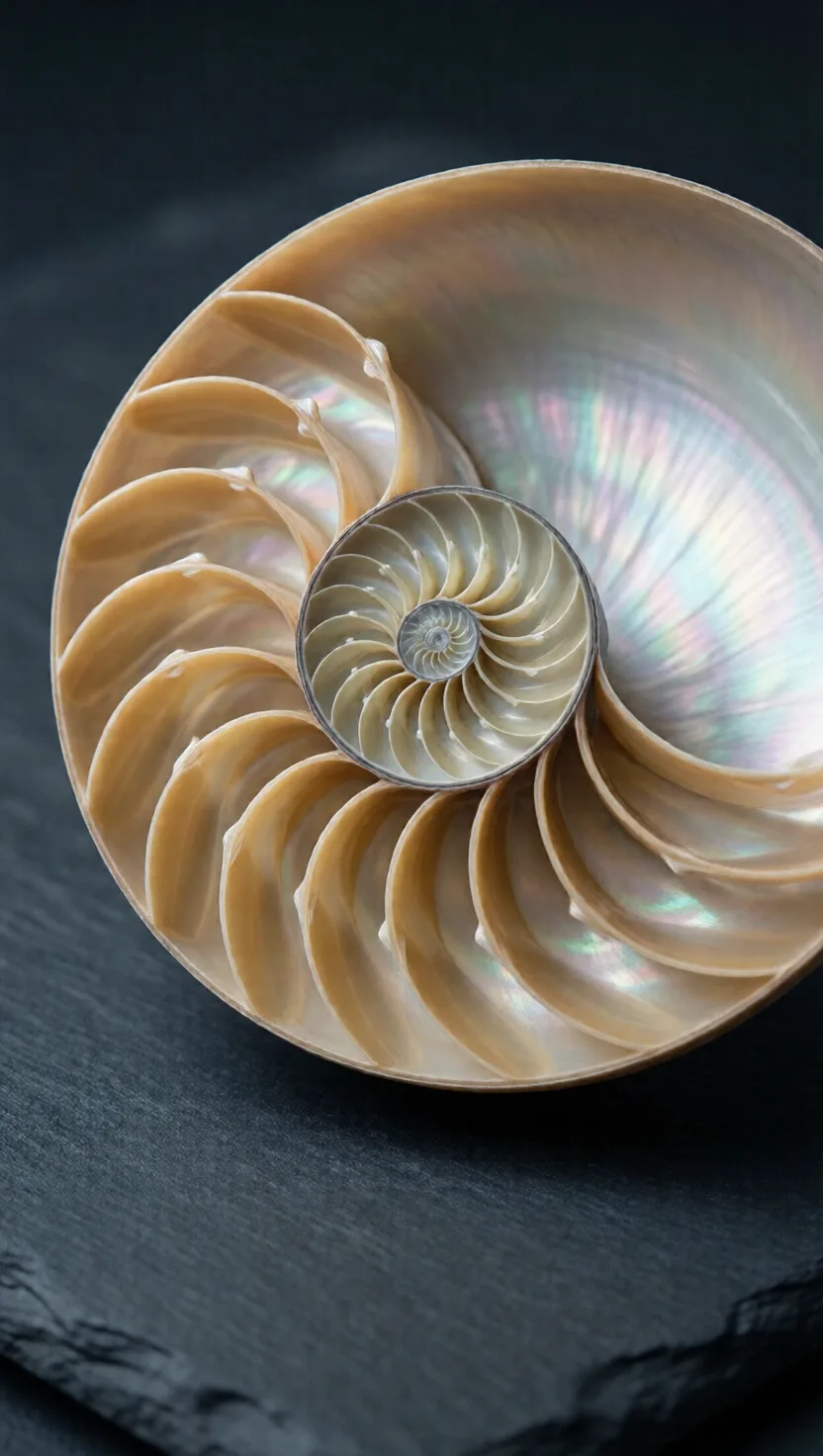
The chambered nautilus has barely changed in 500 million years. Its coiled shell is divided into more than 30 sealed gas chambers, threaded by a living tube called the siphuncle. To rise or sink, the animal pumps fluid into or out of those chambers, trading liquid for gas, exactly the balancing act a submarine performs with its ballast tanks. That lets it hover almost weightless in deep water and jet backward by squirting water from its body.
This dye once cost more than its weight in gold

This dye once cost more than its weight in gold

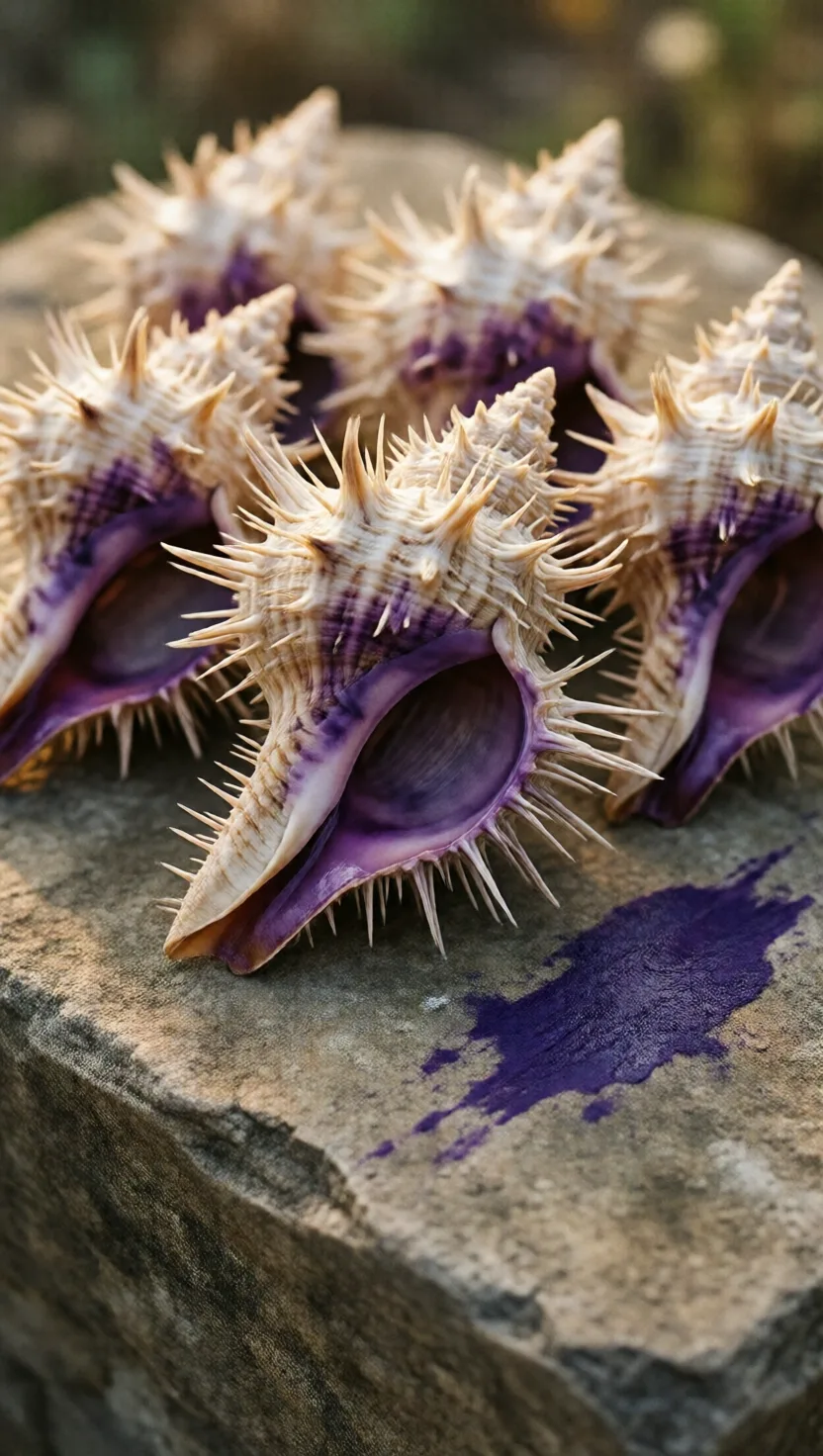
For three thousand years, royal purple came from a gland inside spiny murex sea snails. The pale fluid darkens to deep violet only once sunlight hits it, but each snail yields a mere trace, so it took roughly 10,000 of them to make a single gram of dye. That made the color worth more than gold and reserved it for emperors. A German pigment maker still sells the genuine article today for about 2,500 euros a gram.
This snail's harpoon became a non-addictive painkiller

This snail's harpoon became a non-addictive painkiller

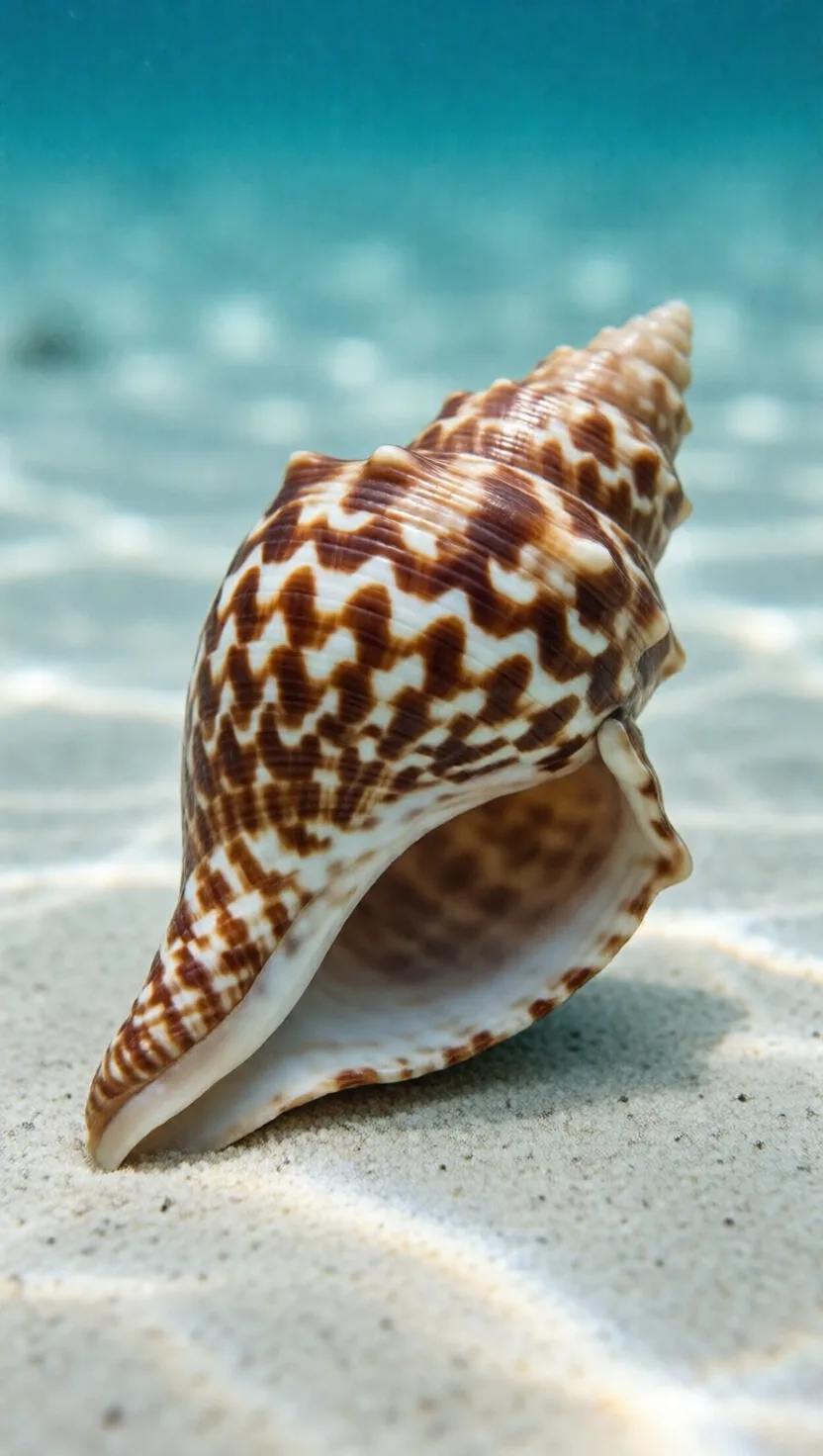
Cone snails hunt fish by firing a hollow, harpoon-like tooth loaded with venom. One peptide from the cone snail Conus magus blocks a calcium channel on spinal nerves, switching off pain signals at the source. Synthesized as the drug ziconotide, it reached patients in 2004, the first medicine ever approved from an ocean animal. It is estimated to be around 1,000 times as powerful as morphine for severe pain, and it does not cause addiction.
A golden silk is spun from a clam's anchor threads

A golden silk is spun from a clam's anchor threads

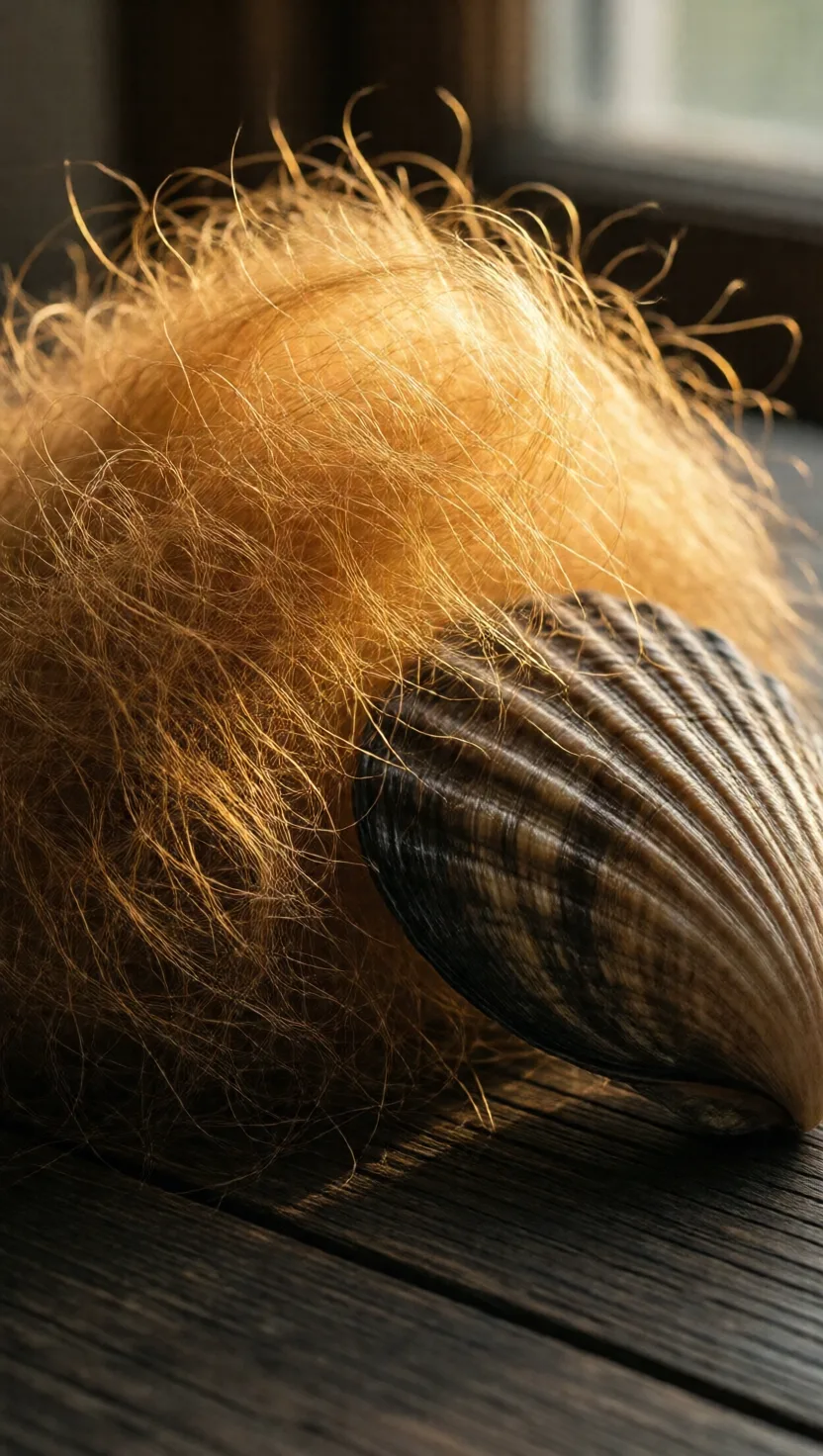
Pen shells, the Mediterranean's largest bivalves, fasten themselves to the seabed with fine fibers called byssus. Harvested and combed, those threads can be woven into sea silk, a fabric so light and naturally golden that ancient writers spun legends around it. The craft has nearly vanished. Today perhaps one woman in Sardinia still knows it, taught across 28 generations of her family, and by her tradition the cloth may only be gifted, never sold.
Mother-of-pearl is mostly chalk, yet nearly uncrackable

Mother-of-pearl is mostly chalk, yet nearly uncrackable

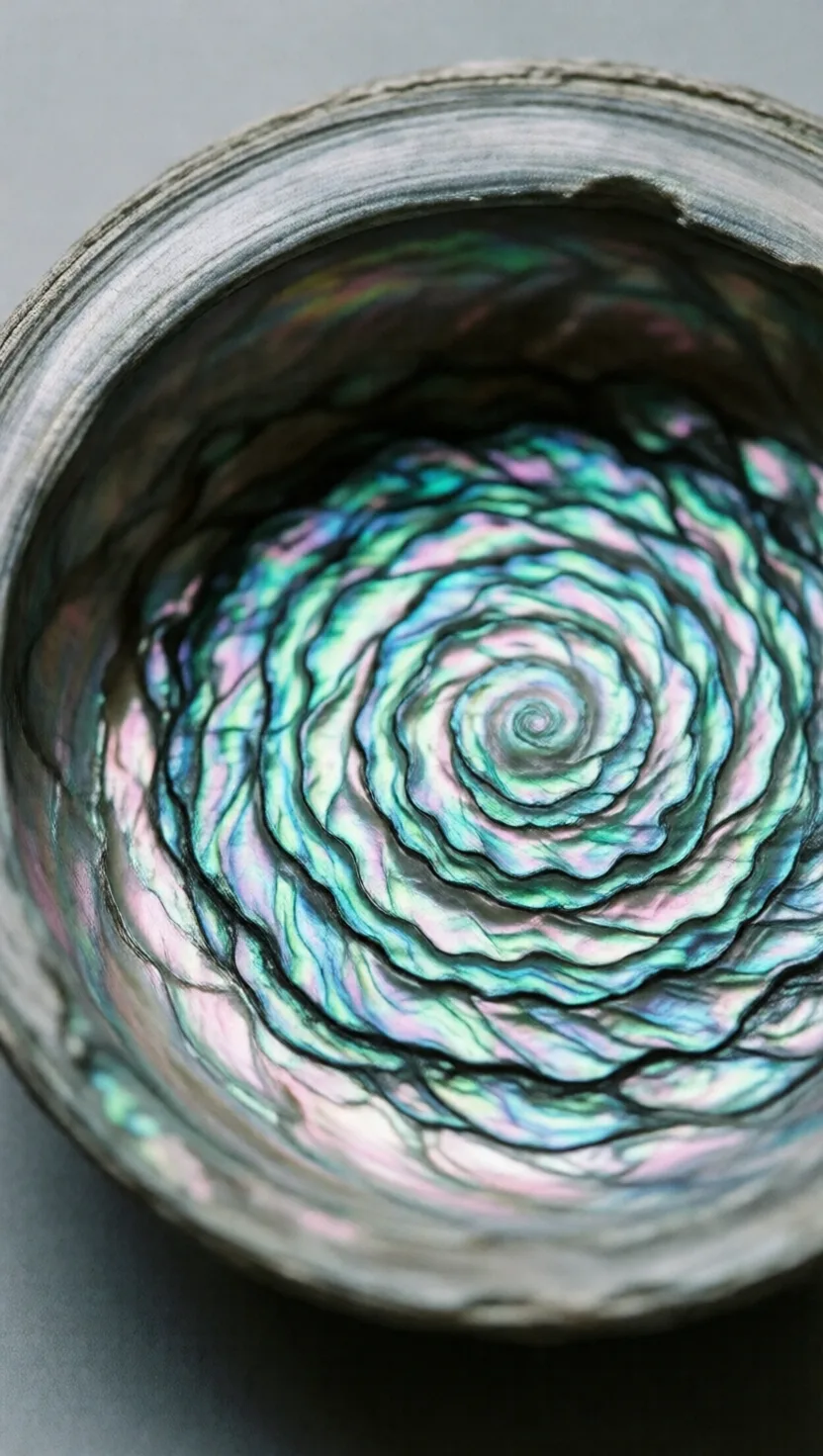
An abalone's iridescent lining is about 95 percent aragonite, the same brittle mineral as blackboard chalk. Yet the shell is thousands of times harder to crack. The secret is architecture: microscopic mineral bricks are stacked and cemented with thin layers of stretchy protein mortar. When a crack tries to spread, the protein absorbs the energy and forces the crack to detour around each tile, so it stalls instead of splitting straight through.
This snail sails the sea on a raft of its own bubbles

This snail sails the sea on a raft of its own bubbles

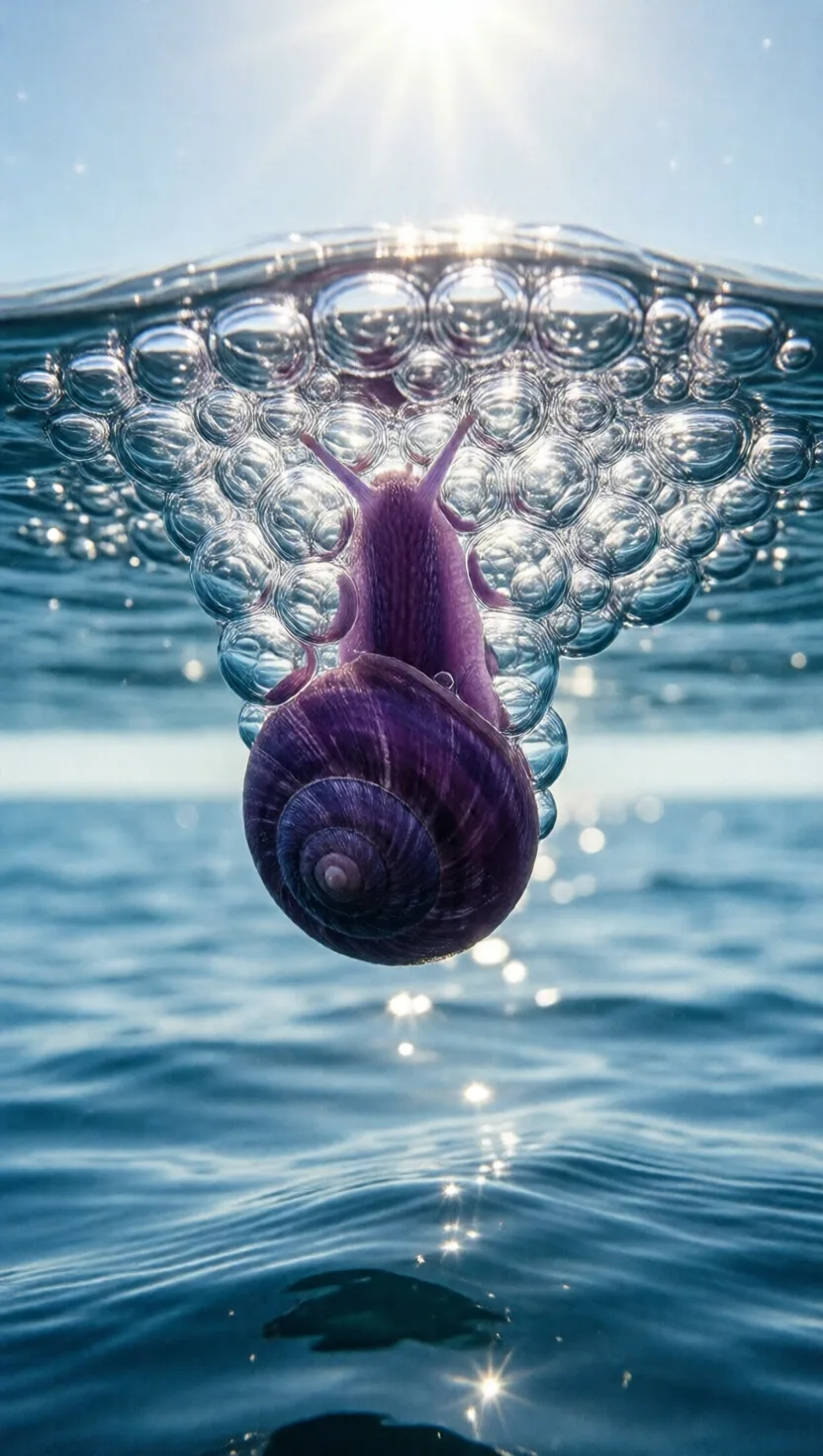
The violet sea snail spends its whole life adrift at the ocean surface, hanging upside down beneath a raft of bubbles it makes itself, trapping air in mucus that hardens into a buoyant float. Its purple shell is darkest underneath, so seabirds looking down see dark water and fish looking up see bright sky. It cannot swim, so if it loses the raft it sinks and drowns. It drifts at the mercy of the wind, feeding on the by-the-wind sailors it bumps into.
tap →swipe ↑ for depthswipe ↓ to exit