Eight things the river giant keeps quiet

DC·216 Deep Cuts
It sweats its own red sunscreen

It sweats its own red sunscreen

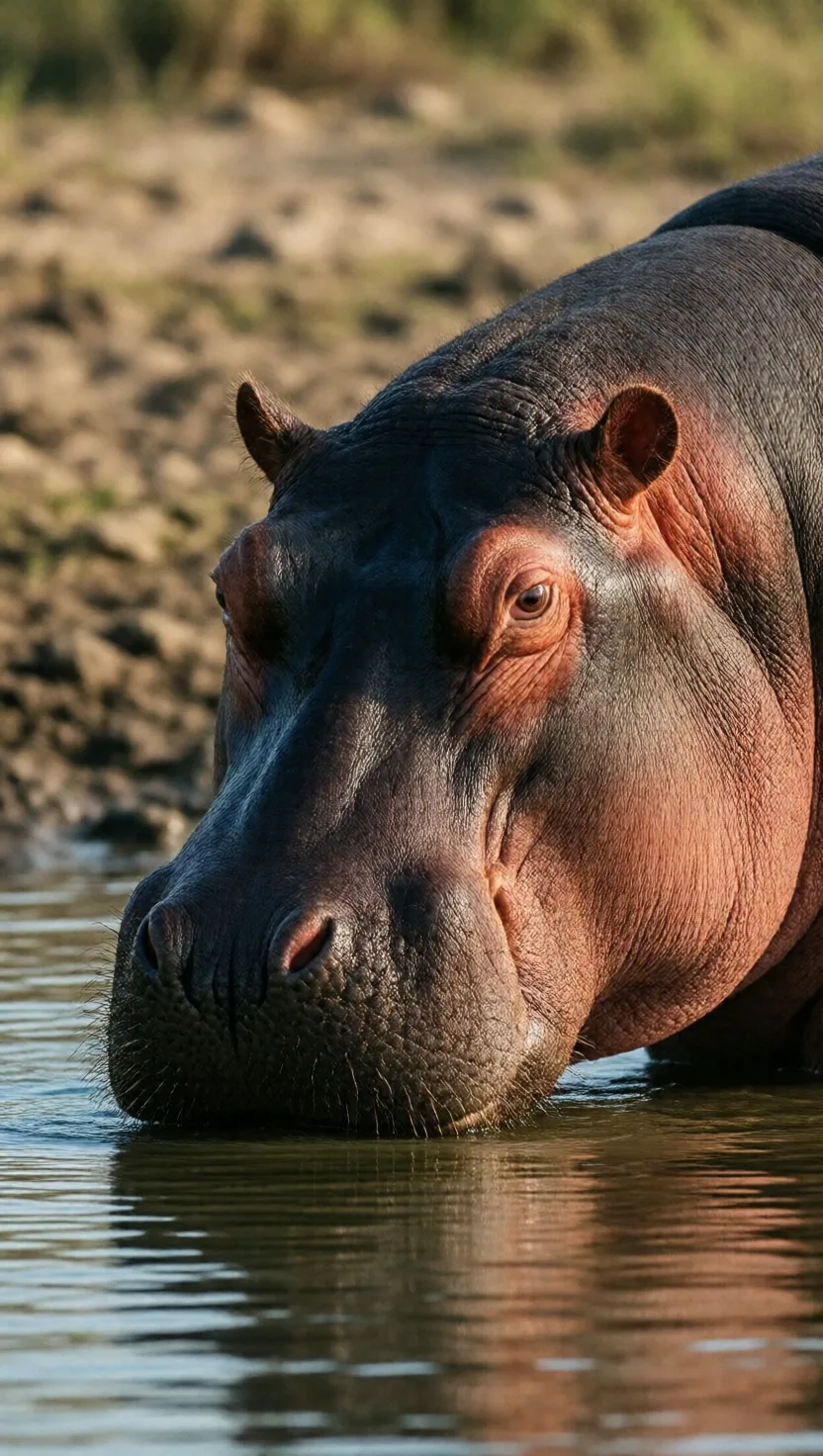
A hippo spends its days half-submerged, but the moment it hauls out, its skin begins to ooze a thick, oily fluid that turns red within minutes, then brown. Early observers called it blood sweat, but it is neither blood nor sweat. The secretion contains two pigments that soak up ultraviolet light like sunblock and also kill bacteria, protecting skin that has no real sweat glands and is constantly cut in fights. The animal manufactures its own lotion on demand.
The water beast cannot actually swim

The water beast cannot actually swim

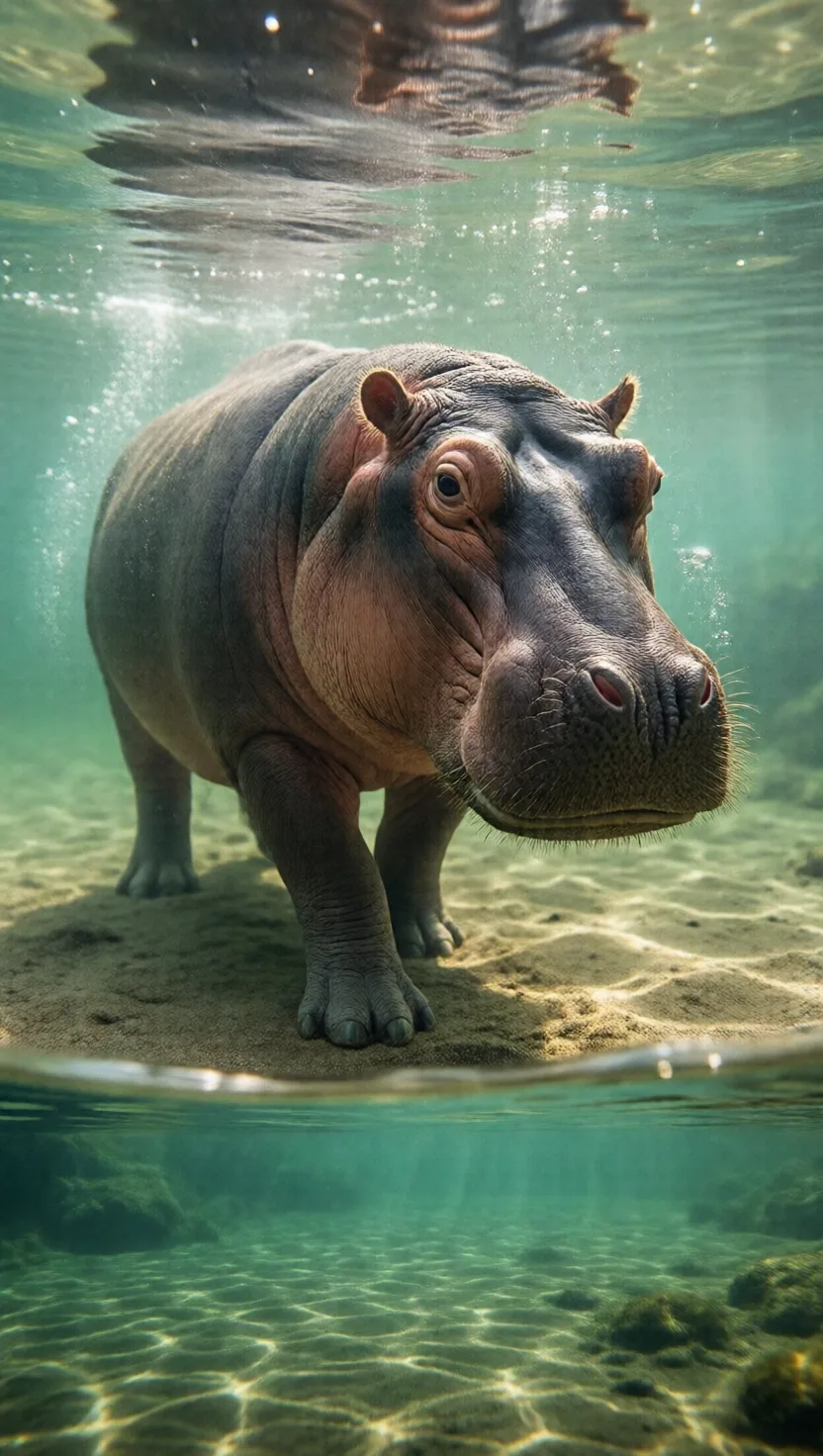
For an animal that lives in rivers, the hippo has a surprising secret: it does not swim. Its body is too dense and heavy to float, so instead it walks, trots, and pushes off the bottom in long, slow-motion bounds, almost galloping along the riverbed and rising for air between leaps. Footage shows them moving through deep water in a gentle, weightless lope, toes barely touching down. They are runners underwater, not swimmers.
Its nearest cousins are whales

Its nearest cousins are whales

The hippo looks like a giant pig, but its closest living relatives are not pigs at all. They are whales and dolphins. The two lineages share a common ancestor that lived more than 50 million years ago, before one branch walked back into the water and eventually became fully aquatic. Hippos and whales still share telltale signs: hairless skin, the ability to nurse and signal underwater, and special glands missing in true land mammals.
It surfaces to breathe in its sleep

It surfaces to breathe in its sleep

A hippo can rest fully underwater, and it keeps breathing without ever waking. Every few minutes its body automatically rises to the surface, takes a breath through nostrils that snap shut on the way down, and sinks again, all while the animal stays asleep. The reflex is so deeply wired that even newborn calves do it. The hippo can hold its breath for around five minutes, surfacing on autopilot through the night.
That huge yawn is a threat, not a stretch

That huge yawn is a threat, not a stretch

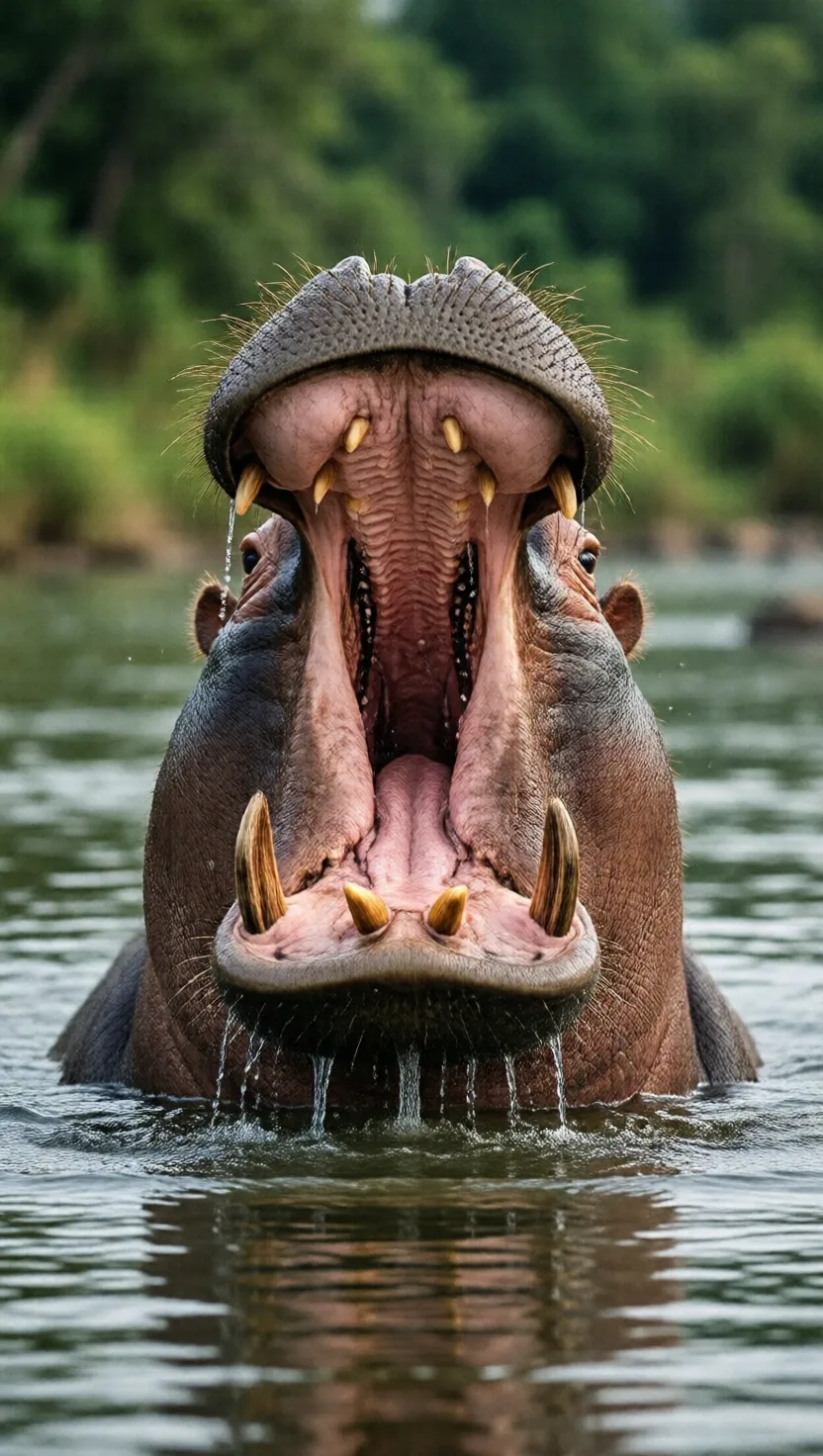
When a hippo throws its head back and opens its mouth into a vast pink cavern, it is not sleepy. The gape is a warning, displaying weapons that can split a small boat. A hippo can open its jaws to nearly 150 degrees, and its lower canine tusks keep growing for life, reaching around half a metre, kept razor-sharp as the upper and lower teeth grind against each other. The wider the gape, the bigger the threat.
It eats remarkably little for its size

It eats remarkably little for its size

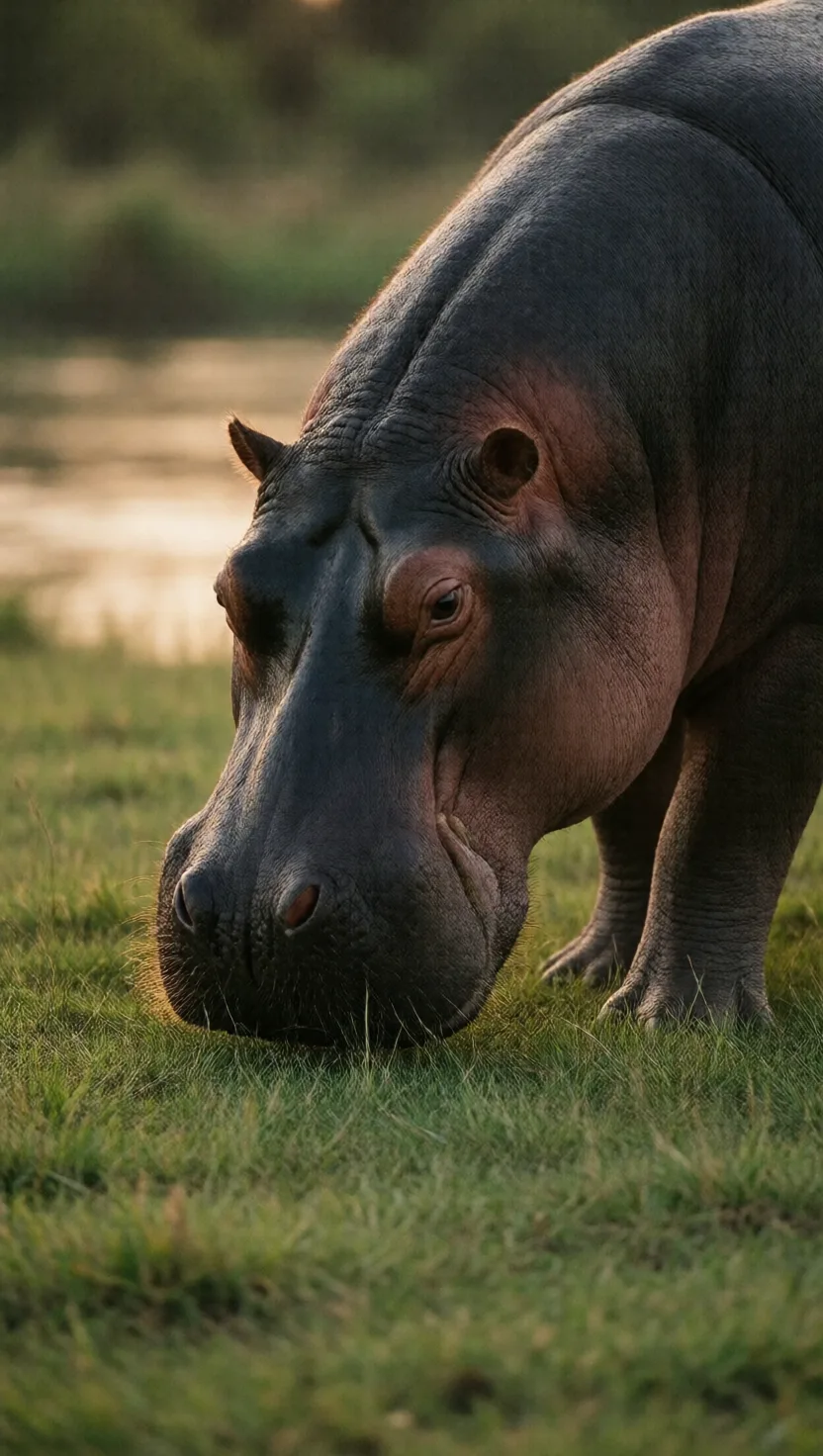
A hippo can weigh more than a ton and a half, yet it eats surprisingly little. Each night it leaves the water and walks to grazing lawns, sometimes several kilometres away, to crop grass with its wide lips, and takes in only around 35 to 40 kilograms, roughly 1 to 1.5 percent of its body weight. Most land grazers of similar bulk eat far more. The trick is its idle, buoyant days in the water, which burn so little energy that a light diet is enough.
Its eyes, ears and nose sit in one line

Its eyes, ears and nose sit in one line

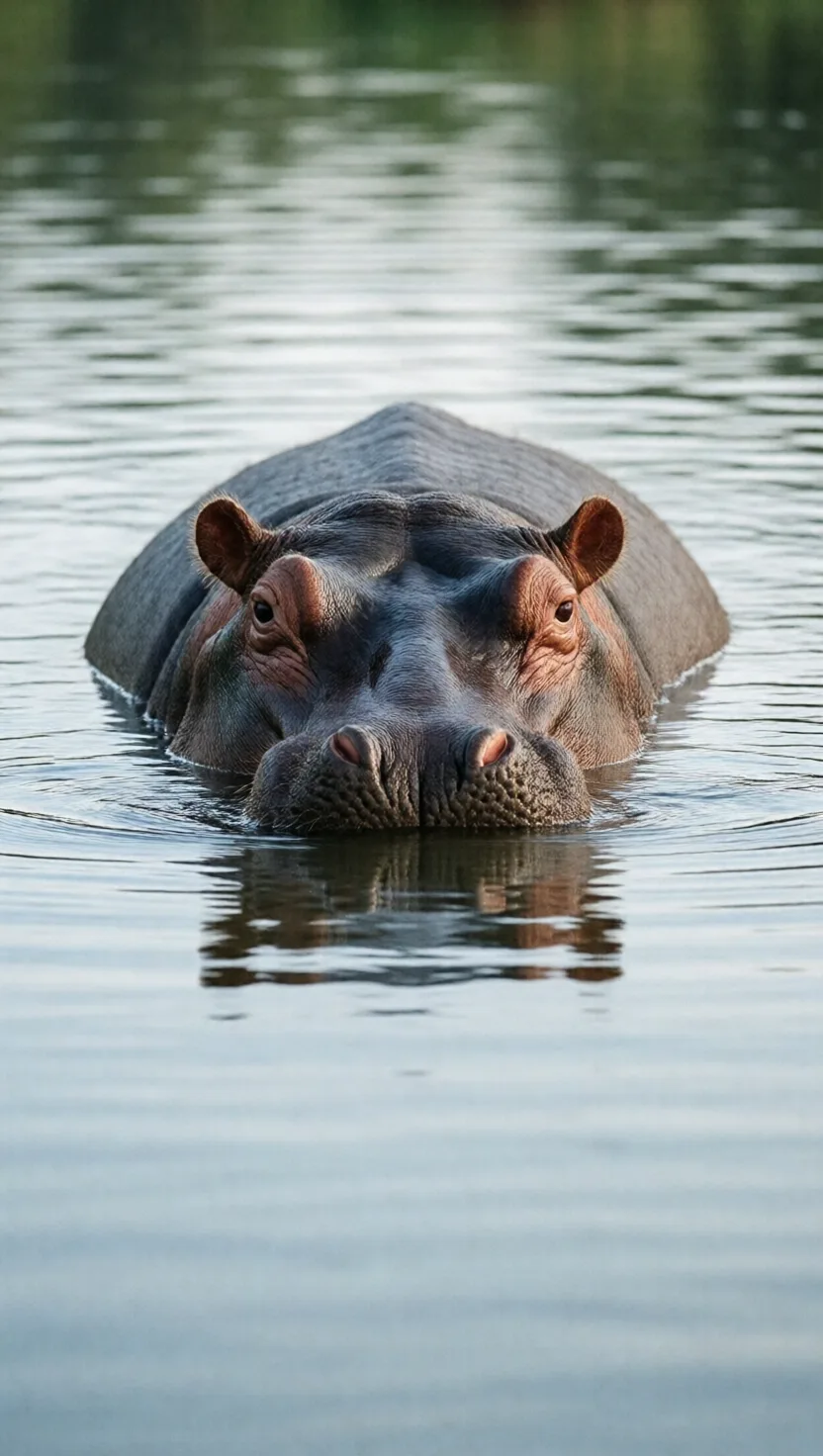
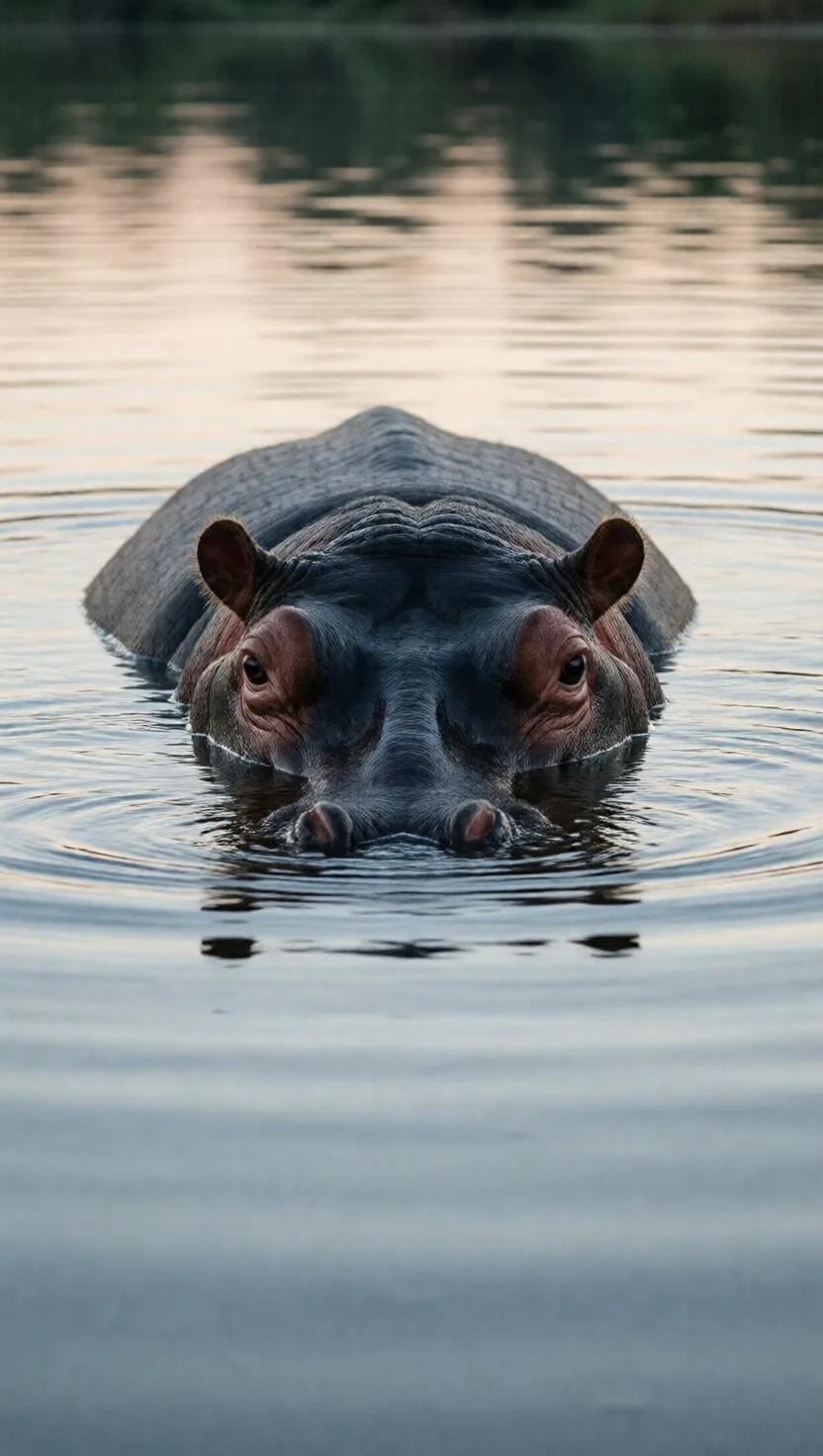
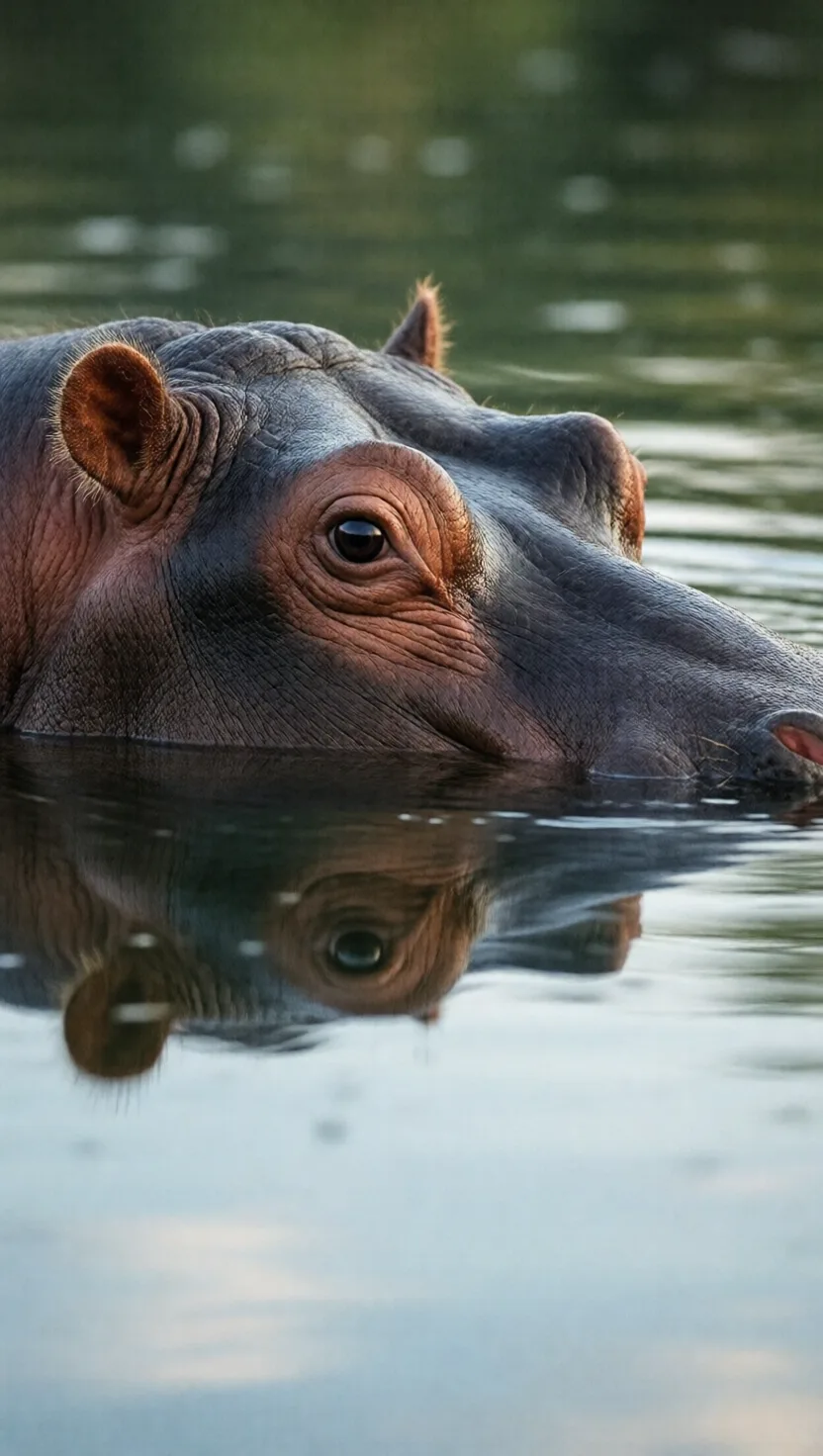
Look at a hippo at the surface and you see only three things: eyes, ears, and nostrils, all riding along the very top of the head in a single plane. The design is deliberate. With the rest of its enormous body hidden below, the hippo can watch, listen, and breathe while staying almost completely concealed underwater, like a living periscope. When it dives, the ears fold and the nostrils seal in one smooth motion.
This three-ton runner can't jump at all

This three-ton runner can't jump at all

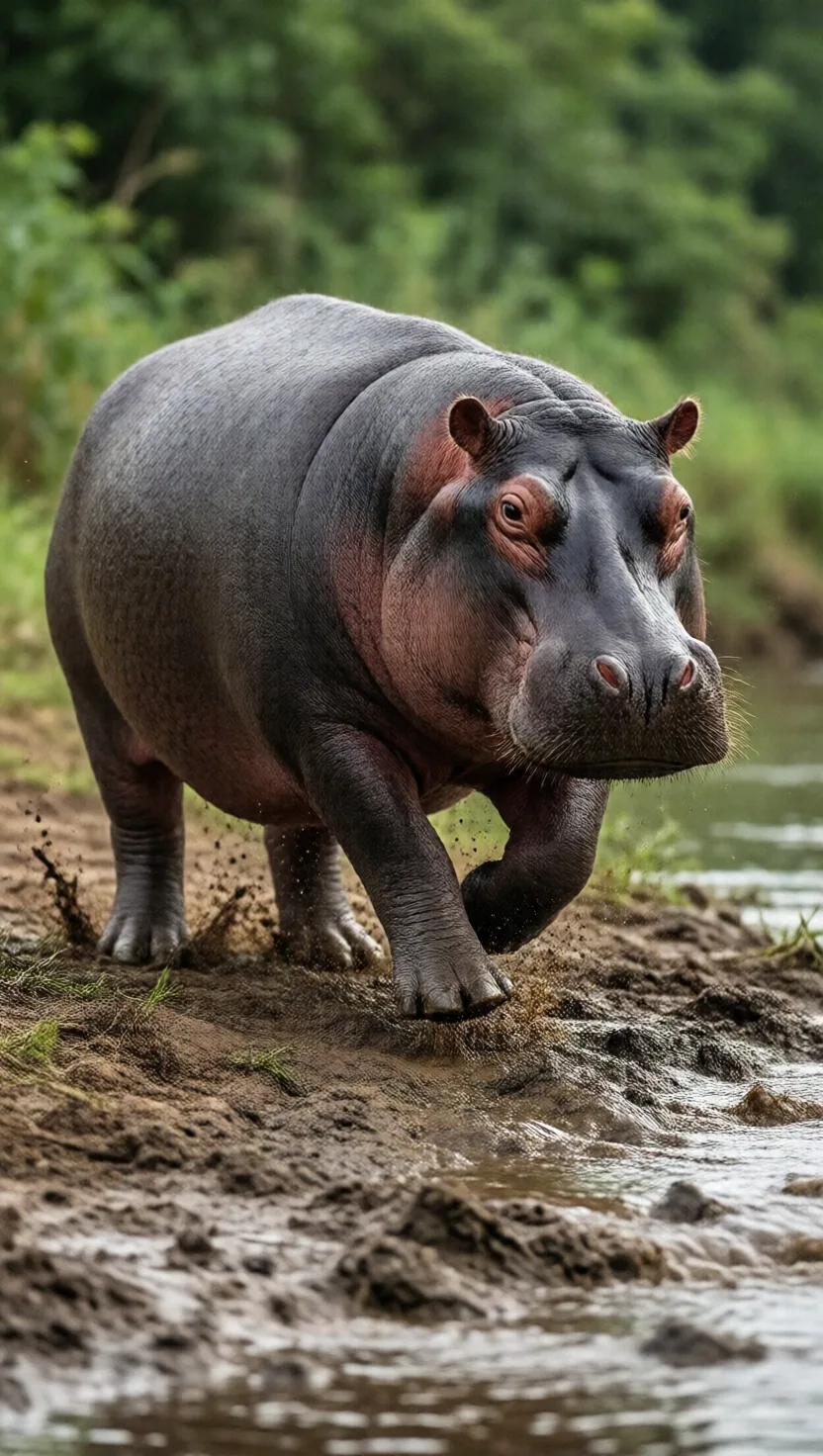
A hippo can weigh well over a ton and a half, yet on land it can charge at roughly 30 kilometres an hour, faster than most people can sprint. The catch is that its legs are short and its body immense, so it physically cannot jump; all four feet never leave the ground at once. To clear an obstacle it has to climb or barge through. A galloping hippo is pure ground-bound momentum.
tap →swipe ↑ for depthswipe ↓ to exit