Eight things about manatees, dugongs and their elephant kin

DC·209 Deep Cuts
Its closest cousin on Earth is the elephant

Its closest cousin on Earth is the elephant

A manatee looks like a sea creature, but it isn't kin to seals, whales or dolphins at all. Its nearest living relatives are land animals: the elephant and the small rock hyrax, grouped together as the Paenungulata. The shared ancestry shows in odd details — toenails on the flippers, thick bristly skin, and cheek teeth that are slowly replaced through life, much as an elephant's are.
Its ribs are so solid they sink like stone

Its ribs are so solid they sink like stone

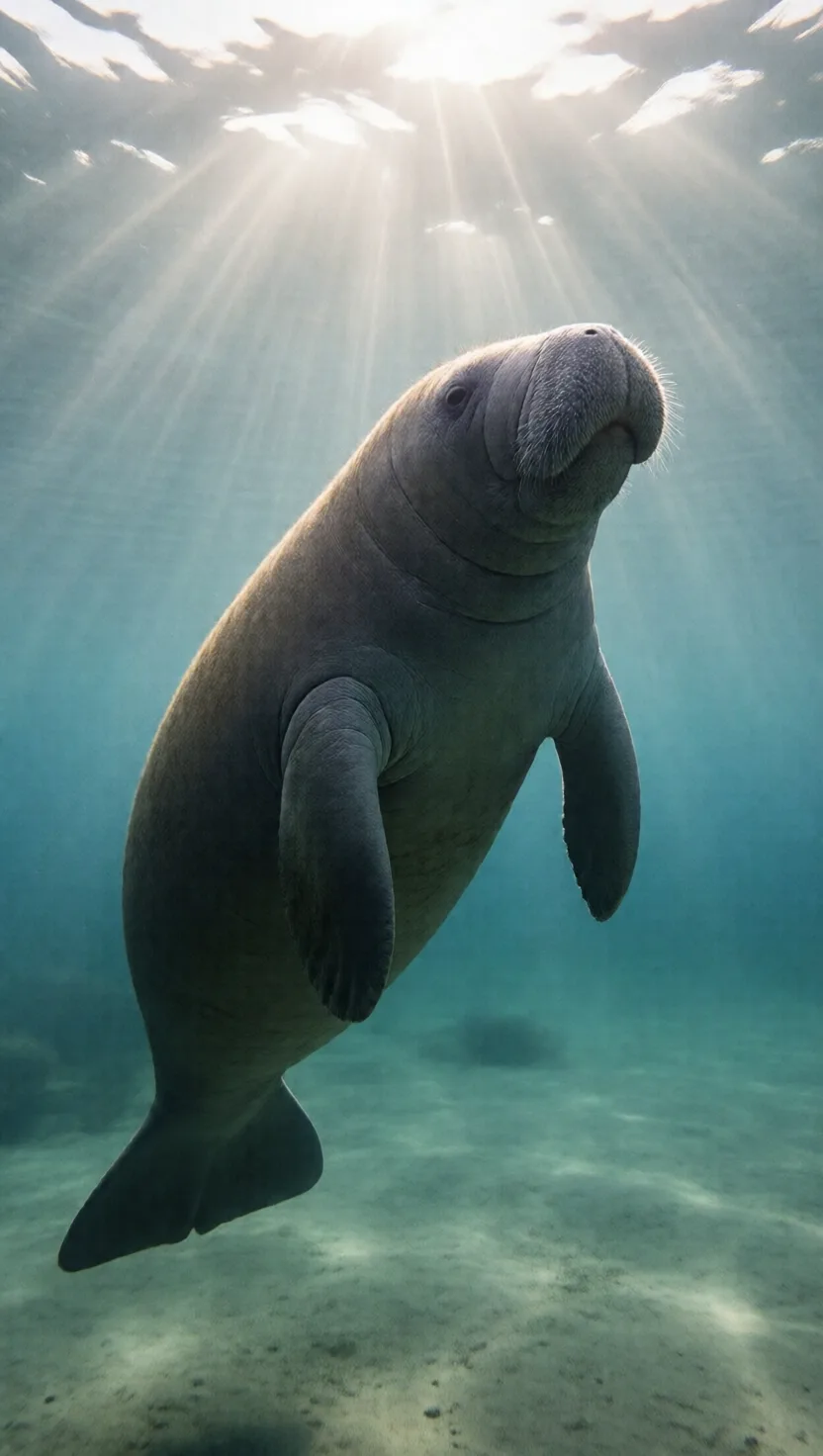
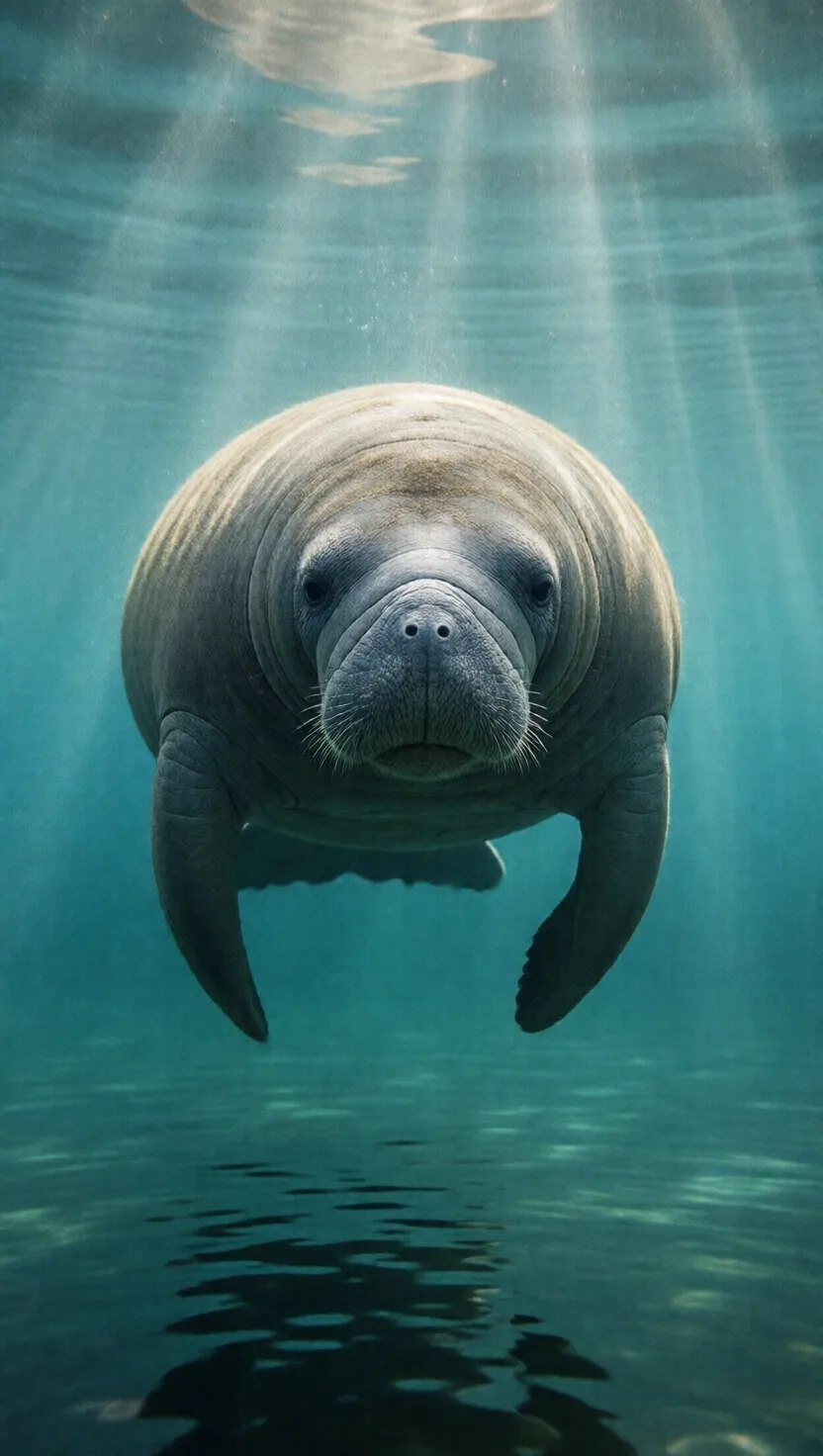
Manatee bones are pachyostotic — thick, dense and almost solid, with no hollow marrow cavity in the ribs. A manatee rib washed up on a beach is often mistaken for a smooth grey rock. That extra weight is the whole point: the heavy skeleton works as built-in ballast, balancing the buoyancy of fat and lungs so the animal can hover, neutrally weightless, in shallow water without effort.
It trims its depth like a submarine

It trims its depth like a submarine

A manatee has an unusually large, muscular diaphragm split into two independent halves, one for each lung, running almost the length of its back. By squeezing each lung separately it fine-tunes the air inside, tilting and rising or sinking with barely a flick of the tail. Gas in its huge gut adds to the effect — a very full manatee can briefly bob at the surface until it passes the gas and settles again.
A cold snap can be deadly to this big, fat animal

A cold snap can be deadly to this big, fat animal

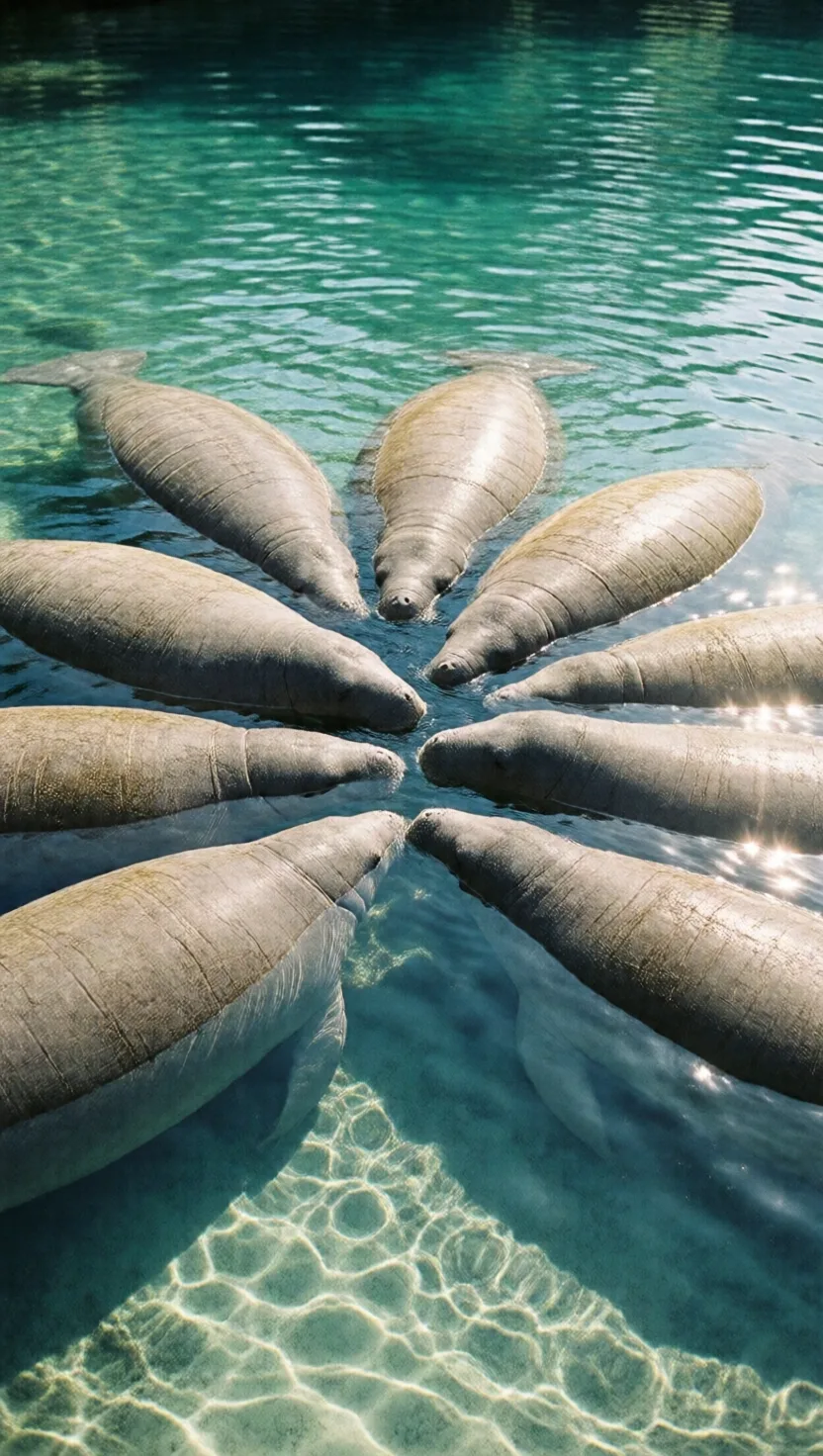
For all its bulk, a manatee has little insulating fat and a very slow metabolism, so it can't hold its body heat in cool water. Below about 20°C (68°F) it develops cold-stress syndrome — skin lesions, failing digestion, a weakened immune system. To survive winter, manatees crowd into warm natural springs that stay near 22°C year-round, sometimes hundreds gathering in a single clear blue pool.
It plows the seabed like an underwater farmer

It plows the seabed like an underwater farmer

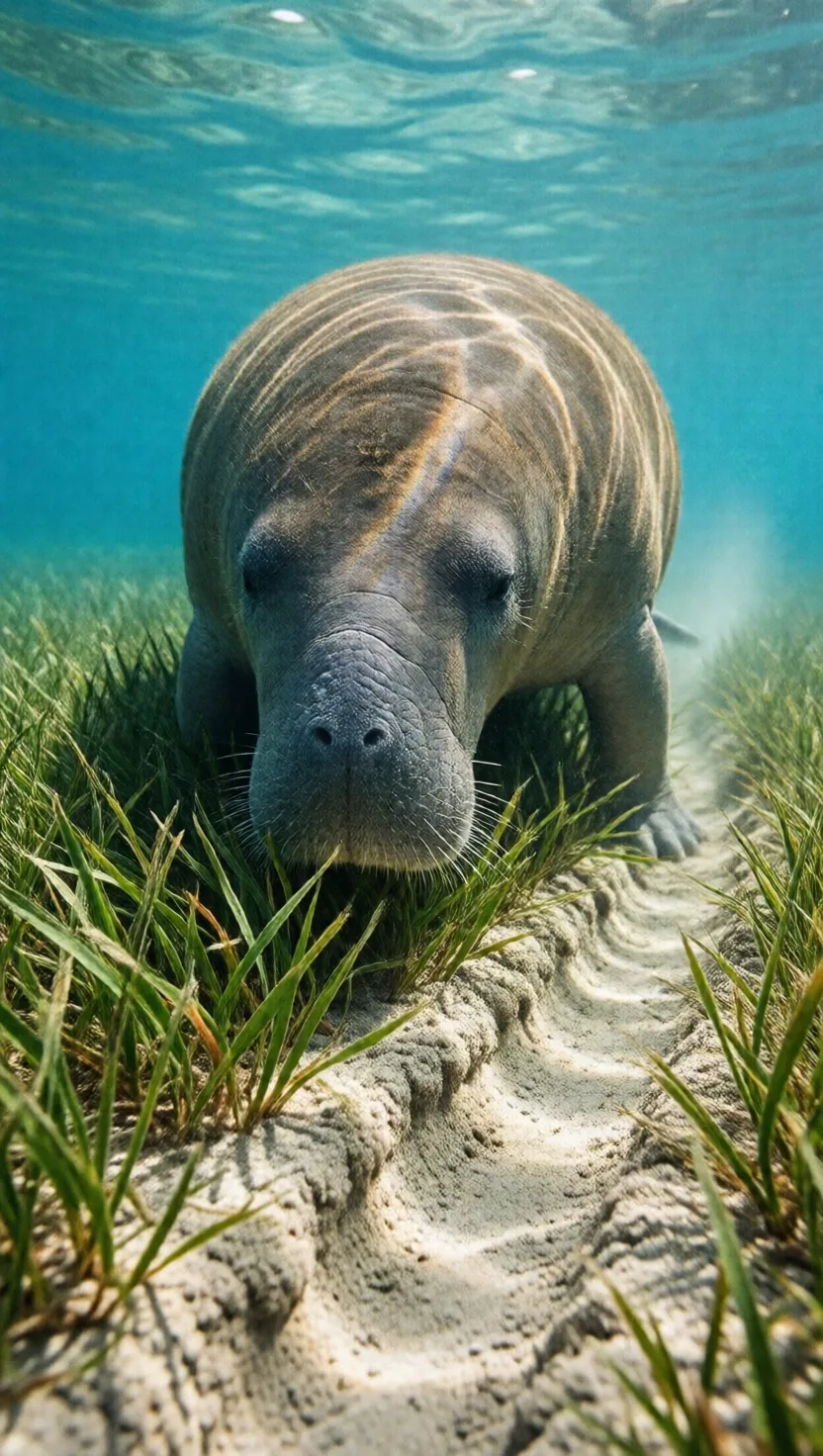
A dugong is the only sea-cow that feeds entirely at sea, grazing seagrass meadows. It roots its snout into the sand, tears up whole plants including the roots, and leaves long winding furrows across the seafloor — feeding trails so distinctive that scientists map them from drones. One dugong eats 30 to 40 kg of seagrass a day, and the cropping actually keeps the meadow healthy and regrowing.
Its split upper lip works like a pair of hands

Its split upper lip works like a pair of hands

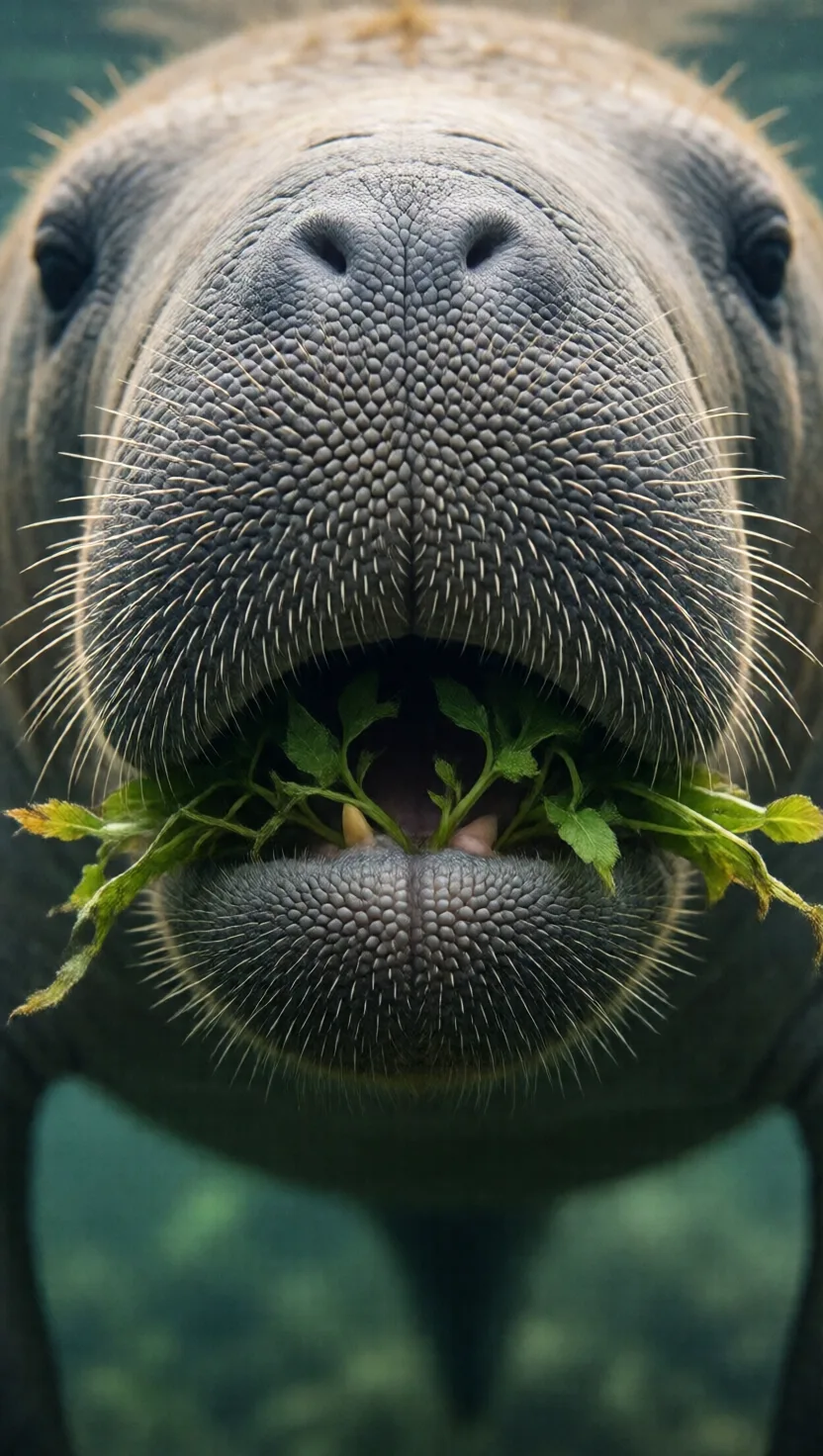
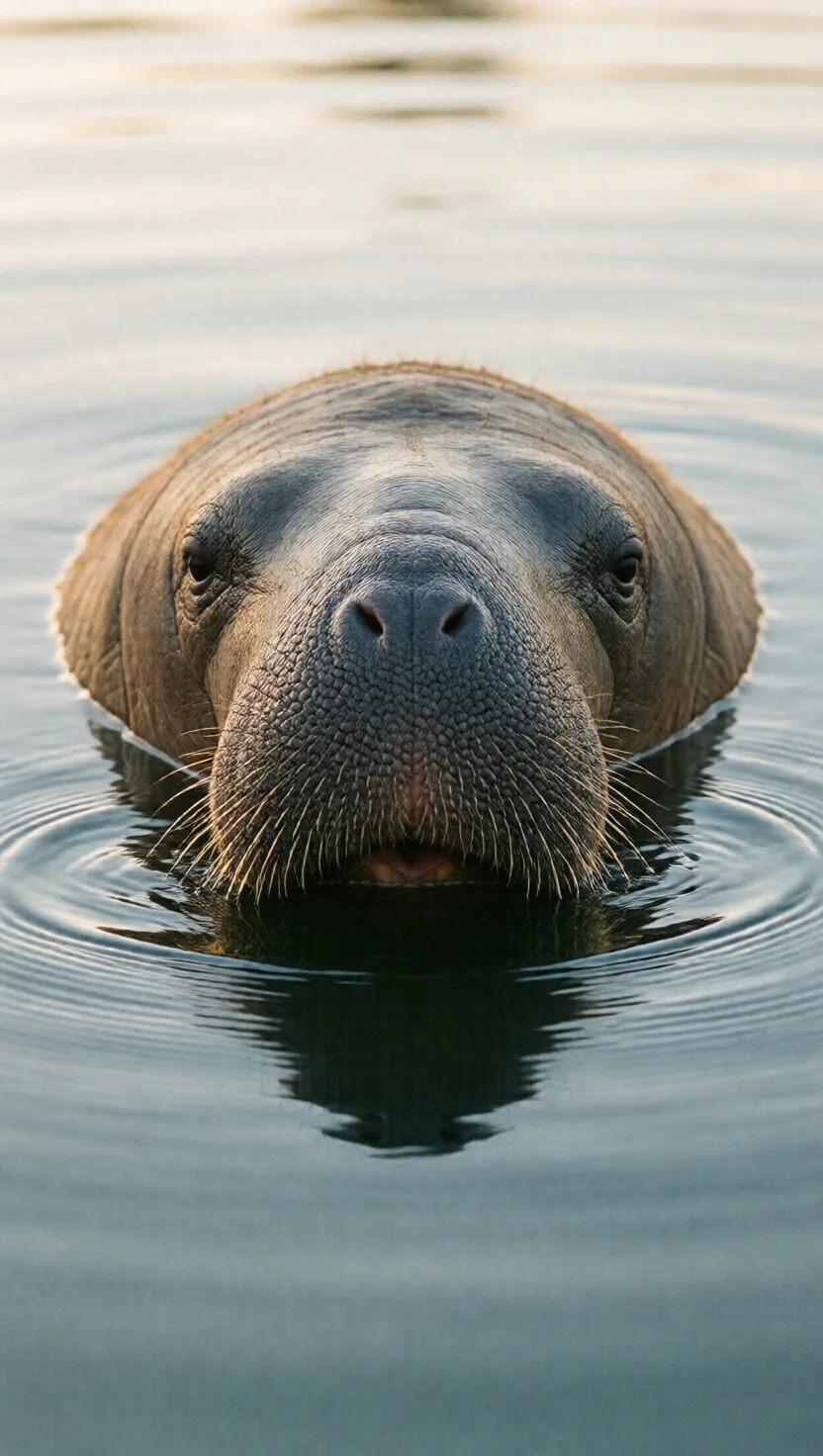
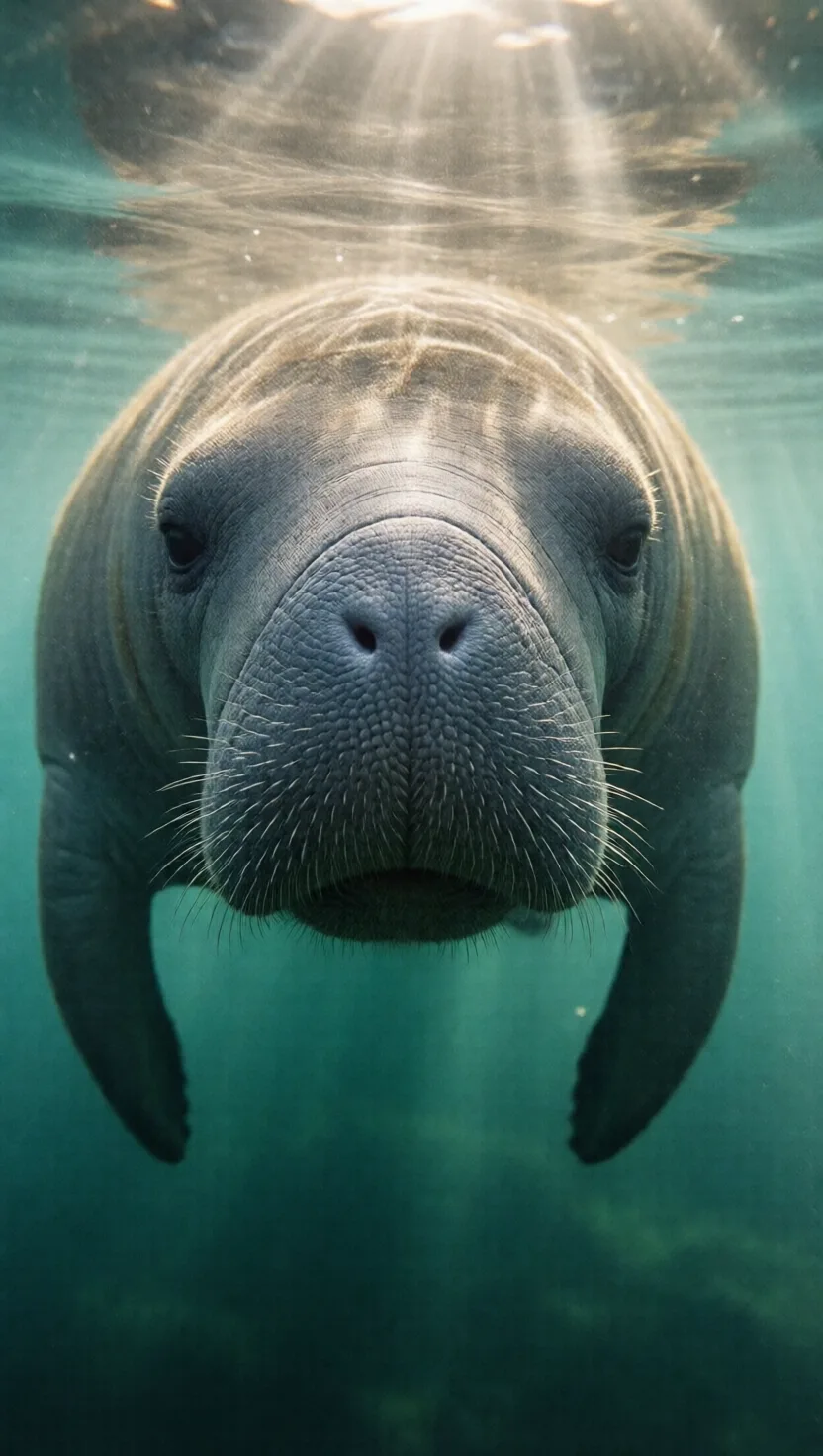
A manatee's upper lip is split down the middle into two halves that move independently, worked by around seven muscles. It uses them like a tiny pair of grasping hands — or a short elephant's trunk — to feel out plants, grip them and stuff them into its mouth. Scientists even coined a word for feeding with the face instead of paws: 'oripulation.' A manatee can eat a tenth of its body weight in a day.
It can nap underwater for 20 minutes

It can nap underwater for 20 minutes

A resting manatee can hold its breath for up to 20 minutes before easing up for air; while active it surfaces every few minutes. Each breath is hugely efficient — it swaps out about 90% of the air in its lungs in a single exhale-inhale, where a human renews only around 17%. That near-total air exchange lets the animal stay down a long time between slow, deliberate breaths.
One paddle, one whale-fin: the tail tells them apart

One paddle, one whale-fin: the tail tells them apart

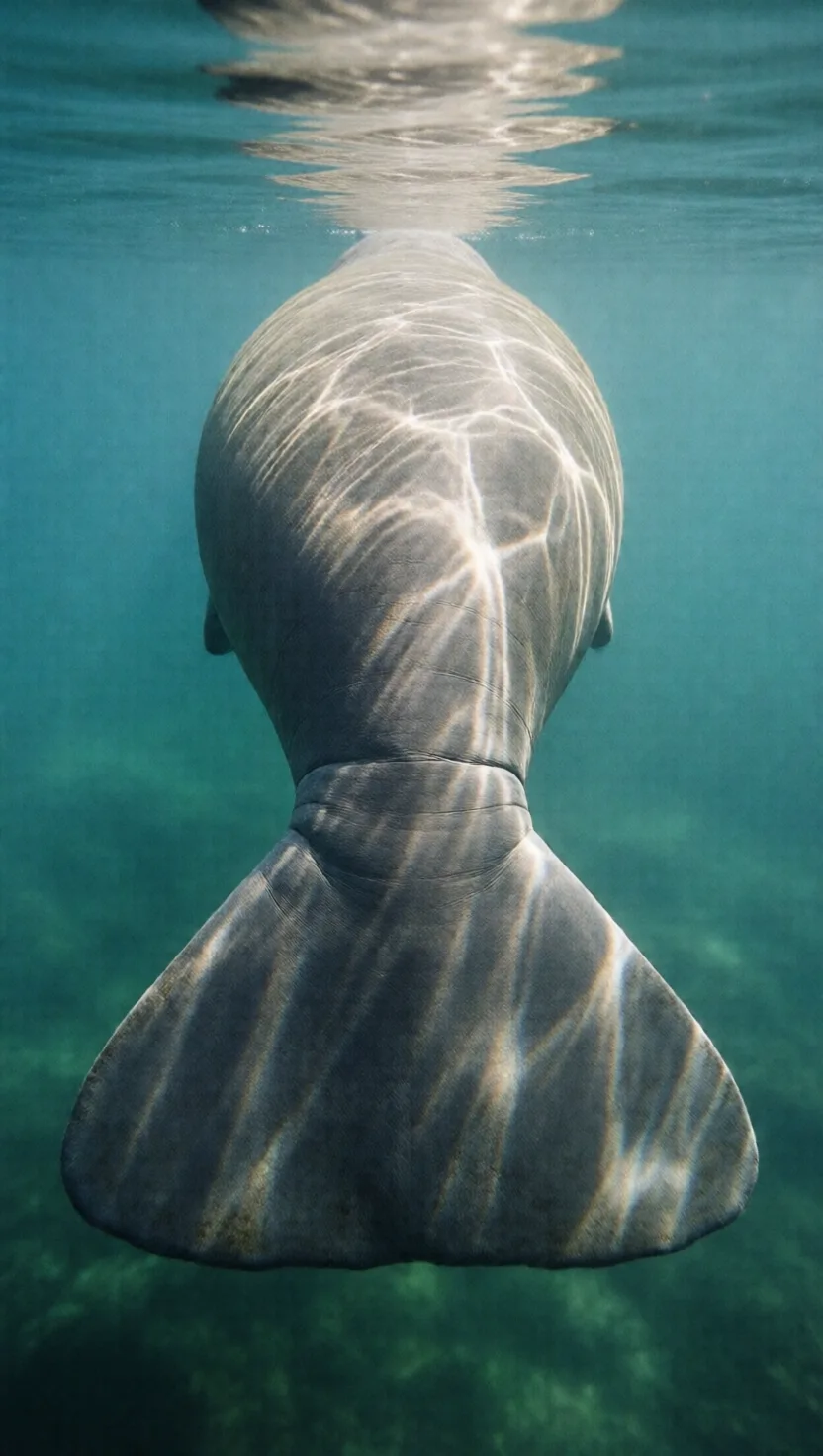
Manatees and dugongs are close cousins, but their tails give them away instantly. A manatee has a broad, rounded, paddle-shaped tail — a single flat spoon — suited to slow cruising in calm rivers and coasts. A dugong's tail is forked and notched like a dolphin's or whale's fluke, built for more agile open-sea swimming. It's the one feature that is never ambiguous between the two.
tap →swipe ↑ for depthswipe ↓ to exit