Eight things hidden in a parrot's feathers, feet, and voice

DC·183 Deep Cuts
The parrot that booms in the dark

The parrot that booms in the dark

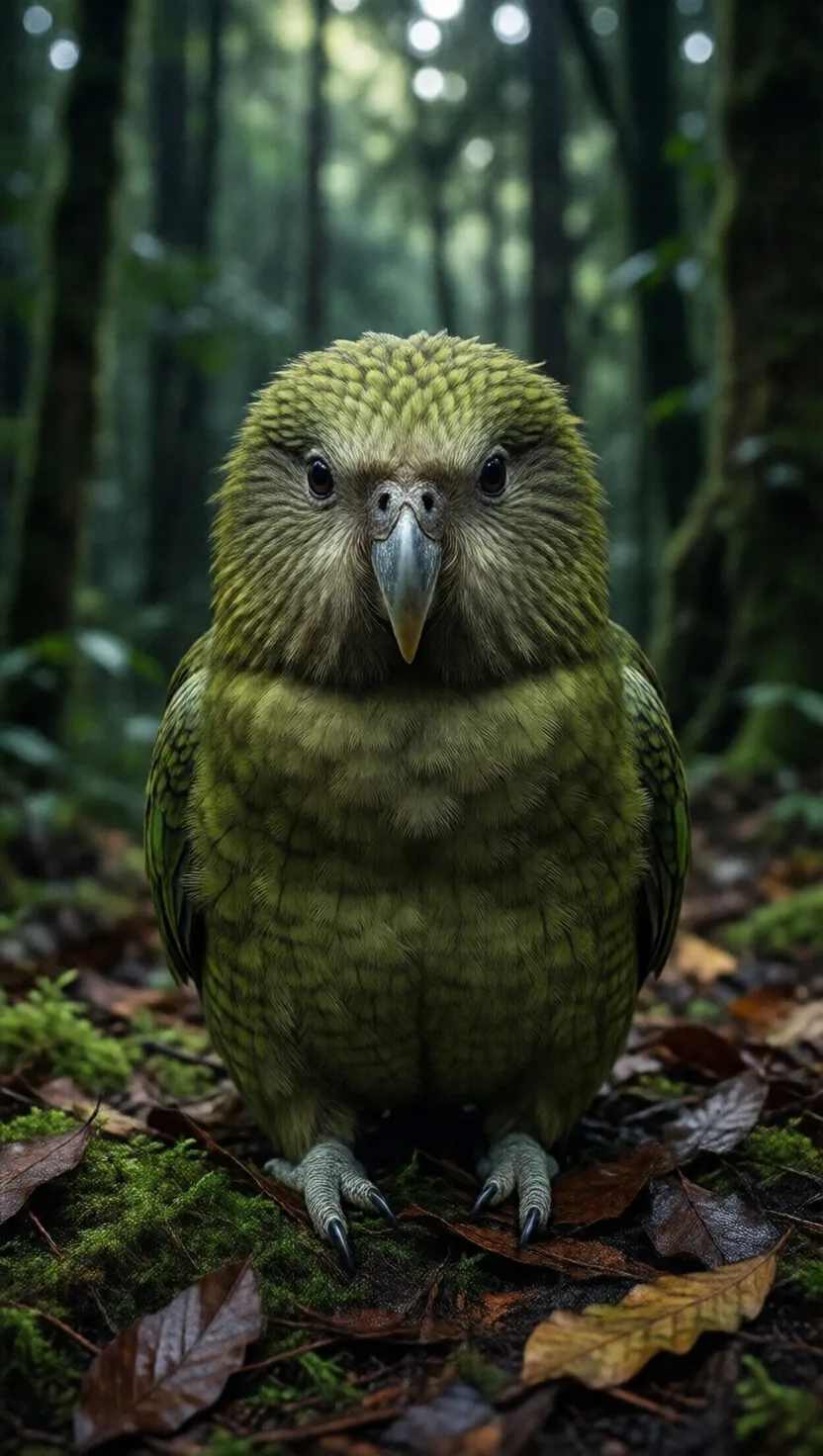
The kakapo is the only parrot that cannot fly and the only one that is nocturnal, and the heaviest, at up to about 4 kilograms. To breed, a male digs a shallow bowl on a ridgetop, inflates an air sac in his chest, and booms a deep, subsonic note once every second or two. The sound carries up to 5 kilometres through the forest, and he keeps it up for hours, night after night, for two or three months.
Parrots make their own paint

Parrots make their own paint

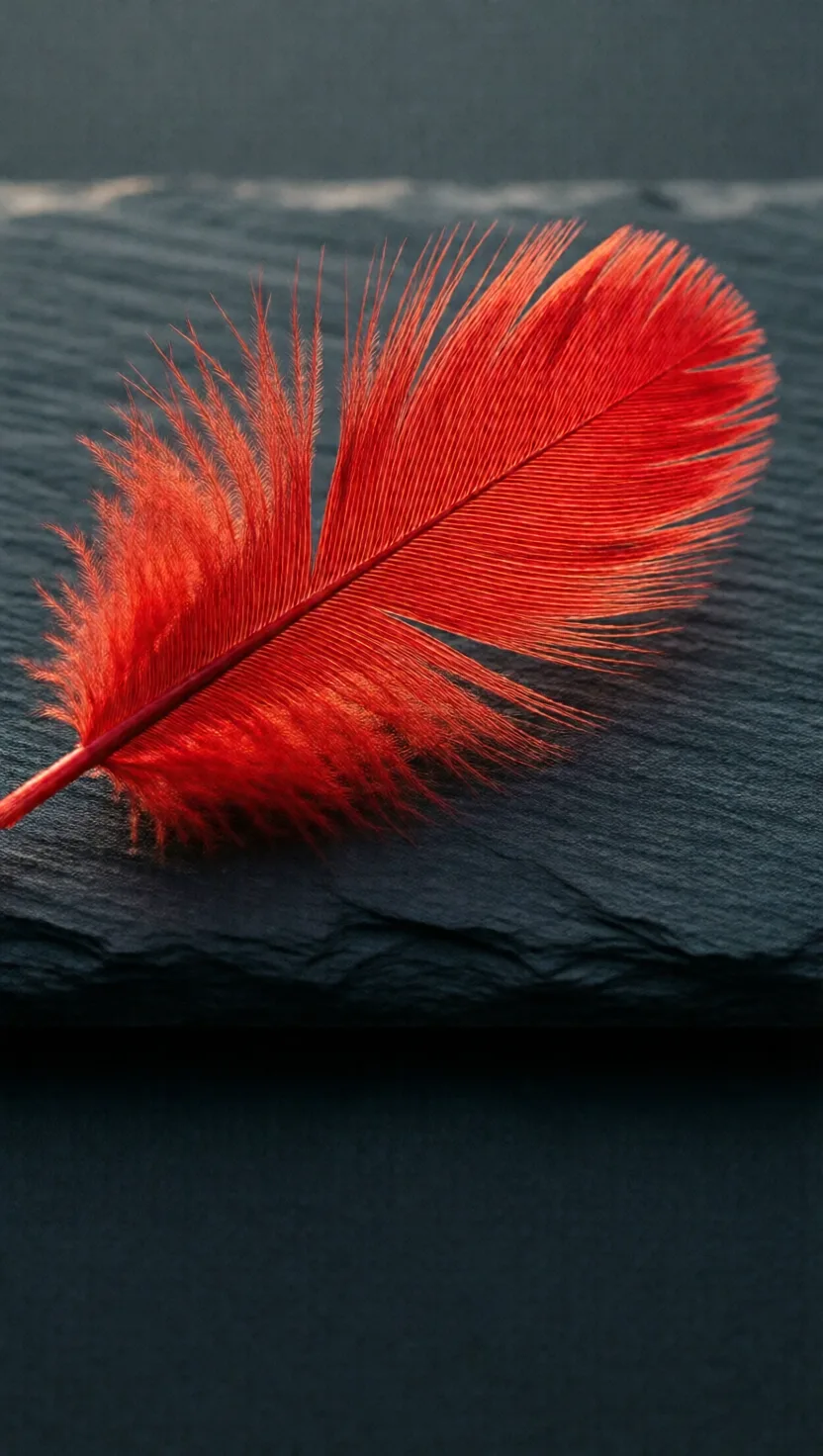
Most birds borrow their reds and yellows from pigments in their food. Parrots don't, they manufacture their own, a family of pigments called psittacofulvins, built right in the growing feather by a single enzyme. The colours do more than dazzle: in lab tests with feather-eating bacteria, red parrot feathers resisted being broken down far longer than white ones, the pigment shielding the keratin like a varnish.
A tongue tipped like a paintbrush

A tongue tipped like a paintbrush

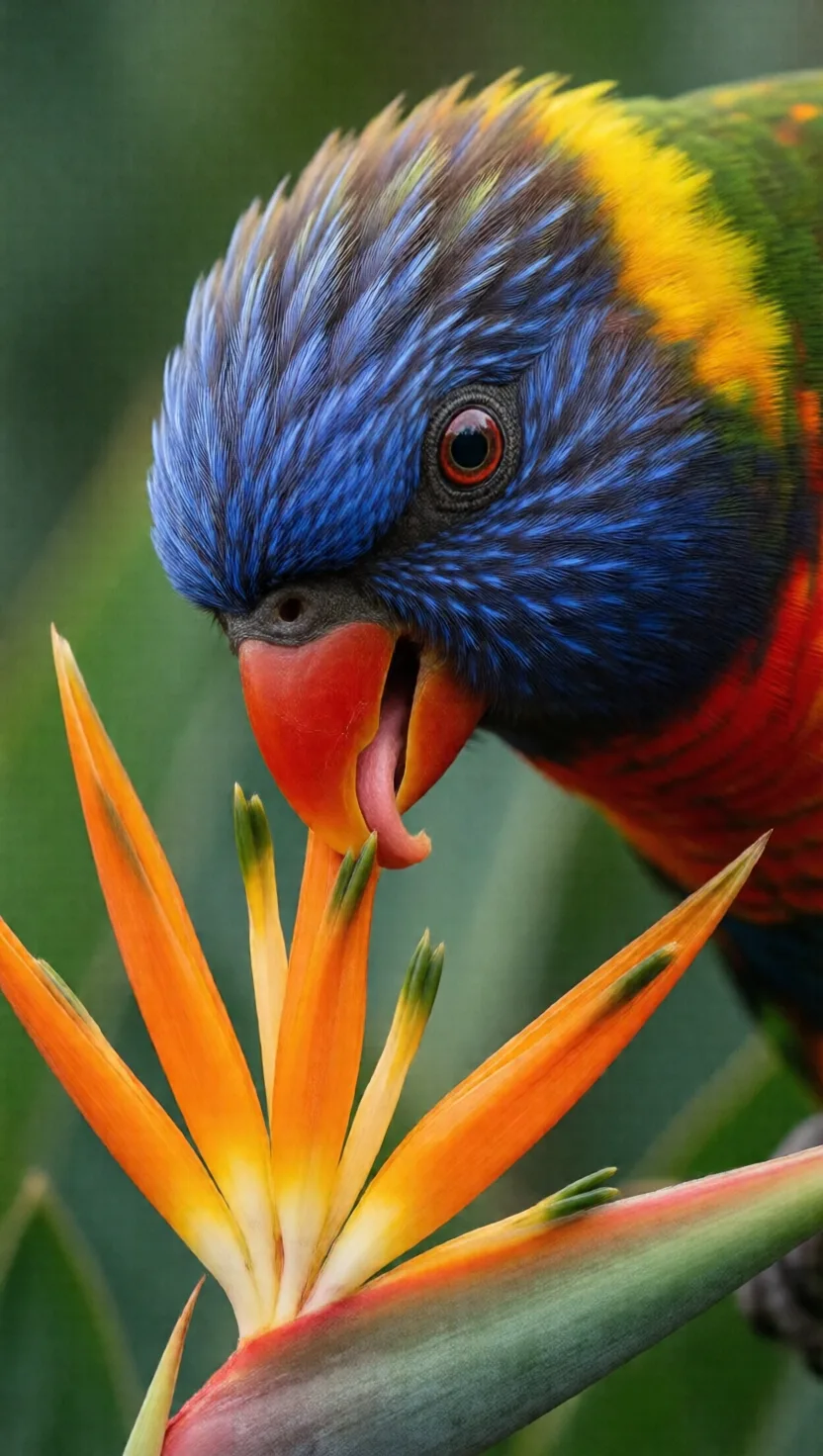
Lorikeets live on nectar and pollen, and their tongue is built for it. The tip carries a dense fringe of fine hair-like papillae that lie flat until feeding, then spring erect like the bristles of a brush. Each flick mops liquid from a flower, the tiny tubes drawing nectar up by capillary action, while grooves along the tongue channel it back to the throat. No other parrot feeds quite this way.
He's green, she's red, one species

He's green, she's red, one species

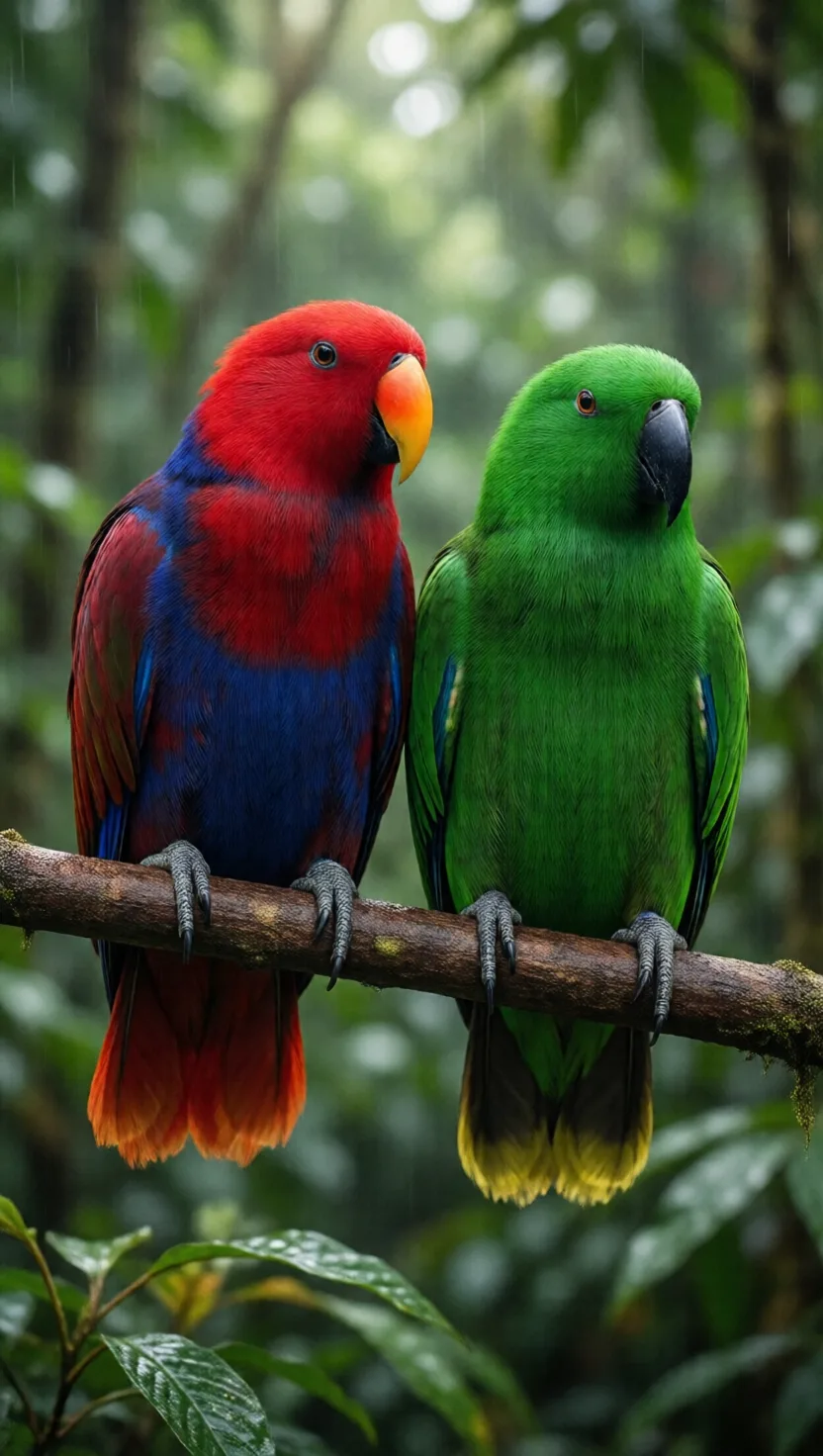
The male eclectus parrot is emerald green; the female is brilliant red and blue. The two look so unalike that early naturalists catalogued them as separate species, the male described in 1776, the female in 1837, and not until 1874 were they recognised as one bird. The colours suit their lives: green hides the roaming male in the canopy, while the red female stays bright at her nest hole.
A cockatoo that lived past 80

A cockatoo that lived past 80

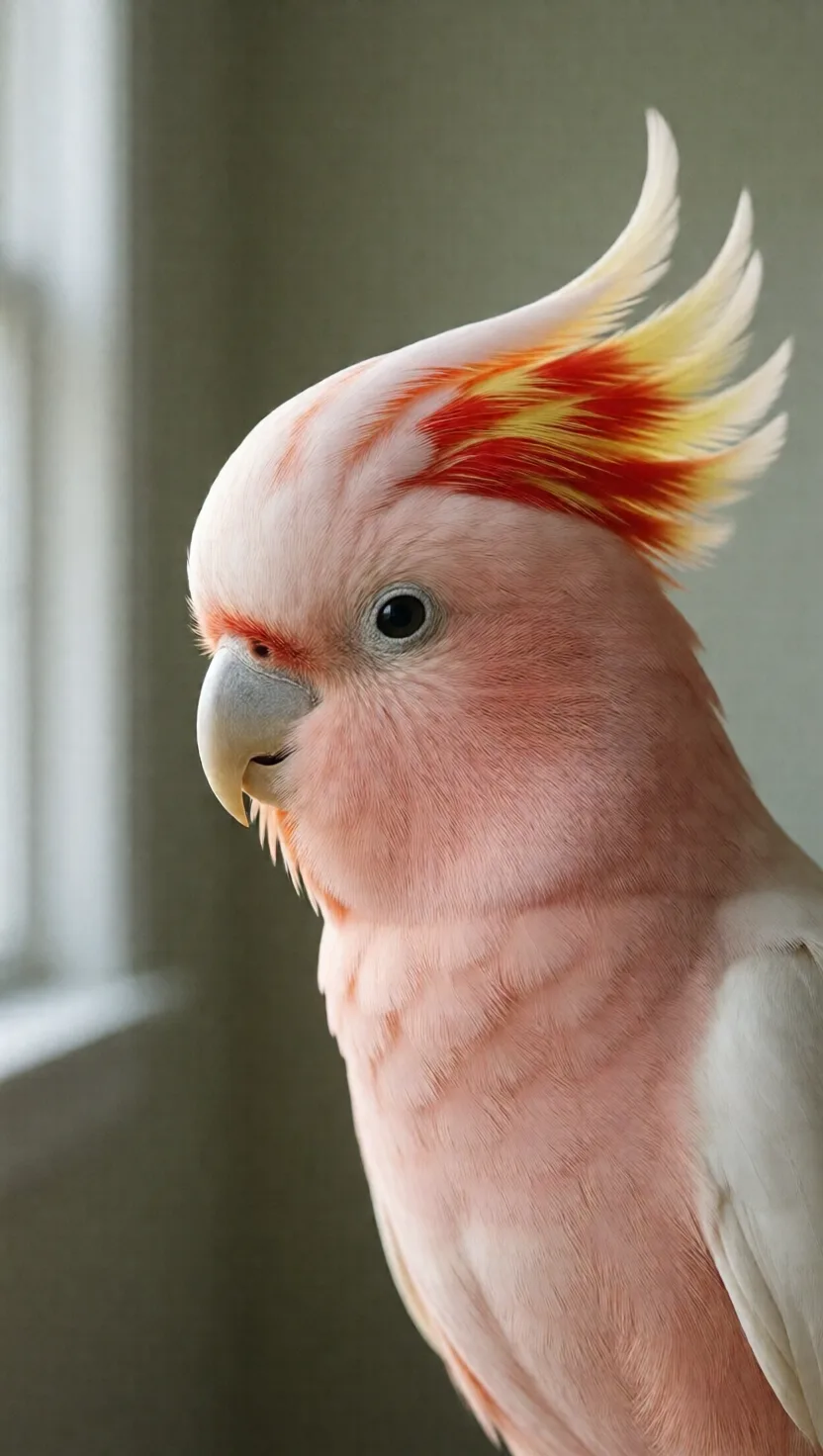
Large parrots are among the longest-lived of all birds, and one pink cockatoo set the mark. He hatched around 1933, lived his whole life in a single zoo, and died in 2016 at the age of 83, decades beyond the 40-to-60-year span typical for his kind. A slow metabolism, few predators in captivity, and a sharp social mind all help big parrots reach ages that rival our own.
Nearly every parrot is left-footed

Nearly every parrot is left-footed

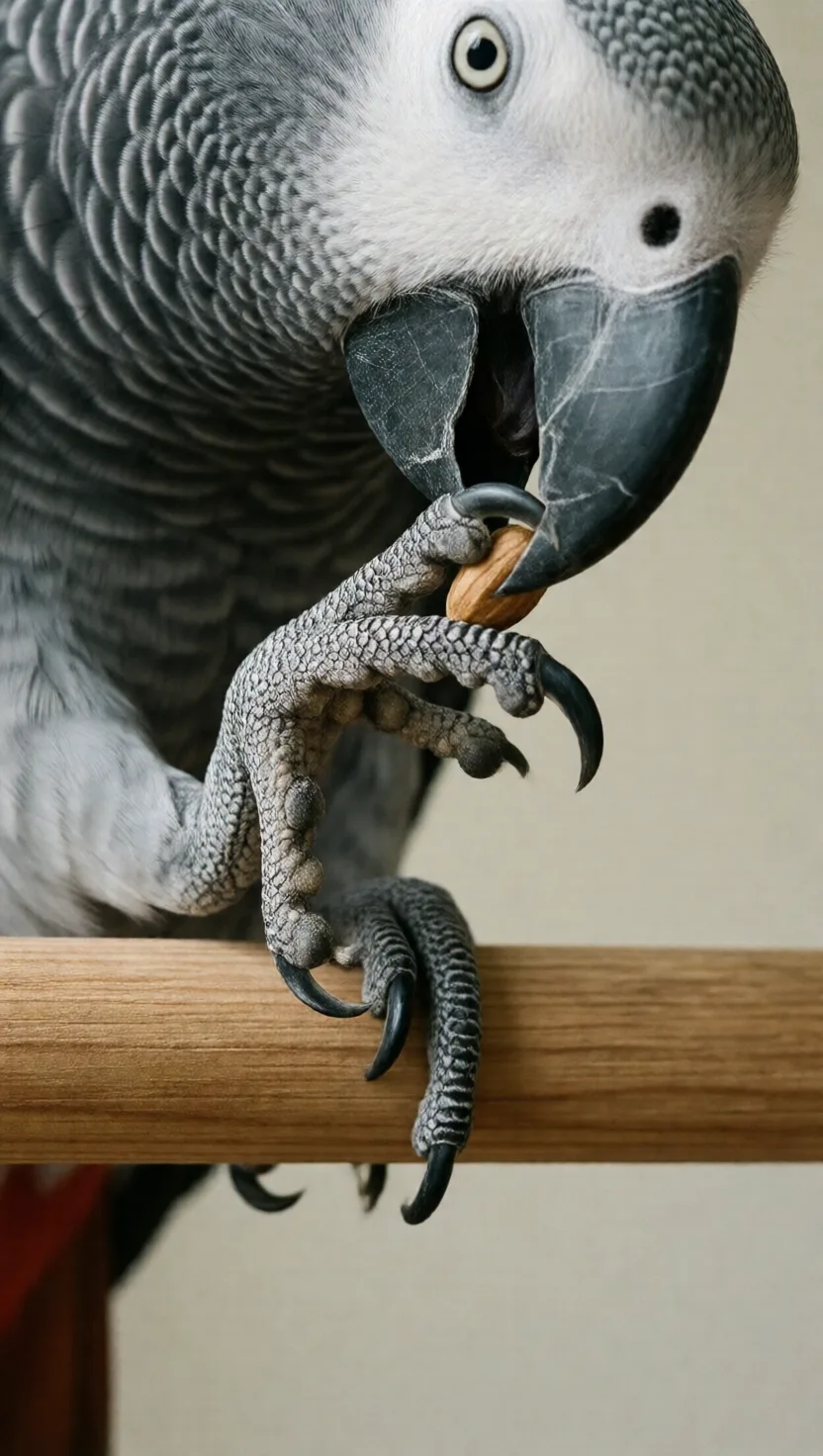
Watch a parrot eat and it will almost always lift food to its beak with the left foot, balancing on the right. Across many species this left-footed habit holds, the bird world's version of handedness. It runs deeper than habit: studies of Australian parrots found that the larger a species' brain, the stronger and more consistently left-footed it tends to be.
Budgies glow under ultraviolet light

Budgies glow under ultraviolet light

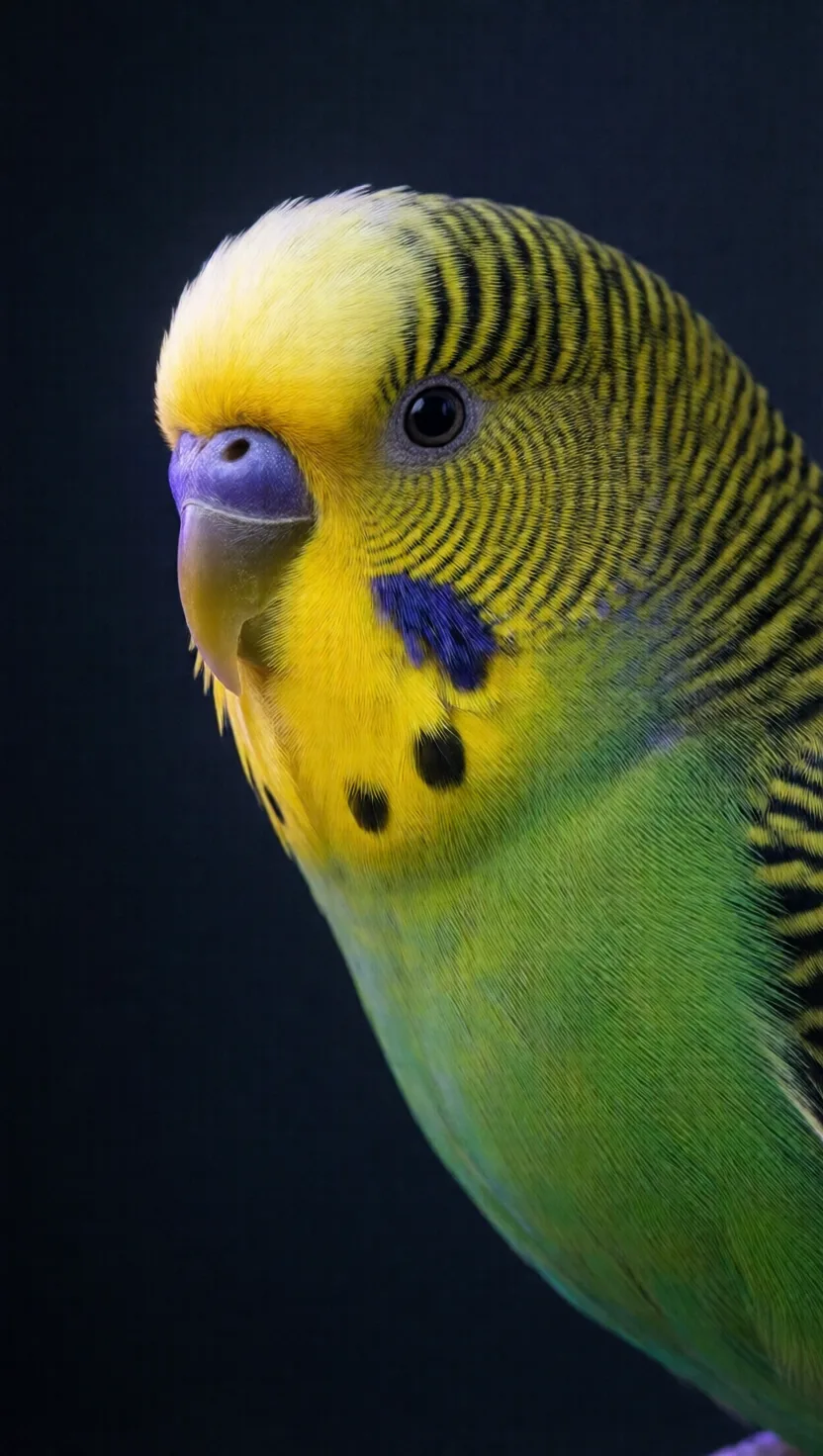
To our eyes a budgerigar's cheeks and crown are plain yellow. Under ultraviolet light they blaze, the yellow feathers absorbing UV and re-emitting it as a glowing patch of fluorescent colour. Budgerigars see into the ultraviolet, so this hidden glow is part of how they read one another, and birds shown brighter fluorescent partners tend to prefer them. We simply can't see the signal at all.
Macaws crowd cliffs to eat dirt

Macaws crowd cliffs to eat dirt

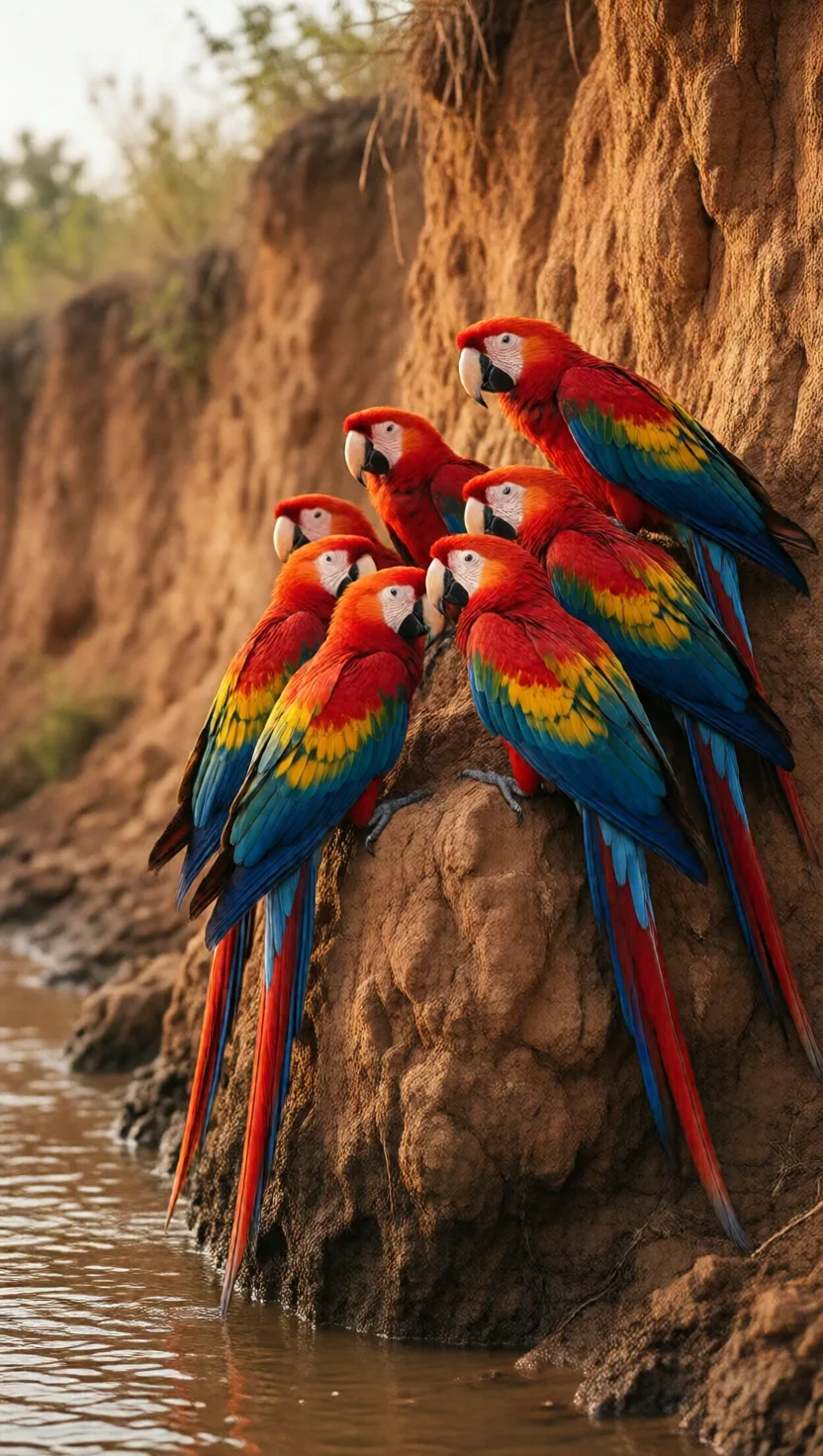
Each morning along certain Amazon riverbanks, hundreds of macaws and parrots gather on exposed clay cliffs to eat the earth itself. For years the clay was thought to soak up plant toxins, but a long study found the real draw is sodium: the clay holds about forty times more than their fruit-and-seed diet, and licking peaks in the breeding season when growing chicks need it most. Rain strips salt from the rainforest, and the cliffs are where it hides.
tap →swipe ↑ for depthswipe ↓ to exit