Eight things about jellyfish

DC·181 Deep Cuts
A jellyfish has no brain, heart, or bones

A jellyfish has no brain, heart, or bones

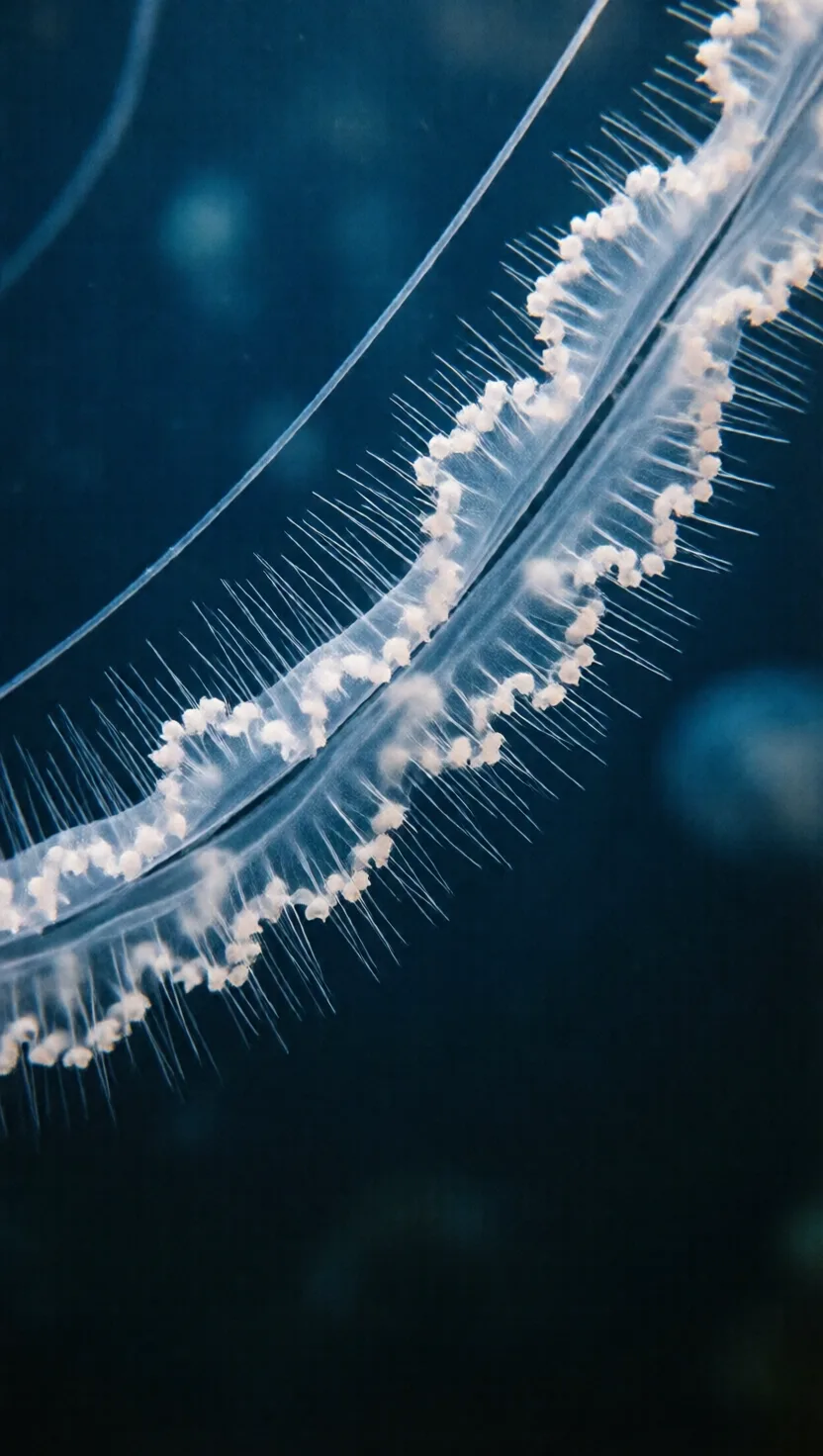
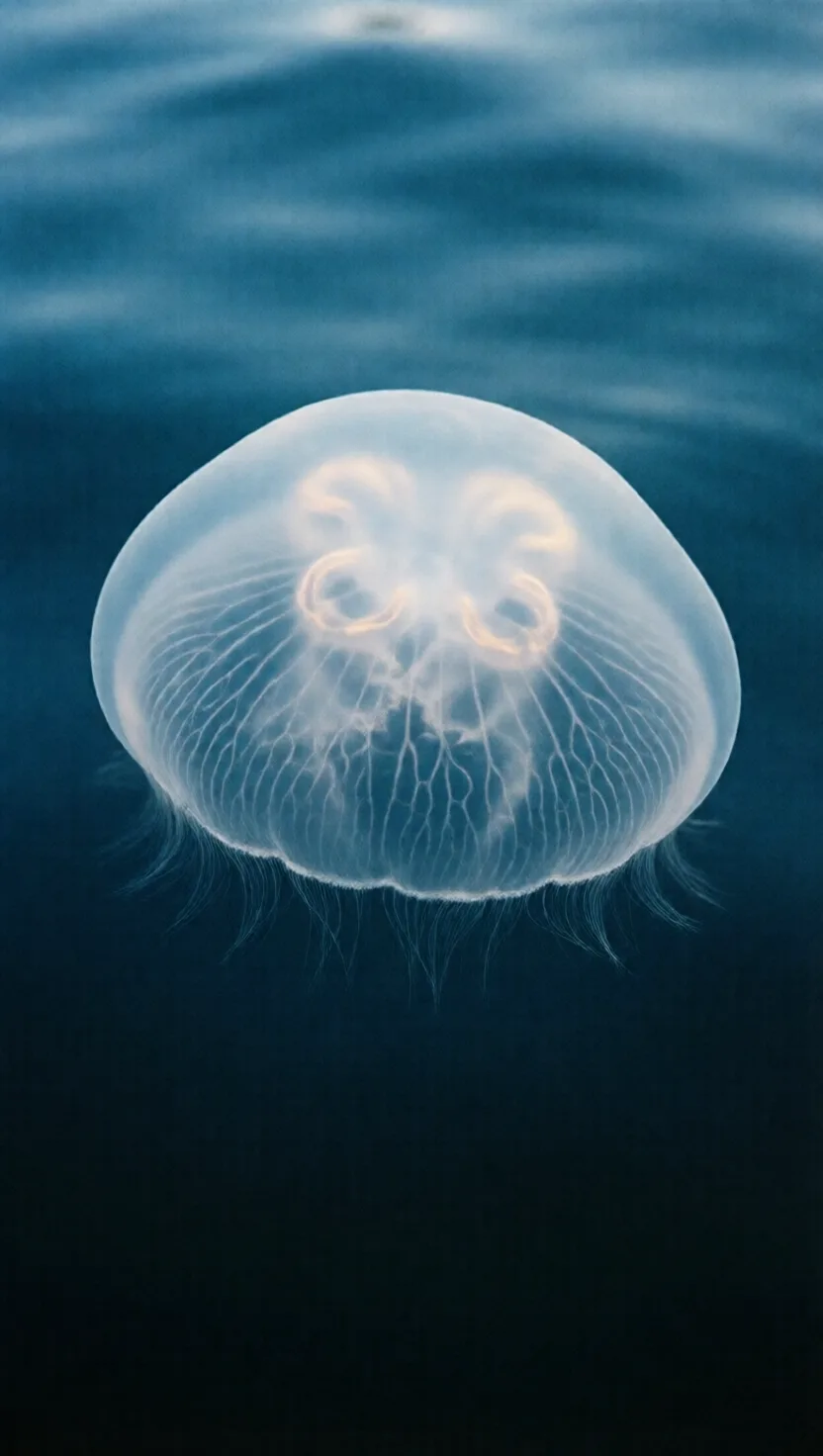
A jellyfish gets by with none of the organs we think of as essential—no brain, no heart, no blood, no bones. Instead of a central brain it runs on a 'nerve net,' a loose web of nerve cells spread through its body that senses light, touch and chemicals and fires the muscles that pulse the bell. It is a body that is roughly 95 percent water, steered entirely by reflexes with no command centre at all.
This brainless jellyfish has 24 eyes

This brainless jellyfish has 24 eyes

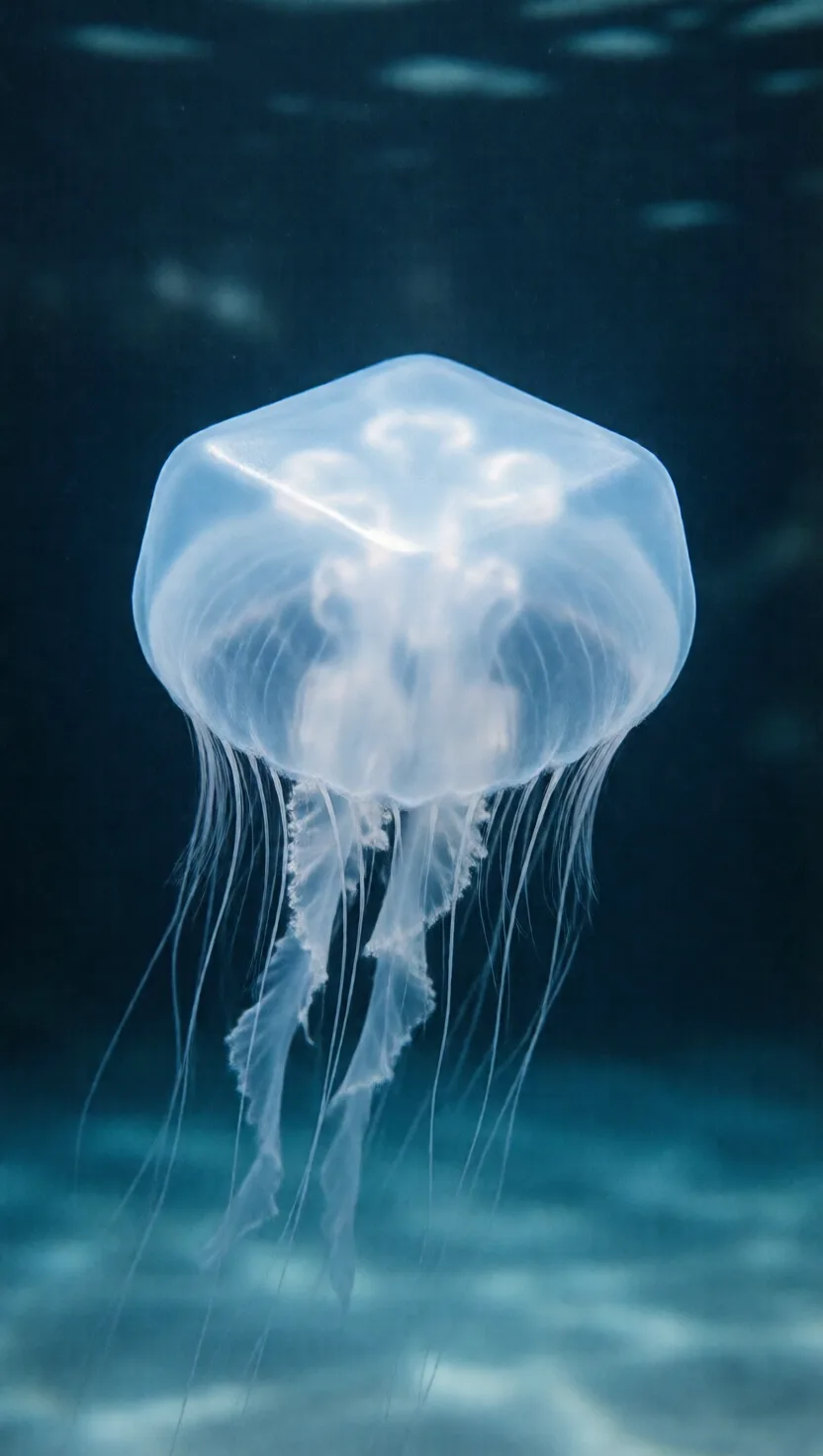
The box jellyfish carries 24 eyes, grouped in four sensory clusters around its bell. Some are simple light detectors, but others are surprisingly advanced, with lenses, retinas and corneas much like our own. A few always point straight up through the water toward the surface, watching the shoreline so the animal can steer toward or away from it—remarkable navigation for a creature with no brain to process the view.
A jellyfish sting is the fastest move in nature

A jellyfish sting is the fastest move in nature

Each stinging cell holds a coiled, venom-tipped harpoon kept under enormous pressure. When triggered, it fires in about 700 billionths of a second, the tip accelerating at over five million times the force of gravity—among the fastest movements known in all of biology. The tiny barb punches through skin faster than almost anything else alive, which is why a sting lands long before you ever feel the touch.
One jellyfish can be longer than a blue whale

One jellyfish can be longer than a blue whale

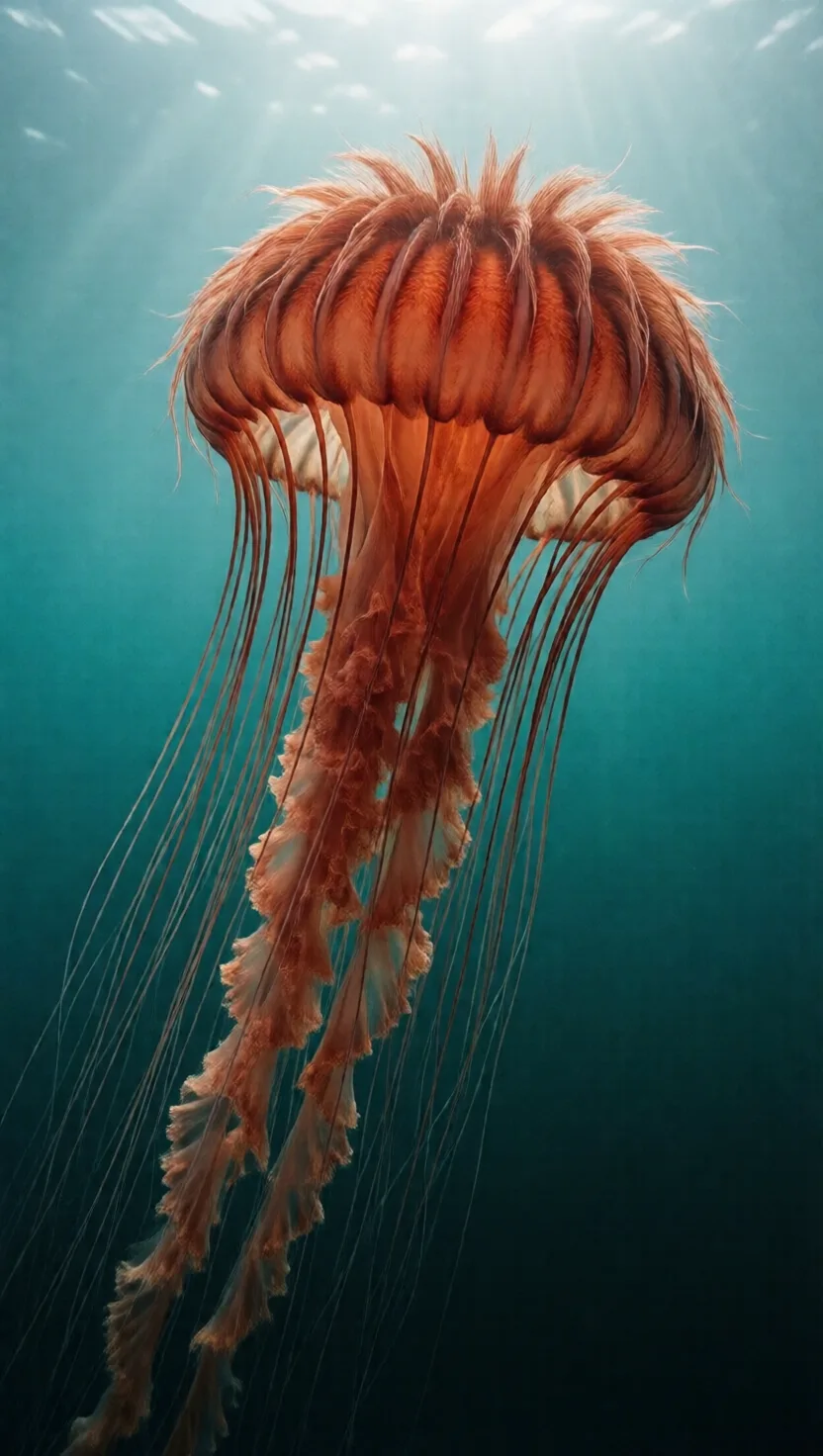
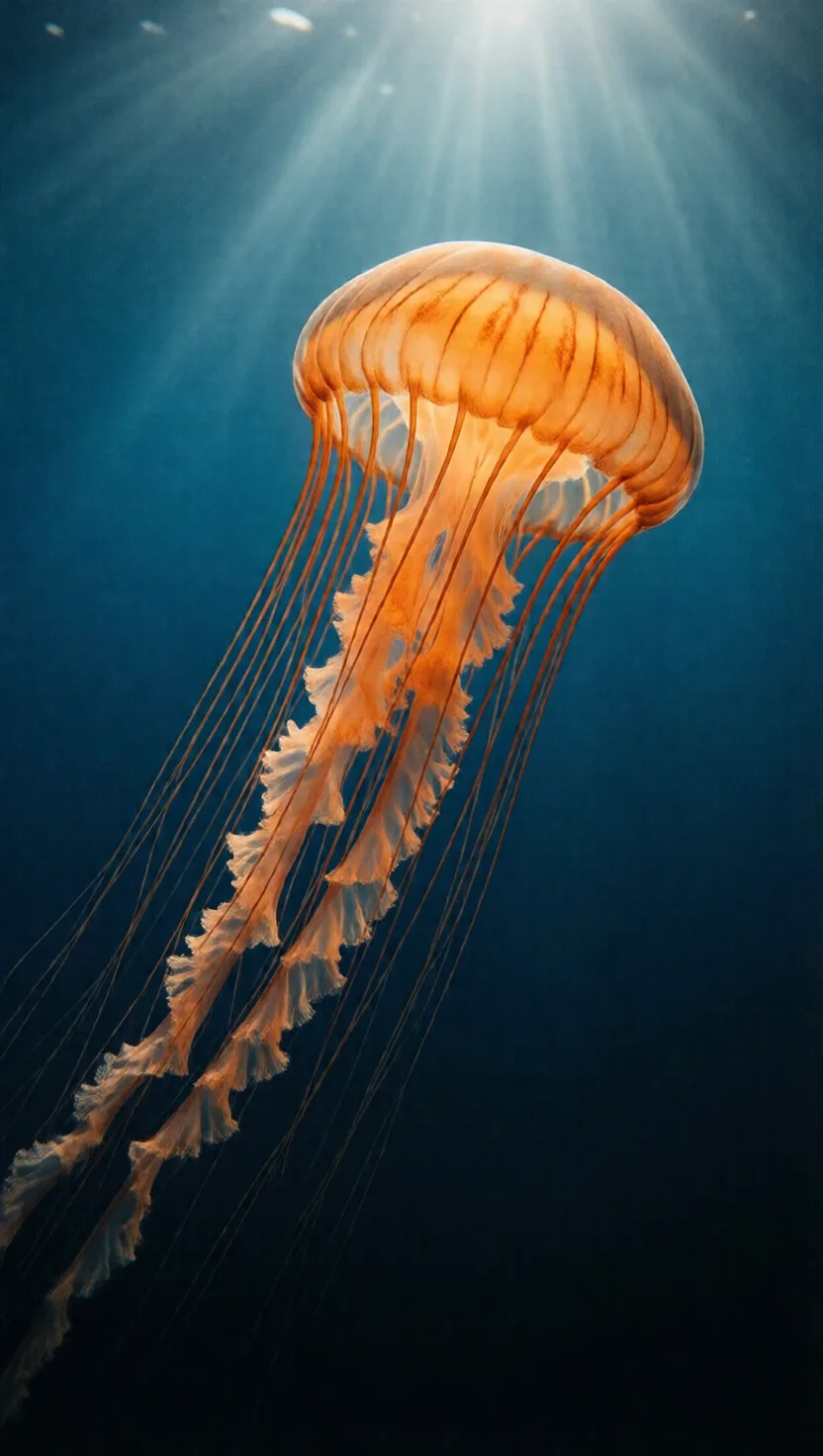
The lion's mane jellyfish trails a dense mane of fine tentacles beneath its broad bell. The largest one ever recorded, washed ashore in 1870, had tentacles stretching about 36.6 metres, or 120 feet—longer than a blue whale, making it one of the longest animals ever measured. The bell itself can spread more than two metres across. Yet almost all of that length is soft, watery tissue far thinner than it looks.
Some jellyfish lie upside down to farm sunlight

Some jellyfish lie upside down to farm sunlight

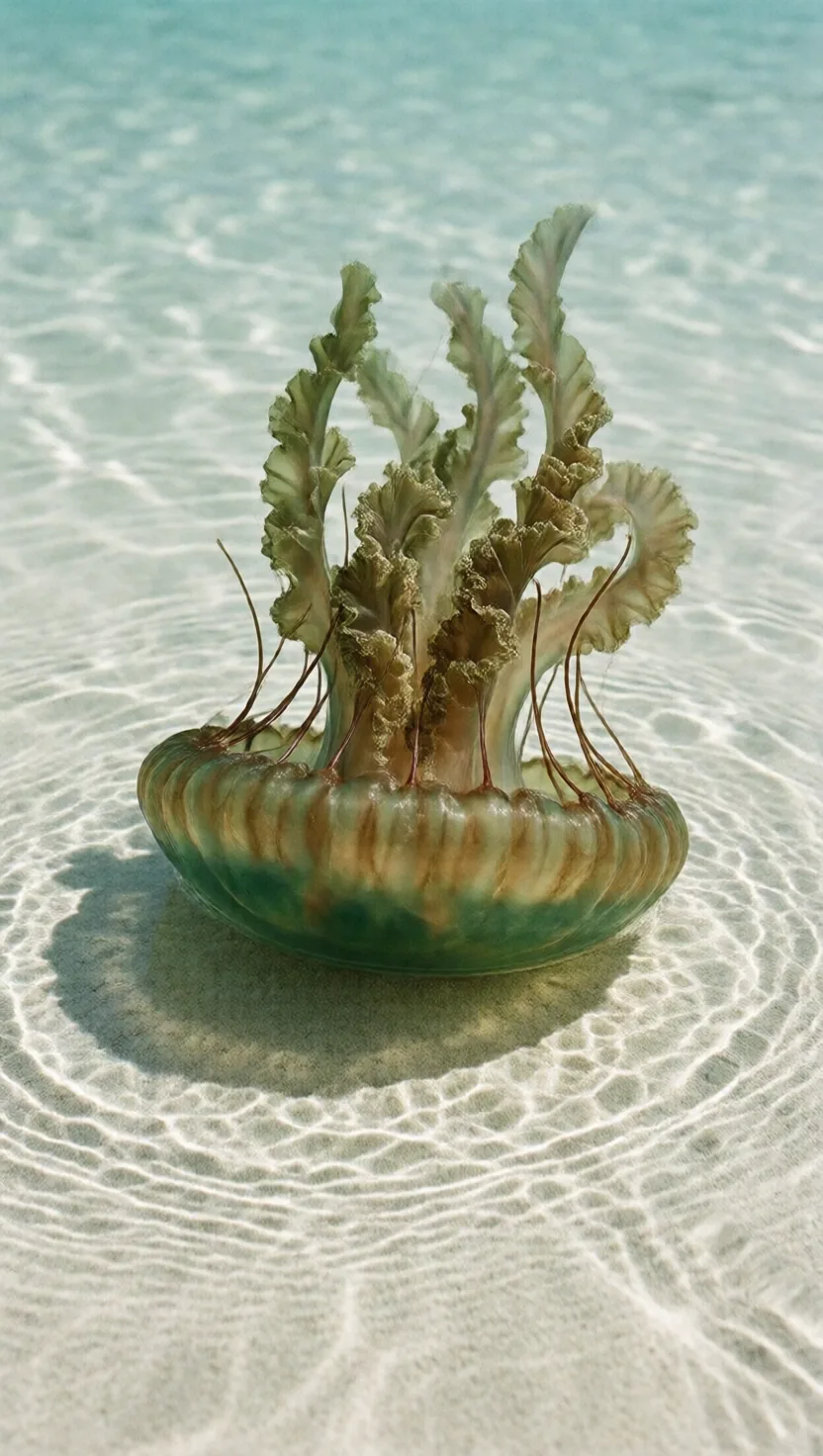
The upside-down jellyfish rests bell-down on the seabed with its frilly arms held up toward the sun. Those arms are packed with tiny algae living inside its tissues—the same kind that build coral reefs. The algae photosynthesise and hand over sugars, so the jellyfish feeds largely on sunlight without chasing prey. To keep its solar partners fed, it parks in bright, shallow water all day long.
A jellyfish's glow rewired modern biology

A jellyfish's glow rewired modern biology

A small jellyfish from the Pacific Northwest makes a substance called green fluorescent protein, which lights up green under blue light. Scientists learned to attach this glow to other proteins, turning it into a tag that makes living cells and processes visible under the microscope. The discovery transformed biology and medicine and earned a Nobel Prize in 2008. It all began with the natural shimmer along a jellyfish's rim.
Jellyfish born in space couldn't handle gravity

Jellyfish born in space couldn't handle gravity

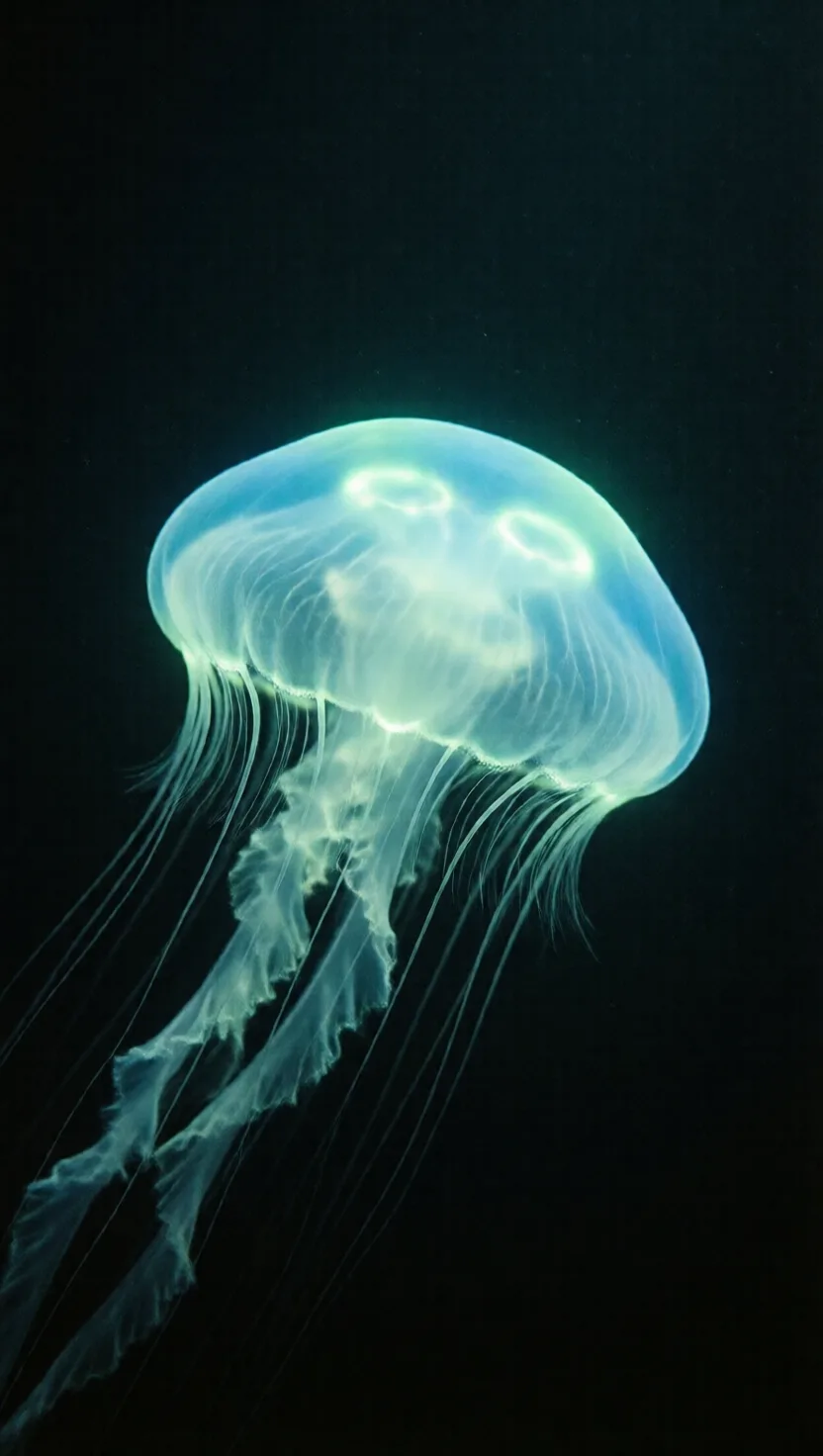
In 1991, thousands of moon jellyfish were flown aboard a space shuttle and bred in orbit, multiplying to roughly 60,000. Jellyfish sense up from down using tiny crystals that roll across sensory hairs. The space-born jellies grew these gravity sensors in weightlessness, but once back on Earth many pulsed and swam abnormally, struggling with a gravity they had never developed in. It hinted at how growing bodies depend on gravity.
Jellyfish are older than trees and dinosaurs

Jellyfish are older than trees and dinosaurs

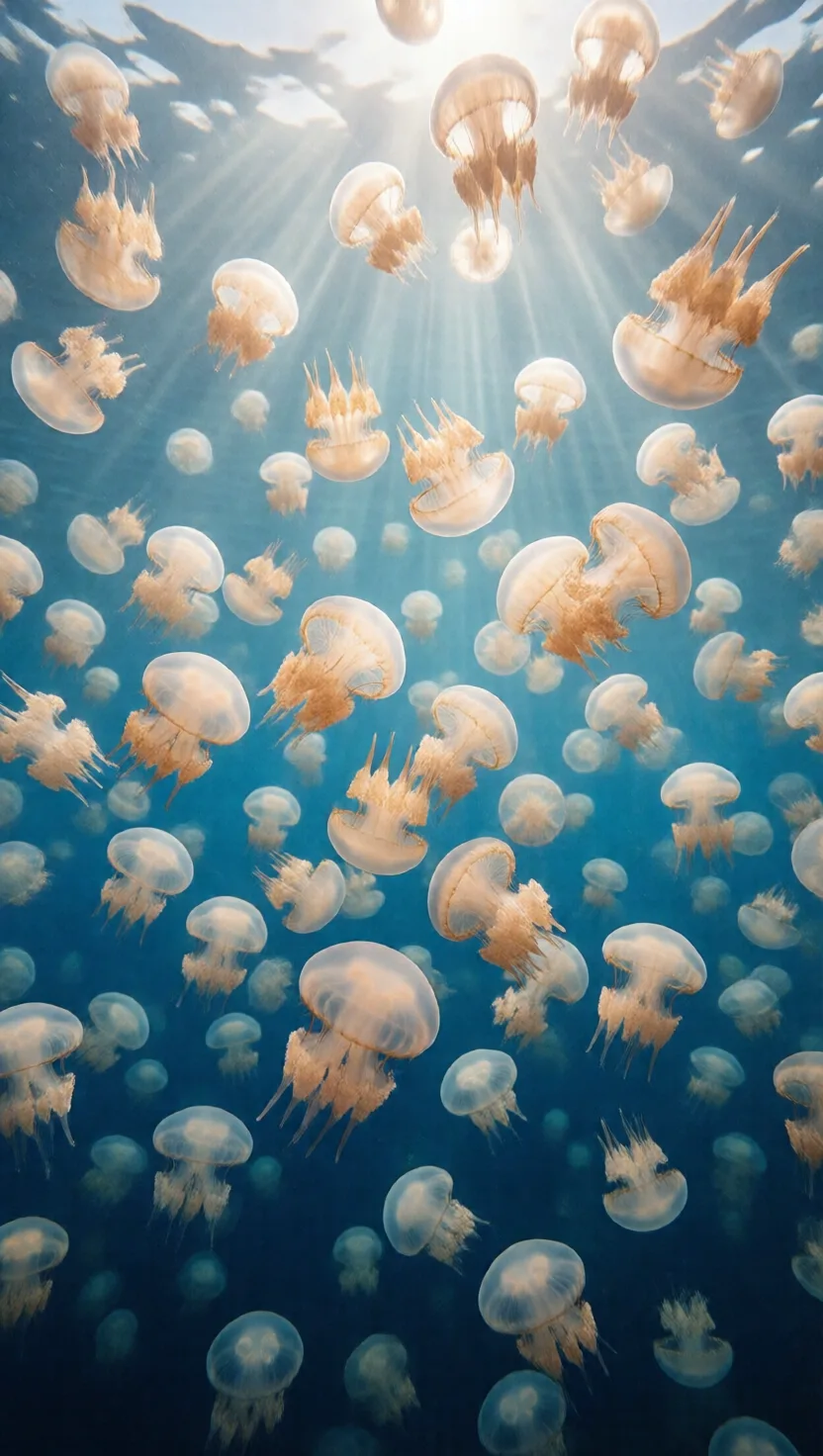
Soft bodies rarely fossilise, yet imprints of jellyfish have been found in rocks more than 500 million years old. That means these animals were already drifting the seas before the first trees grew on land and long before any dinosaur appeared. They have survived every mass extinction since, and when conditions suit them they still gather into blooms of millions—proof that a simple body plan can outlast almost everything.
tap →swipe ↑ for depthswipe ↓ to exit