Eight things the praying mantis really does

DC·179 Deep Cuts
The only insect proven to see in real 3D

The only insect proven to see in real 3D

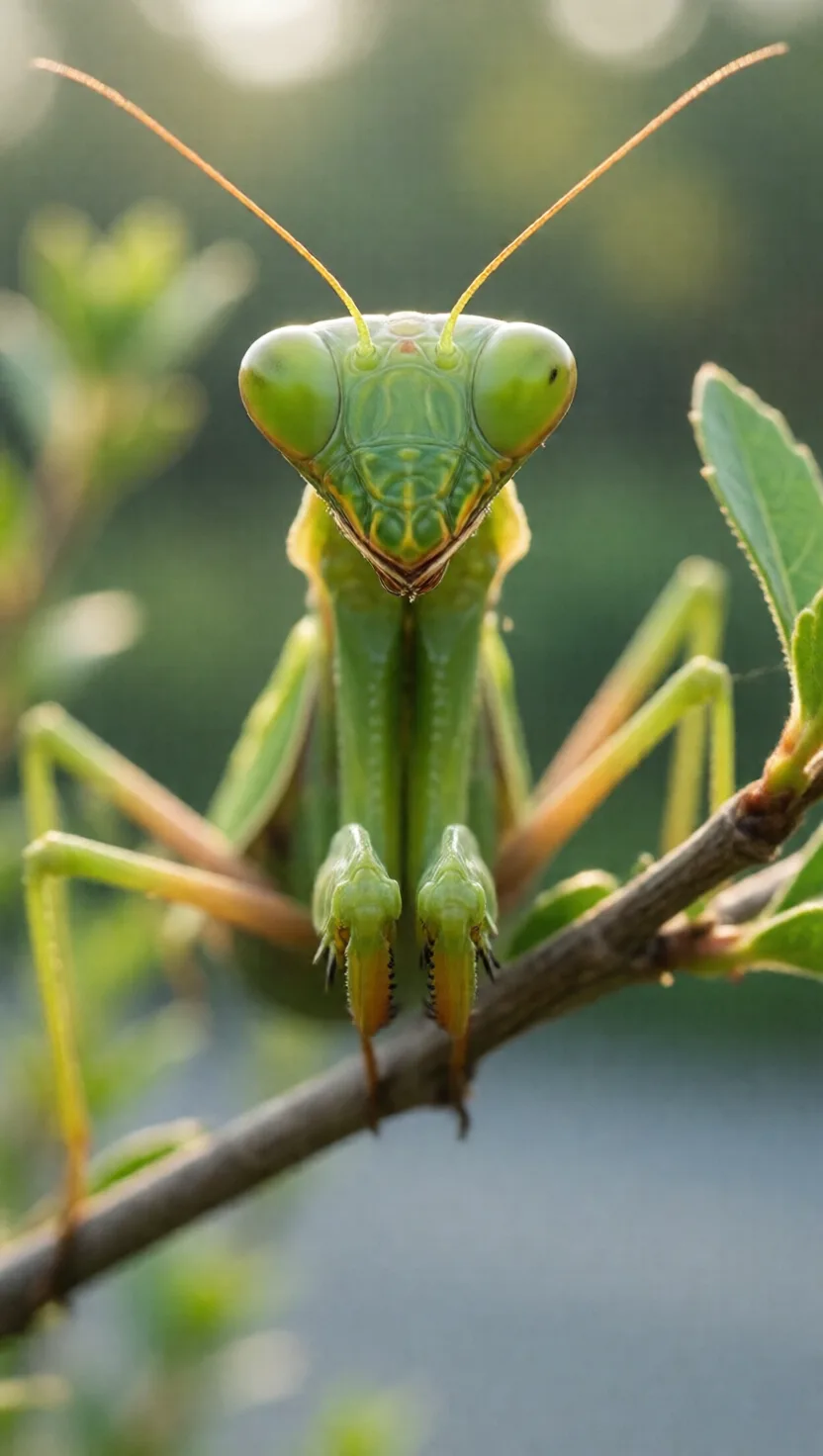
Praying mantises are the only insect known to have true stereoscopic 3D vision. Scientists tested this by gluing the world's tiniest 3D glasses onto mantises with beeswax. Their depth sense works differently from ours: instead of matching static images between the two eyes, the mantis brain, with about 1 million neurons, tracks where things move and change over time, a lean trick that lets a tiny brain still judge the exact distance to a strike.
It hears with one ear, in the middle of its chest

It hears with one ear, in the middle of its chest

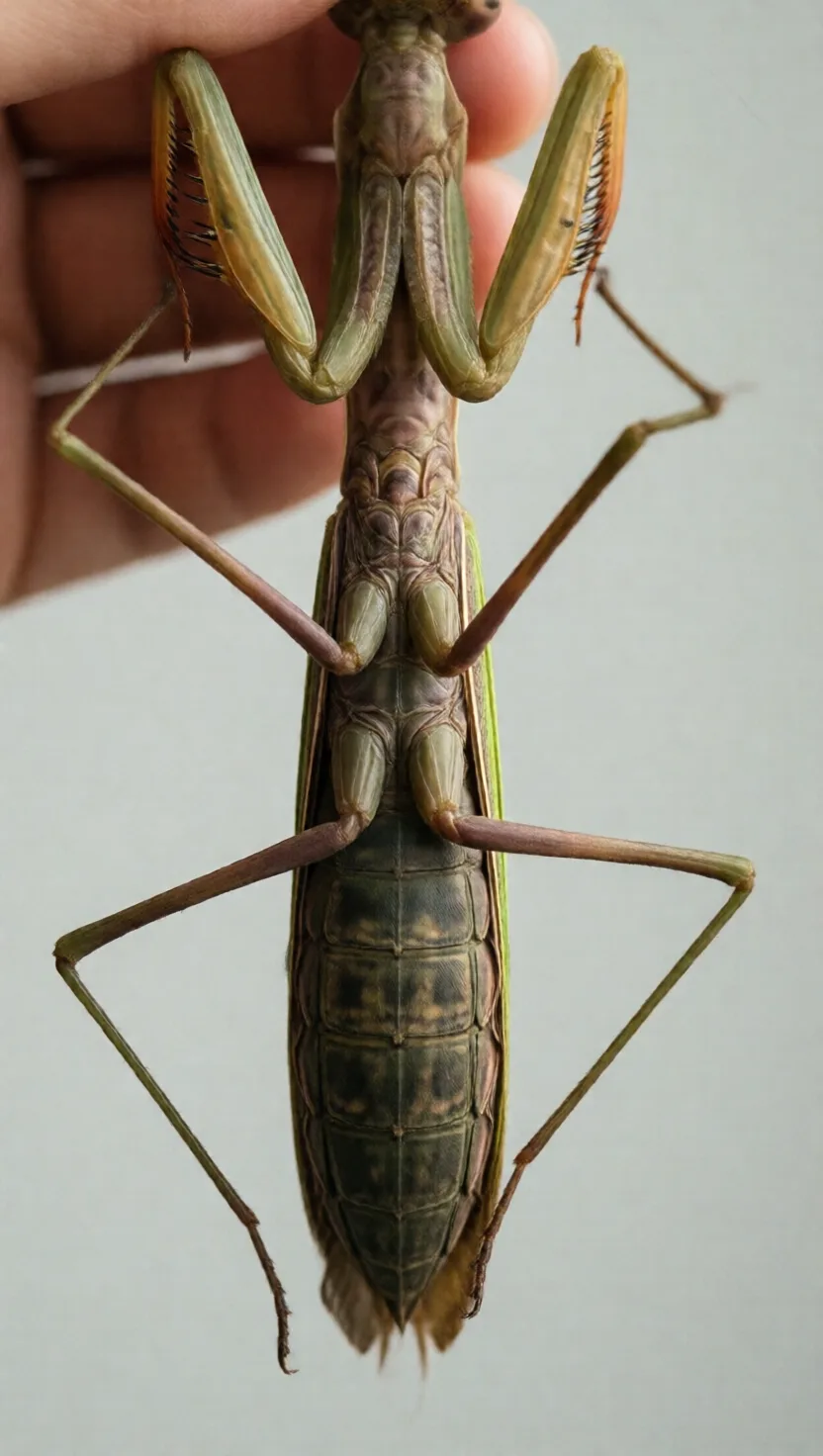
Most praying mantises have a single ear, set in a deep groove on the underside of the thorax rather than on the head. It is nearly deaf to ordinary sound but tuned to ultrasound between 25 and 45 kilohertz, exactly the frequency of a hunting bat's echolocation. First described in 1986, this one strange ear is essentially a dedicated bat-detector built into the chest.
It power-dives out of the sky to dodge bats

It power-dives out of the sky to dodge bats

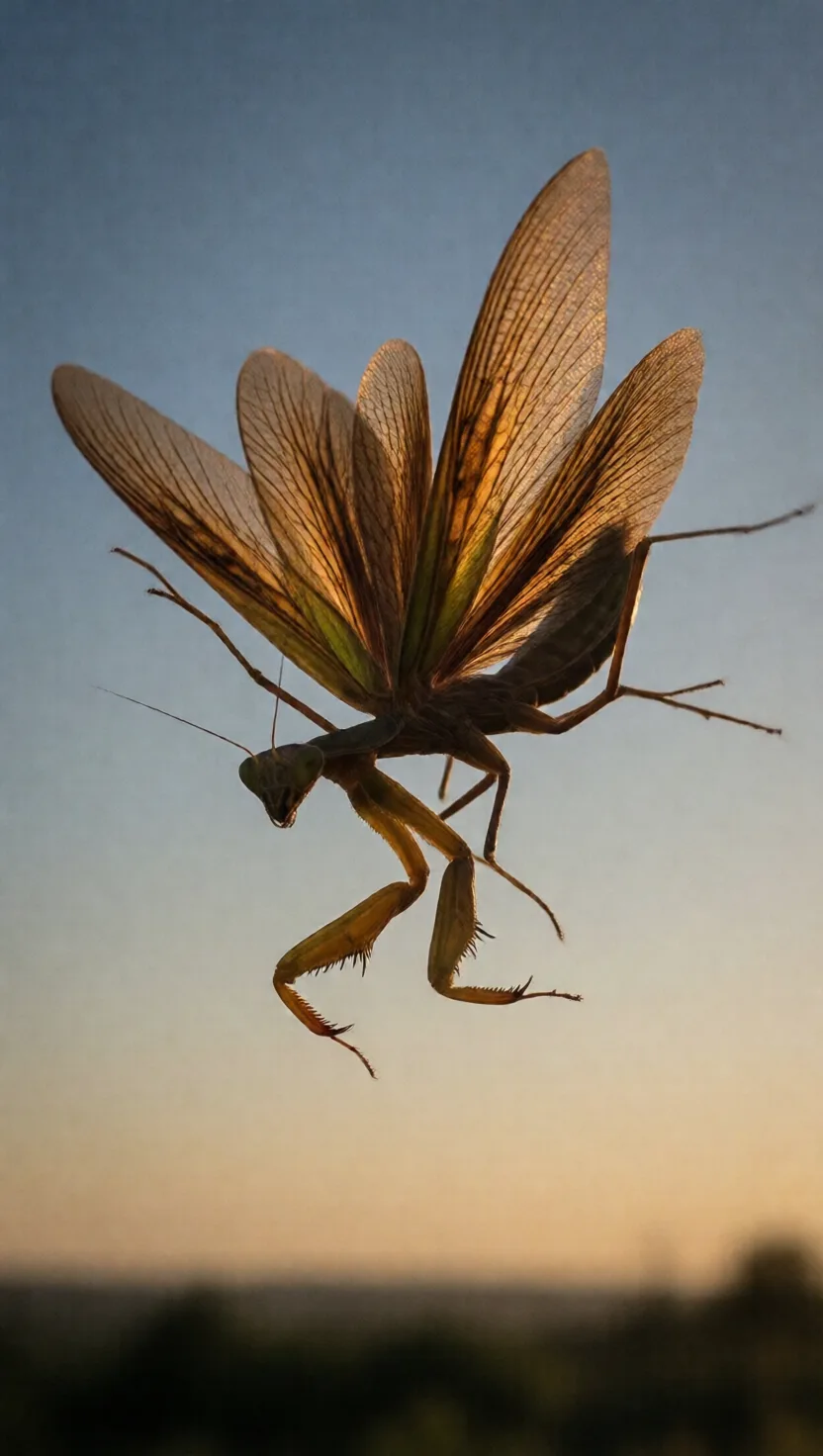
A flying mantis that hears a bat closing in does not just swerve, it folds into a sudden spiraling power dive straight toward the ground. Triggered by the bat's ultrasonic calls picked up by its single chest ear, this last-second plunge lets the mantis escape roughly 80 percent of the time. Researchers found the mantis even tunes the dive to how close the bat is, bailing out only when an attack is truly imminent.
Its killer strike takes just 60 milliseconds

Its killer strike takes just 60 milliseconds

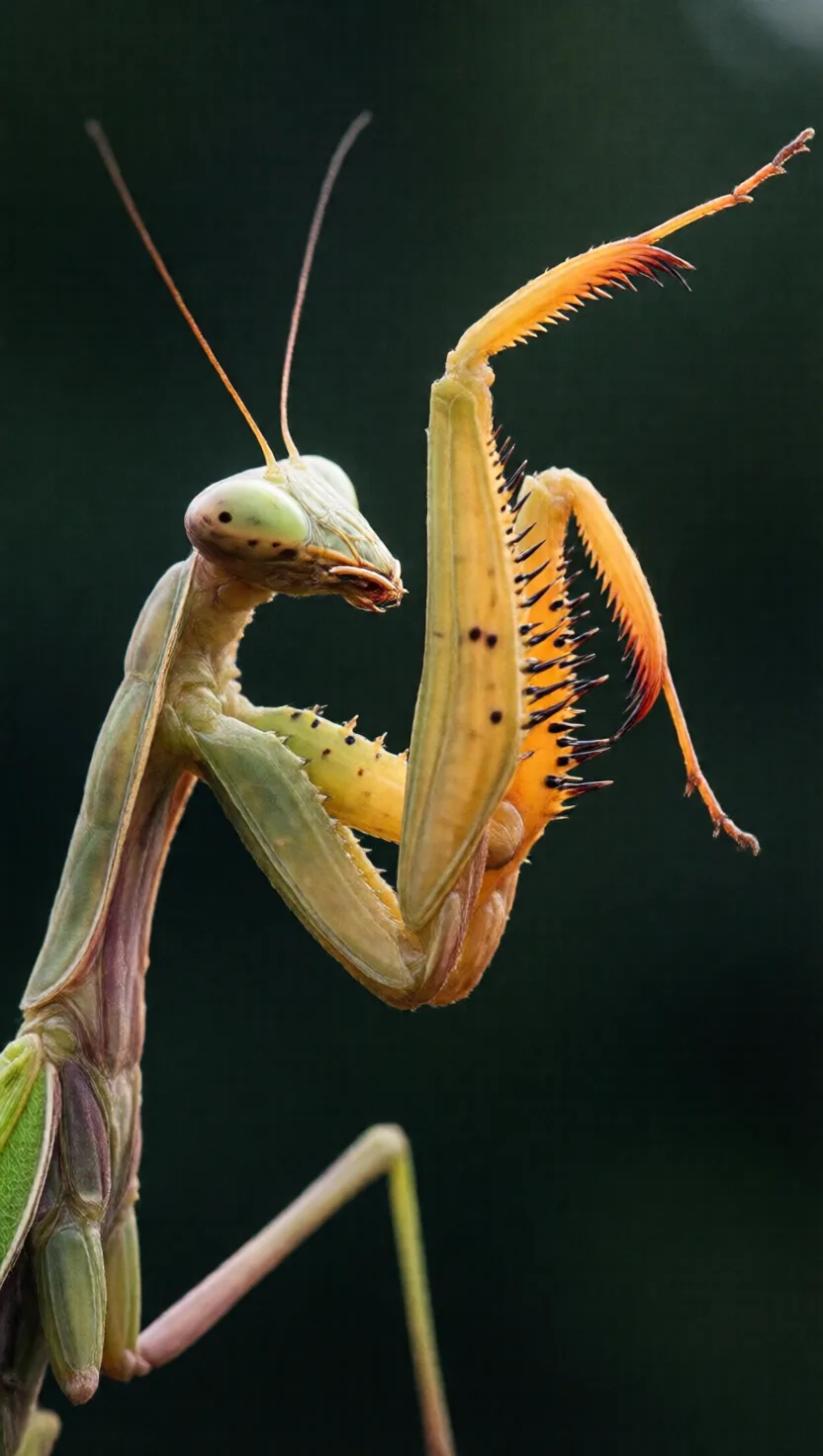
The mantis snaps its spined forelegs shut faster than you can blink. Filming the Madagascan marbled mantis at 200 frames per second, researchers in 2020 clocked the fastest strikes at about 60 milliseconds from start to capture. Even more striking, the mantis adjusts: it strikes fastest at fast-moving prey and slows down, sometimes pausing mid-reach, for slow targets, proving the strike is flexibly tuned rather than a fixed reflex.
The pink 'orchid' is a mantis, and bees love it more

The pink 'orchid' is a mantis, and bees love it more

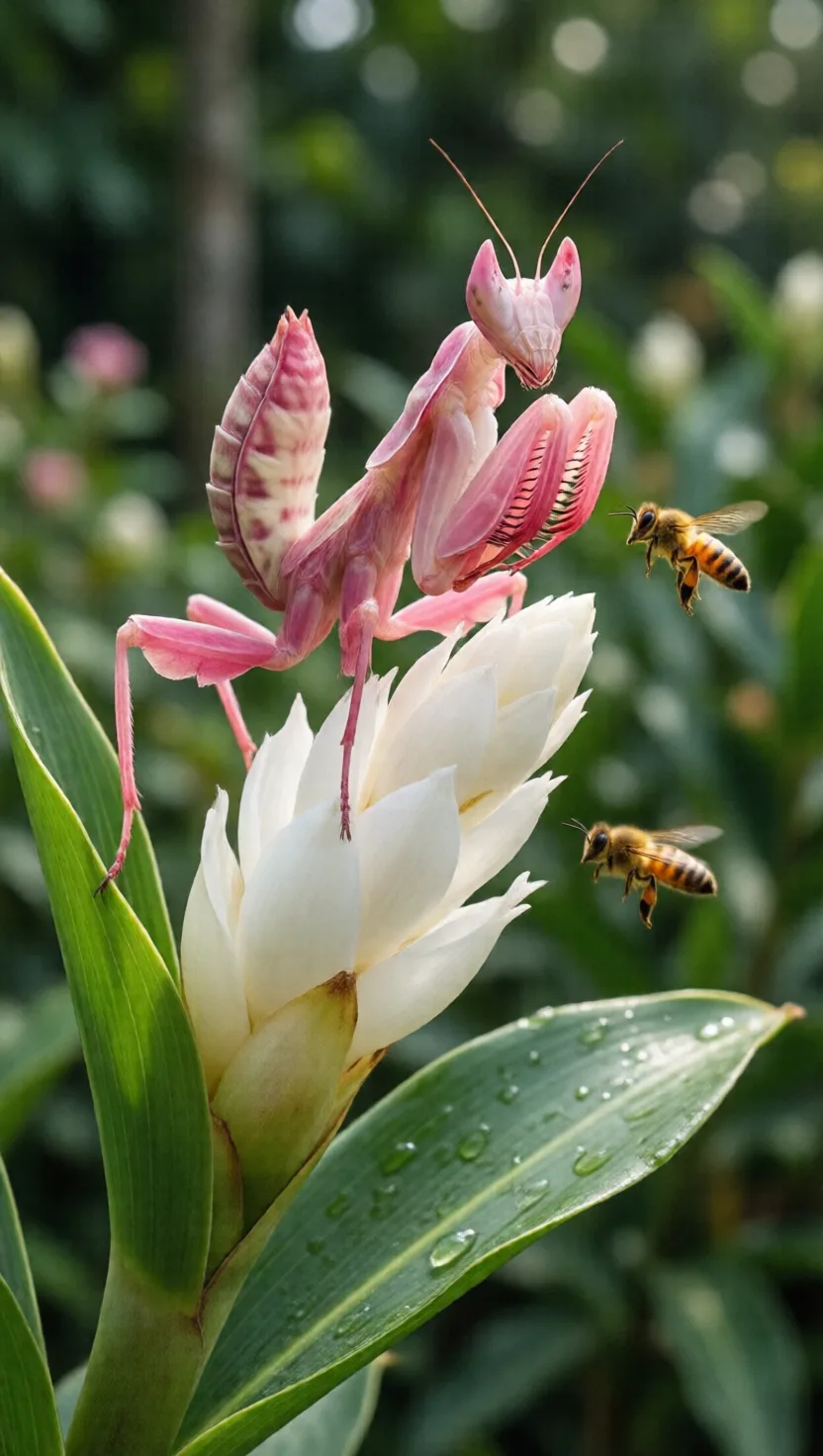
The orchid mantis has petal-shaped legs and a pink-and-white body that mimics a flower so convincingly it draws in pollinators as prey. In a field study published in 2014, an ecologist found the mantis attracted wild pollinators at a rate about 30 percent higher than the real flowers around it, making it the first animal shown to lure prey by out-flowering actual blooms.
Eaten by his mate, he fathers more eggs for it

Eaten by his mate, he fathers more eggs for it

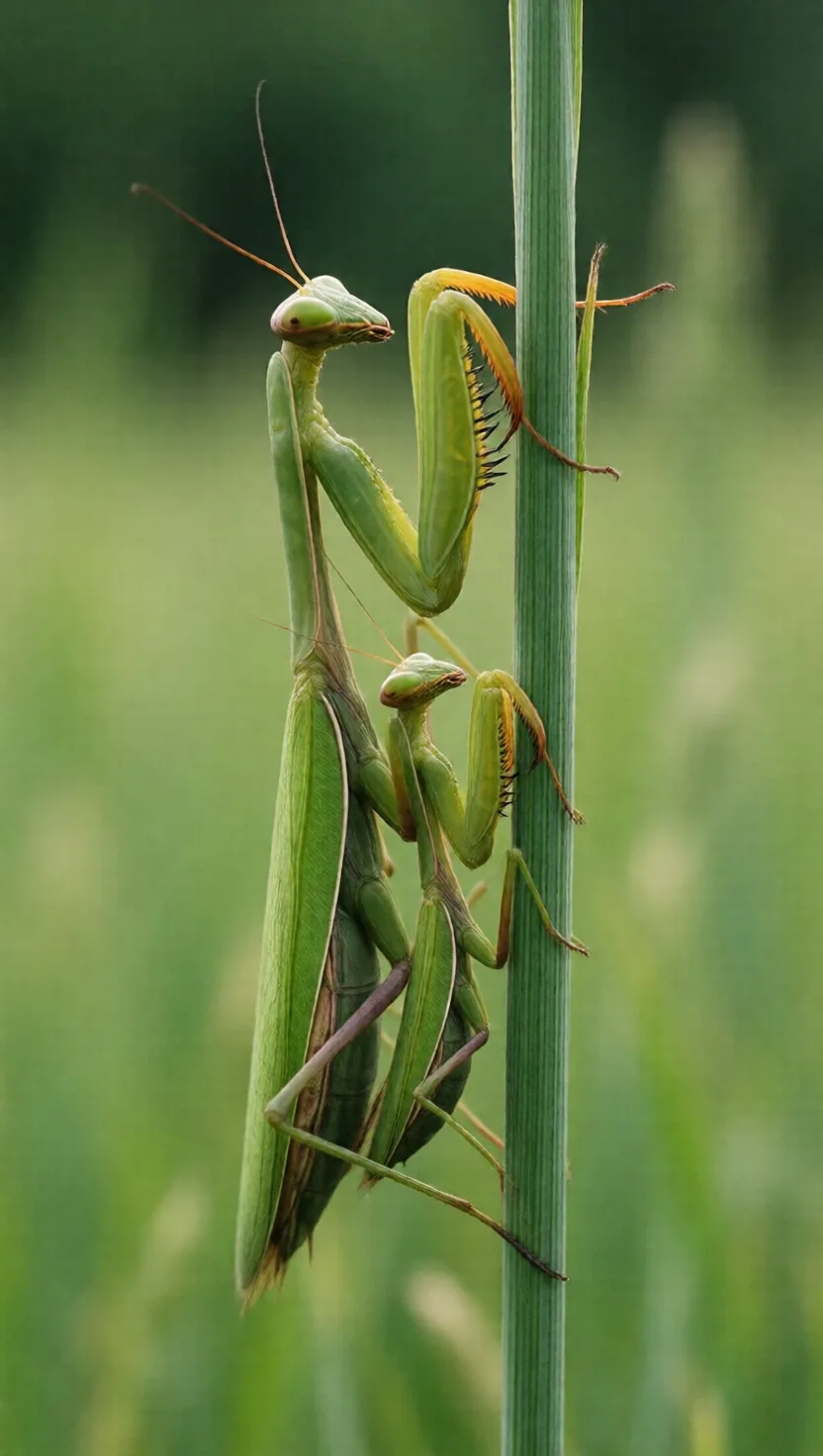
Sexual cannibalism is real but not universal: a field study of the European mantis found females ate the male in about 31 percent of wild matings, not every time. When it does happen, it pays off for the male. In a 2016 study, scientists fed males crickets laced with traceable amino acids and showed that cannibalized males passed significantly more of their body's nutrients into the female's eggs, boosting the number of offspring they fathered.
An insect that hunts and eats hummingbirds

An insect that hunts and eats hummingbirds

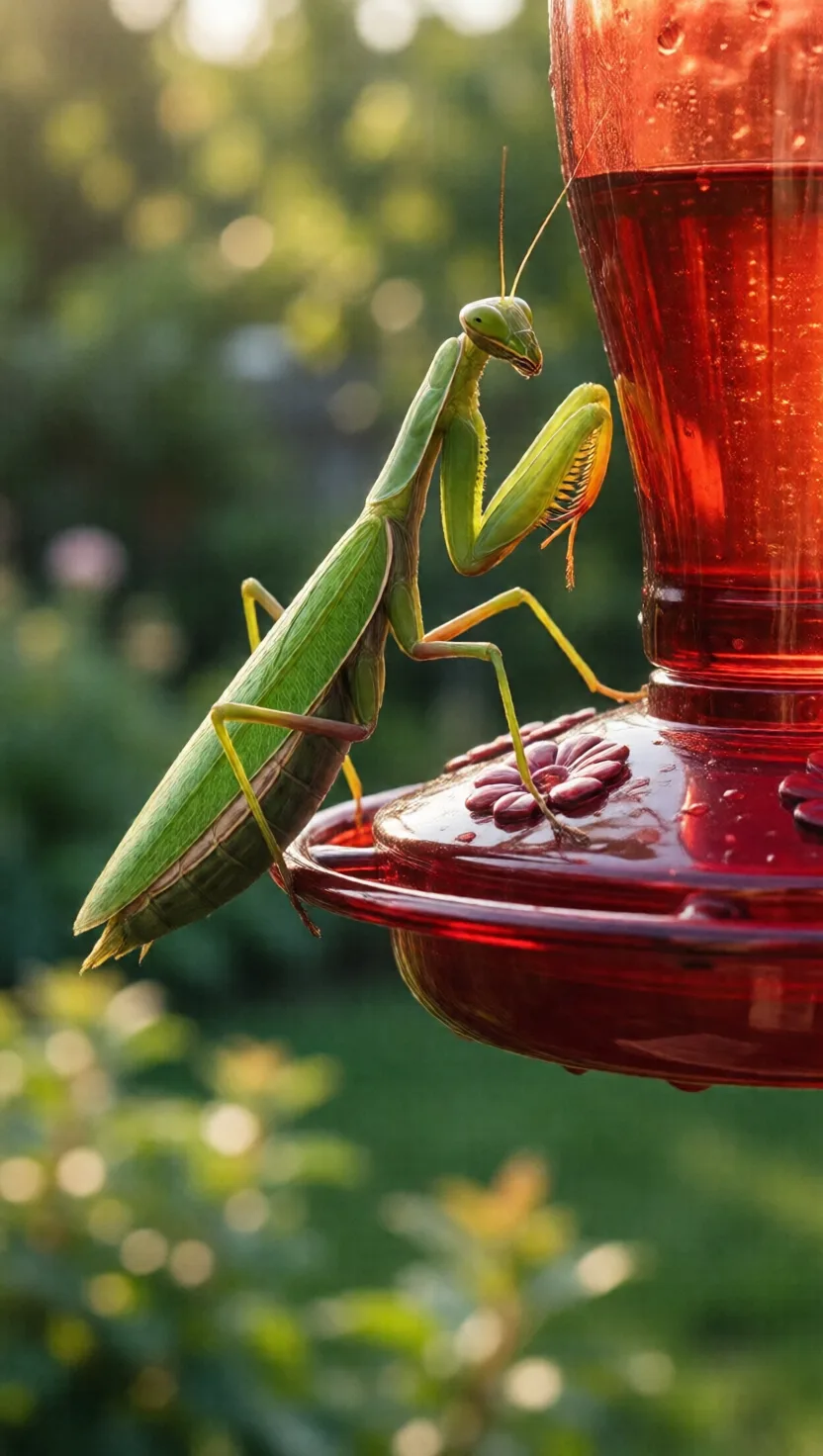
Praying mantises are big enough to take down small birds. A global review published in 2017 documented 147 cases of mantises capturing birds across 13 countries on every continent except Antarctica. More than 70 percent came from the United States, where mantises ambush hummingbirds at feeders, the ruby-throated hummingbird being the most frequent victim, often grabbed in mid-air and eaten alive.
That dark 'pupil' watching you is an illusion

That dark 'pupil' watching you is an illusion

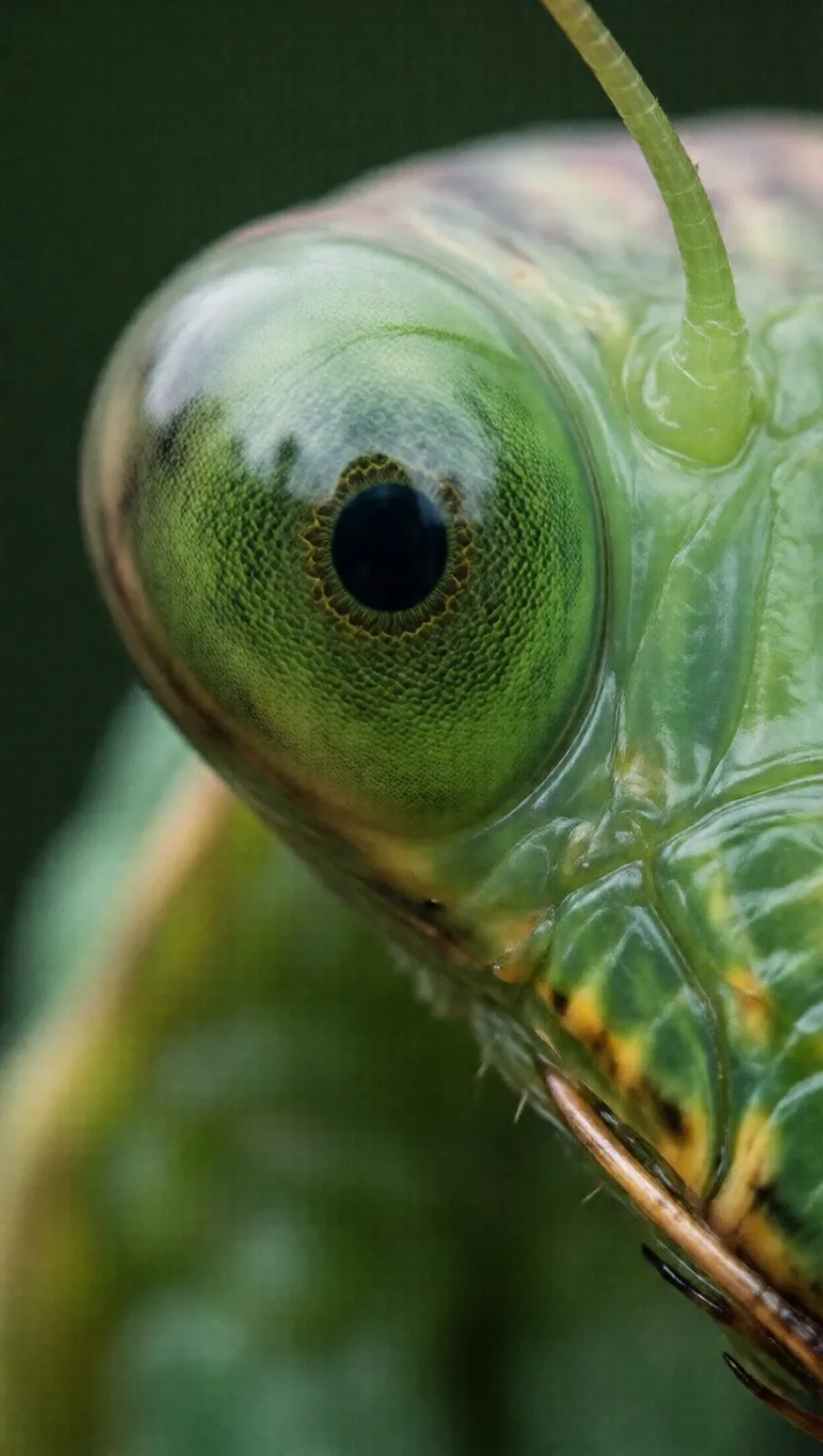
Look at a mantis and a black dot in each compound eye seems to follow you, but it has no pupil at all. The spot, called a pseudopupil, is simply the cluster of tiny eye facets pointed straight at you: they absorb the light heading your way and look black, while the facets angled elsewhere reflect green. As you move, a different set of the eye's thousands of facets lines up with you, so the dark spot glides along to track your position.
tap →swipe ↑ for depthswipe ↓ to exit