Eight things the world's freeloading plants do

DC·175 Deep Cuts
This plant fires its seeds like a gun

This plant fires its seeds like a gun

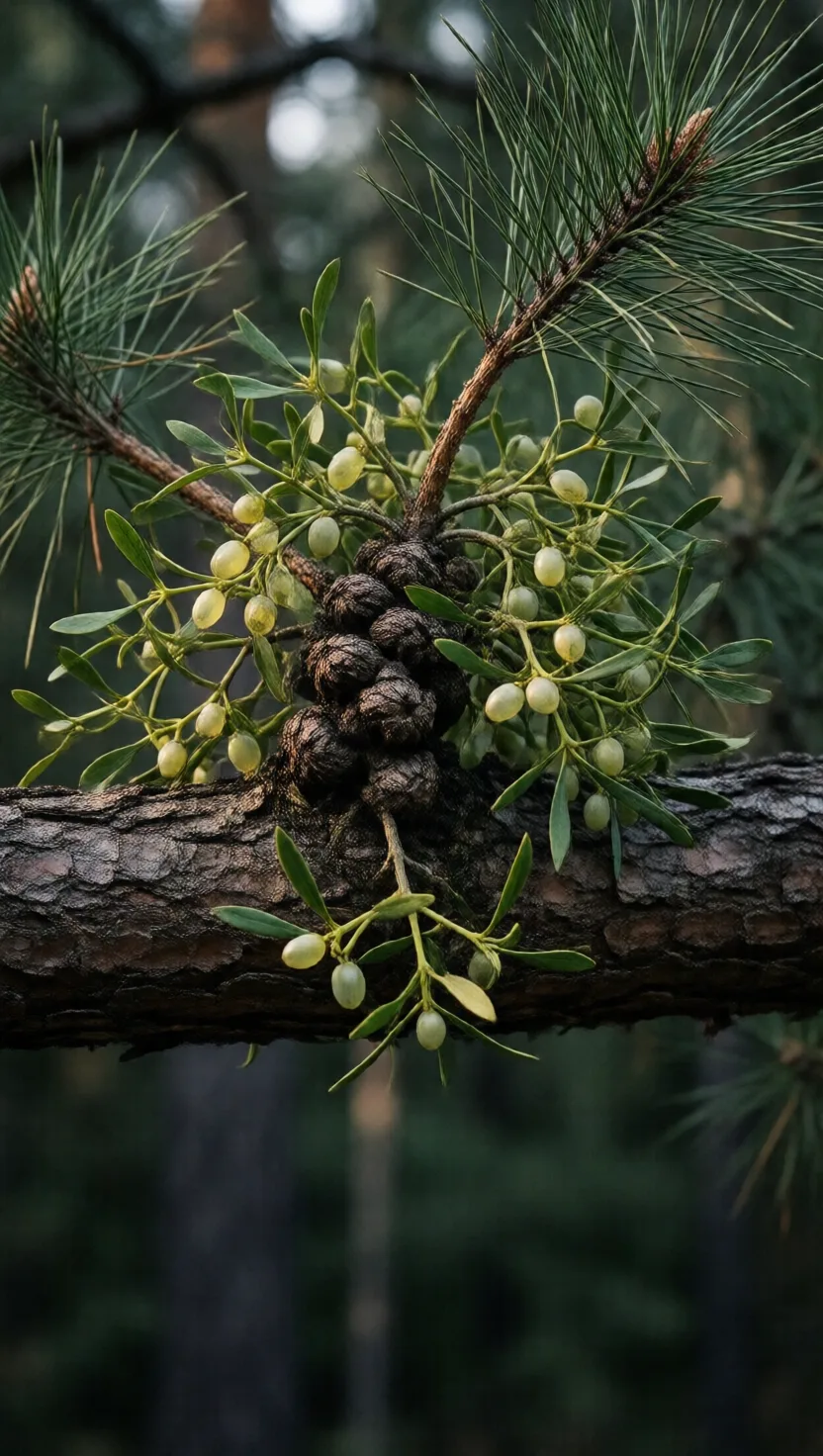
Dwarf mistletoes grow on pine and spruce, and they spread by force. As a berry ripens, water pressure builds inside it until the slightest touch, or even its own warmth, makes it burst. The seed rockets out at around 27 meters per second, roughly 60 miles an hour, and can land more than 15 meters away on a neighboring tree. A sticky coating glues it where it strikes. A single infected pine may be peppered over a season with tens of thousands of these tiny botanical bullets.
Mistletoe drinks from a tree's veins

Mistletoe drinks from a tree's veins

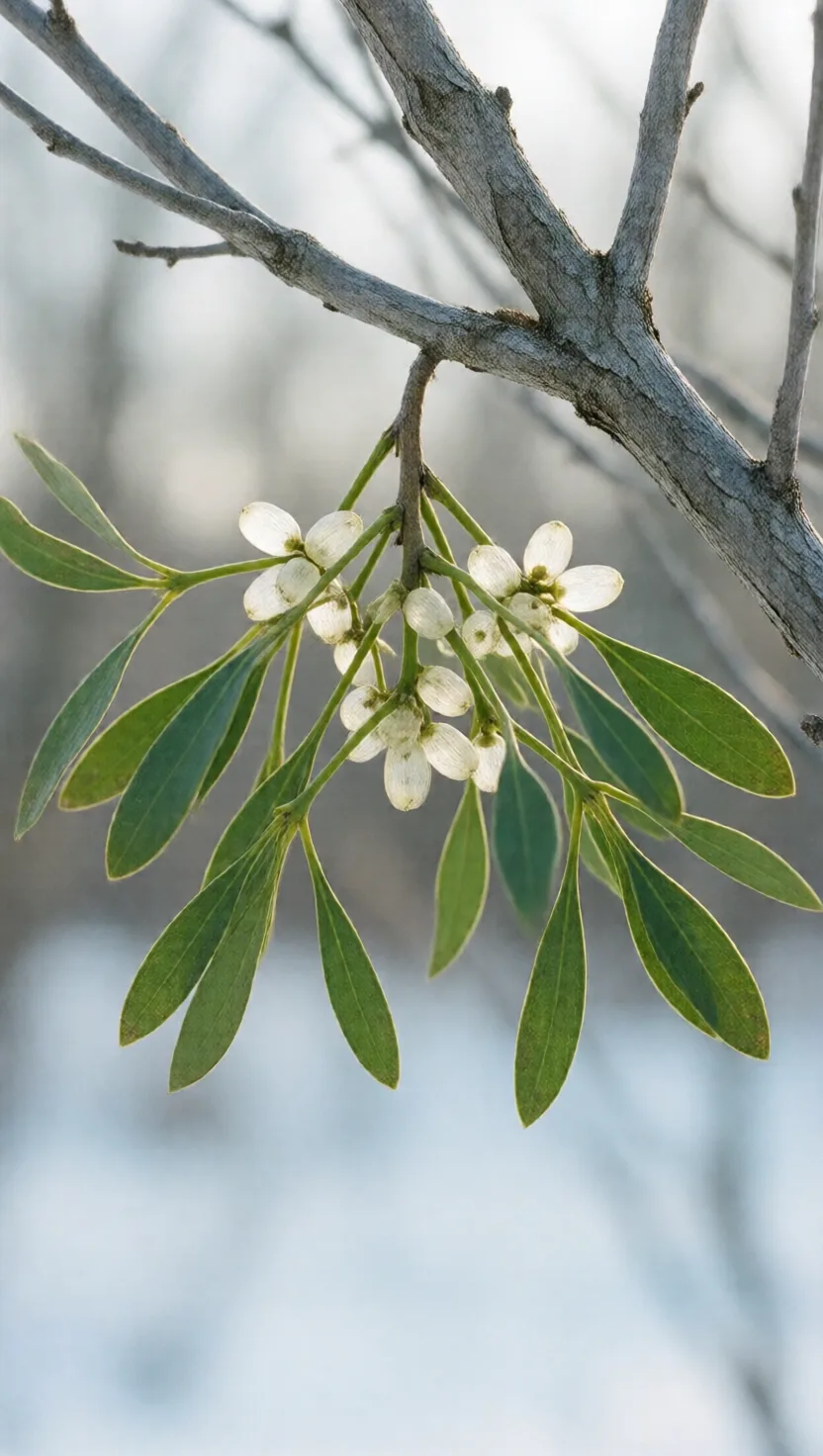
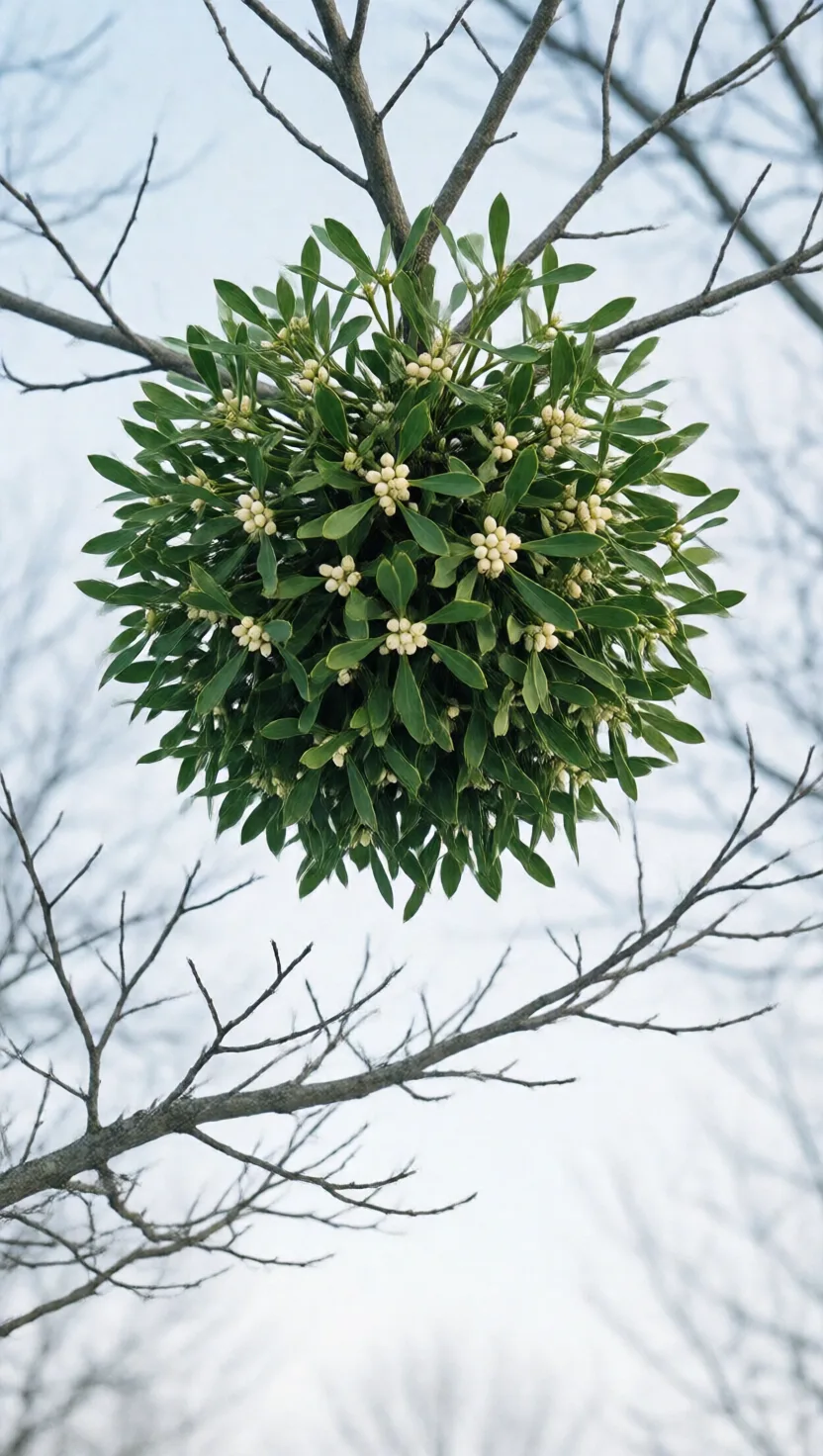
Mistletoe keeps its own green leaves and makes some of its own food, yet it still taps its host for water. Instead of putting roots in soil, it sinks a wedge-like organ called a haustorium through the bark and into the tree's water-carrying vessels. To pull the water across, the mistletoe holds its own tissues at an even lower pressure than the tree and simply lets the water evaporate from its leaves, returning nothing. A heavily infected tree can be quietly drained from the inside.
Remove the mistletoe, the birds vanish

Remove the mistletoe, the birds vanish

Mistletoe looks like a pest, but it quietly holds whole woodlands together. In a landscape-scale experiment, researchers stripped every mistletoe plant from dozens of patches of woodland and watched what followed. Within three years those woods lost more than a third of their woodland-dependent bird species, while untouched control sites held steady or even gained birds. Its rich, year-round berries and dense nesting clumps feed and shelter so many animals that ecologists rank it a keystone of the forest.
A leafless vine that hunts by smell

A leafless vine that hunts by smell

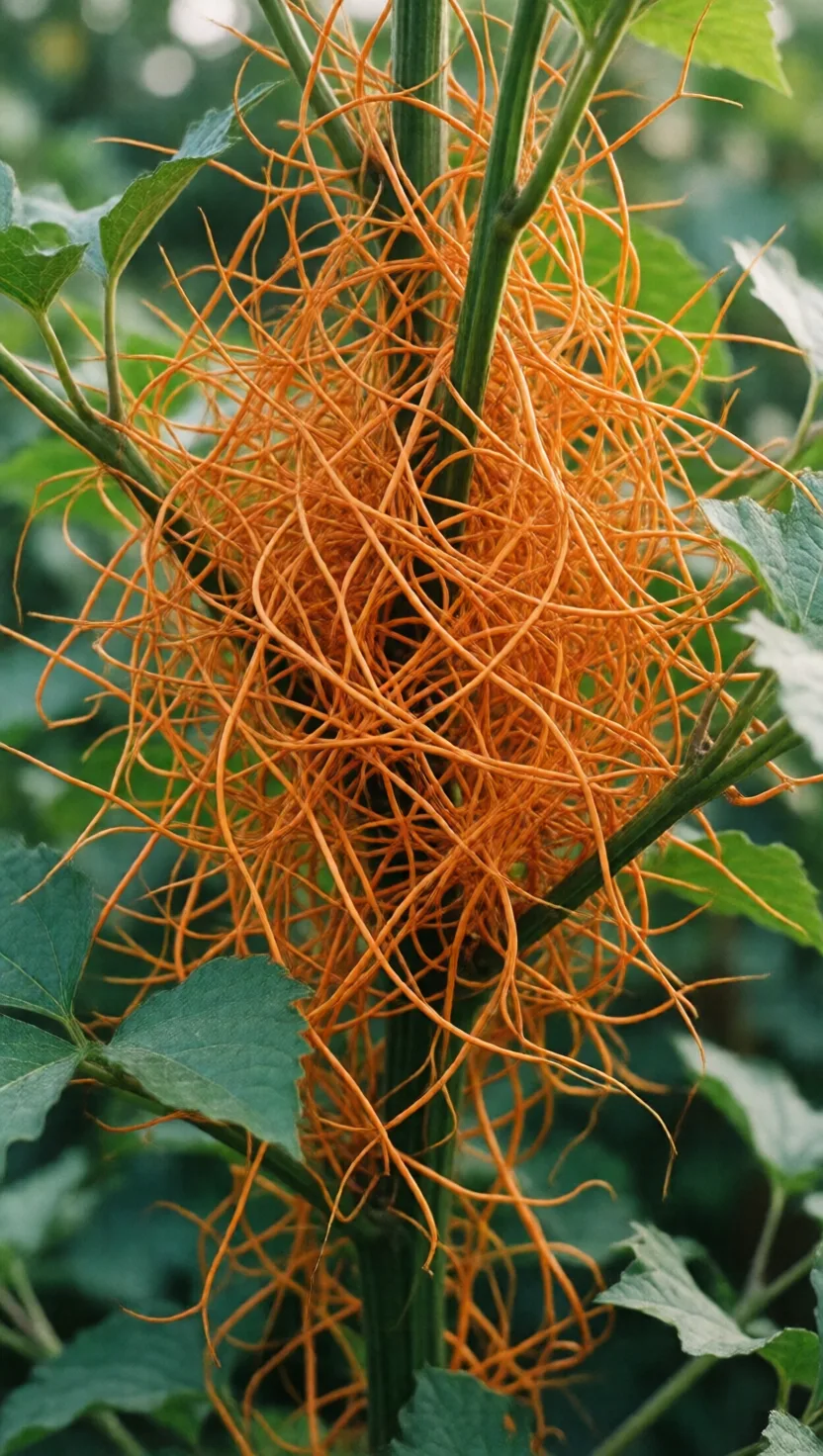
Dodder is a parasite that looks like a tangle of orange string. It has almost no leaves, no working roots, and barely any green, so a freshly sprouted seedling has only days to find a victim before it starves. It does it by scent. The seedling grows in slow circles, sampling the air, and bends toward the smell of a suitable host plant. Offered tomato and wheat in experiments, it reliably leans toward the tomato. Once it touches a stem, it coils on and drives feeding pegs into the plant's plumbing.
The biggest flower is a hidden parasite

The biggest flower is a hidden parasite

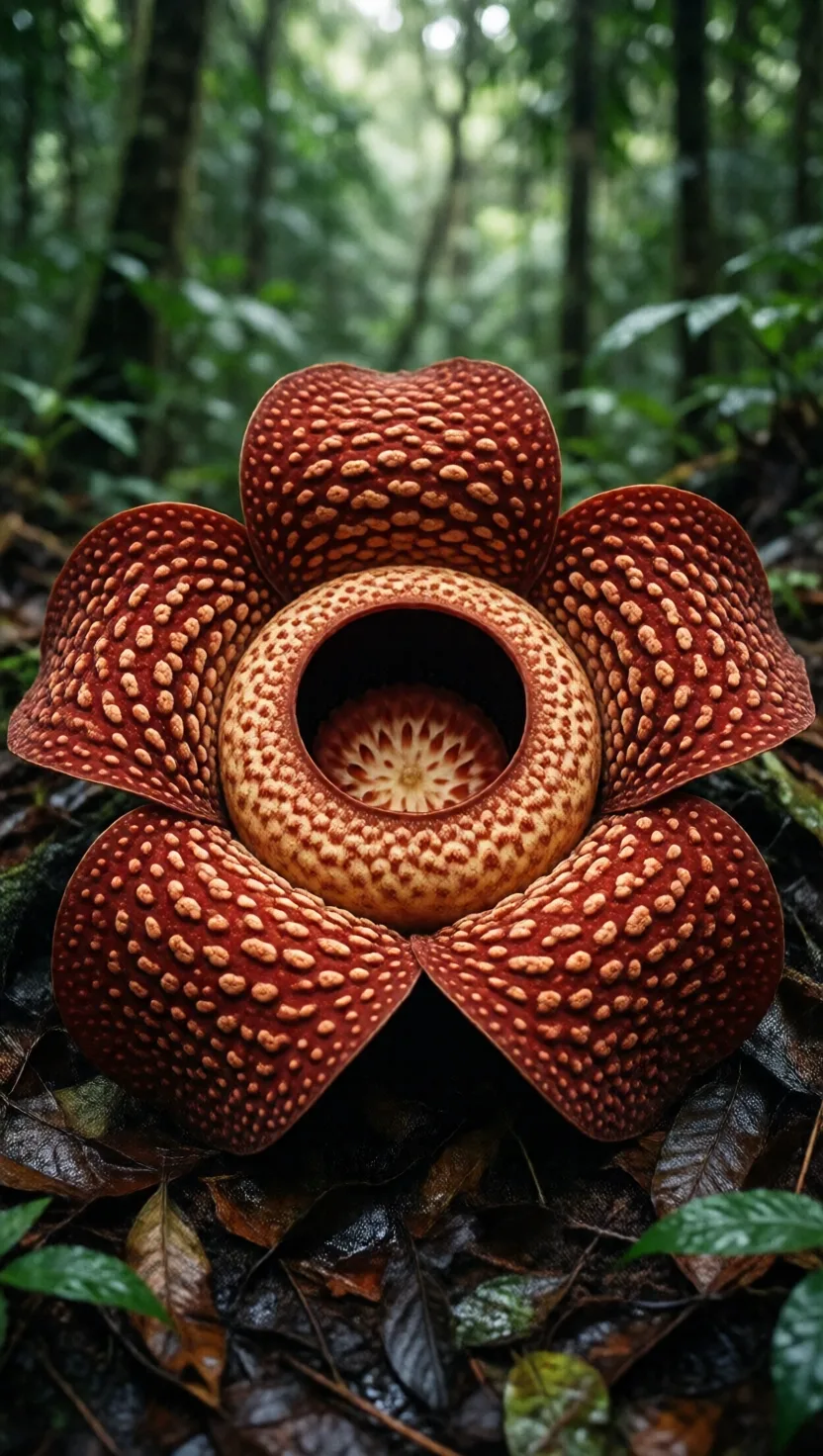
Rafflesia produces the largest single flower on Earth, a rubbery red bloom up to about a meter across and as heavy as 11 kilograms. The rest of the plant barely exists: no leaves, no stem, no roots, just fine threads living hidden inside a jungle vine, the way a fungus lives in wood. Only the flower ever breaks out. It smells of rotting meat, a stench that draws carrion flies to carry its pollen. The huge bloom lasts only a few days before collapsing into a black slime.
The word 'mistletoe' means 'dung twig'

The word 'mistletoe' means 'dung twig'

Mistletoe cannot plant itself, so it depends on birds. A bird eats the sticky berries, then either wipes the gummy seeds off its beak onto a branch or passes them in its droppings, which glue to the bark and sprout high in the canopy. People noticed this long ago. The name mistletoe comes from old words meaning roughly dung and twig, because the plant kept appearing on branches exactly where birds had left their droppings. The unglamorous name records precisely how the plant gets around.
Mistletoe twists trees into witches' brooms

Mistletoe twists trees into witches' brooms

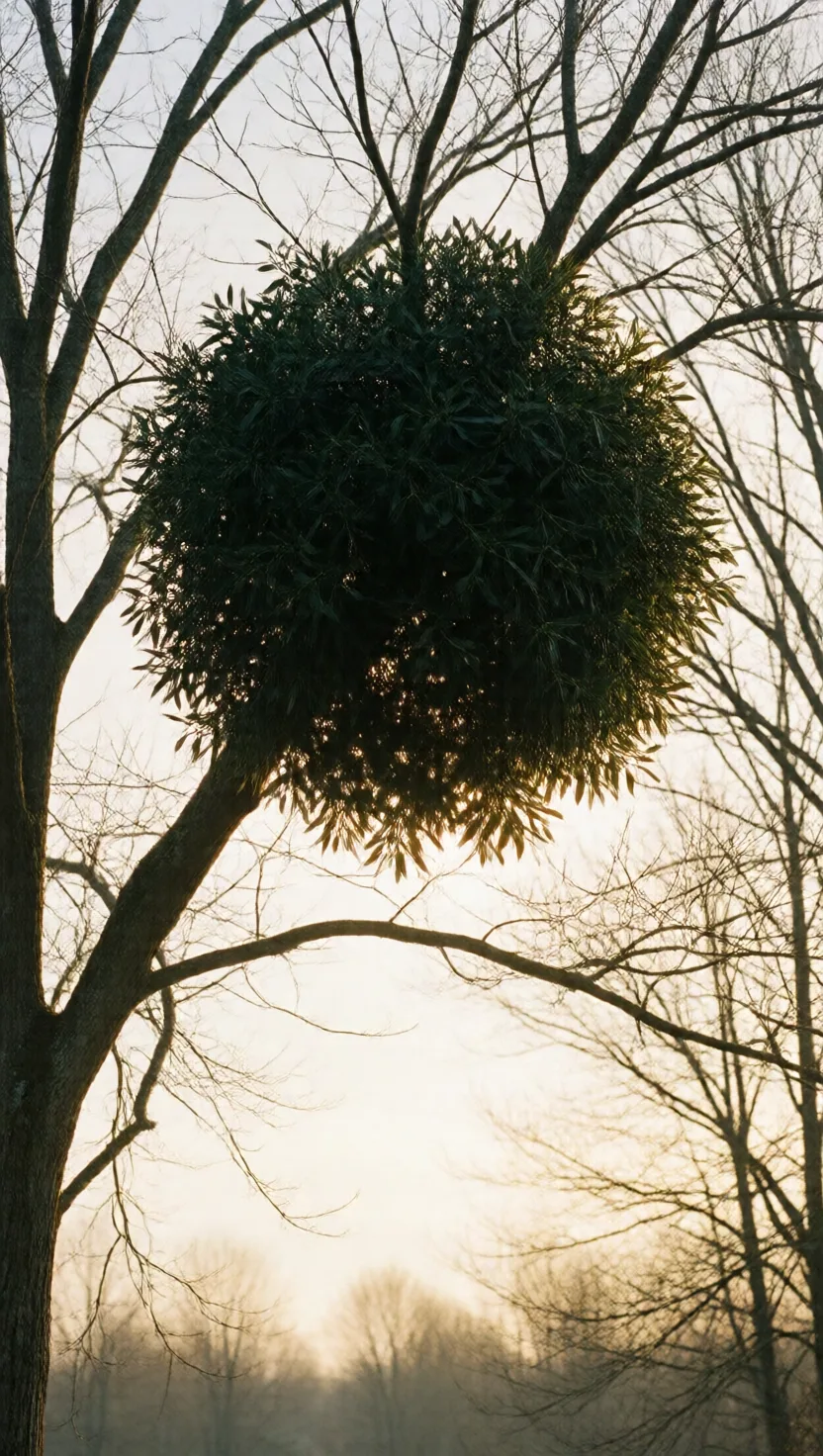
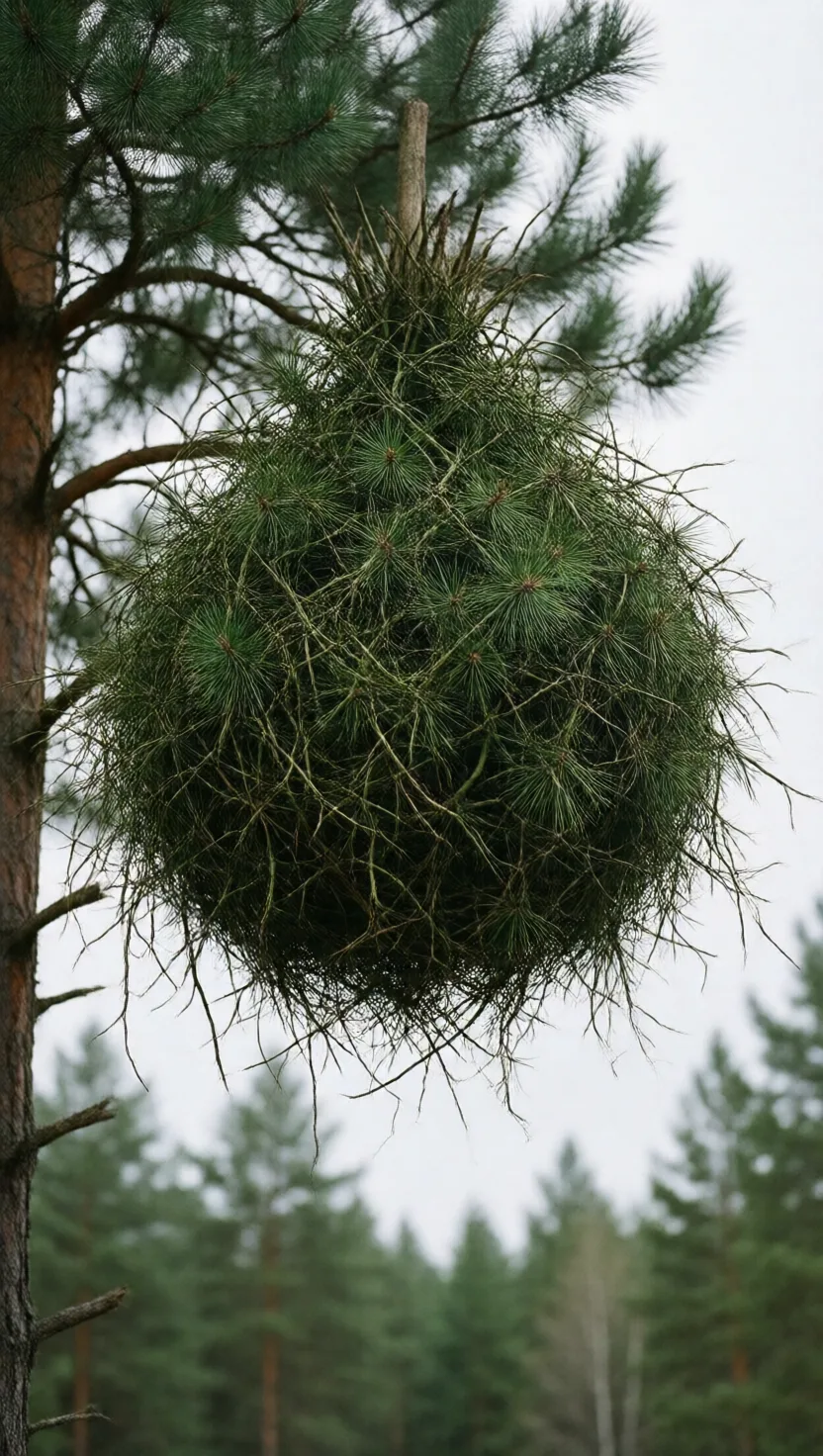
Where dwarf mistletoe digs into a conifer, the tree's own growth runs wild. Signals from the parasite force the branch to sprout a dense, tangled mass of short, deformed twigs all from a single point, a deformity foresters call a witches' broom. The needles in it stay green, but the broom steadily drains the tree, and a conifer crowded with brooms slowly weakens and can die. Some brooms grow large and heavy enough to snap branches, and they may persist for decades after the mistletoe itself is gone.
These seeds wait years for a chemical cue

These seeds wait years for a chemical cue

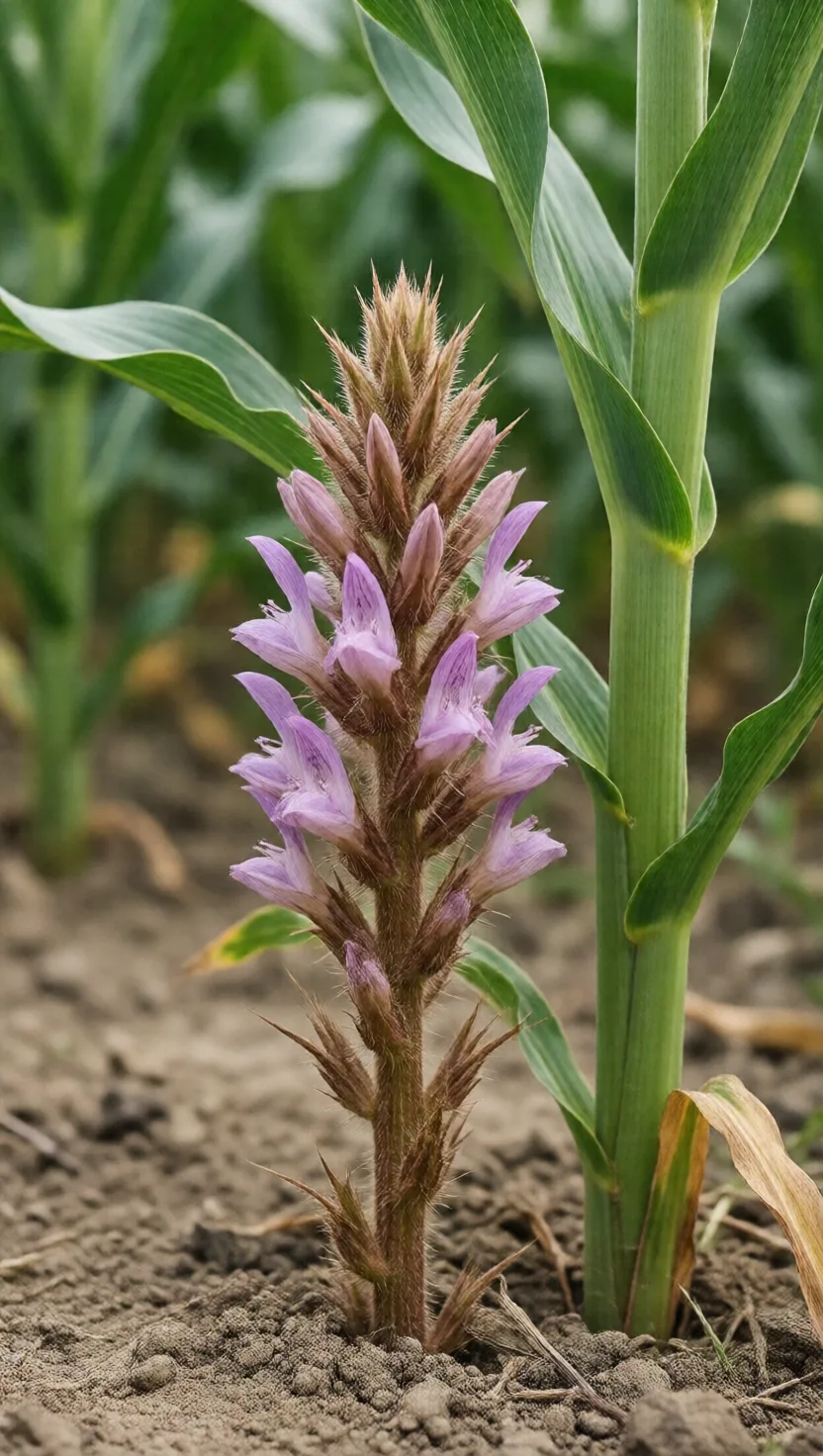
Parasites like broomrape and witchweed cannot survive on their own, so their seeds refuse to sprout until a host is near. A seed can lie dormant in the soil for years, even decades, sensing nothing. Then the roots of a nearby plant leak faint chemicals called strigolactones, signals the host actually makes to summon helpful soil fungi. The parasite eavesdrops on that private message: detecting the right blend, the long-waiting seed finally germinates and latches onto the root it has been waiting for.
tap →swipe ↑ for depthswipe ↓ to exit