Eight things a bird that headbangs for a living gets right

DC·172 Deep Cuts
Its tongue is wrapped around its skull

Its tongue is wrapped around its skull

A woodpecker's tongue is so long it has nowhere to go but up and over. The bony supports that hold it, the hyoid, begin at the nostril, split between the eyes, sweep over the top of the skull and down the back before rejoining at the tongue. Unspooled, that tongue can shoot out two to three times the length of the beak to reach prey deep inside wood.
The tongue ends in barbs and glue

The tongue ends in barbs and glue

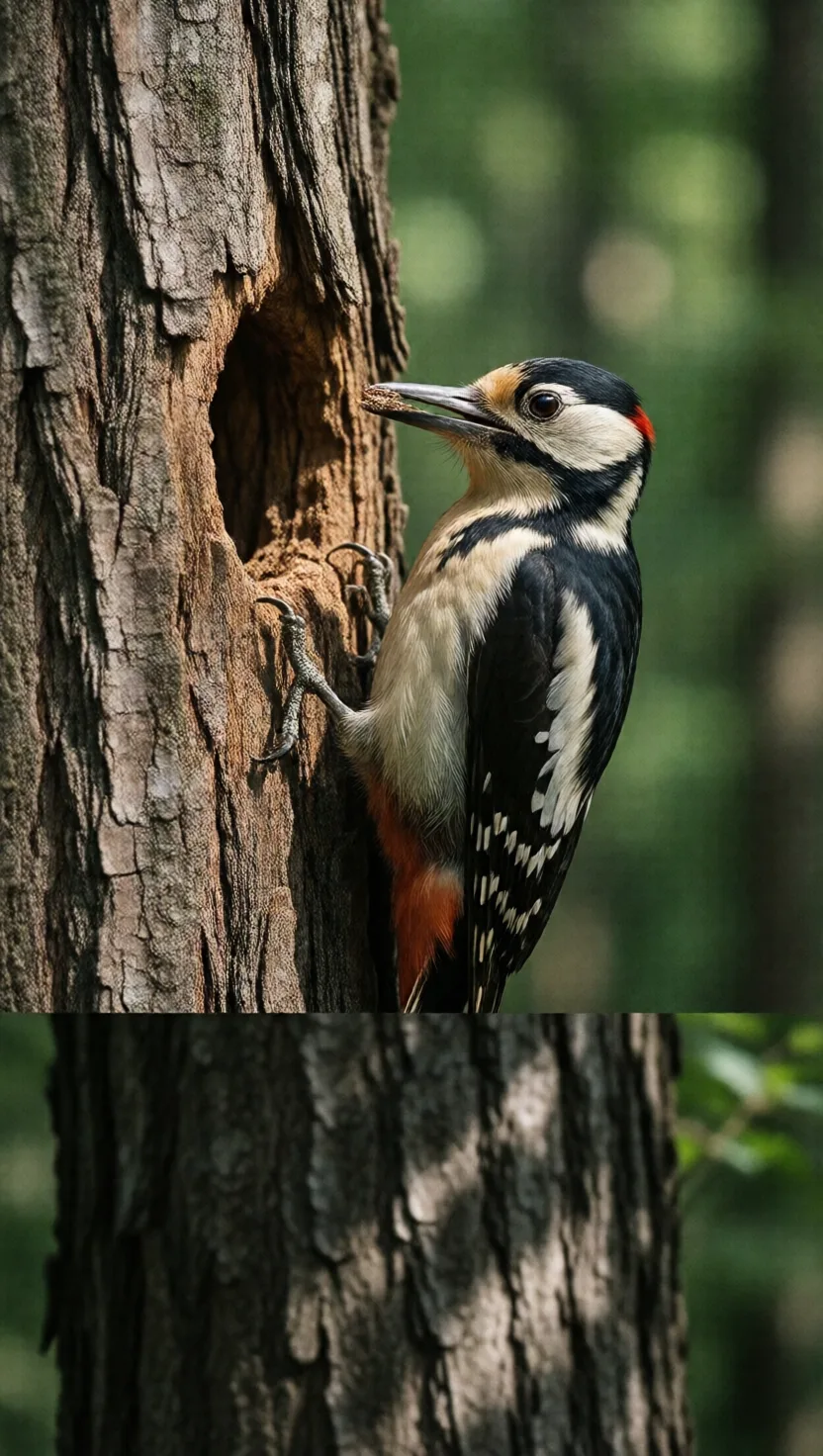
That long tongue is not just for reach. Its tip is stiff with backward-pointing barbs and slicked in sticky saliva, so a grub or ant probed deep inside its tunnel gets harpooned and gummed at the same instant, then reeled straight back out. Some woodpeckers spear their prey on the barbs; others simply mop up insects on the glue-like coating.
Its skull doesn't cushion its brain

Its skull doesn't cushion its brain

The old story said a woodpecker's skull is a built-in shock absorber. High-speed analysis in 2022 showed the opposite. The head works as a rigid hammer with almost no cushioning, because any padding would soften the blow and waste the bird's effort. It survives the pounding simply because its brain is so tiny and light that the force never crosses the threshold for injury.
It blinks a shield before every hit

It blinks a shield before every hit

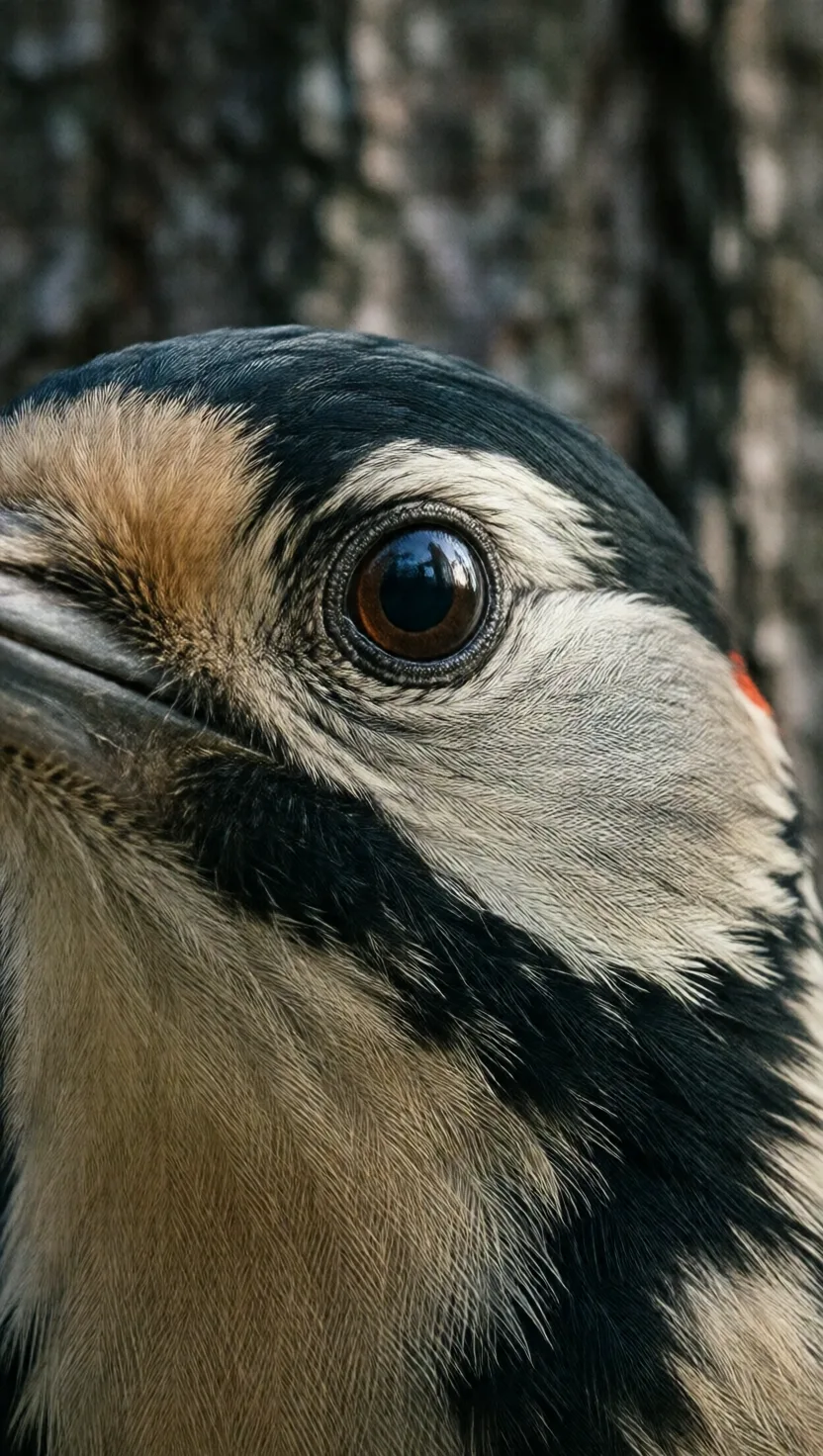
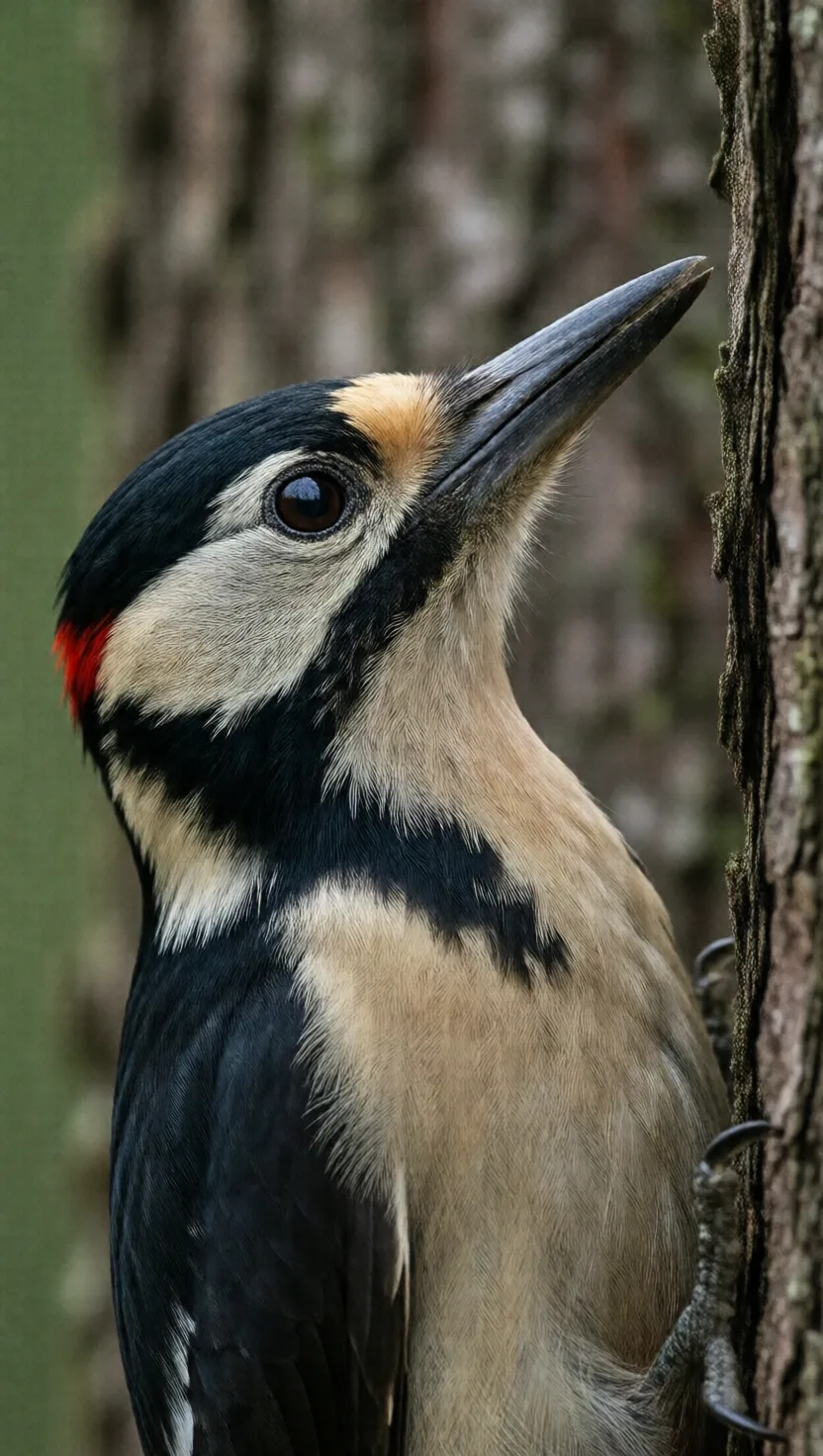
A millisecond before the beak lands, a woodpecker draws a translucent third eyelid, the nictitating membrane, across each eye. It sweeps away flying debris and, more importantly, clamps the eyeball firmly in place so the violent deceleration cannot shake the retina loose or jolt the eye forward. The bird does this thousands of times a day without thinking.
It climbs on a built-in tripod

It climbs on a built-in tripod

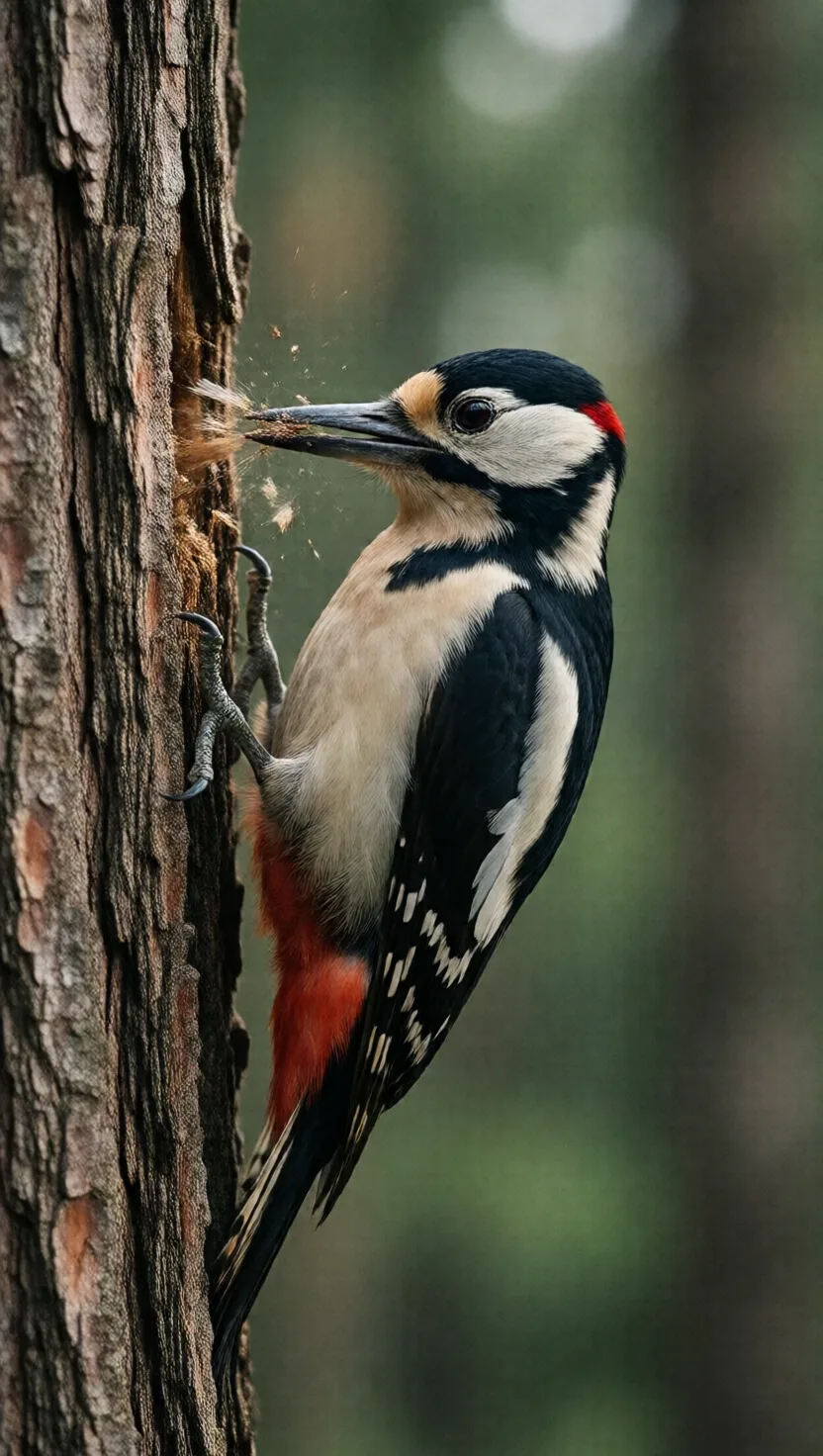
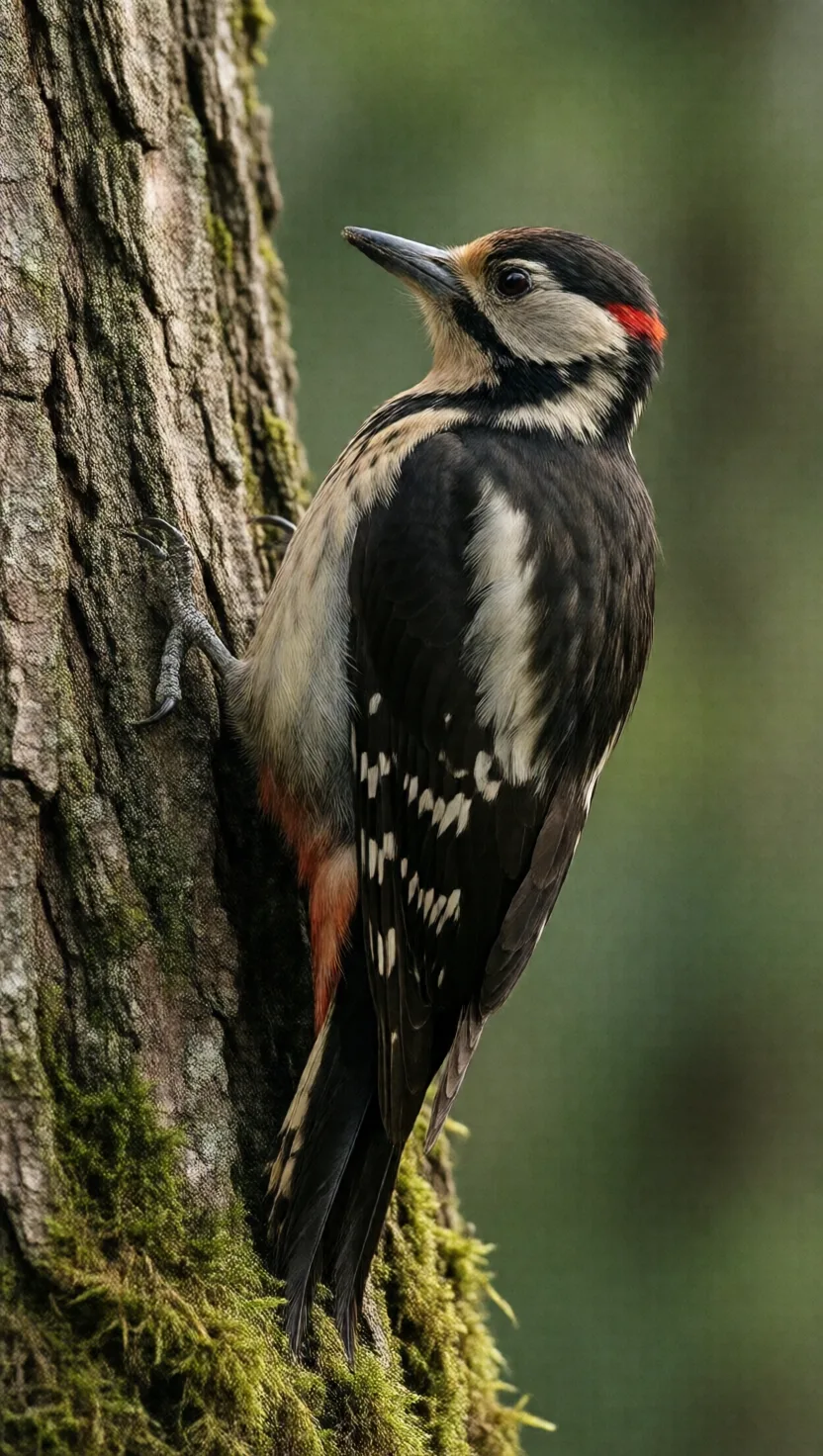
Most birds have three toes pointing forward and one back. Woodpeckers have two and two, a zygodactyl grip that locks onto vertical bark. Behind the feet, the tail feathers are stiffened with reinforced shafts and jammed against the trunk like a kickstand. Together the feet and tail form a tripod that braces the body and soaks up the recoil of every blow.
The drumming isn't hunting, it's a shout

The drumming isn't hunting, it's a shout

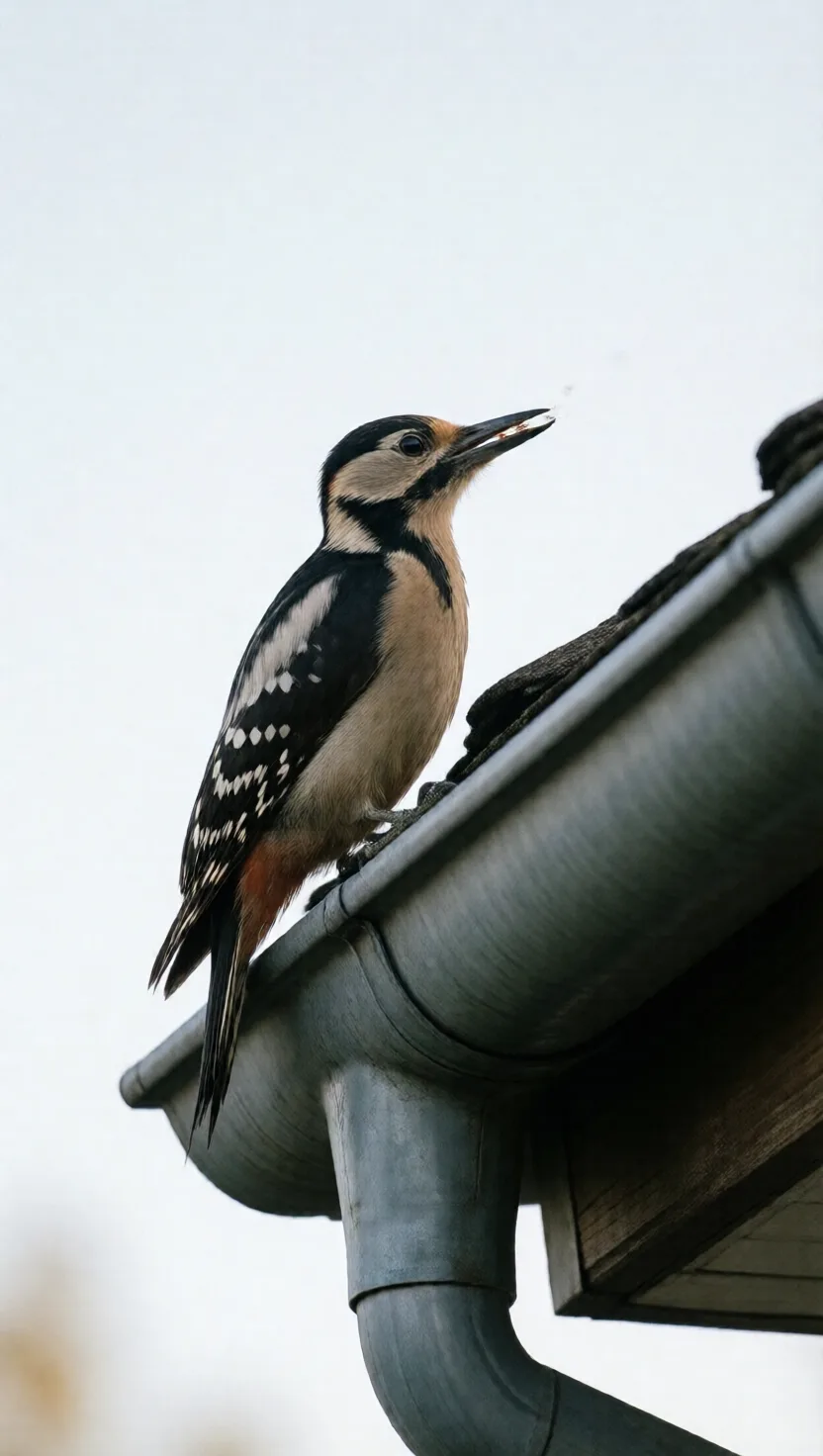
Fast, even drumrolls are not a woodpecker digging for food; foraging is slow and deliberate. Drumming is a broadcast, claiming territory and calling for mates. So the bird hunts out the most resonant surface it can find, which is why one will hammer a metal gutter, chimney cap or street sign at dawn: the ringing metal carries the message far further than wood ever could.
One tree, fifty thousand acorns

One tree, fifty thousand acorns

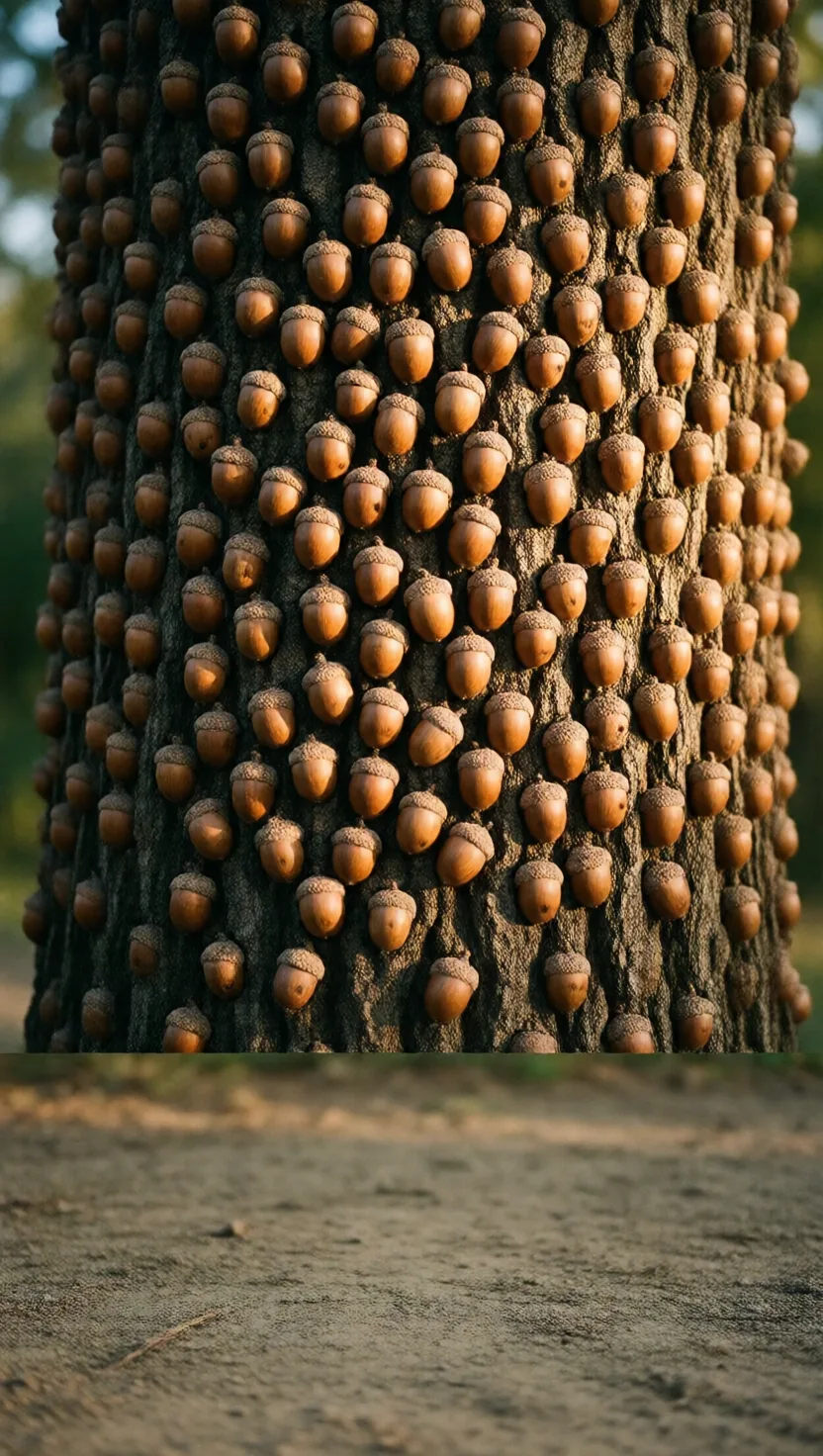
Acorn woodpeckers drill a single dead trunk full of holes, a granary tree, and wedge one acorn snugly into each. A well-used granary can hold up to 50,000 acorns and feed a family group across generations. As the stored nuts dry and shrink, the birds keep moving each one to a tighter hole so it can never fall out, tending the larder year-round.
Some drill orderly rows and farm sap

Some drill orderly rows and farm sap

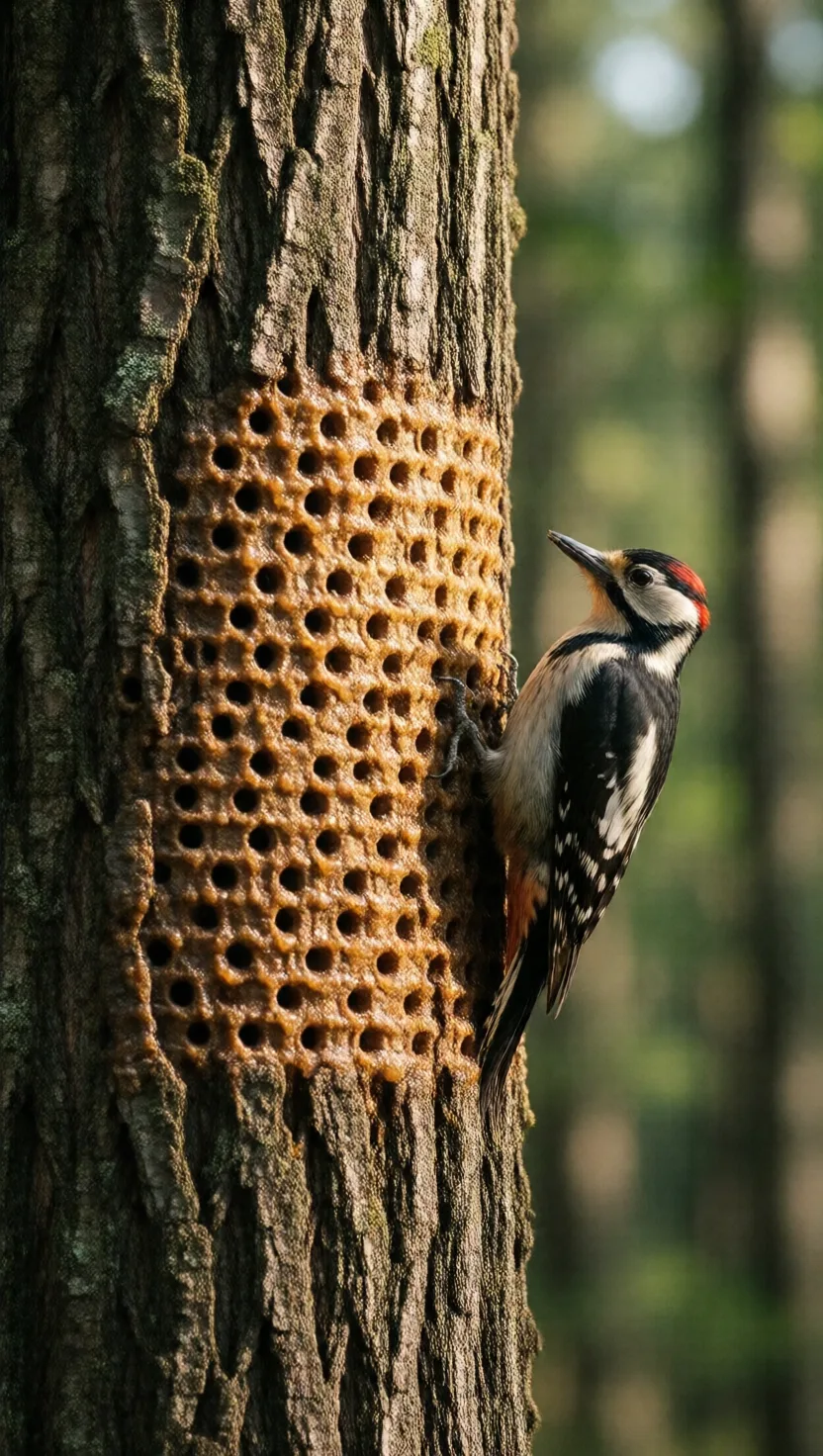
Sapsuckers, a kind of woodpecker, tap neat horizontal rows of shallow holes in living bark, then return again and again to drink the sap that wells up, along with the insects it traps. The rows become a shared bar: hummingbirds arriving north in spring, before the flowers have bloomed, will trail a sapsucker from tree to tree just to drink from its wells.
tap →swipe ↑ for depthswipe ↓ to exit