Eight things the cicada hides underground

DC·165 Deep Cuts
They wait 17 years, and the number isn't random

They wait 17 years, and the number isn't random

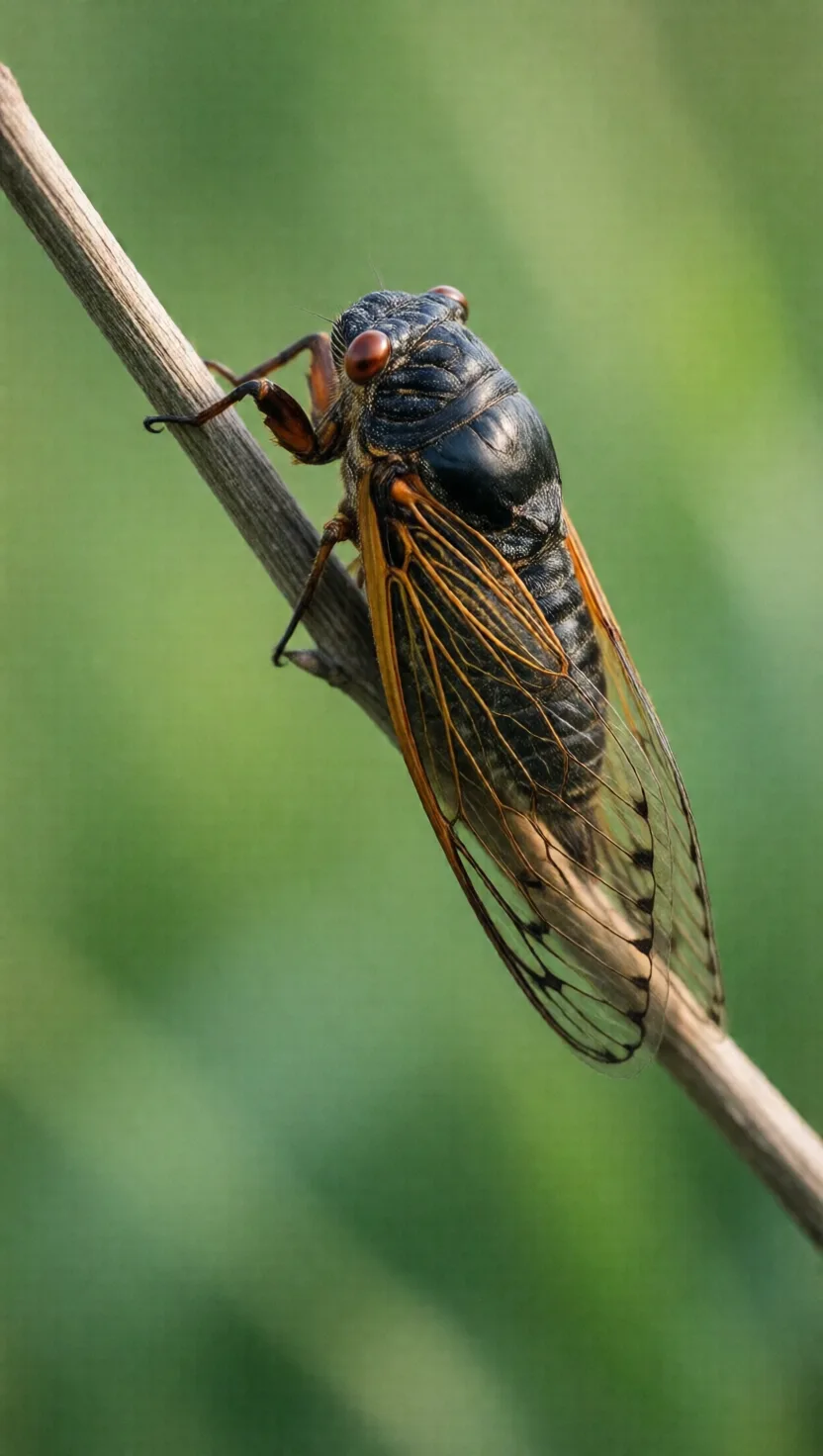
Periodical cicadas spend 13 or 17 years underground, then surface all at once. Both are prime numbers, and that appears to be the point: predators breeding on 2, 3, or 4-year rhythms can never reliably sync with a prime-year feast. A 13-year and a 17-year brood line up only once every 221 years, which also keeps the two cycles from interbreeding and blurring their timing.
A fungus turns it into a hyper-sexual puppet

A fungus turns it into a hyper-sexual puppet

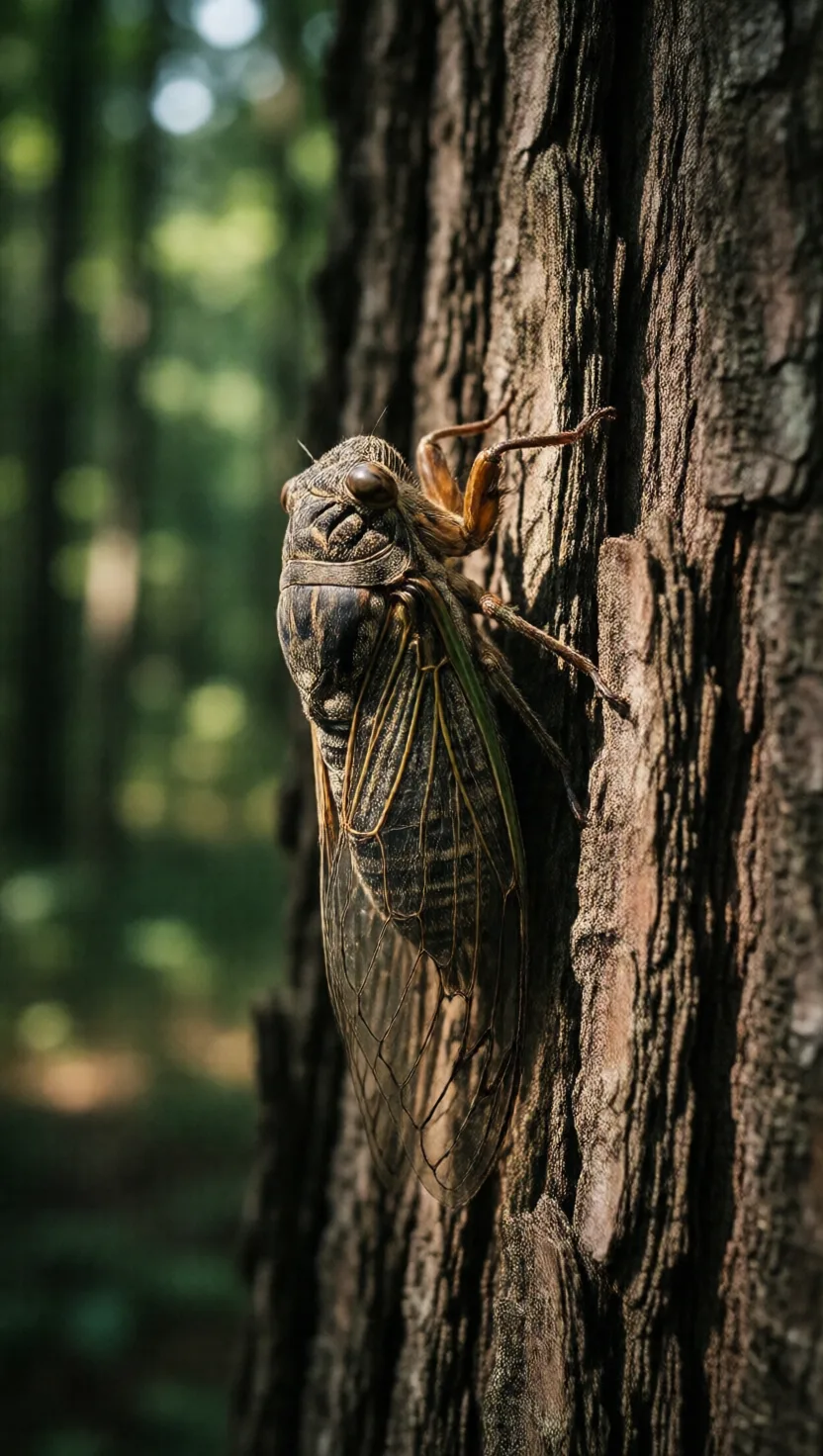
A soil fungus called Massospora hijacks emerging cicadas, eating away the back third of the body and replacing it with a plug of spores. Stranger still, it laces its victims with mind-altering compounds: an amphetamine-like cathinone in periodical cicadas, and psilocybin in annual ones. Drugged and missing their abdomens, infected males keep flying and flicking their wings to lure mates, spreading spores as they go.
Its wing is a bed of nails for bacteria

Its wing is a bed of nails for bacteria

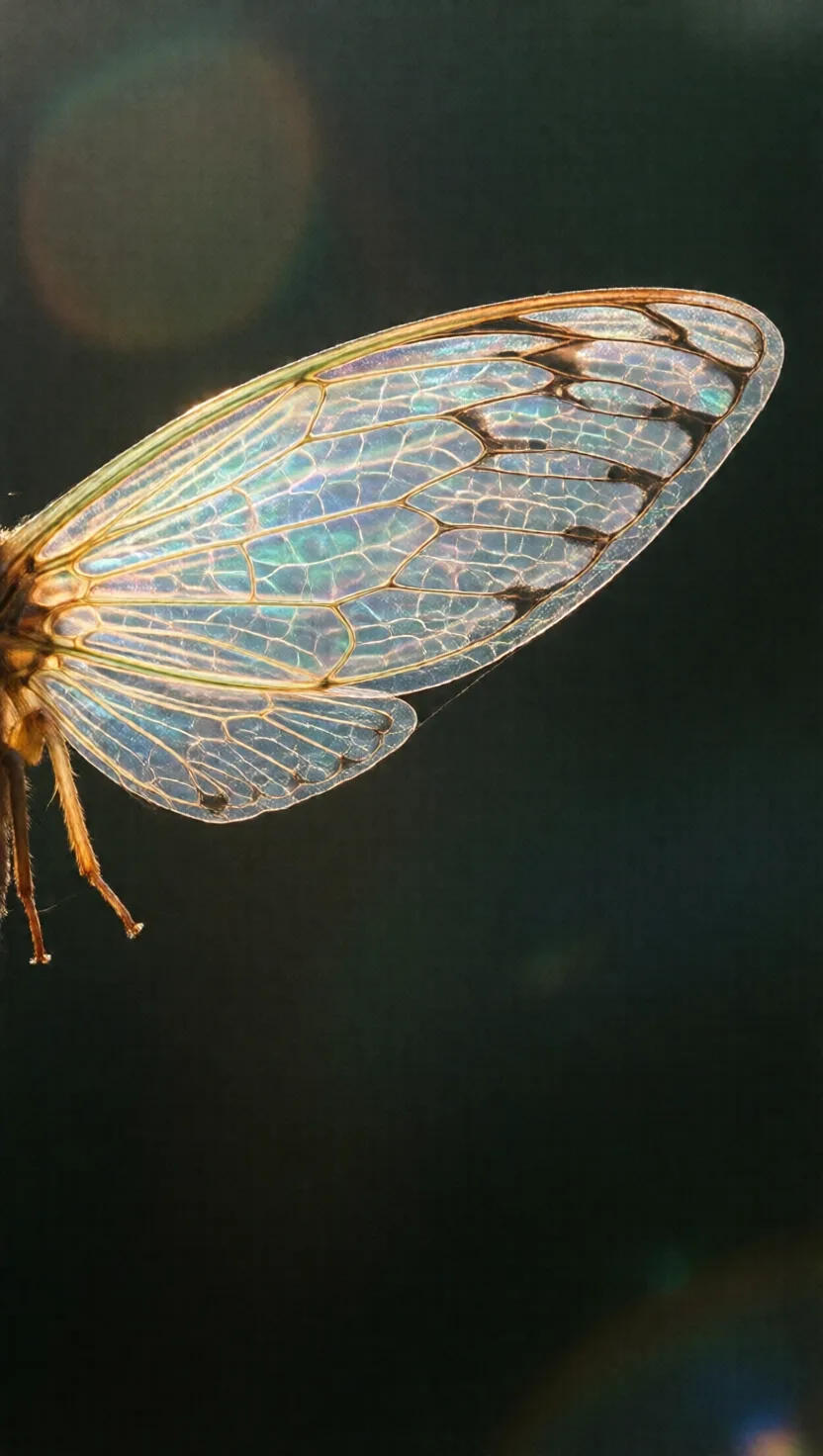
A cicada's transparent wing is covered in a forest of tiny pillars, each only nanometres wide and spaced in a regular hexagonal array. When a bacterium settles, the nanopillars stretch and pierce its membrane until the cell tears open and dies. No poison is involved; the killing is purely mechanical. Engineers now copy the pattern to make surfaces that resist germs without antibiotics.
It spends years sipping the thinnest drink alive

It spends years sipping the thinnest drink alive

Underground, a cicada nymph survives on xylem sap, the watery fluid trees use to haul water up from their roots. It is one of the most nutrient-poor diets in nature, almost pure water with a trace of minerals. To live on it, the nymph hosts symbiotic bacteria that build the amino acids the sap lacks, and grows so slowly that reaching adulthood can take up to 17 years.
The one insect that cools itself by sweating

The one insect that cools itself by sweating

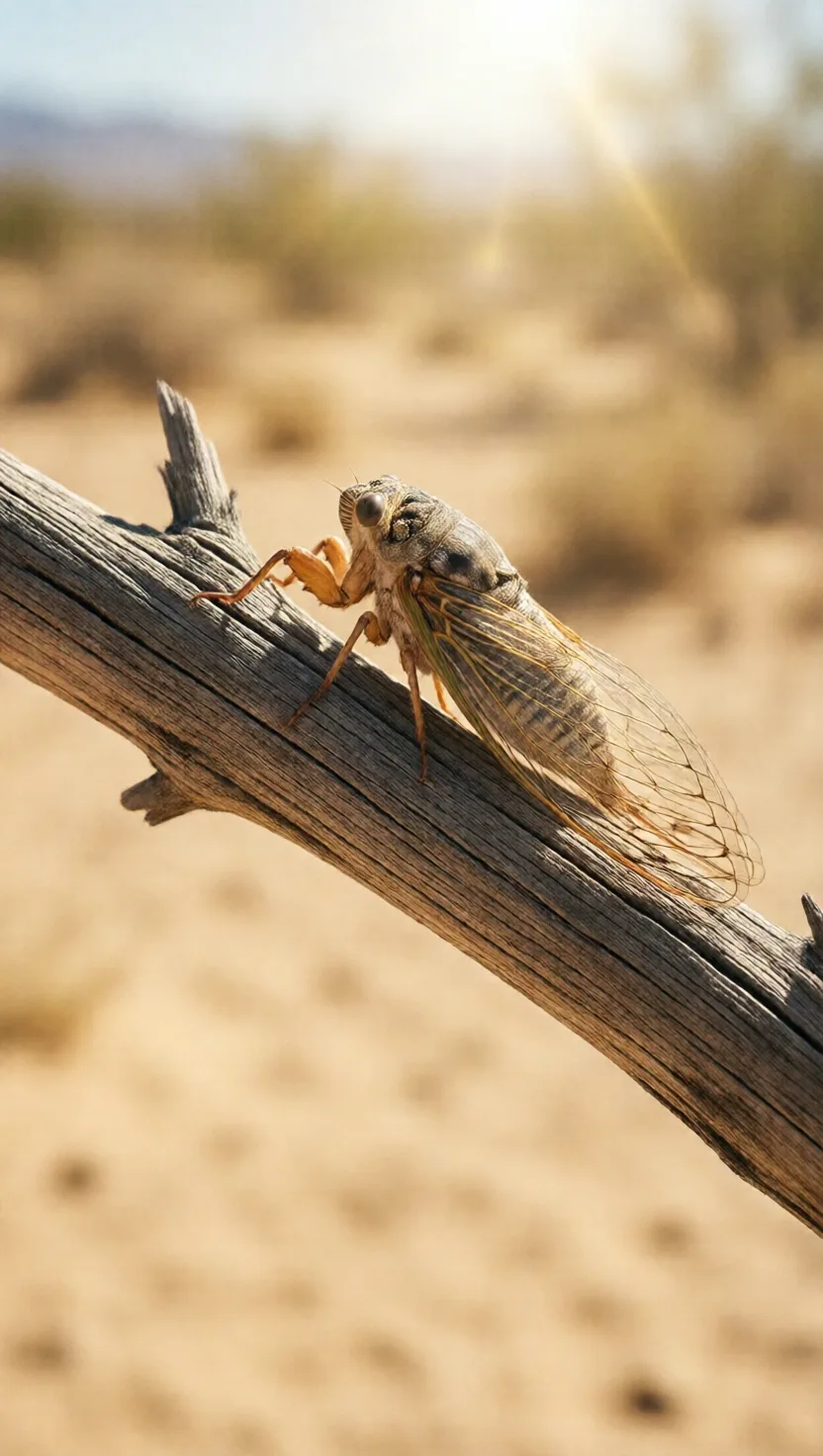
Most insects can't sweat, but the desert cicada is an exception. When its body climbs past about 39C, it pulls extra water from the plant sap it drinks and pushes it out through pores on its back, where it evaporates. The trick works so well the cicada can hold its body around 5C cooler than the blazing air, letting it feed in midday heat that drives other insects into the shade.
This bug is as loud as a power saw

This bug is as loud as a power saw

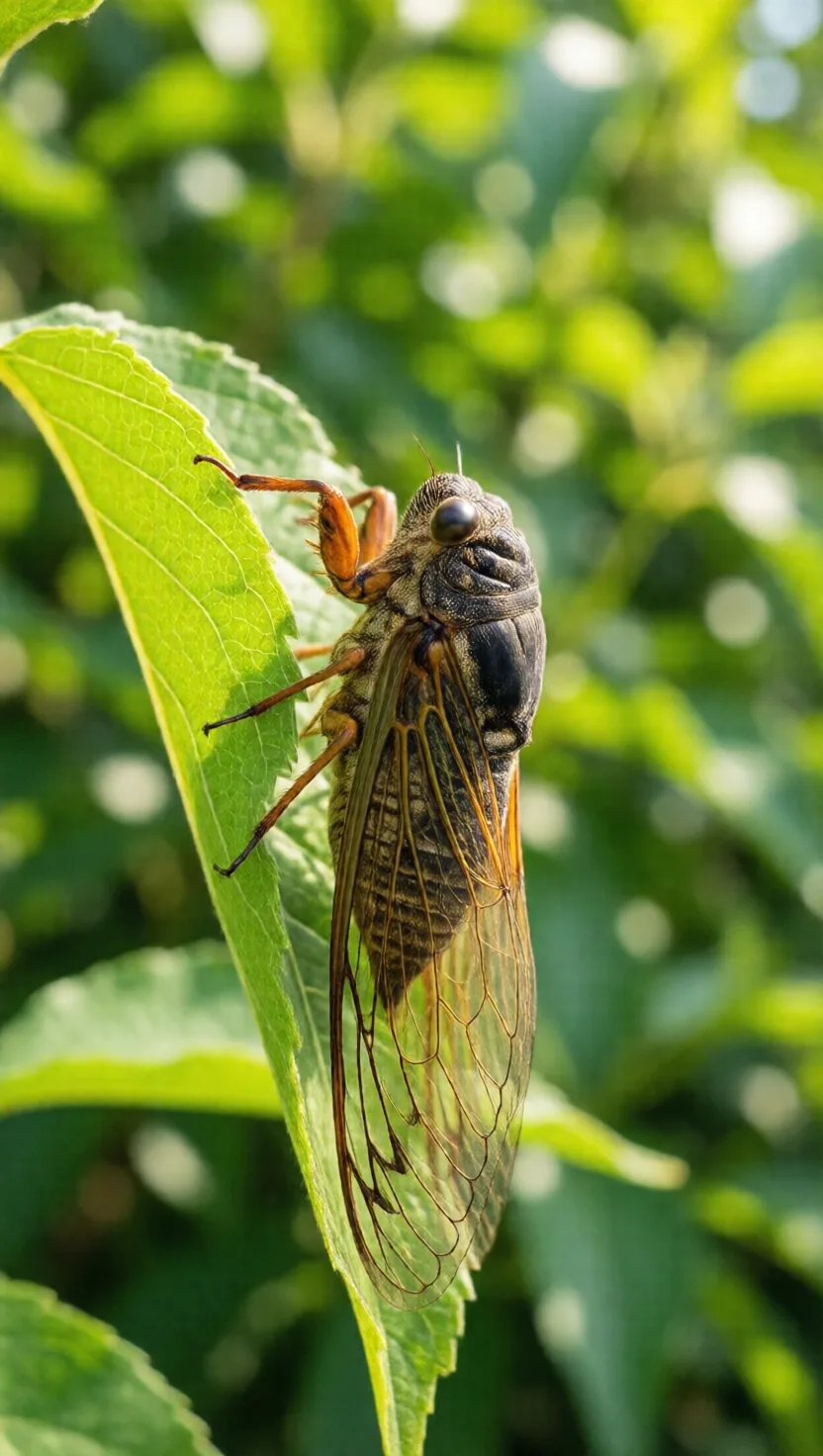
A cicada sings by buckling a pair of ribbed membranes called tymbals on its abdomen, snapping them in and out hundreds of times a second while its largely hollow body amplifies the sound like a drum. The loudest species on record, an African cicada, has been measured at 106.7 decibels from half a metre away, rivalling a chainsaw and ranking it among the noisiest insects alive.
Up to a million crawl out of a single acre

Up to a million crawl out of a single acre

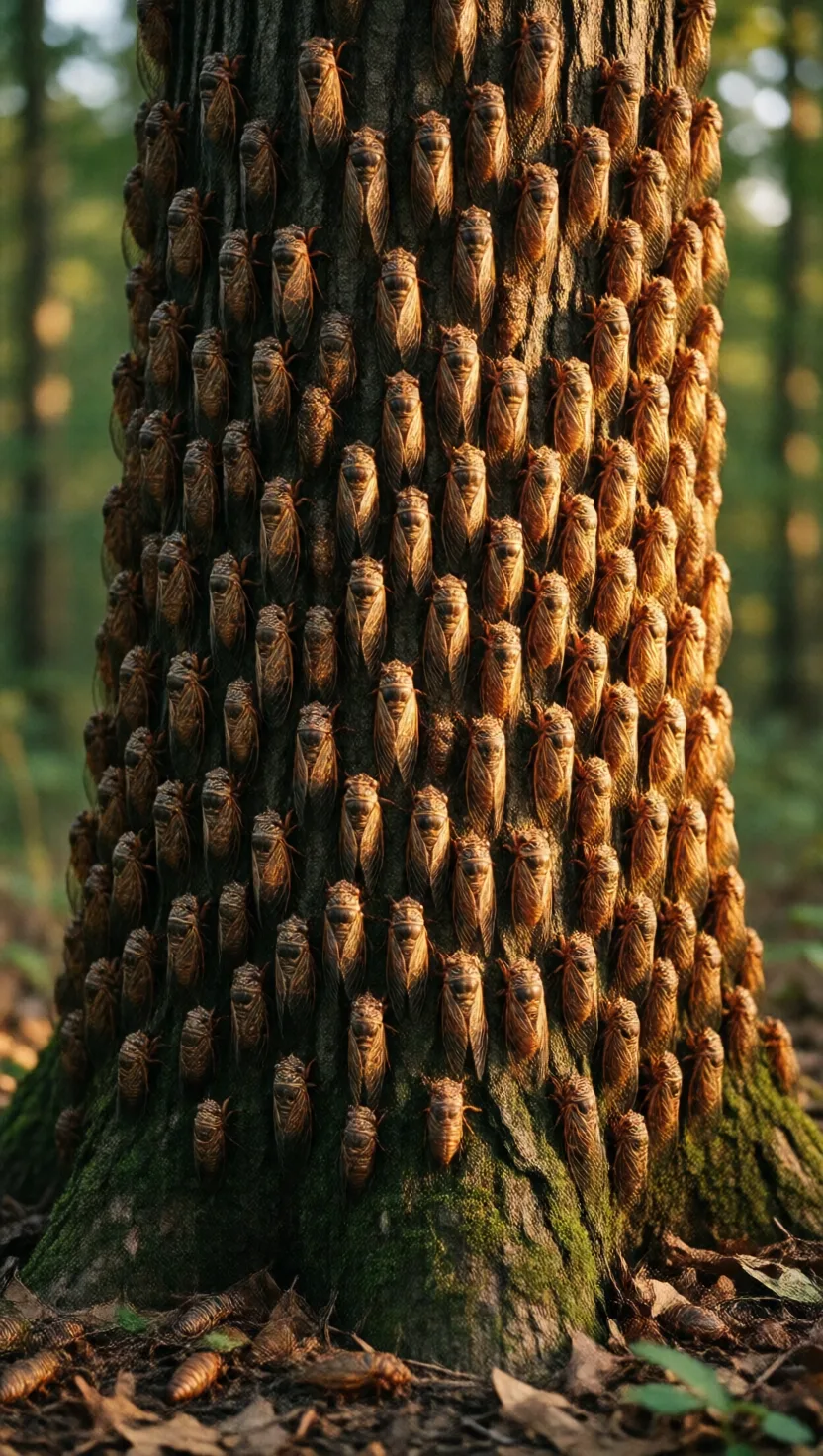
When a periodical brood emerges, the ground can erupt with as many as 1.5 million cicadas per acre. The strategy is brute arithmetic: by surfacing all together in overwhelming numbers, they let every predator gorge to bursting and still leave millions of survivors to mate. A large double-brood year can put an estimated trillion cicadas above ground across the eastern United States.
It climbs out of itself, ghost-white and soft

It climbs out of itself, ghost-white and soft

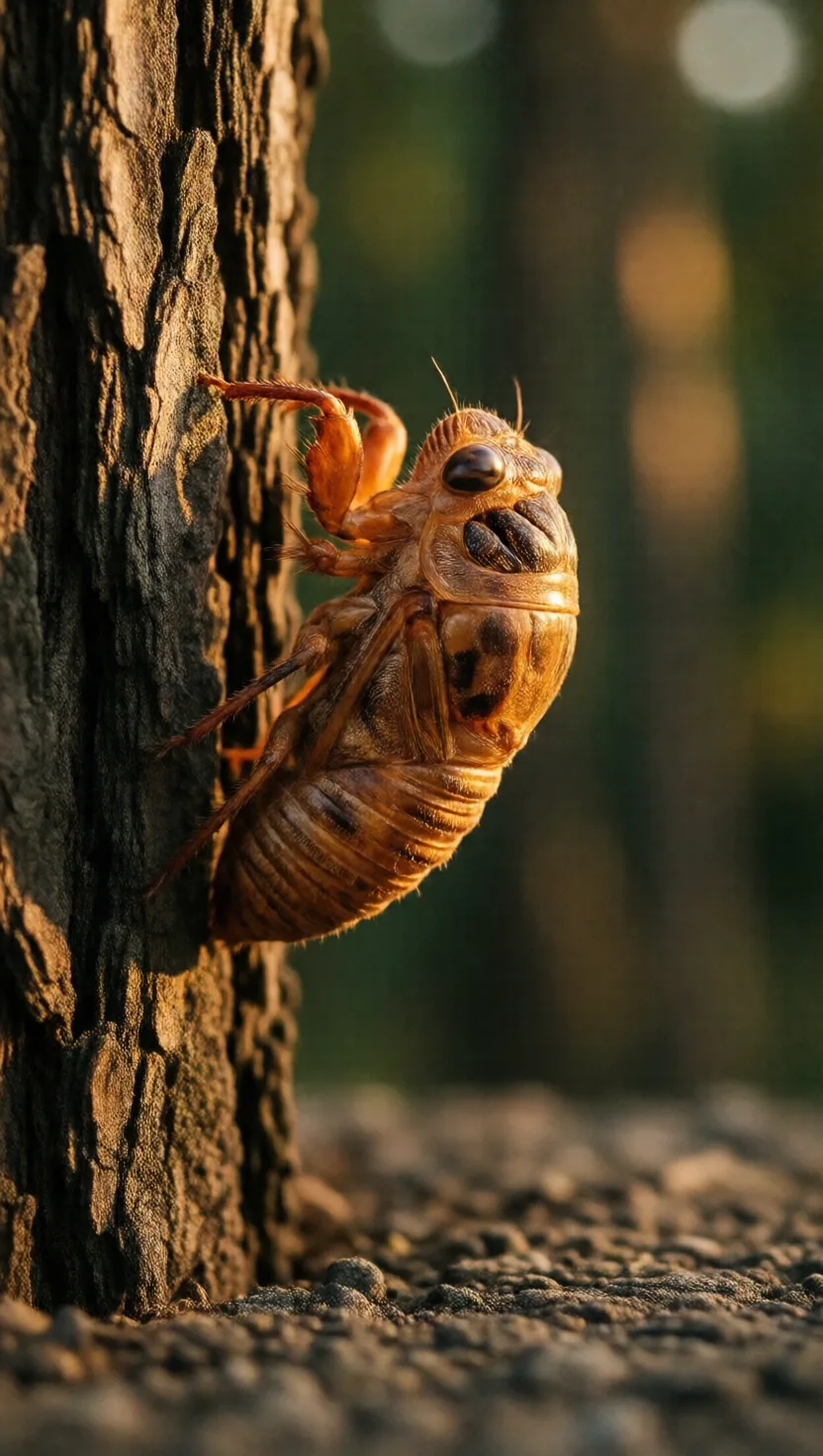
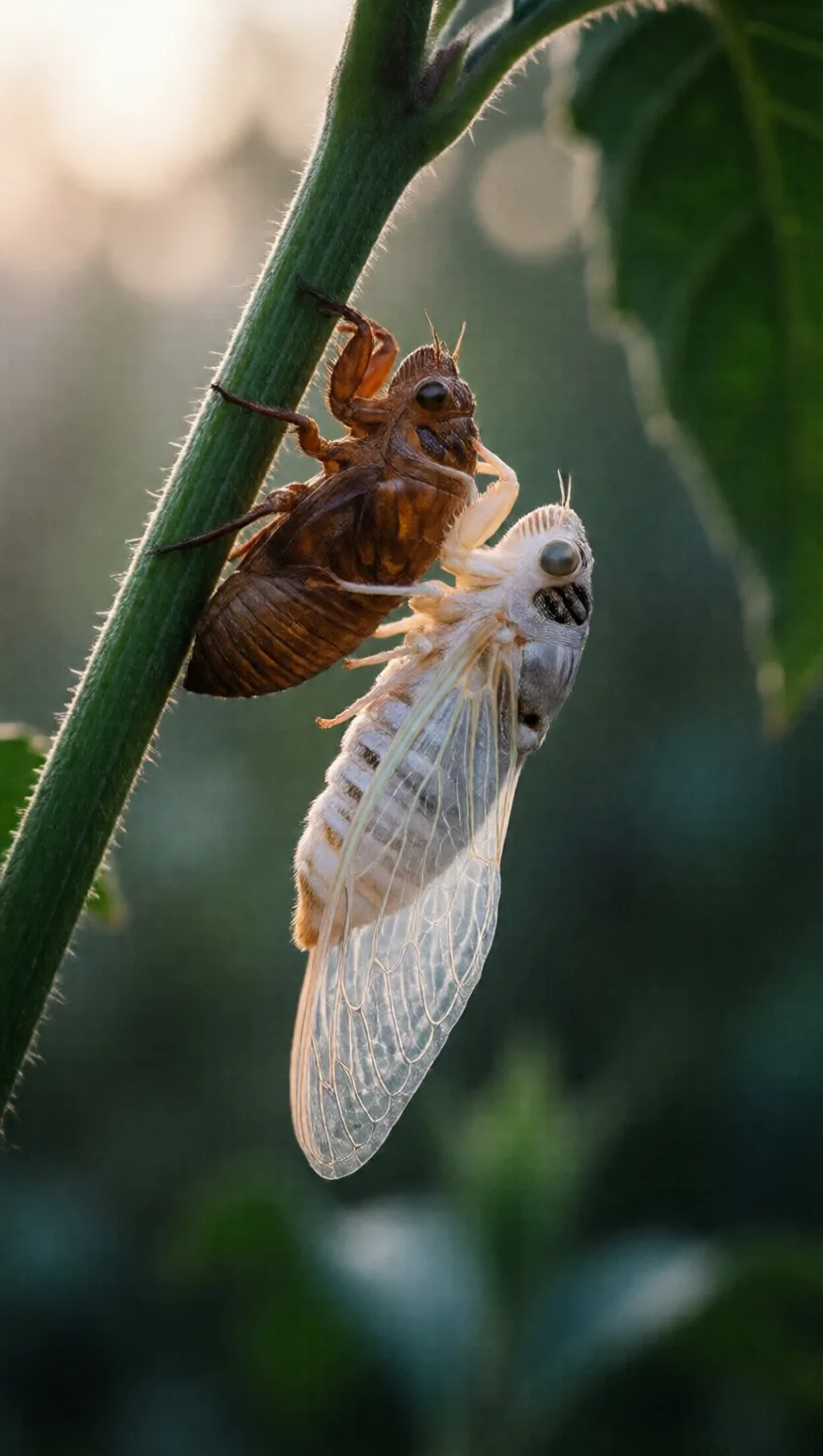
To become an adult, a cicada nymph clamps onto a stem and splits its old skin down the back, pulling free as a soft, ghostly white creature called a teneral. Its crumpled wings fill with pumped body fluid until they expand to full size, adding roughly a sixth of the insect's weight, then everything hardens and darkens over a few hours. Until it does, the cicada is nearly helpless and easily eaten.
tap →swipe ↑ for depthswipe ↓ to exit