Eight things hidden under the armor

DC·164 Deep Cuts
It always has four identical babies, every birth

It always has four identical babies, every birth

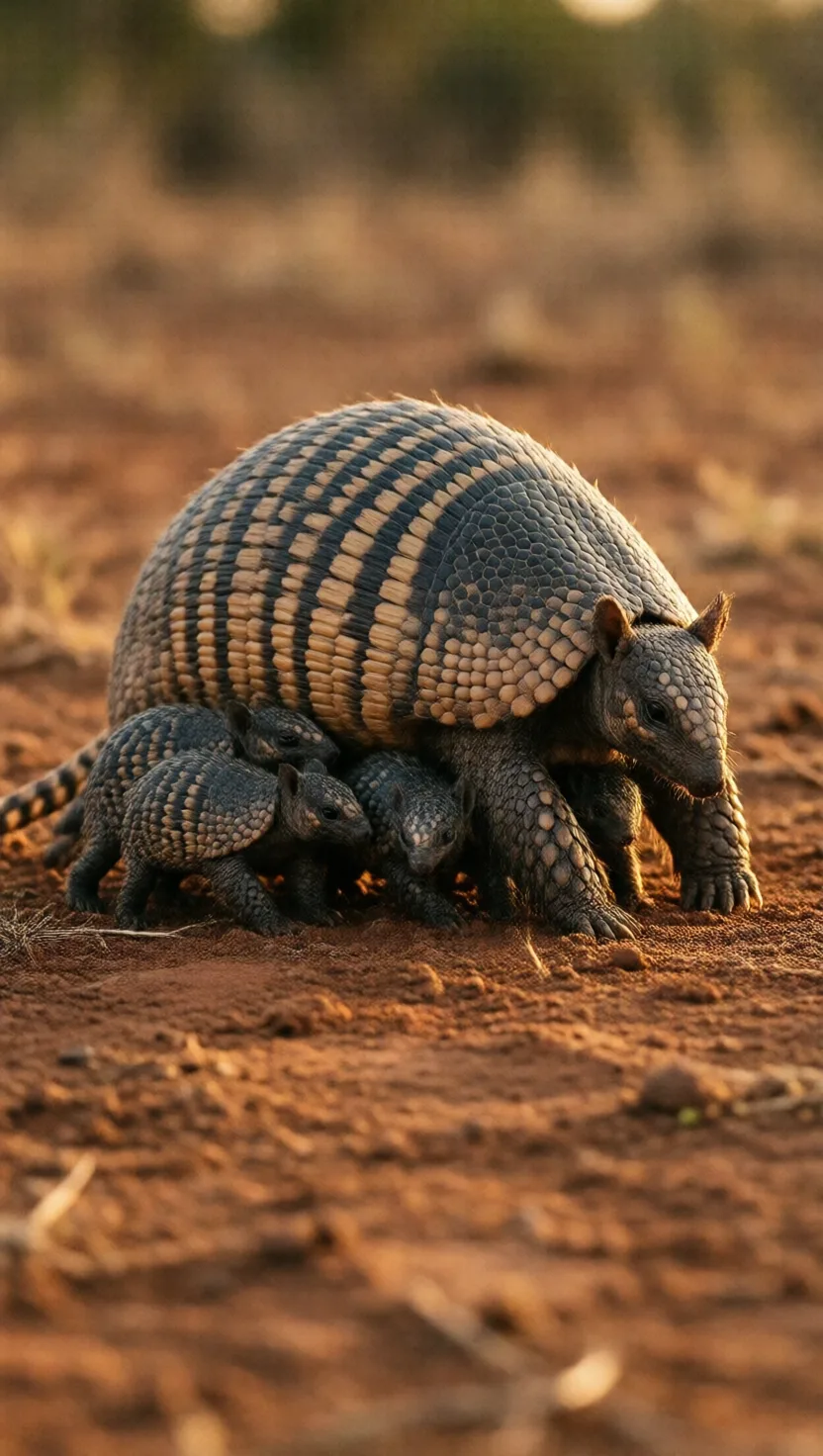
The nine-banded armadillo is the only vertebrate known to practice obligate polyembryony: a single fertilized egg splits into four embryos in every pregnancy. The pups are genetically identical and always the same sex, each in its own amniotic sac but sharing one placenta. Because the litter is one clone of four, the species is prized for studying how identical genomes still produce individuals that differ.
Wild armadillos carry the same leprosy strain as patients

Wild armadillos carry the same leprosy strain as patients

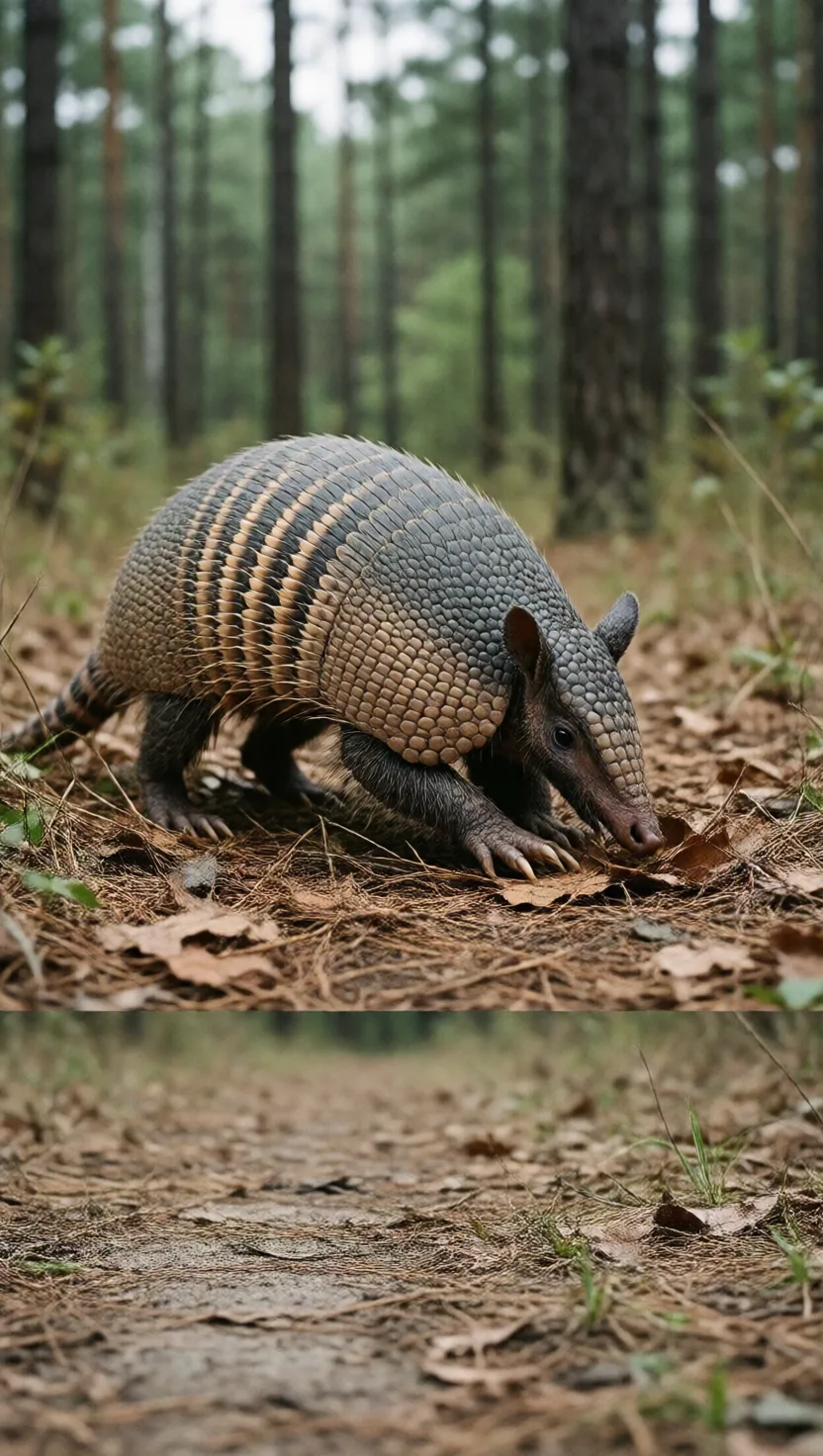
Apart from humans, armadillos are the main natural host of Mycobacterium leprae, the leprosy bacterium. In the southern US and Mexico, wild nine-banded armadillos and many local patients carry the same strain, genotype 3I-2; in one 2022 study an armadillo isolate differed from a nearby human case by only 5 single-letter changes in its genome, strong evidence of animal-to-human transmission. Their low body temperature suits the slow-growing microbe.
Only one armadillo can curl into a sealed ball

Only one armadillo can curl into a sealed ball

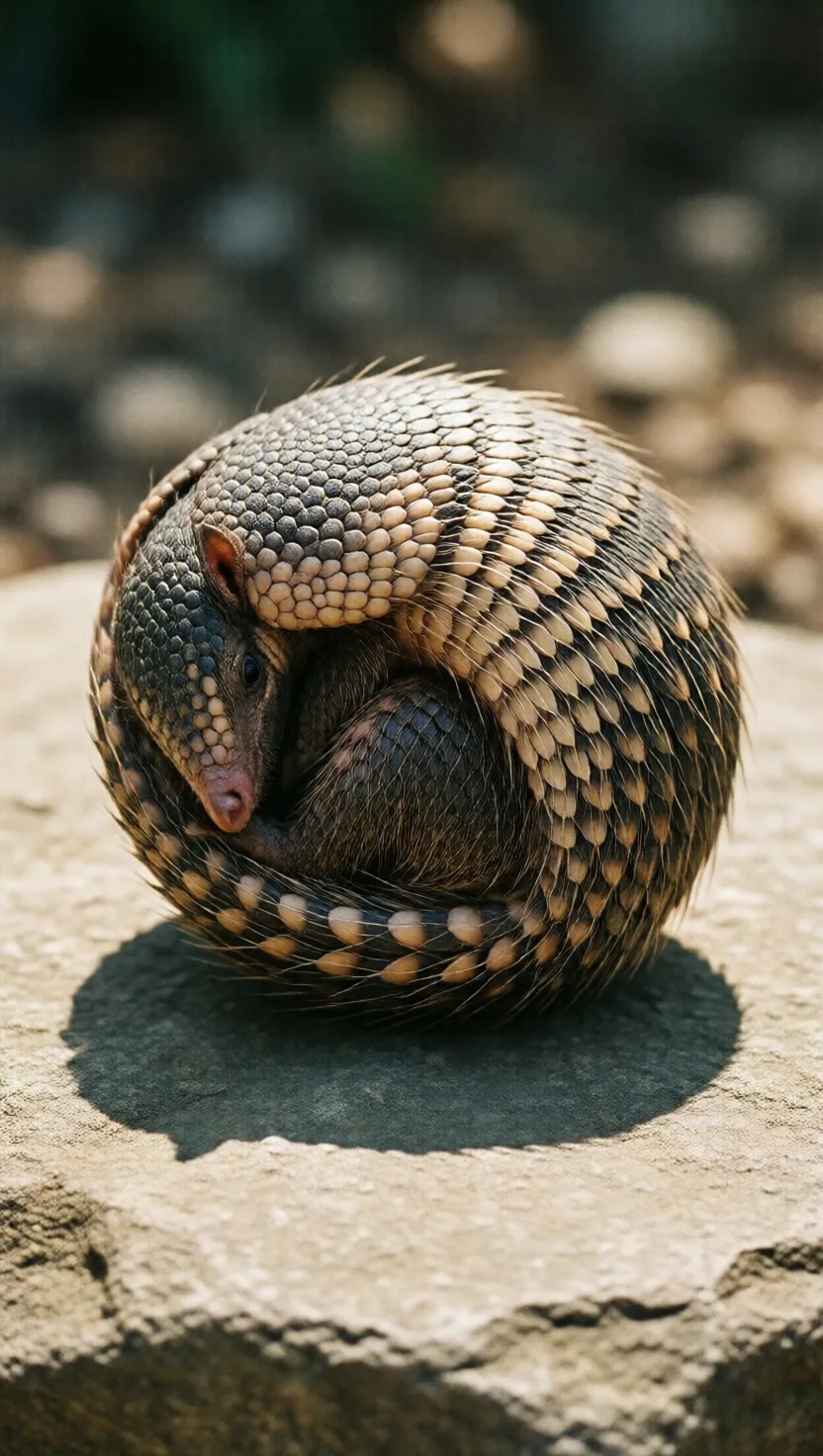
Of the 21 living armadillo species, only the two three-banded armadillos can roll into a complete, sealed ball. Their shell sits looser over the body, and the flexible middle bands let the head plate and tail plate lock together, shielding the soft belly, limbs and face. Other species have too many fused plates to fold up, so they rely on digging or running instead.
Its armor is real bone grown inside the skin

Its armor is real bone grown inside the skin

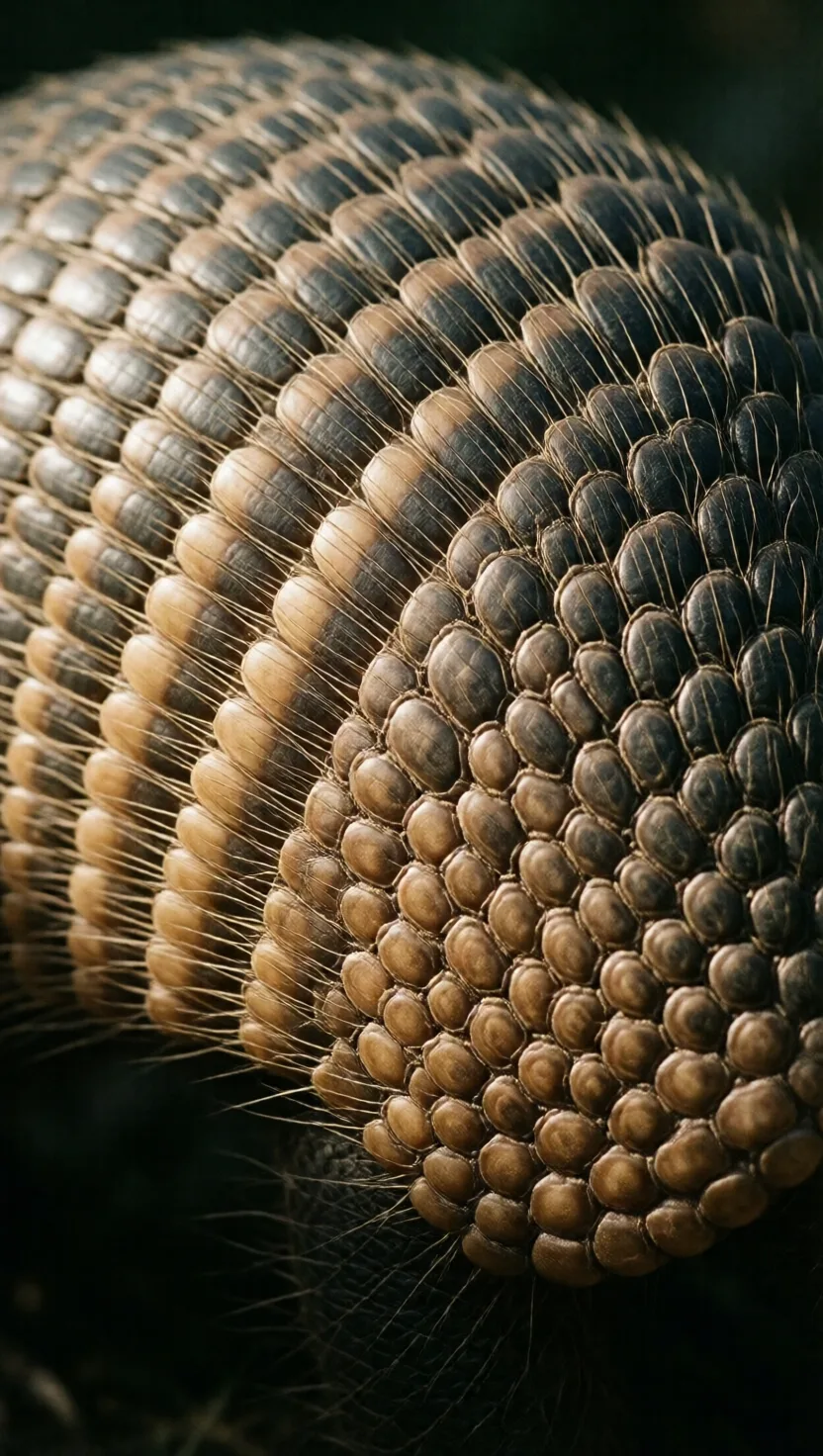
An armadillo's shell is not horn or a turtle-style fused ribcage. It is made of osteoderms, plates of true bone that form within the dermis, the deep layer of the skin, then are covered by small overlapping keratin scutes. Rigid shields over the shoulders and hips are joined by flexible bands of non-mineralized collagen, letting the animal bend. This bony skin armor is unique among living mammals.
A 10 cm armadillo whose shell blushes pink with blood

A 10 cm armadillo whose shell blushes pink with blood

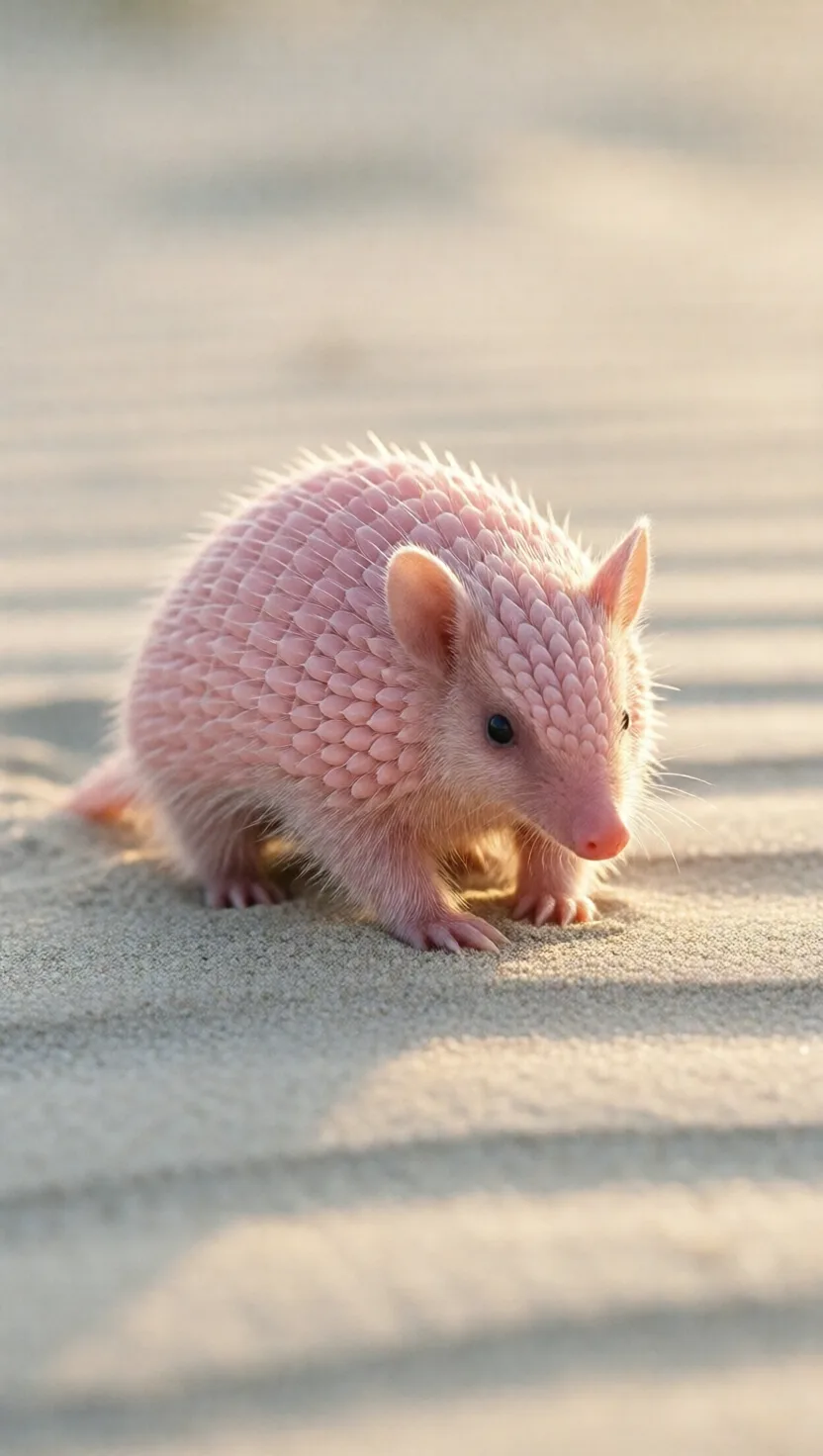
The pink fairy armadillo of central Argentina is the smallest armadillo, about 10 cm head-to-body. It sand-swims through dry soil with oversized claws and spends almost all its life underground. Its thin dorsal shell is connected to the body by only a membrane and is rich with blood vessels; by adjusting blood flow to these surface capillaries the animal both flushes the shell pink and regulates its body temperature in the burrow.
Its Ice Age cousin was as big as a small car

Its Ice Age cousin was as big as a small car

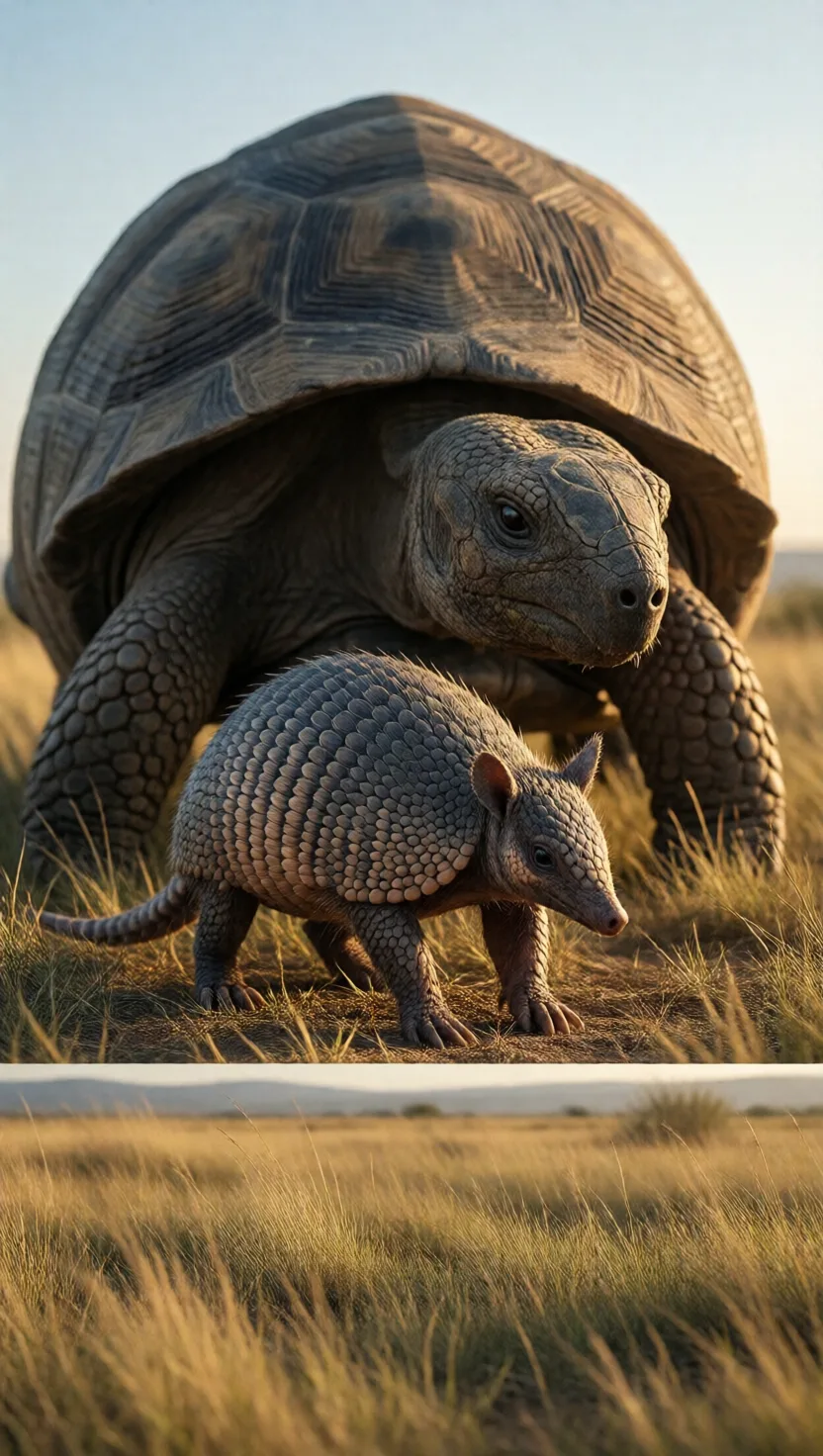
Armadillos belong to an ancient armored lineage that once included glyptodonts, dome-shelled relatives the size of a small car. The largest, such as Doedicurus, weighed up to about 2,370 kg, with a rigid carapace of hundreds of fused bony scutes. DNA recovered from fossils confirms glyptodonts nest within the armadillo family. They vanished around 10,000 years ago, while the smaller, flexible armadillos survived.
It can stroll across a stream bottom underwater

It can stroll across a stream bottom underwater

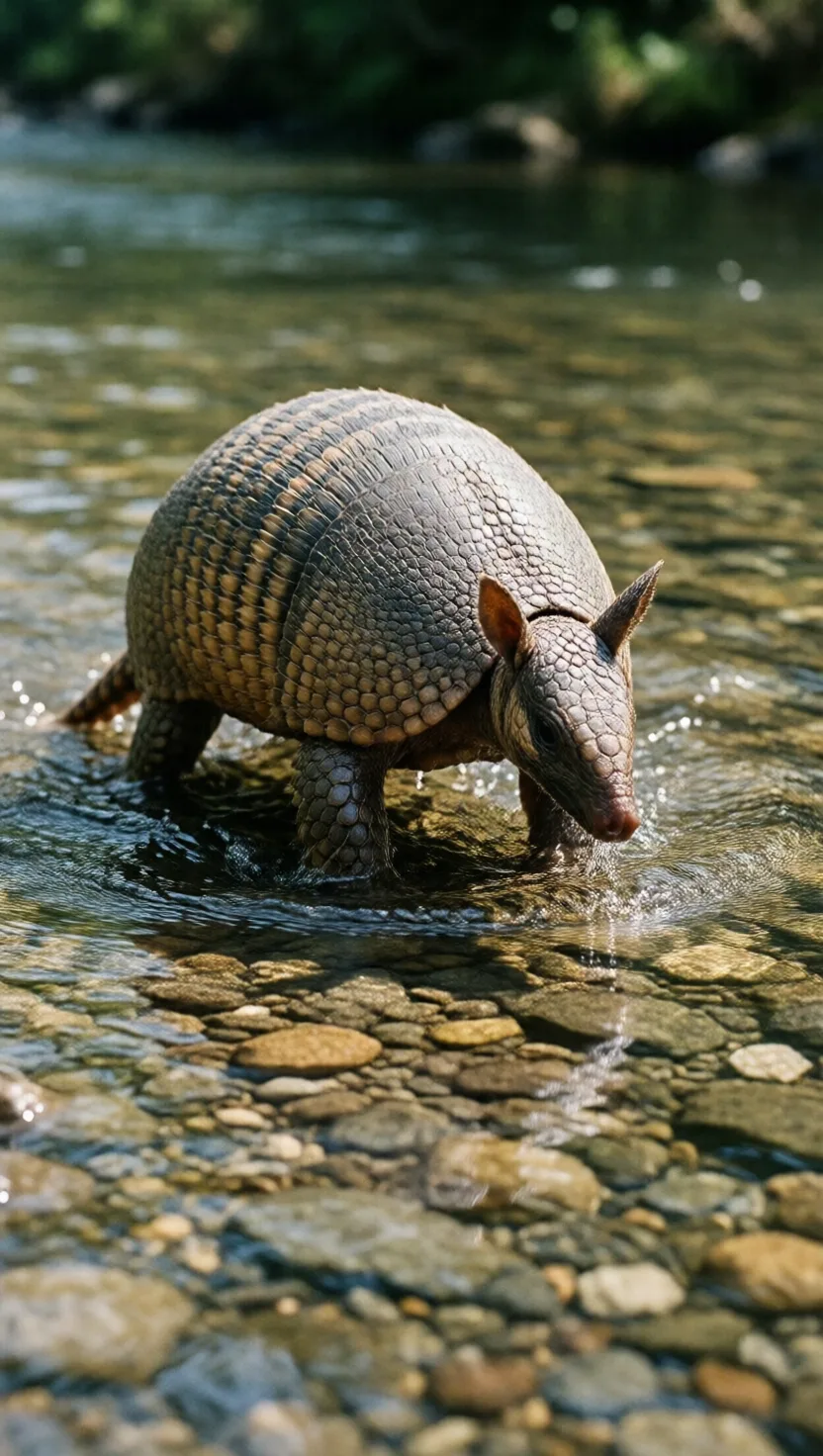
Despite its dense bony armor, an armadillo crosses water in two ways. For short crossings the nine-banded armadillo holds its breath for up to six minutes and simply walks along the bottom of a stream or river. For wider water it swallows air to inflate its stomach and intestines, gaining enough buoyancy to float and paddle across the surface before its weight would otherwise sink it.
It wields the largest claw of any living mammal

It wields the largest claw of any living mammal

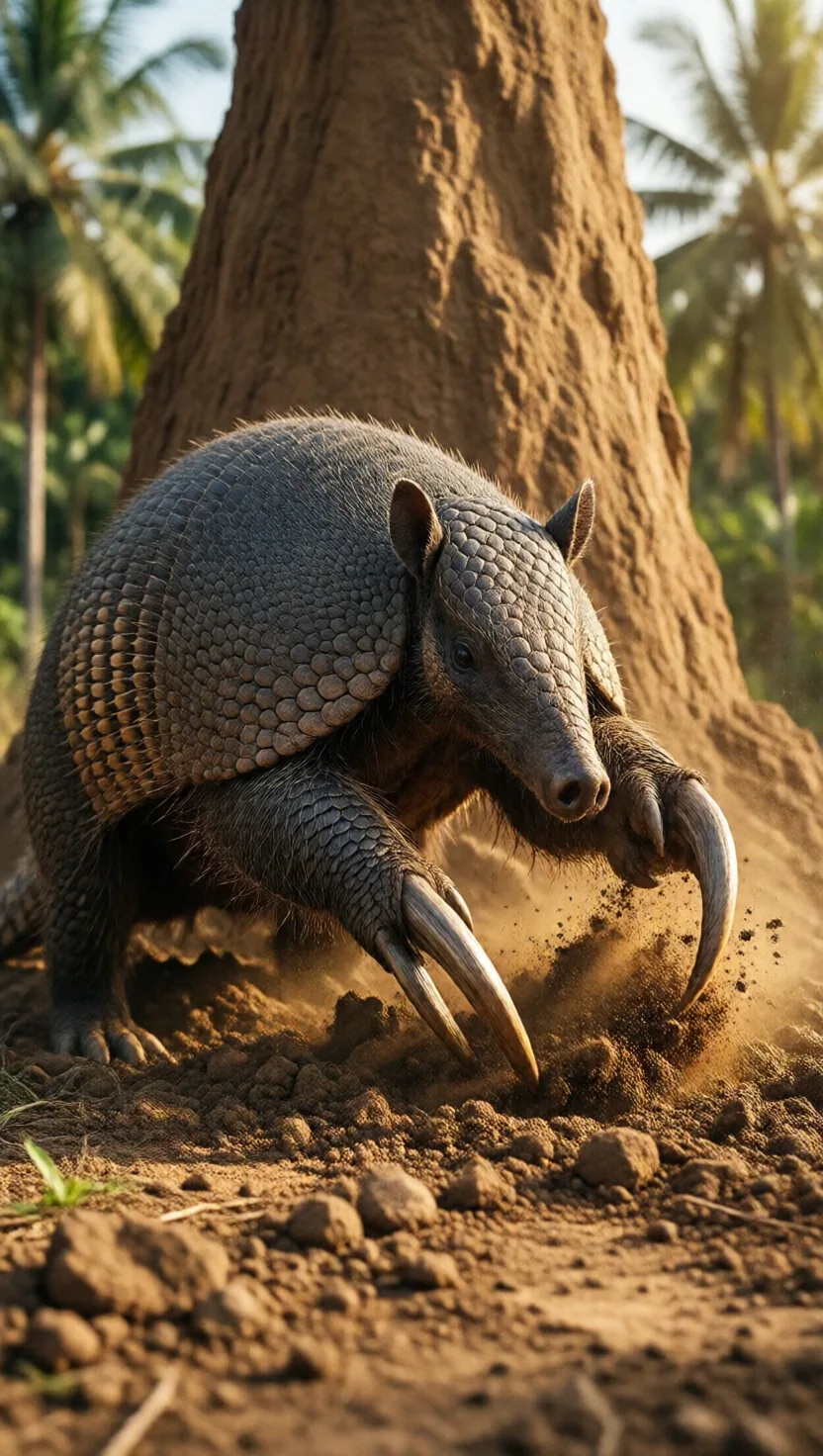
The giant armadillo of South America carries the biggest claw on any living mammal. The sickle-shaped third claw on its forefoot reaches about 20.3 cm measured along the curve, longer than a human hand. It uses these claws to rip open rock-hard termite mounds and dig sweeping burrows. The animal itself can weigh over 30 kg, dwarfing its familiar nine-banded relatives.
tap →swipe ↑ for depthswipe ↓ to exit