Eight things a crow works out for itself

DC·159 Deep Cuts
The only bird that carves a hook

The only bird that carves a hook

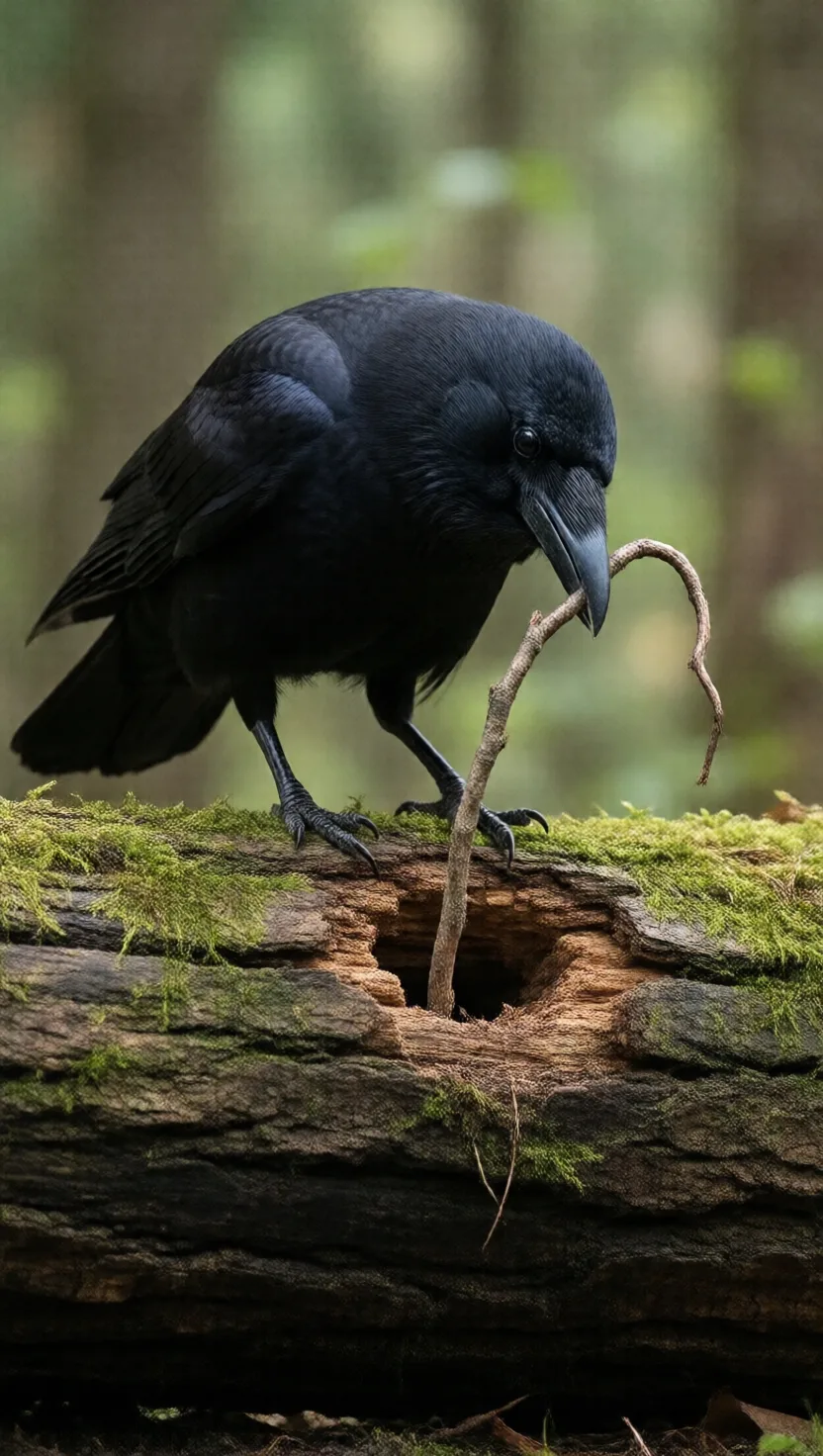
New Caledonian crows are the only animals besides humans known to make hooked tools. A crow snips a twig and trims away everything but a tiny barb at the tip, then pokes it into holes and crevices to winkle out grubs a straight stick could never reach. Young crows take until their second year to match an adult's speed, learning the craft slowly, like an apprentice.
It drops stones to lift the water

It drops stones to lift the water

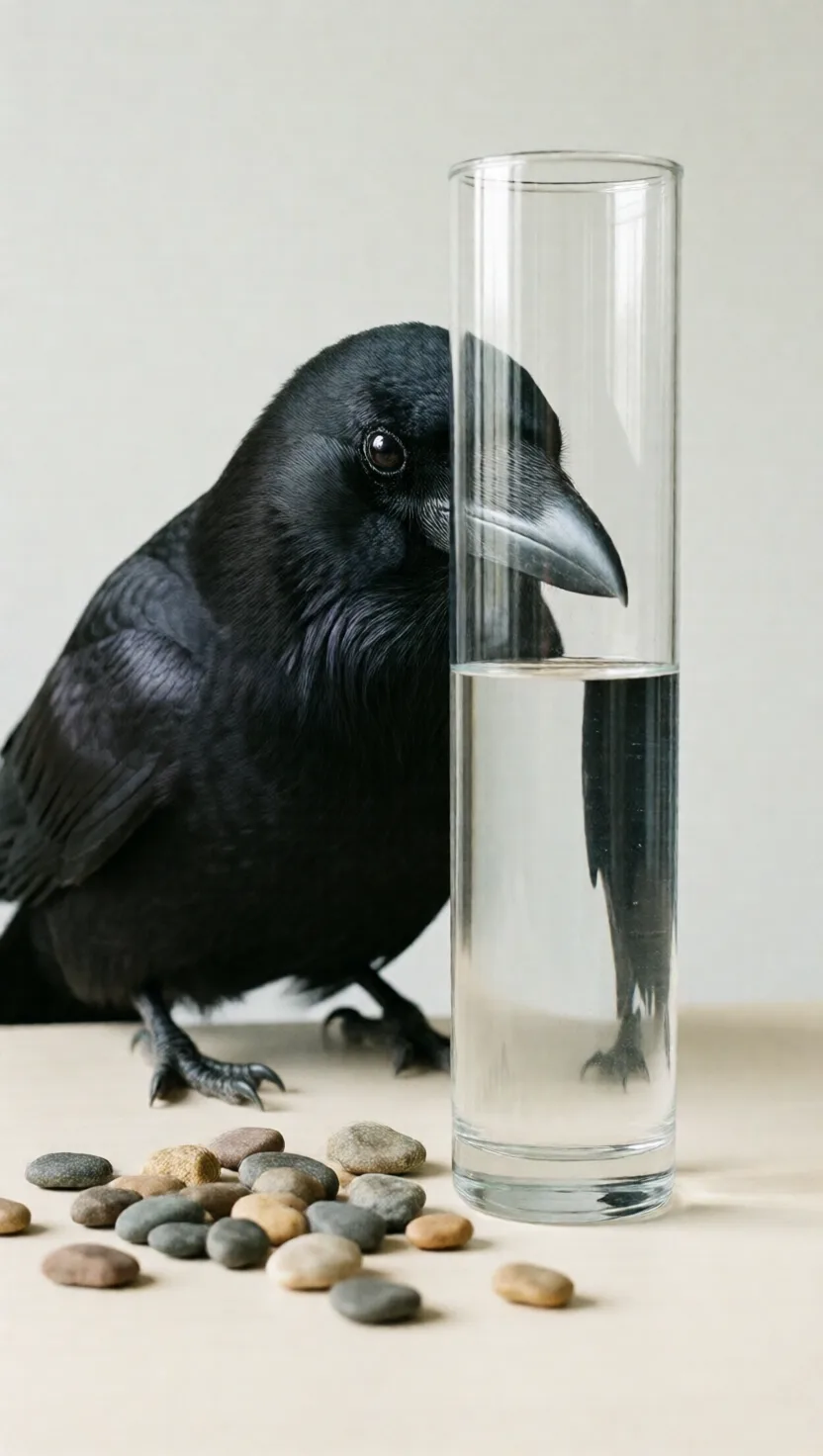
Faced with a treat floating out of reach in a tall tube of water, New Caledonian crows do exactly what the thirsty crow does in Aesop's old fable: they drop in stones to raise the water until the food rises to the beak. Tested carefully, they chose sinking stones over floating ones, and water-filled tubes over sand. Their grasp of the trick rivals that of a five-to-seven-year-old child.
A magpie checks a mark in the mirror

A magpie checks a mark in the mirror

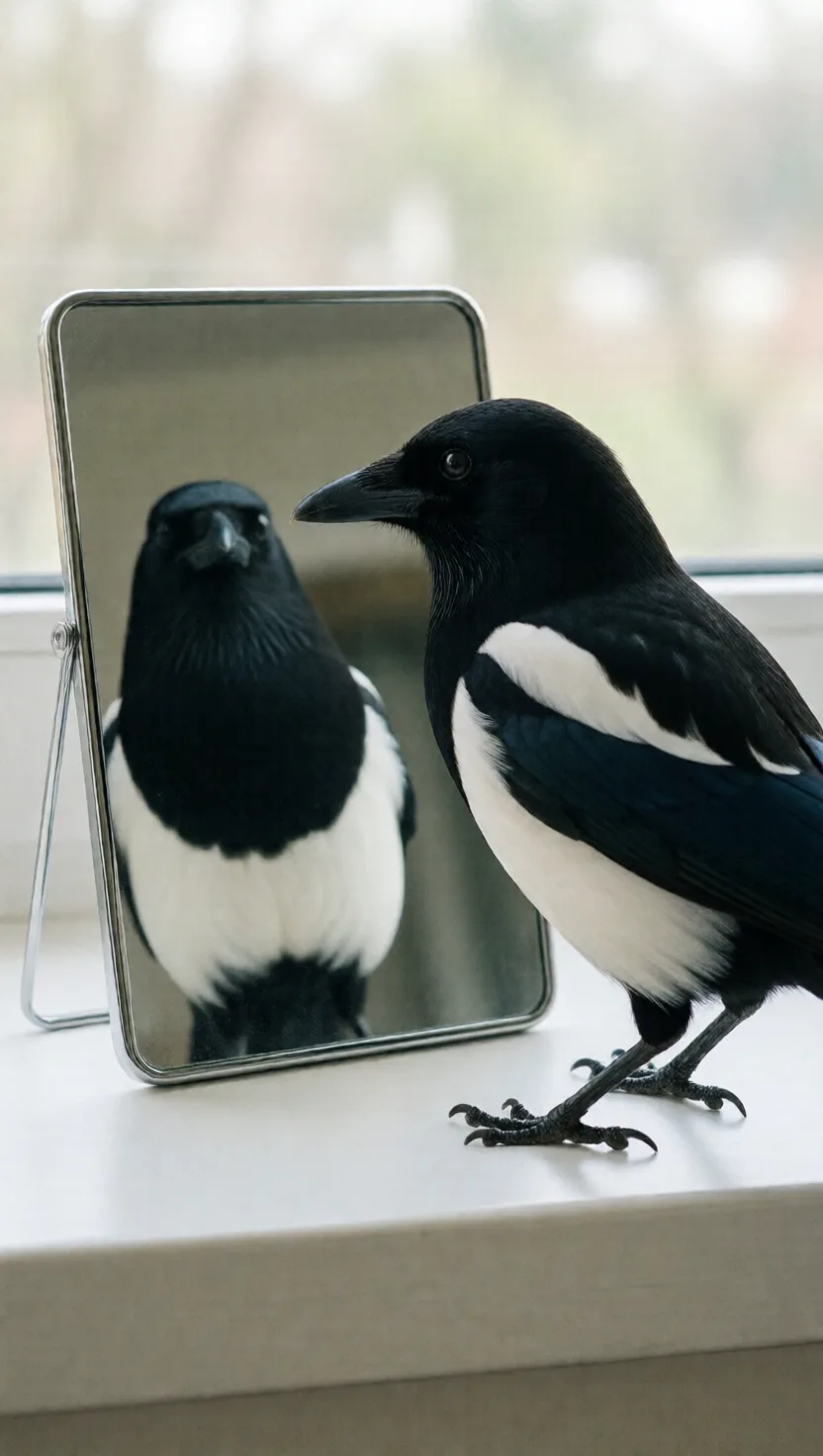
Put a small coloured sticker on a magpie's throat, where it can only be seen in a mirror, and the bird scratches at its own throat to be rid of it, proof that it knows the reflection is itself. The 2008 experiment made the magpie the first non-mammal ever shown to pass the mirror test, settling that this kind of self-awareness can grow in a brain with no neocortex at all.
A raven saves a tool for tomorrow

A raven saves a tool for tomorrow

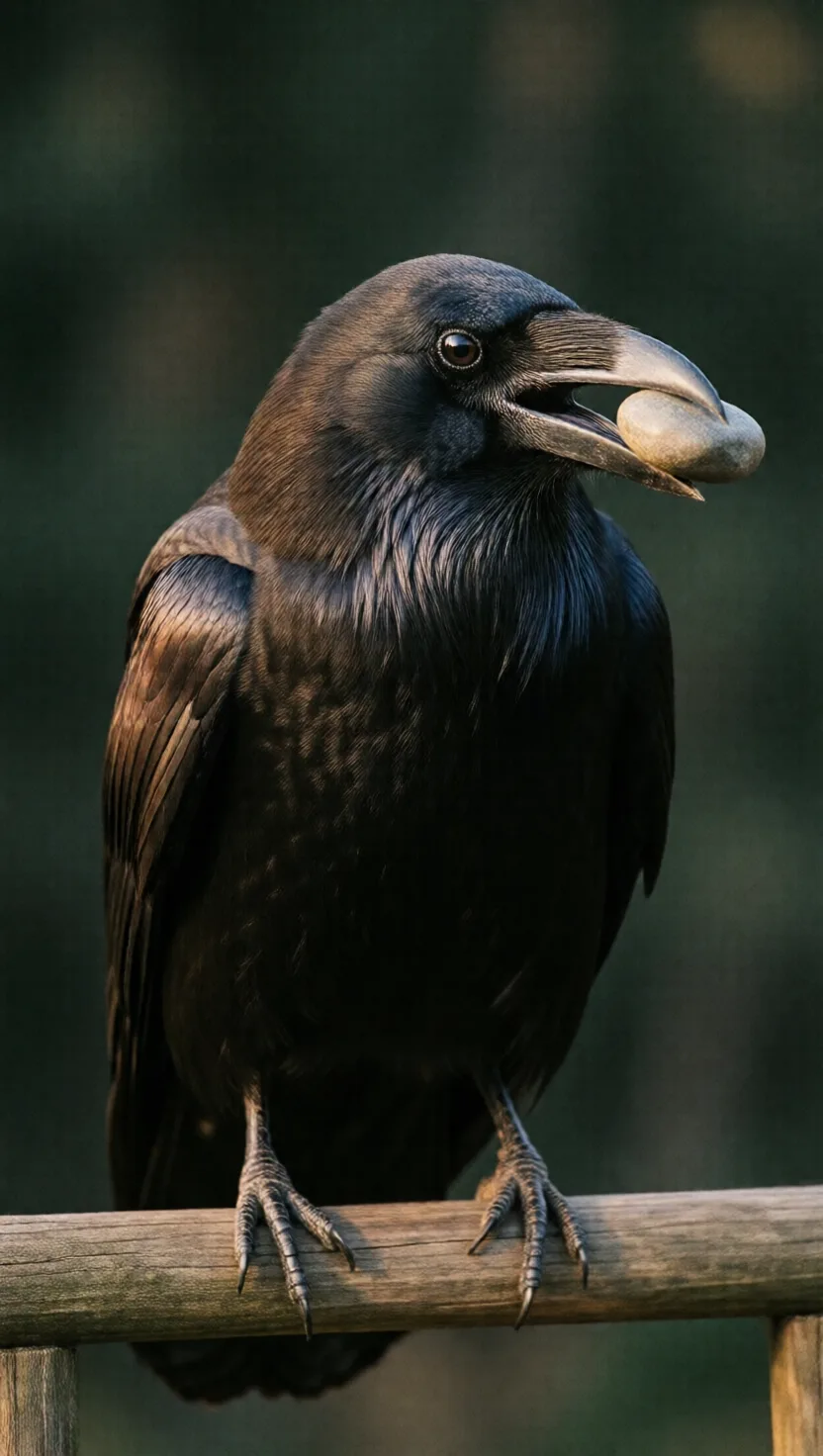
Ravens will pick out a tool and hold on to it for a job that won't come until much later, even turning down a smaller treat offered right now to keep the tool for a bigger reward to come. In one study they held the right object for up to seventeen hours before the chance to use it arrived. That kind of forward planning was long thought to belong to the great apes and us alone.
It builds one long tool from short parts

It builds one long tool from short parts

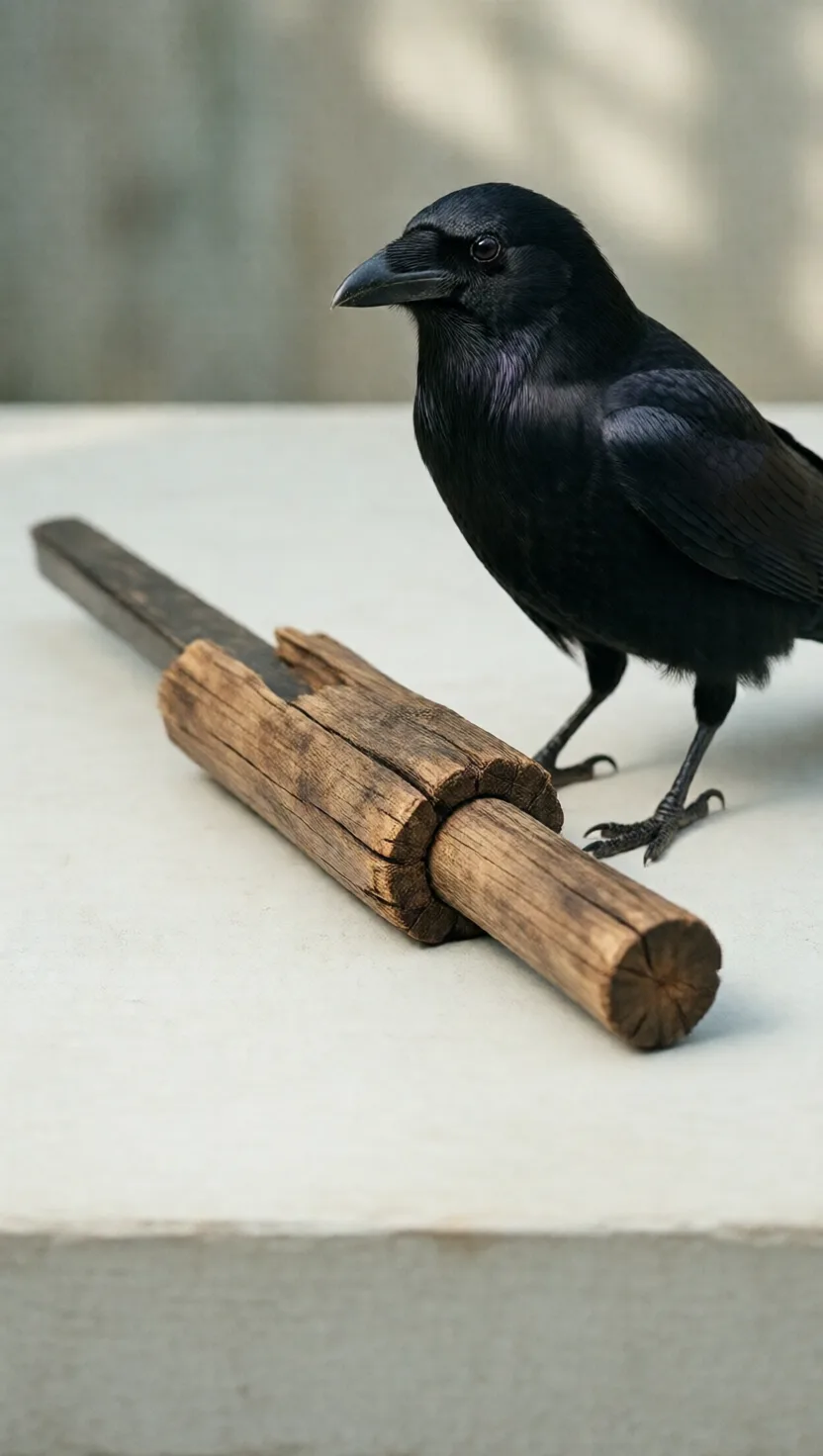
Given pieces too short on their own to reach a treat, New Caledonian crows slot them together into one longer tool, a hollow shaft and a plunger, with no help and no training. One bird went further, joining three and even four parts into a single reaching stick. Building a working tool from separate components had never been seen in any animal outside the great apes.
Trained to caw an exact number

Trained to caw an exact number

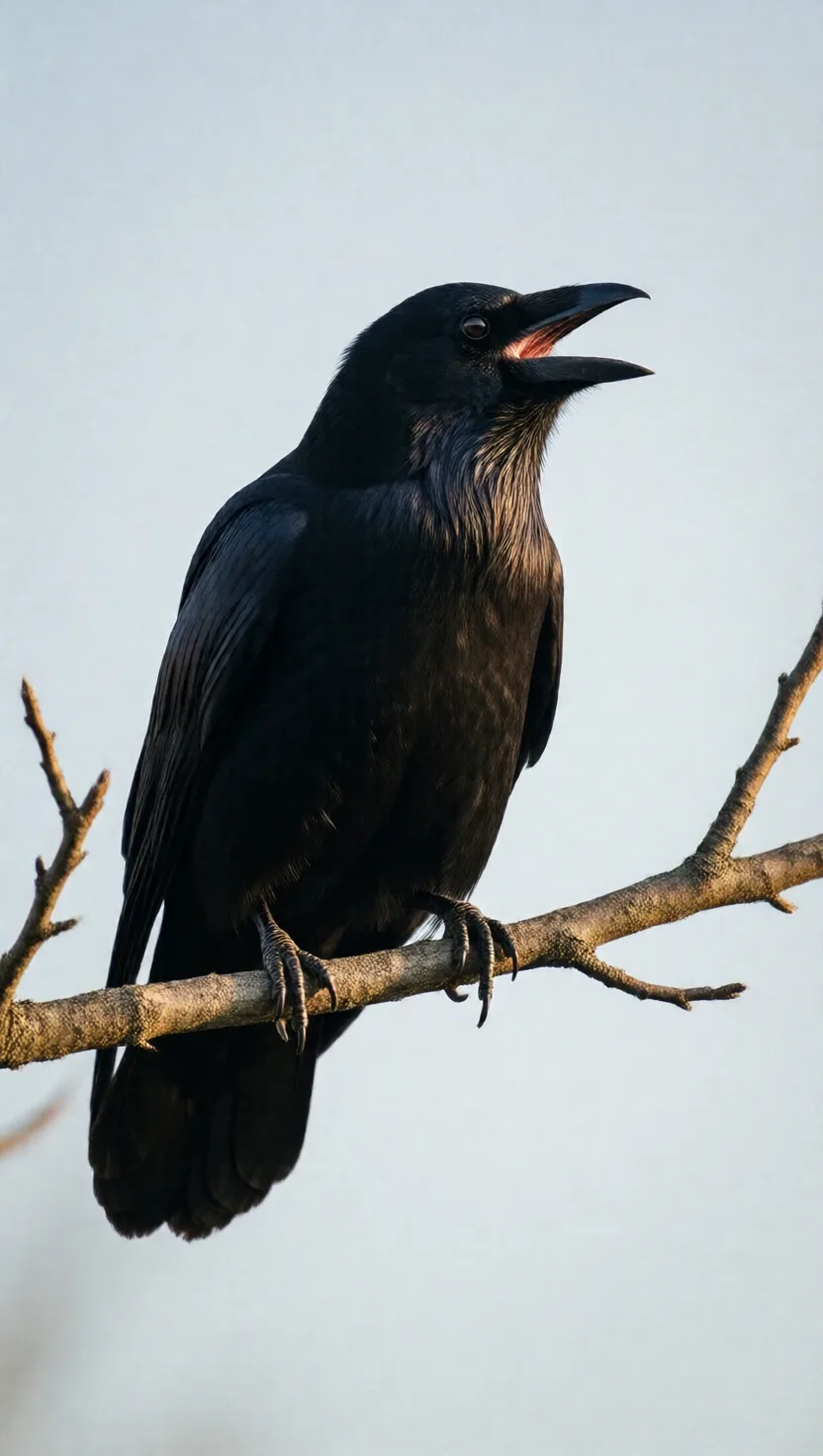
Shown a cue, crows can deliberately produce a set number of caws, one, two, three or four, then peck a key to signal they are done. The very first caw already carries a hint of how many will follow, a sign the bird plans the whole sequence before it begins. It is the clearest case yet of an animal counting out loud, much as a young child does on its fingers.
It buries 30,000 seeds and finds them

It buries 30,000 seeds and finds them

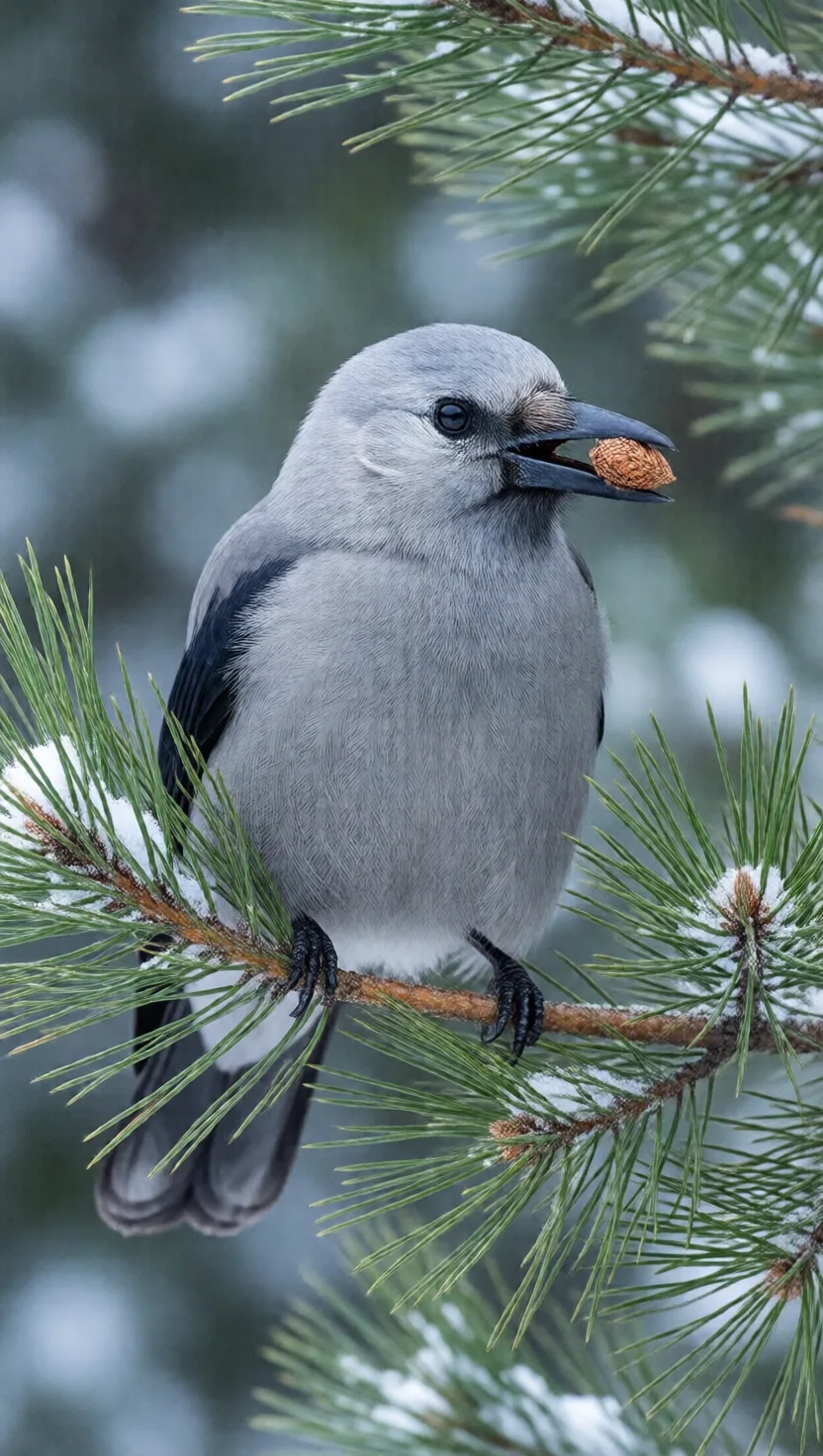
A Clark's nutcracker, a high-mountain cousin of the crow, hides pine seeds for winter, tens of thousands of them, in thousands of separate buried caches scattered across miles of forest. Months later, even under deep snow, it returns and digs them up from memory, using rocks and trees as landmarks. Birds have relocated their stores more than nine months after burying them.
They hold a funeral to learn the danger

They hold a funeral to learn the danger

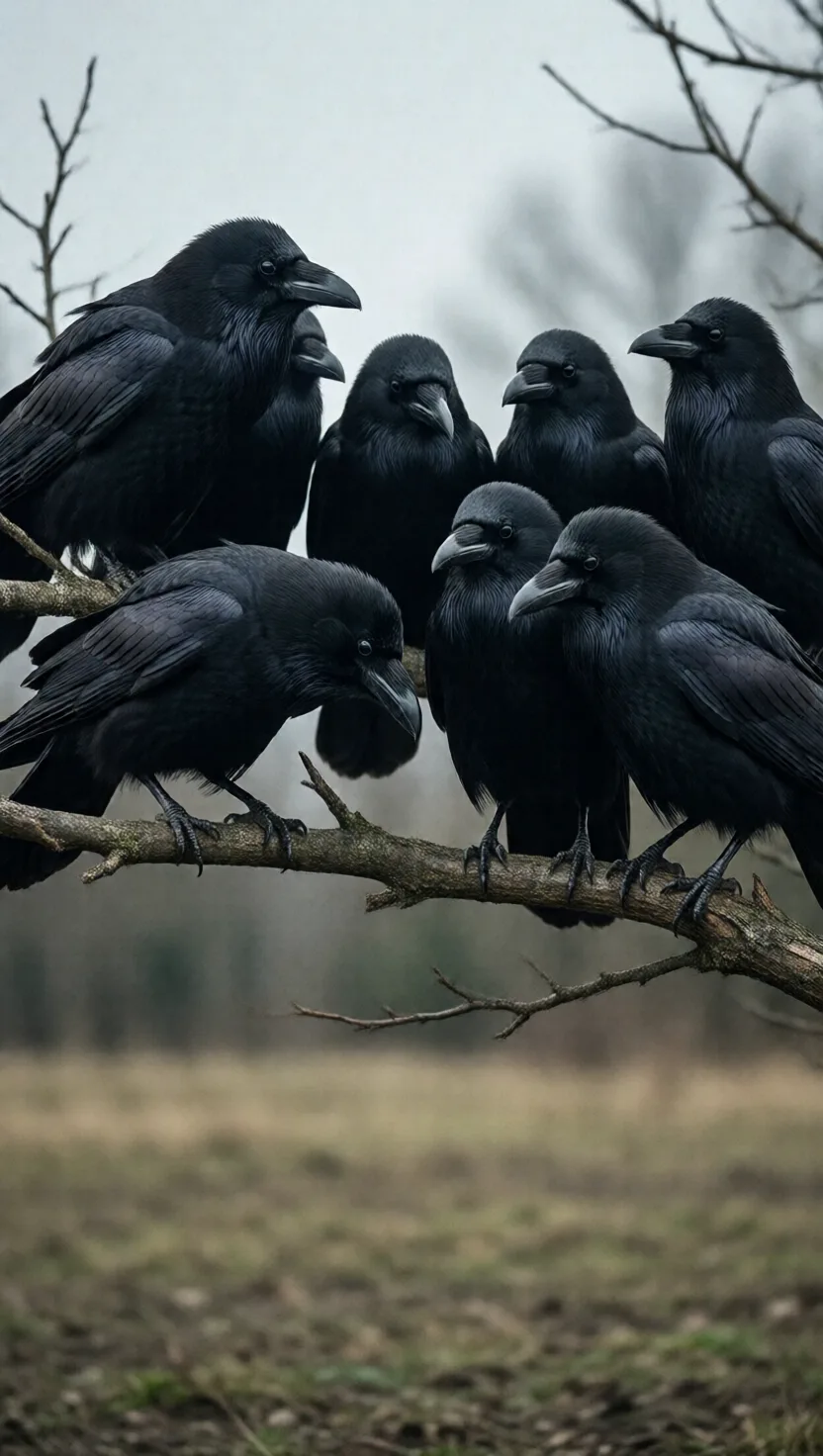
When crows find one of their own lying dead, they gather and mob the spot in a noisy crowd, and they are learning, not mourning. They memorise whatever was near the body, a person or a predator, and afterwards scold that face on sight. The lesson spreads to crows that never saw the death, and the grudge can hold for weeks, passed bird to bird without anyone risking a thing.
tap →swipe ↑ for depthswipe ↓ to exit