Eight things about the largest animals alive

DC·156 Deep Cuts
Its heart can idle at two beats a minute

Its heart can idle at two beats a minute

A blue whale's heart is about the size of a small car and weighs on the order of 180 kilograms. When the whale makes a deep dive, that giant pump nearly stalls: tagged measurements recorded a heartbeat as slow as two beats a minute at depth, then a racing surge up to about 37 as it surfaced to breathe. Slowing the heart this much helps it stretch a single lungful of air across a long, cold dive.
A calf can gain ninety kilos in a single day

A calf can gain ninety kilos in a single day

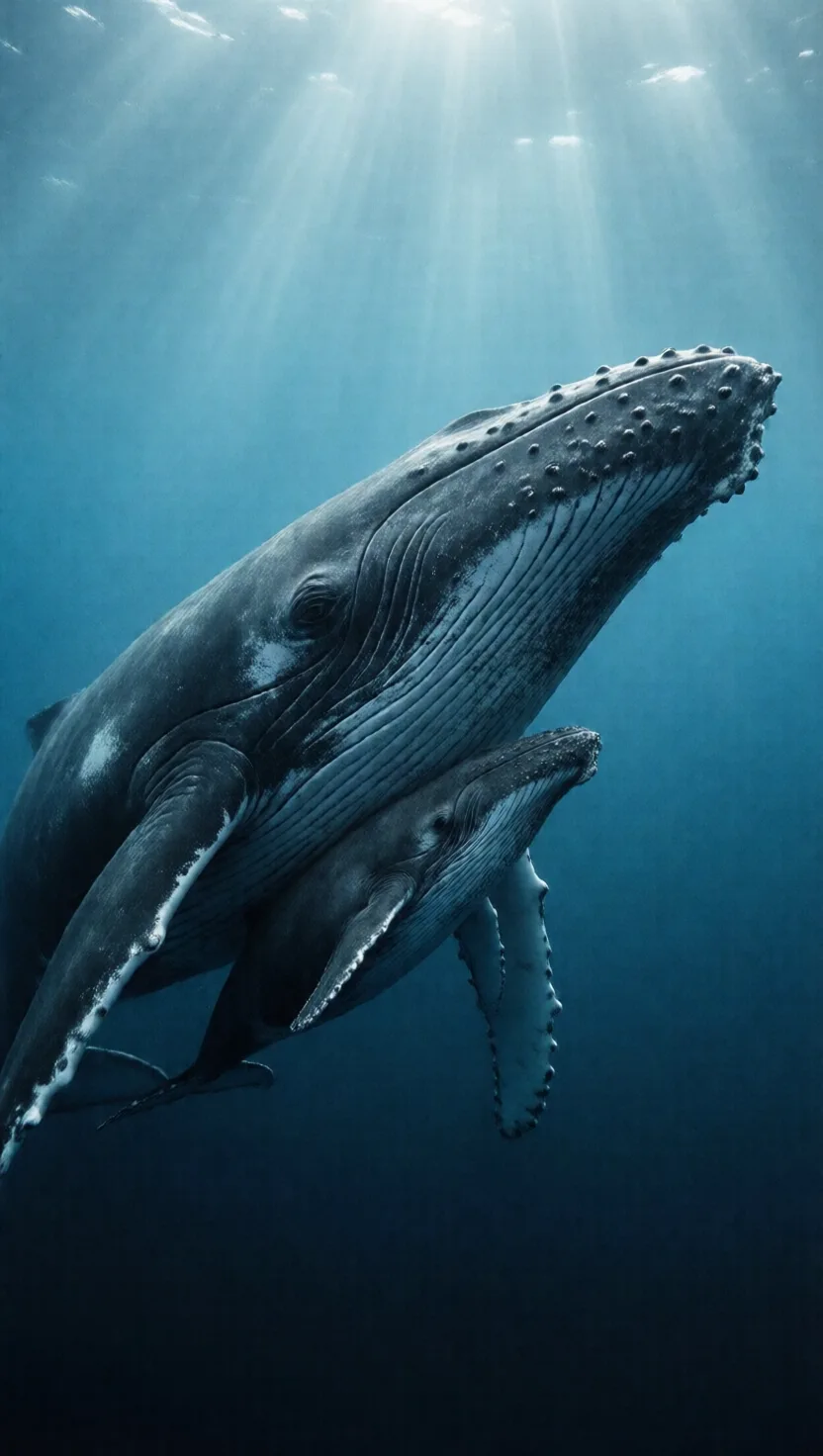
Whale milk is almost nothing like ours. It runs 35 to 50 percent fat, closer to toothpaste than to a drink, so the calf doesn't lose it in the water while nursing. On that rich diet a blue whale calf grows at a staggering pace, putting on roughly 90 kilograms a day in its first months and adding several centimetres of length while it's at it.
Two miles down on a single breath

Two miles down on a single breath

The deepest dive ever recorded for any mammal belongs to a small, rarely seen species called the Cuvier's beaked whale. One tagged animal went down nearly 2,992 metres, almost two miles beneath the surface, and another stayed under for 3 hours and 42 minutes on a single breath. To survive the crushing pressure it lets its lungs collapse and runs on oxygen stored in its muscles and blood.
One mouthful can outweigh the whole whale

One mouthful can outweigh the whole whale

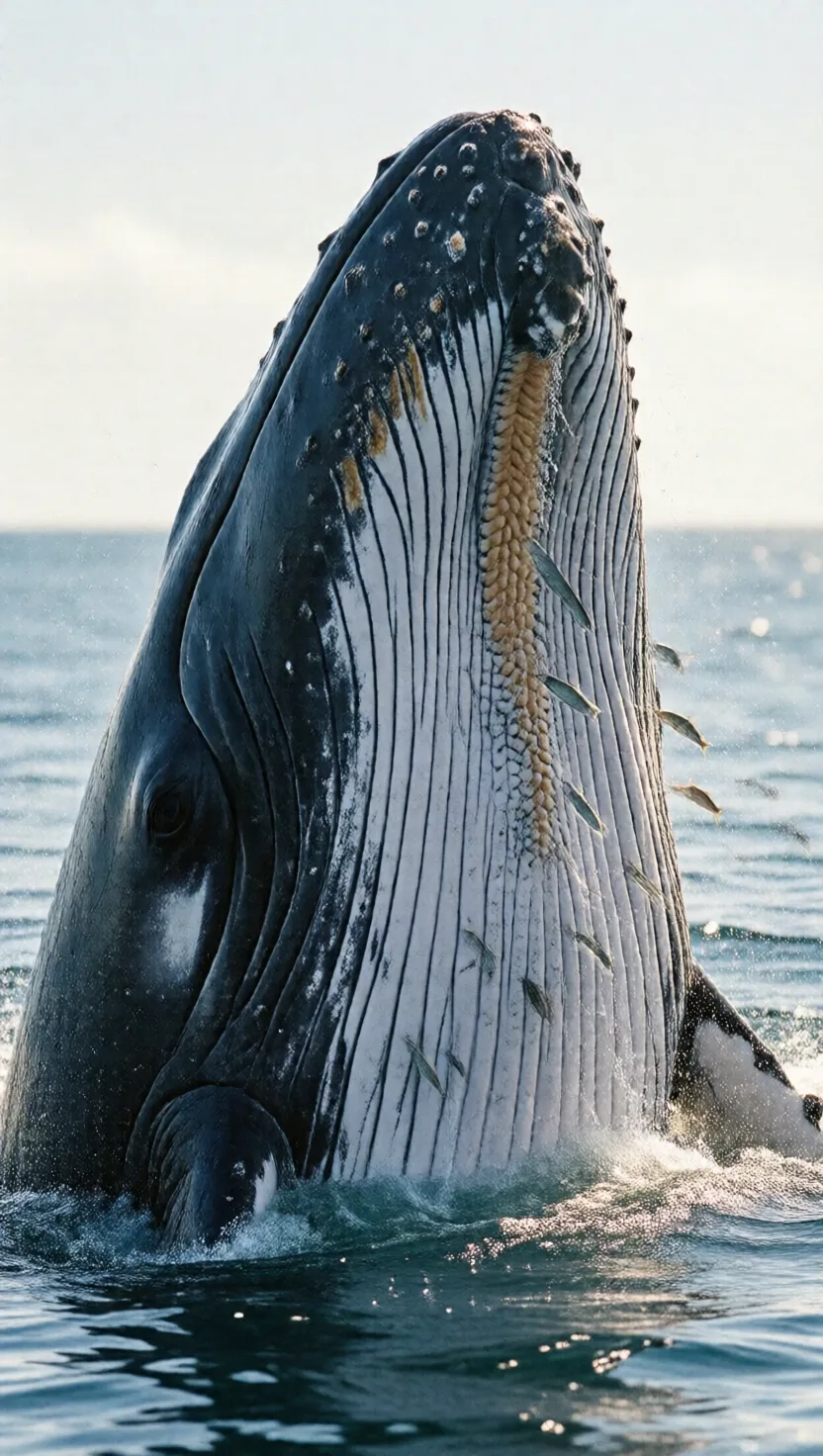
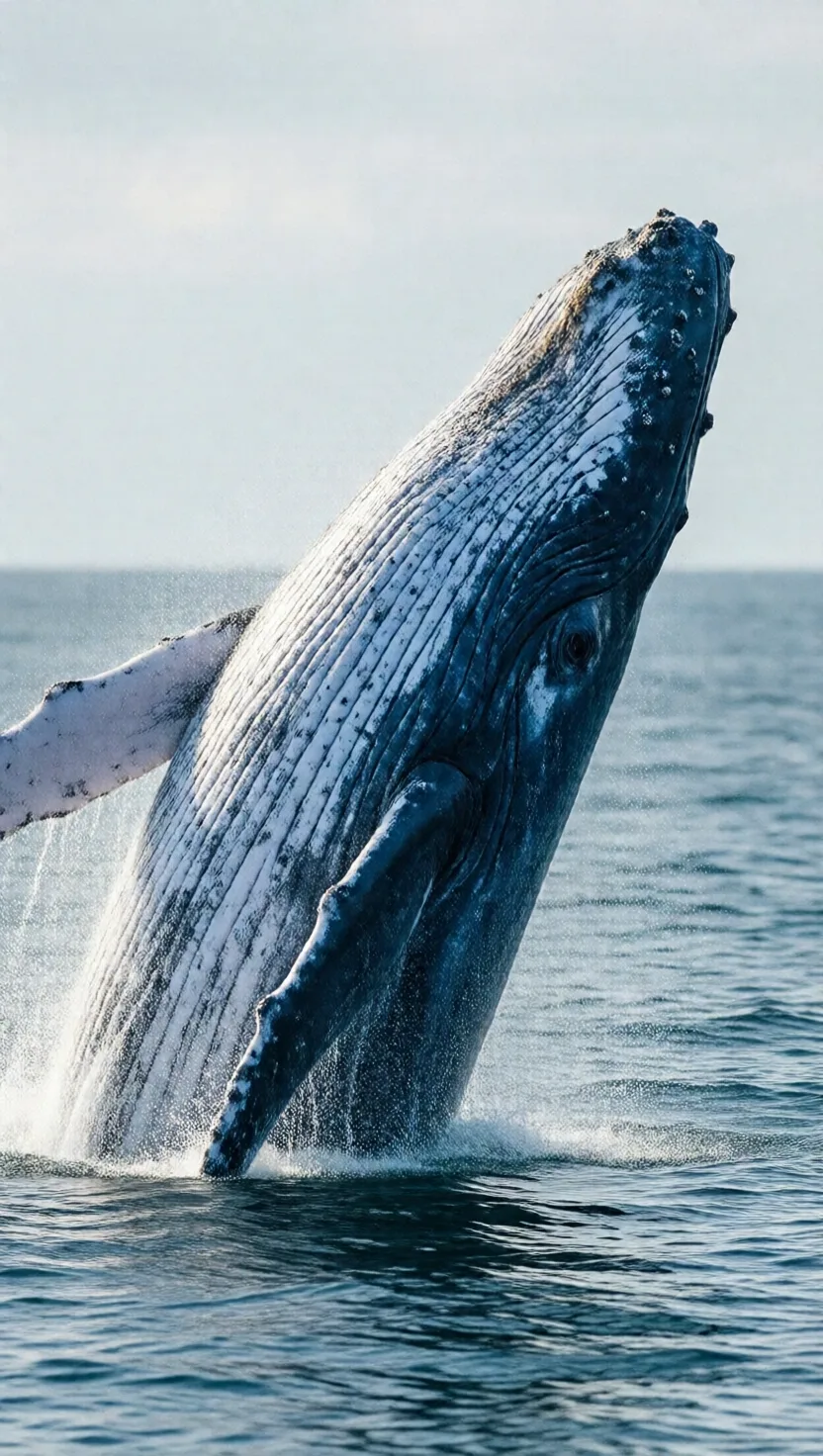
A lunge-feeding whale doesn't sip; it ambushes. Charging a swarm of krill, it throws its mouth open and the pleated throat balloons out like a vast elastic sack. In a single gulp it can take in a mass of water greater than the whale's entire body, then squeeze it back out through the bristled filter in its mouth, trapping the food behind. It is one of the largest single biomechanical events in nature.
Its closest living cousin is the hippo

Its closest living cousin is the hippo

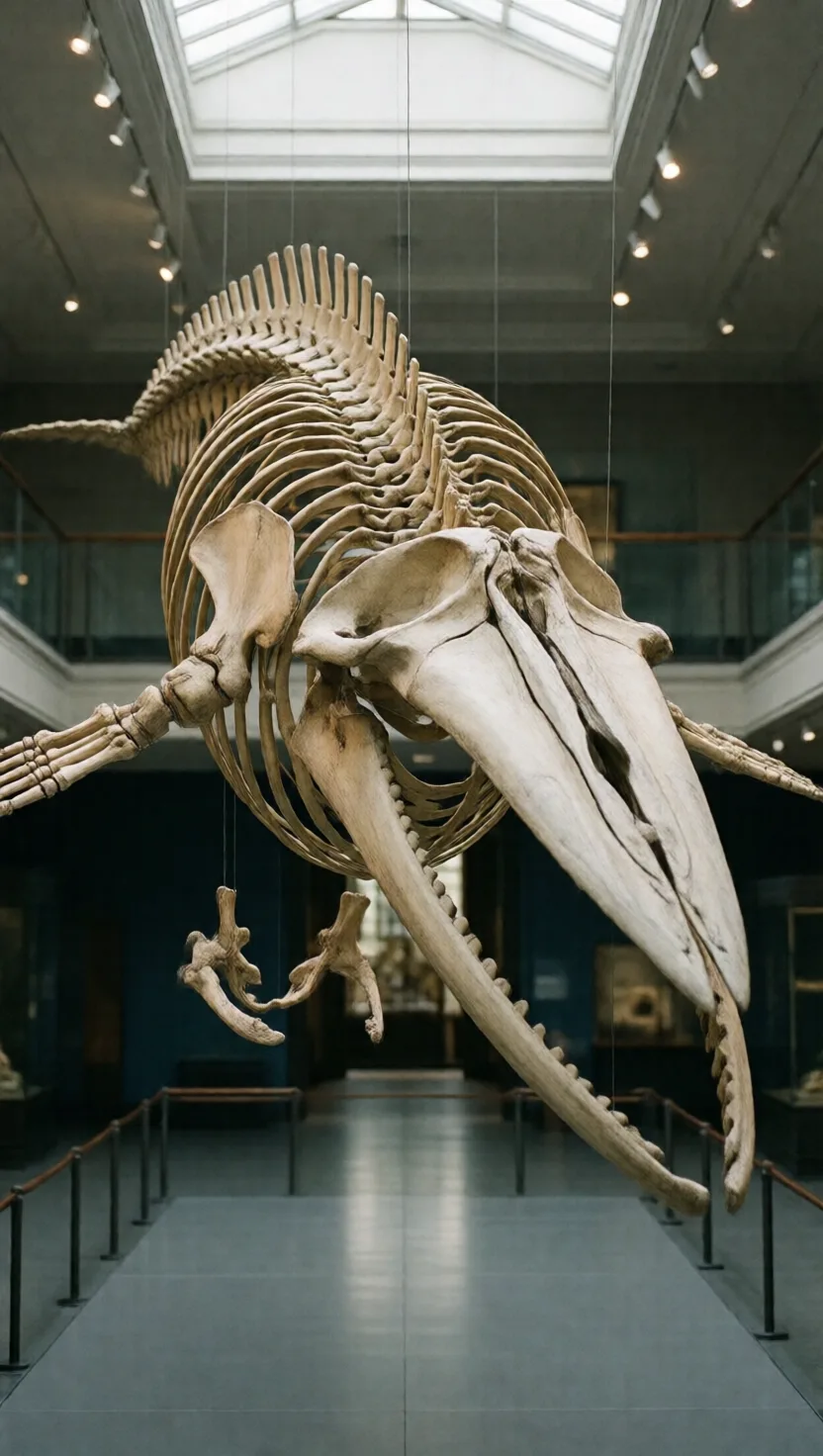
Whales began as four-legged land animals that waded back into the sea about 50 million years ago. Genetics now points to a surprising nearest relative still alive today: the hippopotamus. The evidence is hidden inside the whale's own body, where a pair of small bones float free of the spine. Once dismissed as useless leftovers of hind legs, these pelvic bones turn out to still anchor muscles used in mating.
Older than the harpoons buried in its back

Older than the harpoons buried in its back

The bowhead whale of the Arctic may be the longest-lived mammal on Earth. By dating proteins in the lens of the eye, researchers estimated one animal at around 211 years old. The clinching evidence came from the whales themselves: hunters have found stone and ivory harpoon points from the 1800s embedded in living bowheads, weapons that had been carried inside the animal for well over a century.
A new song sweeps the ocean every few years

A new song sweeps the ocean every few years

Male humpback whales all sing the same long, structured song, and that song keeps changing. Every few years a new version appears in one population and spreads, whale to whale, in a wave that can travel right across an ocean basin, replacing the old song completely. Researchers have tracked these song revolutions moving eastward across the Pacific over distances of up to 14,000 kilometres. It is one of the clearest cases of culture spreading among animals.
We tell them apart by the lice on their heads

We tell them apart by the lice on their heads

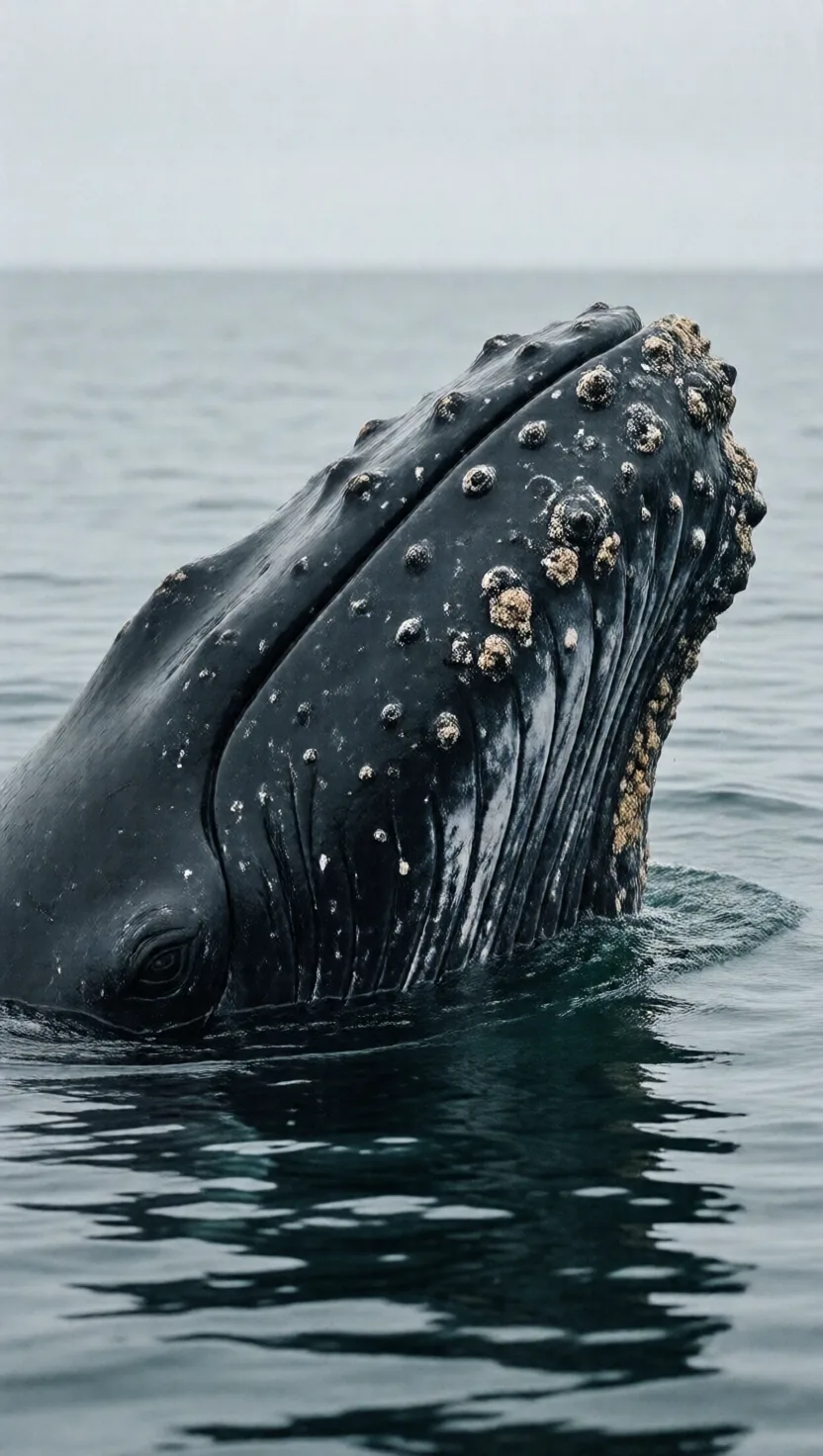
Right whales carry rough, crusted patches of skin on their heads called callosities. The patches look chalky white, but the colour isn't the skin; it's whole colonies of pale whale lice clinging to it. Every right whale's pattern of callosities is fixed before birth and unique, so researchers photograph and catalogue these markings to recognise individuals year after year, the same way we use a fingerprint.
tap →swipe ↑ for depthswipe ↓ to exit