Eight things the slowest mammal hides in plain sight

DC·153 Deep Cuts
Two kinds of sloth, and they're barely related

Two kinds of sloth, and they're barely related

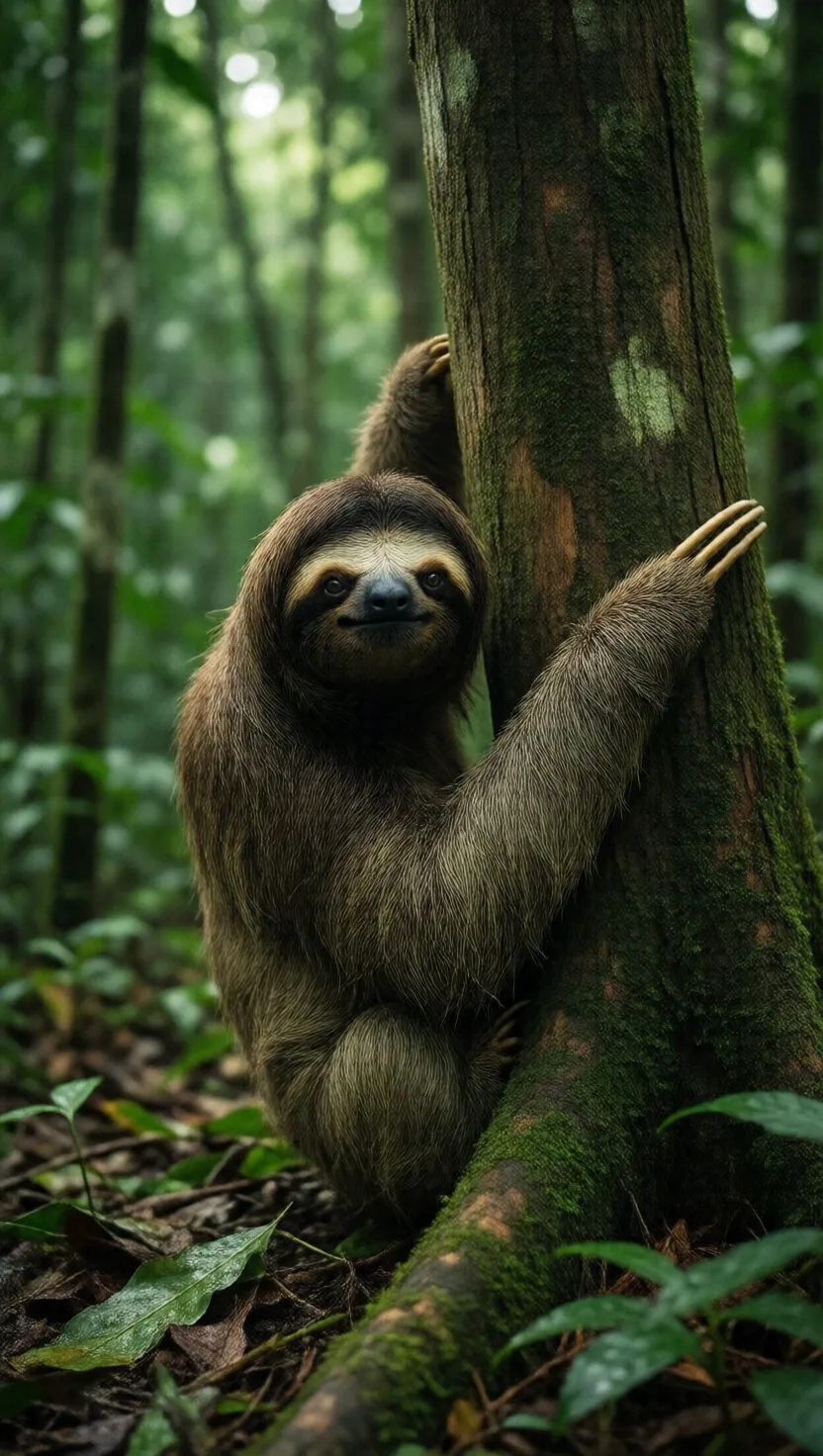
Two-toed and three-toed sloths look like cousins, but their lineages split roughly 30 million years ago — two-toed sloths are actually closer to the extinct giant ground sloths than to their three-toed neighbours. Their shared upside-down, slow-motion life is convergent evolution: two separate branches of the family arriving at the same hanging body plan because the same rainforest problem had the same best answer.
It breaks the rule every mammal obeys

It breaks the rule every mammal obeys

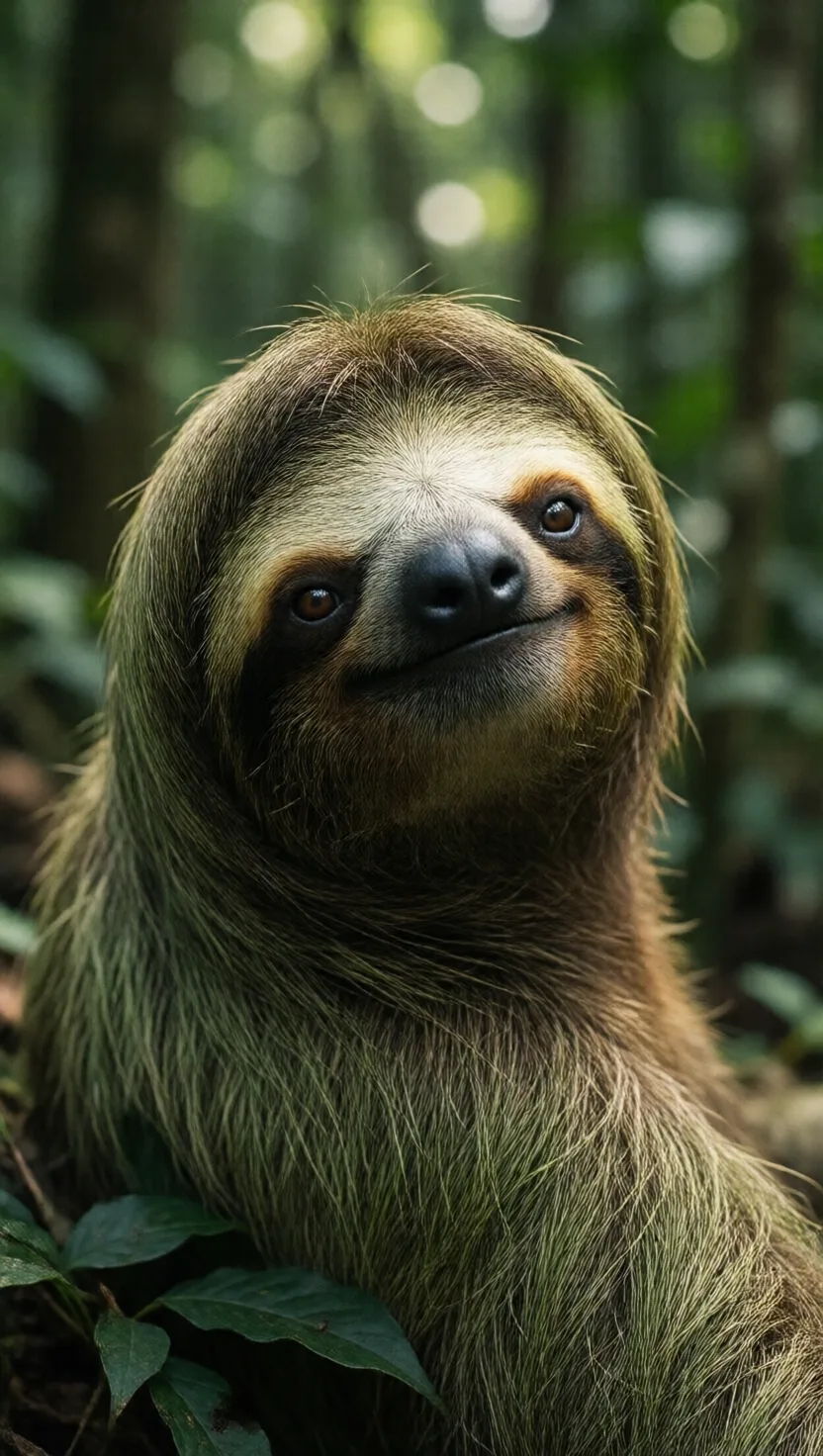
Almost every mammal — mouse, giraffe, human — has exactly seven bones in its neck. Three-toed sloths carry as many as nine, and manatees have six; they are among the only mammals that break the seven-vertebra rule. Those spare neck bones let a sloth swivel its head about 270 degrees, scanning the canopy for predators, mates and food without moving its slow body an inch.
A mammal that runs almost cold-blooded

A mammal that runs almost cold-blooded

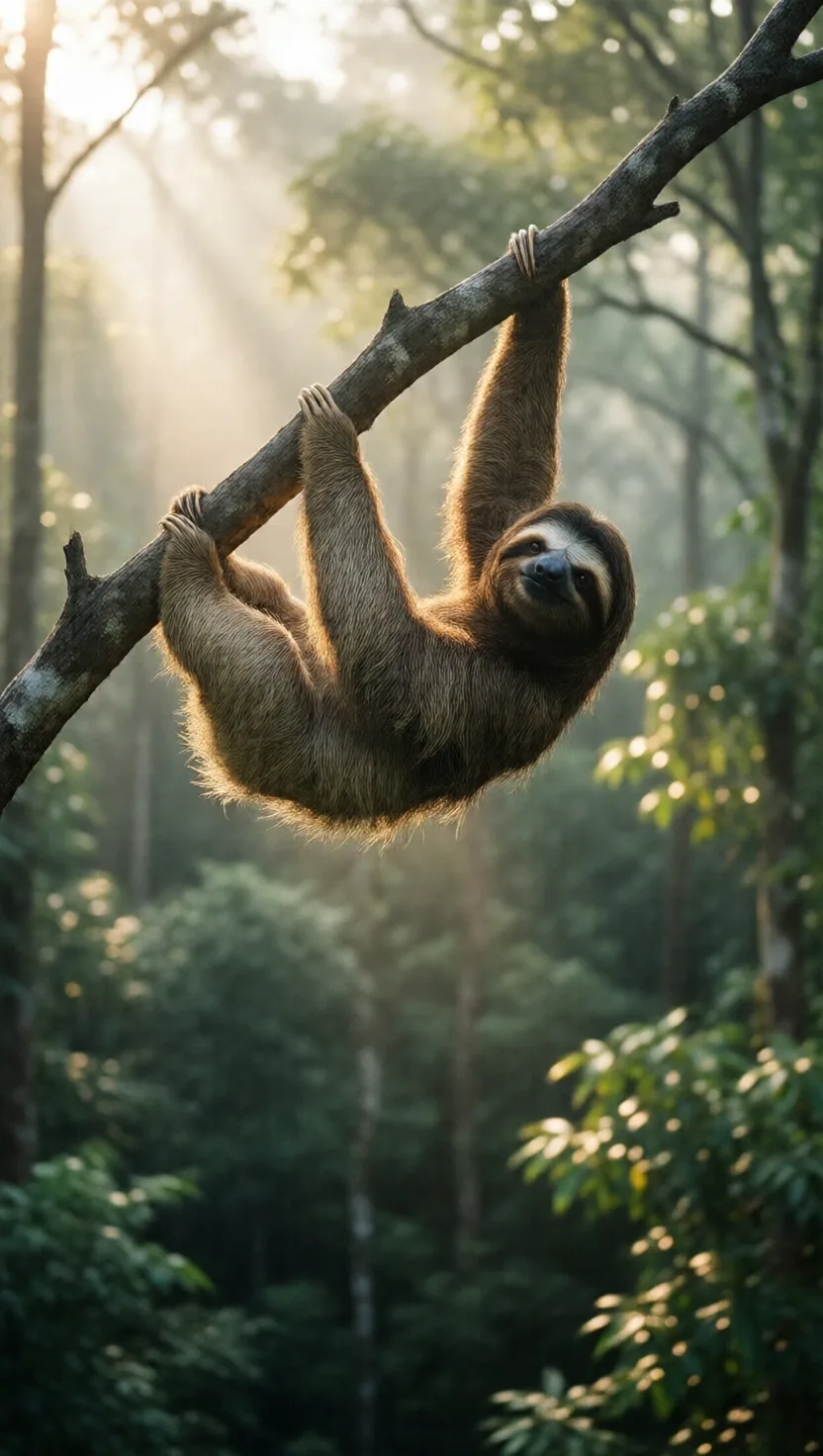
A sloth's core temperature drifts with the air around it, sliding roughly between 24 and 33°C across a single day — the widest, lowest range of any mammal. When it gets cold, the gut bacteria that digest its leaves slow down too, so a chilled sloth can starve on a full stomach. To warm back up it does what a reptile does: climbs to a high branch and finds a patch of sun.
One trip down costs it a third of itself

One trip down costs it a third of itself

A sloth digests so slowly that waste builds up for days. When it finally climbs down to relieve itself — almost the only time it ever leaves the trees — it can shed up to a third of its body weight in a single visit to the ground. That descent is the most dangerous thing a sloth does: a large share of sloth deaths from ground predators happen during these rare, exposed trips.
Its grip needs no muscle — it holds on after death

Its grip needs no muscle — it holds on after death

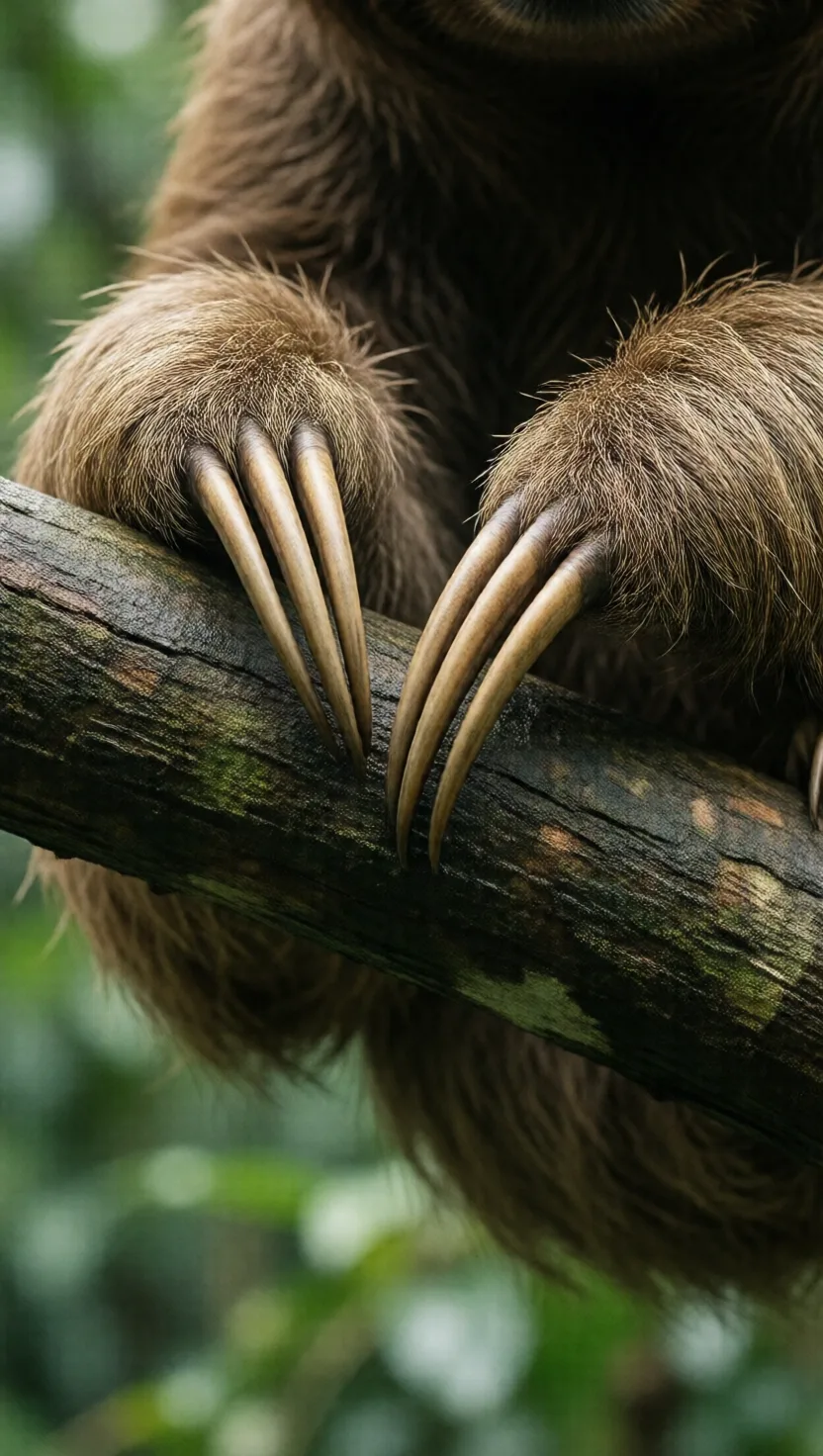
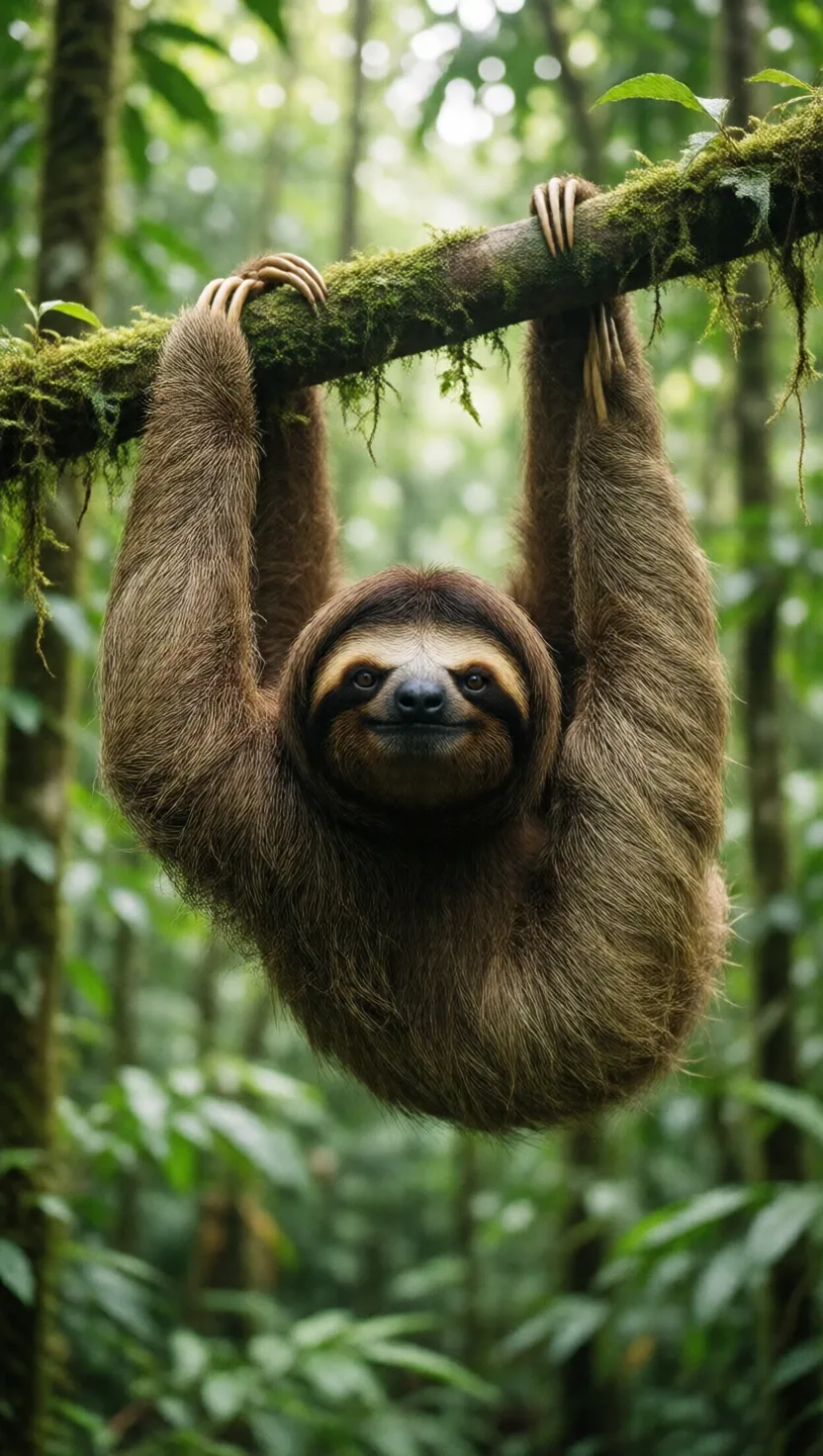
A sloth's fingers and toes curl into permanent hooks, and the tendons lock the long curved claws shut so that hanging takes almost no muscular effort — gravity does the gripping for it. The catch is so secure that wild sloths have been found still suspended from a branch after they died. The same passive lock lets one doze for hours hanging below a limb without ever tiring.
Its fur is parted the wrong way on purpose

Its fur is parted the wrong way on purpose

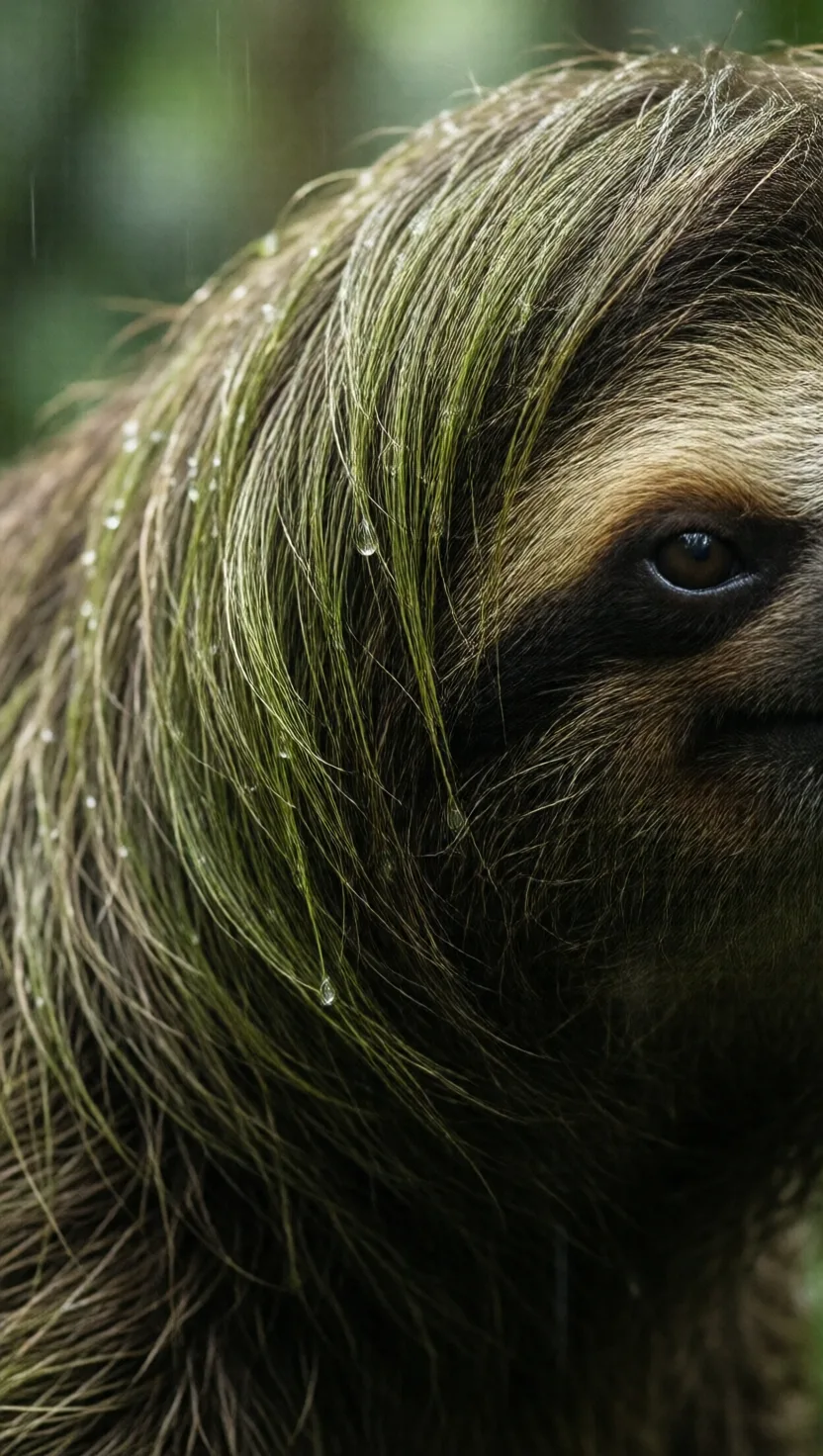
On every other mammal, fur lies from the spine down toward the belly. A sloth's grows the opposite way — parted along the belly and pointing toward the back — because the animal lives inverted. With the sloth hanging upside down, the coat becomes a roof that channels rain off and away. Micro-cracks in each strand even shelter algae, tinting the fur green for camouflage.
The slowpoke is three times faster in water

The slowpoke is three times faster in water

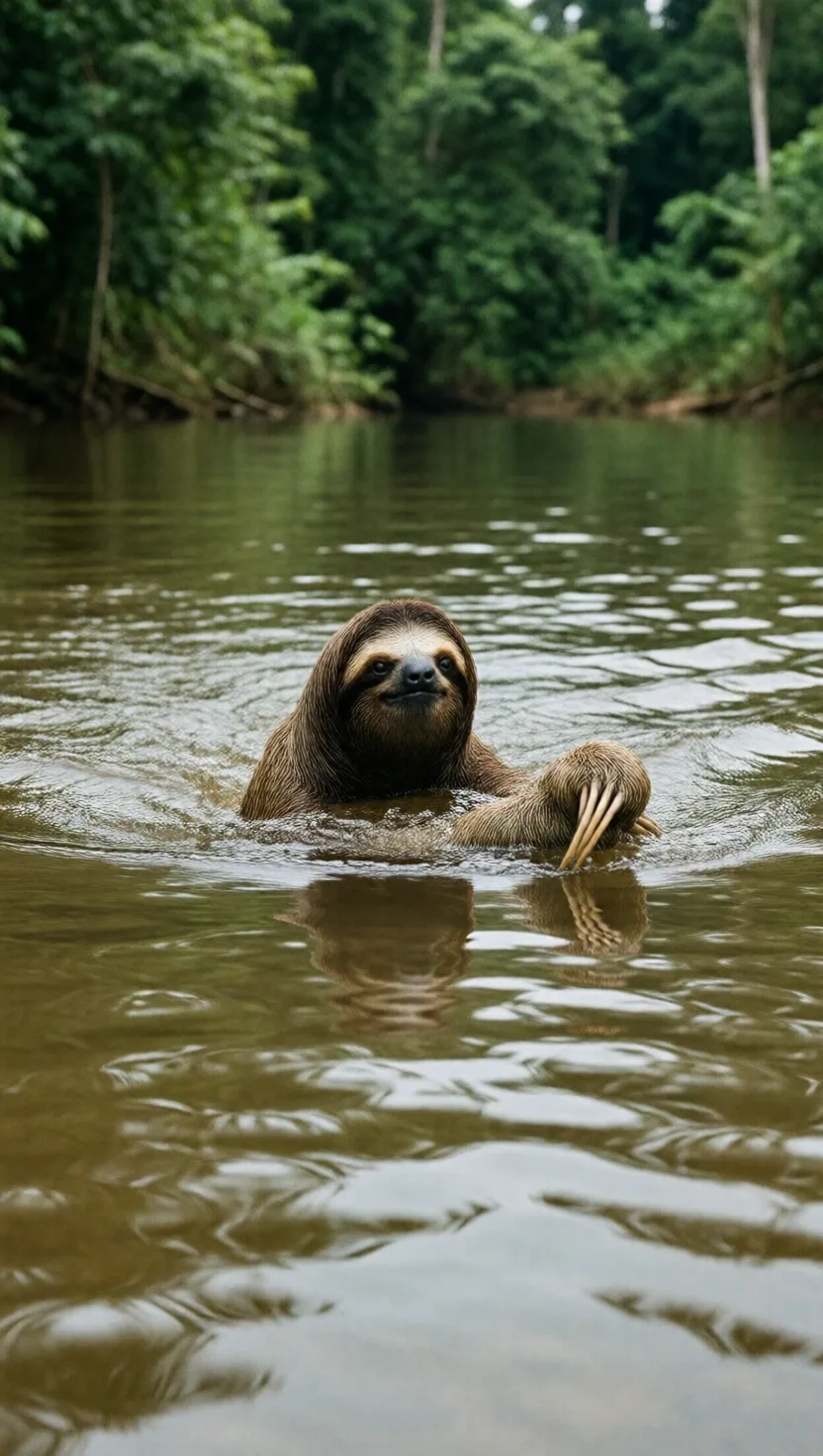
On land a sloth barely crawls, but drop it in a river and it swims — about three times quicker than it moves through the trees, using a steady breaststroke. It can also drop its heart rate to a third of normal and hold its breath for up to 40 minutes, longer than many diving mammals manage. Rivers are highways, not hazards, for an animal built to do everything slowly.
A single leaf can take a month to digest

A single leaf can take a month to digest

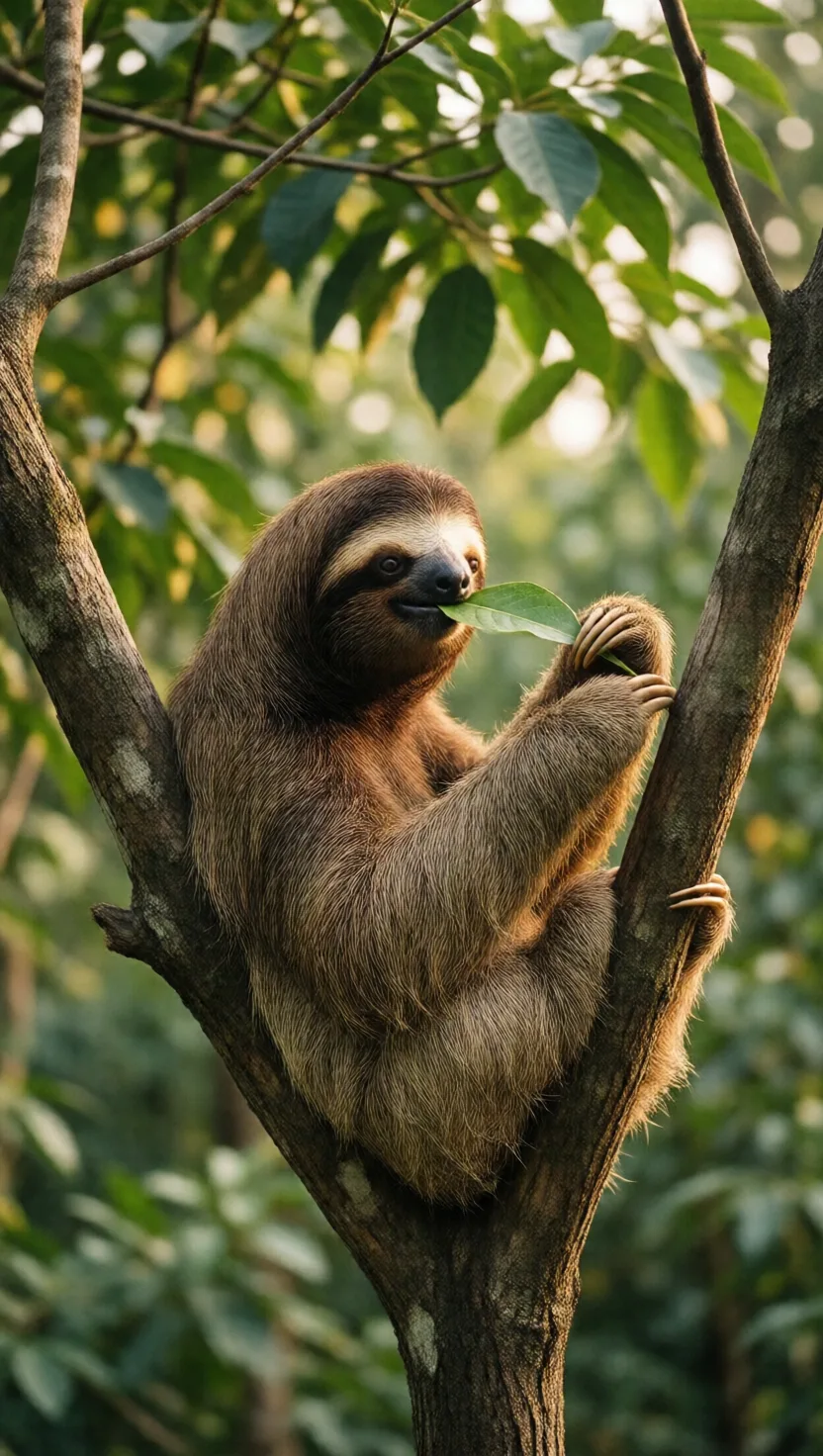
Leaves are tough and almost empty of calories, so a sloth runs the slowest digestion of any mammal: one leaf may take around 30 days to pass through its four-chambered, cow-like stomach, where bacteria slowly break down the fibre. A full gut can be nearly a third of the animal's weight. This is the real reason sloths move so little — they are running on the thinnest of fuel.
tap →swipe ↑ for depthswipe ↓ to exit