Eight things ferns do that flowering plants never learned

DC·150 Deep Cuts
This fern flings its spores with a tiny catapult

This fern flings its spores with a tiny catapult

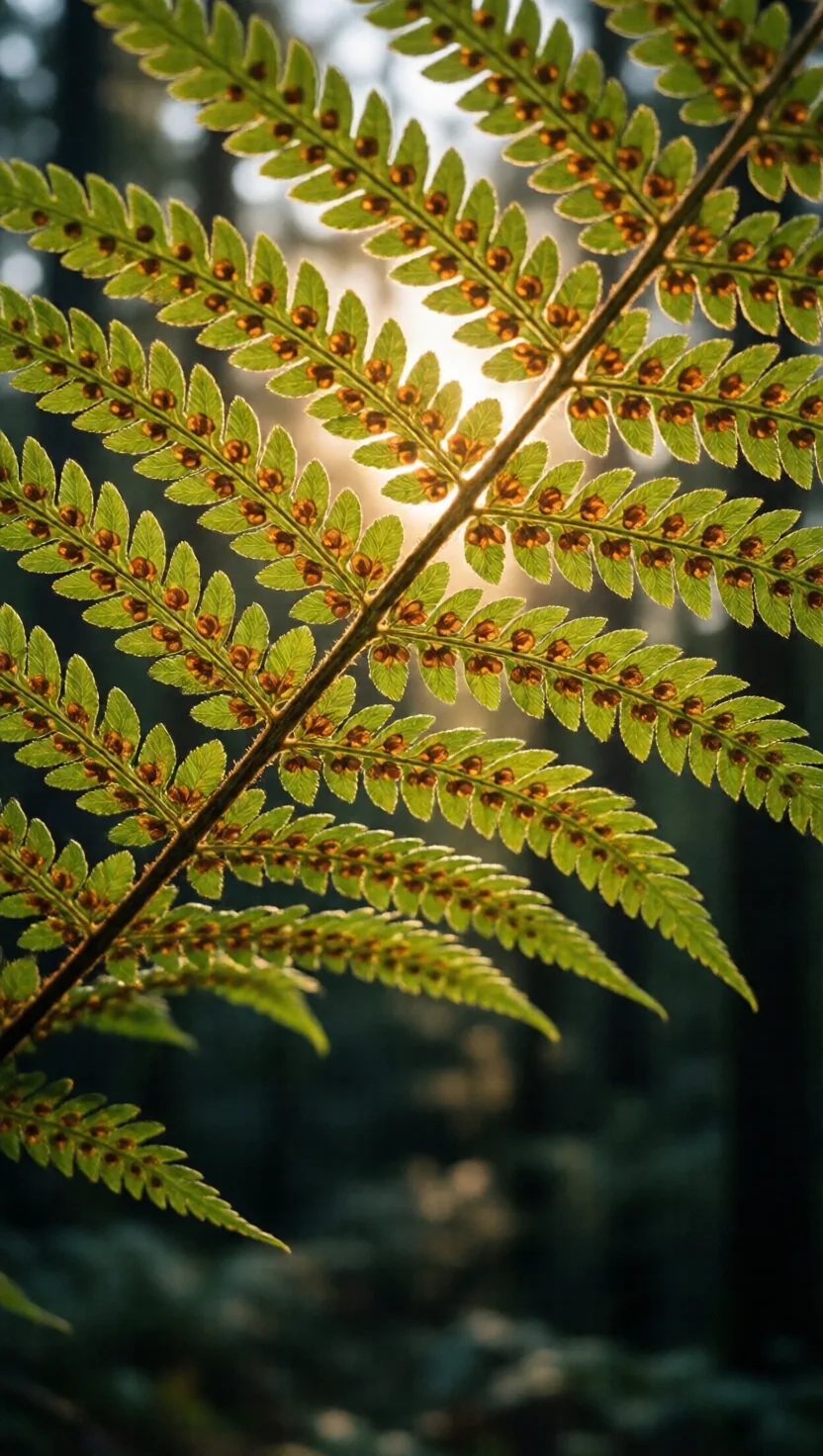
Look under a fern frond and you find rows of little spore cases. Each one is a catapult. As it dries, a ring of cells called the annulus pulls back; the water inside snaps into vapour and the ring springs forward, hurling the spores at about 6.9 metres per second. The launch lasts only tens of millionths of a second, with accelerations near 100,000 times gravity — among the fastest movements any plant makes.
One fern holds more chromosomes than any living thing

One fern holds more chromosomes than any living thing

We carry 46 chromosomes. A modest little fern called the adder's-tongue carries the most of any plant — and of any plant or animal known. One species packs roughly 1,440 chromosomes into each cell, about 720 pairs. Nobody is sure why it hoards so many copies of its genome; it simply does, quietly outdoing every flower, tree, bird and beast on Earth for sheer chromosome count.
A tiny floating fern may have cooled the whole planet

A tiny floating fern may have cooled the whole planet

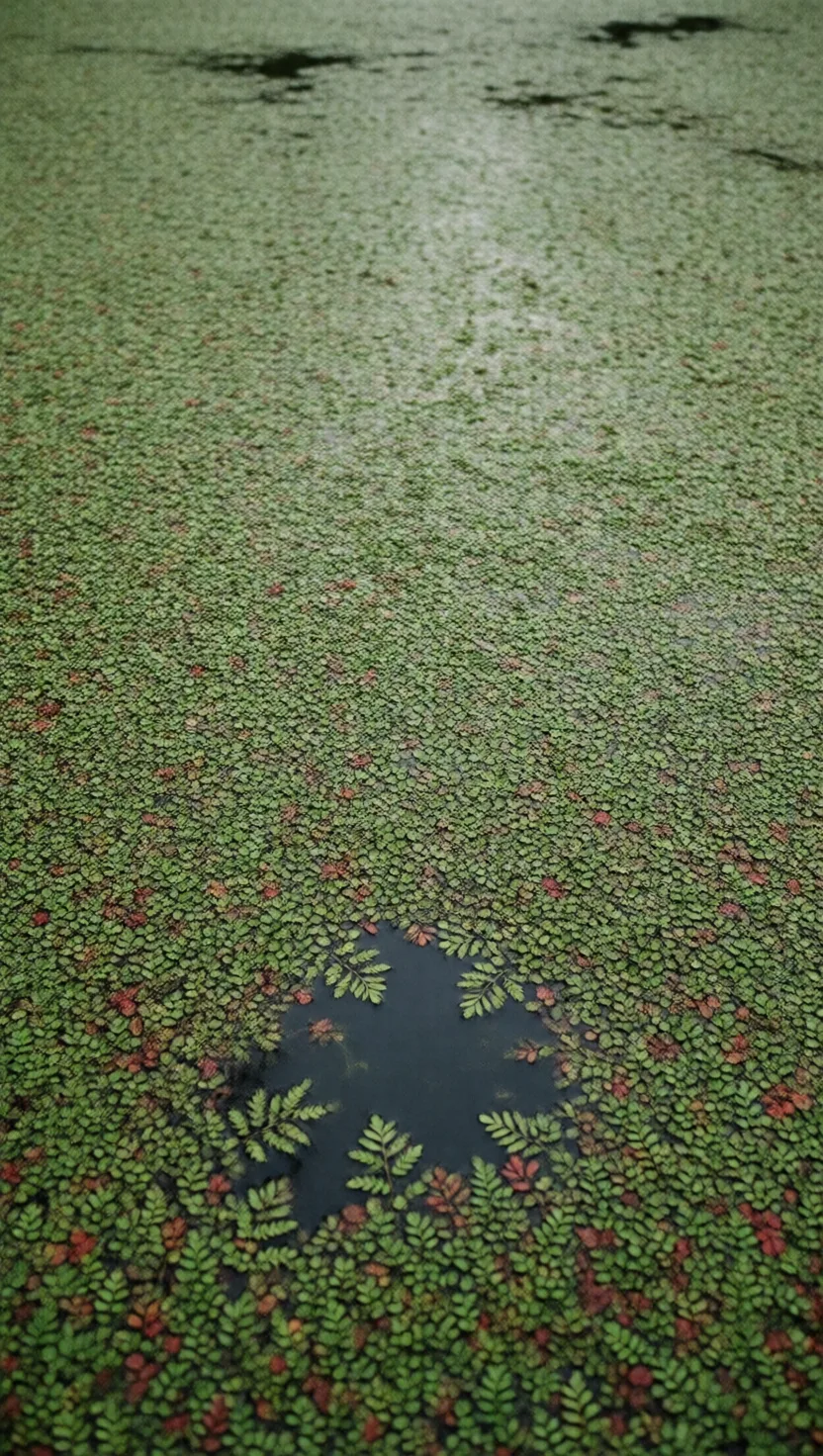
Around 49 million years ago the Arctic Ocean turned fresher on top, and a thumbnail-sized floating fern called Azolla bloomed across it in vast mats, on and off for some 800,000 years. As generation after generation died and sank, their carbon was buried on the seafloor. Many scientists think that long drawdown of carbon dioxide helped tip a hothouse Earth toward the cooler world we live in now.
This fern drinks arsenic and stores it in its leaves

This fern drinks arsenic and stores it in its leaves

Most living things flee arsenic. The brake fern does the opposite: it pulls the poison up out of the soil and stockpiles it in its fronds, reaching about 2 percent of their dry weight — over 20,000 milligrams per kilogram — without any harm. People now plant it on purpose to scrub arsenic from contaminated ground, a slow green cleanup that simply grows the toxin away.
After the dinosaurs died, ferns took over the world first

After the dinosaurs died, ferns took over the world first

In the rock that records the asteroid strike 66 million years ago, geologists find a thin band just above the impact layer where fossil spores are almost all fern — locally 70 to 100 percent. Forests had burned and many plants were gone, but ferns, which spread by dust-fine spores, blanketed the scorched land first. The same recovery shows up after lava flows and landslides today.
A 180-million-year-old fern looks just like today's

A 180-million-year-old fern looks just like today's

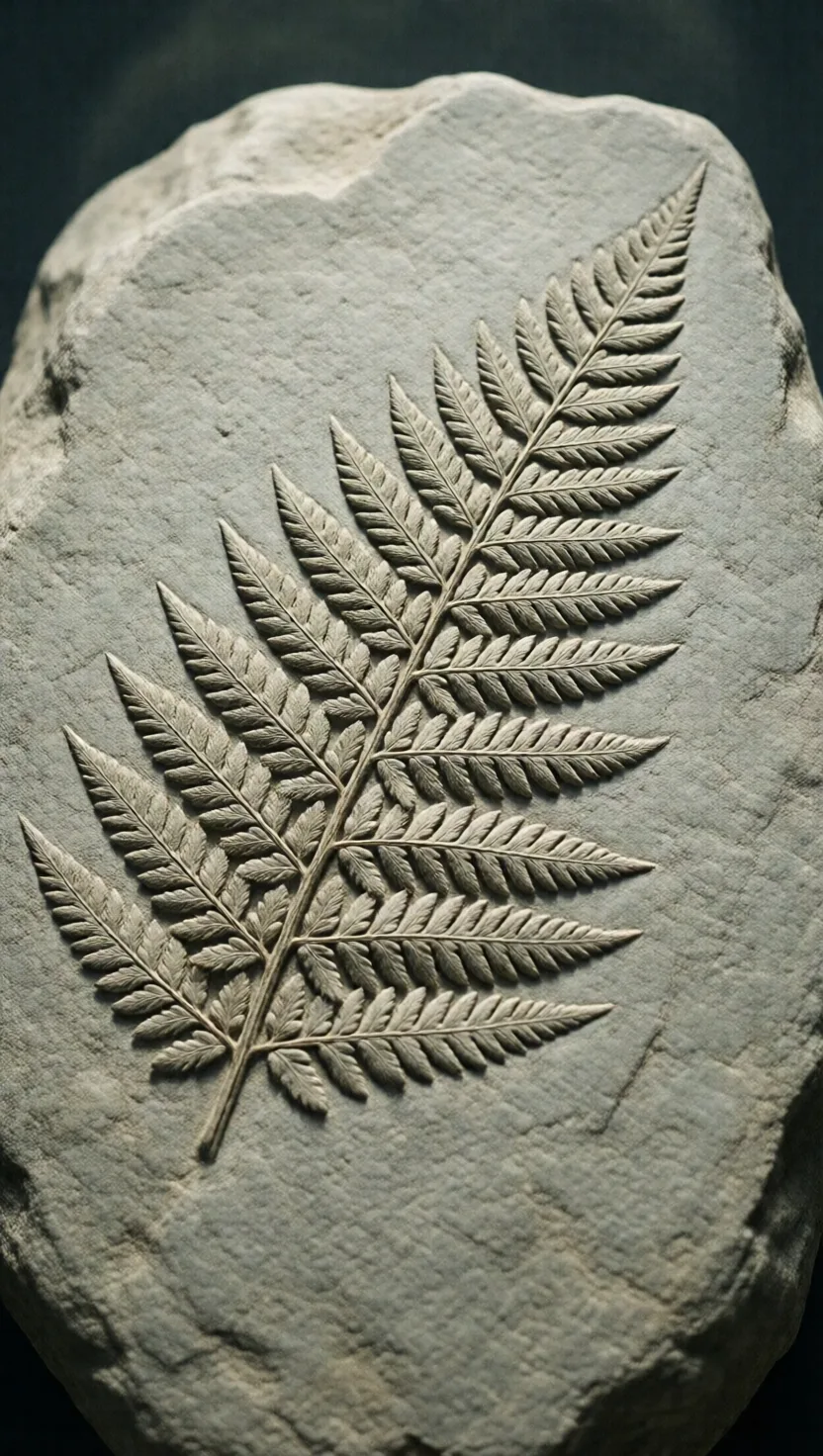
A royal fern that grew in Jurassic Sweden was buried and mineralised so fast that its cells froze mid-life. Under the microscope you can still see the nuclei, and even the chromosomes caught in the act of dividing — virtually the same size as those in royal ferns alive now. After 180 million years, this plant has barely changed: a living thing that found its shape and simply kept it.
This fern walks across rock on the tips of its leaves

This fern walks across rock on the tips of its leaves

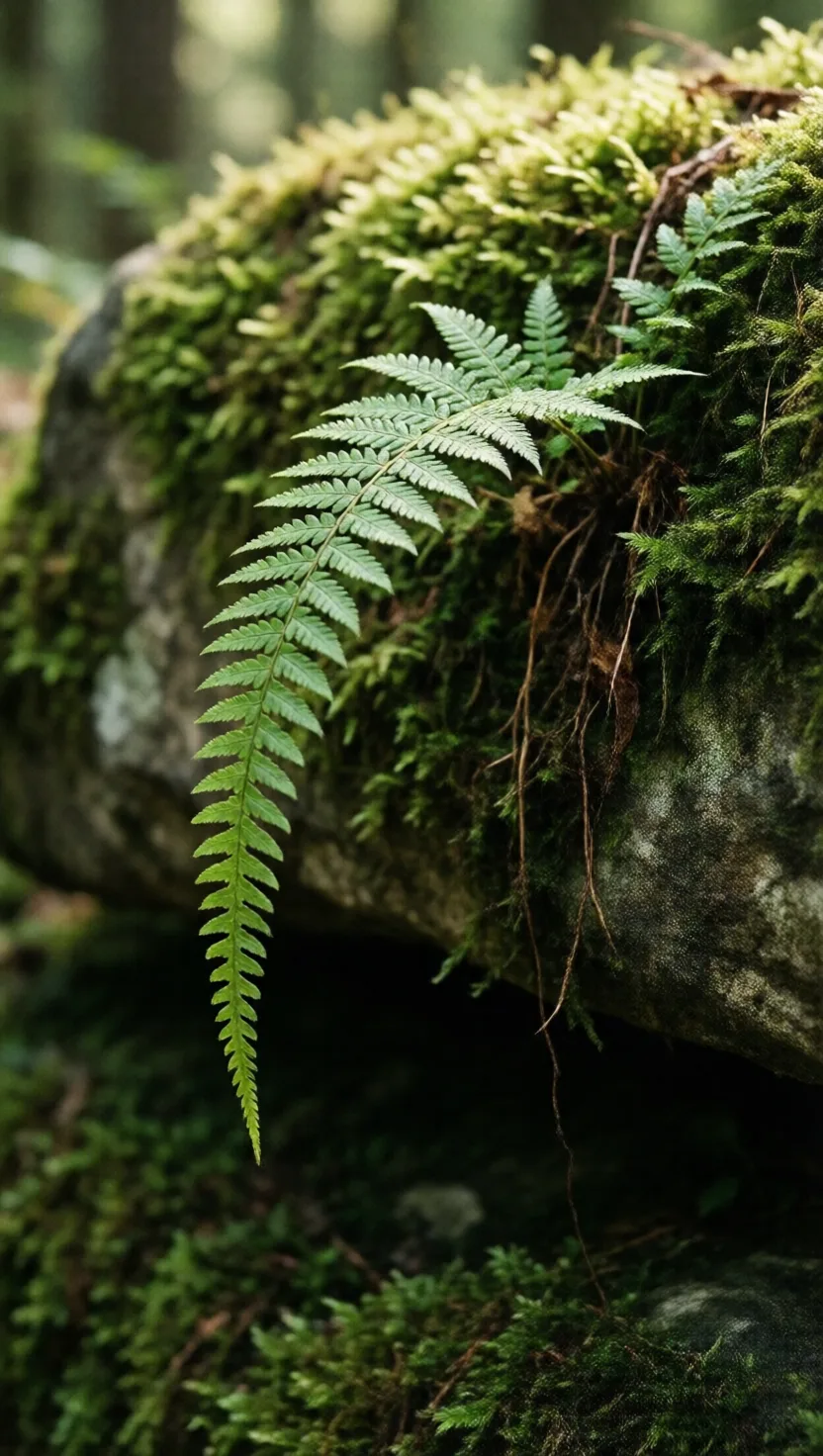
The walking fern grows long, narrow fronds that arch out over bare stone. Where a frond tip touches down, it puts out roots and sprouts a whole new plant, often 20 to 30 centimetres from the parent. That young fern sends out its own arching leaves, takes another step, and over years a single fern strolls across a mossy boulder, stitching itself into a connected colony.
This fern can shrivel up dead, then revive in a rain

This fern can shrivel up dead, then revive in a rain

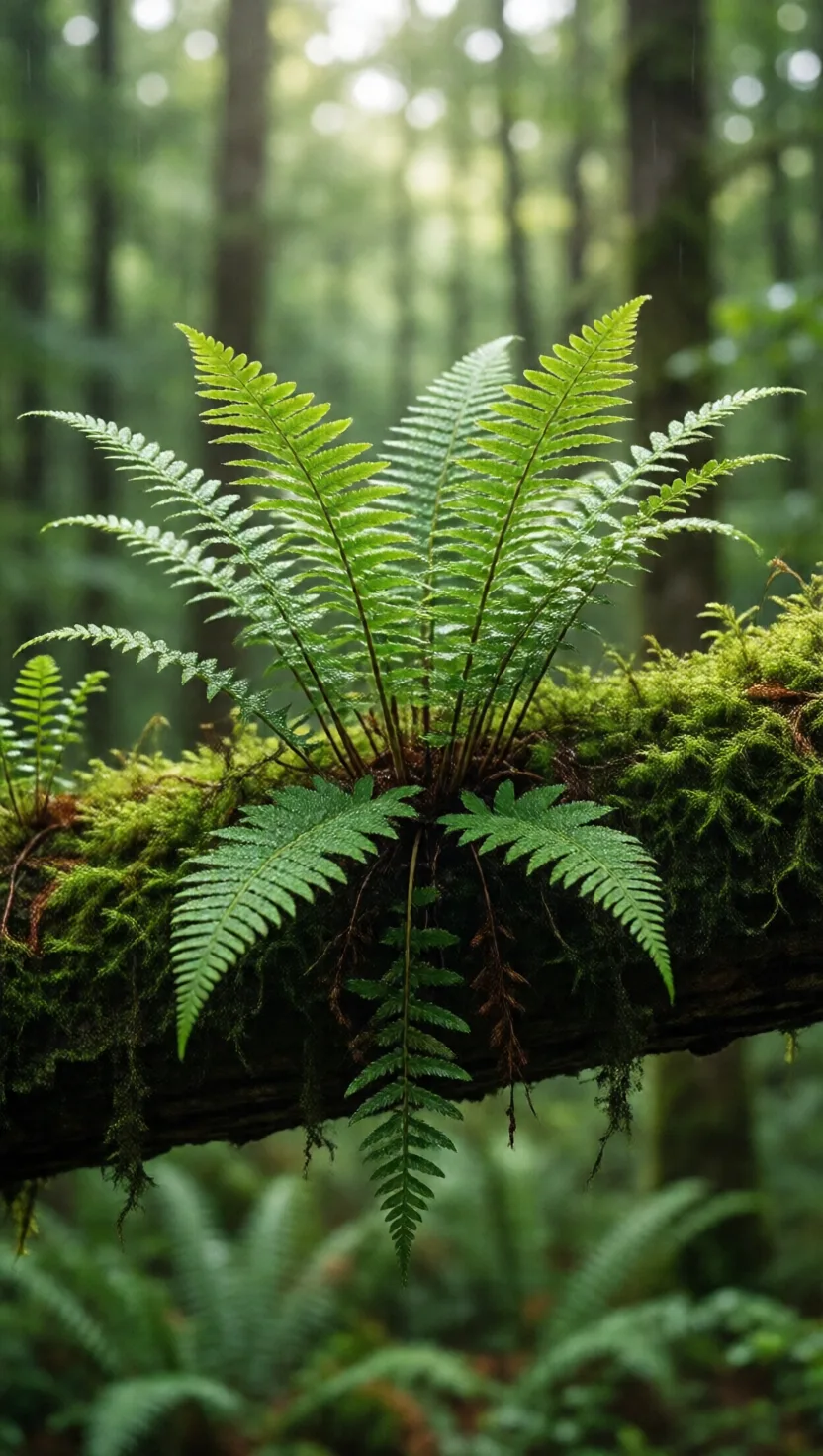
The resurrection fern lives clinging to tree branches, with no soil to hold water. When drought comes it lets itself dry almost to dust, losing up to 97 percent of its water and curling into grey, brittle, seemingly dead curls. Then rain falls. Within a day the fronds drink, uncurl and turn green again, ready to do the whole thing over — a plant that treats dying of thirst as a nap.
tap →swipe ↑ for depthswipe ↓ to exit