Eight things forged into chains and links

DC·137 Deep Cuts
Pour this chain out and it leaps up first

Pour this chain out and it leaps up first

Tip a long string of metal beads out of a tall jar and the chain does not just slide down. It arcs up above the rim into a self-feeding fountain before falling. When a bead is yanked from the heap, the pile briefly pushes back up on it, an extra kick that flings the chain skyward. Cambridge physicists John Biggins and Mark Warner described this rod-and-pile mechanism in Proceedings of the Royal Society A in 2014.
A cricket pitch is exactly one old measuring chain

A cricket pitch is exactly one old measuring chain

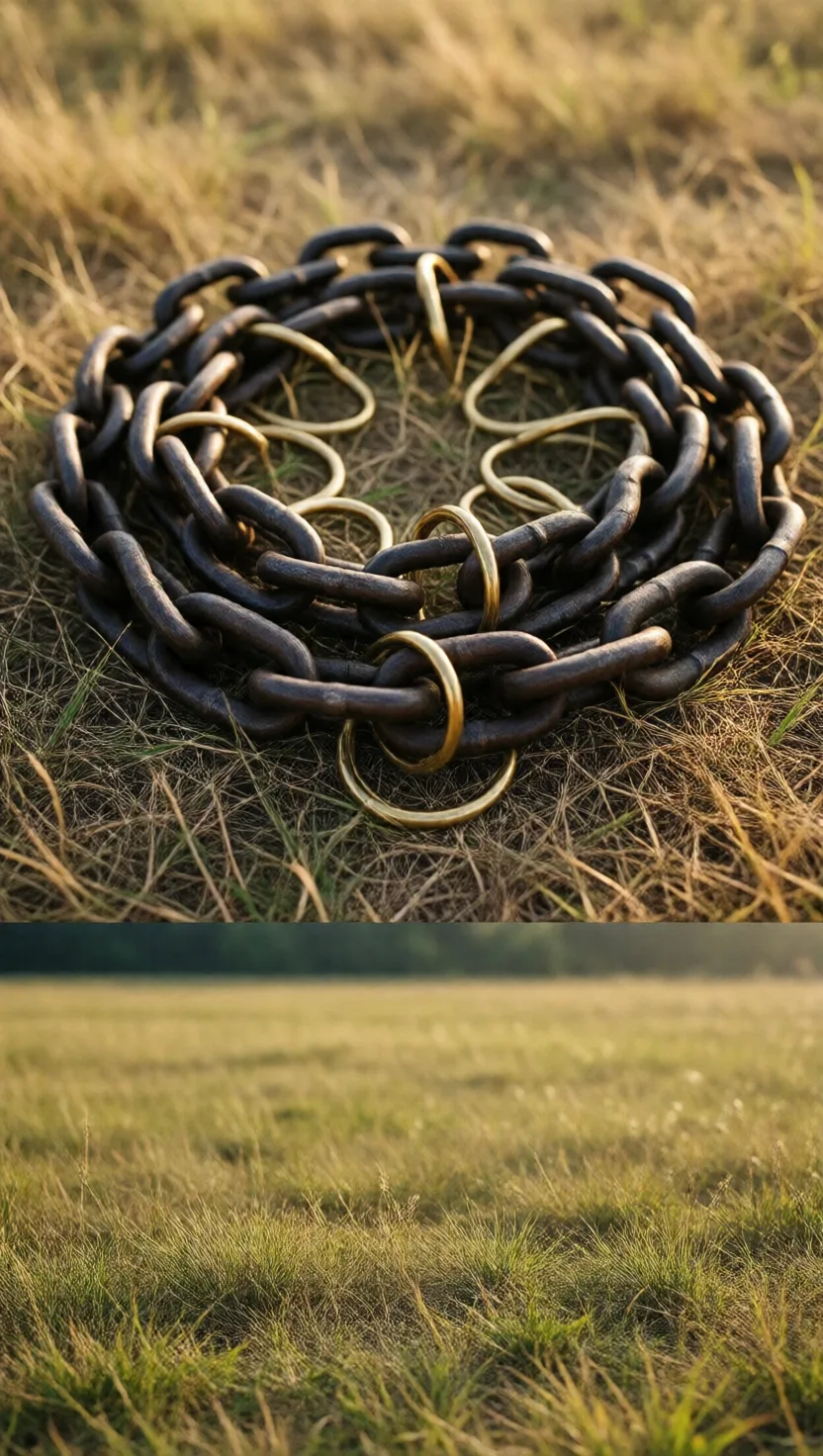
Before tape and laser, land was measured with a jointed steel chain. The surveyor's chain runs 66 feet and is split into exactly 100 links, so ten chains make a furlong and an acre is just ten square chains. The same length set the cricket pitch: the distance between the wickets is 22 yards, one full chain. It was standardized by Edmund Gunter in 1620 and quietly shaped how fields and towns were laid out.
Flip a hanging chain and you get the perfect arch

Flip a hanging chain and you get the perfect arch

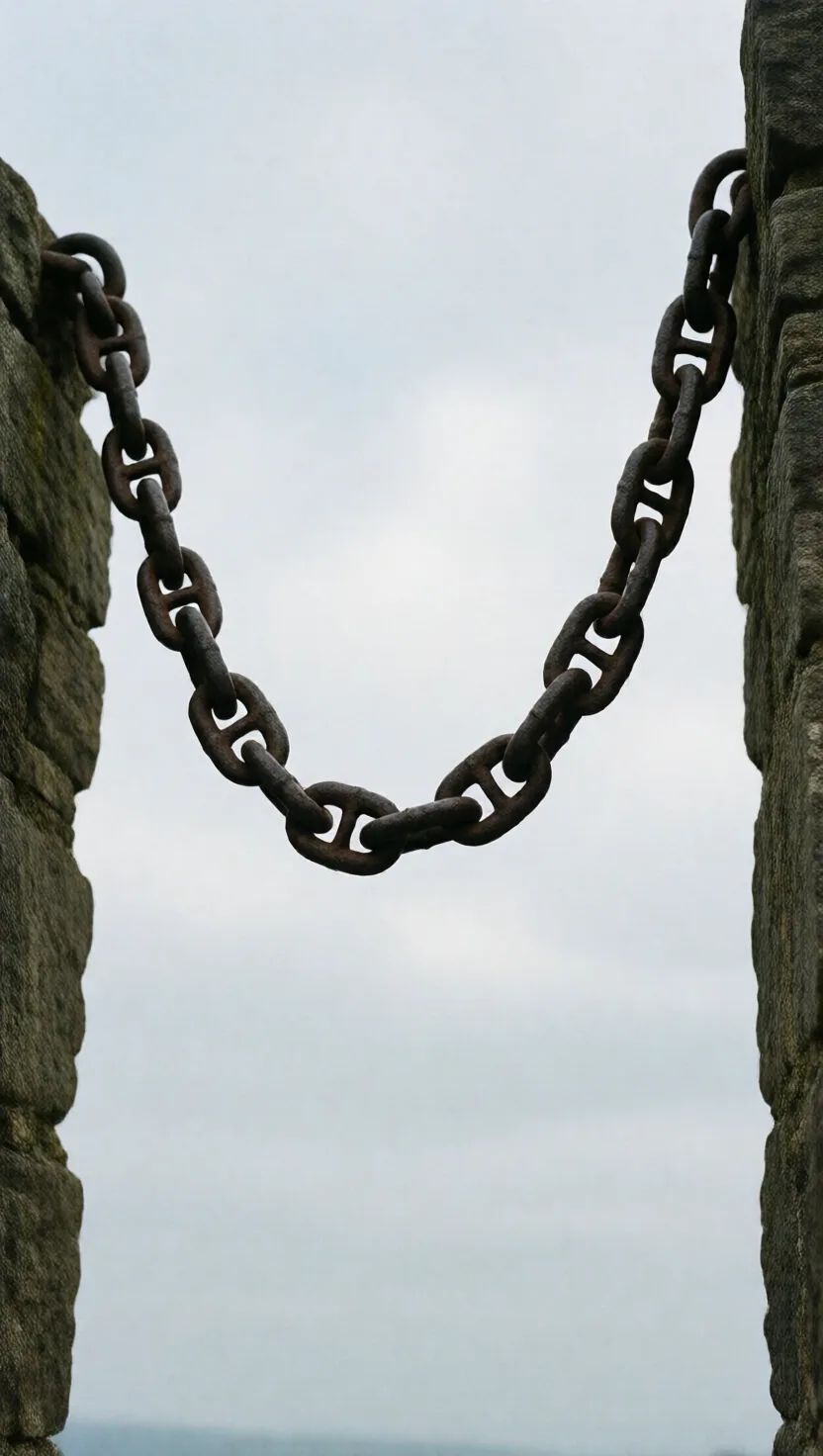
A chain held at both ends sags into a special curve called a catenary, the only shape it can take under its own weight. Turn that curve upside down and you get the ideal self-supporting arch, one held up by pure compression with no sideways strain. Robert Hooke hid this insight in a 1675 Latin anagram, solved only after his death: as hangs the flexible line, so, inverted, will stand the rigid arch.
The bar inside each link is what stops the tangle

The bar inside each link is what stops the tangle

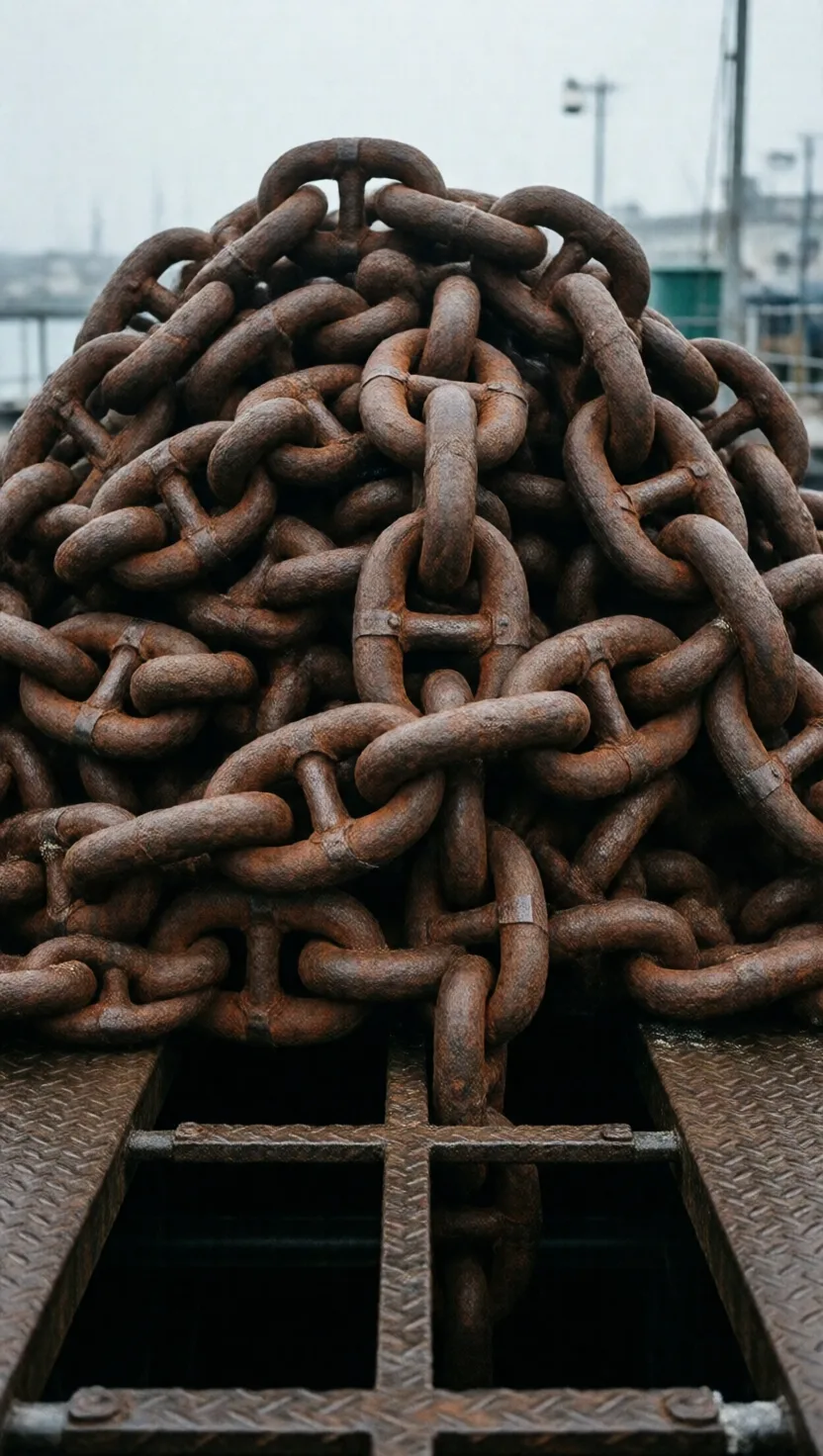
Look closely at a ship's anchor cable and every oval link has a small bar welded across its middle. That stud keeps the link from squashing flat under load and stops the heavy chain from kinking and snarling as it runs out or piles in the locker. Navy crews count the chain in shots, each one fifteen fathoms or ninety feet, with the joining links painted so they can see how much cable has gone over the side.
Each ring of real mail grips four of its neighbors

Each ring of real mail grips four of its neighbors

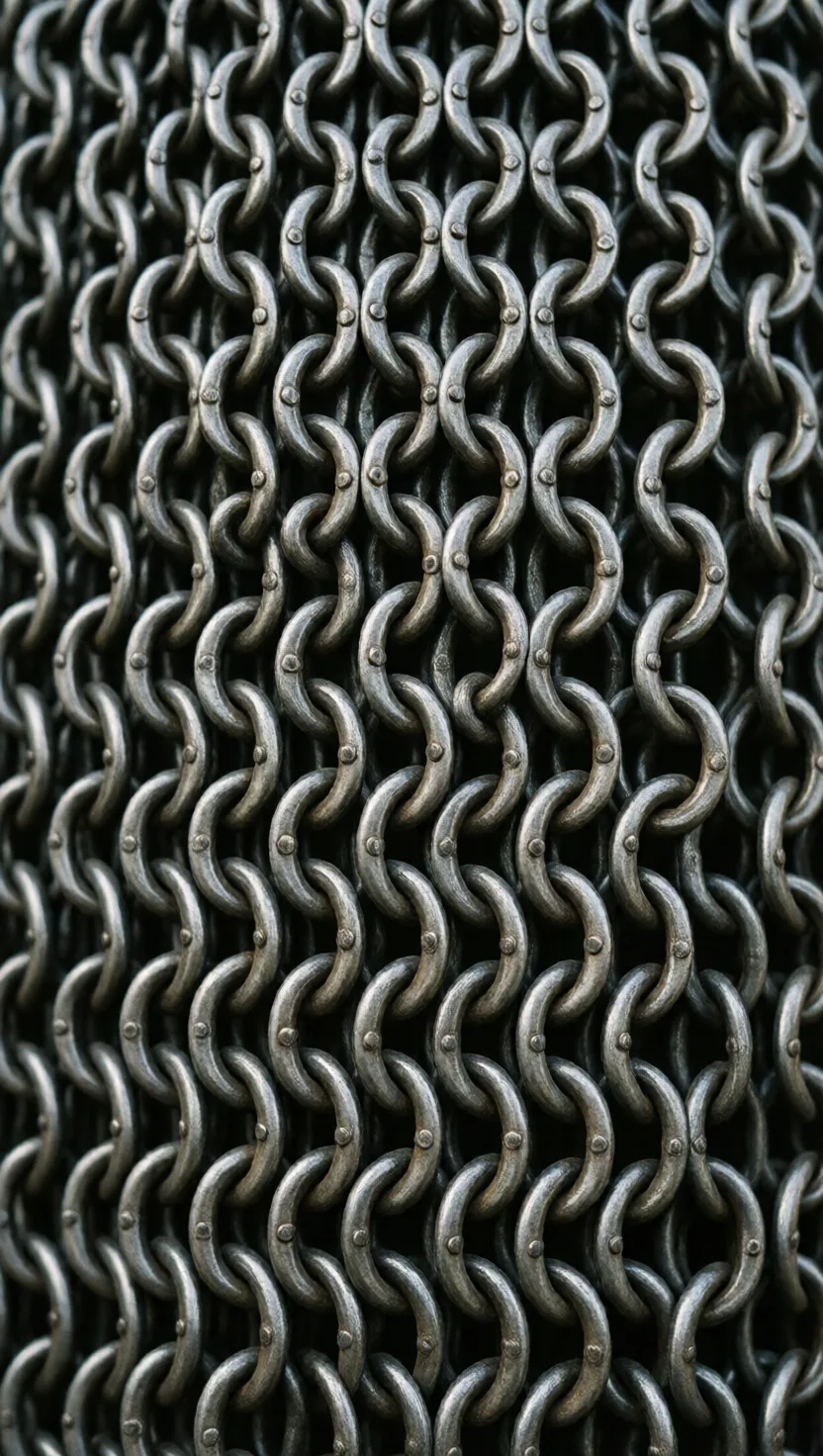
Battle mail was not loose loops but a precise lattice: in the European four-in-one weave every ring threads through four others, and each ring was closed with a tiny rivet so it could not be pulled apart. A single shirt could hold more than thirty thousand rings. Cheap modern butted rings just press shut and spring open under a blow, which is why riveted mail, used for well over a thousand years, was the kind that actually saved lives.
One iron chain once sealed an entire harbor

One iron chain once sealed an entire harbor

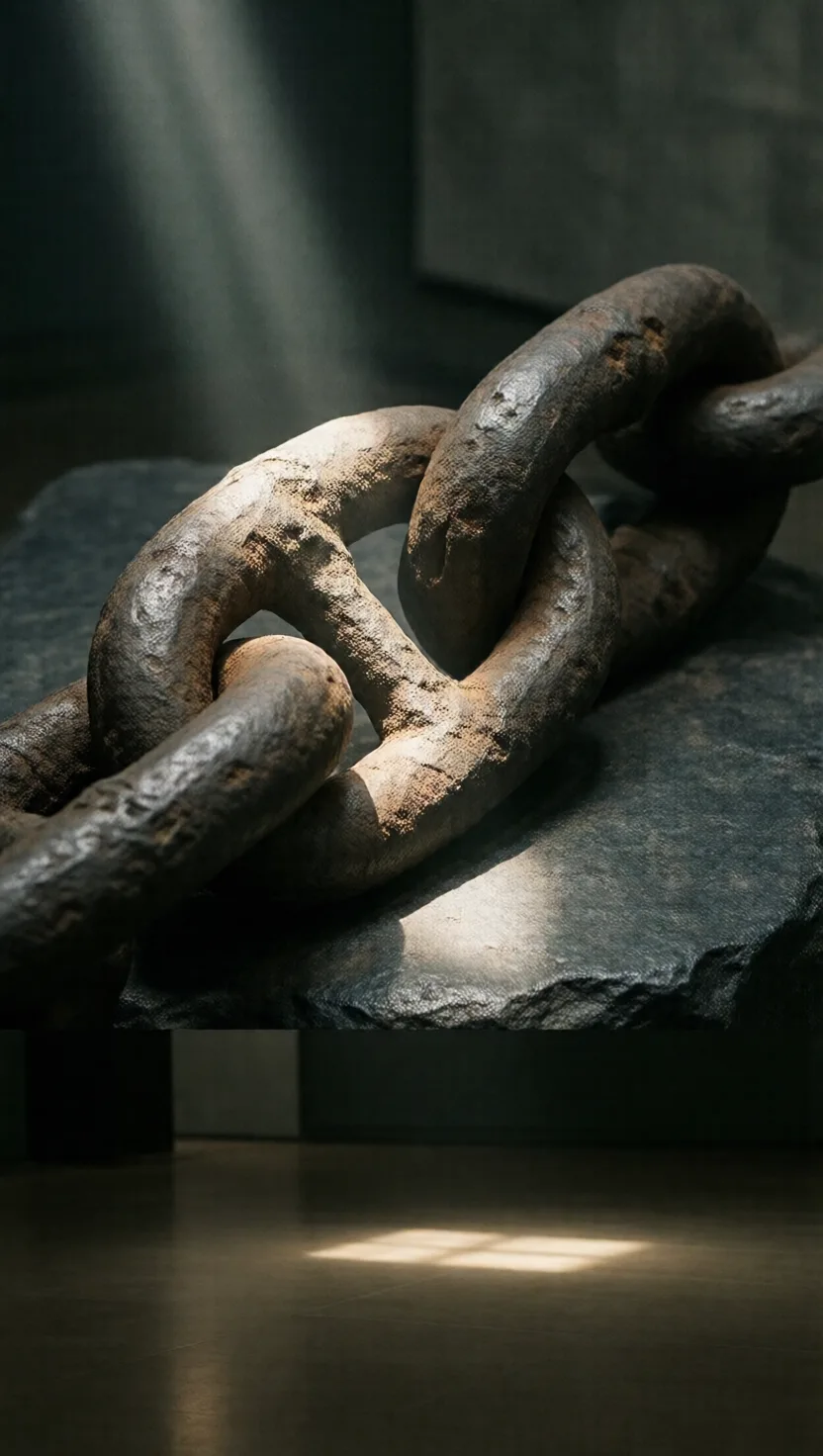
To guard the great inlet of Constantinople, defenders stretched an enormous iron chain across its mouth, floated on wooden barrels so it could span the water. During the siege of 1453 the chain held the Ottoman fleet out so well that the attackers gave up trying to break it and instead hauled their ships overland on greased rollers to slip in behind. Heavy sections of that harbor chain survive today in museums in Istanbul.
Two balls and a chain, fired to slice the sails

Two balls and a chain, fired to slice the sails

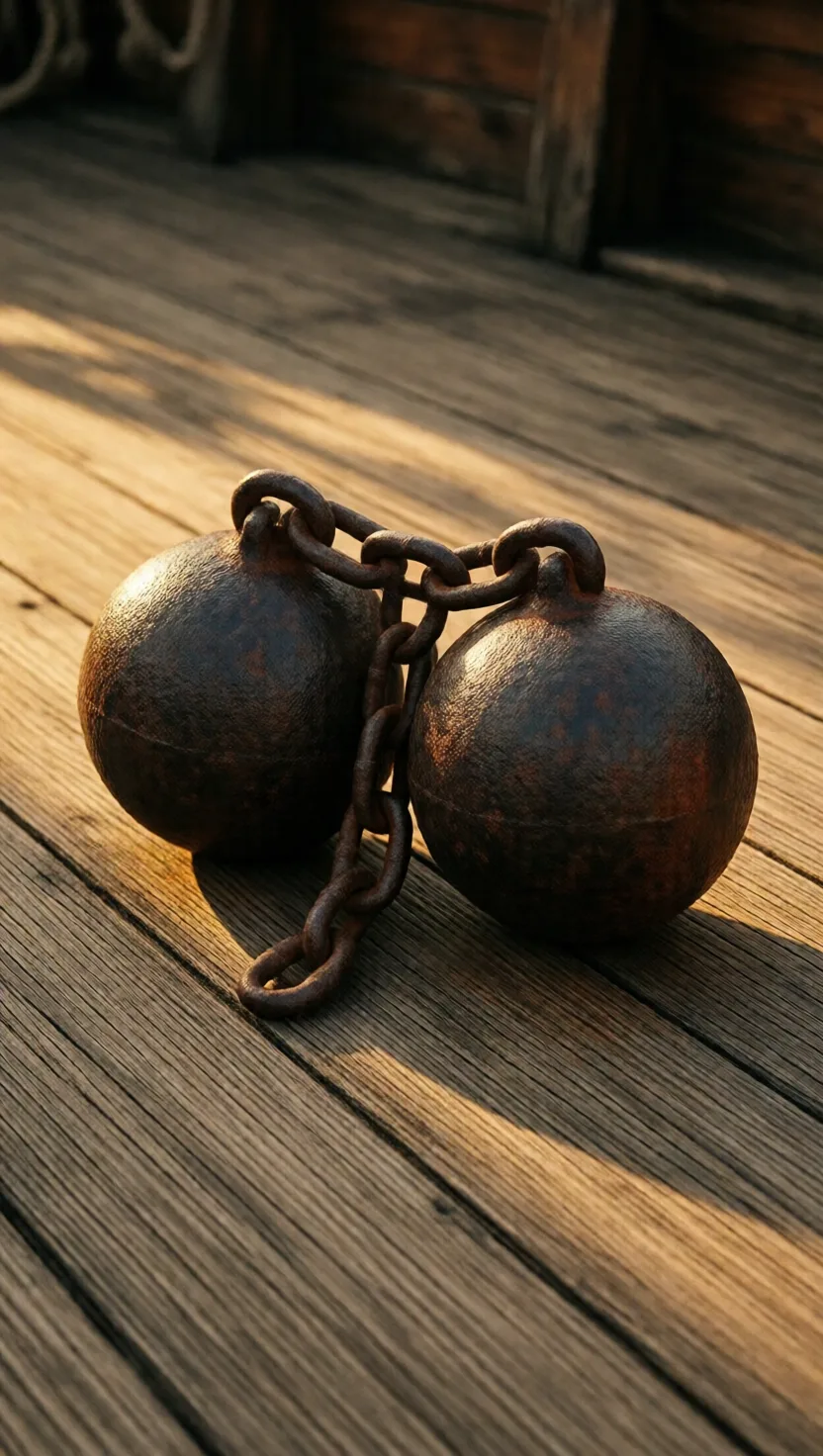
Fighting sail meant crippling a ship, not just sinking it, so gunners loaded chain shot: two iron balls or half-balls joined by a short length of chain. Leaving the cannon the pair spun apart and the taut chain whirled through the air like a flying blade, shearing masts, ropes and canvas so the enemy could no longer steer or run. A ship left without rigging was a ship that could be caught.
An endless chain of paddles once lifted the rivers

An endless chain of paddles once lifted the rivers

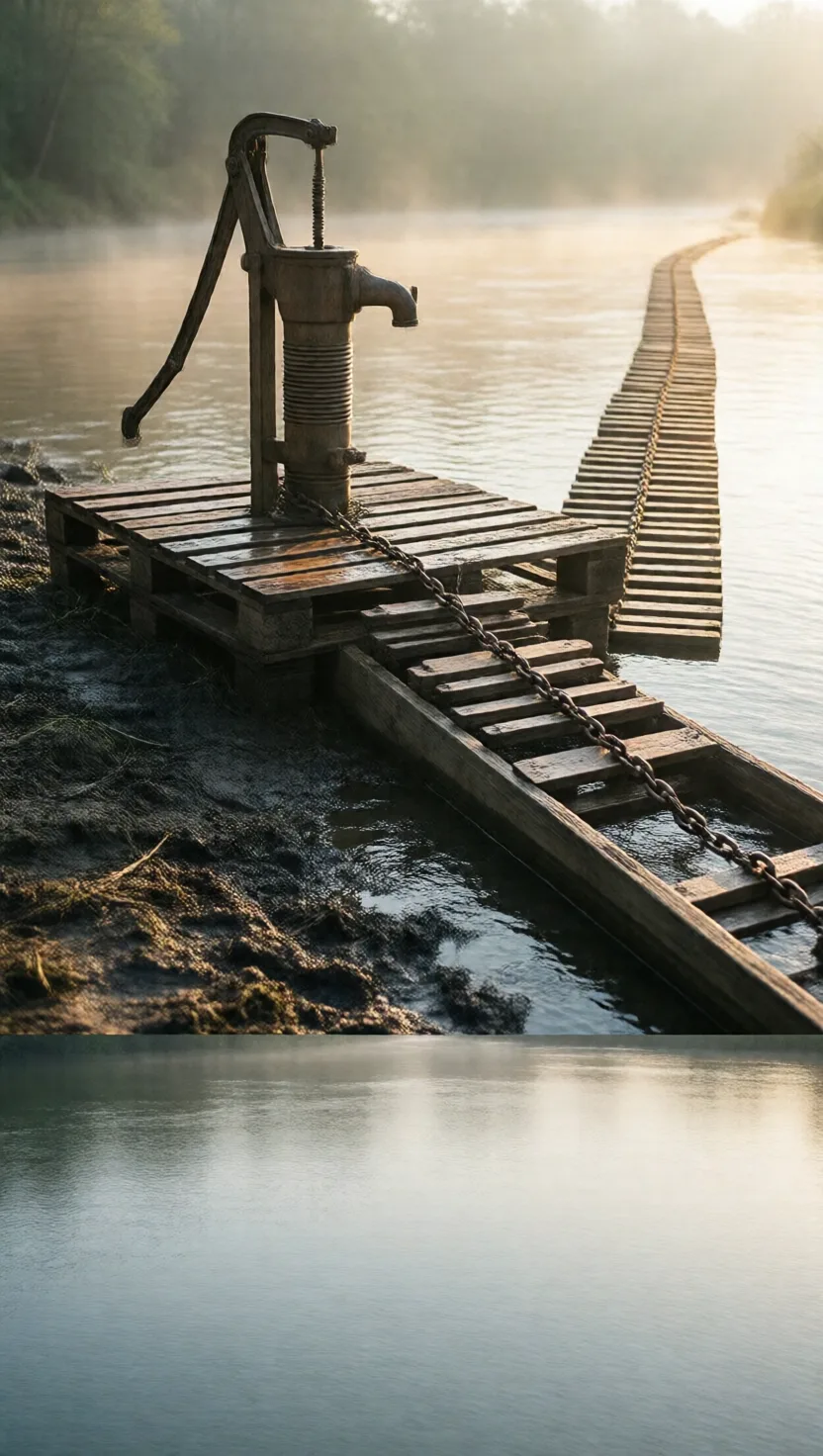
Long before pumps, farmers raised water with a chain. The square-pallet chain pump ran an endless loop of linked chain carrying wooden boards up an inclined trough, each pallet scooping a slice of water and dragging it to the top as the chain turned. Described in China around the first century AD and worked by foot or by hand, it lifted river water into fields for nearly two thousand years.
tap →swipe ↑ for depthswipe ↓ to exit