Eight things hidden in the world's most precious blue

DC·129 Deep Cuts
Those gold flecks aren't gold

Those gold flecks aren't gold

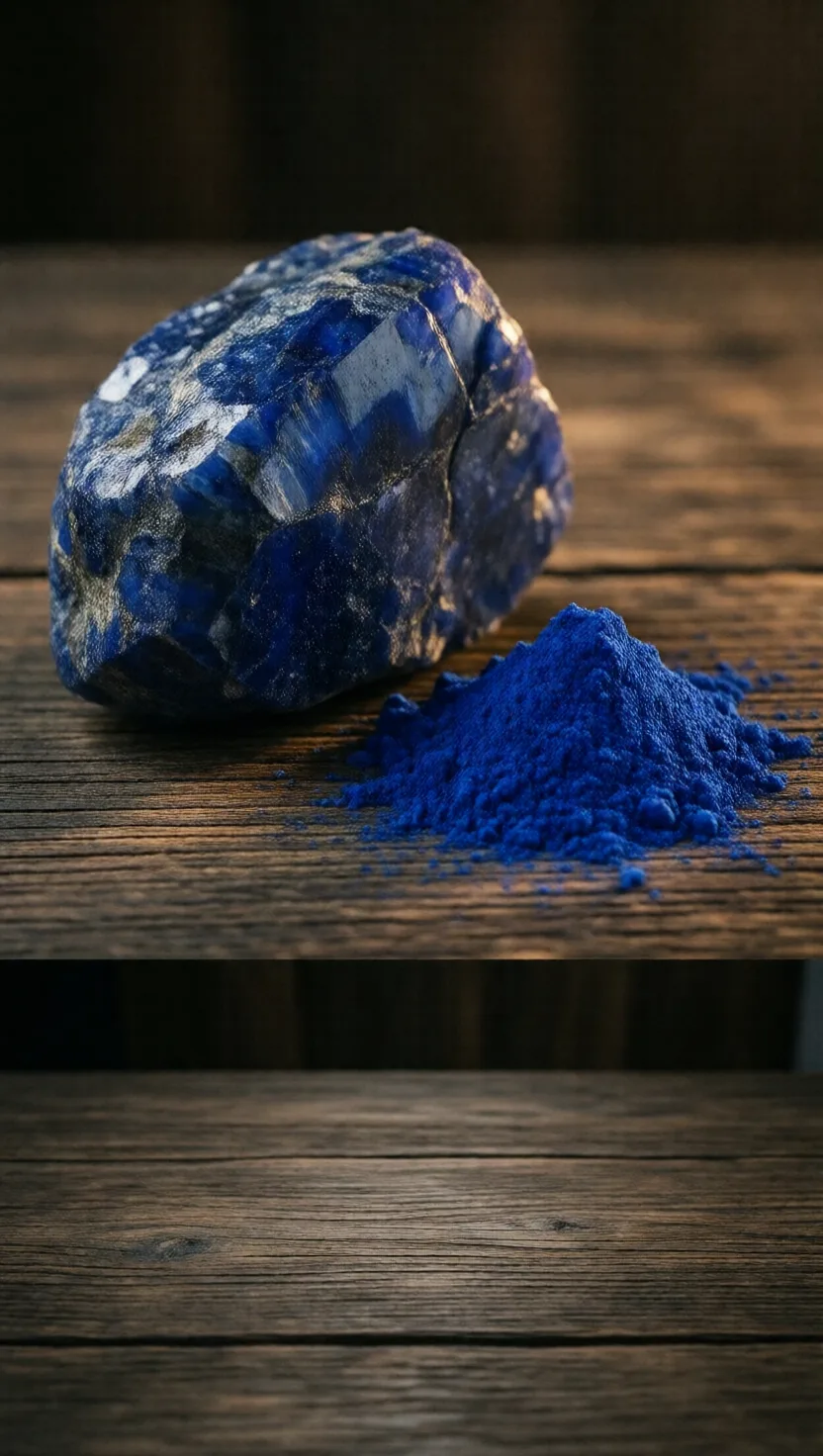
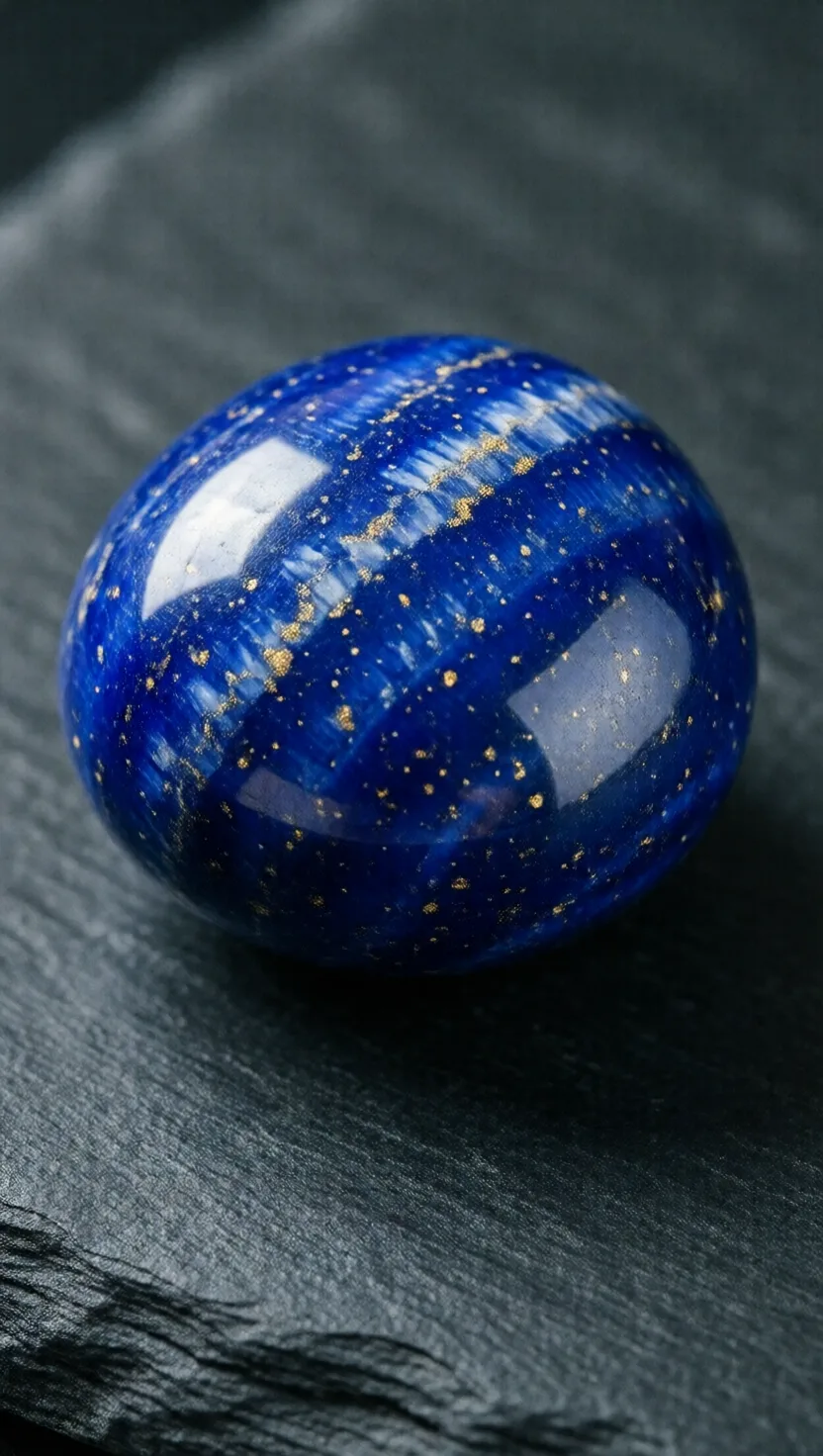
Lapis lazuli isn't a single mineral but a whole rock. The blue comes from lazurite, usually only 30 to 40 percent of the stone; the rest is white calcite and glittering specks of pyrite — fool's gold, not real gold. The most prized grades are deep blue with a fine dusting of pyrite and little calcite, which is why the best stones look like a night sky scattered with stars.
Its blue is a trapped molecule, not metal

Its blue is a trapped molecule, not metal

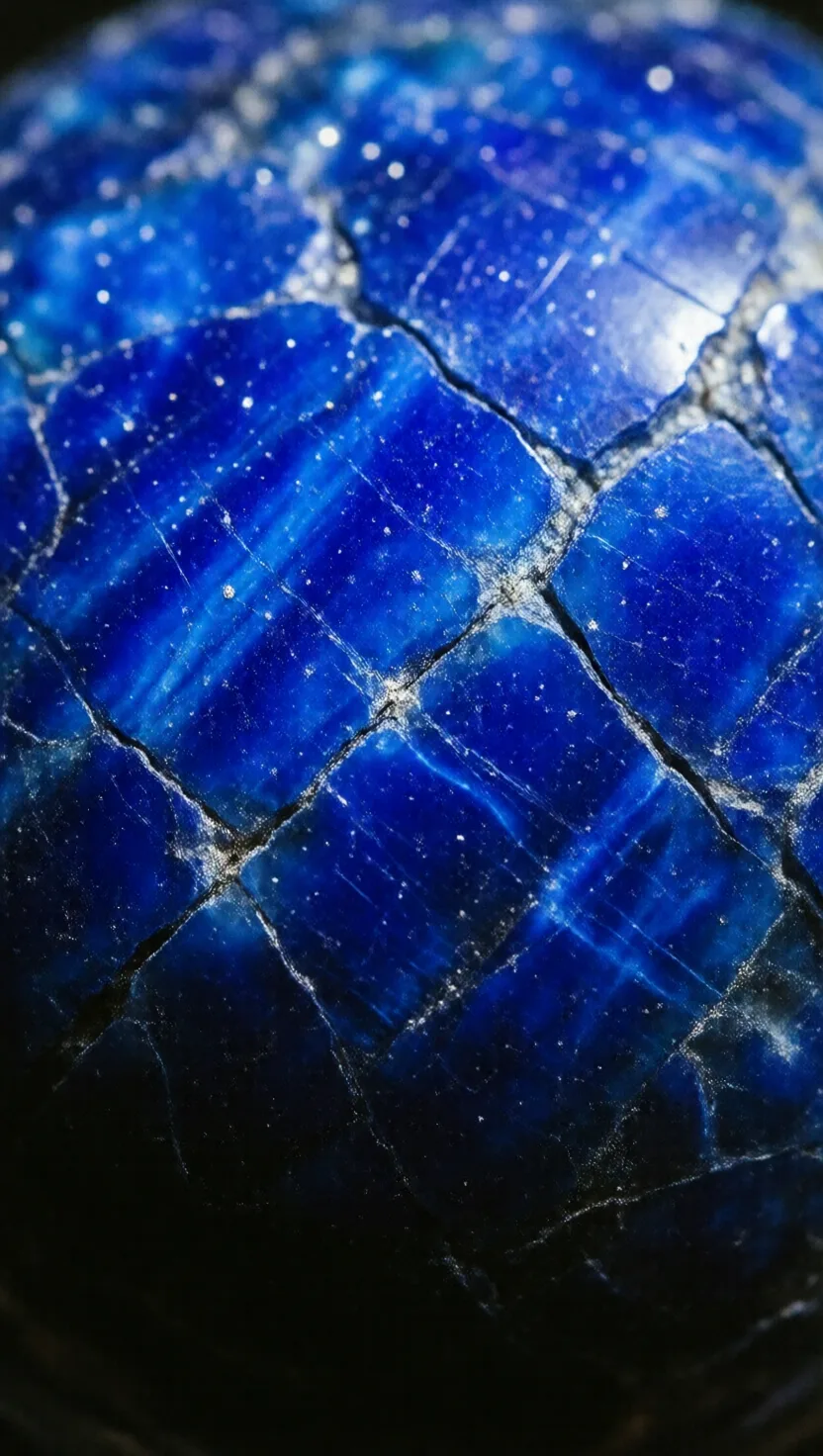
Almost every blue mineral owes its colour to a metal like copper or cobalt. Lapis is different: its blue comes from a tiny three-atom sulfur ion, S3-, caged inside cavities in the lazurite crystal. That cage is one of the only places this fragile charged molecule survives at room temperature. In the most intense ultramarine, only about a third of the cages hold the blue ion — yet that is enough to give the richest blue in nature.
This blue is named 'beyond the sea'

This blue is named 'beyond the sea'

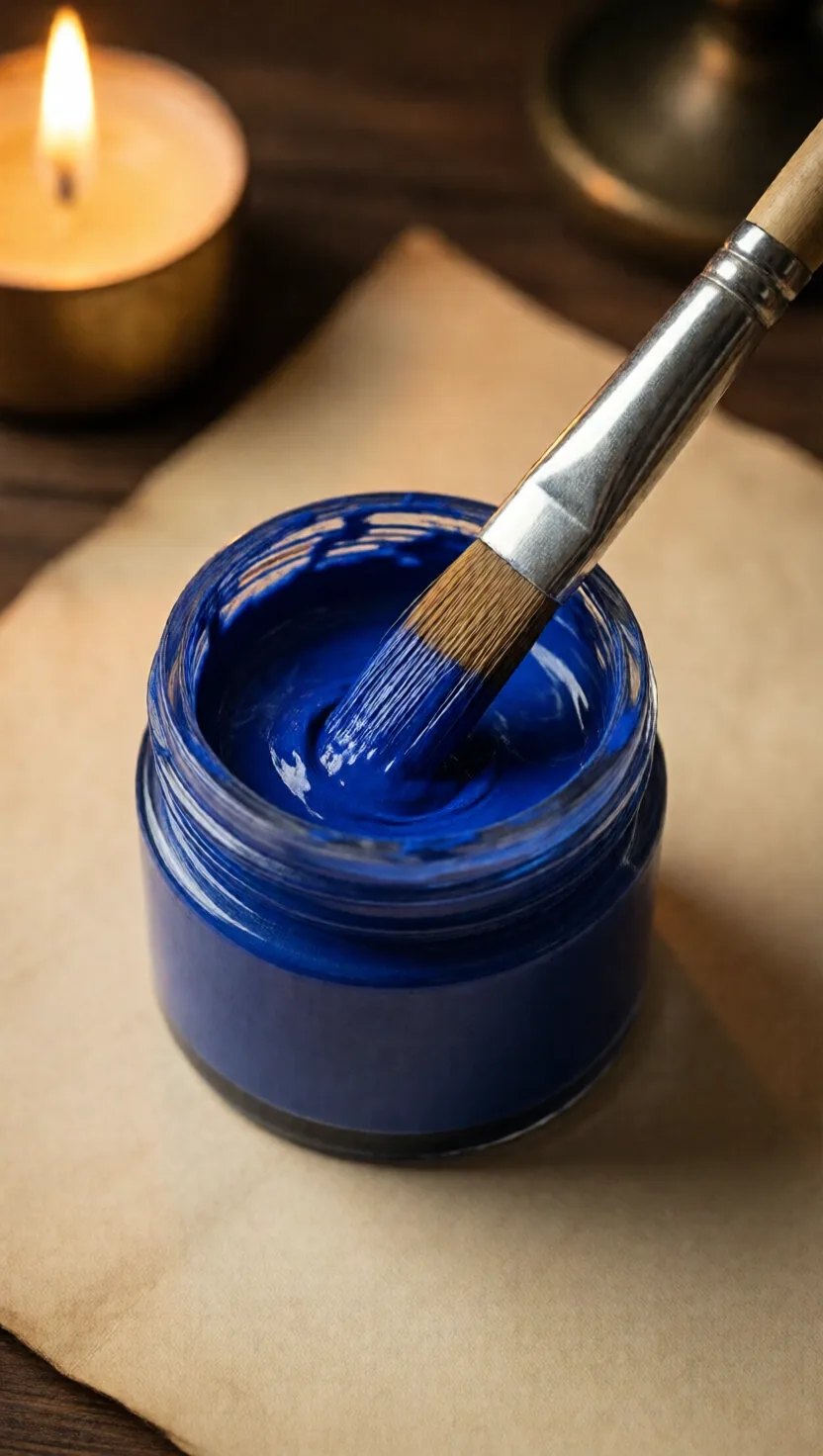
When the pigment ground from lapis reached medieval Europe, it had travelled overland from a single Afghan valley and then by ship across the Mediterranean. Italian traders called it oltremarino, and Latin made it ultramarinus — literally 'beyond the sea.' The name records the journey, not the colour: Europe's most coveted blue was defined by how impossibly far it had come to arrive.
One valley supplied the world for 6,000 years

One valley supplied the world for 6,000 years

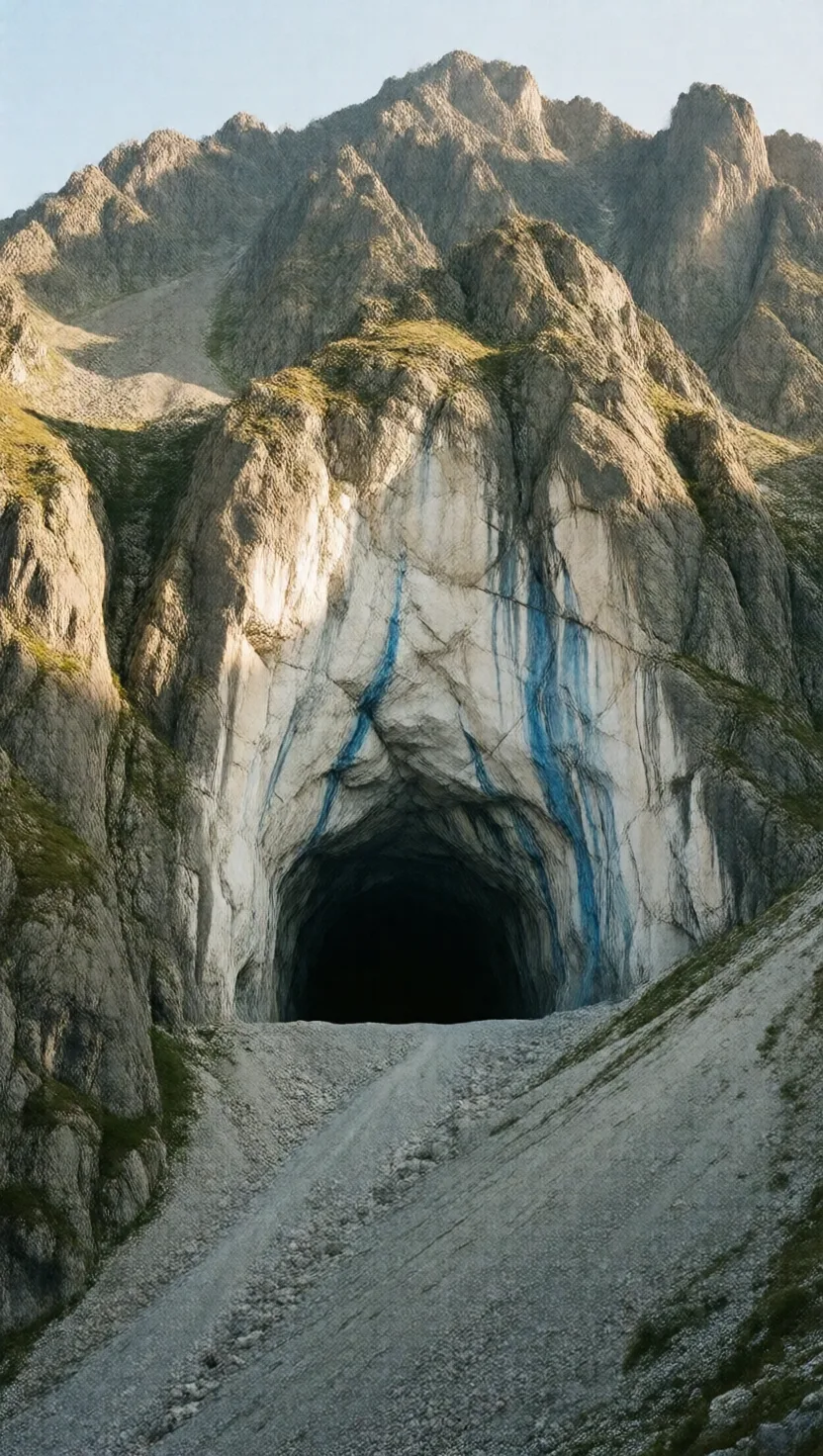
For most of history nearly all lapis came from one place: the Sar-e-Sang mines in the Kokcha valley of Badakhshan, Afghanistan, worked for more than 6,000 years. Lapis from these same cliffs turns up in the royal tombs of Ur and on the burial treasures of Egypt — carried thousands of miles from a remote mountainside that is still among the oldest continuously worked mines on Earth.
A chemist faked it from clay and soot

A chemist faked it from clay and soot

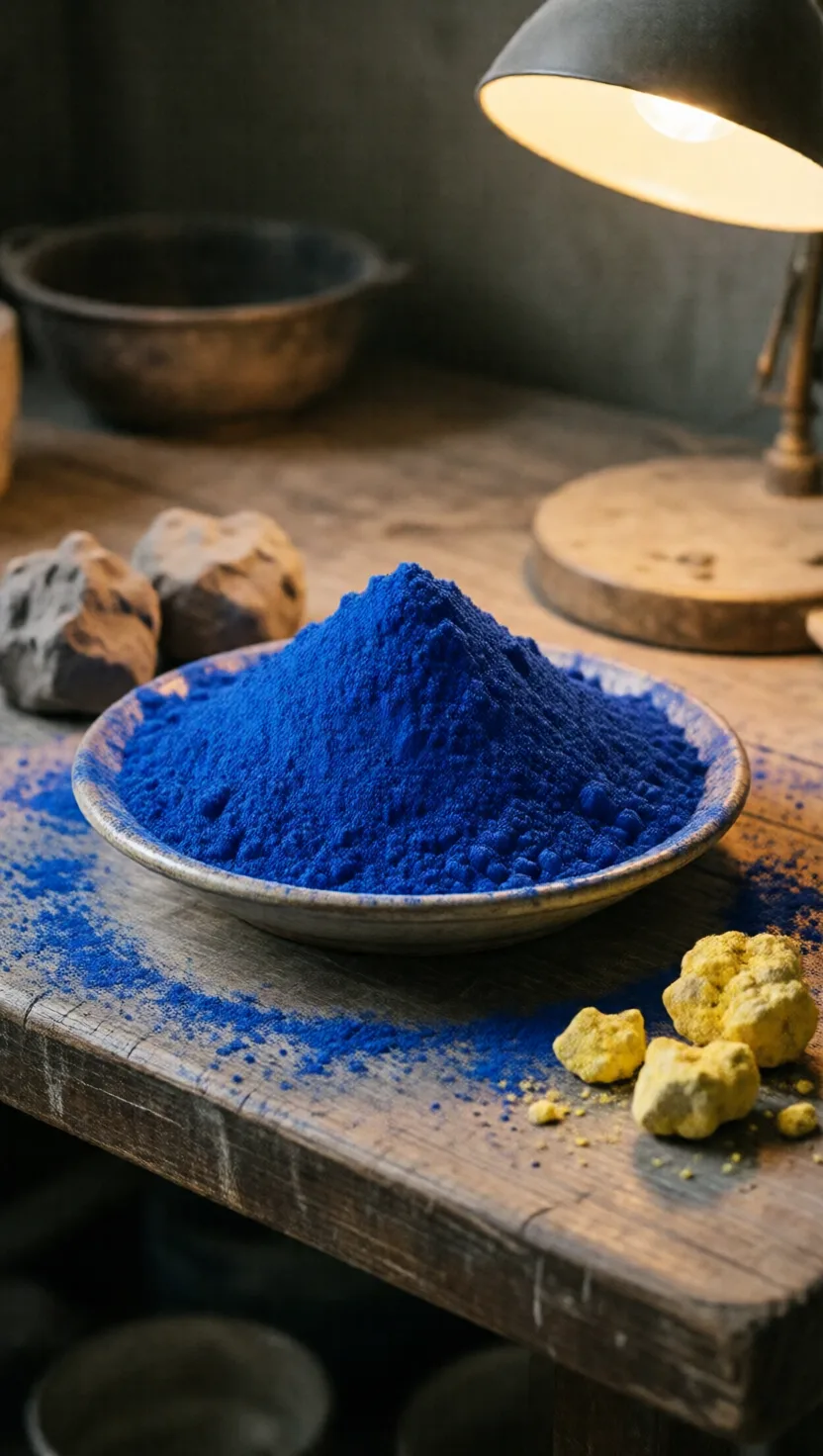
Natural ultramarine was so costly that in 1824 France offered a prize for an artificial version. In 1828 the chemist Jean-Baptiste Guimet won the 6,000-franc reward by baking a mix of china clay, soda, charcoal and sulfur into an identical blue. His synthetic ultramarine was chemically the same as the ground stone but cost roughly a hundred times less — and within decades it had all but replaced the real thing on artists' palettes.
Michelangelo left her robe blank — no blue

Michelangelo left her robe blank — no blue

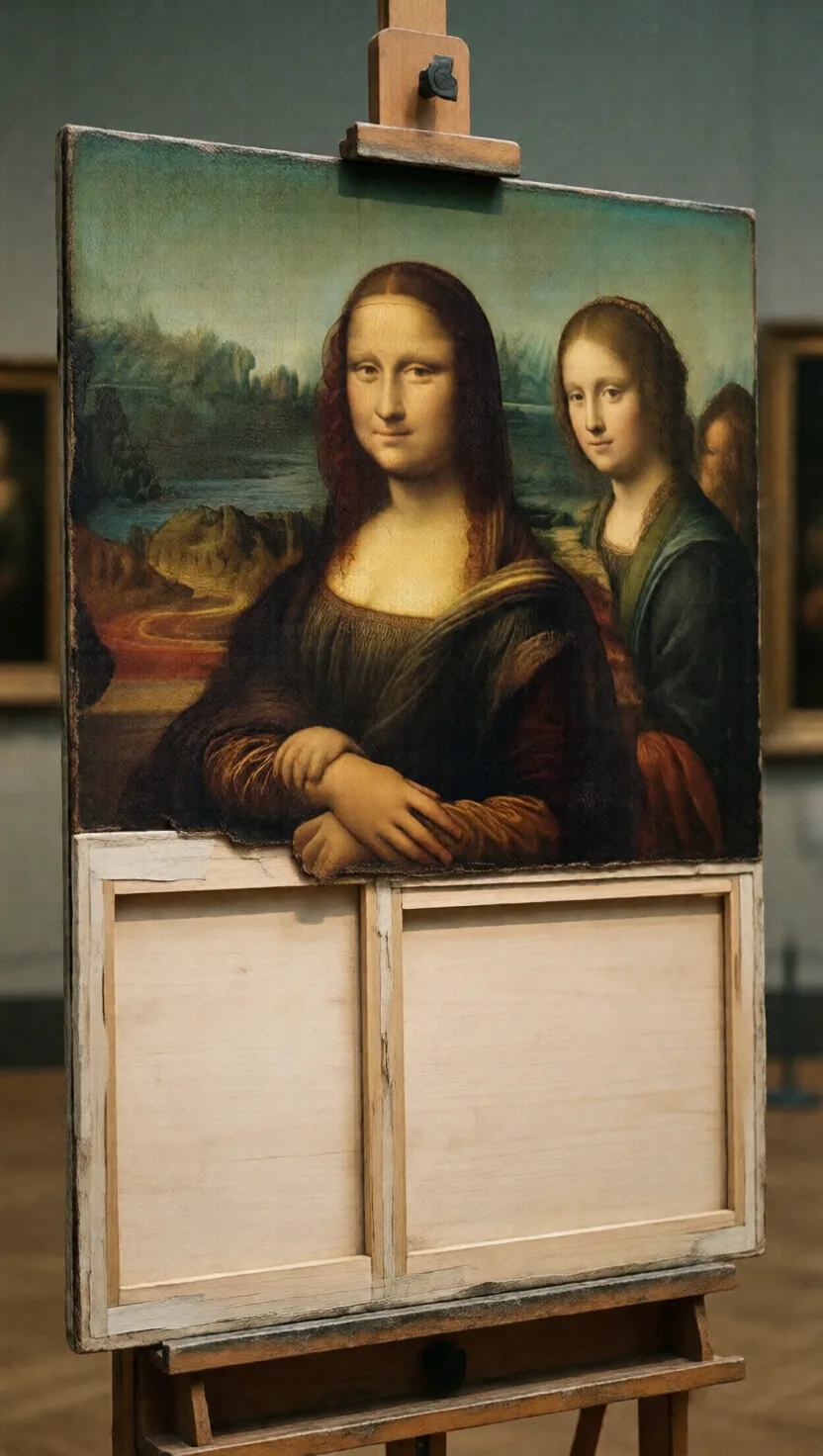
In Michelangelo's unfinished Entombment, a kneeling figure in the lower right is just bare panel. That space was reserved for the Virgin Mary, whose mantle traditionally had to be painted in ultramarine — the dearest pigment of all. The blue was usually saved for last and bought at the final moment. The painting was abandoned around 1501, and the spot meant for her costly robe was simply never filled.
Blue in her teeth revealed a hidden artist

Blue in her teeth revealed a hidden artist

When researchers examined the hardened plaque on the teeth of a woman buried around 1100 at a German convent, they found it studded with brilliant blue particles — lapis ultramarine. The likeliest explanation is that she pointed her brush with her lips while painting manuscripts in the rarest pigment of the age. The 2019 finding put a named, ordinary woman at the heart of medieval book-making, where history had assumed only monks worked.
Tutankhamun's eyebrows are solid lapis

Tutankhamun's eyebrows are solid lapis

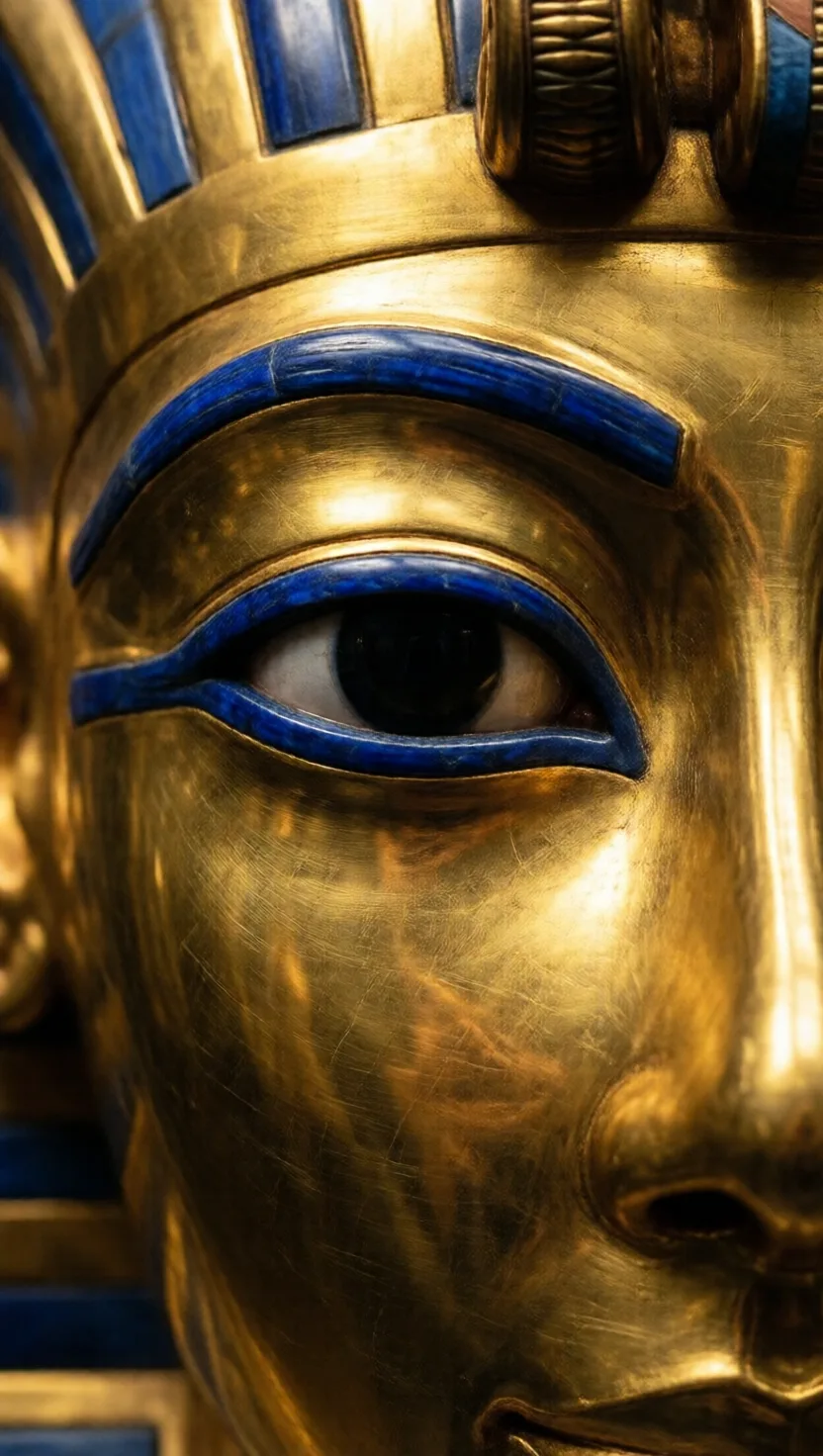
The gold mask of Tutankhamun isn't only gold. The arching eyebrows and the long cosmetic lines around his eyes are inlaid with lapis lazuli, carried from Afghanistan more than 3,000 years ago. To the Egyptians the deep blue stood for the night sky and the hair of the gods, so the young king's gaze was framed forever in the most heavenly colour they knew.
tap →swipe ↑ for depthswipe ↓ to exit