Eight things the sky-blue stone remembers

DC·124 Deep Cuts
Copper paints it blue, iron turns it green

Copper paints it blue, iron turns it green

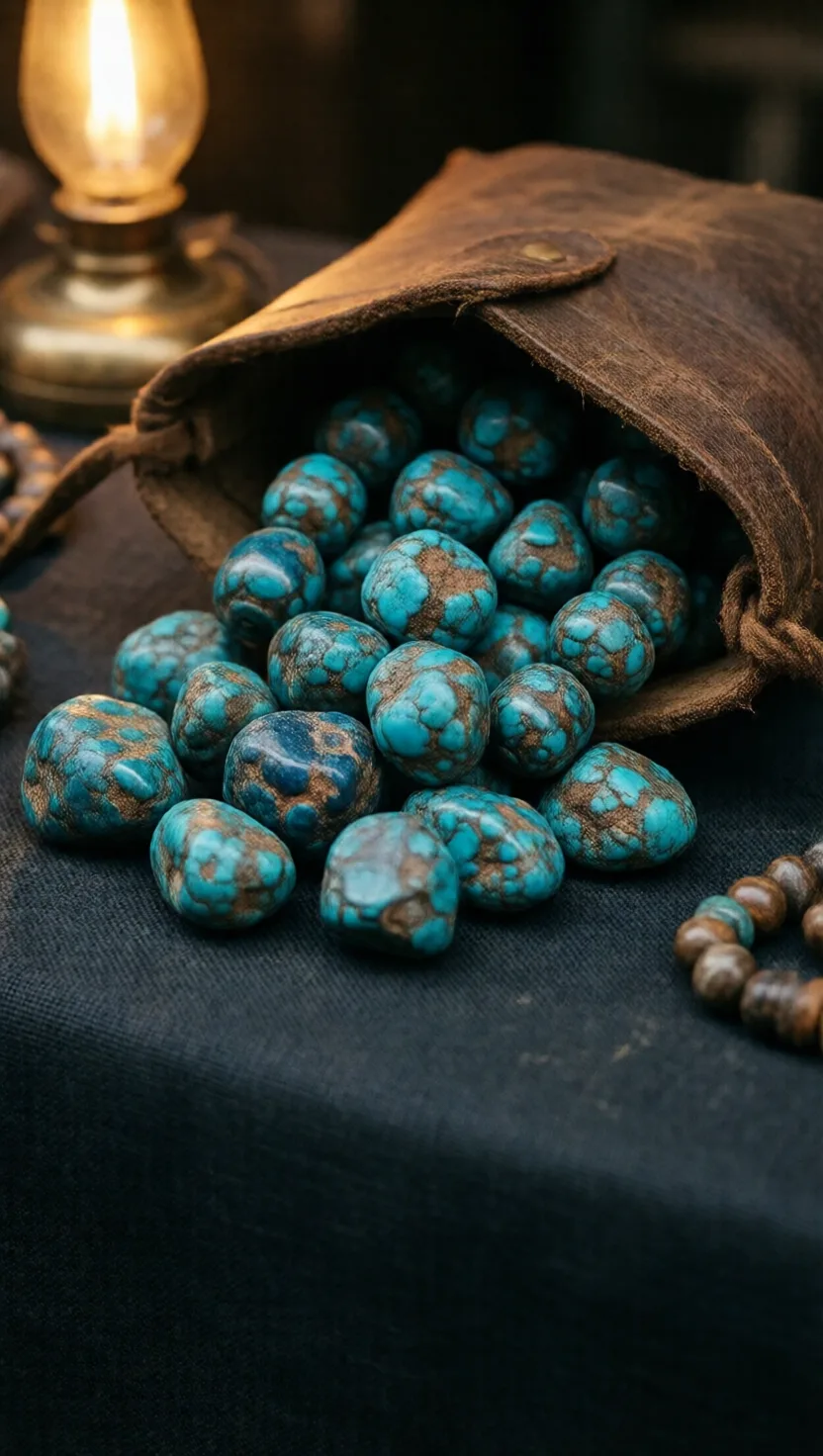
Turquoise is a sponge-textured mineral built from copper, aluminium and phosphate locked up with water. The copper is what makes it blue — the colour comes from the metal itself, not from any trick of light. Swap some of the aluminium for iron and the same stone drifts toward green, so a single mine can yield everything from sky blue to olive. It's a soft gem, only about 5 to 6 on the hardness scale — roughly as hard as window glass.
Worn on skin, the stone slowly changes

Worn on skin, the stone slowly changes

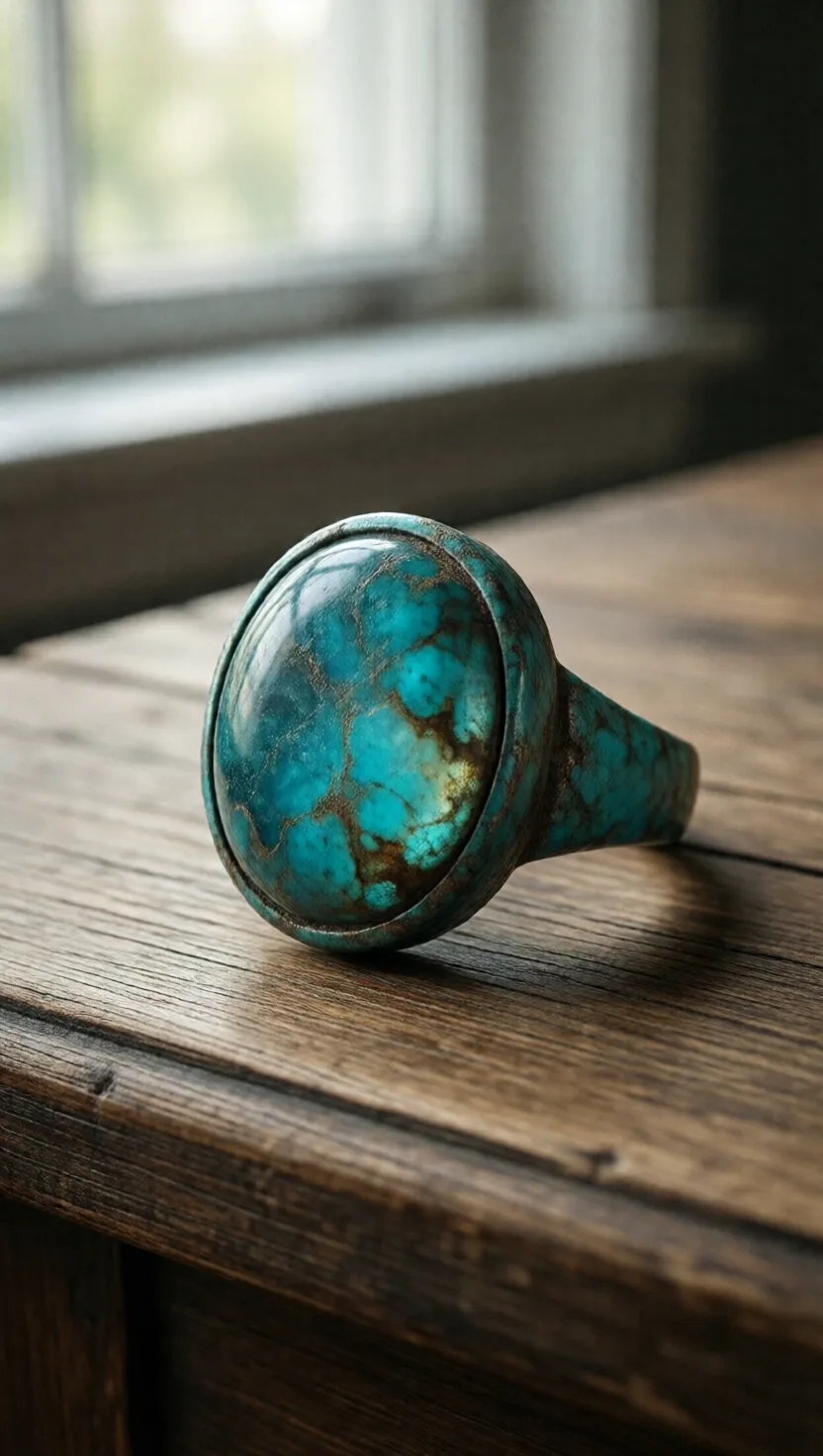
Turquoise is porous — nearly a fifth of some stones is water — so it drinks in whatever it touches. Skin oils, sweat, soap and perfume soak into a worn turquoise over the years and shift its colour, usually nudging bright blue toward a softer green. Jewellers call it a living stone because it visibly ages with its owner. That same thirst makes it fragile, which is why most turquoise is sealed or hardened before it is ever set in a ring.
Named Turkish, yet never from Turkey

Named Turkish, yet never from Turkey

The name turquoise simply means Turkish stone, borrowed into French in the 16th century. Yet almost none of it was Turkish: the finest stones were mined in Persia, around Nishapur, and in the Sinai, then carried into Europe along trade routes that ran through Turkey. Merchants named the gem for the road it arrived on rather than the ground it came from — a slip now fixed in nearly every European language.
Mined in the desert 5,000 years ago

Mined in the desert 5,000 years ago

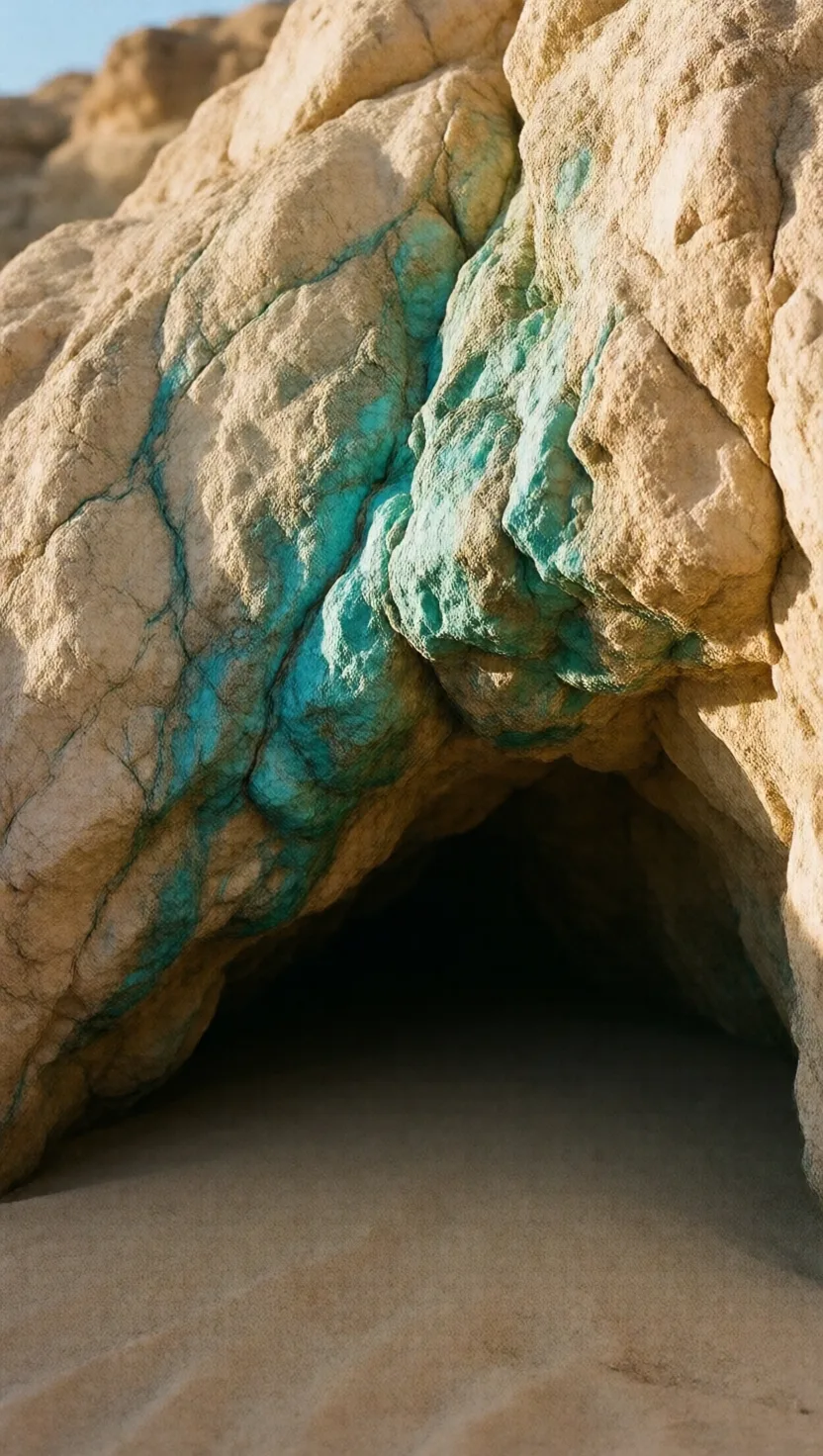
Turquoise is among the oldest gemstones humans dug for. In the Sinai desert, Egyptian miners cut into the rock at Serabit el-Khadim as early as 3000 BCE, leaving behind a rock-temple to the goddess Hathor, whom they called the Lady of Turquoise. They braved scorpions and heat for the blue-green stone, prizing it for amulets and jewellery long before most familiar gems were worked — a roughly five-thousand-year-old hunger for a single colour.
Two thousand blue chips make one serpent

Two thousand blue chips make one serpent

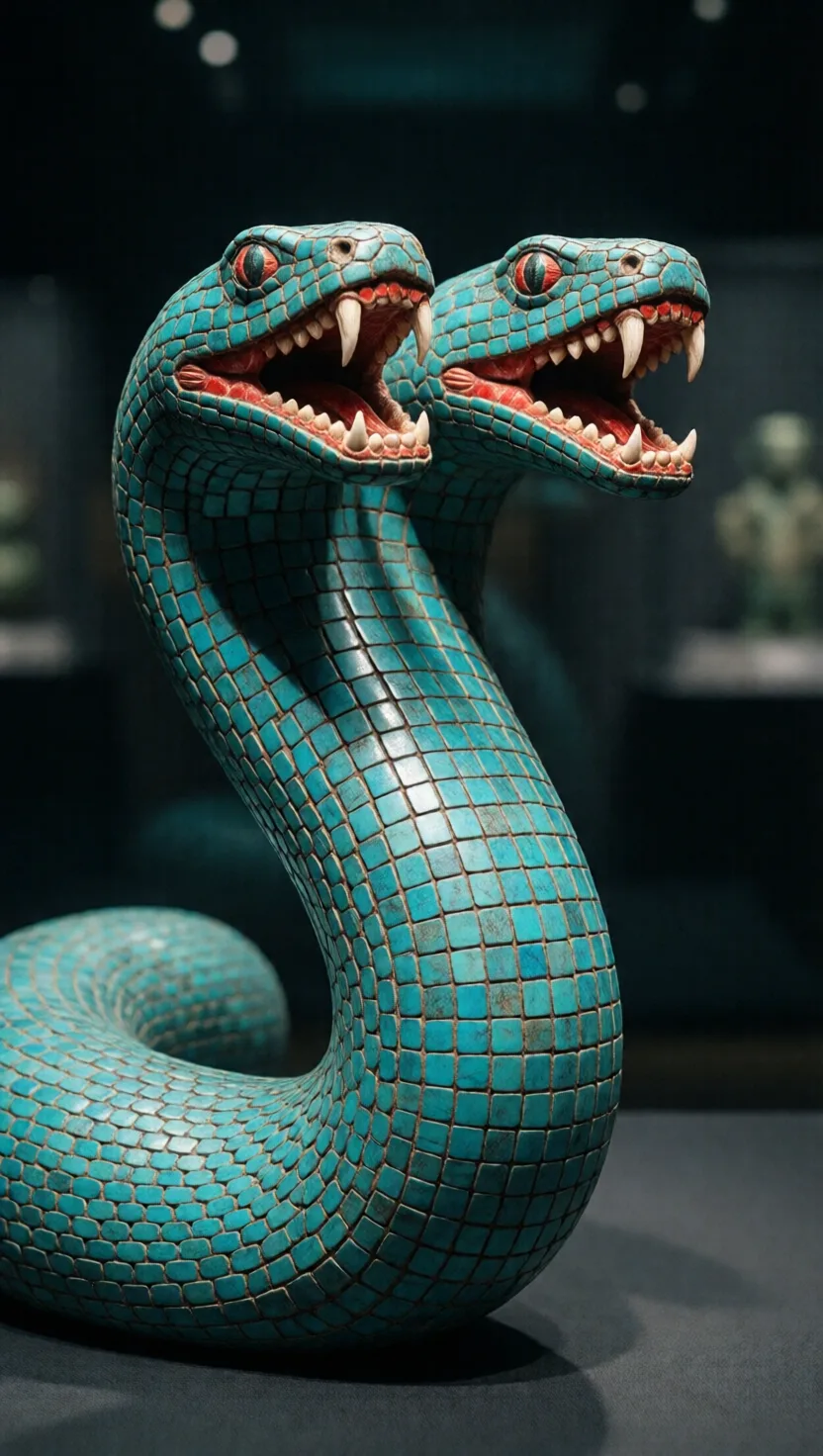
One of the great treasures of Aztec craft is a double-headed serpent worn on the chest, carved from a single block of cedar wood and then tiled with about two thousand tiny pieces of turquoise, fitted edge to edge like a mosaic. Red spiny-oyster and white conch shell pick out the fanged mouths. Each blue fragment was ground and set into a bed of pine resin and beeswax — a glittering skin of stone barely a foot and a half across.
The dark web isn't the gem at all

The dark web isn't the gem at all

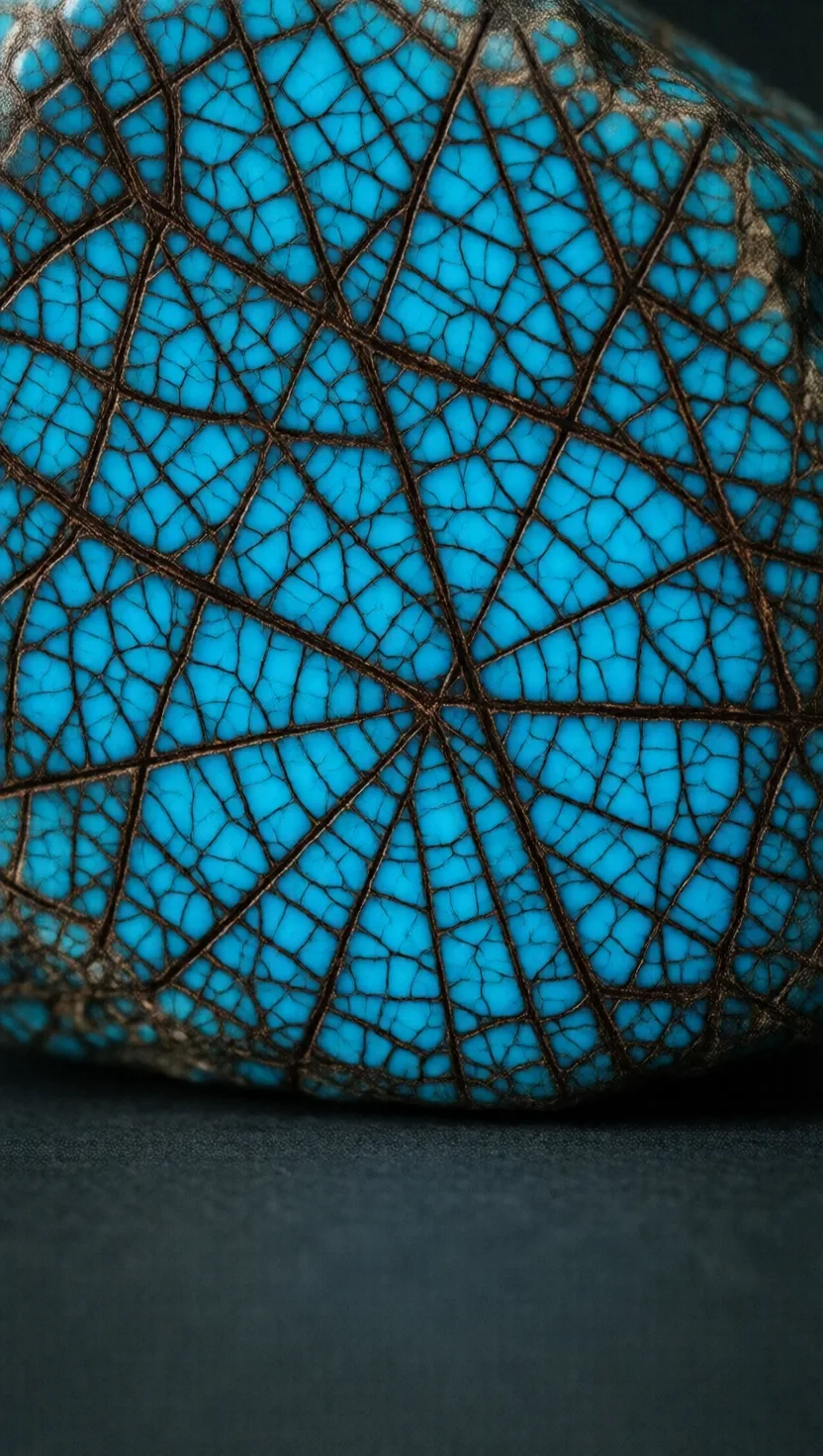
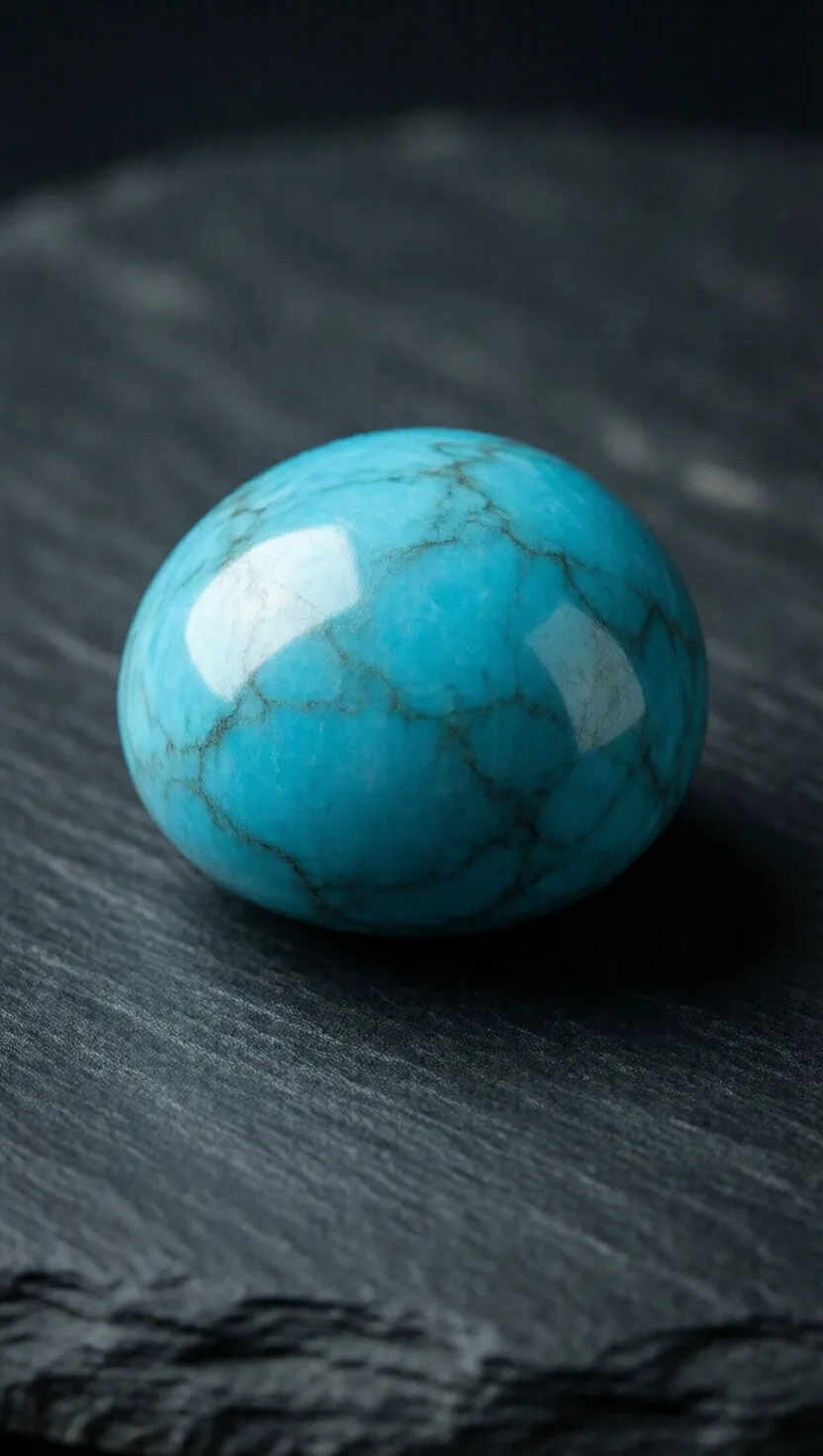
The fine dark net that laces across the best turquoise — called spiderweb turquoise — looks like a flaw, but it isn't turquoise at all. Those veins are leftover threads of the surrounding host rock, usually iron-stained brown limonite or sandstone, trapped as the turquoise formed inside cracks in the ground. Collectors prize a tight, even web most of all, valuing the stone partly for the rock it never quite managed to escape.
Riders pinned it to horses against falls

Riders pinned it to horses against falls

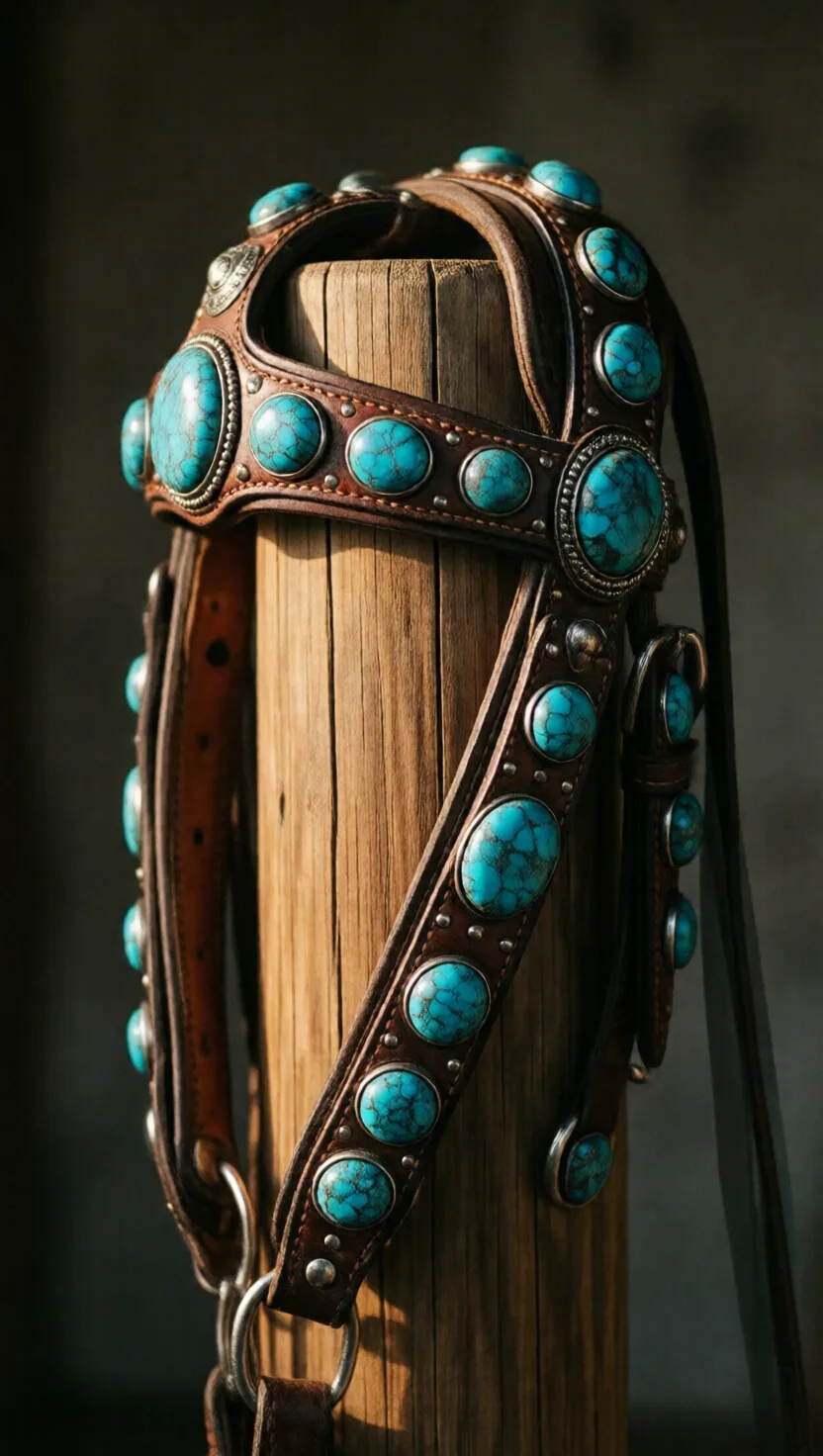
Across Persia and Central Asia, turquoise was the rider's stone. Horsemen fixed it to bridles and harnesses as a charm, trusting it to guard against a fall from the saddle — a belief that later widened to protection from any tumble at all. People also read the stone for warnings: if a turquoise paled or shifted colour, it was taken as a sign of the owner's coming illness or danger. The fading was real, just chemistry — but the omen stuck for centuries.
Most turquoise you see is doctored

Most turquoise you see is doctored

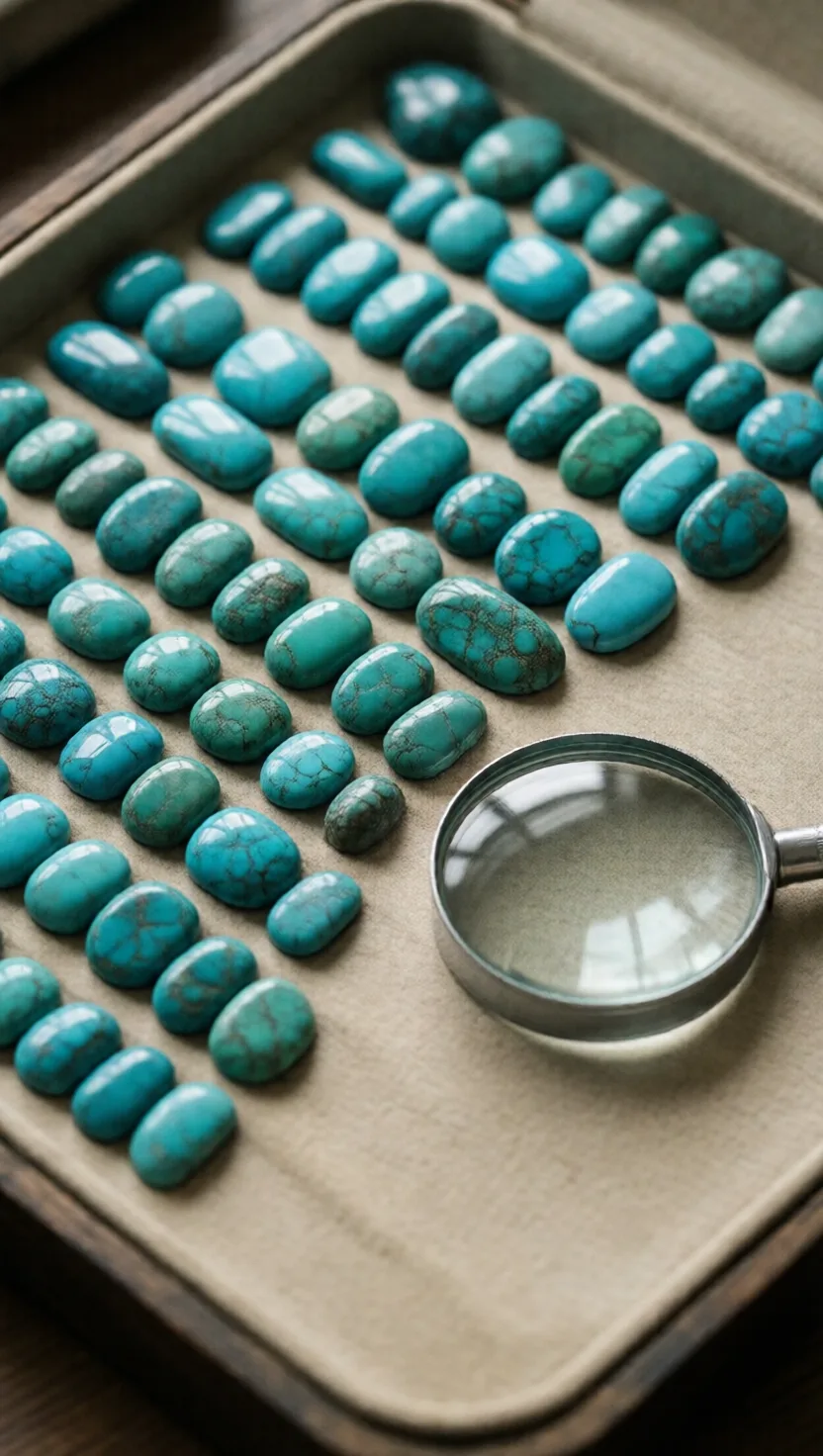
Natural turquoise hard enough to cut is scarce, so the vast majority on the market — by many estimates 80 to 90 percent — has been altered. Soft, chalky stone is soaked with resin to harden it, dyed to deepen the blue, or ground up and pressed back together as reconstituted turquoise. Cheaper still, dyed white howlite or plain plastic is sold under its name. A truly untreated, naturally hard turquoise is one of the rarer things in a jeweller's tray.
tap →swipe ↑ for depthswipe ↓ to exit