Eight things hidden under a penguin's feathers

DC·121 Deep Cuts
We find penguin cities by their stains from orbit

We find penguin cities by their stains from orbit

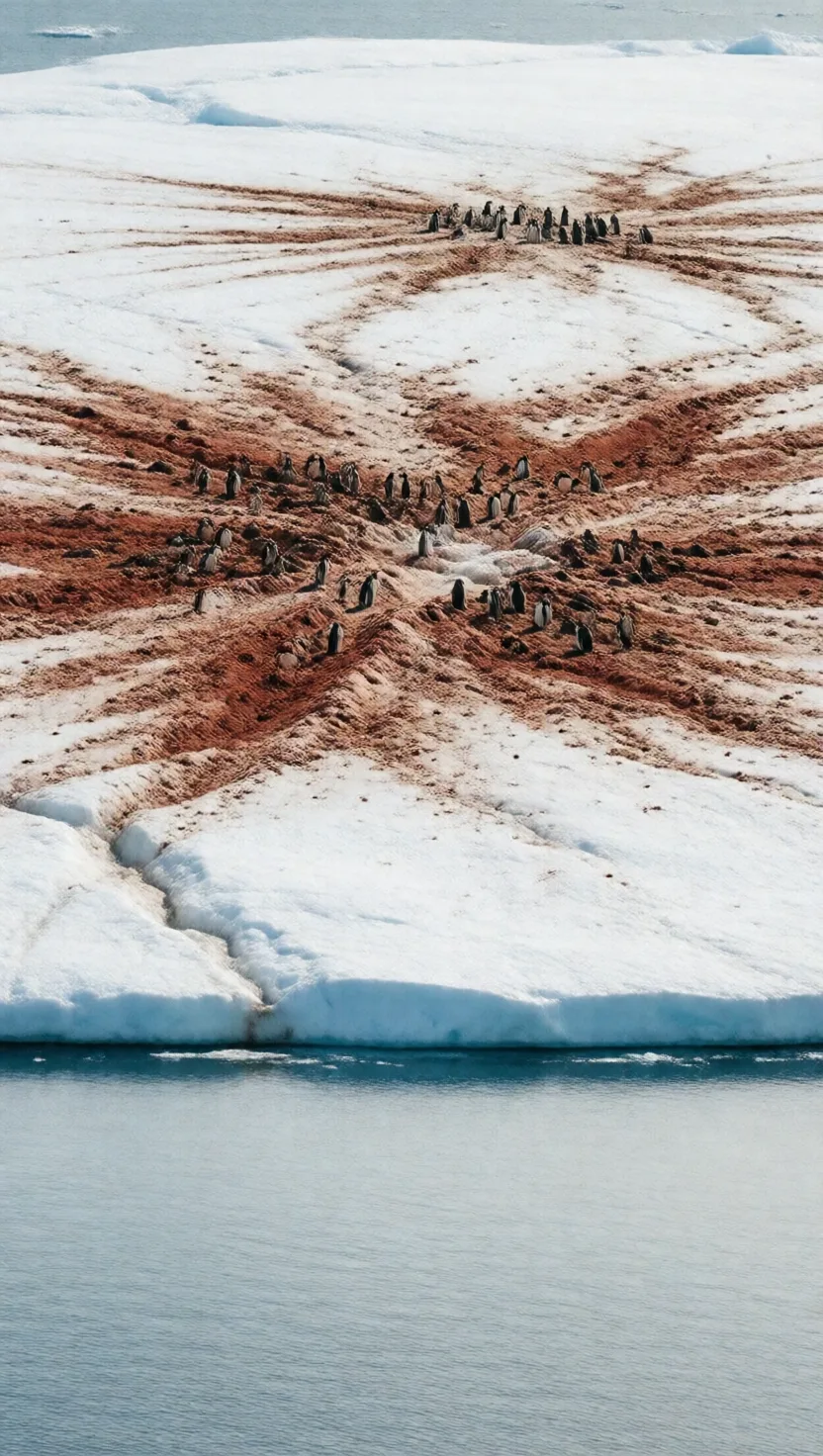
Emperor penguins breed on remote Antarctic sea ice where no one can easily count them, so scientists hunt instead for the reddish-brown smears their guano leaves on the white ice, clearly visible in satellite images. Mapping these stains with 10-metre-resolution satellites has revealed hidden colony after hidden colony, bringing the known total to 66 by 2024. The birds are too small to see; their mess is not.
No bird dives deeper than an emperor penguin

No bird dives deeper than an emperor penguin

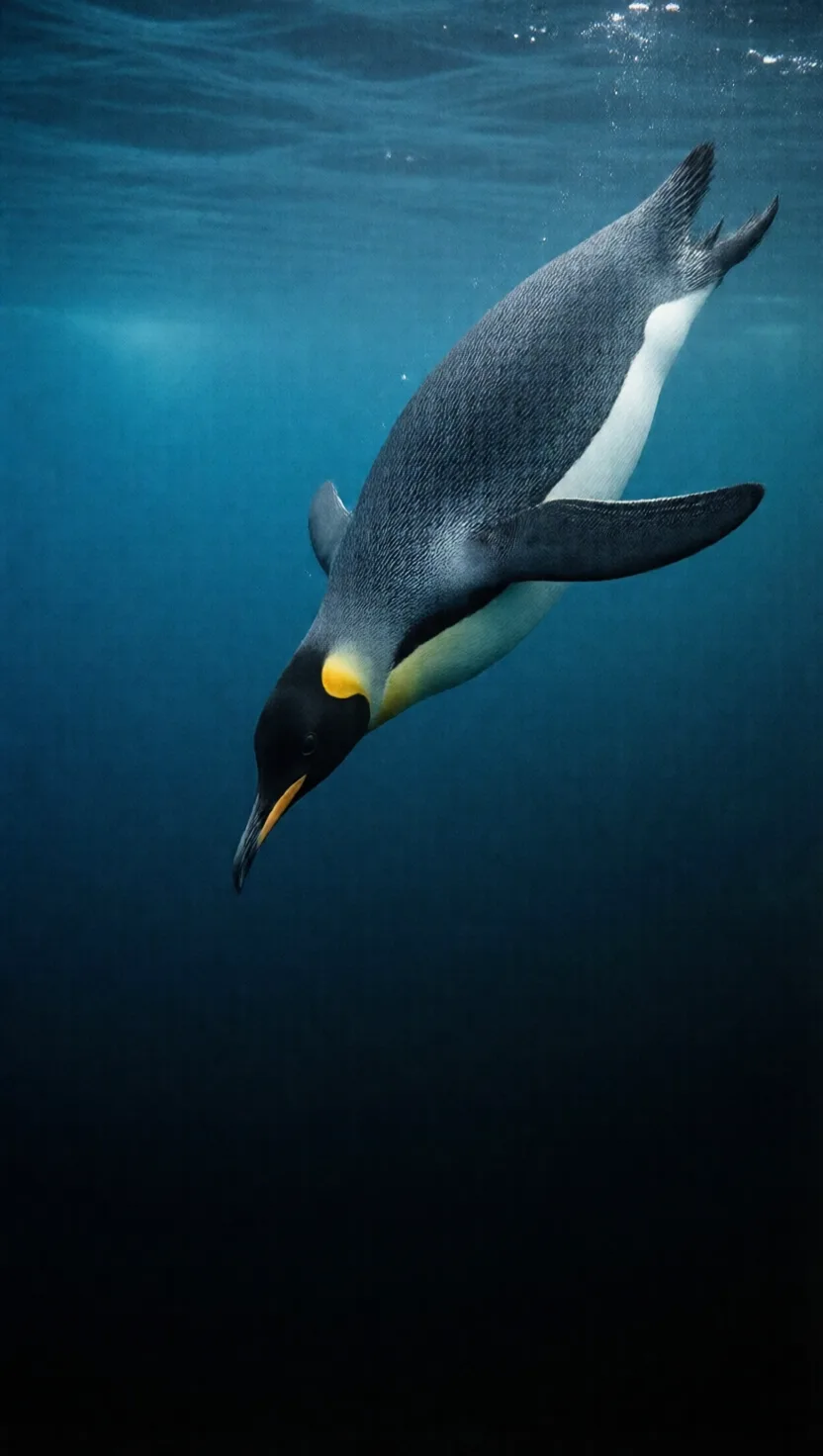
The deepest dive ever measured for any bird is 564 metres, set by an emperor penguin off eastern Antarctica, deeper than many submarines venture. To survive the crushing pressure the bird lets its air sacs collapse and its heart rate fall to a few beats a minute, hunting fish and squid in near-total darkness before surfacing. The longest recorded emperor dive lasted 32 minutes on a single breath.
Penguins grease their escape with their own bubbles

Penguins grease their escape with their own bubbles

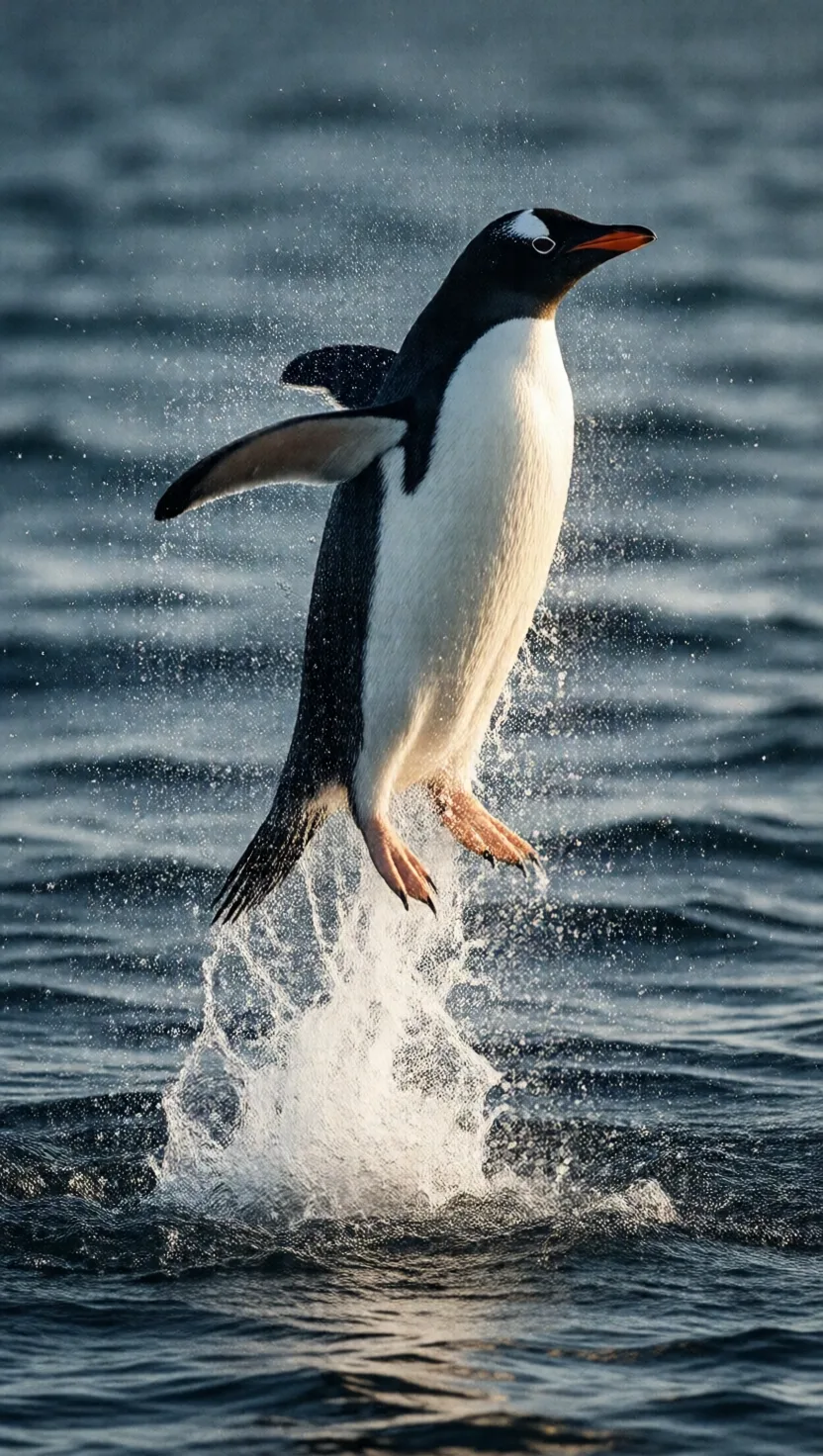
To leap from the sea onto an ice ledge, an emperor penguin dives deep, then rises fast, releasing air trapped in its feathers as a cloud of microscopic bubbles. The bubble coat slashes the drag of water against its body, letting the bird double or even triple its swimming speed in the final sprint, fast enough to rocket clear of the surface and out of a leopard seal's reach. Engineers study the trick to speed up ships.
Penguins drink seawater and weep out the salt

Penguins drink seawater and weep out the salt

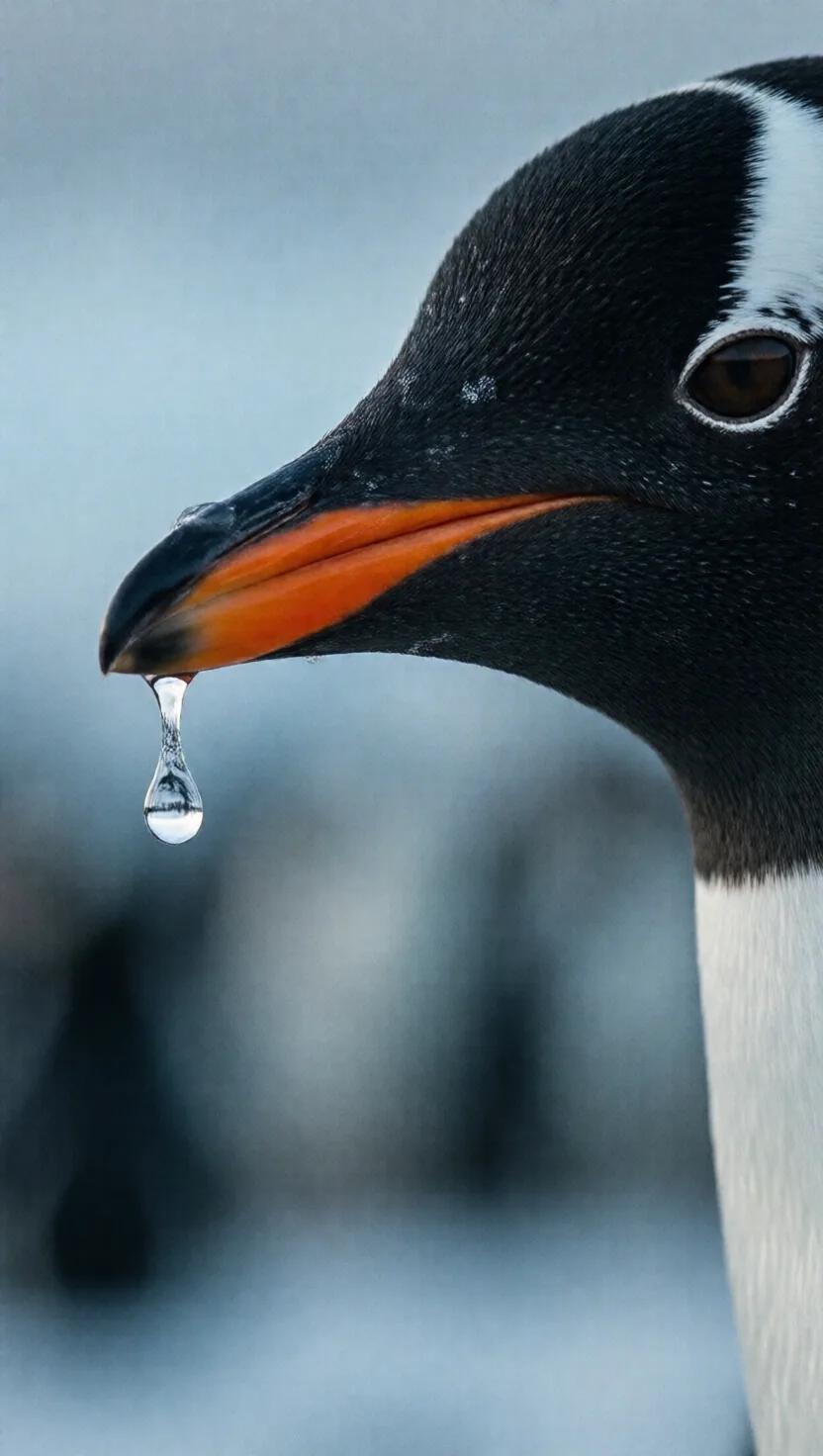
Penguins live surrounded by seawater and freely drink it, then deal with the salt using a gland above each eye called the supraorbital gland. It pulls sodium and chloride from the blood and pours them out as a concentrated brine, up to five times saltier than the sea, that drips and is shaken from the tip of the bill. The constant runny look is not a cold; it is the bird desalinating itself.
A father penguin starves for months on bare ice

A father penguin starves for months on bare ice

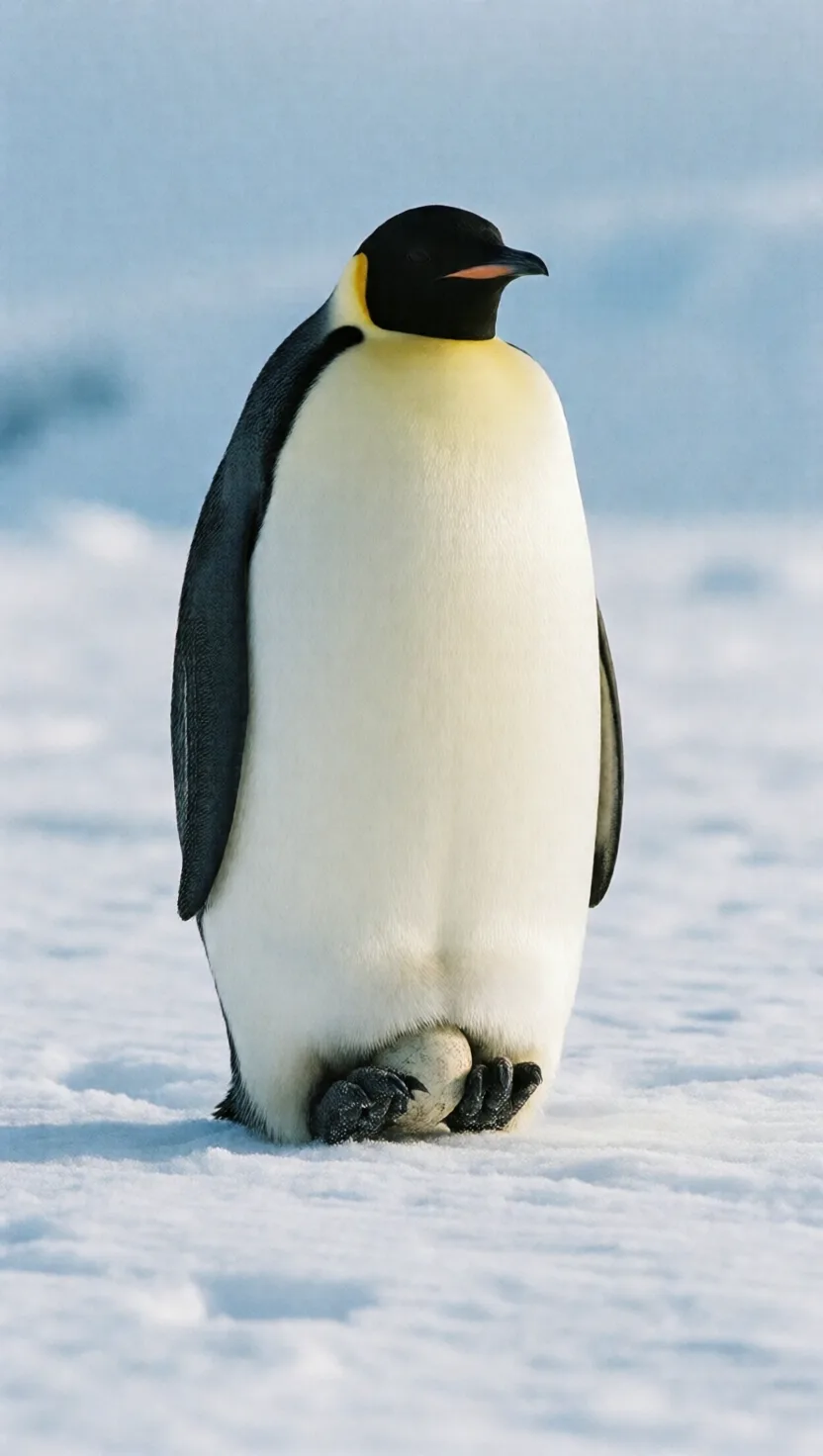
After the female lays a single egg she heads to sea, and the male emperor penguin takes over, balancing the egg on his feet beneath a warm fold of belly skin through the Antarctic winter. He cannot eat the entire time. By the time the chick hatches he has fasted for around 115 days in temperatures near minus 40 Celsius, losing close to half his body weight while huddling against the dark and the wind.
A penguin's most valued possession is a pebble

A penguin's most valued possession is a pebble

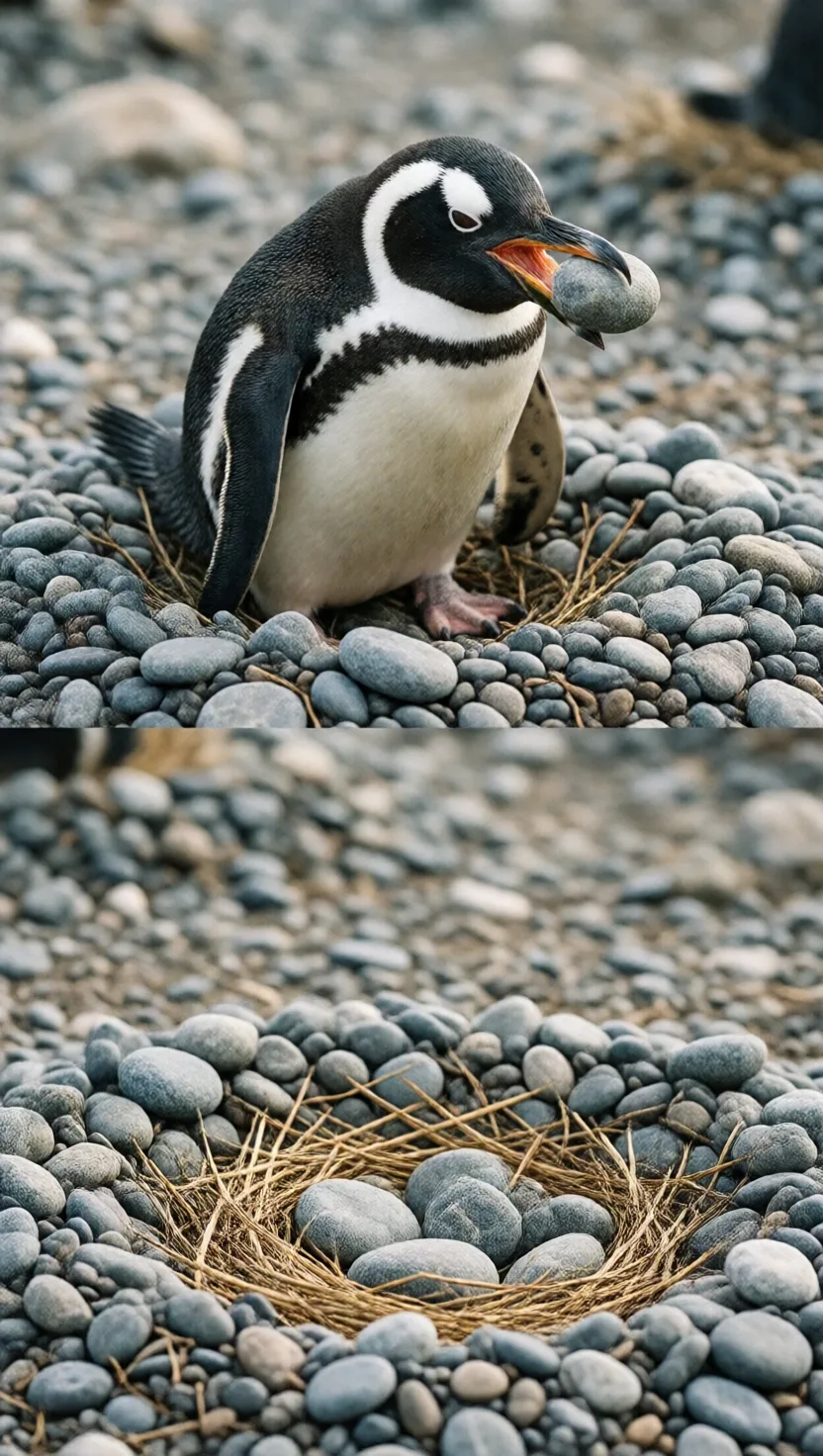
For pebble-nesting penguins like Adelies and gentoos, smooth stones are treasure. A nest is a shallow scrape lined with hundreds of pebbles that lift the eggs above the freezing meltwater when the rookery floods. Good stones are scarce, so a male hauls them one by one to build the nest and impress a mate, and thinks nothing of stealing pebbles from a neighbour's nest the moment its owner looks away.
A penguin huddle moves in slow traveling waves

A penguin huddle moves in slow traveling waves

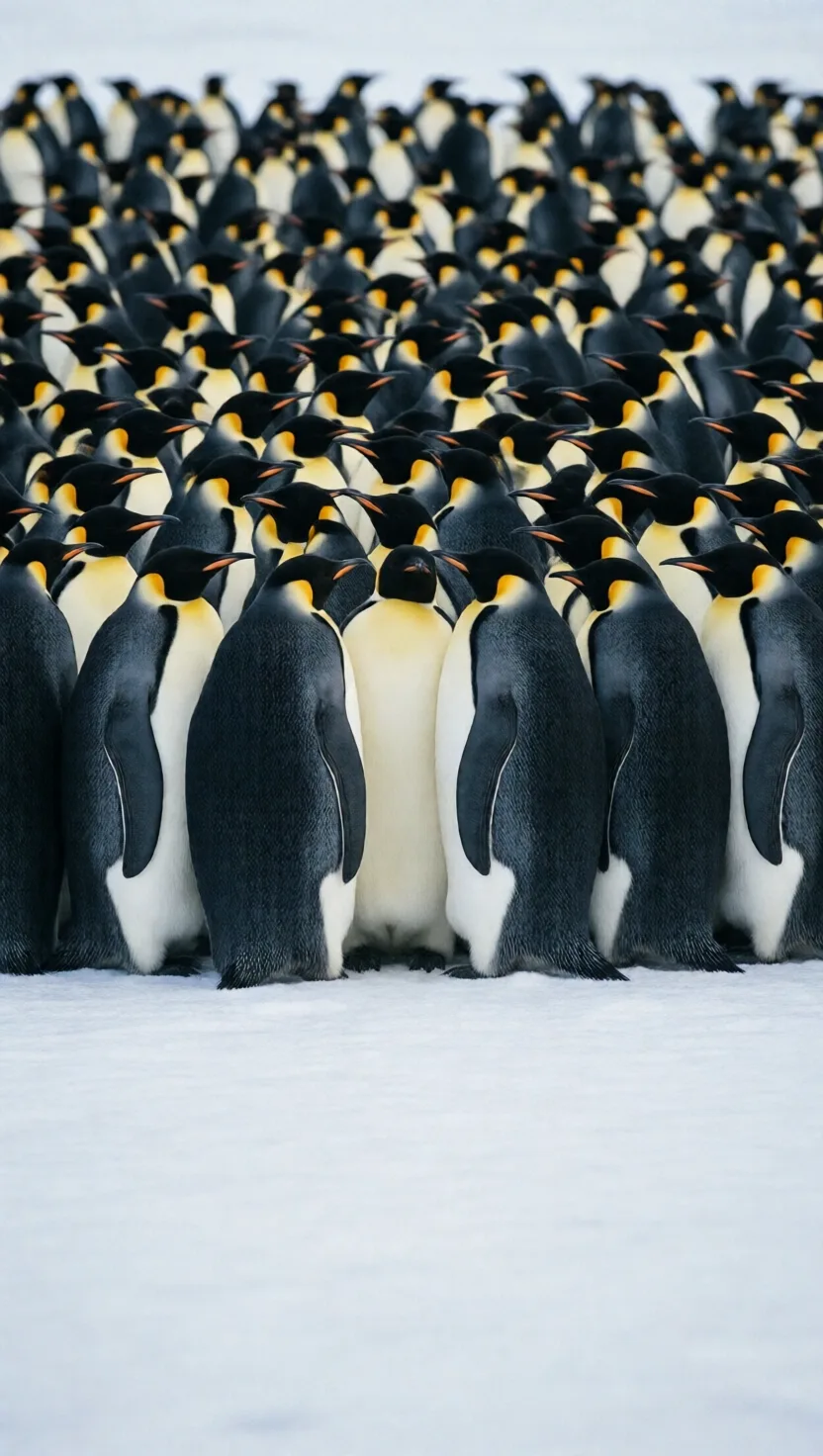
Emperor penguins survive the winter by huddling so tightly that the core can reach body temperature while it is minus 40 outside. Packed shoulder to shoulder, no single bird can move freely, so every 30 to 60 seconds the whole huddle takes a tiny coordinated step, around 5 to 10 centimetres, that ripples through the crowd like a slow wave. Over time these waves rotate everyone through the warm middle and the cold edge.
Penguins were once as tall as a grown adult

Penguins were once as tall as a grown adult

Today's biggest penguin, the emperor, stands just over a metre, but its ancestors were giants. Fossils from New Zealand and Antarctica reveal penguins standing as tall as an adult human, around 1.6 to 2 metres. One recently described species, Kumimanu fordycei, is estimated to have weighed about 150 kilograms, heavier than two grown men, as it patrolled southern coastlines some 55 million years ago.
tap →swipe ↑ for depthswipe ↓ to exit