Eight things hidden in a green stone

DC·116 Deep Cuts
"Jade" is secretly two unrelated minerals

"Jade" is secretly two unrelated minerals

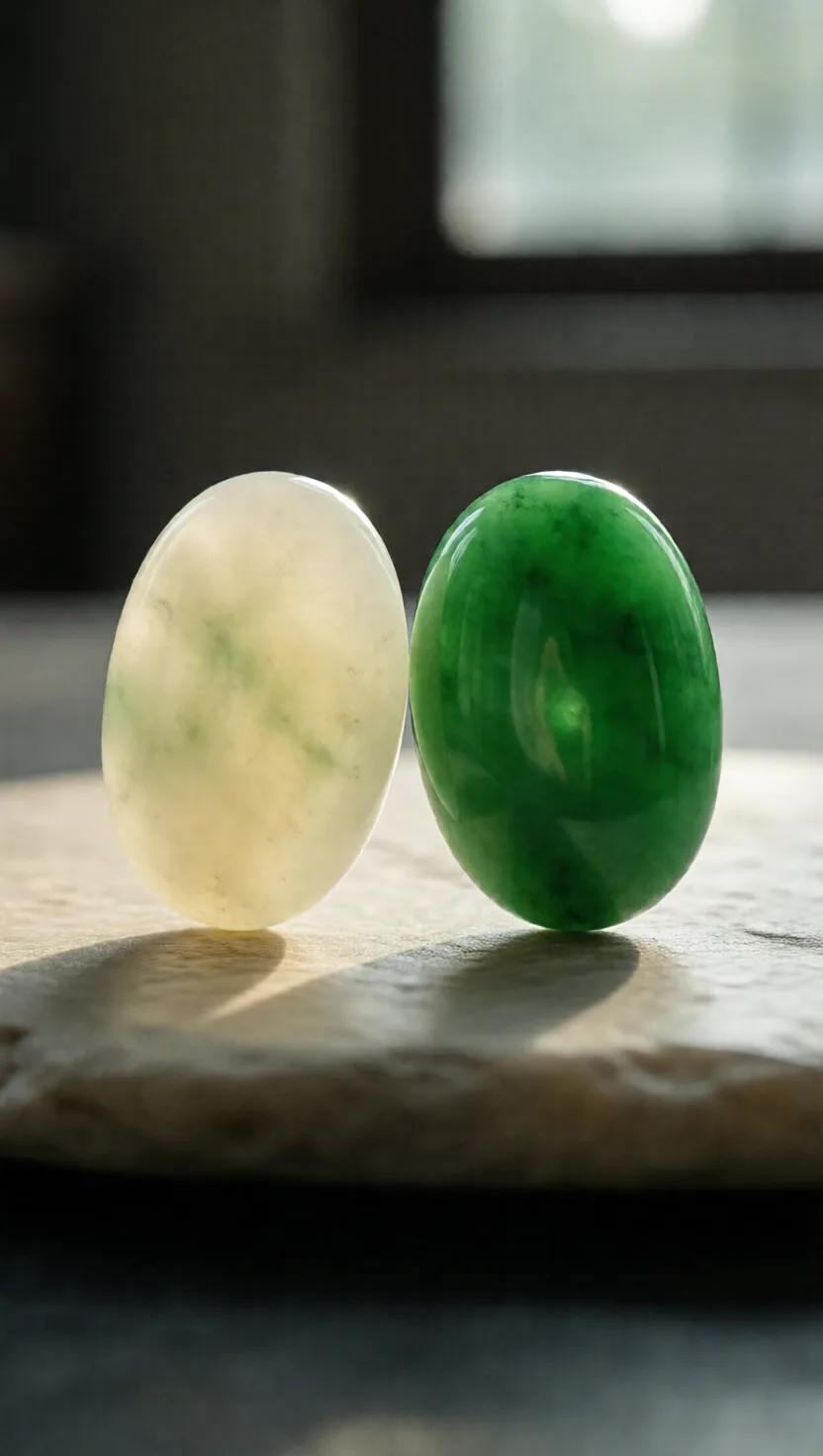
For thousands of years jade meant one prized green stone. Then in 1863 a French mineralogist, Alexis Damour, showed it was actually two unrelated minerals: nephrite, a calcium-magnesium amphibole, and jadeite, a sodium-aluminum pyroxene. They look almost identical to the eye but differ in chemistry and crystal structure, which is why even experts often need testing to tell them apart.
The toughest gem won't win a hardness contest

The toughest gem won't win a hardness contest

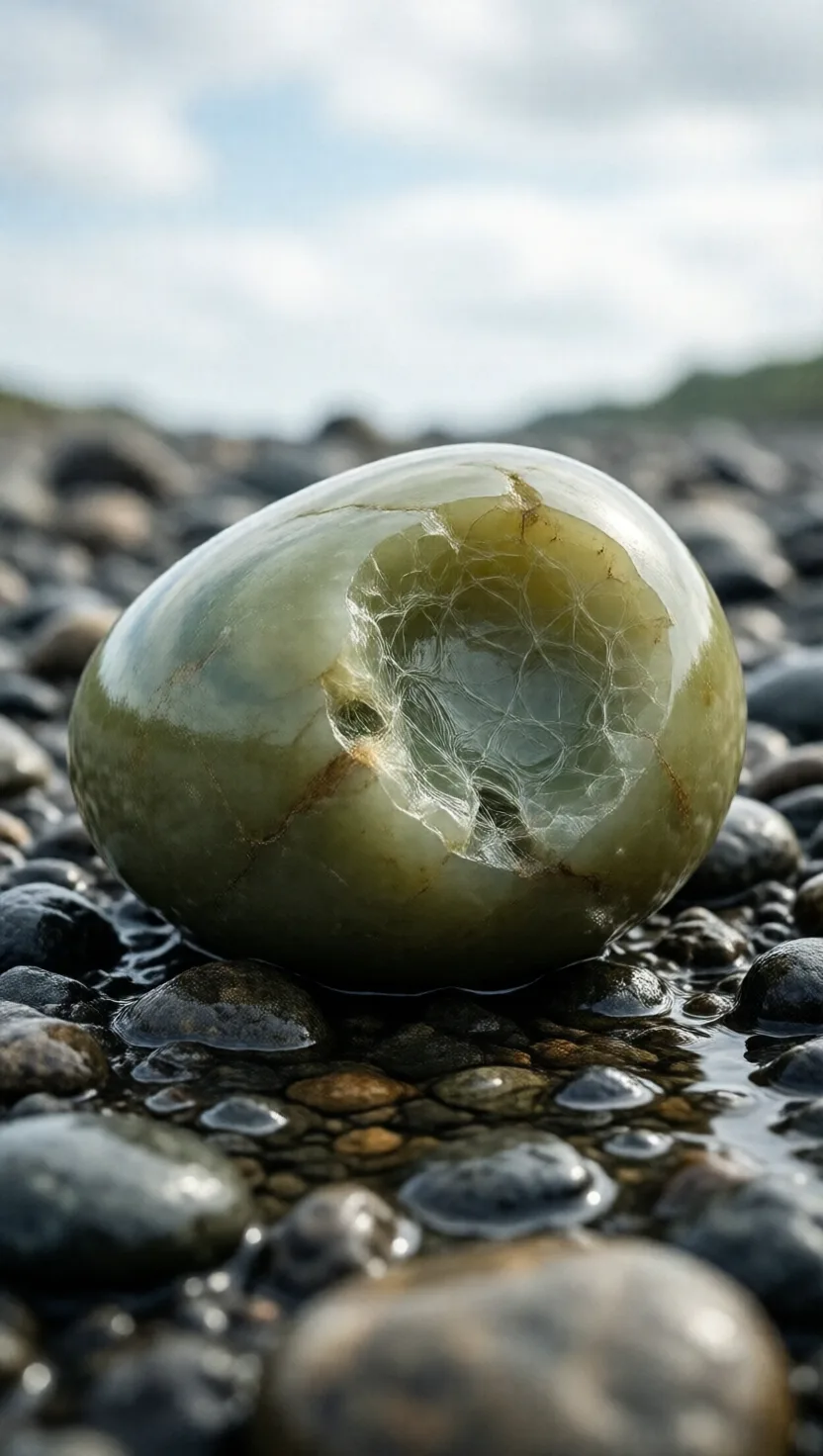
Diamond is the hardest gem, but nephrite jade is among the toughest natural materials, meaning it resists breaking and chipping rather than scratching. Under a microscope it looks like felt: a dense interlocking mesh of fibers roughly 0.1 to 5 microns across, woven in random directions. A crack cannot run straight through that tangle, so the stone absorbs blows that would shatter quartz. Its scratch hardness, though, is only about 6 to 6.5.
Jade is ground, not cut — even with metal

Jade is ground, not cut — even with metal

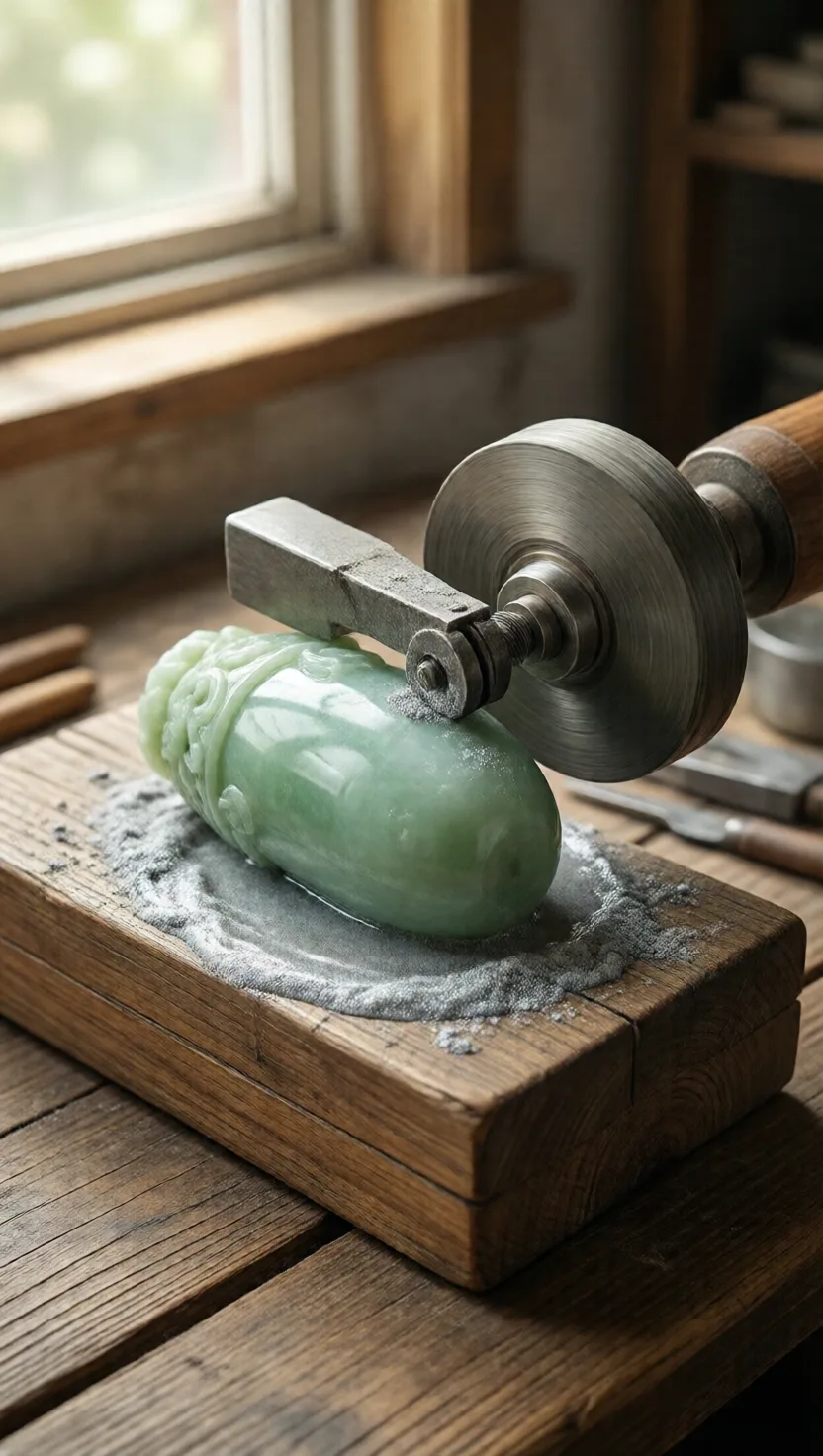
Jade is too tough to slice with a blade, so it was never really cut. Chinese craftsmen shaped it by abrasion: a tool of wood, leather, or metal carried a wet slurry of hard sand, quartz at hardness 7 or harder garnet and corundum, and the grit, not the tool, slowly wore the stone away. A single carving could take years of patient rubbing, drilling, and sawing with string and abrasive paste.
A Han prince was buried in 2,498 jade tiles

A Han prince was buried in 2,498 jade tiles

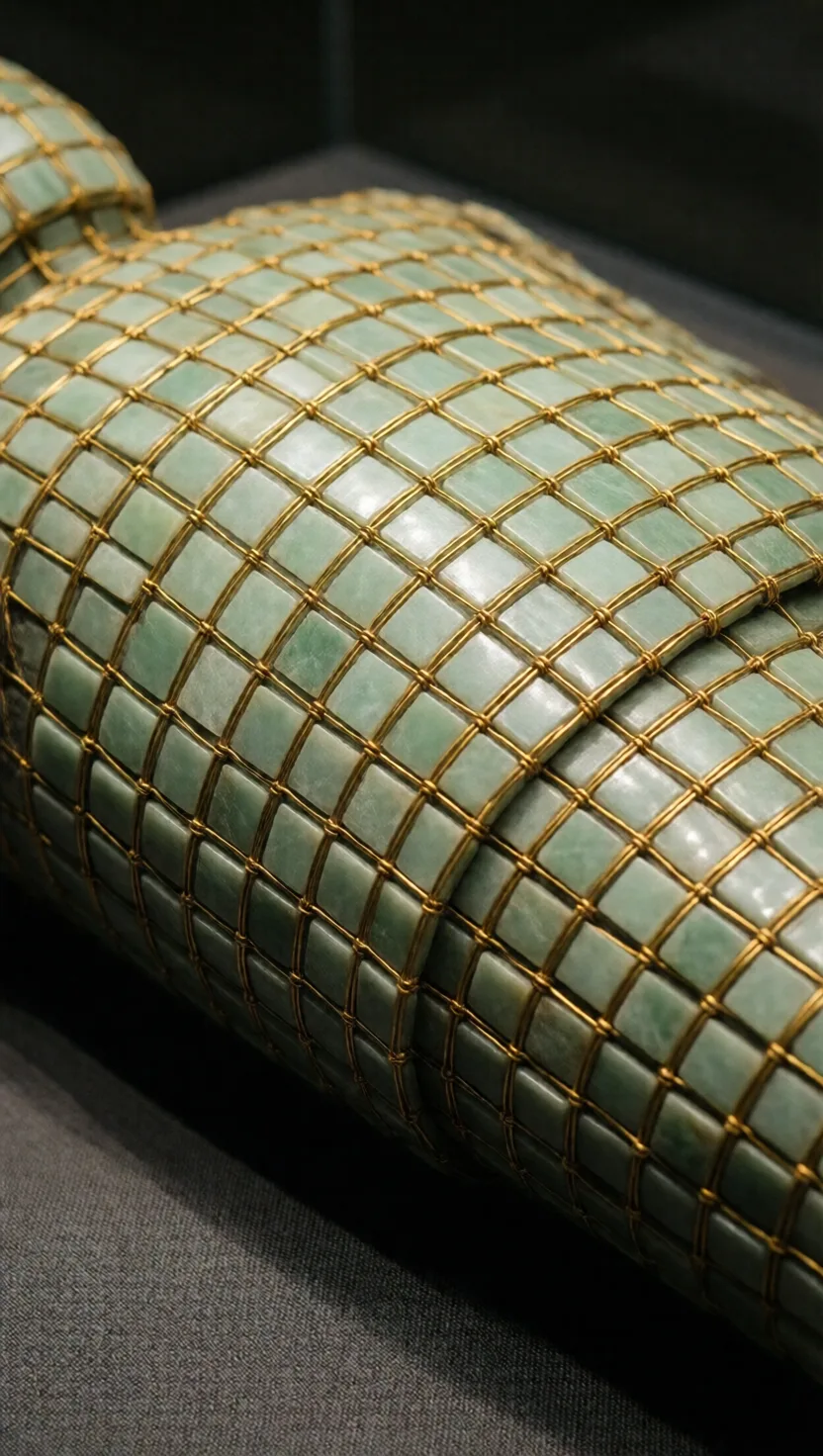
To guard the body for eternity, Han-dynasty elites were encased in suits of jade. The suit of Prince Liu Sheng, found in 1968 at Mancheng, was assembled from 2,498 small jade plaques drilled at the corners and sewn together with gold wire weighing roughly 1.1 kilograms. Each plaque had to be cut and matched by hand; scholars estimate a single suit took about a decade of work to complete.
Stone Age Europe traded jade axes 1,000+ km

Stone Age Europe traded jade axes 1,000+ km

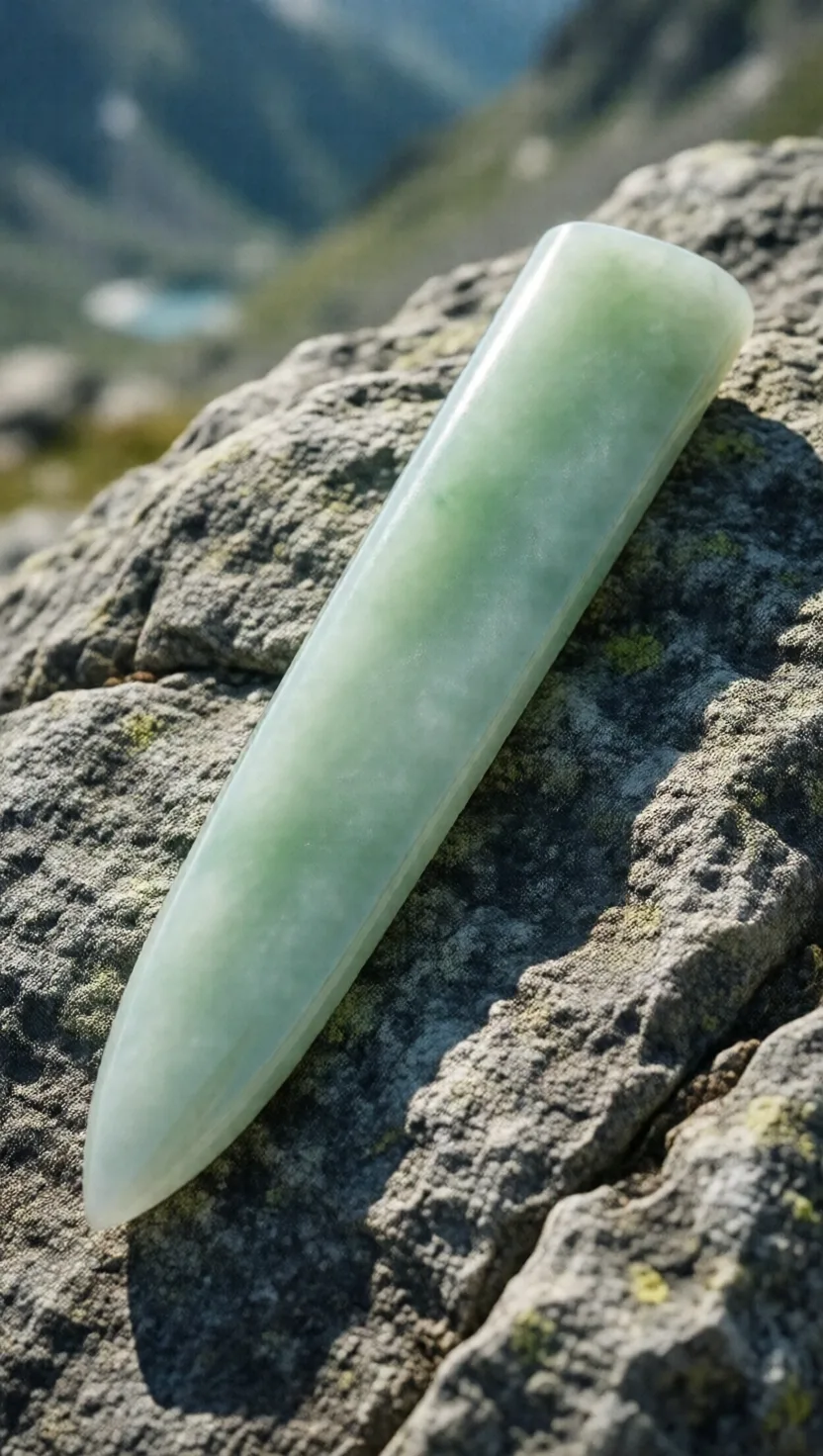
Around 5000 BC, Neolithic people quarried jadeite high on Monte Viso in the Italian Alps, at 2,000 to 2,400 meters, and ground it into thin polished axeheads. Many were far too fine and fragile to chop wood; they were prestige objects. From this single Alpine source they traveled astonishing distances, some over 1,700 kilometers, reaching Britain, the North Sea, and beyond, mapping a vast prehistoric exchange network.
A hurricane reopened a lost jade source

A hurricane reopened a lost jade source

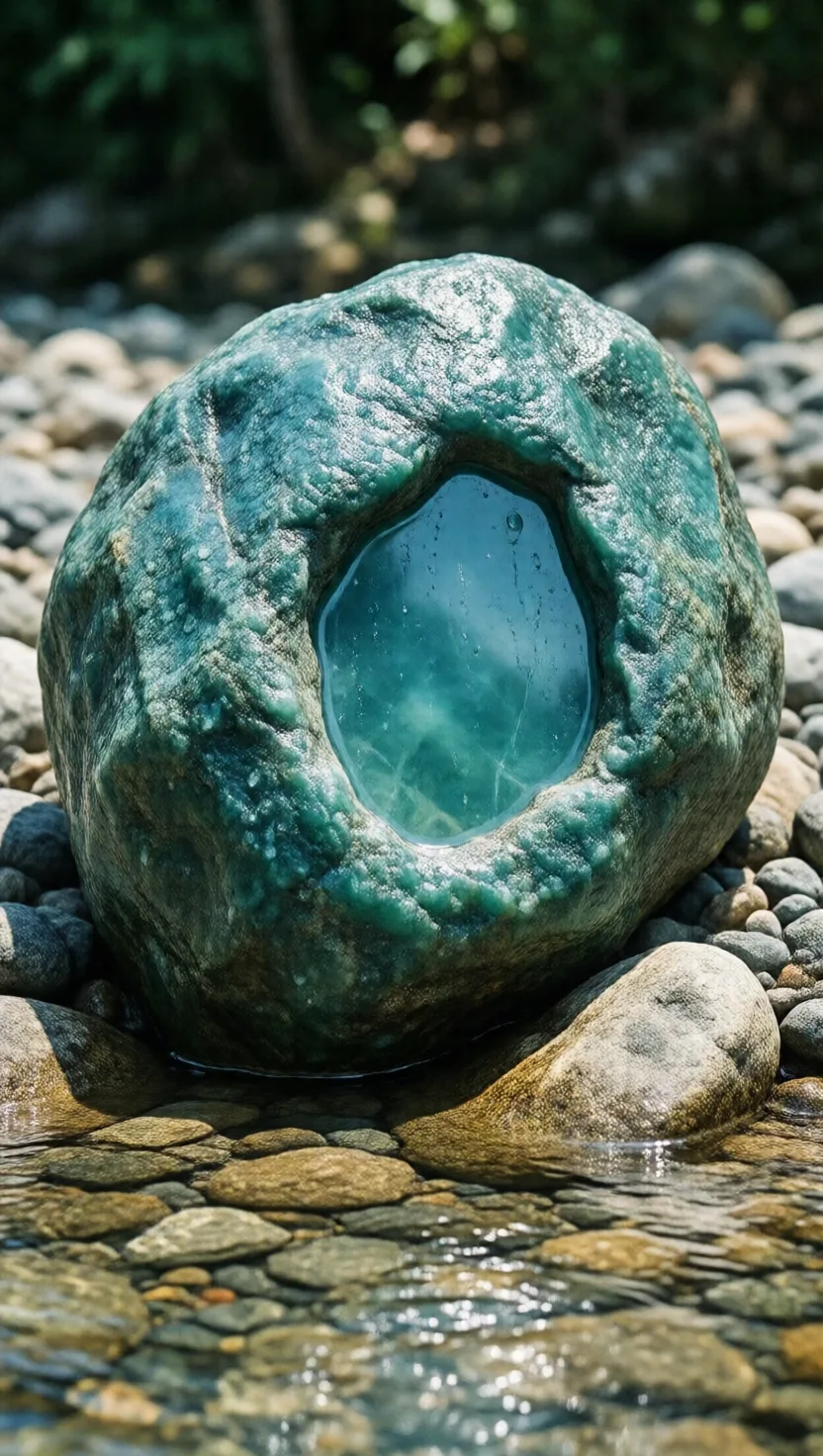
The Olmec and Maya prized blue-green jadeite above gold, but the location of their finest blue stone was lost for centuries. In 1998 the floods of Hurricane Mitch tore through Guatemala's Motagua river drainages and overturned boulder fields, exposing alluvial jade cobbles. Researchers traced them upstream to large outcrops, rediscovering the long-sought ancient source after roughly five centuries.
The white jade prized above green

The white jade prized above green

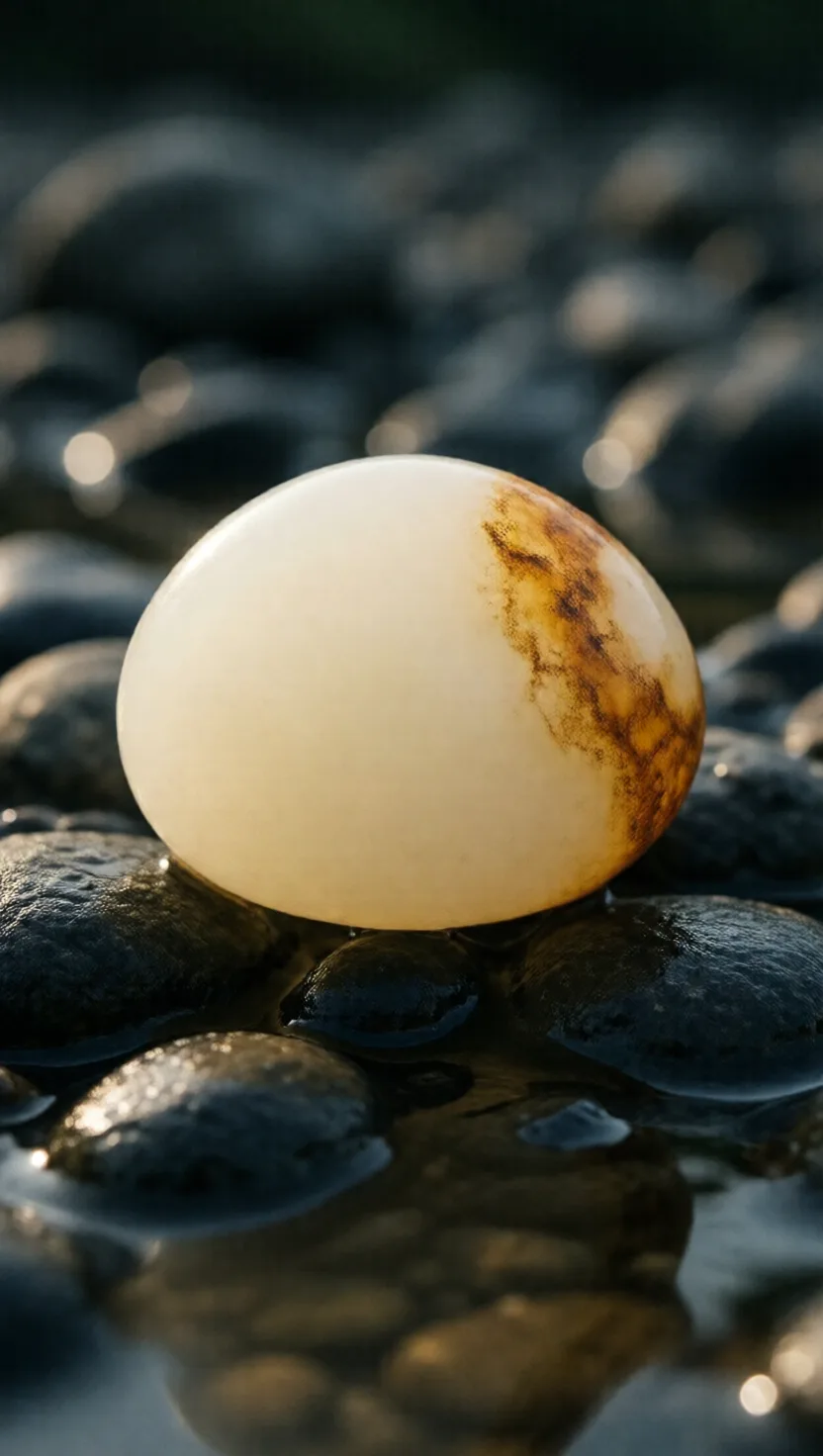
In Chinese tradition the most treasured nephrite is not green but a creamy white called mutton-fat jade, named for its soft, oily, fat-like sheen. The finest comes as river pebbles from the Yurungkash and Karakash rivers near Hotan in Xinjiang, washed down from the Kunlun Mountains and gathered there for over two thousand years along the Silk Road. Top river-pebble pieces can sell for more per gram than gold.
Disks of jade buried to stand for the sky

Disks of jade buried to stand for the sky

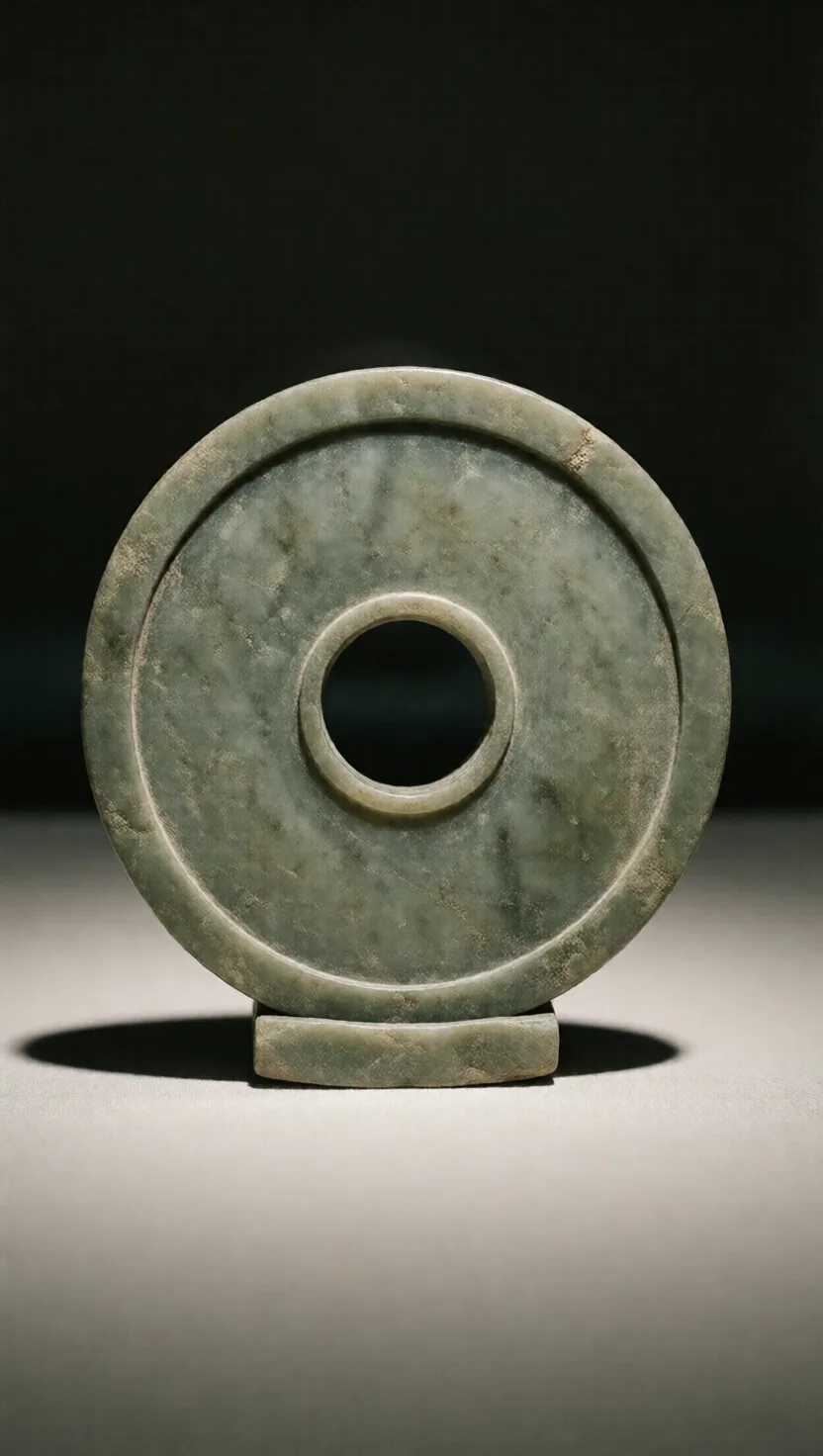
The Neolithic Liangzhu culture of China, around 3300 to 2200 BC, carved flat jade disks with a central hole, called bi. They are among the earliest worked jade and were placed in burials of high-status people, often on the chest or stacked around the body, sometimes dozens to one grave. In later Chinese thought the round bi came to symbolize heaven, paired with the square cong of earth, though the original Neolithic meaning is unknown.
tap →swipe ↑ for depthswipe ↓ to exit