Eight things ants do underfoot

DC·115 Deep Cuts
Their jaws snap at 145 mph — then fling them airborne

Their jaws snap at 145 mph — then fling them airborne

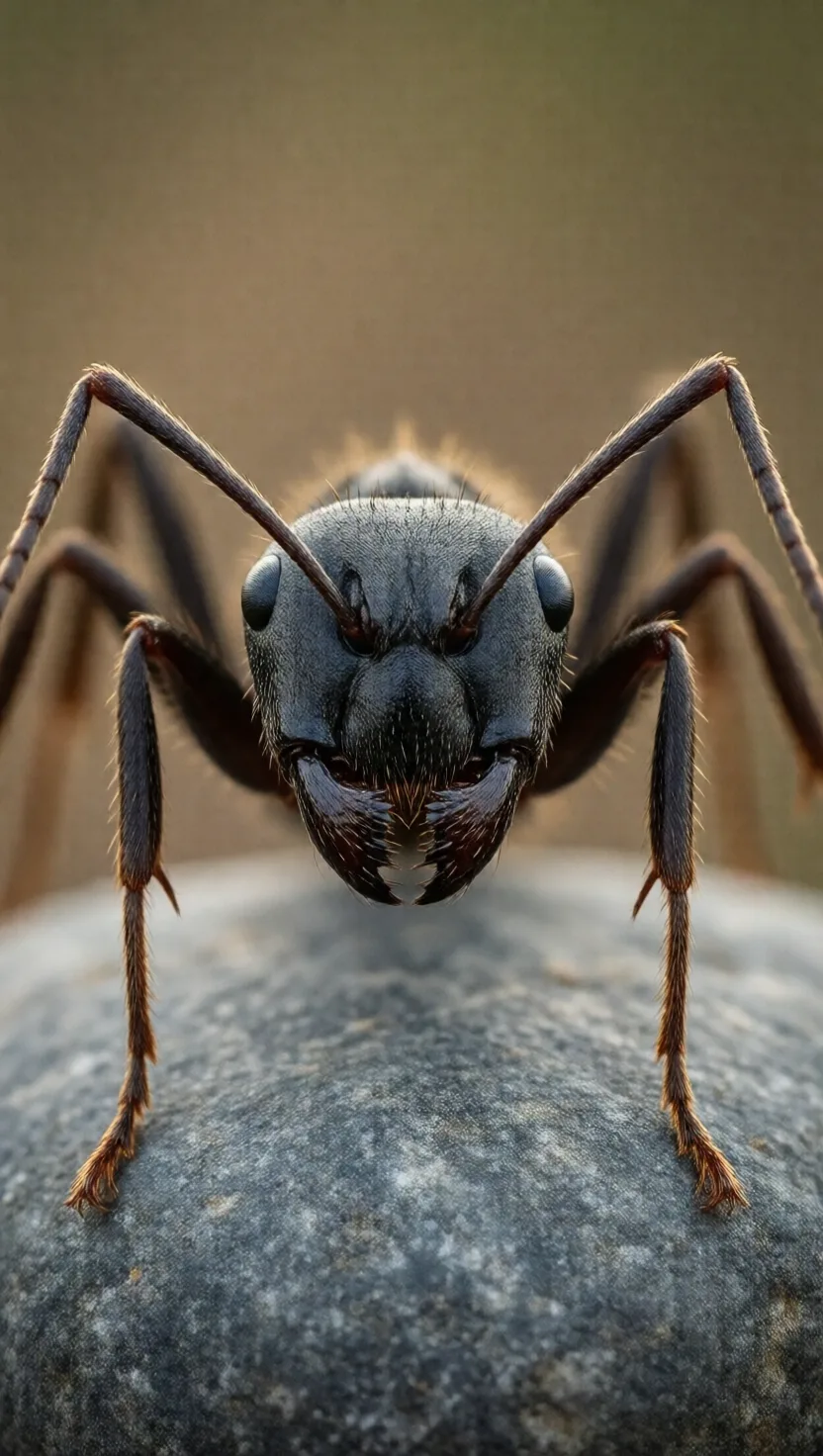
The trap-jaw ant cocks its mandibles wide and latches them under tension, then releases. The jaws slam shut in about 0.13 milliseconds, reaching peak speeds of 35 to 64 m/s, up to roughly 145 mph, with accelerations near 100,000 g, among the fastest self-powered movements known in the animal kingdom (PNAS, 2006). Bite the ground instead of prey and the same snap launches the ant backward through the air, a built-in ejector seat to escape danger.
This ant runs across 50°C sand using mirror hairs

This ant runs across 50°C sand using mirror hairs

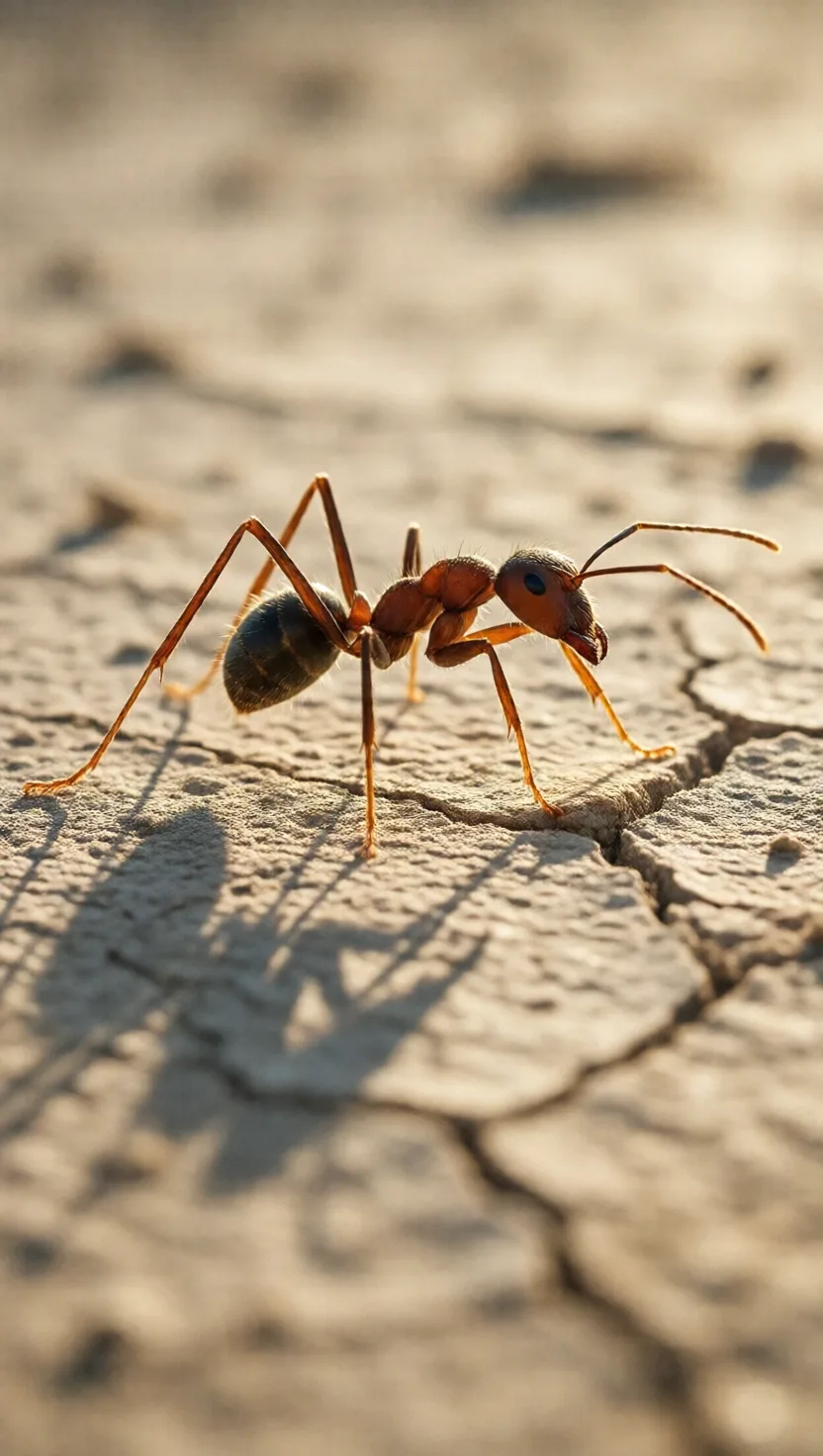
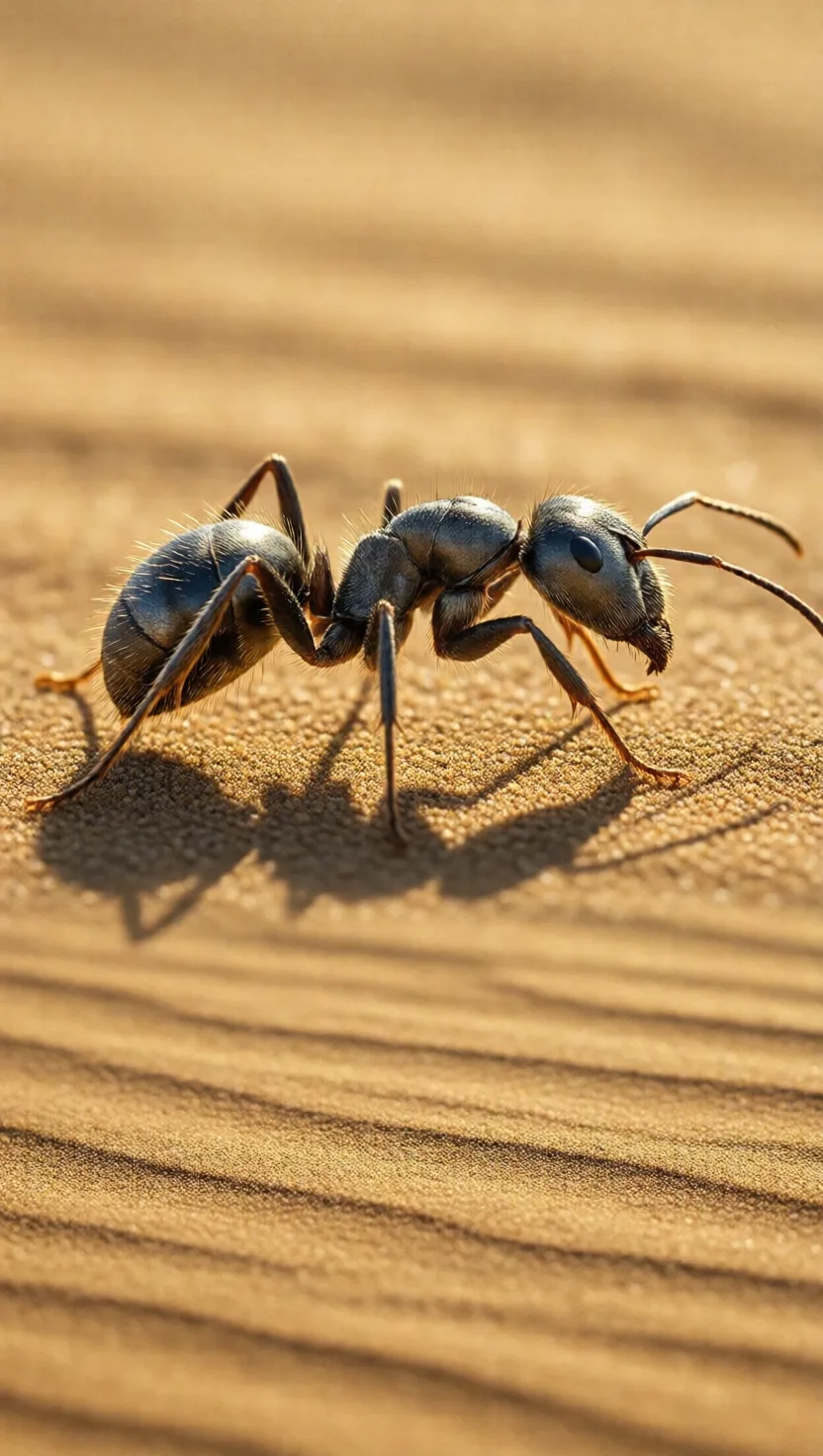
The Saharan silver ant forages at the hottest part of the day, sprinting over sand near 47 to 50°C while staying just under its lethal limit of about 53.6°C. Its silvery sheen comes from densely packed hairs with a triangular cross-section that reflect visible and near-infrared light and radiate heat away in the mid-infrared, keeping the body cooler. In a 2019 study it also clocked 85.5 cm per second, roughly 108 body lengths a second, making it the fastest ant measured.
This ant counts its own steps to find home

This ant counts its own steps to find home

Desert ants navigate the featureless desert partly by a built-in pedometer. In a 2006 Science experiment, researchers let ants walk to food, then glued on stilts of pig bristle or trimmed legs to stumps. On the way home, stilt-walkers overshot the nest and stump-walkers stopped short, proof the ant gauges distance by counting strides, not by elapsed time or effort. Give it the right legs again and the error vanishes.
Leafcutters farm one fungus — and wear bacteria to weed it

Leafcutters farm one fungus — and wear bacteria to weed it

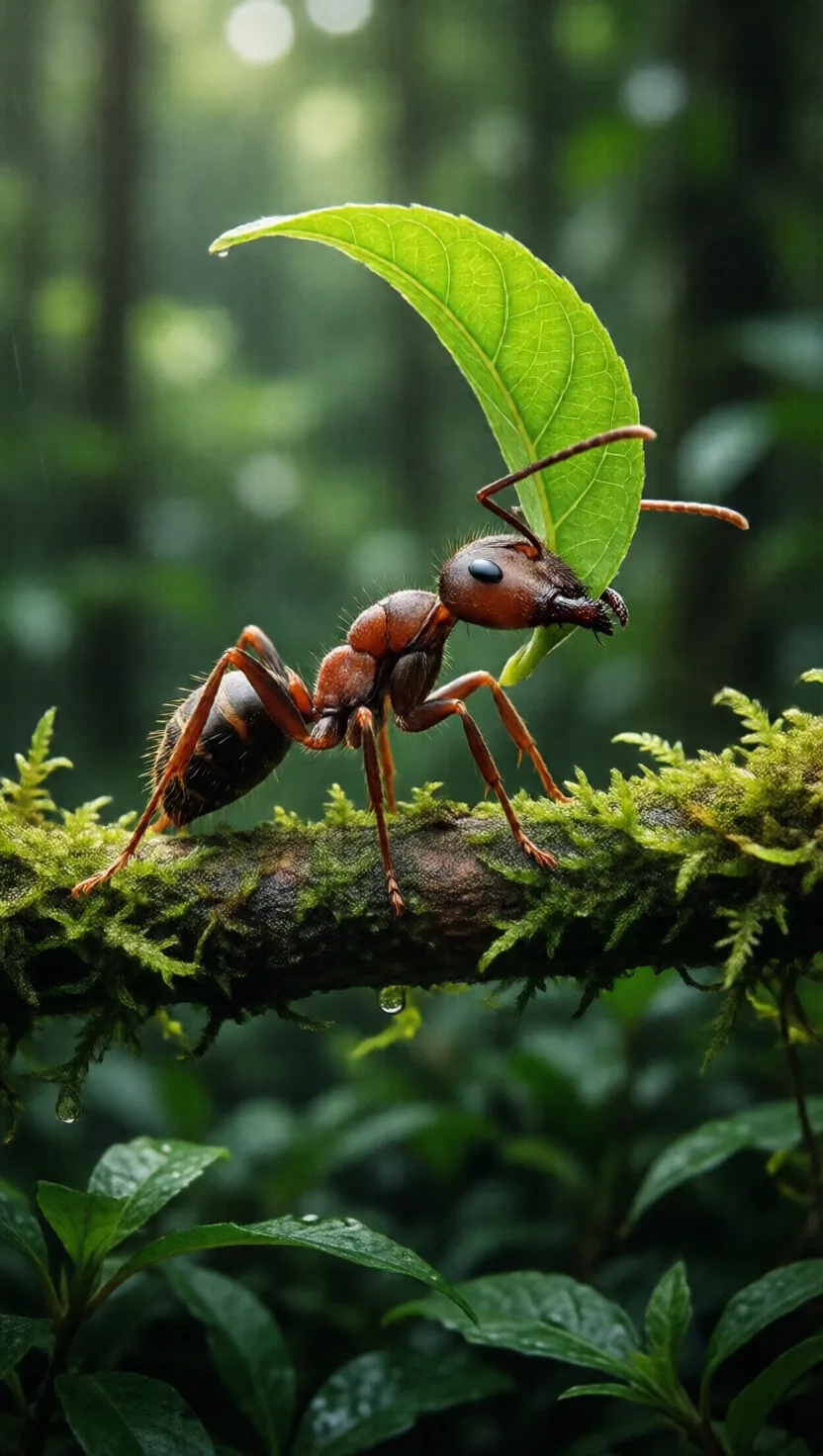
Leafcutter ants don't eat the leaves they carry; they feed them to an underground fungus garden that is their only real food. To stop a specialized parasitic weed fungus from overrunning the crop, the ants culture antibiotic-making bacteria on their own bodies, visible as a whitish crust. This ant farming arose roughly 50 to 60 million years ago, tens of millions of years before humans grew crops.
Some workers become living jars hung from the ceiling

Some workers become living jars hung from the ceiling

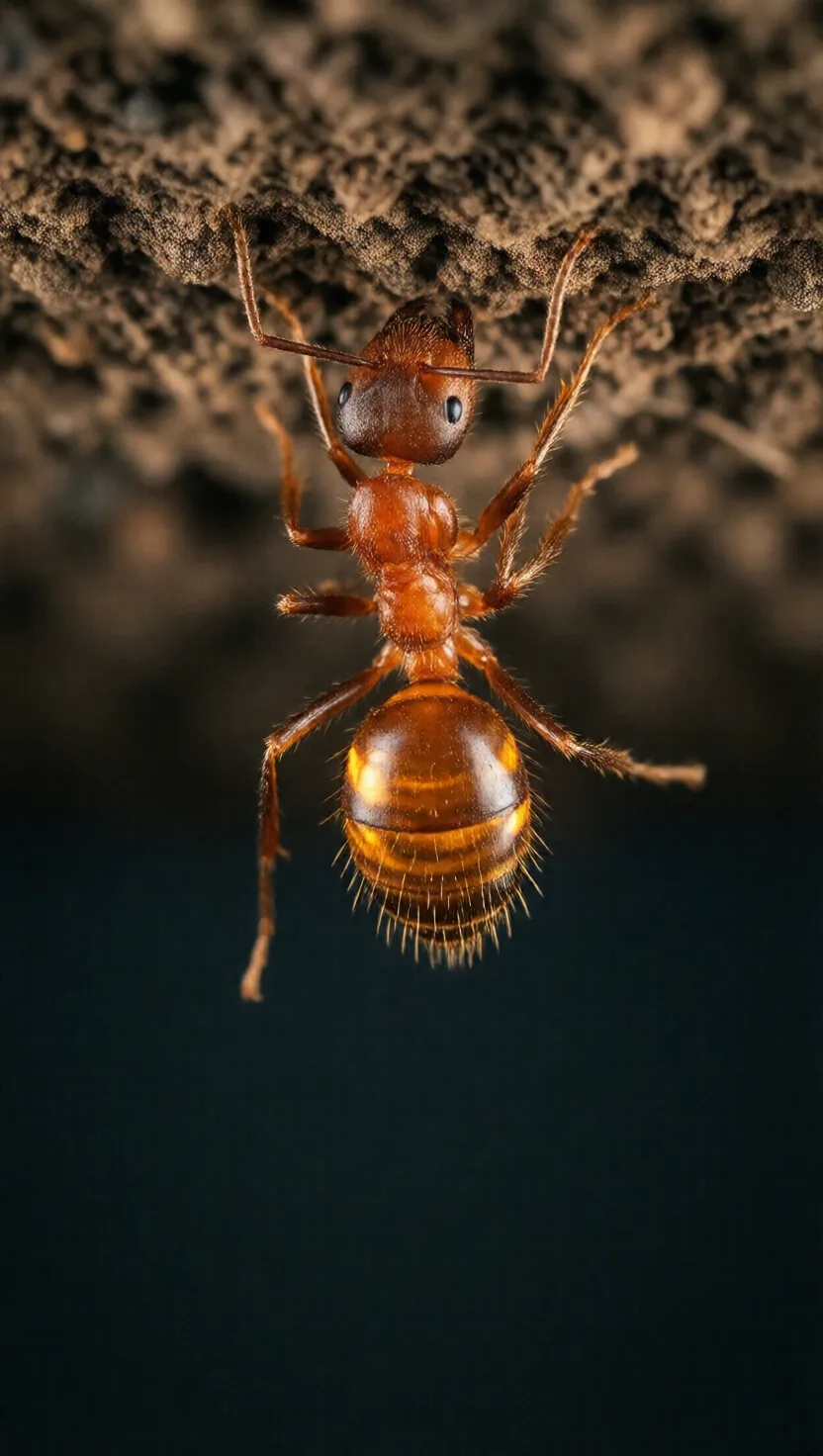
In honeypot ant colonies, special workers called repletes are fed nectar and honeydew until their abdomens swell into translucent amber globes the size of small grapes, the crop stretching about four to five times its normal length. Too heavy to move, they hang motionless from the nest ceiling as living larders. In lean months other ants tap them with their antennae and the repletes regurgitate stored food to feed the colony.
They sew nests shut using their larvae as glue guns

They sew nests shut using their larvae as glue guns

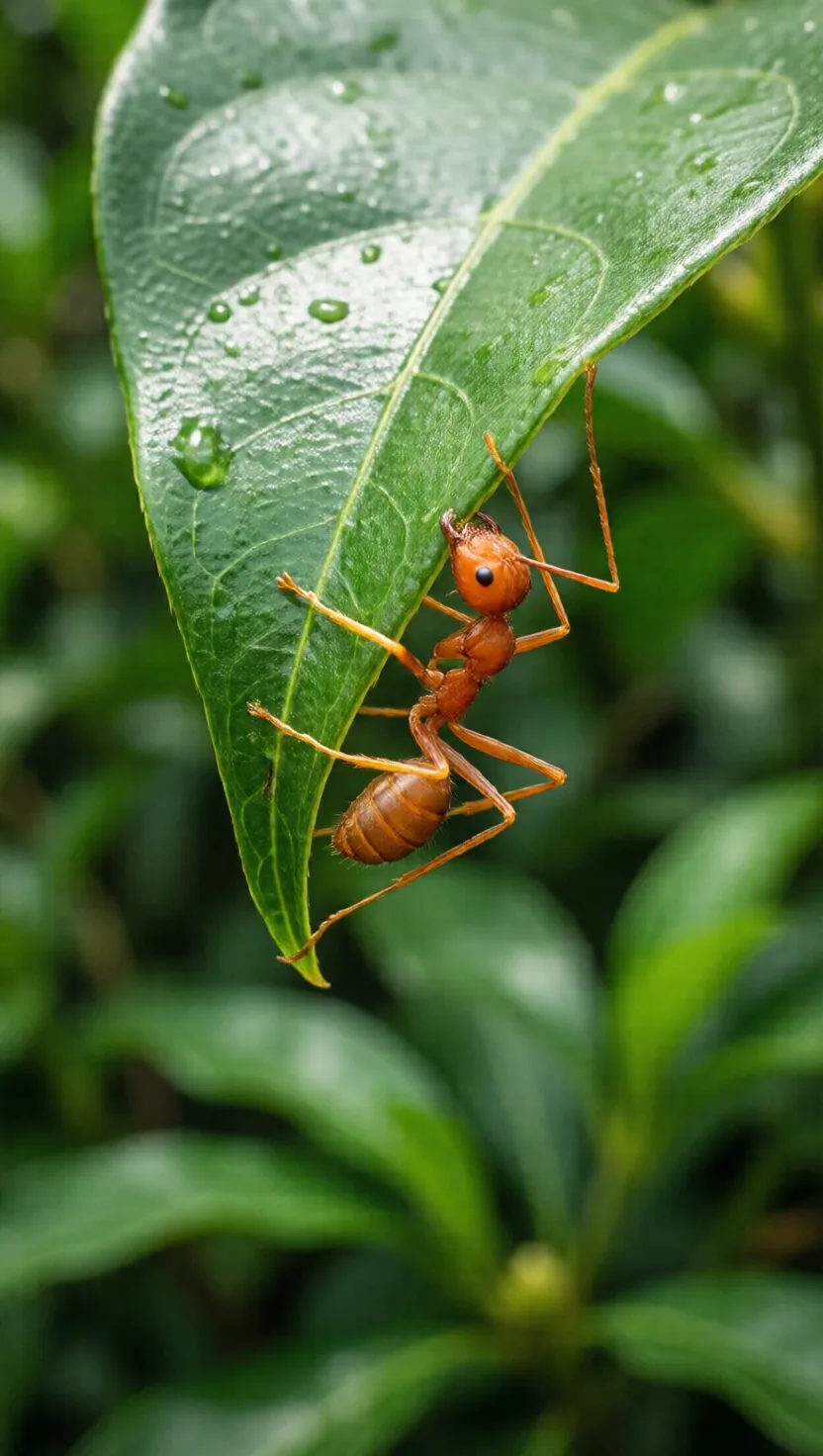
Weaver ants build nests in tree canopies by pulling living leaves together; chains of workers haul a leaf edge into place, then hold mature larvae in their jaws and gently squeeze. The larvae release strands of sticky silk, which the adults run back and forth to stitch the leaf edges into a watertight pouch. The larvae spend their silk on the nest instead of on their own cocoons, making them living shuttles in a shared construction project.
Dropped in a flood, they link into a weeks-long raft

Dropped in a flood, they link into a weeks-long raft

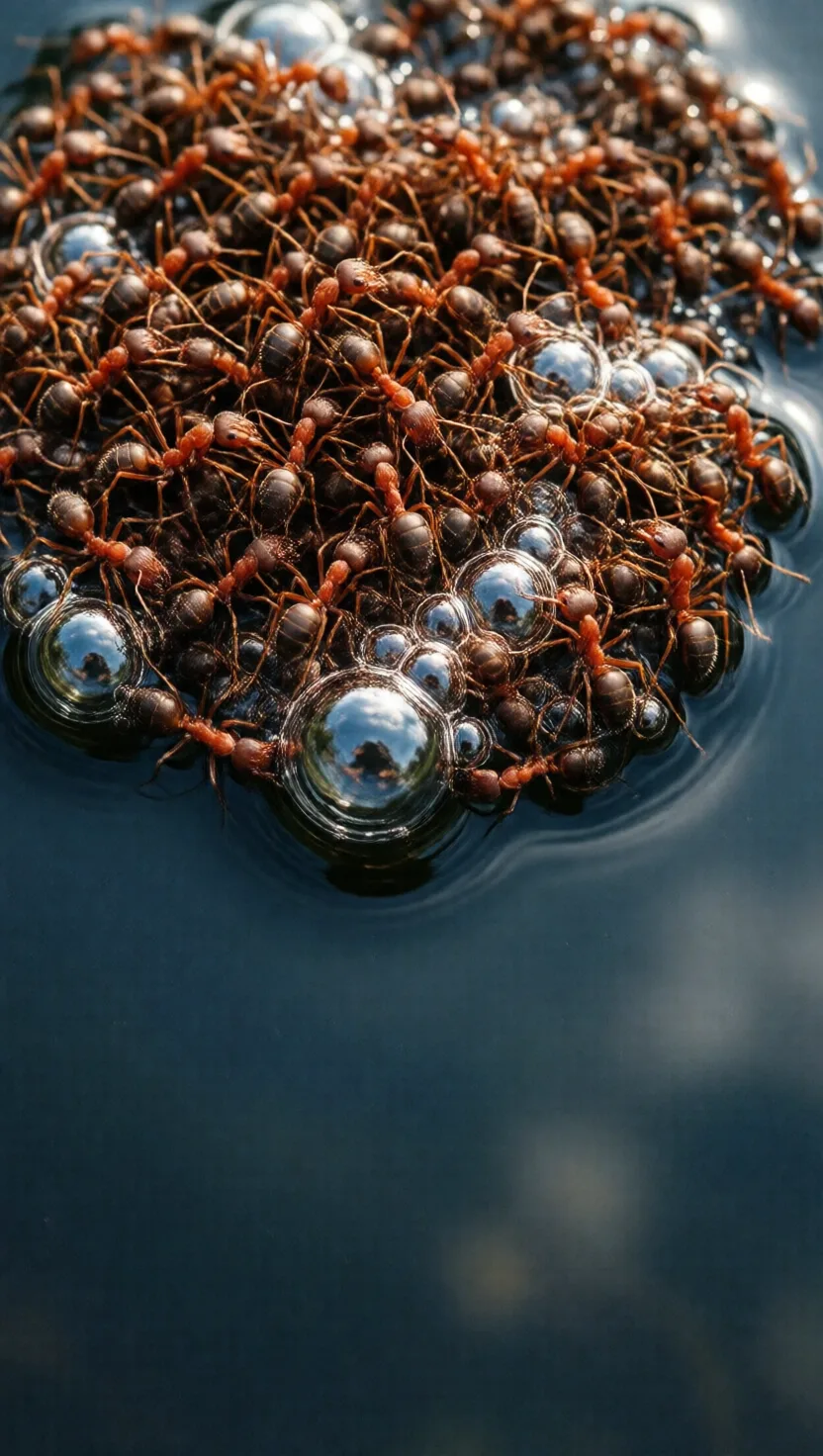
When water rises, fire ants clamp legs and jaws together and self-assemble into a living raft in about 100 seconds. Tiny body hairs and the gaps between interlocked ants trap air, cutting the raft's density by roughly 75% so it floats, and even the ants on the bottom keep a film of air to breathe. The structure is self-healing: poke a hole and others flow in to seal it, and the raft can stay afloat for days to weeks (PNAS, 2011).
A colony stretching 6,000 km whose members never fight

A colony stretching 6,000 km whose members never fight

Argentine ants, accidentally spread worldwide, have formed enormous supercolonies. Along the Mediterranean and Atlantic coasts of southern Europe, one supercolony runs about 6,000 km, with millions of nests and billions of workers. Because the introduced population shares nearly identical chemical ID scents, ants from distant nests treat each other as nestmates and don't fight, while members of a separate supercolony are attacked on sight (PNAS, 2002).
tap →swipe ↑ for depthswipe ↓ to exit