Eight things about the upright little fish where the father gives birth

DC·109 Deep Cuts
The pregnant parent here is the father

The pregnant parent here is the father

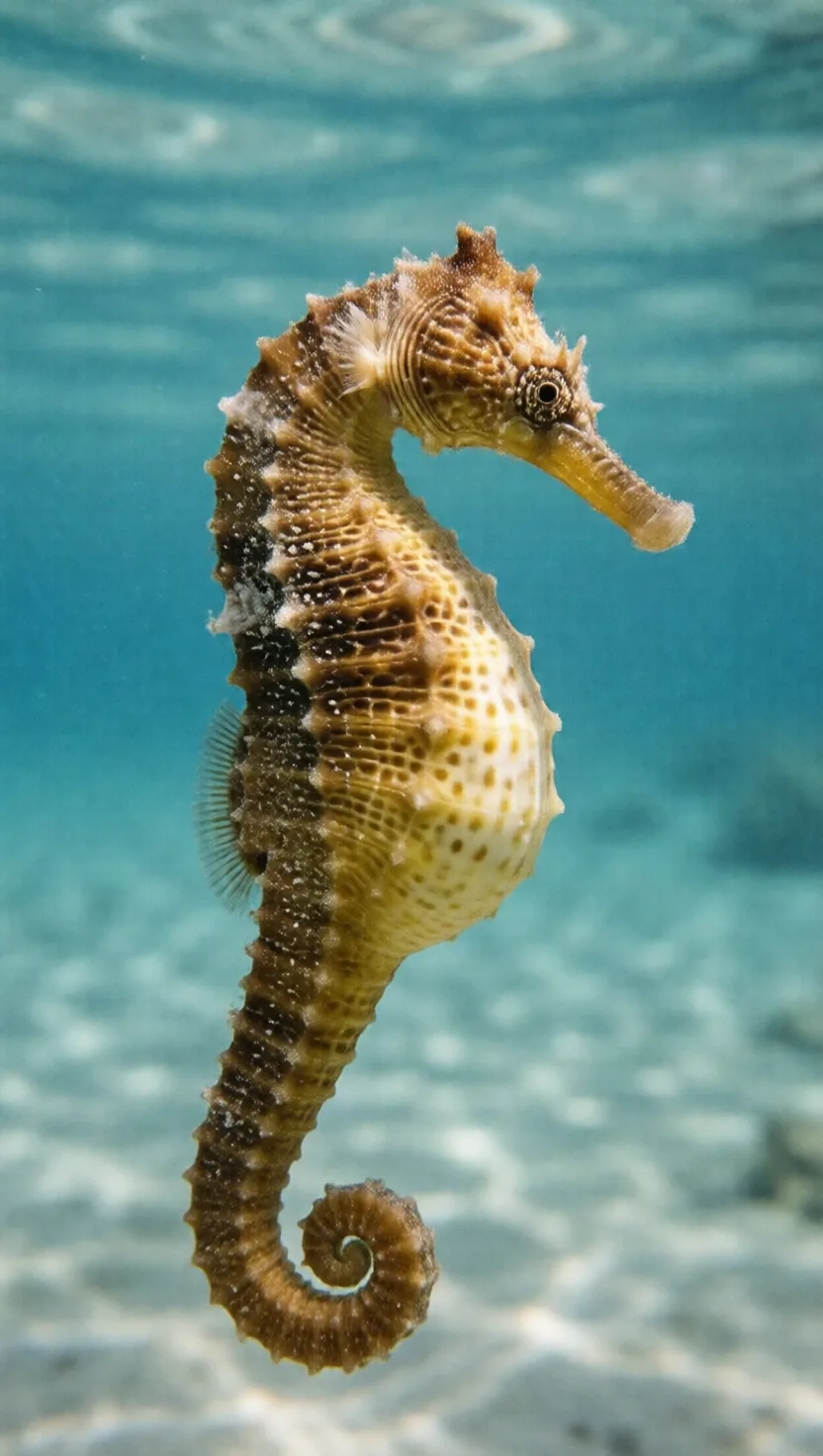
In seahorses the female transfers eggs into a sealed pouch on the male's belly, where he fertilizes and carries them. Late in pregnancy the pouch wall thins and grows a dense web of blood vessels that work like a mammal's placenta, feeding oxygen to the embryos and clearing their waste. A pot-bellied seahorse father can carry up to 1,000 young and gives birth after about a 30-day pregnancy.
It eats 3,000 meals a day with no stomach

It eats 3,000 meals a day with no stomach

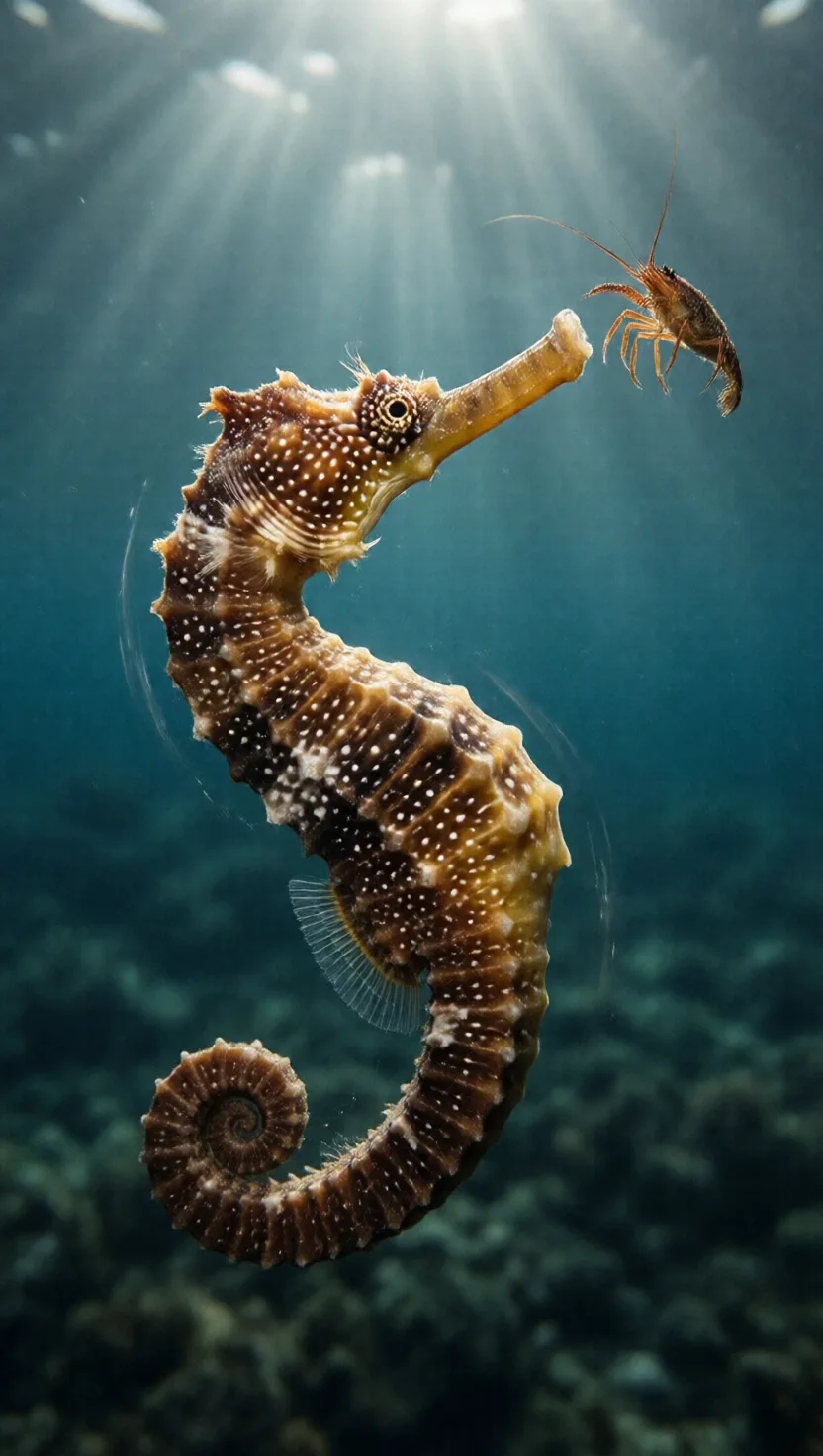
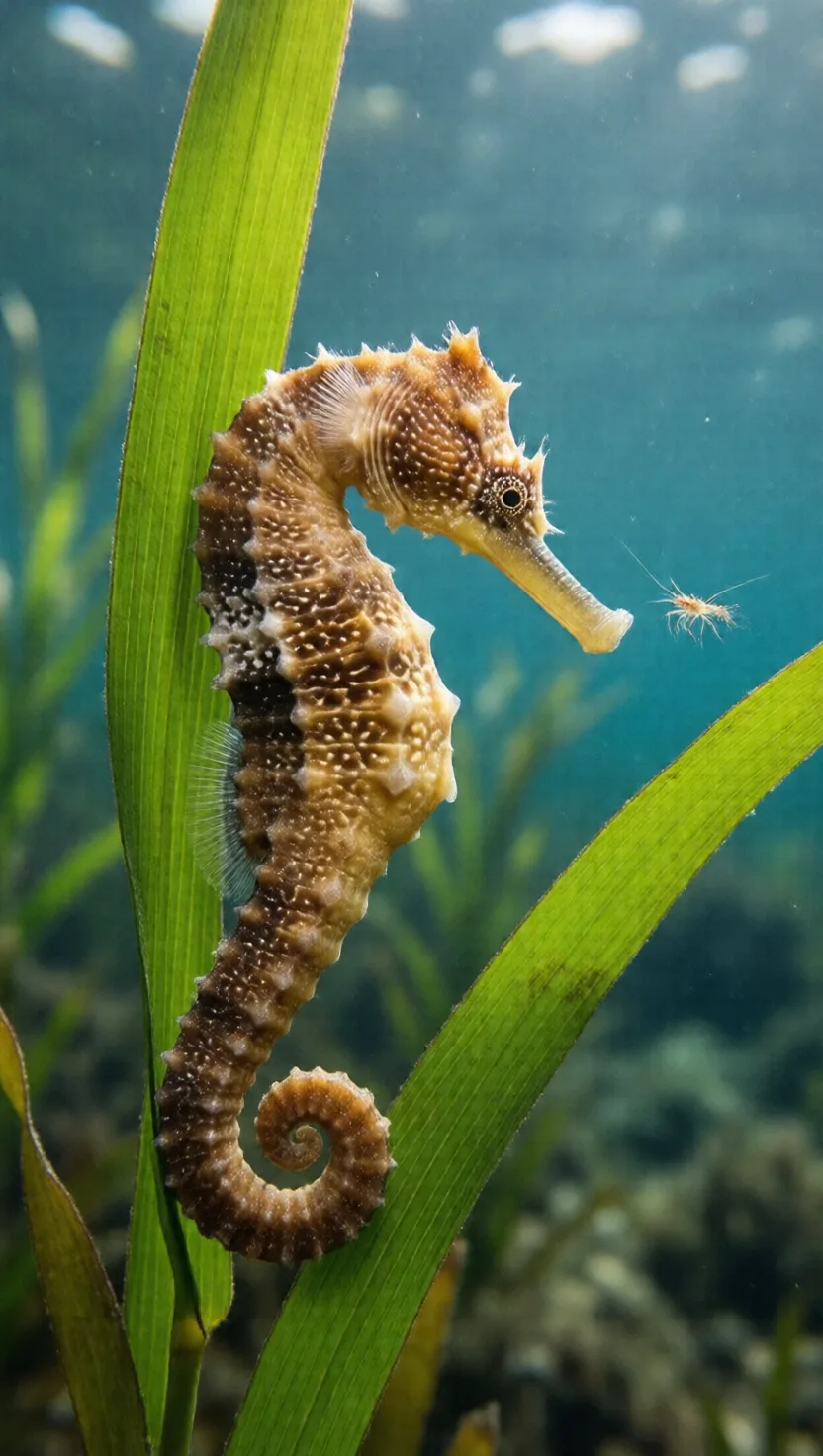
Seahorses have no stomach and no teeth, so food races through their gut almost undigested. To absorb enough nutrients they must graze nearly nonstop, hoovering tiny crustaceans through their tube-like snout from up to 3 centimeters away. A single seahorse can swallow around 3,000 brine-shrimp-sized prey in one day just to stay alive.
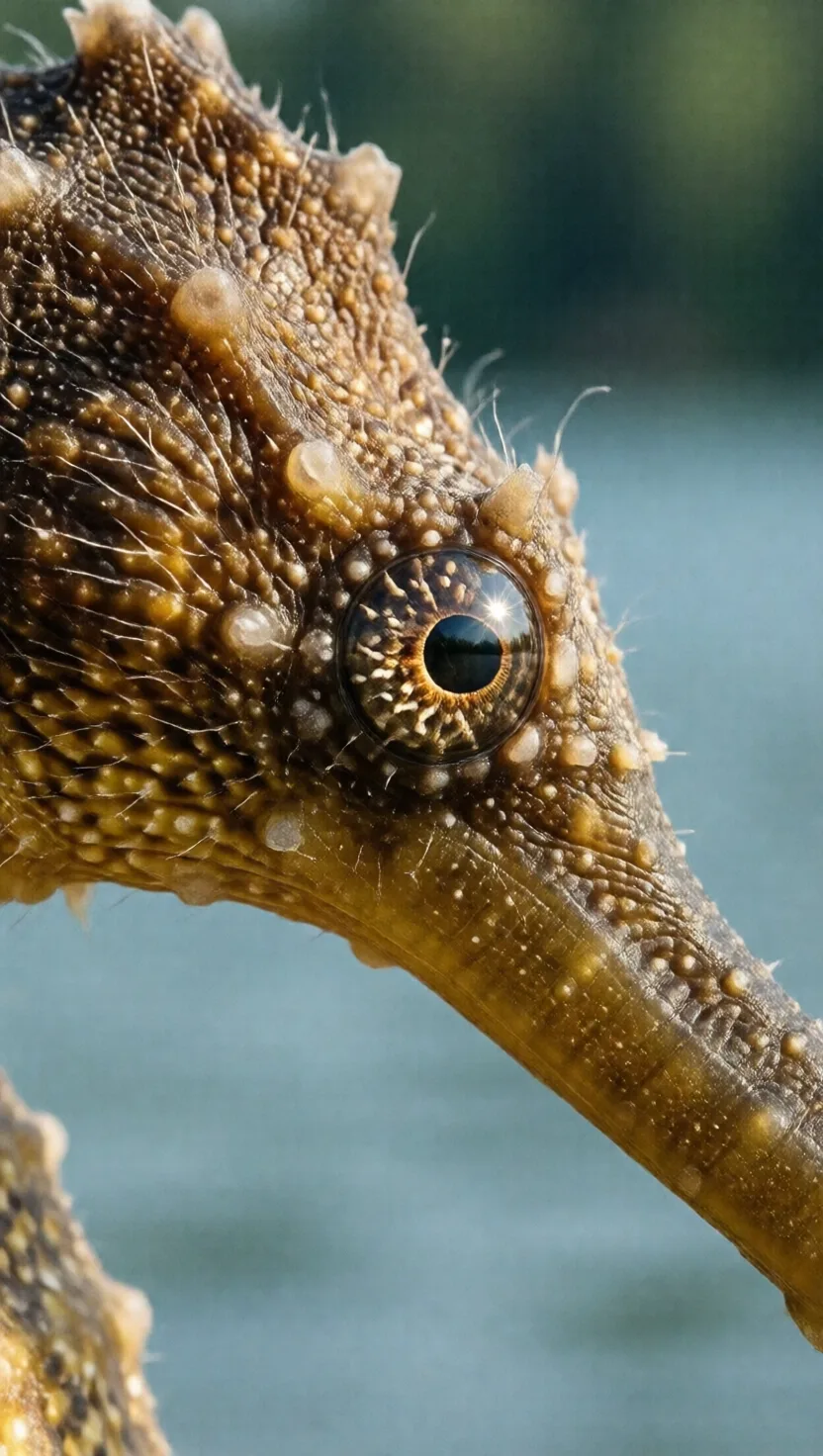
Each eye aims on its own, like a chameleon

Each eye aims on its own, like a chameleon

A seahorse can swivel its two eyes completely independently, exactly like a chameleon. One eye can track prey ahead while the other watches for predators behind, giving it almost 360 degrees of coverage without moving its rigid body. The eyes hold rods and cones, so it also sees in color and can spot objects roughly 4.5 meters, about 15 feet, away.
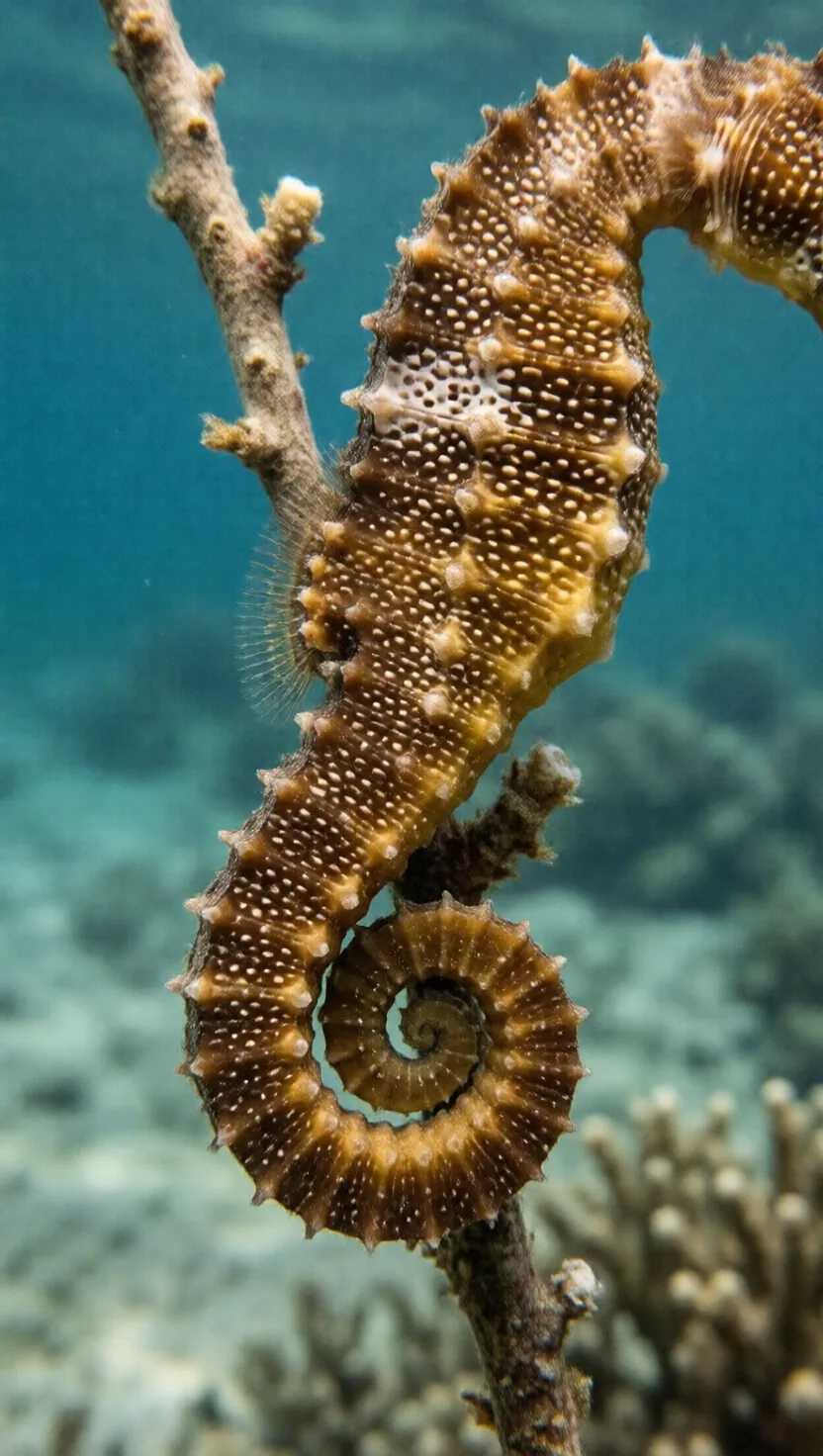
Its gripping tail is square, not round, on purpose

Its gripping tail is square, not round, on purpose

Almost every grasping tail in nature is round, but a seahorse's tail is built from square, bony plate-rings. When researchers 3D-printed square versus round tail models, the square design gripped with more contact area, snapped back to its resting shape, and survived crushing far better, resisting forces a round tail could not. The work was published in the journal Science in 2015.
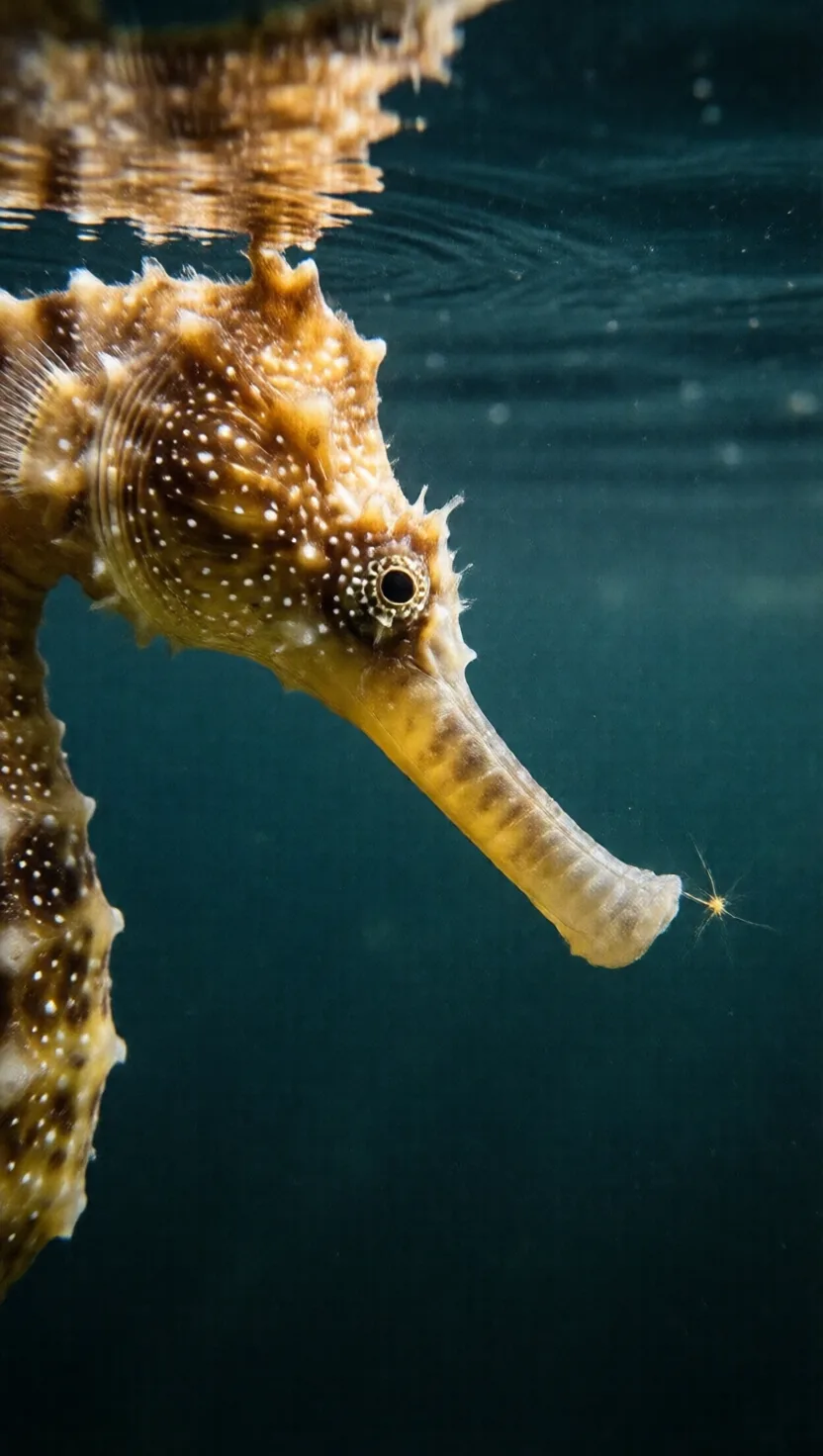
Its snout moves water without making a ripple

Its snout moves water without making a ripple

Copepods flee at the faintest swirl of water, yet seahorses catch them more than 90% of the time. Their narrow snout and tapered head are shaped to barely disturb the water as they ease in, creating almost no wake until the strike. Because the still zone sits right above the snout tip, prey are seized from only about 1 millimeter away, a stealth feeding edge confirmed in Nature Communications in 2013.
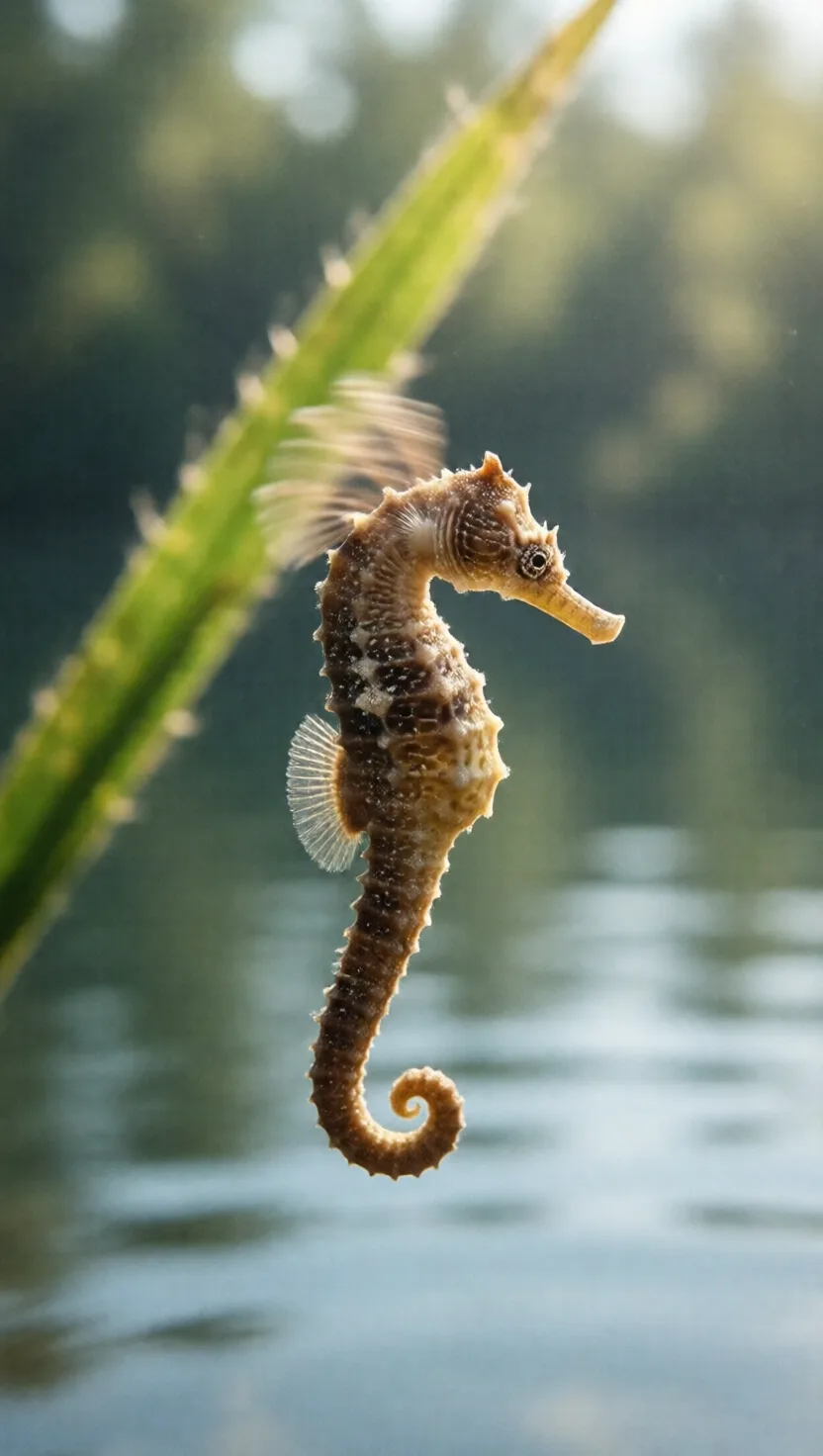
The slowest fish on Earth: 1.5 m an hour

The slowest fish on Earth: 1.5 m an hour

The dwarf seahorse holds the Guinness World Record as the slowest fish ever measured, likely never exceeding 0.016 km/h, about 1.5 meters per hour. Its body is stiff and armored, so it can only inch forward by fluttering a tiny dorsal fin that beats dozens of times a second while the seahorse hangs nearly upright in the water.
He carries 250 eggs in cups under his tail

He carries 250 eggs in cups under his tail

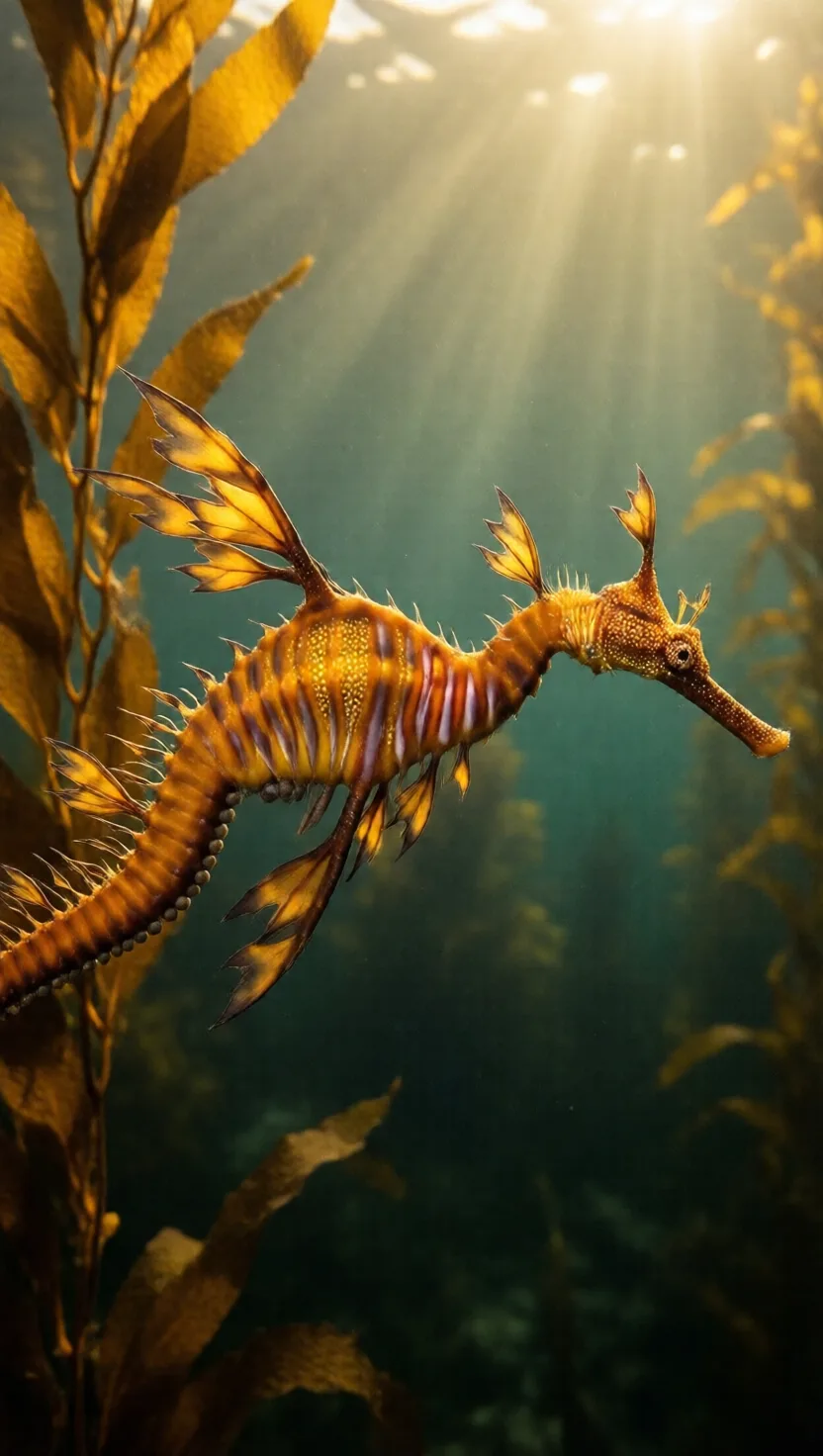
Unlike seahorses, the leafy sea dragon has no brood pouch. Instead the female presses up to 250 bright-pink eggs onto a special brood patch on the underside of the male's tail, where each egg nestles into its own blood-rich cup of skin that pipes in oxygen. The father carries them openly for weeks until tiny sea dragons hatch.
Its strike is a spring-loaded slingshot

Its strike is a spring-loaded slingshot

A seahorse cannot chase prey, so it ambushes. It loads big neck tendons like a drawn slingshot, holding the tension for over 200 milliseconds, then releases, snapping its head and snout upward through more than 20 degrees in under 5 milliseconds to suck in the prey, one of the fastest feeding strikes recorded in fish.
tap →swipe ↑ for depthswipe ↓ to exit