A whisper at the pedal, multiplied all the way to the road.

SRC·88 Source
Same legs, same push — a different bicycle

Same legs, same push — a different bicycle

Halfway up the long hill, Mara plays a private game: she gives the pedal one tiny extra press, a breath of force, and feels for the answer at the road. In this gear the bike barely acknowledges her. Two clicks, the same whisper of a press — and now the bike lunges. Her legs haven't changed. What decides how much of her push survives the trip to the wheel?
Follow the wiggle, one stage at a time

Follow the wiggle, one stage at a time

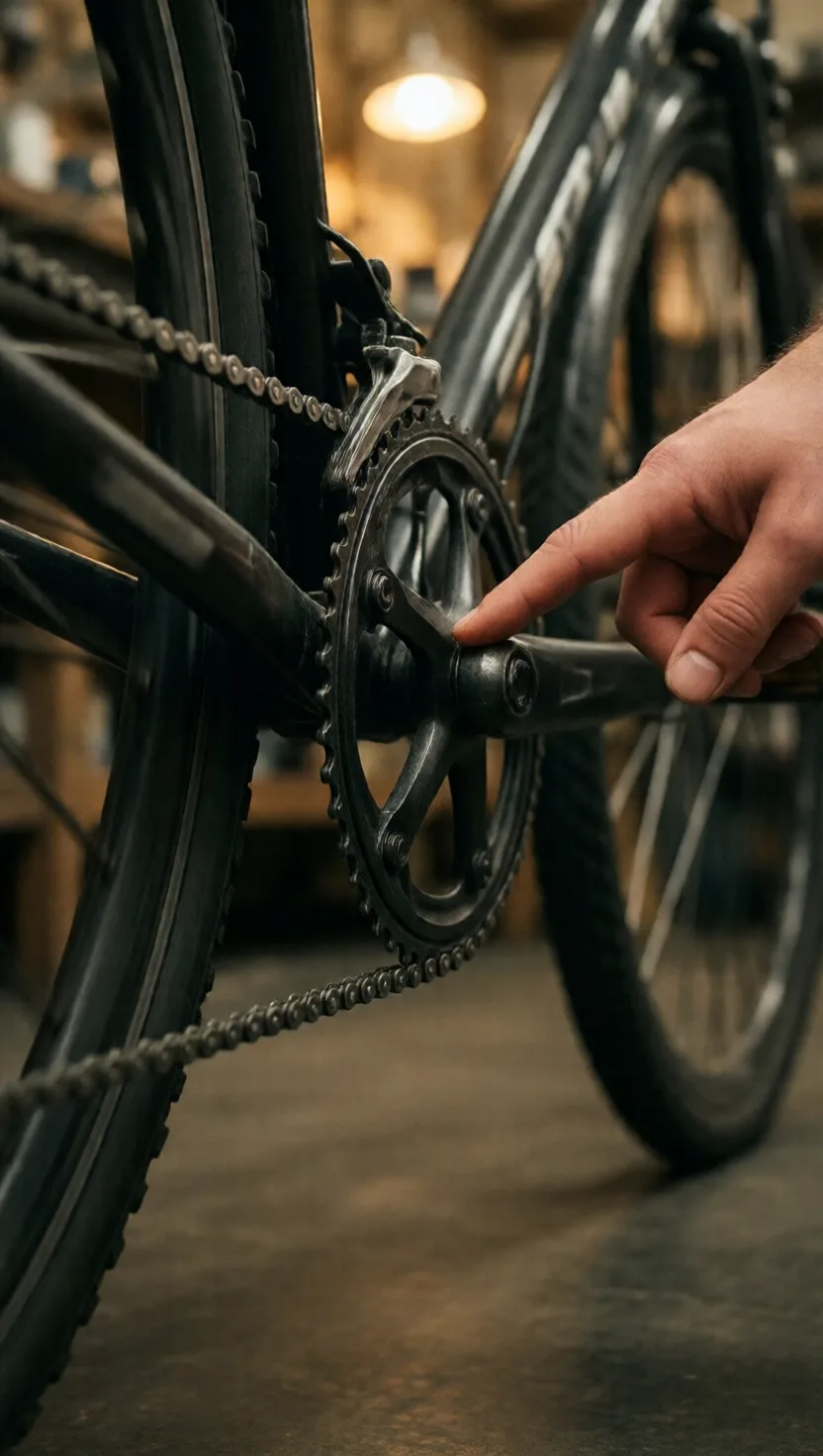
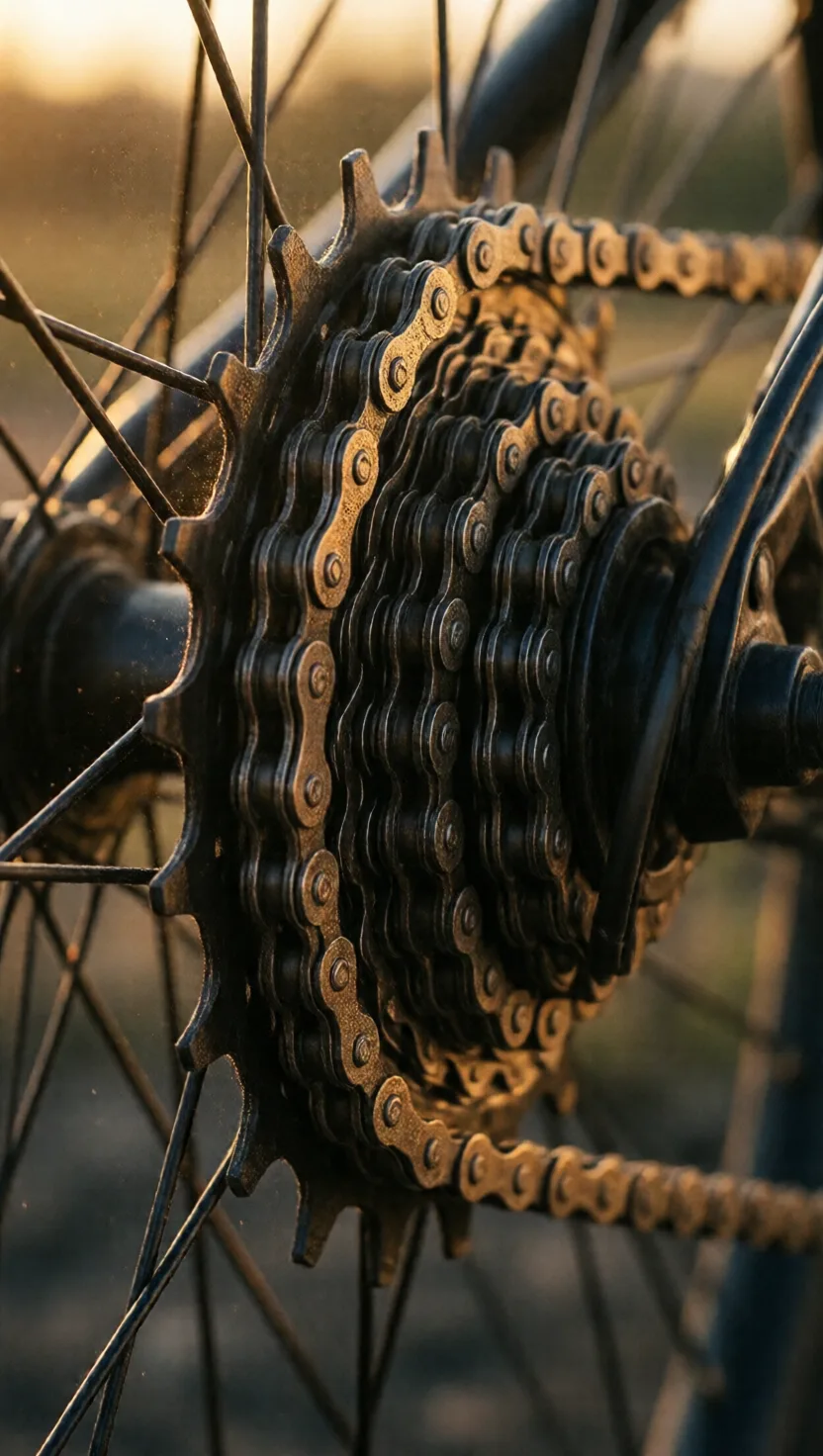
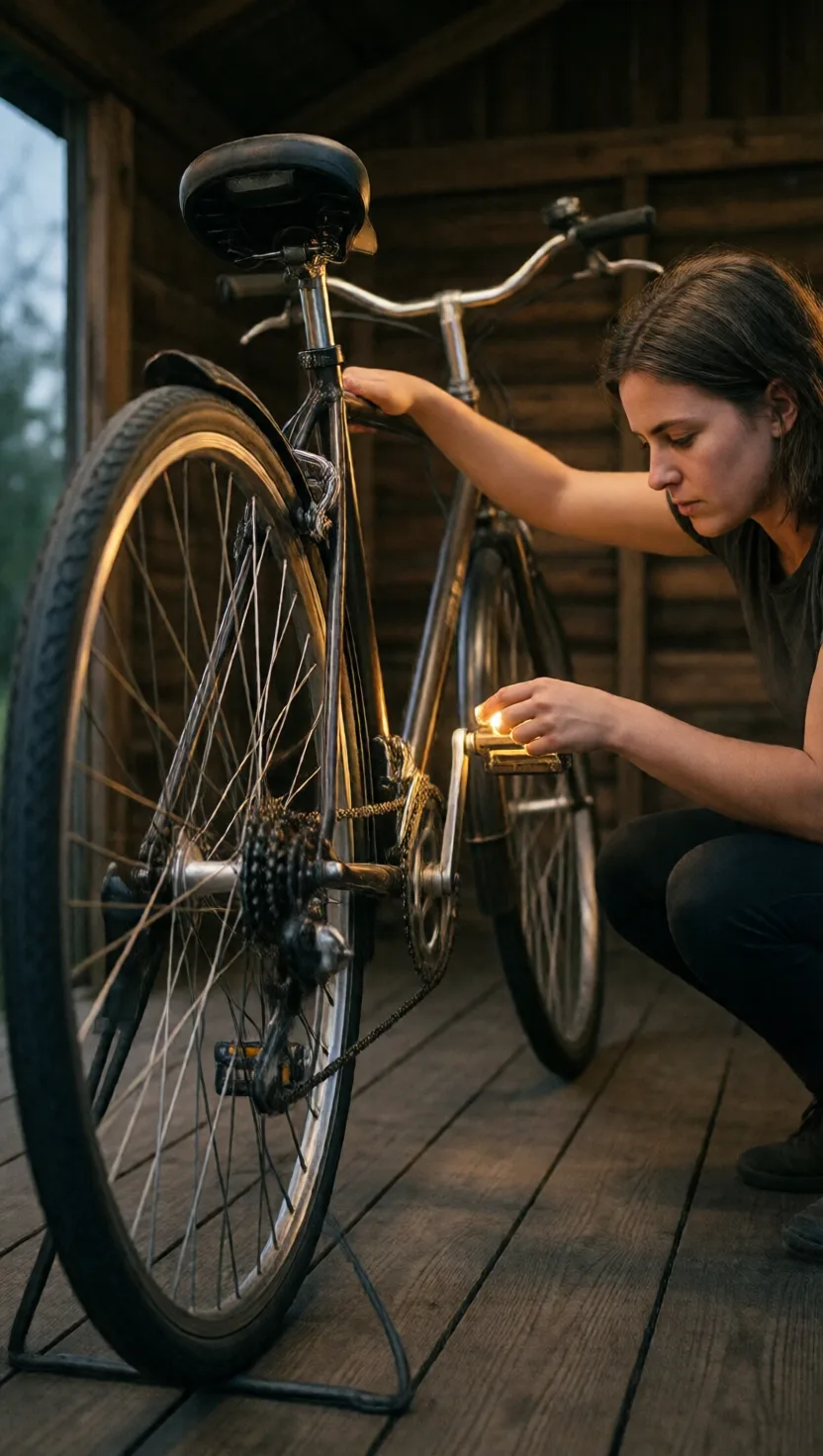
That evening, bike upside down in the shed, she traces the path her push actually takes. Pedal turns crank, crank turns chainring, chainring drags the chain, the chain turns the little rear cog, the cog turns the wheel. Her press never touches the road directly — it is handed down a pipeline, and each stage passes it on at its own exchange rate
The stages don't add — they multiply

The stages don't add — they multiply

She tests it with her hands: nudge the crank a little, watch how far the rim swings. If one stage doubles a wiggle and the next stage triples it, the rim moves six times the nudge — not five. Each stage scales whatever it receives, so the whole path scales by the product of its stages. That explains the strange gears — and hints at something darker…
One slack stage starves the whole chain

One slack stage starves the whole chain

One rainy week the chain runs loose and the worn rear cog slips: that stage passes on almost nothing of what it receives. And a product with a near-zero factor is near zero — she can pedal furiously and the road feels a ghost. It doesn't matter how good every other stage is. Multiplication has no mercy. The opposite arrangement is just as dramatic…
When every stage amplifies

When every stage amplifies

In her hardest gear every stage scales the wiggle upward, and the product turns a breath at the pedal into a lurch at the rim — thrilling, and twitchy as a startled cat. So Mara stops treating the bike as one machine. To know what the road will feel of her foot, she multiplies the little exchange rates along the path, stage by stage. That habit has a name…
Sensitivity is a product: the chain rule

Sensitivity is a product: the chain rule

(fu)(x)=f(u(x))u(x)(f \circ u)'(x) = f'(u(x)) \cdot u'(x)
When change flows through a pipeline, each stage has its own local rate, and the end-to-end sensitivity is those rates multiplied. That is the chain rule — the equation reads: the whole path's rate is stage two's slope times stage one's. Machines that learn in layers trace every nudge exactly this way, multiplying local slopes from the mistake back to each knob.
🌱 A hundred stages of 0.9 — or of 1.1?

🌱 A hundred stages of 0.9 — or of 1.1?

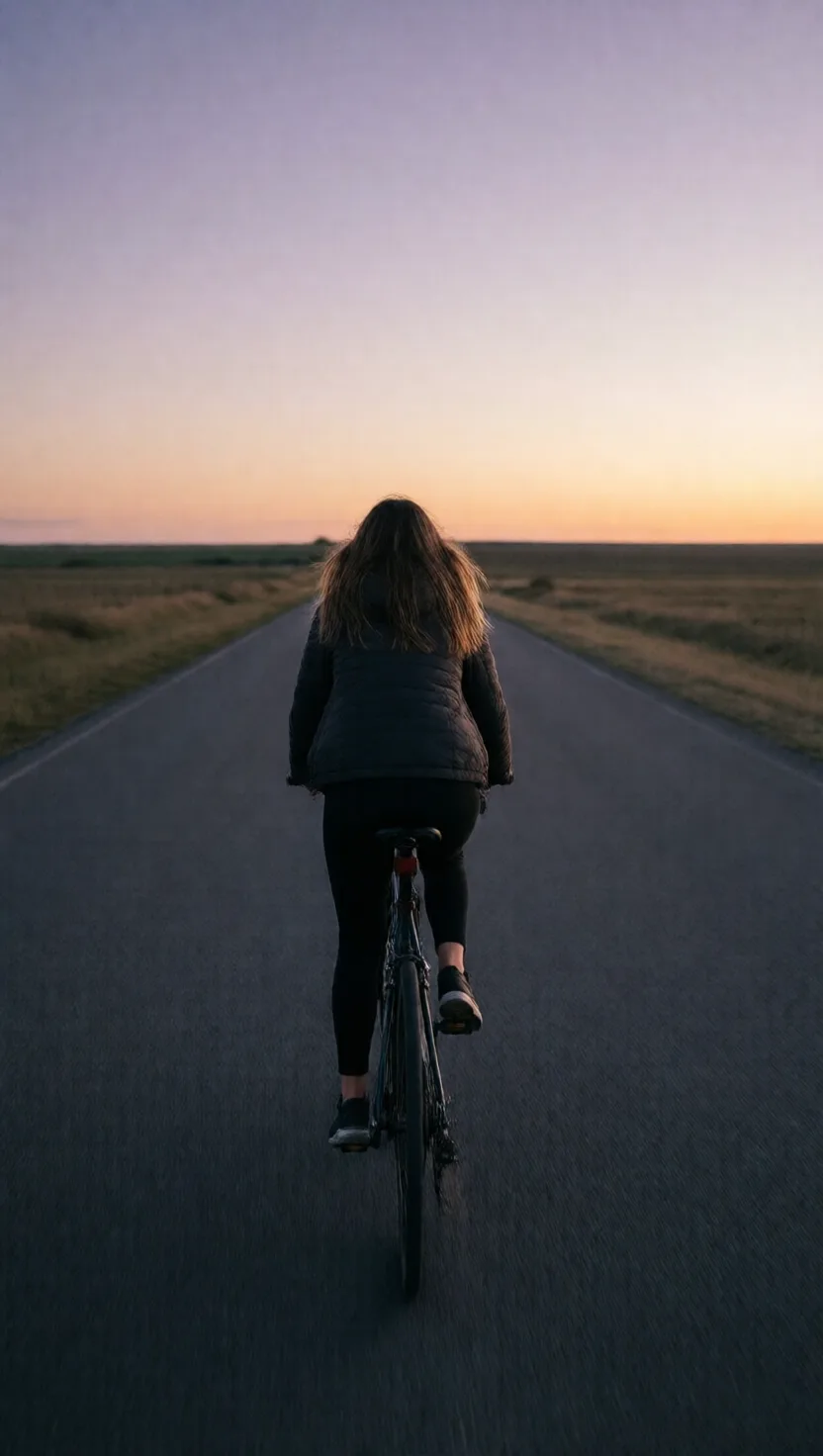
Rolling home in the dusk, Mara wonders about pipelines far longer than a bicycle. Pass a whisper through a hundred stages that each scale it by 0.9, and almost nothing arrives; make each stage 1.1, and it lands as an avalanche. How does anything built from many stages hand a whisper down intact — and what would every stage have to hold close to?
tap →swipe ↑ for depthswipe ↓ to exit