The guild hall that turns raw tar into perfume, floor by floor.

SRC·113 Source
Raw tar goes in at street level; perfume comes out on top

Raw tar goes in at street level; perfume comes out on top

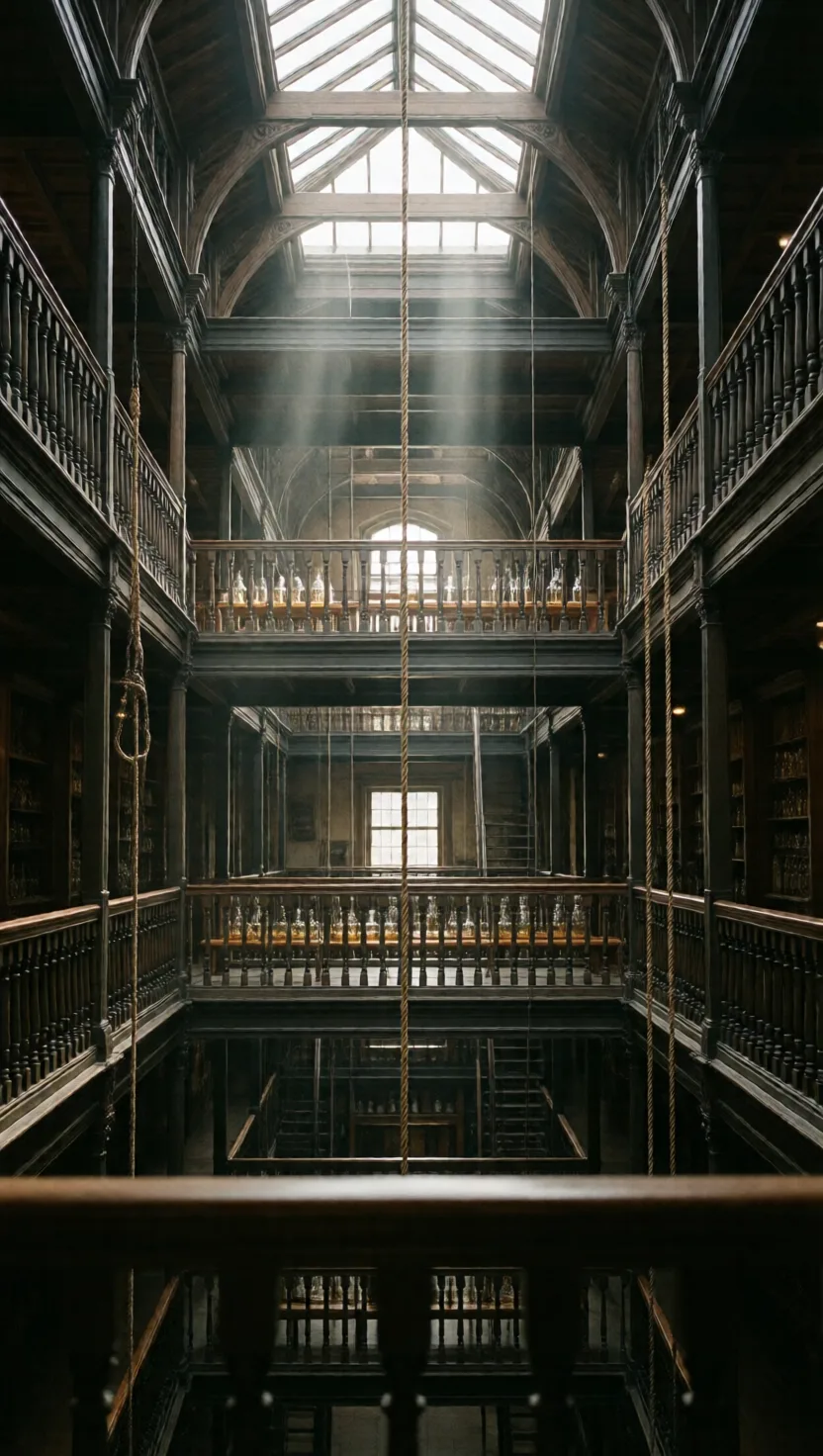
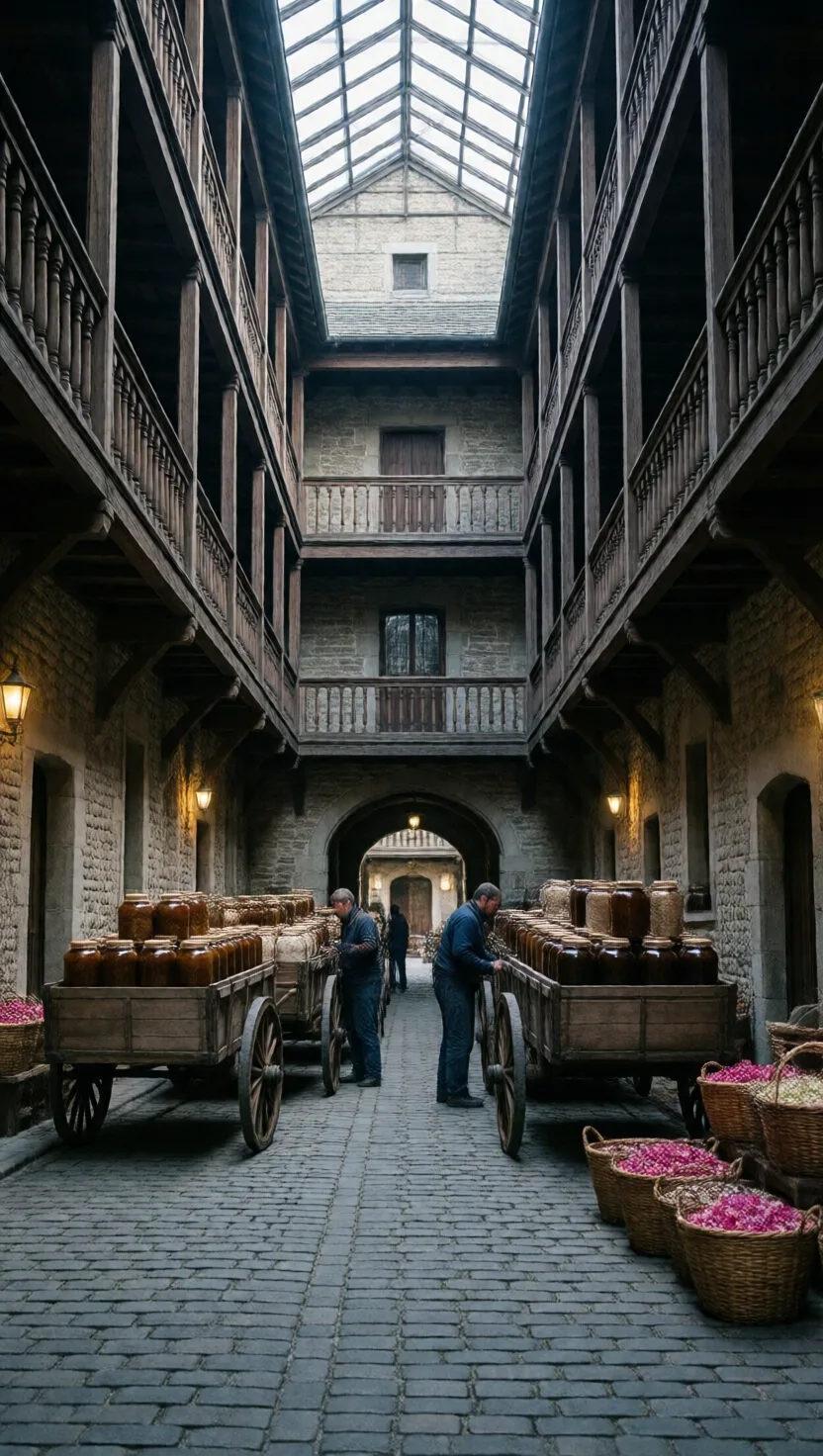
At dawn, carts unload raw goods at the guild hall's street level: birch tar, crude resins, petals still wet from the field. Some of it smells like a stable. By evening, at the top gallery, a finished perfume leaves the hall — and nothing in it smells like what went in. Between street and sky stand seven working galleries. What happens on the climb?
Every ingredient gets a vial, and the bench keeps their order

Every ingredient gets a vial, and the bench keeps their order

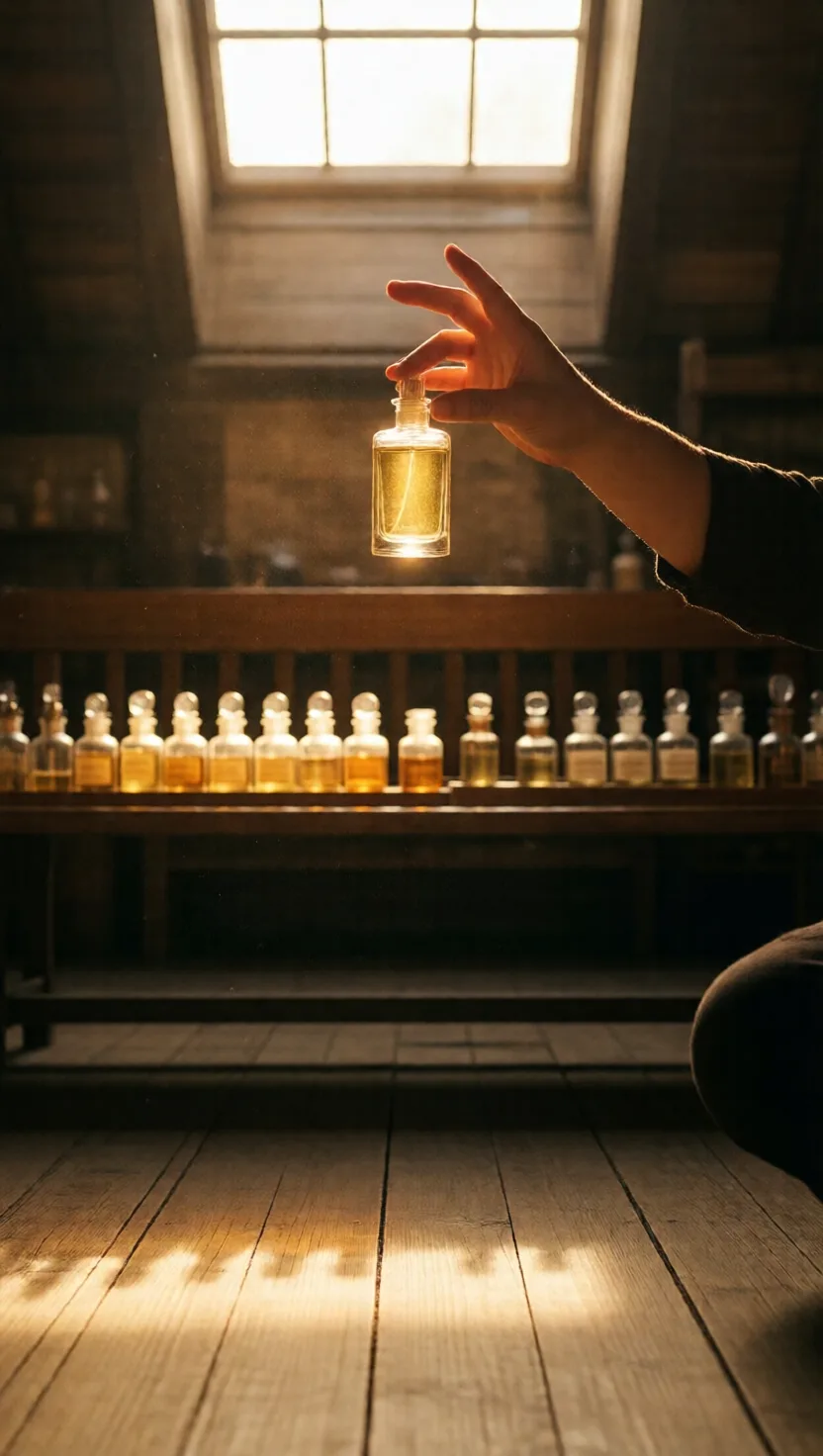
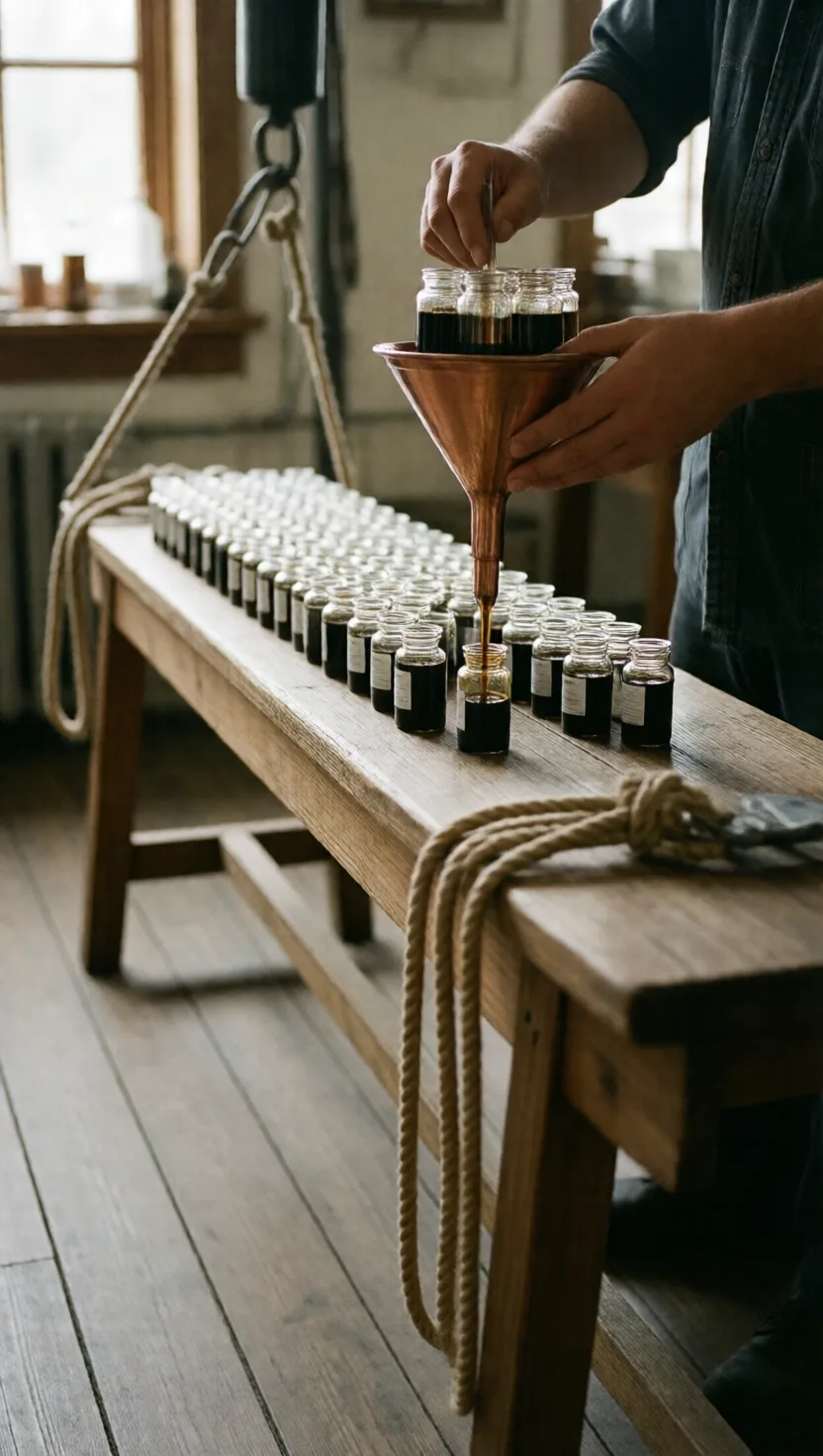
First, the decanting. Each raw material is drawn into its own small open vial — one vial per ingredient — and set on one long bench in exactly the order it arrived. Nothing is blended yet. Each vial knows only itself: this one is tar, this one is rose, this one is smoke. Then the hoist ropes creak, and the whole bench rises to the first gallery, where the ritual begins…
First rule of the gallery: smell everything before touching

First rule of the gallery: smell everything before touching

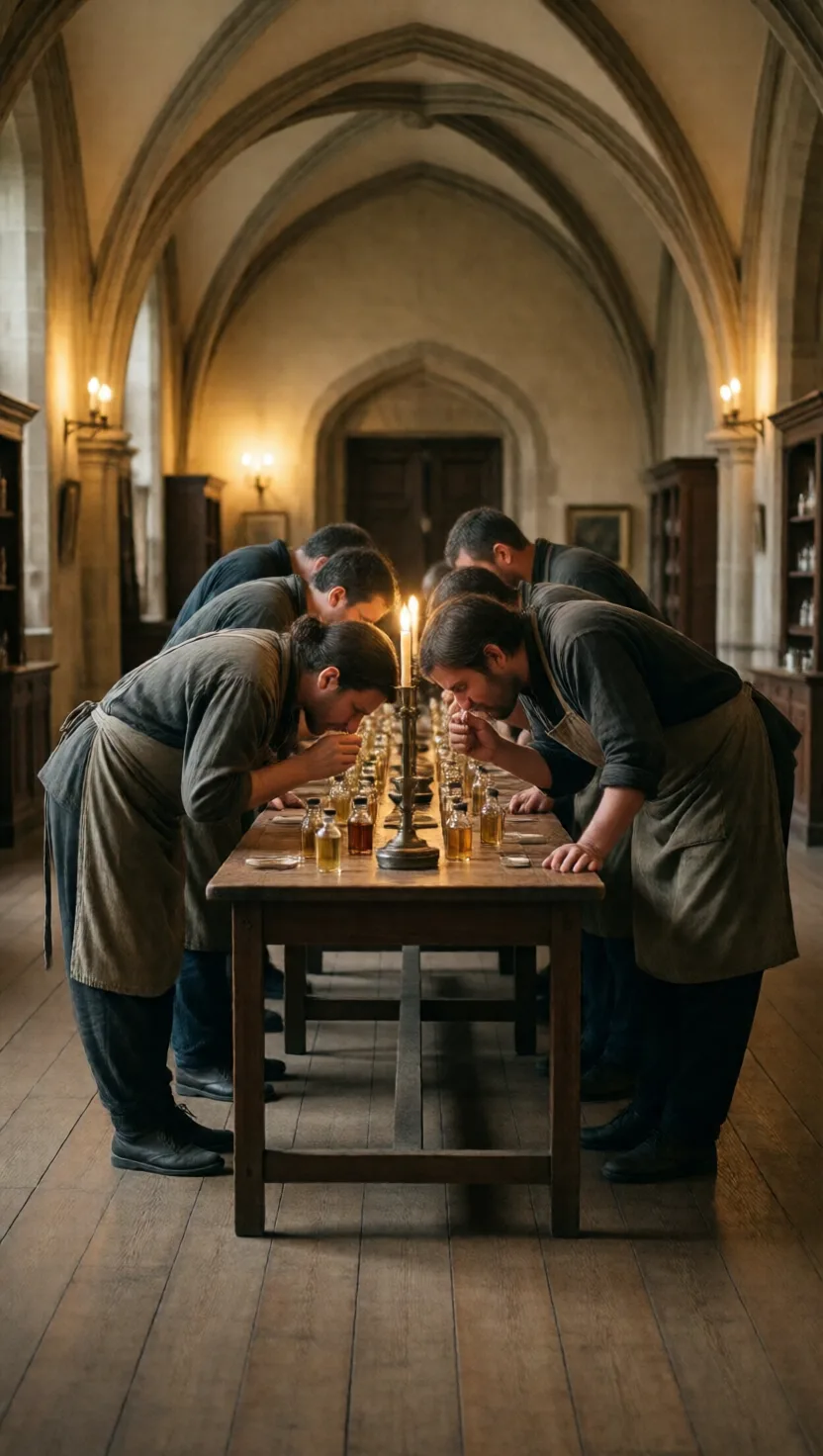
On each gallery, one perfumer stands over each vial — hers and no other. Before touching it, the rule: lean down the bench and re-smell every open vial. Not equally — what her own vial lacks decides which neighbors pull hard. The tar's keeper lingers on the rose; the rose's keeper, on the smoke. They say an old master's bench ritual became this law. Then everyone turns away at once…
Second rule: work your own vial alone — and only ever add

Second rule: work your own vial alone — and only ever add

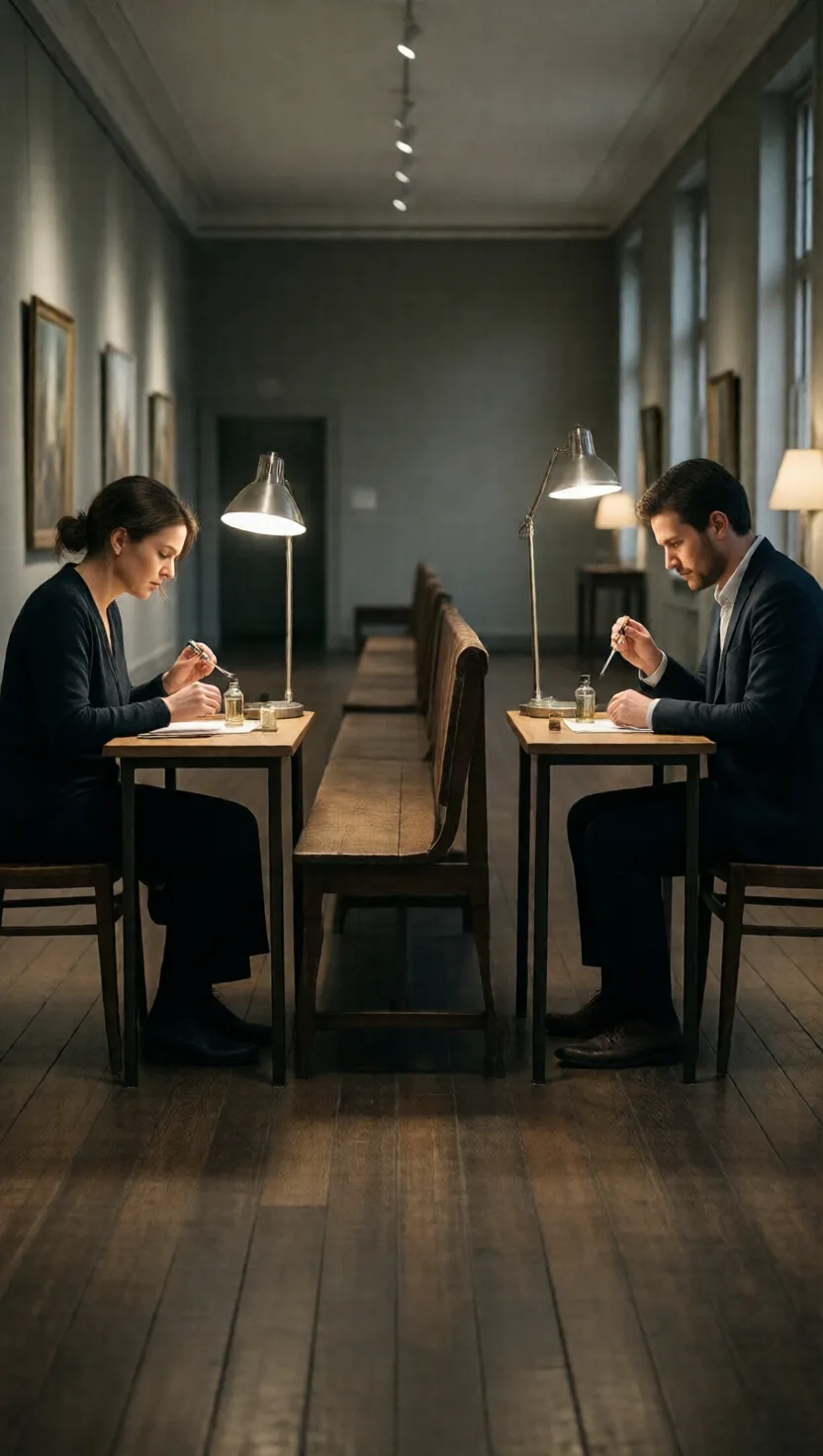
Phase two is silent. Each perfumer retreats to a side desk with only her own vial and works it privately — a drop of this, a grain of that — never touching a neighbor's glass. Strangest clause of all: no vial is ever poured out. A floor may only add to what a vial already holds, so nothing learned below is ever erased. Smell together, refine alone, add — and the ropes creak again…
Low floors pair notes; high floors compose whole accords

Low floors pair notes; high floors compose whole accords

Climb with the bench and the work changes. On the second gallery the moves are small pairings — the citrus learns it sits beside tar. By the fifth, whole phrases form: a smoke-and-rose accord that no single vial contained. Each floor works on what the floors below already composed, so the questions grow richer with height. Near the skylight, the vials are no longer ingredients at all…
Embeddings, attention, depth — the tower is a transformer

Embeddings, attention, depth — the tower is a transformer

x    x+Attn(x)x    x+FFN(x)x \;\leftarrow\; x + \mathrm{Attn}(x) \qquad x \;\leftarrow\; x + \mathrm{FFN}(x)
A language machine reads a sentence the way this hall works. Words enter as vials of raw meaning (embeddings). Every floor repeats one rhythm — smell everything (attention), then refine your own vial alone (the feed-forward step) — and stacked floors turn raw words into finished sense. Assembled, the tower is a transformer. Below: one floor as the machine writes it — two steps, each only adding. At midnight, the masters count the cost…
🌱 Every nose smells every vial — the tower's quiet tax

🌱 Every nose smells every vial — the tower's quiet tax

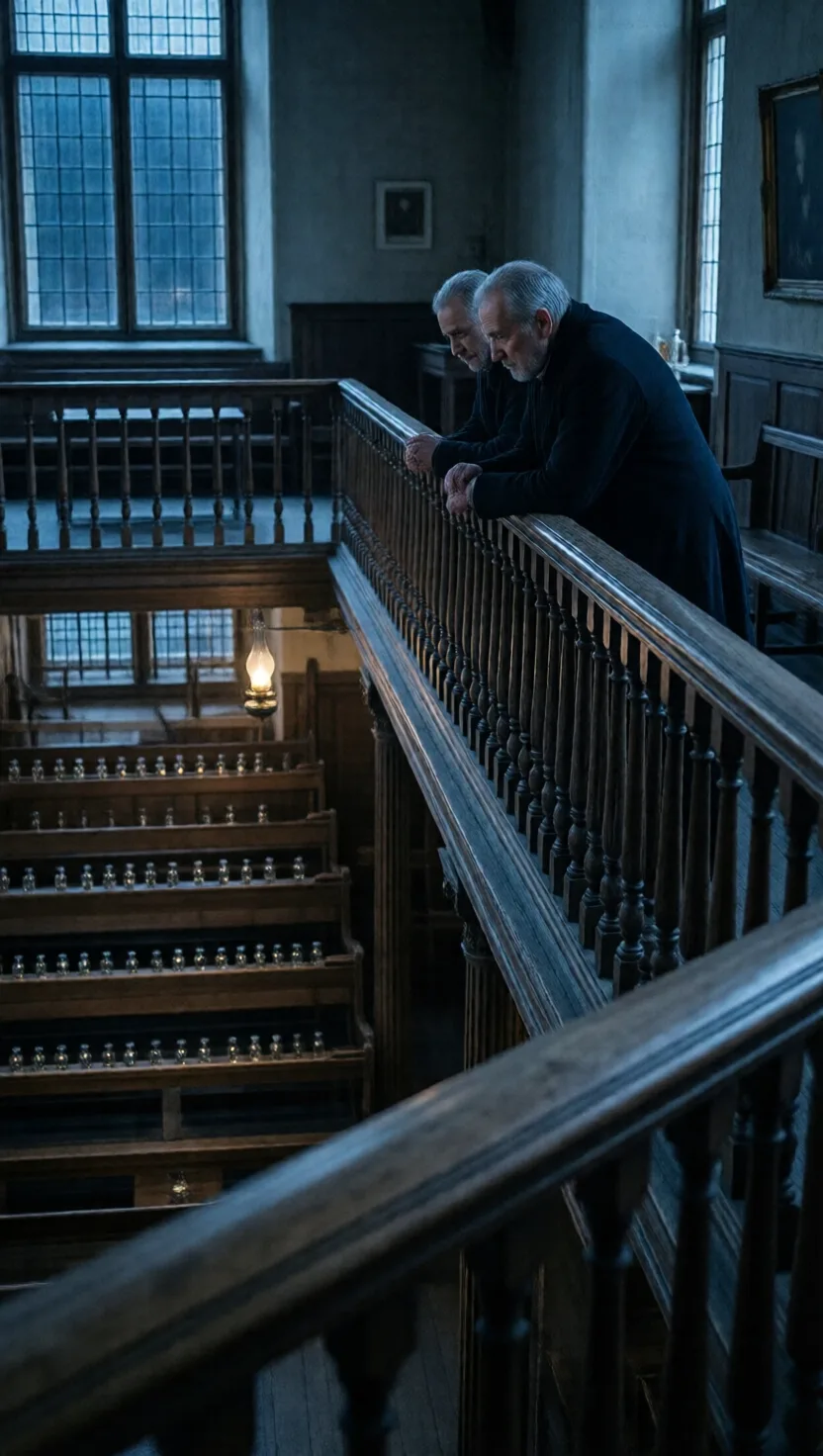
At midnight the masters lean on the top railing and count the day. The hall's gift is that no one ever waits — every perfumer on a floor works at the same time. Its tax: on every floor, every nose smells every vial, so a bench twice as long costs four times the smelling. 🌱 Could a gallery learn which vials it may safely skip — and still catch the one far-off note that changes everything?
tap →swipe ↑ for depthswipe ↓ to exit