Eight things wind and water were made to do

DC·71 Deep Cuts
The best waterwheels work by weight, not push

The best waterwheels work by weight, not push

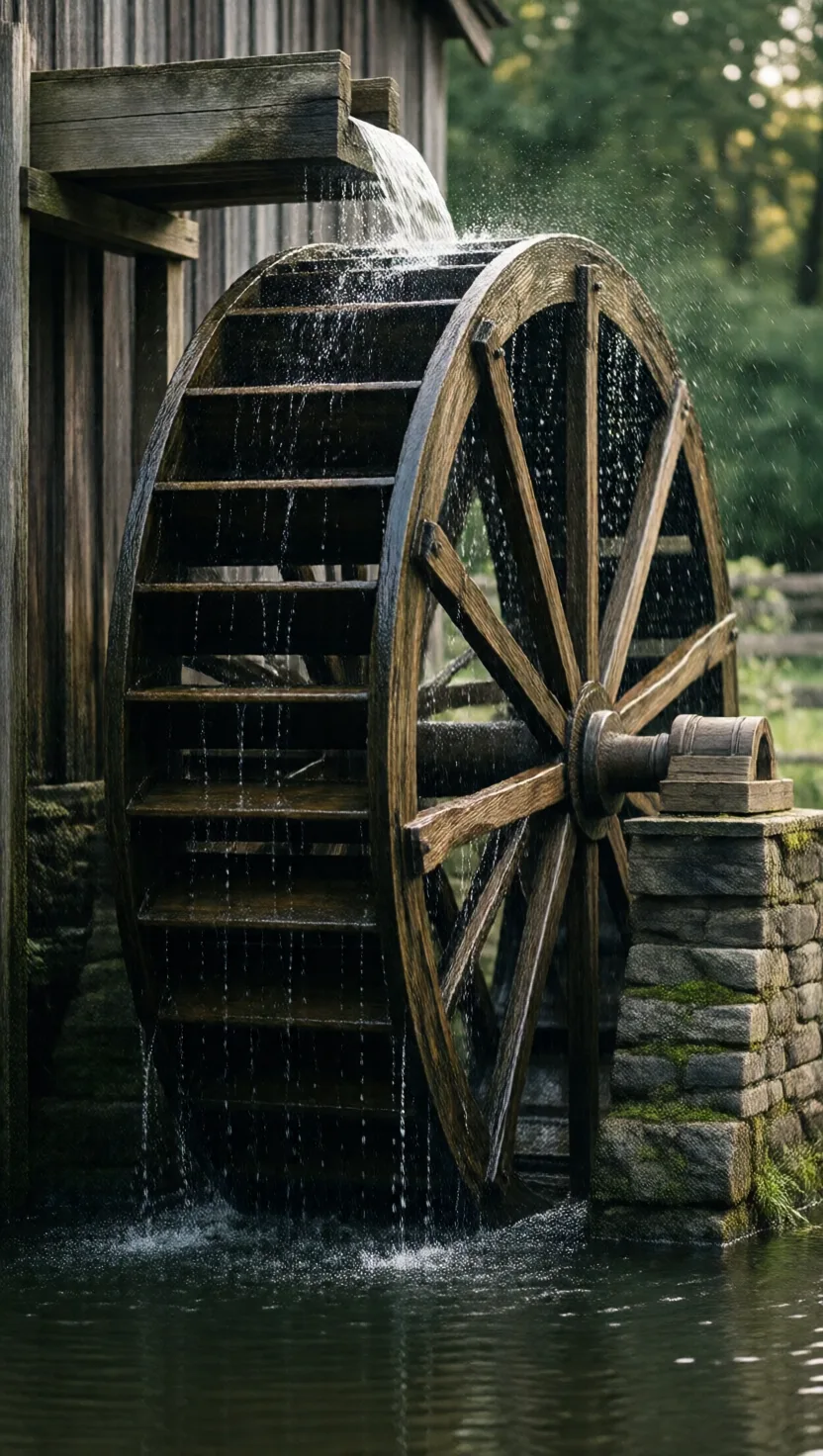
Not all waterwheels are equal. An undershot wheel, paddles dragged by the current at the bottom, only ever captures about a fifth to a third of the water's energy. An overshot wheel, fed from the top so each bucket fills and the sheer weight of the water turns it, reaches roughly two thirds or more. Pouring the water onto the top instead of shoving the bottom can more than double the power.
A spinning screw can carry water uphill

A spinning screw can carry water uphill

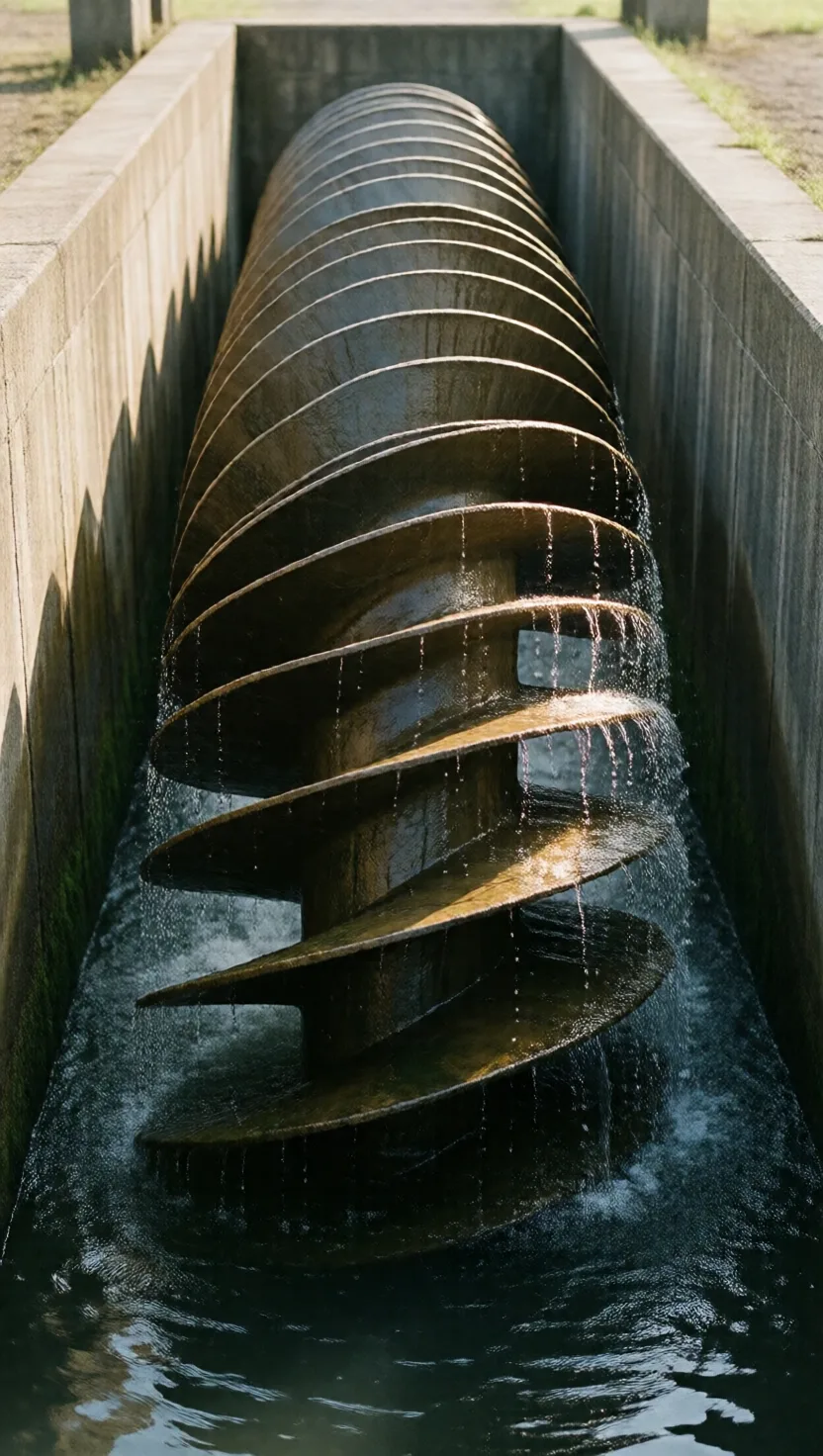
Tilt a giant screw inside a tube with its foot in a river and turn it, and water seems to climb against gravity. Each turn traps a pocket of water between the spiral threads and walks it up the slope to spill out the top. The design is over two thousand years old, named for Archimedes, yet it still lifts water in irrigation and sewage works, and run backwards it now spins to make electricity.
Dutch windmills mostly pumped water, not flour

Dutch windmills mostly pumped water, not flour

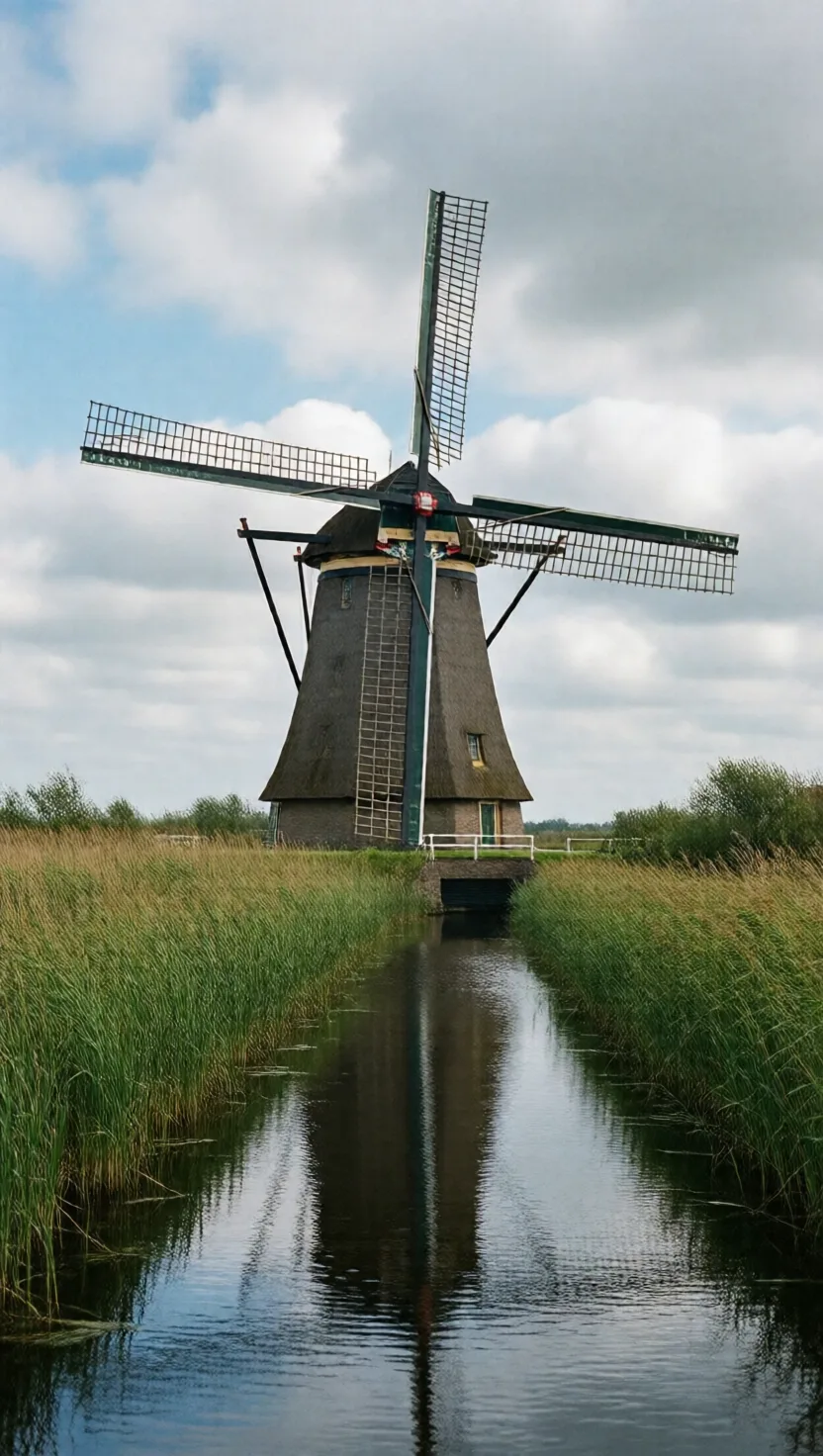
The famous Dutch windmills were less about grinding grain and more about staying dry. About a third of the Netherlands sits below sea level, so windmills spun a scoop wheel that lifted water out of the diked fields, called polders, and dumped it toward the sea. Where the climb was steep, mills worked in a gang, each lifting the water a little higher up a staircase of canals.
A small wheel keeps the windmill facing the wind

A small wheel keeps the windmill facing the wind

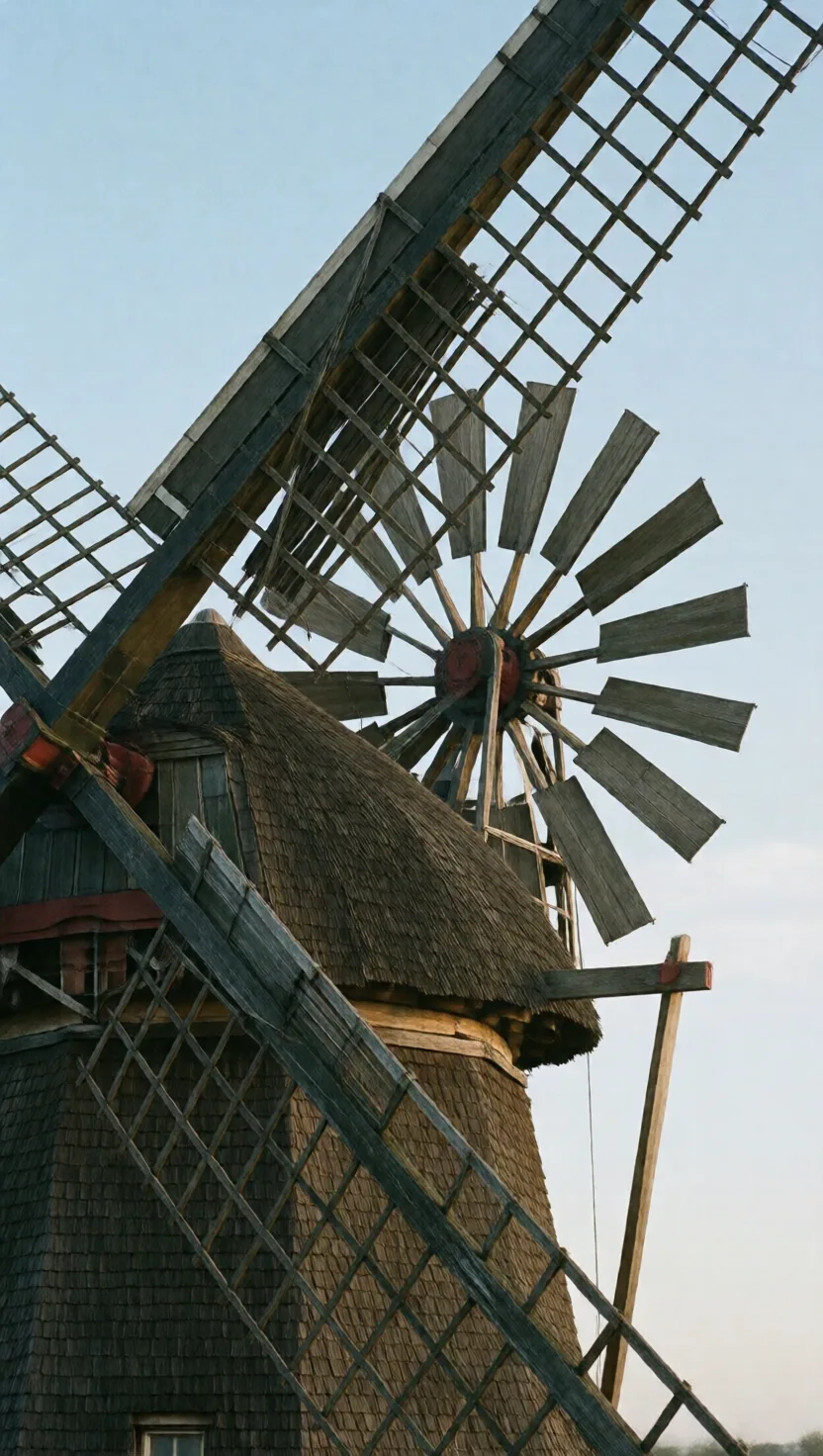
A windmill only works when its sails point into the wind, and for centuries millers had to heave the whole cap around by hand with a long pole. In 1745 Edmund Lee added a fantail, a little second windmill mounted crosswise at the back. When the wind shifts it strikes the fantail, which turns gears that swing the cap until the sails face the wind again, then quietly stops itself.
Millstones grind grain without ever touching

Millstones grind grain without ever touching

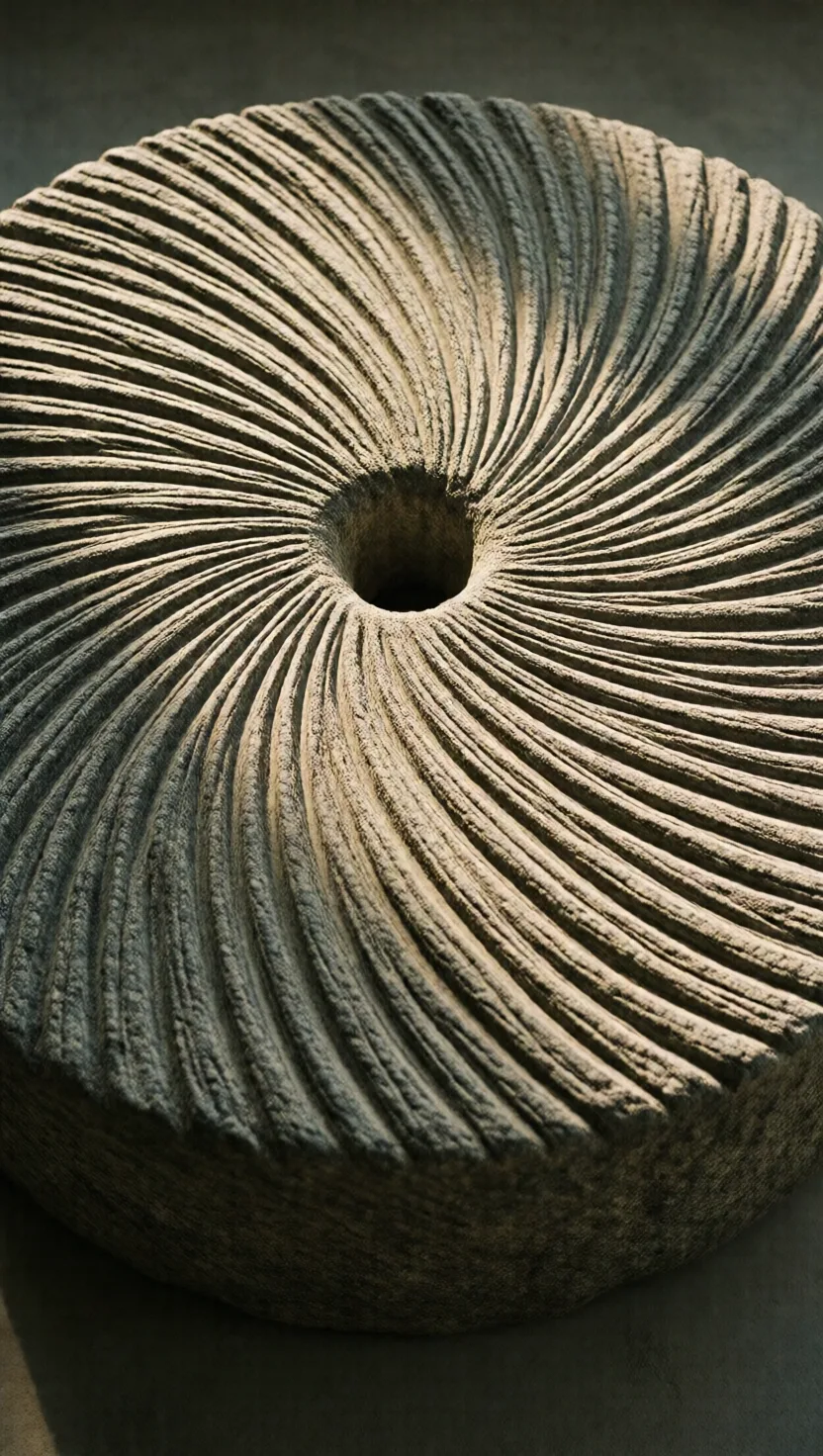
In a mill only the upper runner stone turns; the bedstone beneath stays still, and the two never meet. They ride a hair apart, a gap no wider than a sheet of paper, set finer or coarser for the flour wanted. Each stone is carved with grooves called the dressing, and as they cross over each other they work like scissors, shearing the grain and sweeping the meal outward to the rim.
The first windmills spun flat like a turnstile

The first windmills spun flat like a turnstile

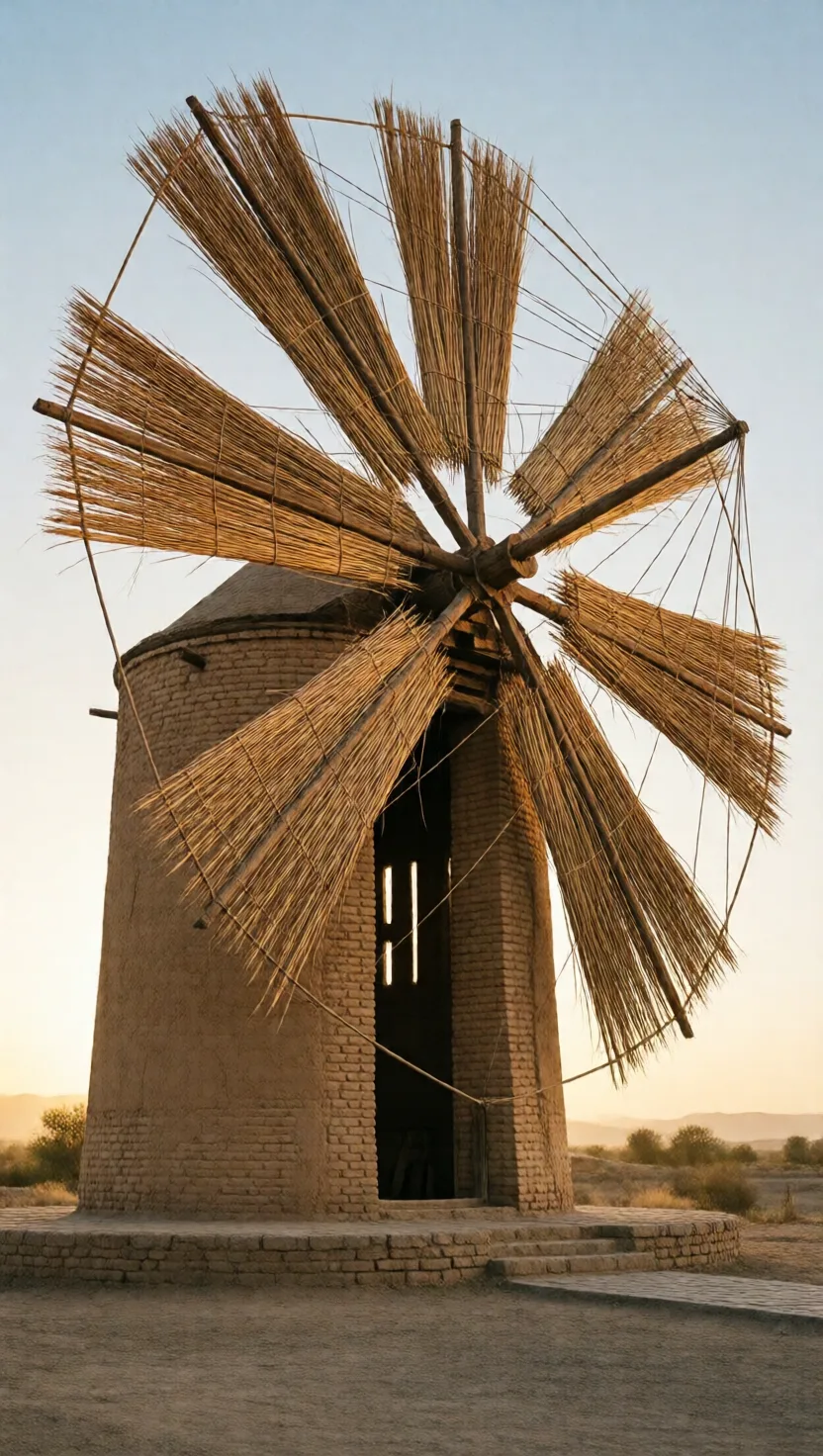
Long before the upright Dutch sails, the earliest known windmills turned on a vertical axis, like a revolving door. Built in the windy Sistan region of Persia around the ninth century, they had sails of reed matting set around a central shaft and were walled in, with an opening that funneled the wind onto one side only so the returning sails would not fight back. They ground grain on the famous hundred-and-twenty-day wind.
Some mills ran on the pull of the Moon

Some mills ran on the pull of the Moon

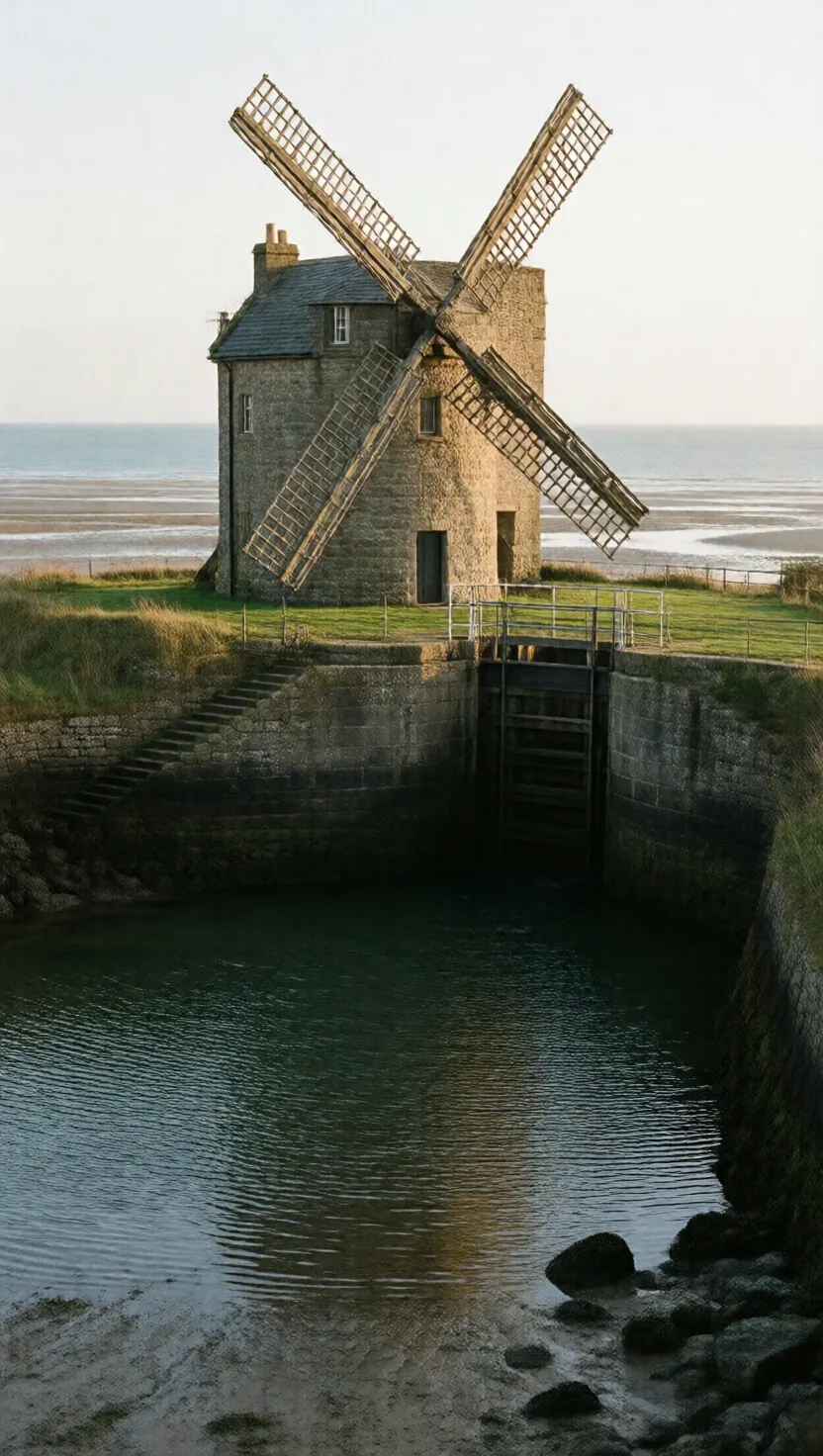
A tide mill borrows its power from the sea's rise and fall. As the tide floods in, water pushes through a one-way gate into a holding pond; at high tide the gate swings shut, trapping it. When the tide ebbs and the sea outside drops, the penned water is let out through a wheel and turns it. Because the tides answer the Moon, the mill could run roughly twice a day, a little later each time.
A windmill could burn itself down by spinning too fast

A windmill could burn itself down by spinning too fast

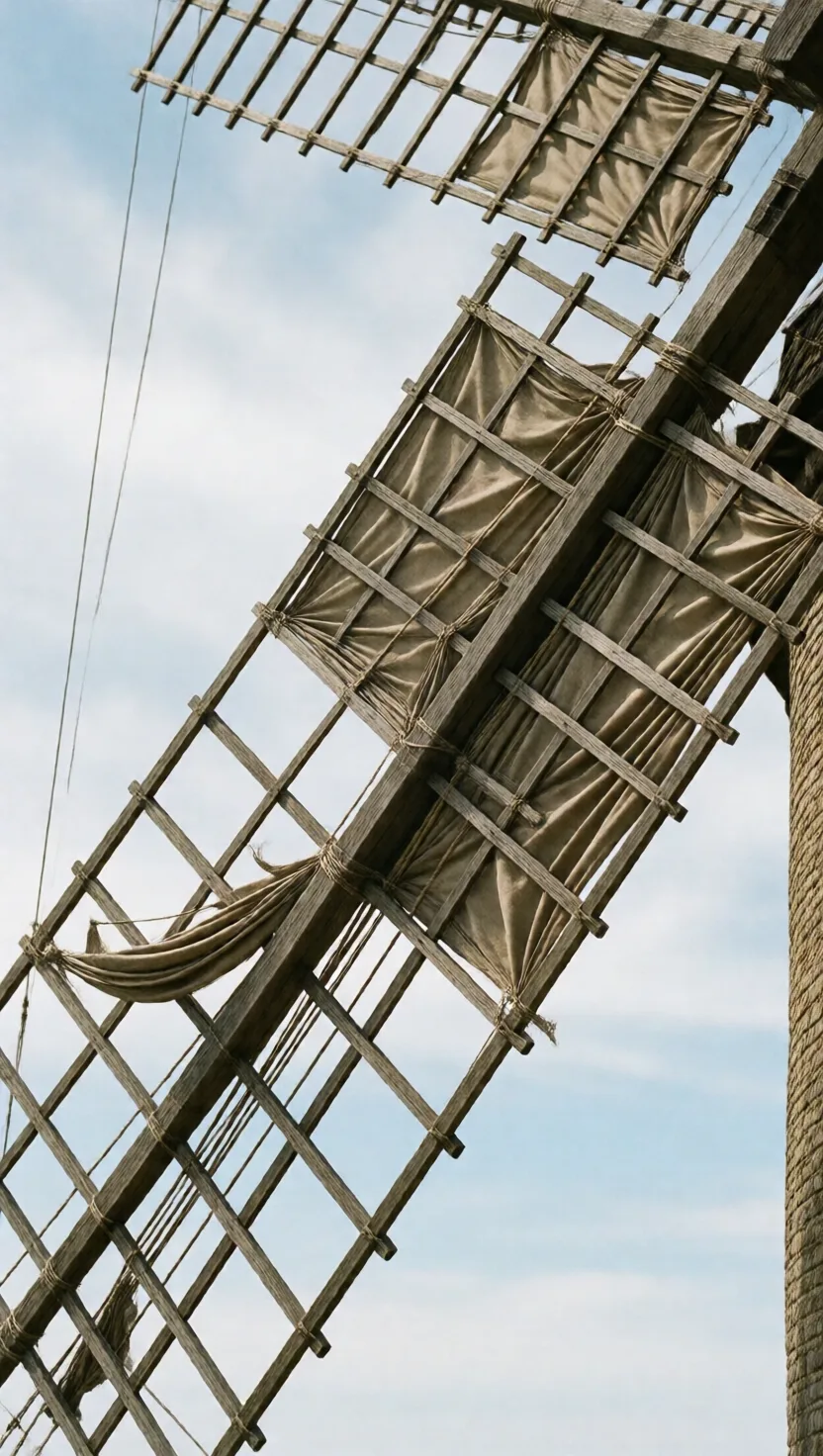
Traditional sails were wooden lattices spread with canvas that the miller furled or opened like a ship's sails to match the wind. In a gale a mill could run away, the sails whirling out of control until the friction of the racing wooden gears, or of the brake clamped on to stop them, threw off enough heat to ignite the timber and the flour dust in the air. Many old mills were lost exactly this way.
tap →swipe ↑ for depthswipe ↓ to exit