Eight things your old tools quietly know

DC·59 Deep Cuts
A mountain can pull your plumb line crooked

A mountain can pull your plumb line crooked

A plumb bob hangs on a string toward Earth's center, marking true vertical. But a string follows gravity, and a big mountain has its own pull. In the 1774 Schiehallion experiment in Scotland, surveyors measured the plumb line tugged sideways by about 11.6 arcseconds toward the mountain. From that tiny lean they weighed the whole Earth. The word 'plumb' comes from the Latin plumbum, lead, the dense metal the bob is cast from.

The level's glass is bent on purpose

The level's glass is bent on purpose

The little tube in a spirit level looks straight, but it is curved or barrel-shaped, fatter in the middle. Because the trapped air bubble is lighter than the liquid around it, it always floats to the highest point of that curve, which sits dead center only when the tool is truly level. Tilt it and the bubble slides off to the high end. The French scientist Melchisedech Thevenot described the device before February 1661.
This tube finds level around a corner

This tube finds level around a corner

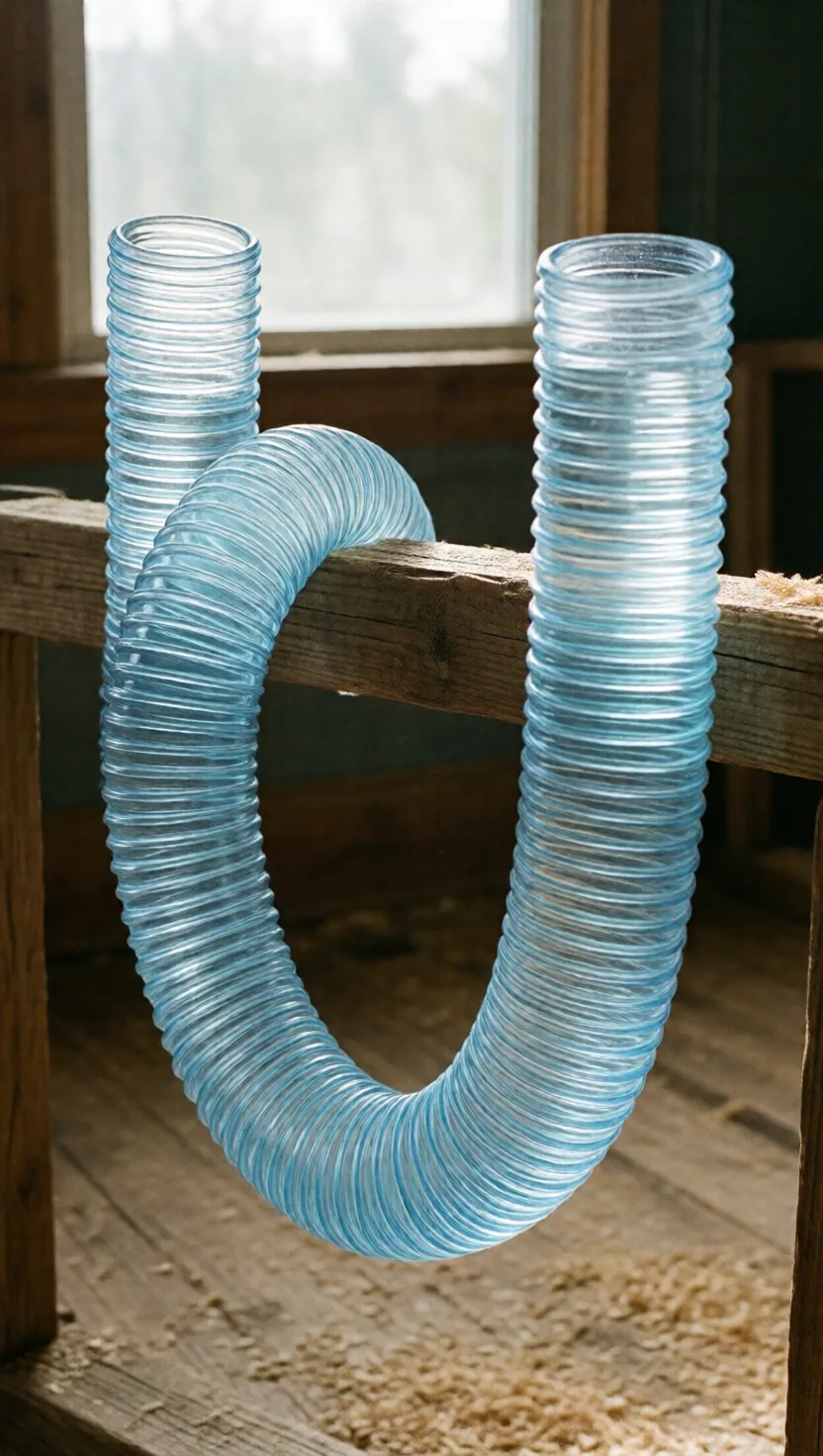
A clear hose filled with water is one of the oldest leveling tools, and it beats line-of-sight every time. Water in a connected tube always settles to the same height at both open ends, no matter how far apart they are or how the hose bends around walls and corners. The principle is hydrostatic equilibrium, the physics of communicating vessels. No laser, no sightline, no batteries, just gravity pulling the surface flat at both ends.
Run it backward and it makes electricity

Run it backward and it makes electricity

An Archimedes screw has lifted water for over two thousand years: turn the helix and water climbs the spiral, scooped pocket by pocket. Spin it the other way and it becomes a generator. Falling water pushes on the flights and turns the screw, driving a shaft that makes power. Because the blades move slowly and the gaps are huge, fish pass through unharmed. Modern screw turbines reach around 80 to 90 percent mechanical efficiency on low-head streams.
The same drill that bored holes lit fires

The same drill that bored holes lit fires

The bow drill is among the oldest rotary tools: a string wrapped around a spindle, sawed back and forth with a small bow, spins the shaft fast in either direction. Fit a hard tip and it drills neat holes in wood, stone, bone, even beads of lapis. Blunt the tip and press it into dry wood and the same friction that bored holes now makes glowing embers and fire. Jasper-tipped bow drills were used at Mehrgarh, in present-day Pakistan, in the 5th to 4th millennium BCE.
Those spirals exist to throw out the dust

Those spirals exist to throw out the dust

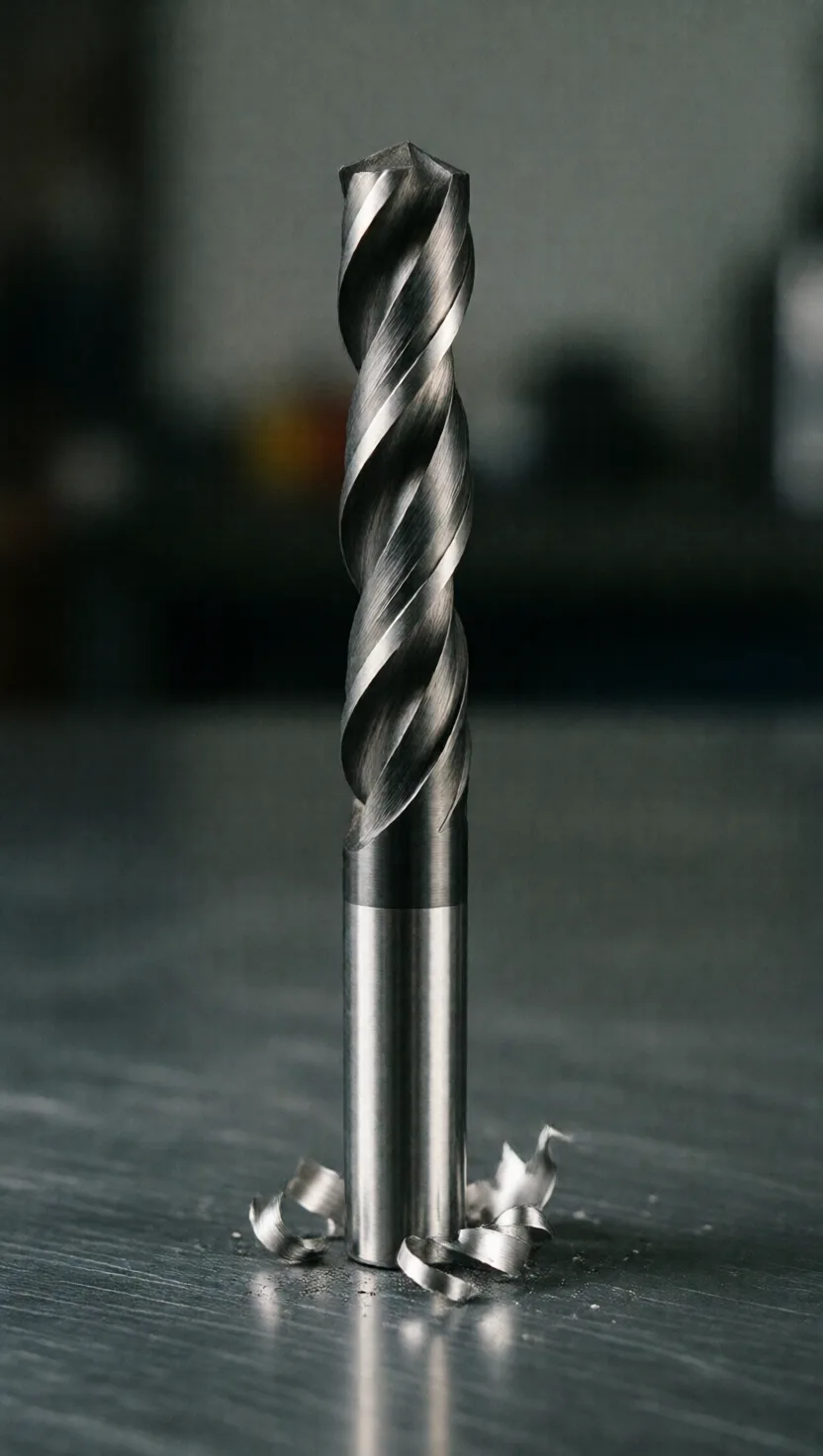
The twisted grooves on a steel drill bit are not for cutting. They are escape ramps. Only the tip's edges actually cut; the spiral flutes act like a screw conveyor, lifting chips and debris up and out of the deepening hole so the bit does not jam or overheat. Before this, flat spade drills had nowhere to send the waste, so they choked. Stephen Morse patented the twist drill in 1863, and the shape has barely changed since.
It grips one way and free-spins the other

It grips one way and free-spins the other

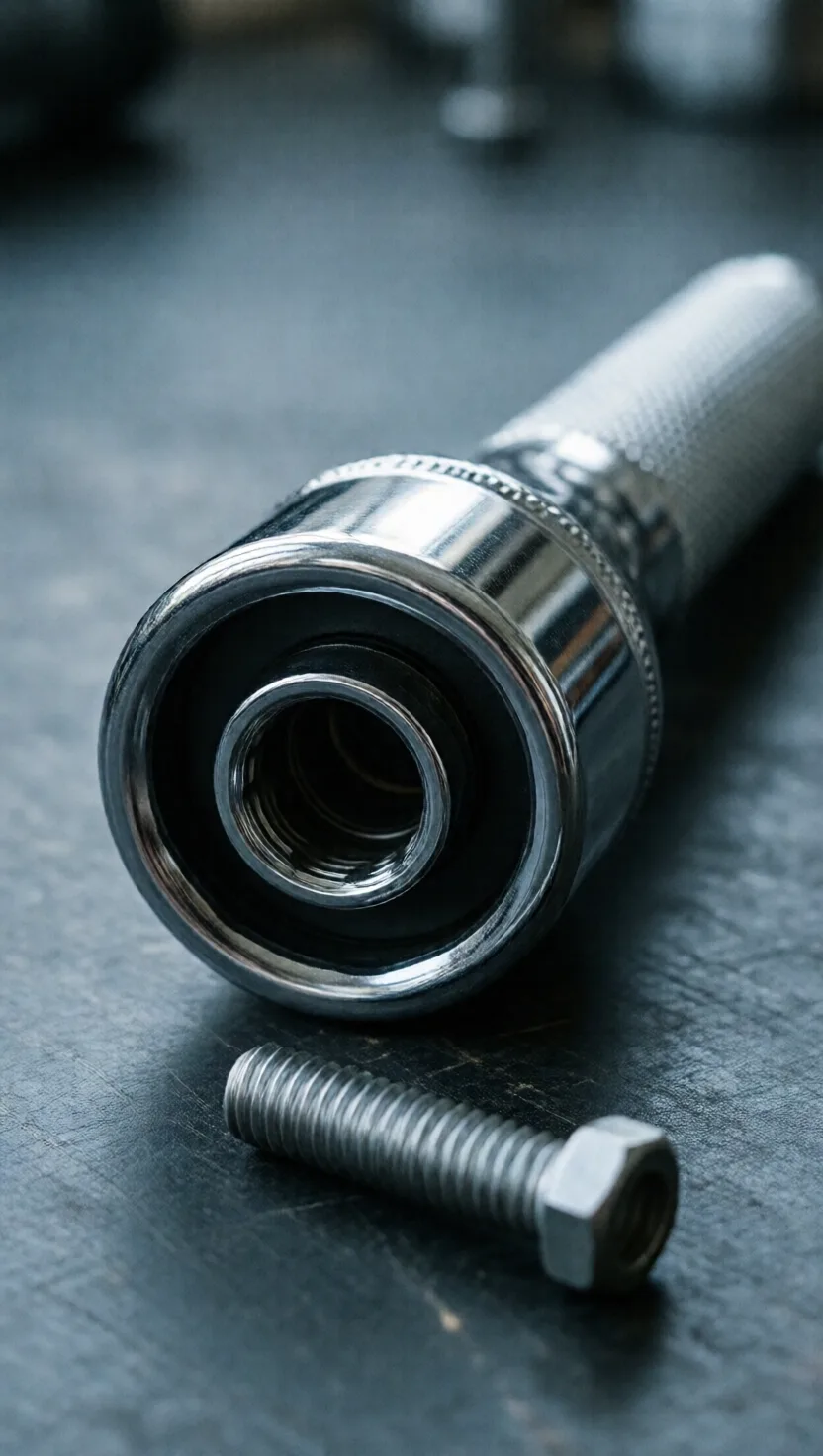
A ratchet's click is a one-way gate. Inside the head sits a toothed gear and a spring-loaded pawl: push the handle one way and the pawl catches a tooth, turning the bolt; swing it back and the pawl just skips over the teeth, so you reset without lifting the tool off the fastener. That lets you work in tight spaces with short strokes. J.J. Richardson of Vermont patented this ratcheting wrench with swappable sockets on June 16, 1863.
Old screws couldn't start their own hole

Old screws couldn't start their own hole

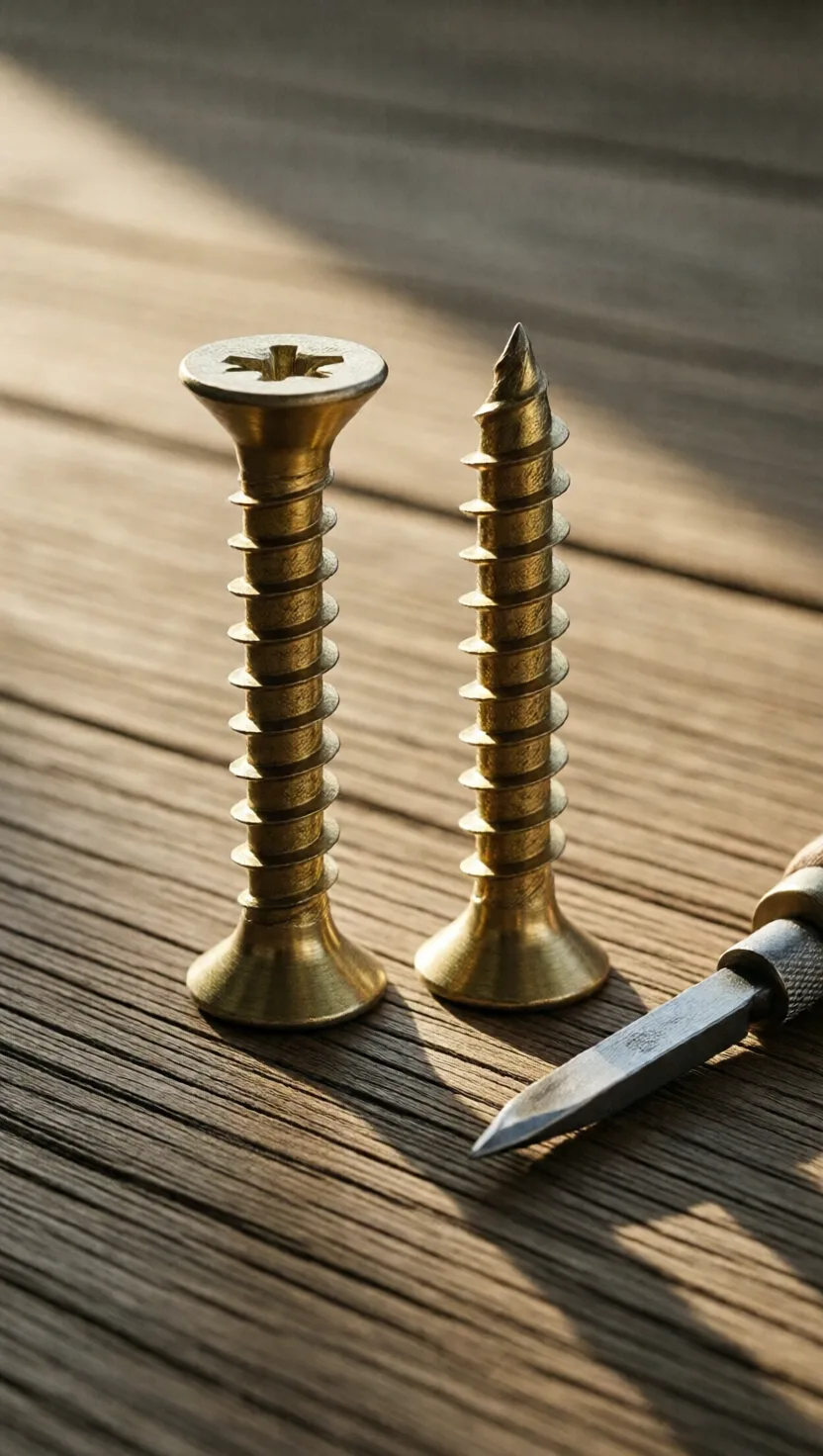
A modern wood screw bites the moment you press its sharp gimlet point in. But early machine-made screws had blunt, flat ends and threads that stopped short, so they could not start themselves at all. You first had to bore a pilot hole with a gimlet, then drive the screw into it. The self-starting pointed screw, with the thread carried right down to the tip at the same pitch, came from Thomas Sloan's 1846 manufacturing process.
tap →swipe ↑ for depthswipe ↓ to exit