Eight things wood knows that nails don't

DC·56 Deep Cuts
These temples hold together with no nails at all

These temples hold together with no nails at all

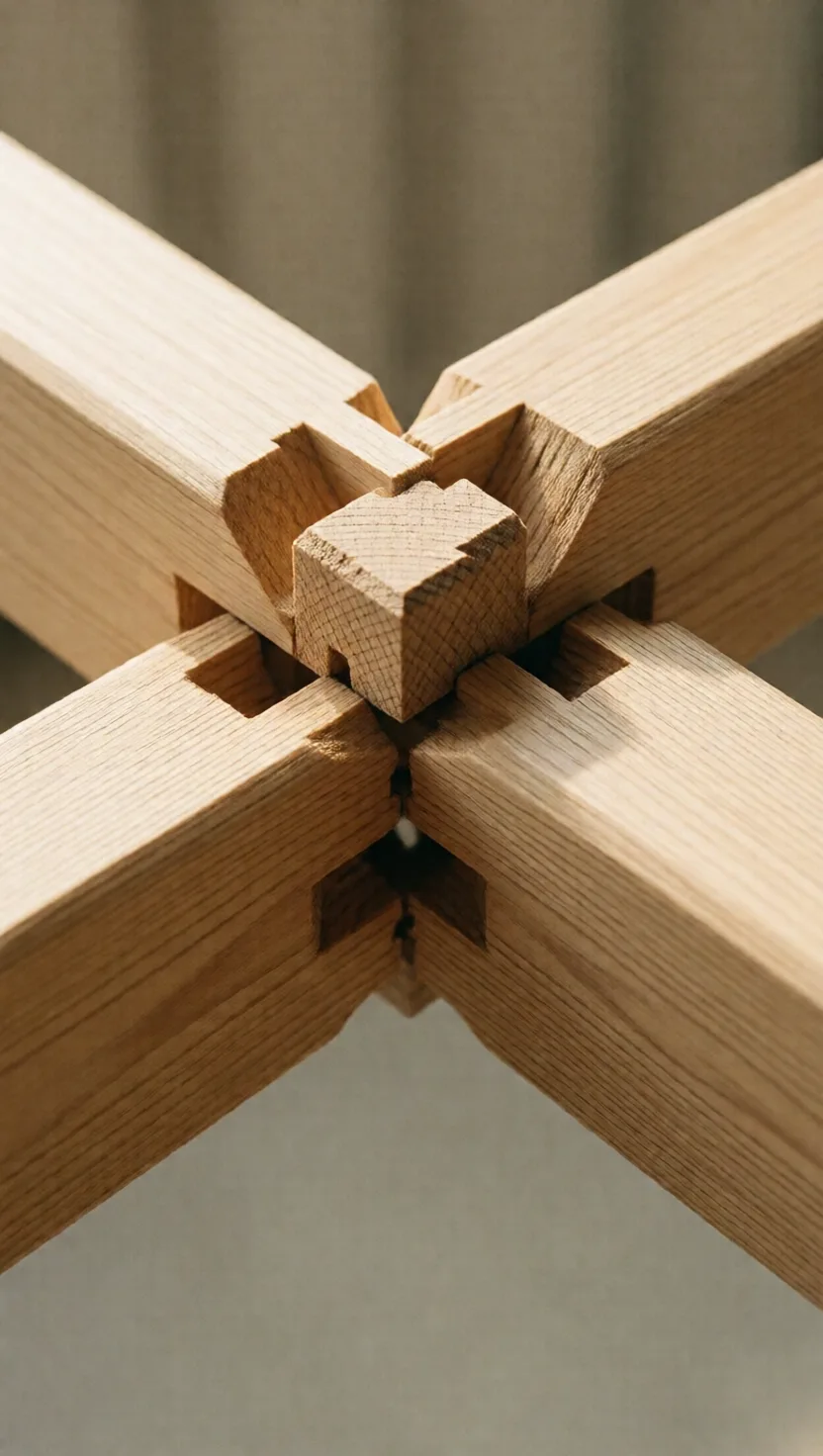
Traditional Japanese carpentry joins heavy timbers using nothing but the shape of the cuts: each piece is carved with interlocking tongues and sockets that mesh and hold by friction and the building's own weight. No nails, no screws, no glue. The oldest wooden buildings on Earth, raised this way over 1,300 years ago, still stand, partly because the flexing joints ride out earthquakes that would crack a rigid frame.
This joint can't be pulled apart one way

This joint can't be pulled apart one way

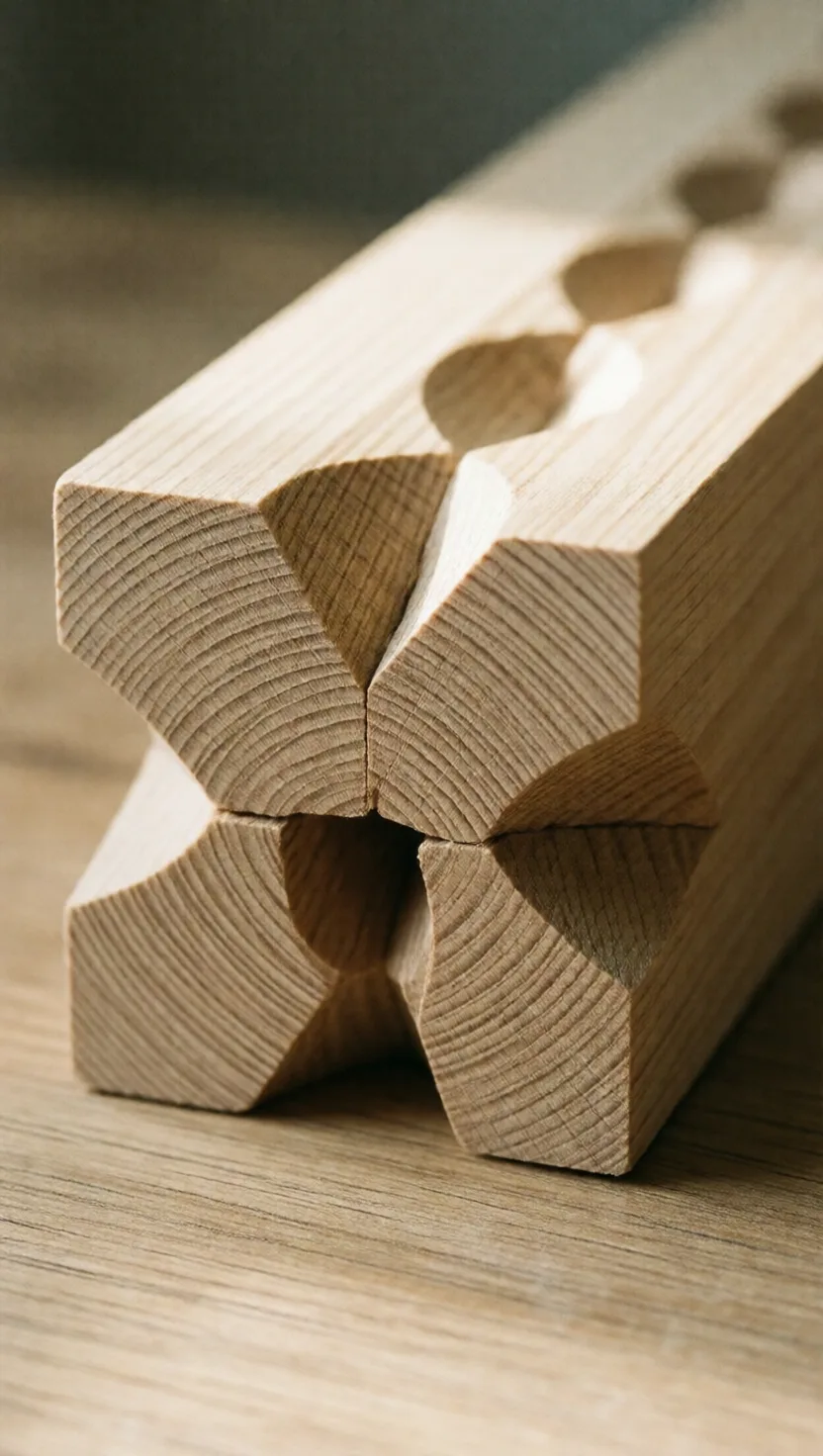
A dovetail joins two boards with a row of flared, wedge-shaped tabs that slot into matching gaps. Because each tab is wider at its tip than at its base, the boards simply cannot be pulled apart in the direction the joint resists; the wood would have to tear before the tabs slipped free. The geometry alone does the locking, which is why a well-cut dovetail needs little or no glue to last for centuries.
Wood moves across the grain, never along it

Wood moves across the grain, never along it

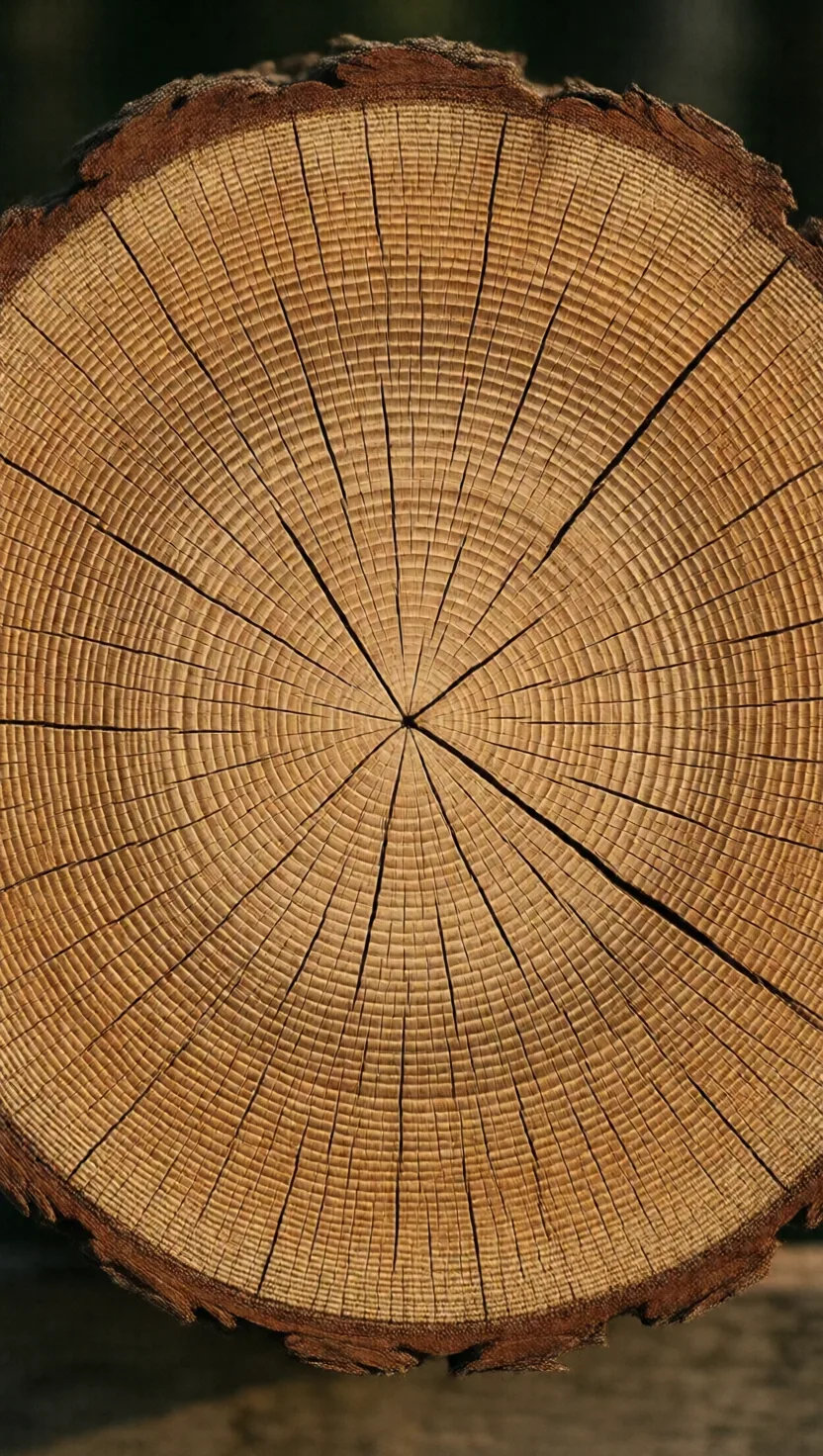
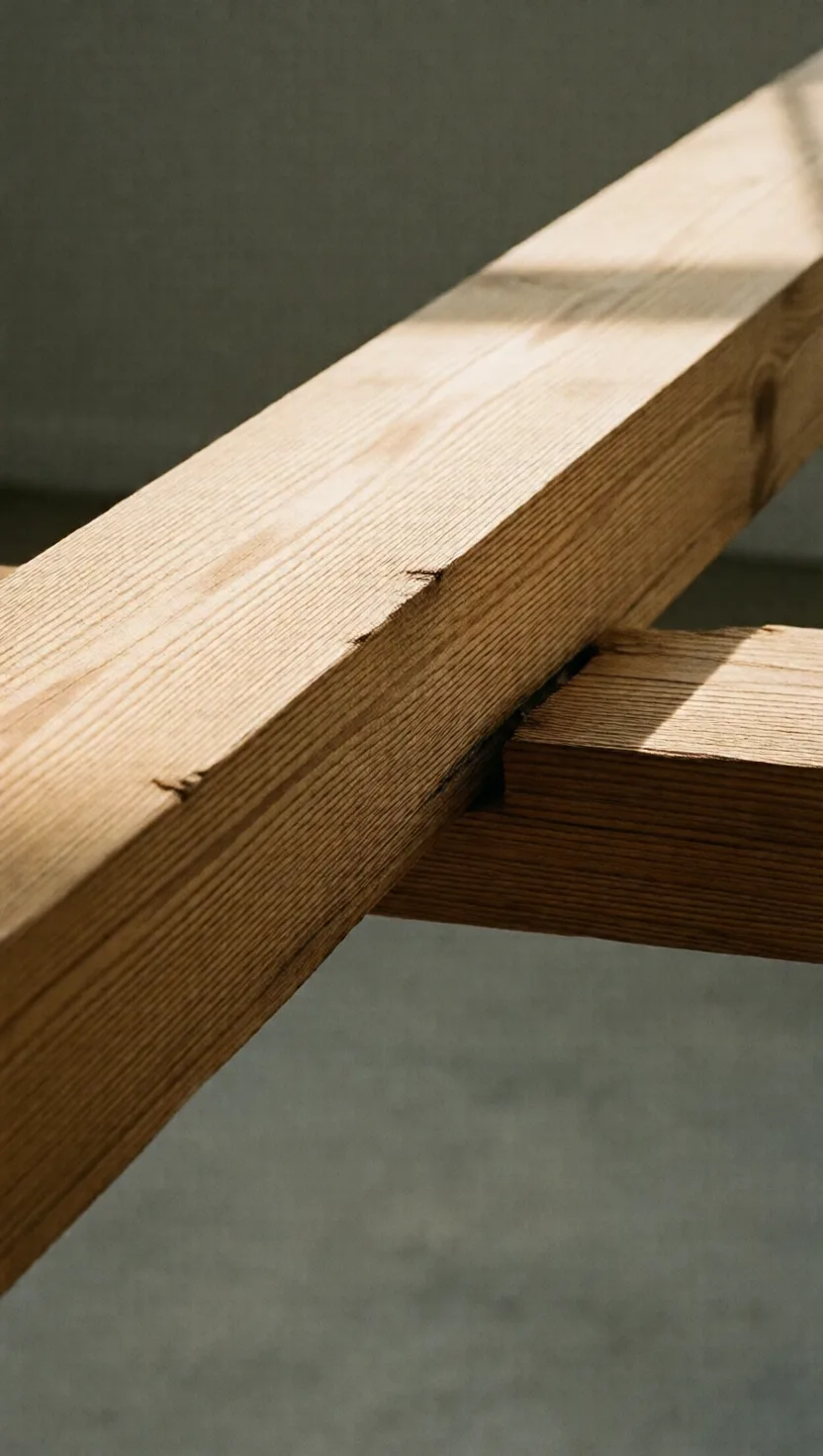
Wood never stops breathing with the seasons, swelling in damp air and shrinking in dry, but it does so almost entirely sideways. A board widens and narrows across its grain, while its length barely changes, often by less than a tenth of a percent. It also moves about twice as much around the rings as across them. Ignore this and a tabletop cracks or cups; good joinery leaves the wood room to move.
Steam turns a stiff plank bendable

Steam turns a stiff plank bendable

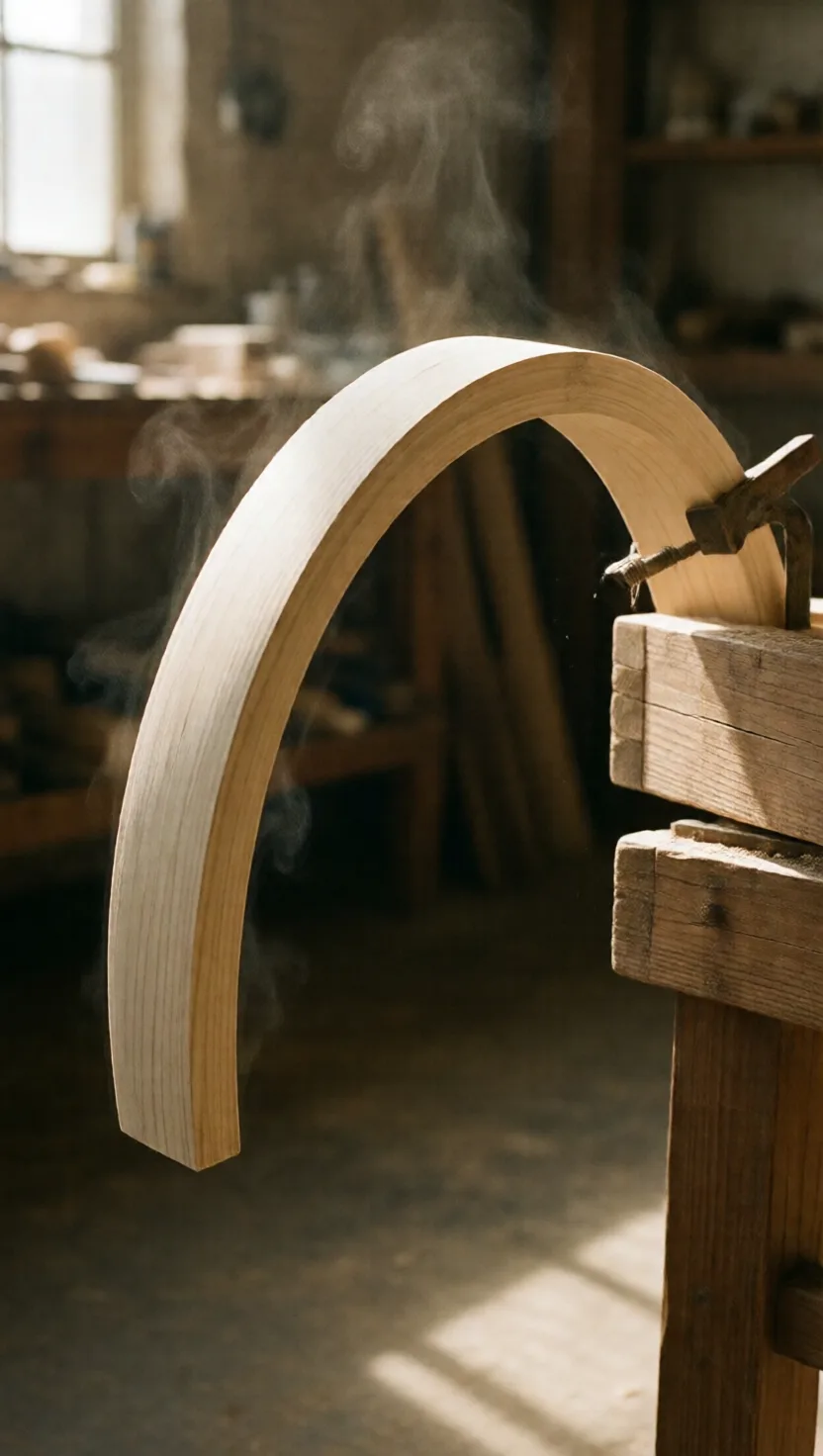
One of the glues holding wood's fibres together is lignin, a natural polymer that turns soft and pliable when heated. Saturate a board in hot steam and the lignin loosens enough that the once-rigid wood can be curved around a form. As it cools and dries, the lignin sets hard again and the wood holds its new shape for good. The trick built everything from ship ribs to the classic curved café chair.
Wet wooden pegs lock a ship tighter

Wet wooden pegs lock a ship tighter

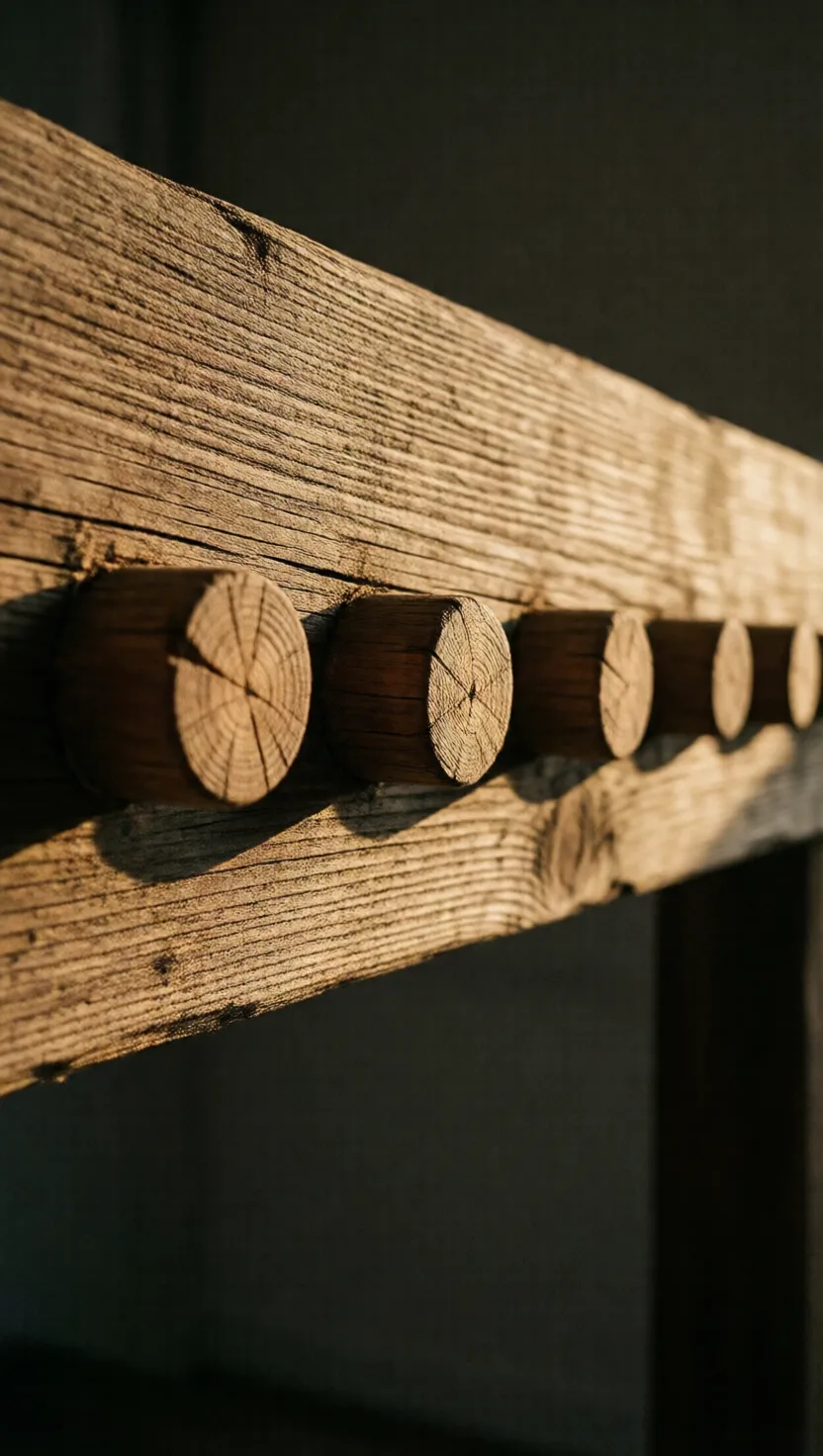
Before bolts, shipwrights fastened hull planks to the frame with treenails, stout wooden pegs driven through bored holes. As the timber took up seawater it swelled, and the peg swelled with it, gripping ever tighter instead of working loose. Wooden pegs also dodged the rot that creeps around iron fasteners, called nail-sickness, so a properly pegged hull could outlast one held by metal.
Split wood is far stronger than sawn

Split wood is far stronger than sawn

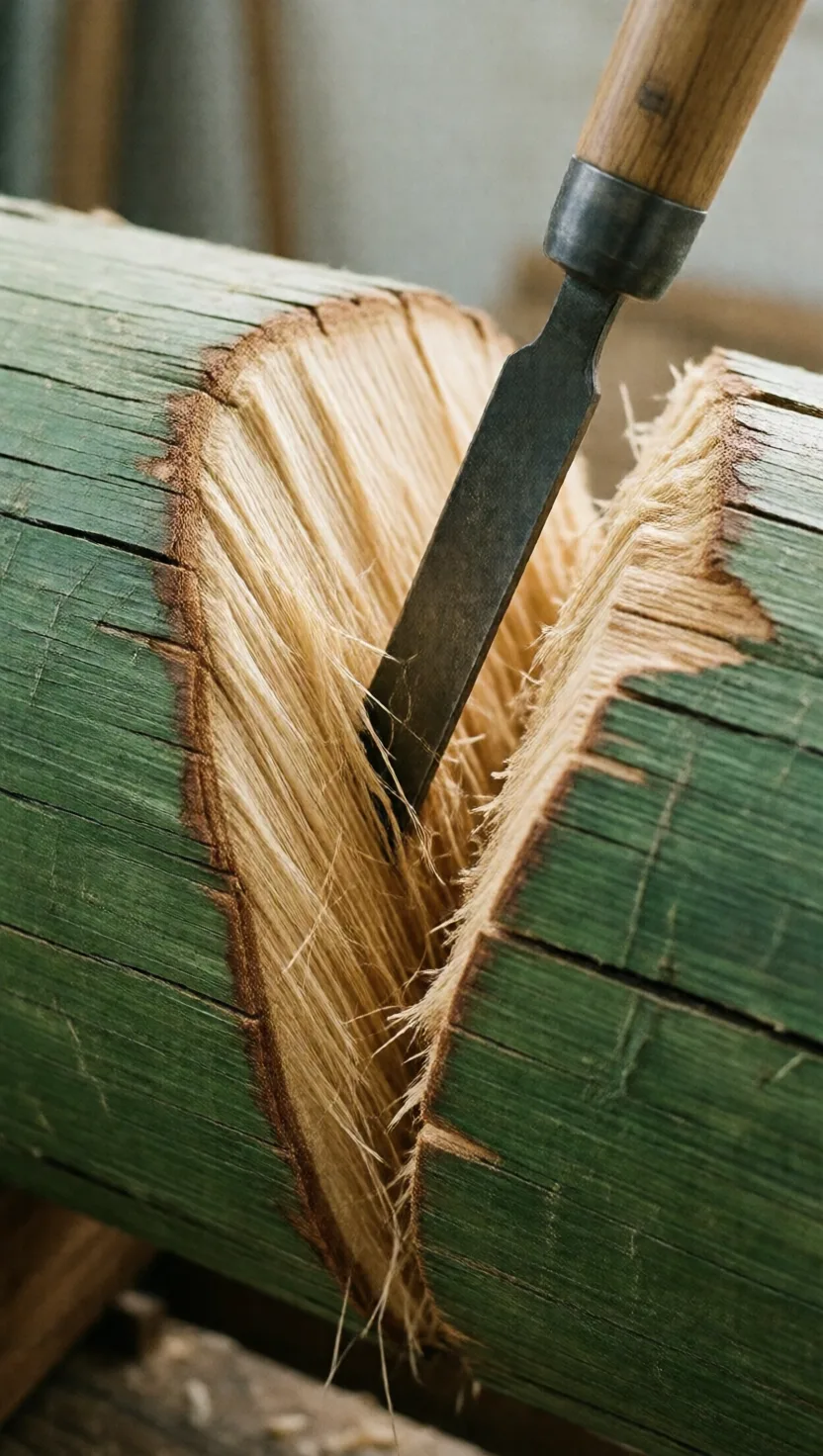
A saw cuts a straight line regardless of the grain, so its boards often have fibres running off the edge, a built-in weak point. Splitting green wood with a wedge does the opposite: the crack follows the grain, leaving every fibre running unbroken end to end. Chair makers rive their stock this way, which is why slender hand-split spindles and legs from the 1700s are still sound under daily use today.
A peg in offset holes pulls a joint shut

A peg in offset holes pulls a joint shut

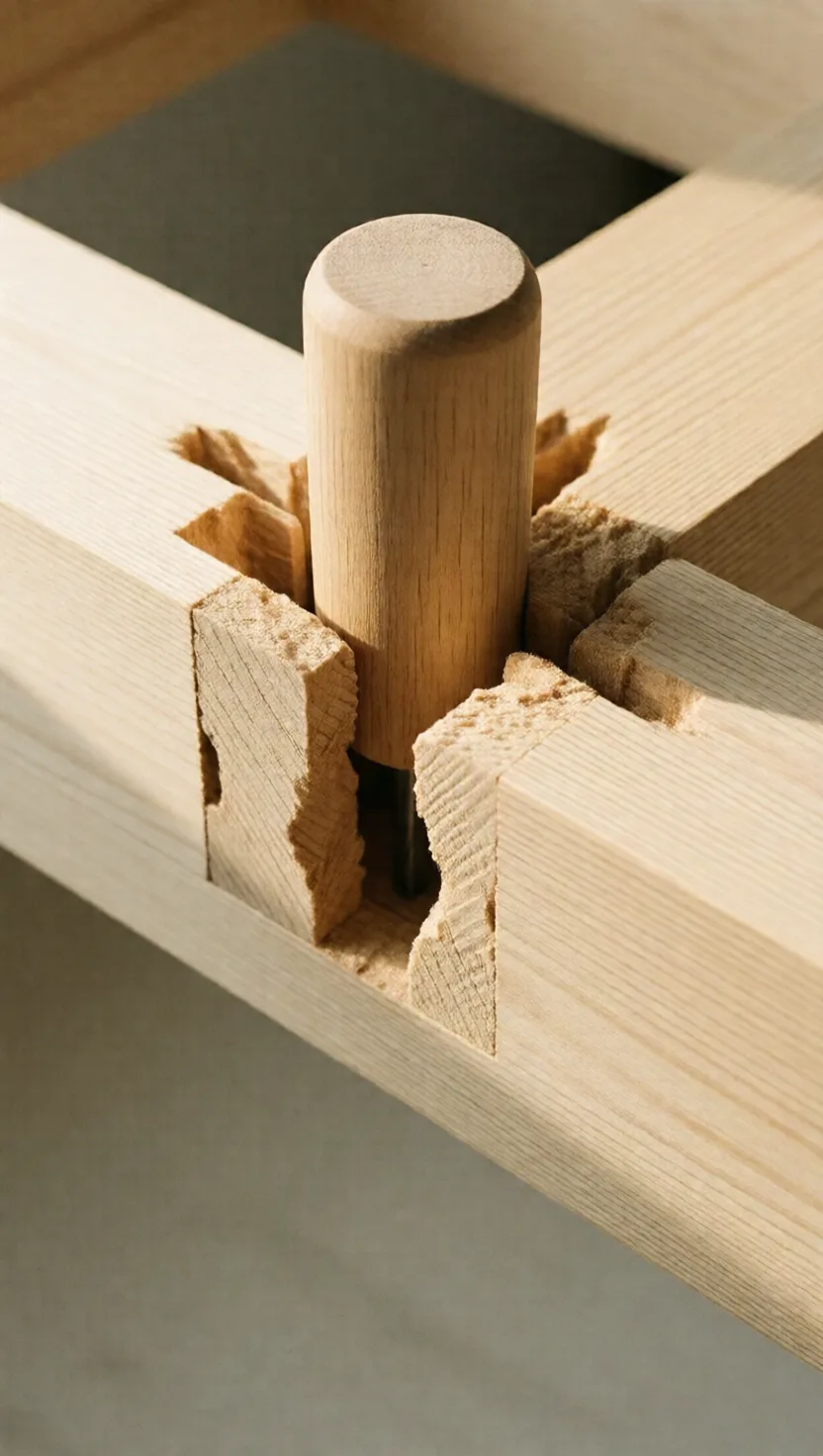
In timber framing the tongue of one beam sits in a slot in another, then a wooden peg pins them. The clever part: the hole through the tongue is bored a little closer to the shoulder than the hole through the slot. Drive a tapered peg through both and it forces the misaligned holes to line up, dragging the joint tight and clamping it shut, then keeps it tight for centuries as the wood shrinks.
Pound for pound, wood out-pulls steel

Pound for pound, wood out-pulls steel

Steel is far stronger than wood in absolute terms, but it is also roughly seventeen times denser. Compare the two by weight rather than bulk and wood wins along its grain: a strip of timber can carry more tension per kilogram than a strip of structural steel. That quiet efficiency is why wood framed ships, aircraft, and bridges long before steel, and why it is returning to tall buildings.
tap →swipe ↑ for depthswipe ↓ to exit