Eight hidden feats of bridges, lighthouses and dams

DC·25 Deep Cuts
This bridge is alive and grows stronger every year

This bridge is alive and grows stronger every year

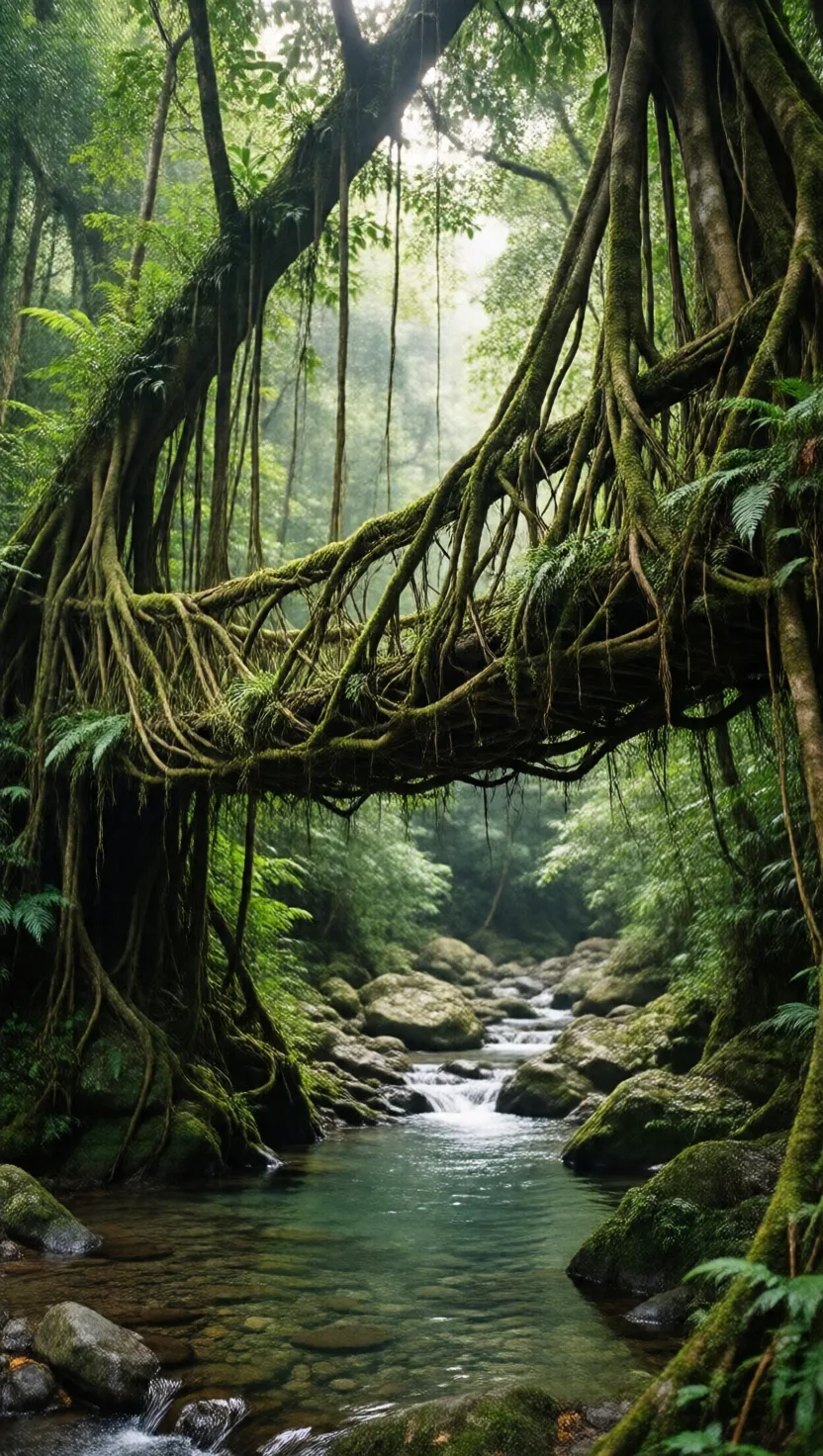
For more than 500 years the Khasi and Jaintia people of Meghalaya, India have trained the aerial roots of the rubber fig across rivers, coaxing them for 15 to 25 years until they knit into a walkable span. Unlike steel or concrete, the living roots thicken and fuse as the tree grows, so the bridge strengthens with age instead of rotting. Some are over five centuries old and can hold fifty people at once.
The glass beehive that saved a million ships

The glass beehive that saved a million ships

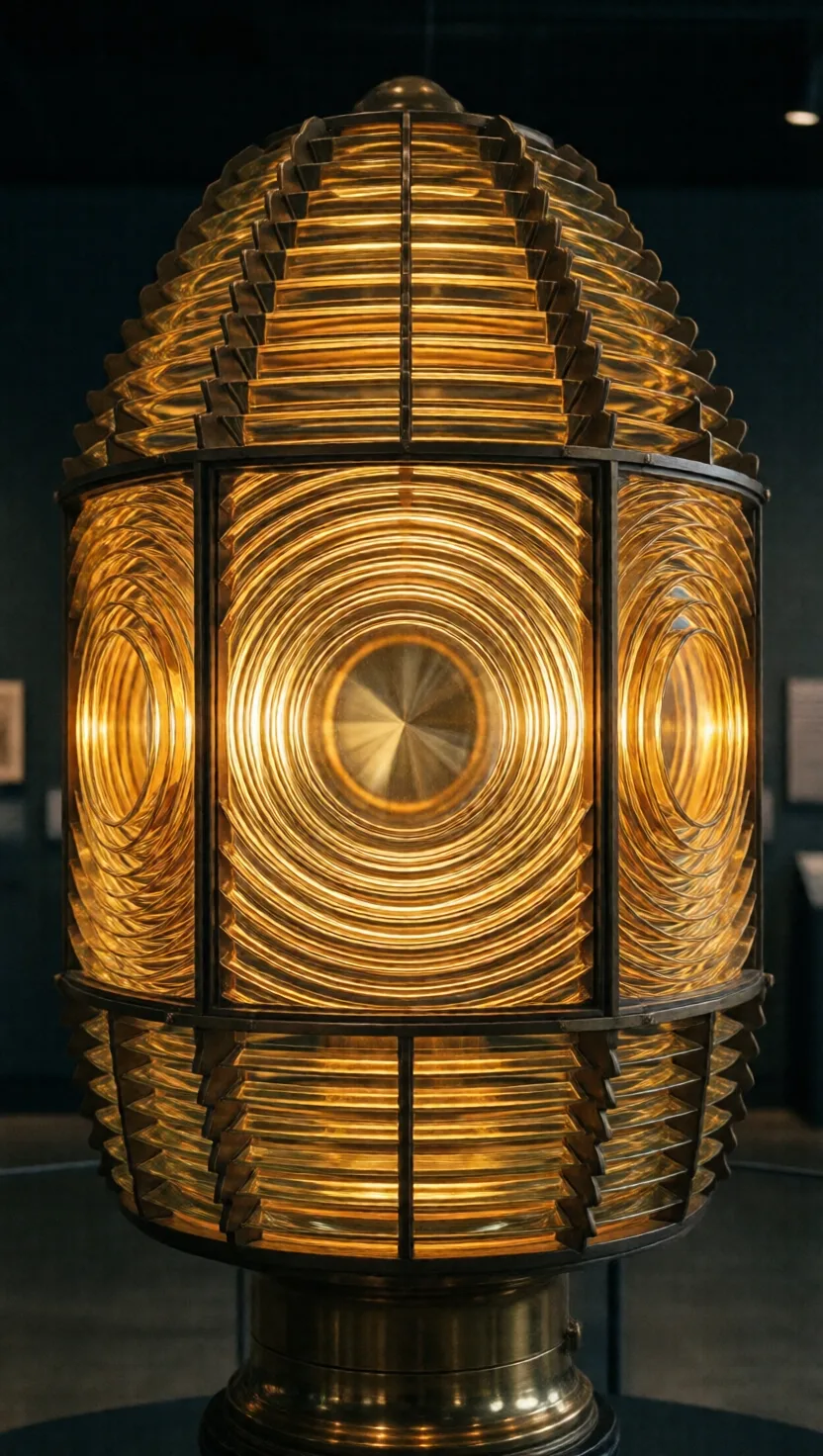
In 1822 a French physicist replaced a lighthouse's heavy solid lens with concentric rings of glass prisms stacked into a beehive shape. Each ring bends stray light that would have escaped back into a single horizontal beam, so one small flame could be seen from over 20 miles out instead of 8 to 12. The design squeezed so much reach from so little glass that it became known as the invention that saved a million ships.
The last Inca bridge is rebuilt from grass each June

The last Inca bridge is rebuilt from grass each June

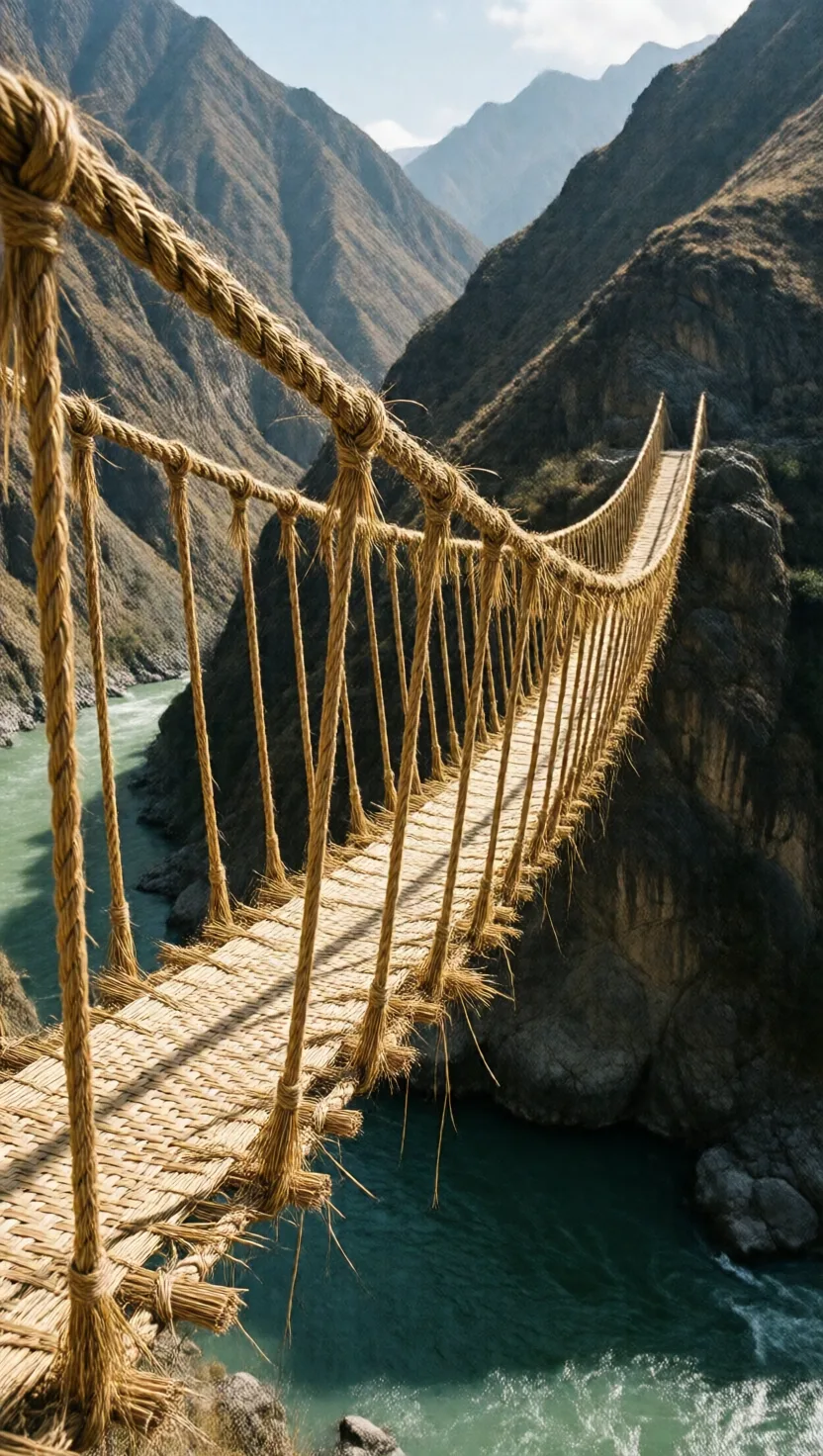
Across a gorge of the Apurimac River in Peru hangs Q'eswachaka, the last handwoven Inca suspension bridge. Every June four neighbouring communities twist mountain grass into thick cables, rebuild the entire span in about three days, then cut the old bridge loose into the river. They have repeated this in the same spot for over 500 years, the sole survivor of a network of nearly 200 Inca rope bridges.
This canal in the sky was sealed with ox blood

This canal in the sky was sealed with ox blood

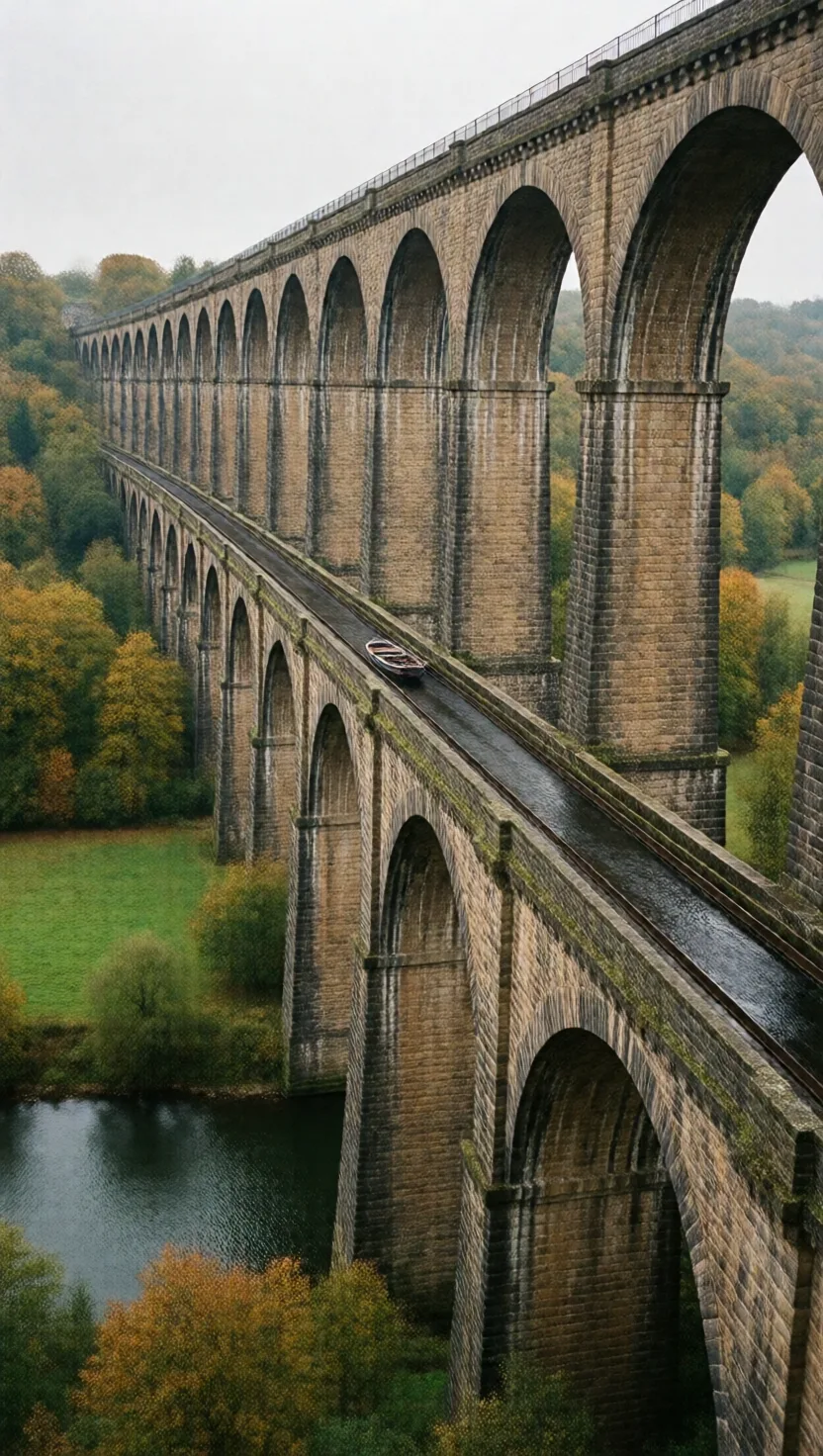
In Wales the Pontcysyllte Aqueduct carries a working canal 38 metres above the River Dee in a slender cast-iron trough, so narrowboats float across open air. Opened in 1805, it is still the highest canal aqueduct in the world. To help the stone piers survive freeze-and-thaw winters, the builders mixed their lime mortar with ox blood, whose proteins trap tiny air bubbles and toughen the set.
The lighthouse built in the shape of an oak tree

The lighthouse built in the shape of an oak tree

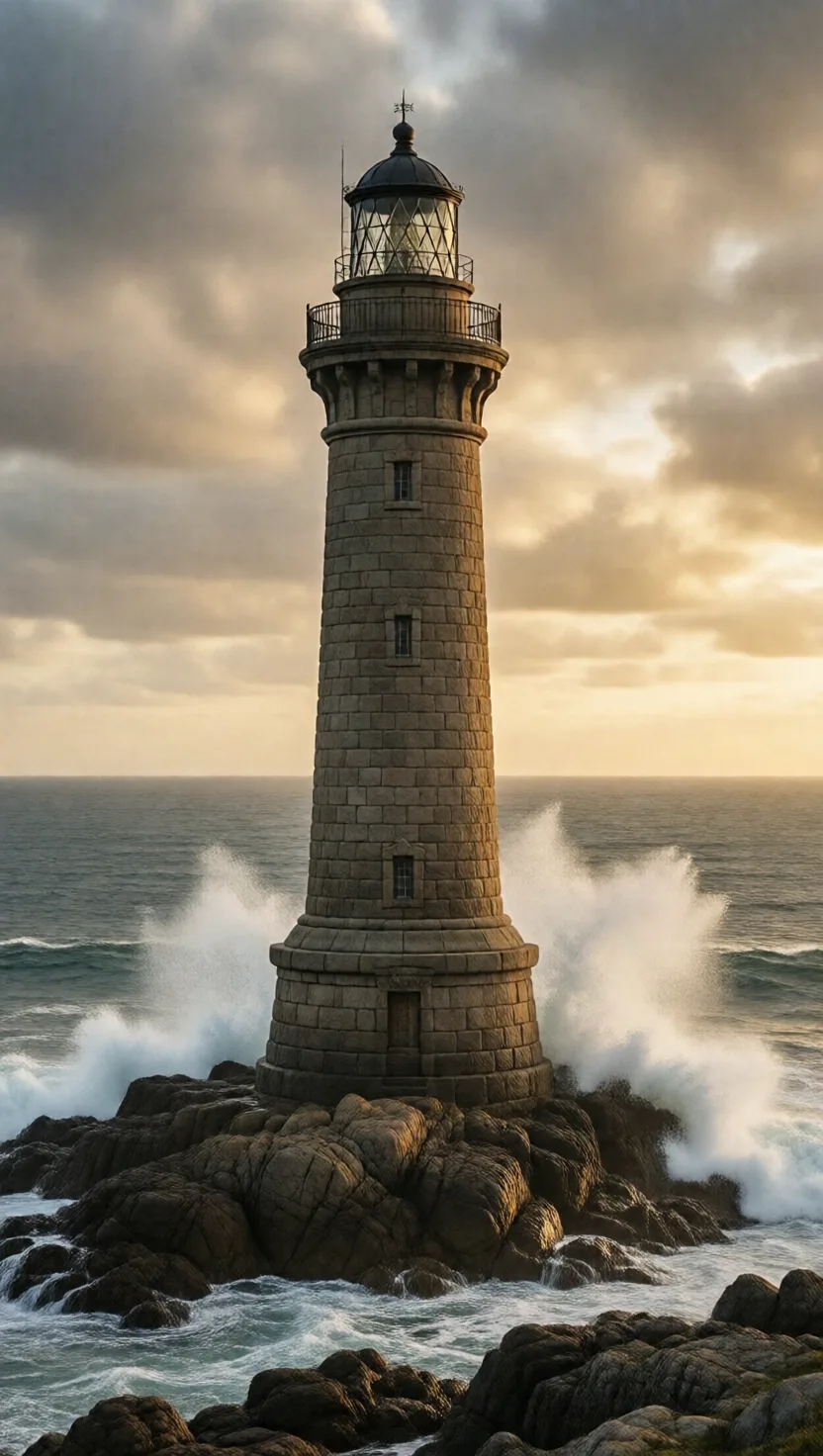
Two earlier lighthouses on the wave-smashed Eddystone reef were destroyed. In the 1750s John Smeaton modelled his on an oak trunk, broad and heavy at the base and tapering upward, so the sea would slide past rather than topple it. He dovetailed the granite blocks together like joinery and invented hydraulic lime, a cement that hardens underwater. His tower stood for 123 years.
Poured in one piece, this dam would still be cooling

Poured in one piece, this dam would still be cooling

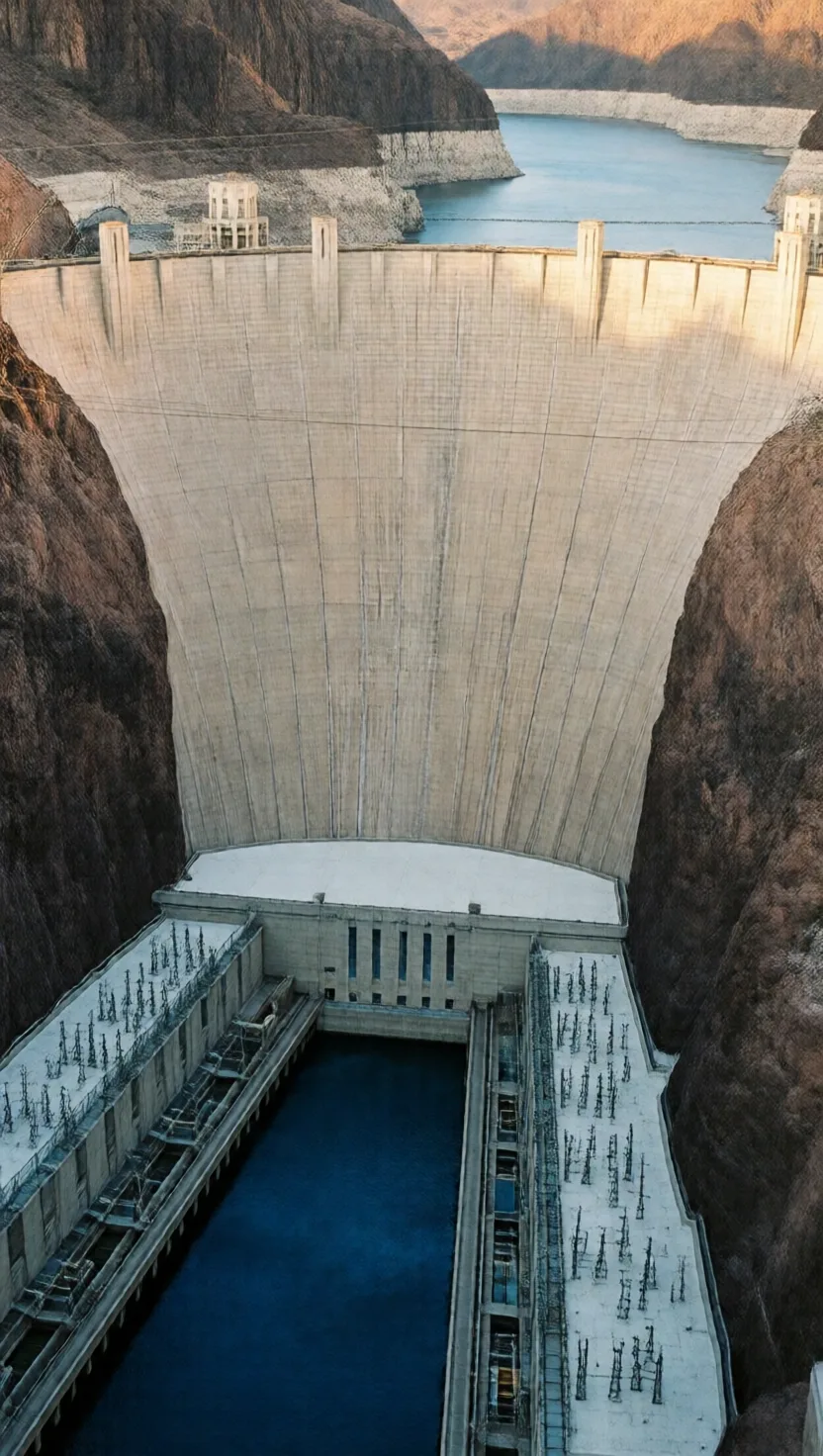
Hoover Dam holds so much concrete that, cast as a single block, the heat of curing would have taken an estimated 125 years to fade, and the stresses would have cracked the dam apart. So engineers built it as a stack of columns laced with 582 miles of thin steel pipe, pumping river water and then ice-plant water through them. Cooling finished in two years, and the gaps were grouted into one solid mass.
The first iron bridge was put together like furniture

The first iron bridge was put together like furniture

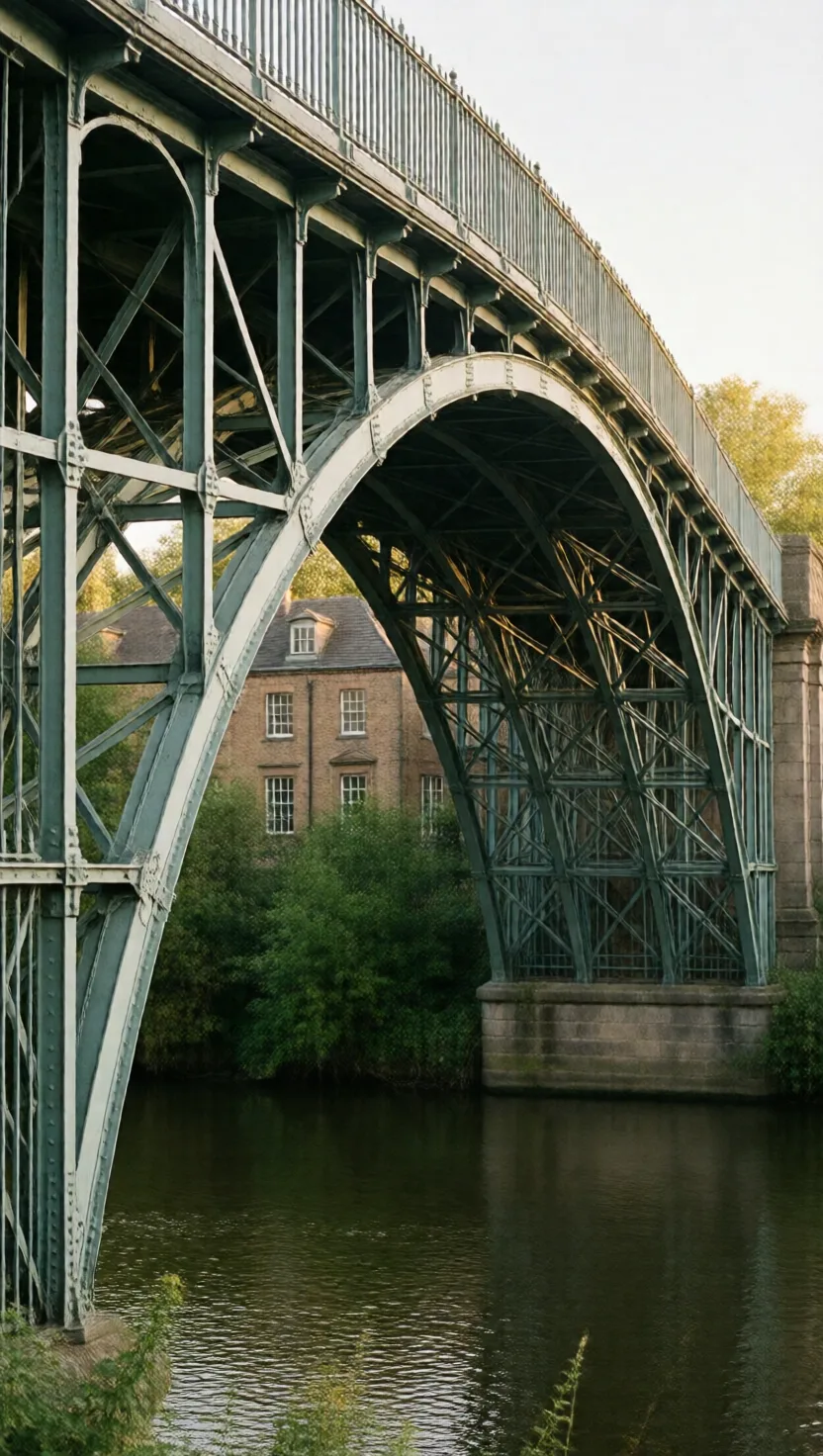
When the world's first major cast-iron bridge rose over England's River Severn in 1779, nobody had ever joined large iron parts before. So its makers borrowed from woodworking: the roughly 1,700 castings lock together with mortise-and-tenon and dovetail joints, the very techniques used for oak beams. The carpenter's thinking is visible in every connection of its graceful 30-metre arch.
This giant wheel lifts boats using almost no power

This giant wheel lifts boats using almost no power

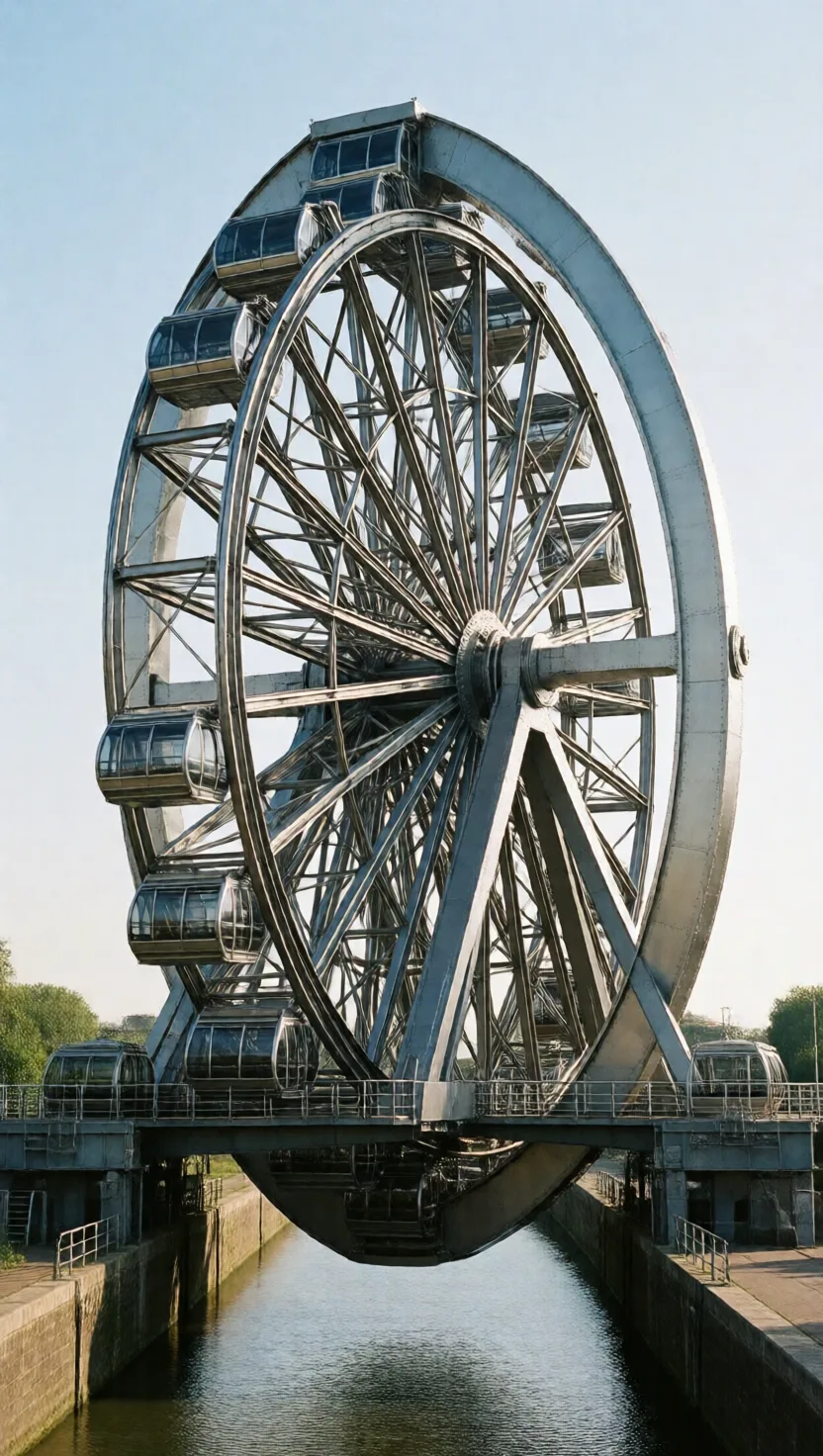
Scotland's Falkirk Wheel is the world's only rotating boat lift, swinging vessels 24 metres between two canals in a single half-turn. Because a floating boat displaces its own weight in water, each gondola weighs the same whether or not a boat sits in it, so the arms stay perfectly balanced. A half-rotation therefore uses about as much electricity as boiling eight kettles.
tap →swipe ↑ for depthswipe ↓ to exit