Eight things hidden inside a single stitch

DC·232 Deep Cuts
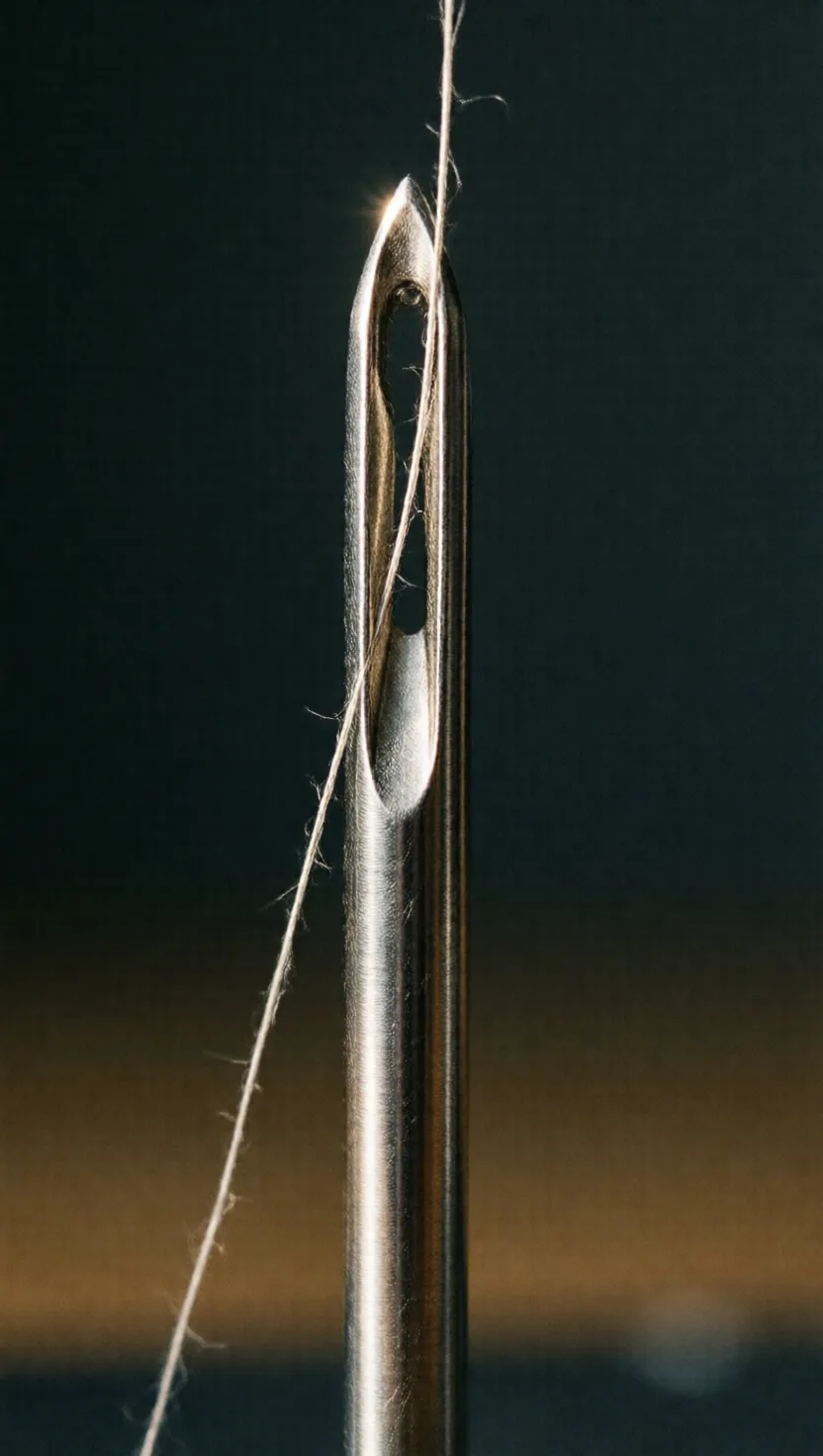
A sewing-machine needle has its eye at the point

A sewing-machine needle has its eye at the point

A hand needle carries the thread's eye at the blunt end; the sewing machine only worked once someone flipped it around. Putting the eye right behind the sharp tip lets the needle carry a loop of thread all the way through the cloth, where a hook waiting underneath can snatch that loop and lock the stitch. That single inversion, the eye at the point rather than the tail, is the idea every lockstitch machine built since the 1840s still turns on.
Every machine seam is two threads locked in cloth

Every machine seam is two threads locked in cloth

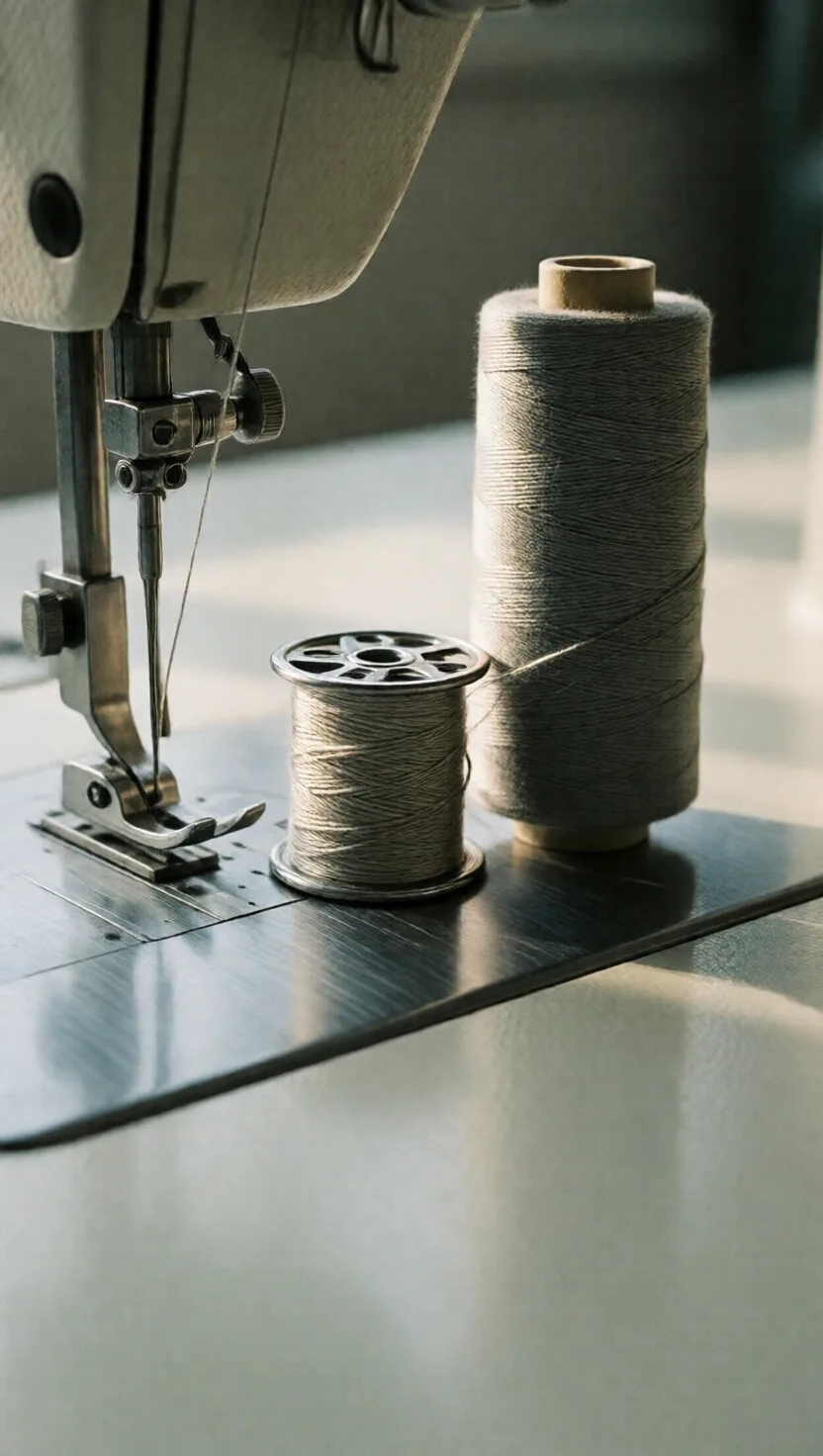
A sewing machine doesn't stitch with one thread but with two that never actually pass through one another. The top needle thread dips down through the fabric; underneath, a hook catches its loop and wraps it around a second thread coiled on a small spool called the bobbin. The two cinch tight in the middle of the cloth, forming a 'lockstitch' that looks identical on both faces and won't unravel even if the thread is cut at a single point.
Tiny toothed bars walk fabric under the needle

Tiny toothed bars walk fabric under the needle

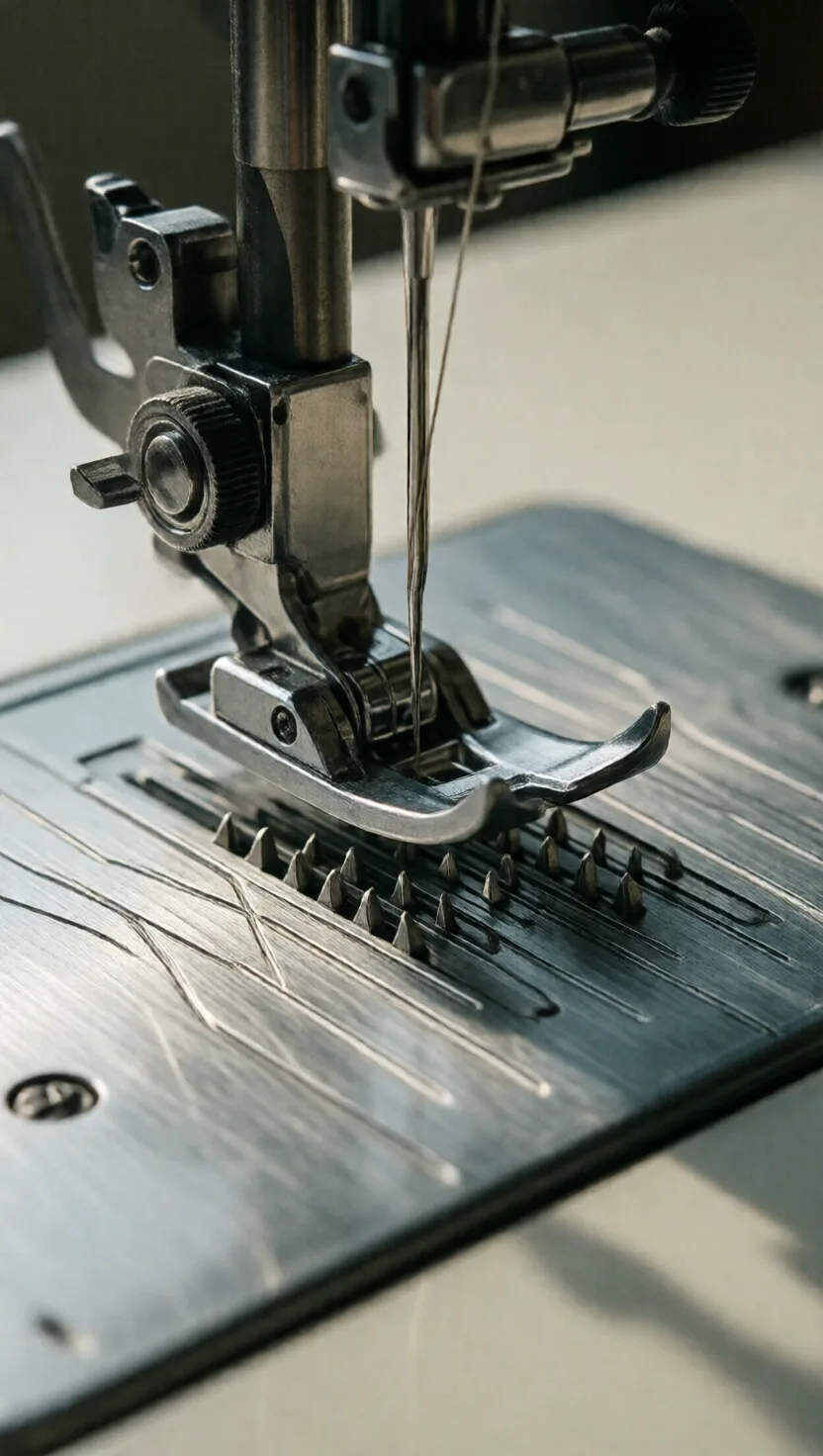
The cloth in a sewing machine isn't pushed by hand; it is walked. Beneath the needle, a set of toothed bars called feed dogs traces a four-step rectangular loop: they rise through a slot in the plate, grip the fabric and drag it back exactly one stitch, then drop and glide forward unseen to bite again. They only move while the needle is lifted clear. Allen B. Wilson devised this four-motion feed in the early 1850s, and it remains standard today.
A serger trims, sews and binds an edge at once

A serger trims, sews and binds an edge at once

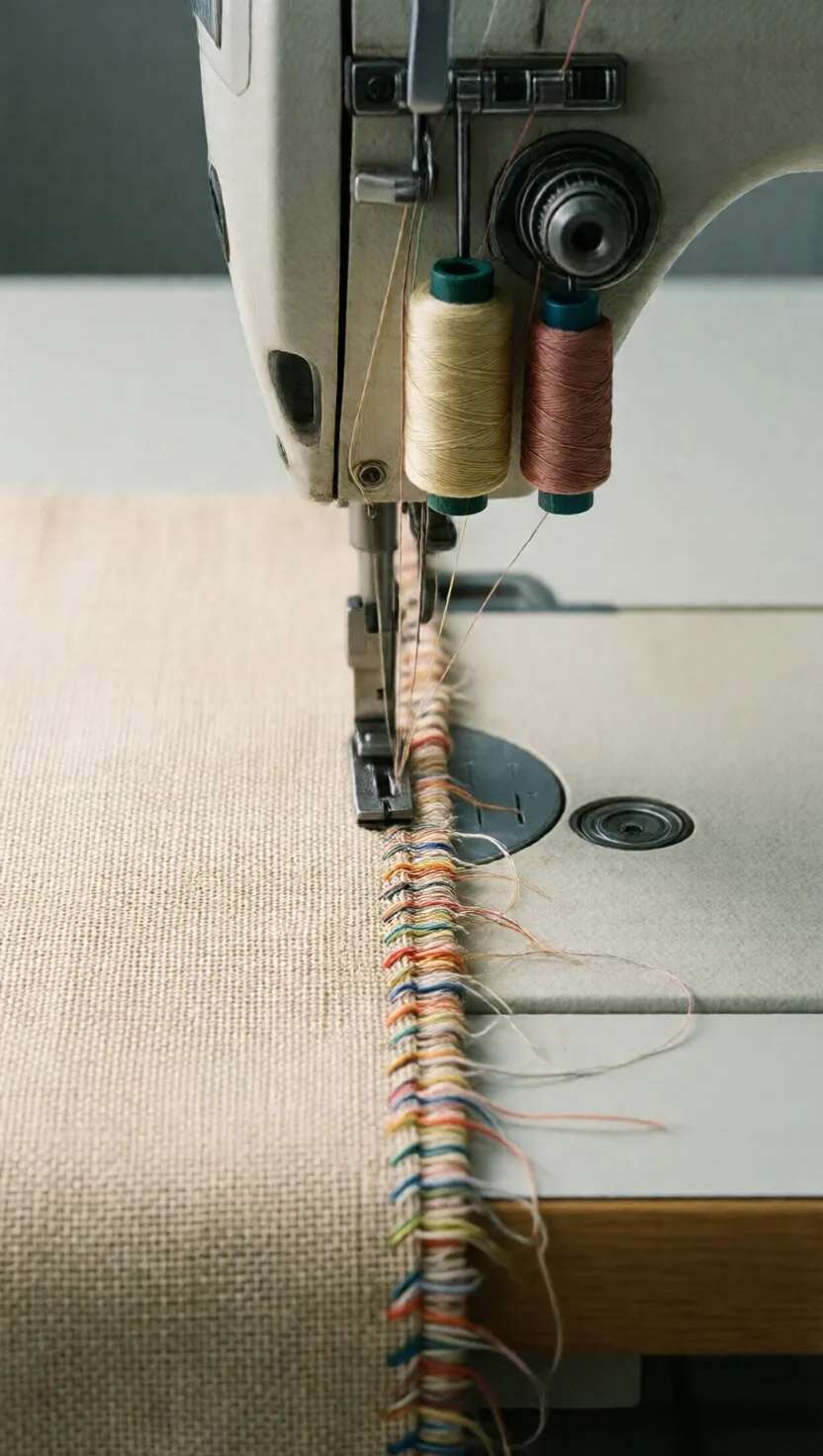
Look inside a T-shirt seam and you'll find a stitch no single needle makes. An overlock machine, or serger, does three jobs in one pass: a blade trims the raw edge, needles sew the seam, and curved arms called loopers, with no bobbin at all, throw two to four threads around the cut edge to wrap it so it cannot fray. It runs fast enough to finish factory garments at thousands of stitches every minute.
Pull the right thread and a feed sack unzips

Pull the right thread and a feed sack unzips

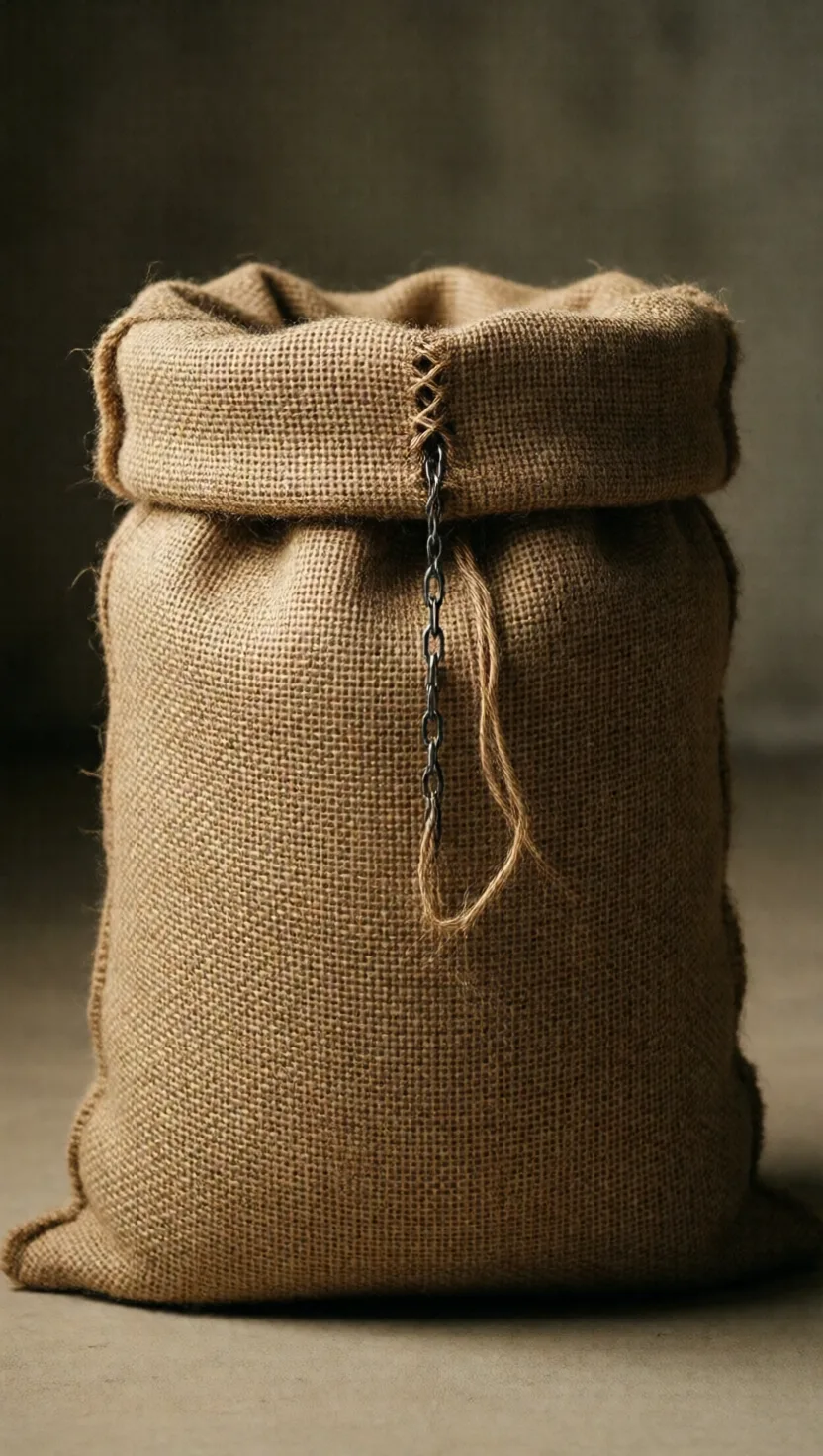
A chain stitch is a magic trick waiting to happen. Made from a single thread looping through itself rather than two locked together, it holds firm until you find the correct end and tug, and then the whole seam unzips in one smooth pull. That is exactly why heavy grain and feed sacks are closed with it: grab the right thread and the bag falls open across the top. Catch the wrong end, though, and the seam won't give at all.
The sewing machine spawned America's first patent pool

The sewing machine spawned America's first patent pool

By the 1850s rival inventors had buried the sewing machine in lawsuits, an era nicknamed the 'Sewing Machine War,' each side suing the others over needles, feeds and stitches. In 1856 four of the great rivals, among them Howe and Singer, tried something new: they threw their key patents into a single shared pool and split the royalties on every machine sold. It was the first patent pool in United States history, and it cut the licence fee per machine from about 25 dollars to 5.
A mob of tailors smashed the first sewing machine

A mob of tailors smashed the first sewing machine

The first working sewing machine almost didn't survive its inventor's own neighbours. When the French tailor Barthelemy Thimonnier set up a Paris workshop of wooden chain-stitch machines to sew army uniforms, rival tailors, terrified the devices would steal their livelihoods, stormed in and destroyed them, first in 1831 and again about a decade later. He died poor and largely forgotten, yet the machine he built went on to outlive him by well over a century.
A thimble's dimples are there to grip the needle

A thimble's dimples are there to grip the needle

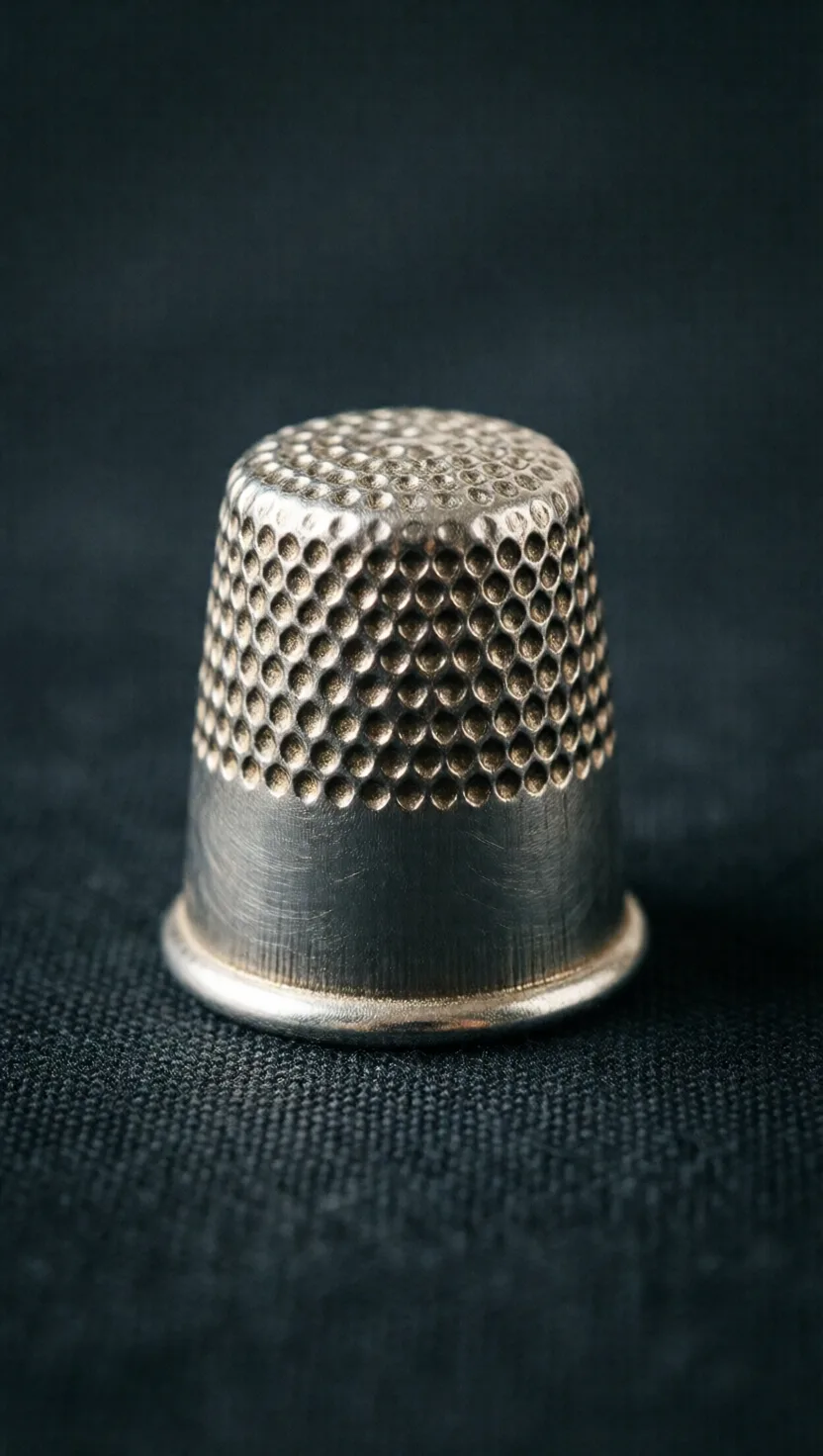
Those countless tiny pits on a thimble aren't decoration; they're a gripping surface. When a sewer pushes a needle through thick or layered cloth, its blunt end can skid right off a smooth metal cap, so each little dimple catches the needle's head and holds it steady while the force drives straight through. Metalworkers had already perfected the fine, regular knurling that stamps those dimples by the 14th century.
tap →swipe ↑ for depthswipe ↓ to exit