Eight things split out of a grey stone

DC·155 Deep Cuts
It splits along stress, not its own layers

It splits along stress, not its own layers

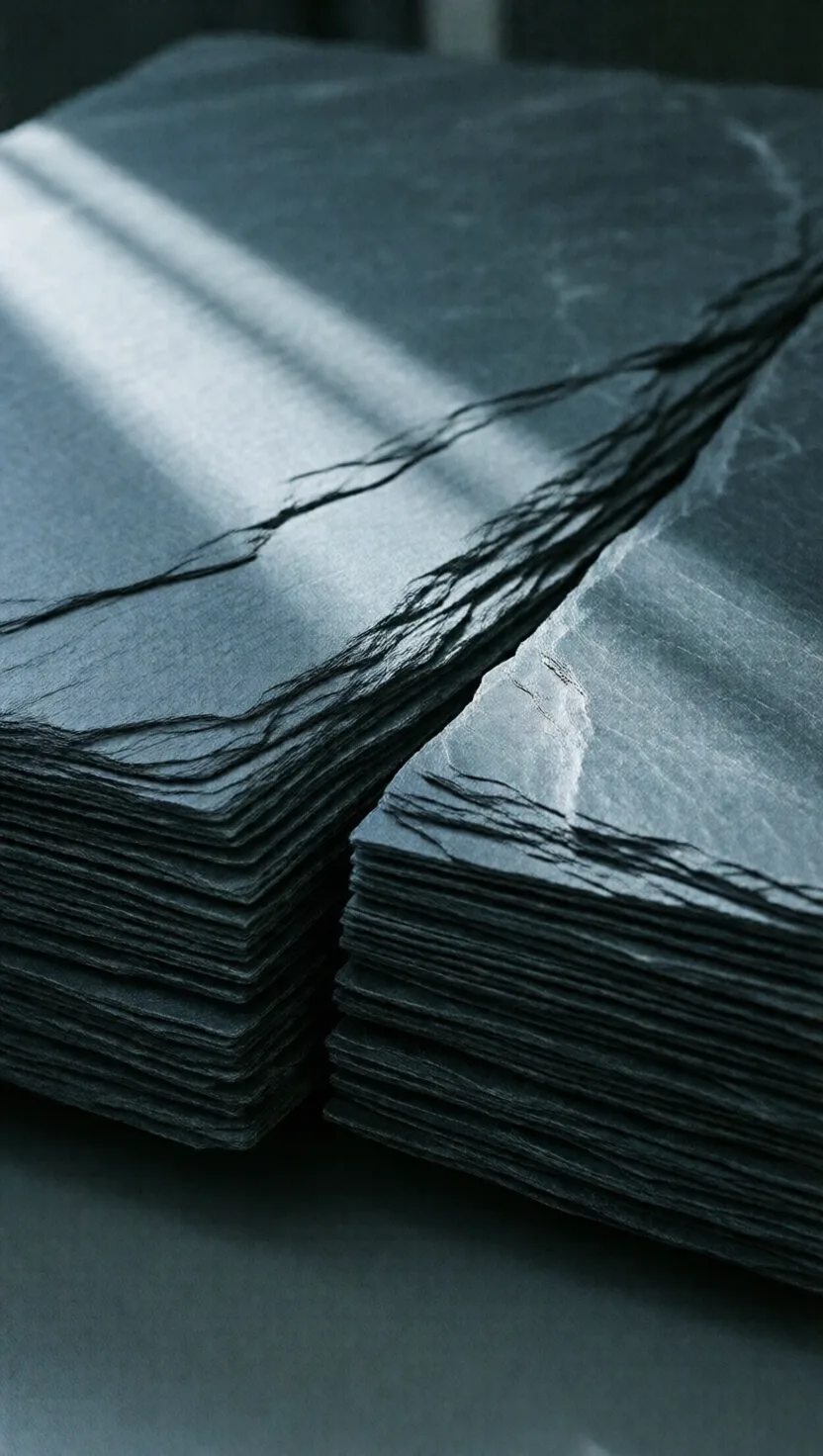
Slate begins as mud, pressed and gently cooked into rock. Under the squeeze of mountain-building, its microscopic mica flakes all swing around to line up at right angles to the pressure, and the stone splits cleanly along that new grain. The strange part: this cleavage usually cuts across the original mud layers — so slate breaks the way the Earth squeezed it, not the way it was first laid down.
A roof that can outlive five generations

A roof that can outlive five generations

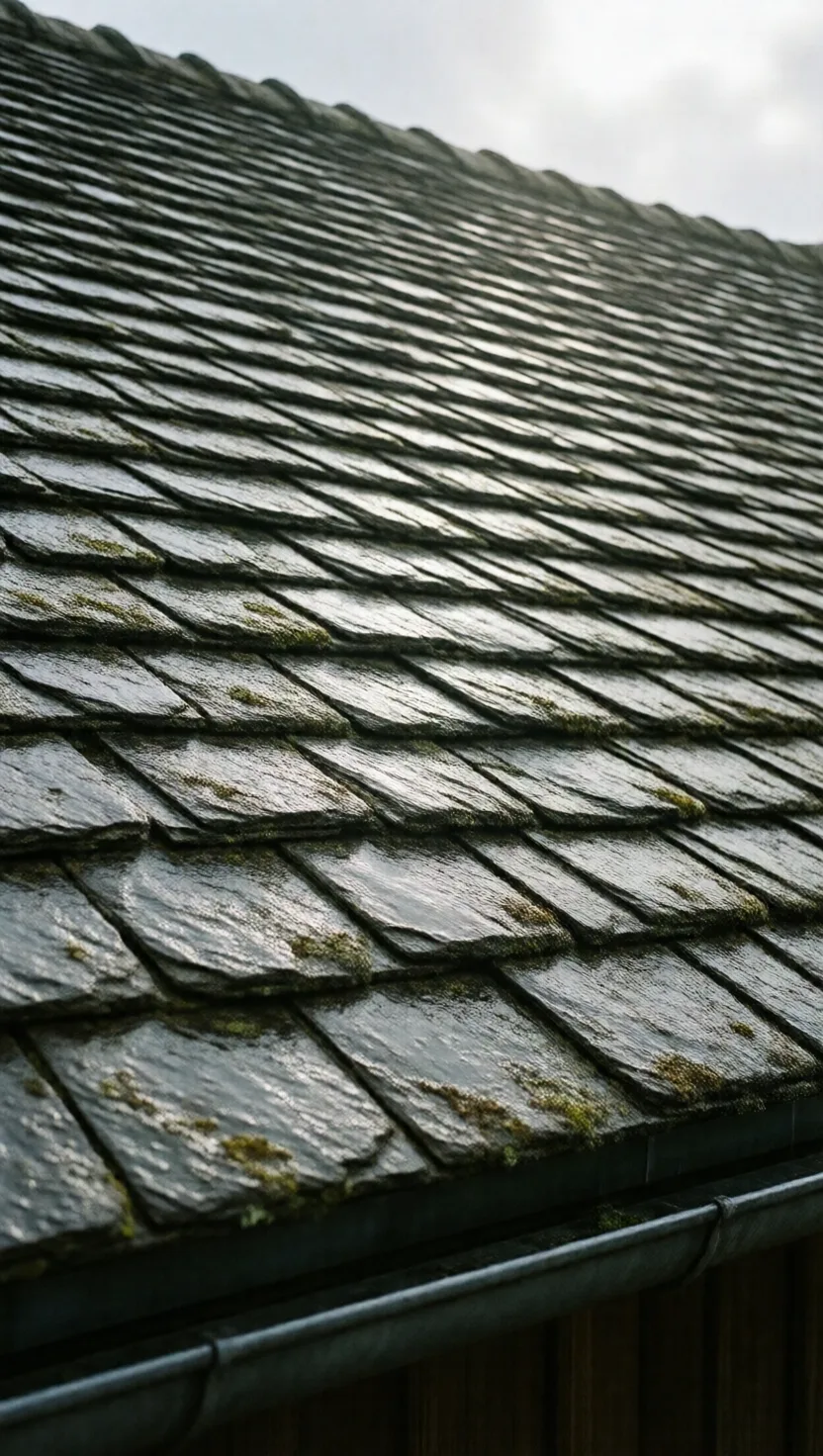
Split slate is almost inert — it barely absorbs water, won't rot, won't burn, and shrugs off frost — so a well-laid slate roof routinely lasts beyond a century, and the hardest slates from Wales, Vermont and New York can shelter a building for 150 to 200 years. The nails and the timber underneath almost always fail long before the stone does.
Every serious pool table hides a stone bed

Every serious pool table hides a stone bed

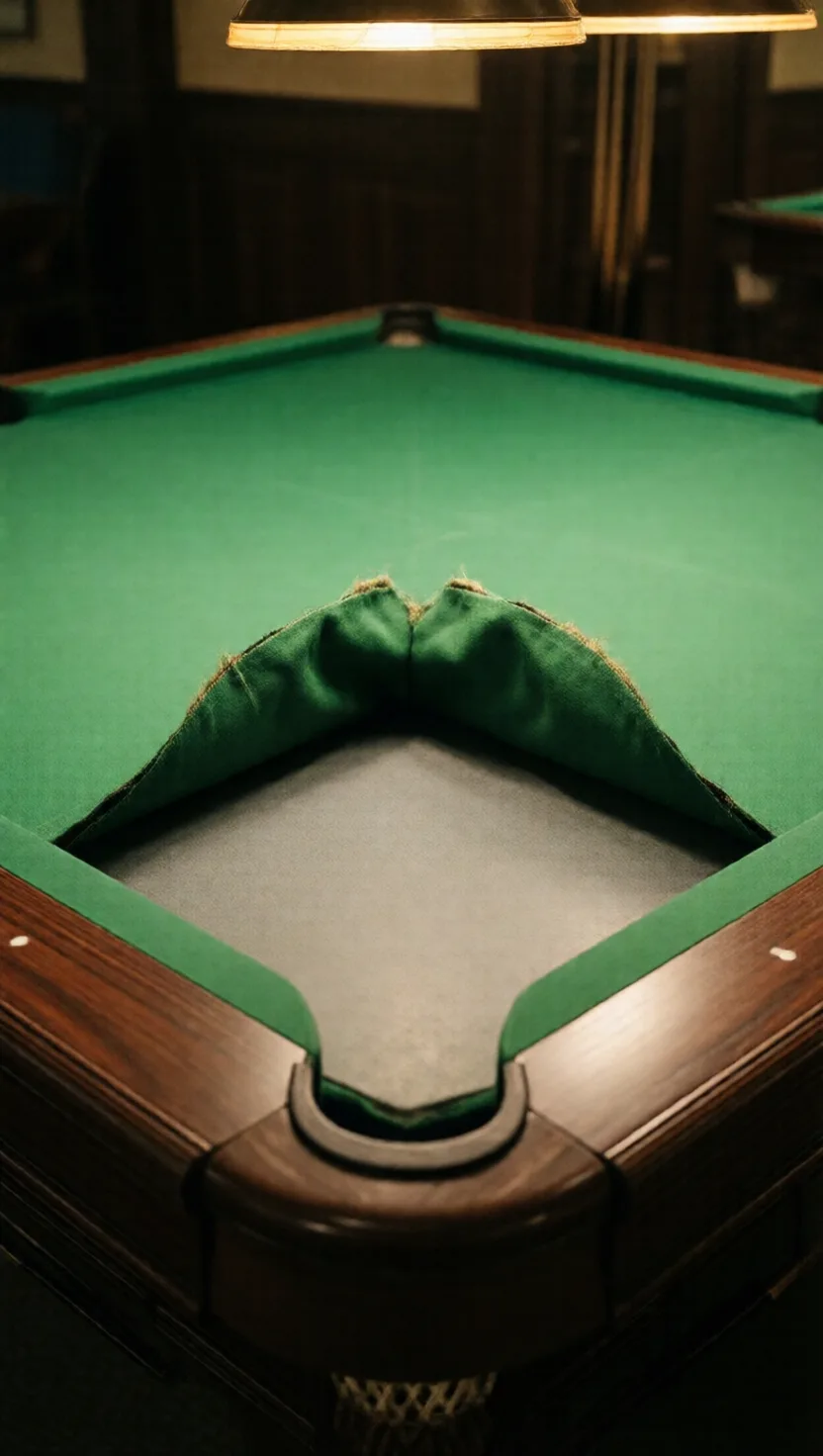
Beneath the cloth of a professional pool or snooker table lies a bed of slate, ground dead flat. Slate is chosen because it can be machined to a near-perfect plane and, unlike wood, it won't warp, swell or sag with damp or heat — so the balls keep rolling true for decades. Tournament tables the world over are slate-bedded; the cheaper tables that aren't never play quite right.
One Welsh pit roofed half the world

One Welsh pit roofed half the world

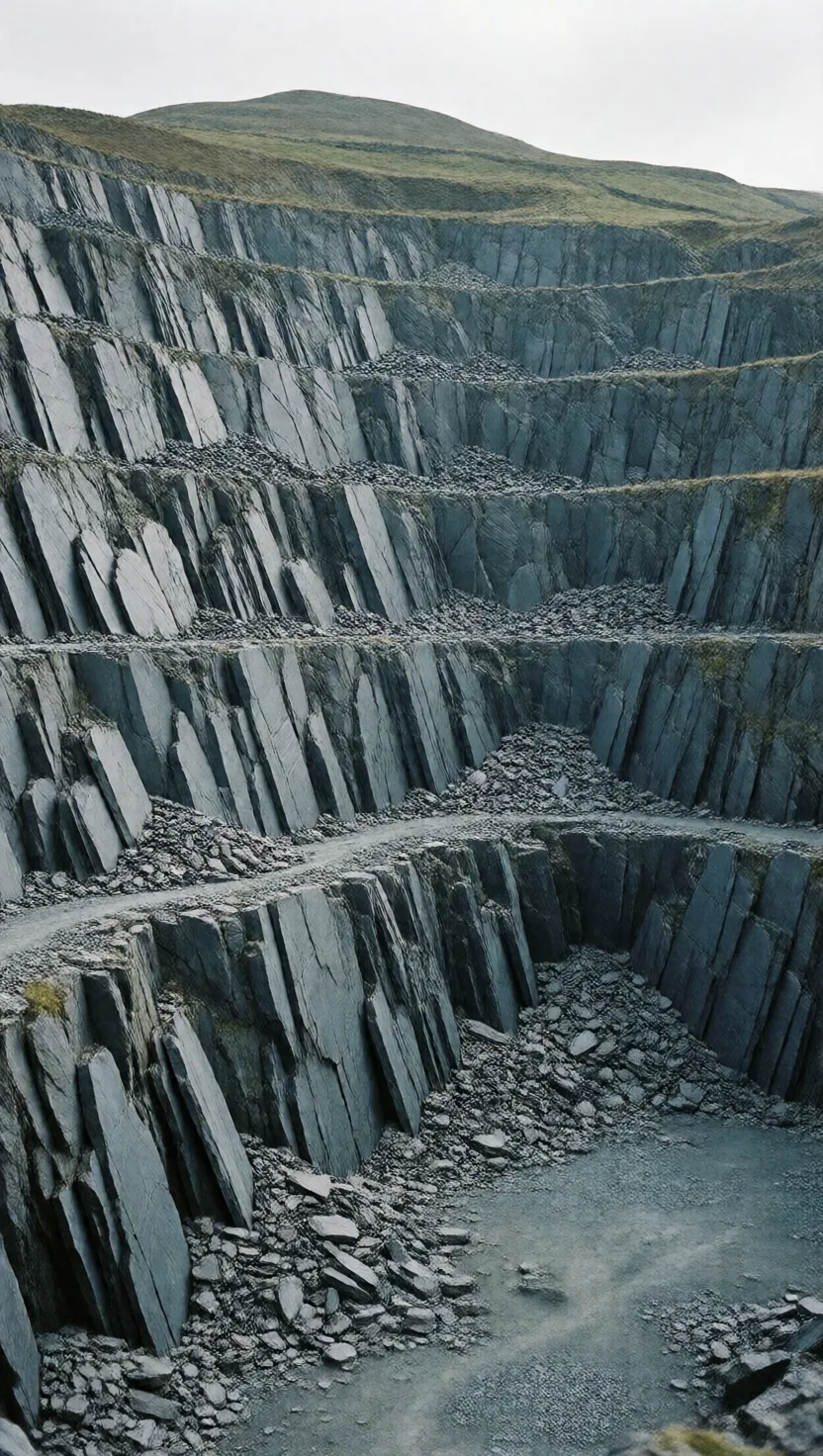
Through the 1800s, Welsh slate covered roofs from the Americas to Australia. The Penrhyn quarry in north Wales grew into the largest slate quarry on Earth, employing around 3,000 men and cutting on the order of 100,000 tonnes a year. Whole towns were built around splitting rock by hand, and the terraced quarry landscape they left behind is now a World Heritage Site.
No machine splits it as well as a hand can

No machine splits it as well as a hand can

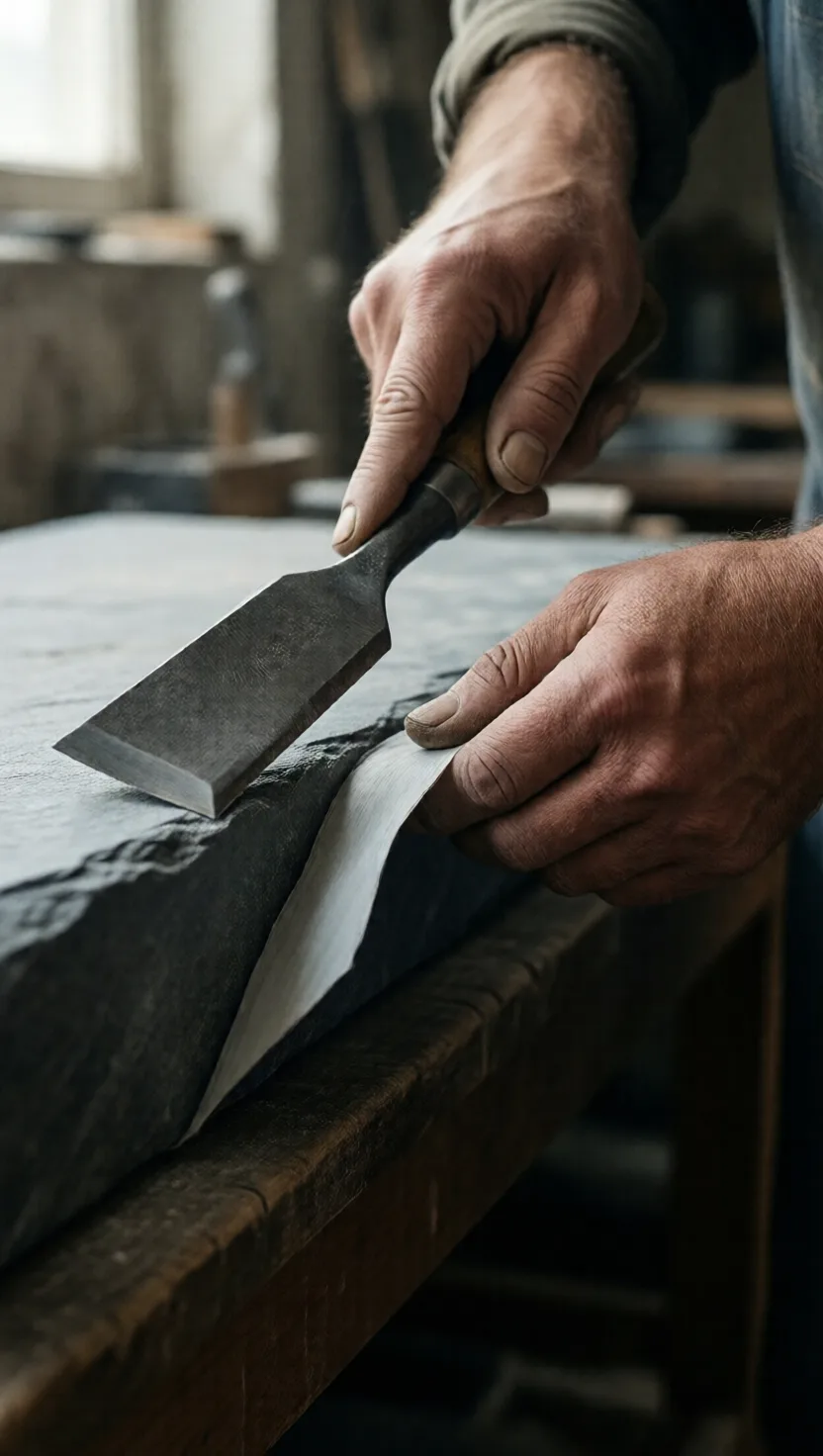
Turning a block into roofing slate is still largely handwork. A splitter rests the slab on a knee, sets a wide chisel along the grain, and taps once — and the stone peels into two smooth, nearly identical sheets, again and again, down to a few millimetres thick. The feel for exactly where the rock will part is a craft that takes years to learn and resists machinery.
Squashed fossils show how hard mountains pressed

Squashed fossils show how hard mountains pressed

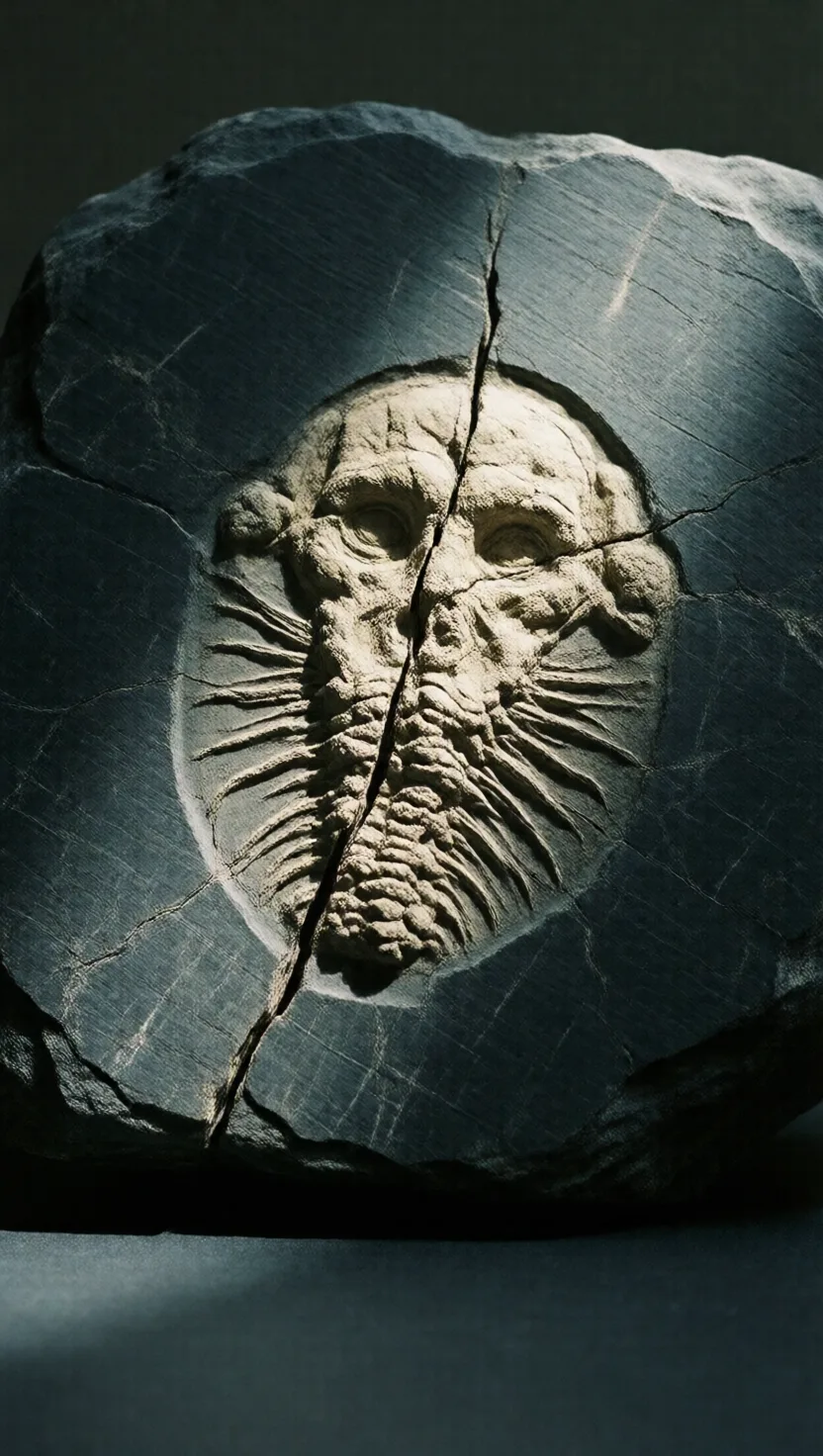
When mud turned to slate under tectonic pressure, any fossils trapped inside were stretched and sheared along with the rock. Because geologists know the true shape of creatures like trilobites and graptolites, the distortion becomes a ruler: measuring how badly a fossil is squashed reveals the strain the stone endured — in some slates the rock was shortened by 50 to 70 percent.
Children once wrote on stone, then wiped it clean

Children once wrote on stone, then wiped it clean

Before cheap paper, nearly every schoolchild wrote on a small framed sheet of slate, using a pencil cut from softer slate or soapstone. The marks wiped away with a cloth, so the same surface served all day, every day — far cheaper than paper, which stayed costly well into the 20th century. Whole generations learned their letters and sums on a stone tablet they slowly wore smooth.
It once held the wiring of electric cities

It once held the wiring of electric cities

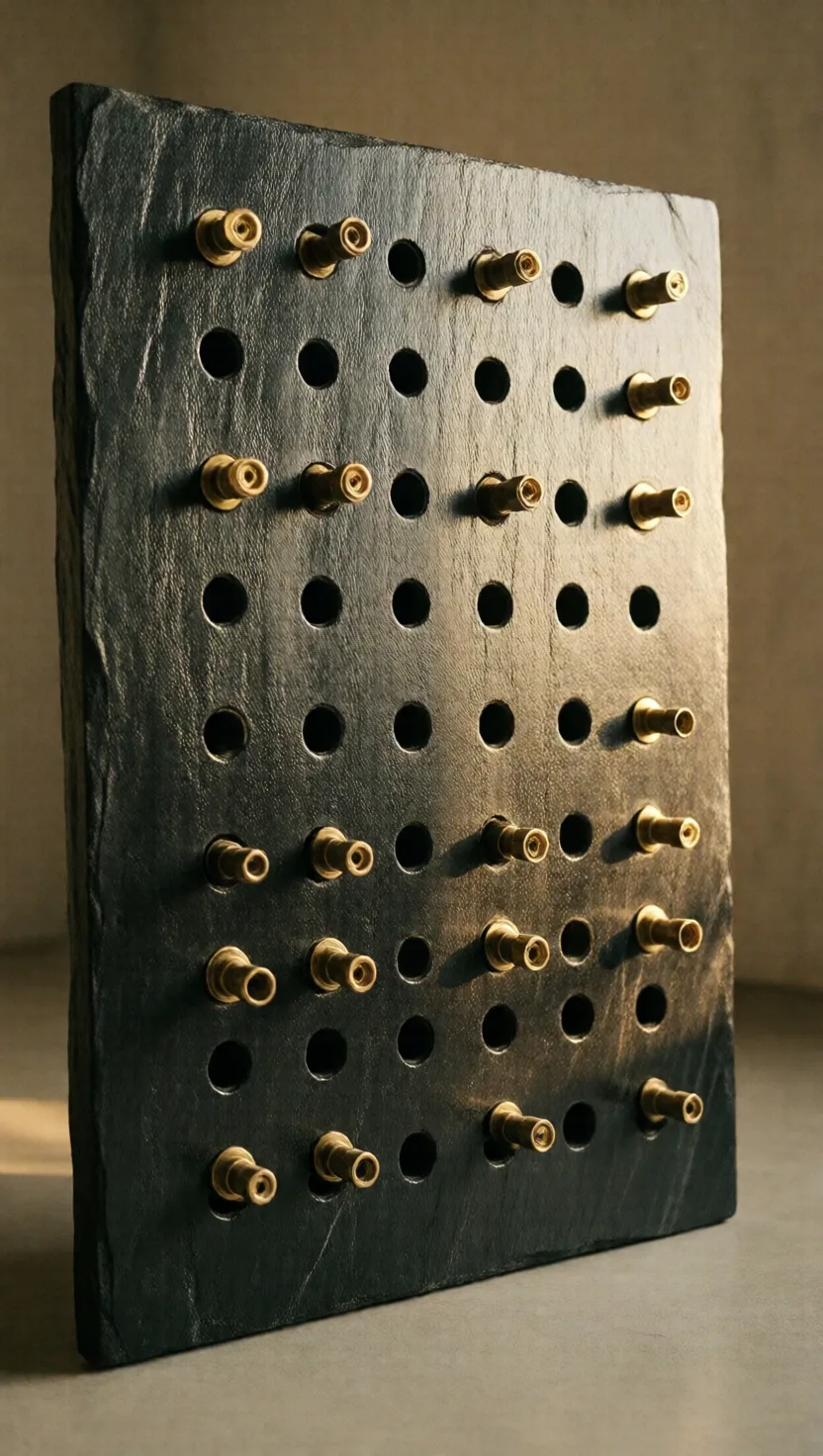
When cities first wired up for electricity, the panels behind the switches and fuses were often cut from slate. The stone is a natural electrical insulator and will not burn, and it was both tougher and cheaper than the marble it replaced — so early-1900s switchboards and motor controls were built on slabs of polished slate, until steel cabinets finally took over decades later.
tap →swipe ↑ for depthswipe ↓ to exit