Eight things hidden behind the giant bill

DC·154 Deep Cuts
Its giant bill is a built-in radiator

Its giant bill is a built-in radiator

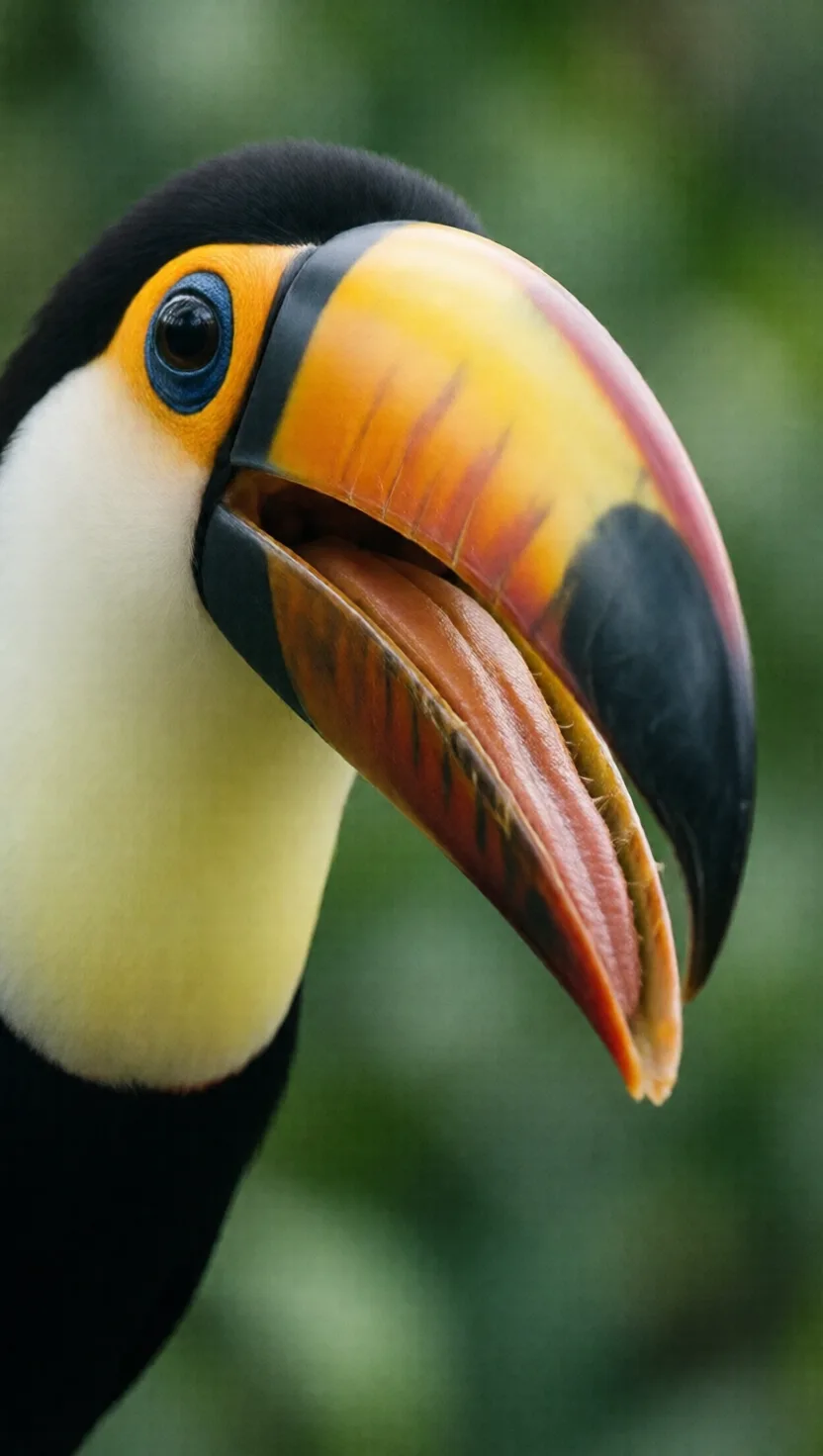
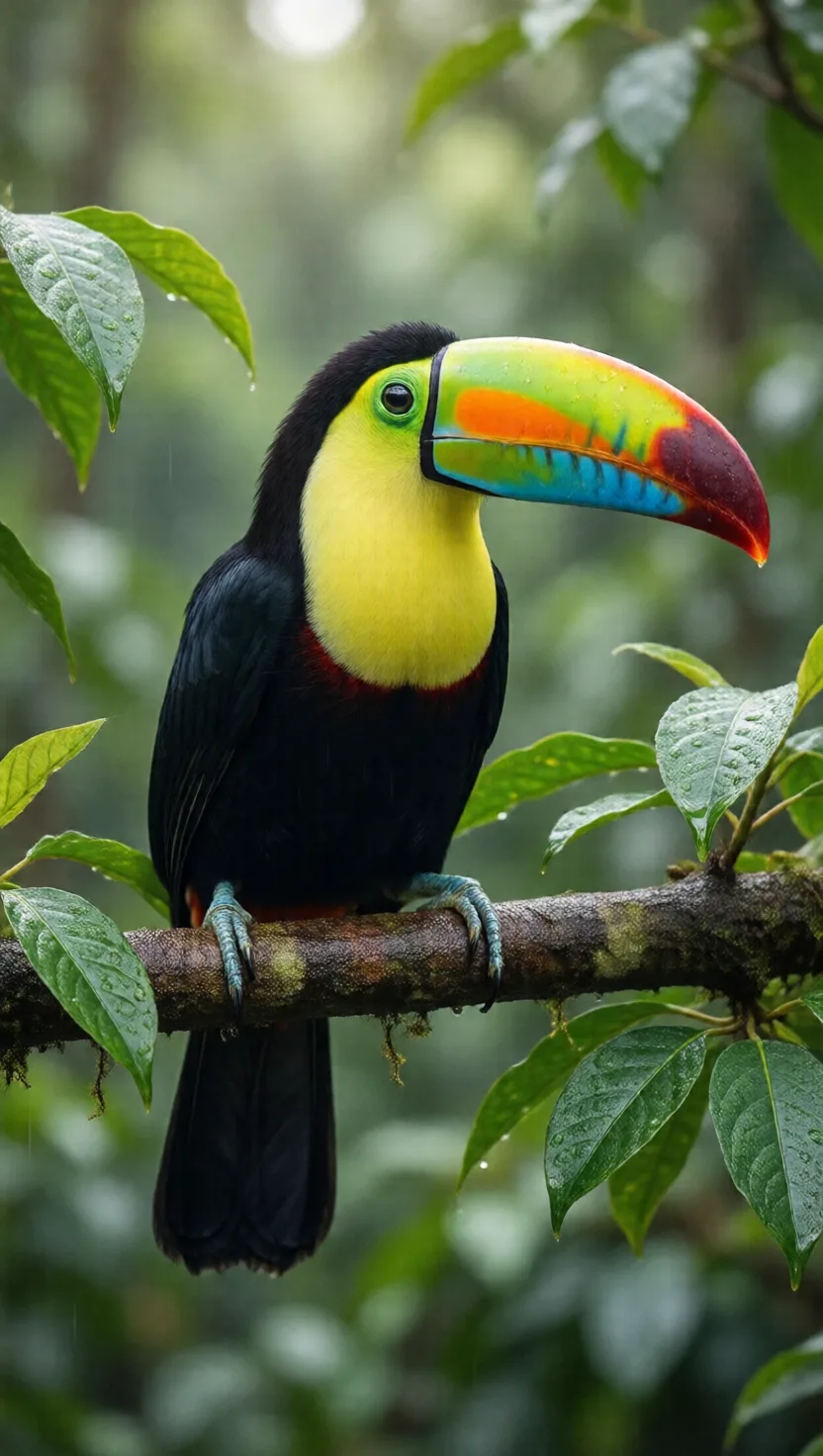
A toucan's bill is laced with blood vessels it can open and close at will. By flushing the bill with warm blood, the bird dumps heat through the bare surface — infrared studies show it can shed anywhere from 5 to 100 percent of its body heat this way, one of the largest 'thermal windows' of any animal, rivalling an elephant's ears. On cold nights it powers the bill down and tucks it away to stay warm.
That huge beak weighs almost nothing

That huge beak weighs almost nothing

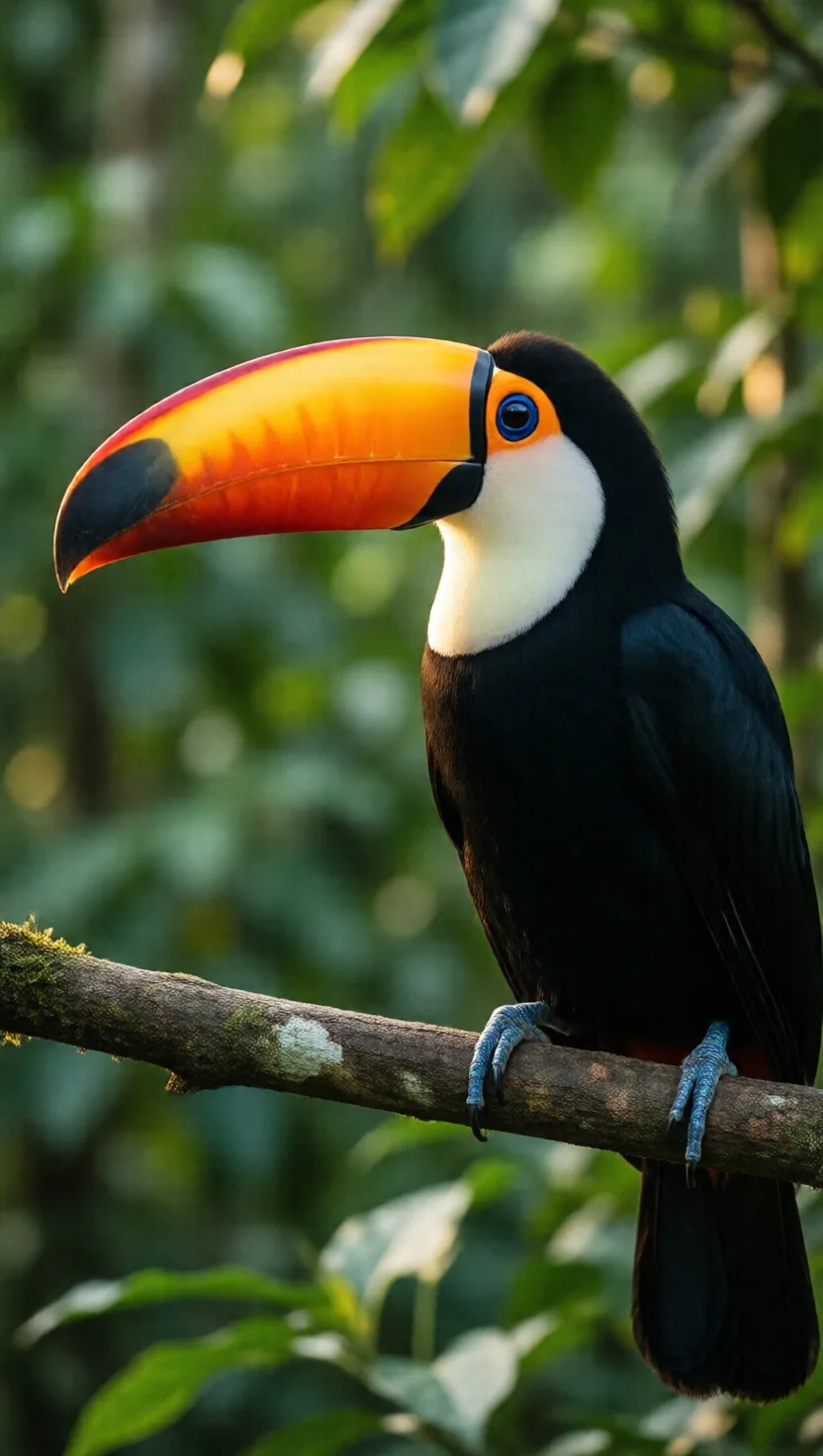
A toco toucan's bill runs about a third of the bird's entire length — proportionally the largest beak of any bird alive — yet it makes up only a small fraction of the body weight. Inside, a thin shell of keratin covers a scaffold of bony struts and air pockets, a rigid foam that is mostly empty space. The trick gives the toucan an outsized tool without ever grounding it.
Behind the beak hides a frayed, feathery tongue

Behind the beak hides a frayed, feathery tongue

Reach past the bill and you find a tongue up to 15 centimetres long — narrow, grey, and fringed with bristles down both edges so it looks almost like a feather. Those frayed sides turn it into a sensitive tasting and food-handling tool, helping the bird flip fruit back into its throat. It is nothing like the short muscular tongue most birds carry.
At night it folds into a ball and vanishes

At night it folds into a ball and vanishes

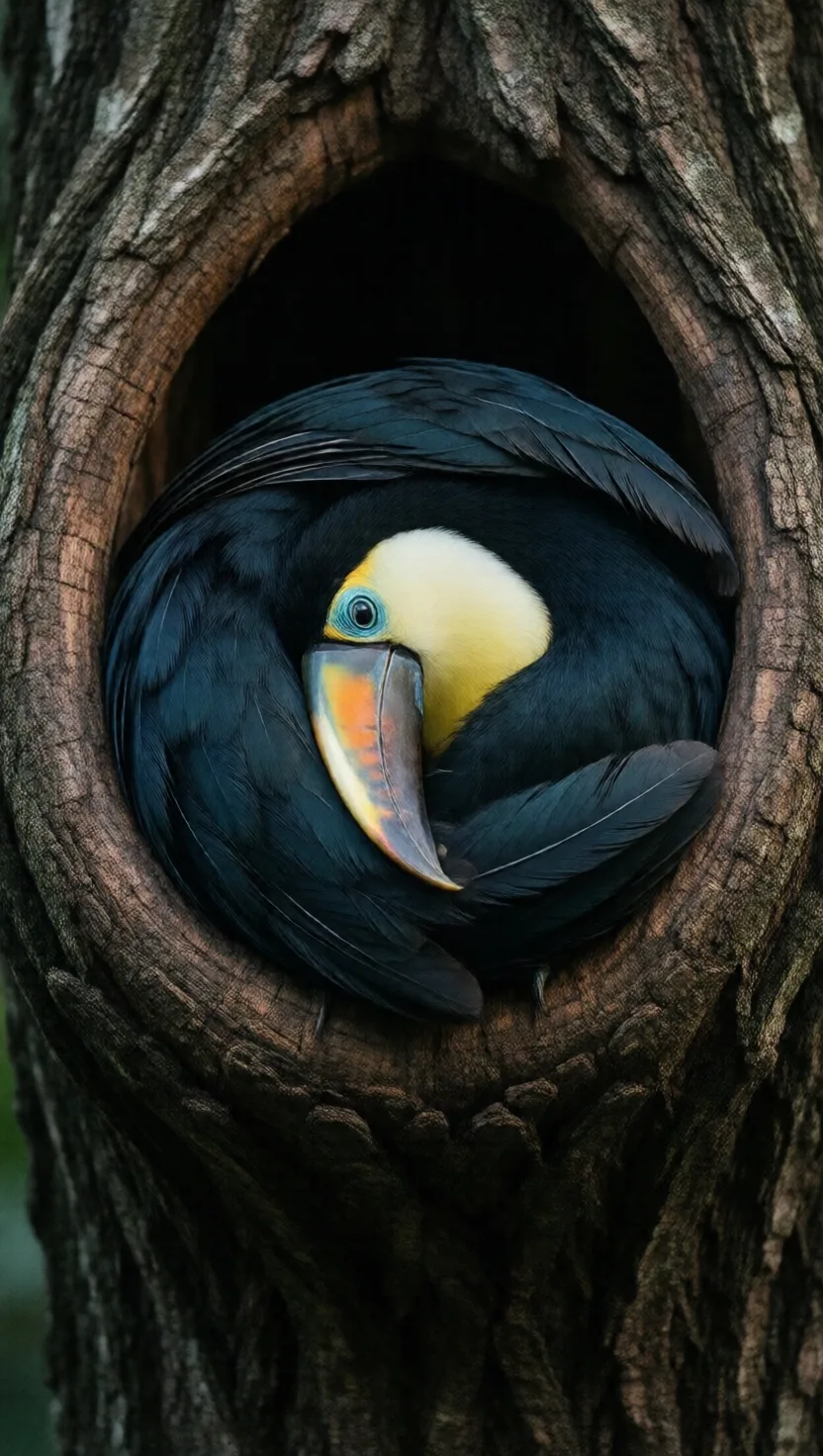
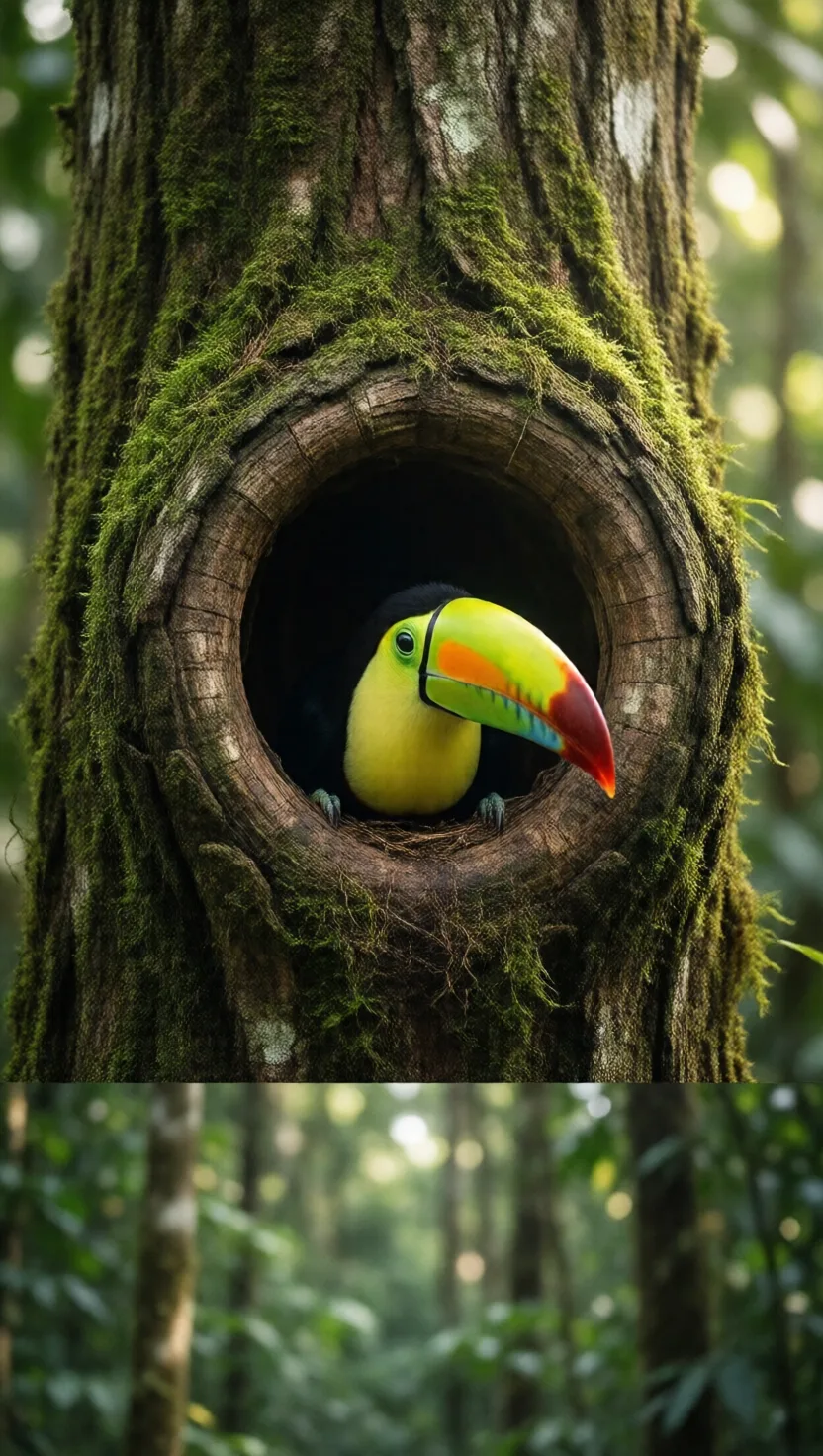
To sleep, a toucan turns its head right around and lays the big bill flat along its back, then flips its tail up and over to cover it — folding into a round puff of feathers half its waking size. Several adults may pack into a single tree hollow this way. Tucking the bill in among the feathers also keeps that heat-leaking surface warm through the night.
Two toes forward, two back — a built-in clamp

Two toes forward, two back — a built-in clamp

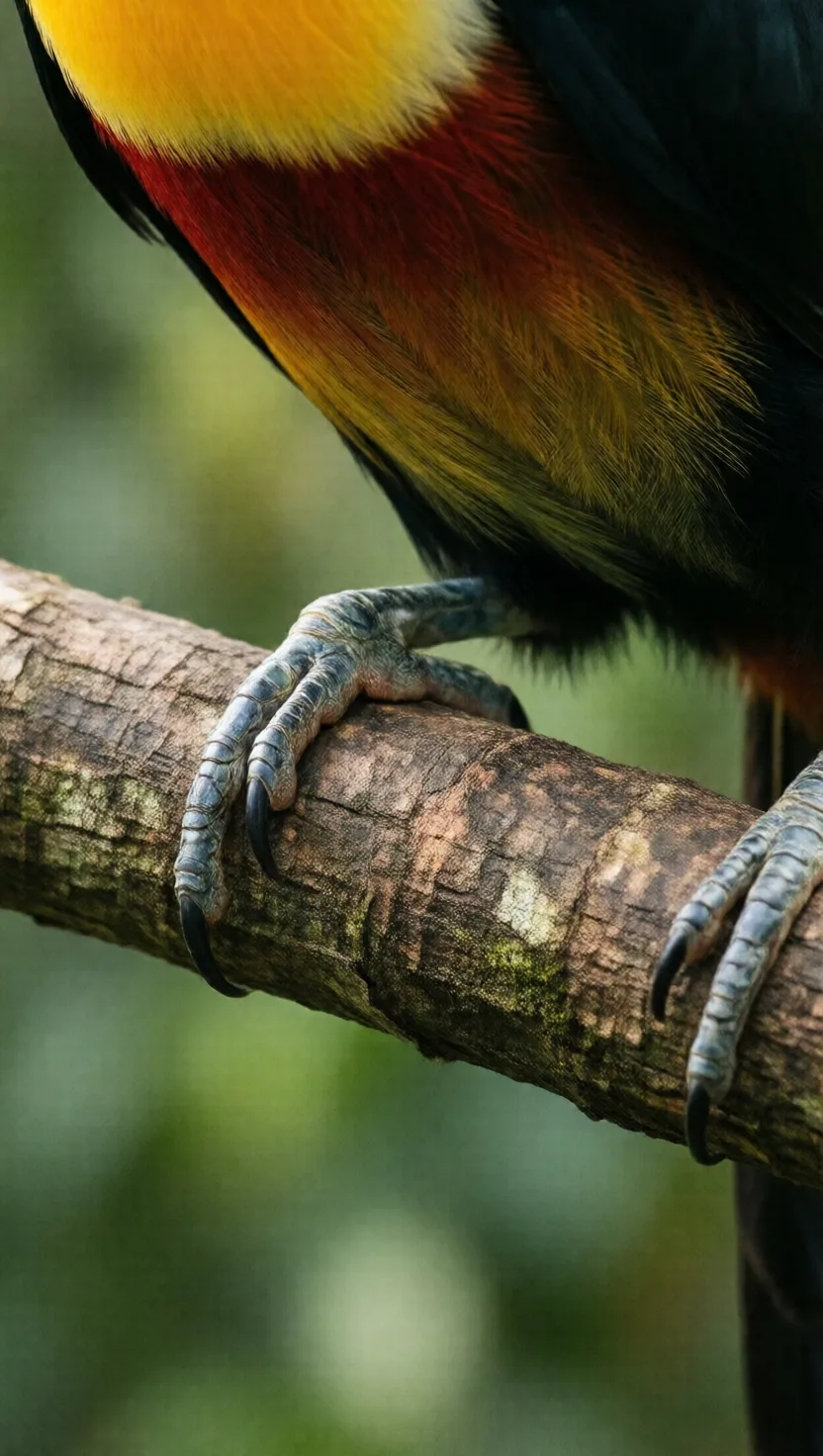
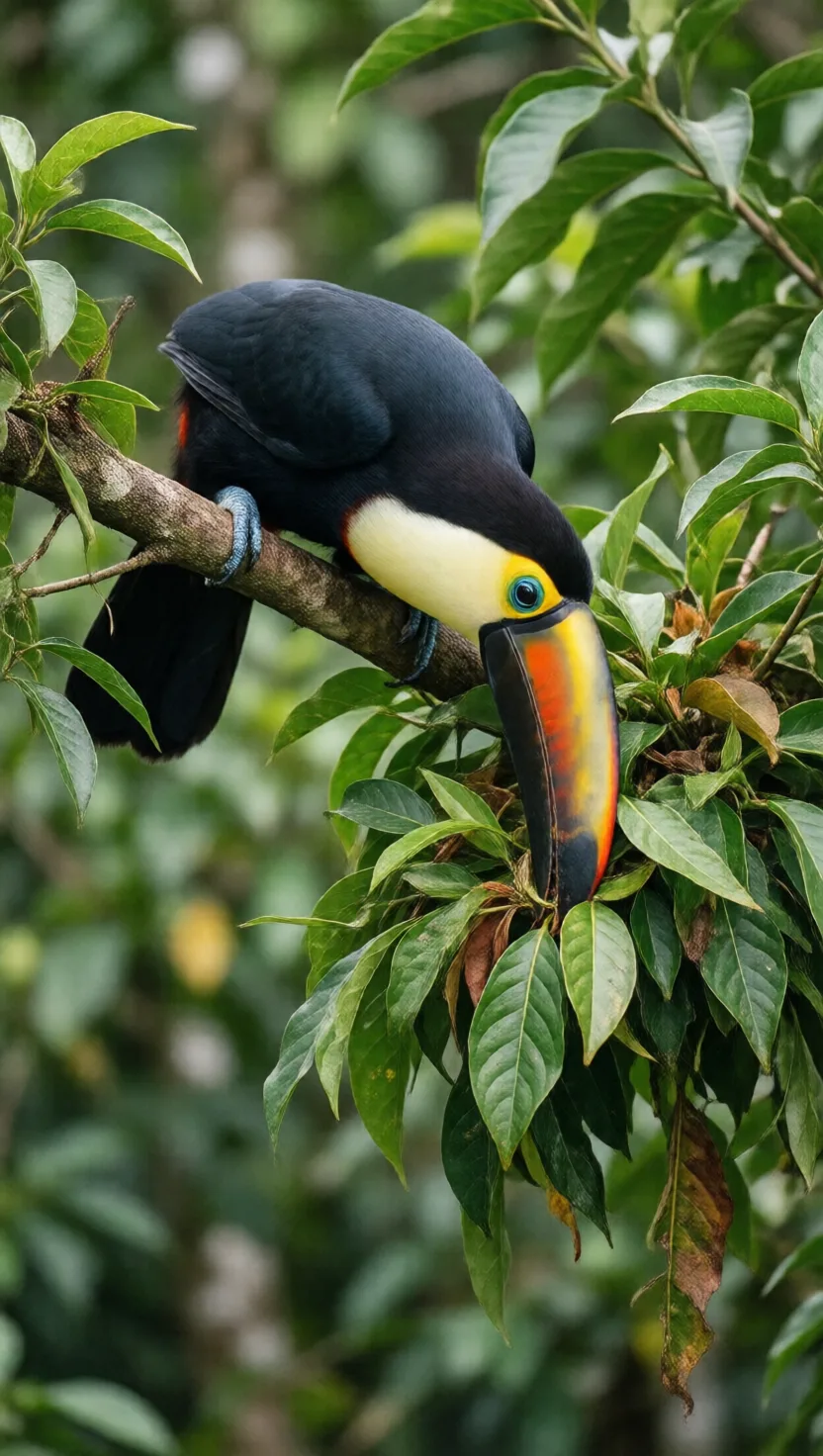
A toucan's foot is zygodactyl: two toes point forward and two point backward, forming an X that grips a perch like a clamp. The arrangement lets the bird hold tight to a thin branch while it leans far out and stretches that long bill to reach fruit on twigs too flimsy to perch on. It also makes toucans nimble, hopping from limb to limb rather than walking.
It can barely fly across a clearing

It can barely fly across a clearing

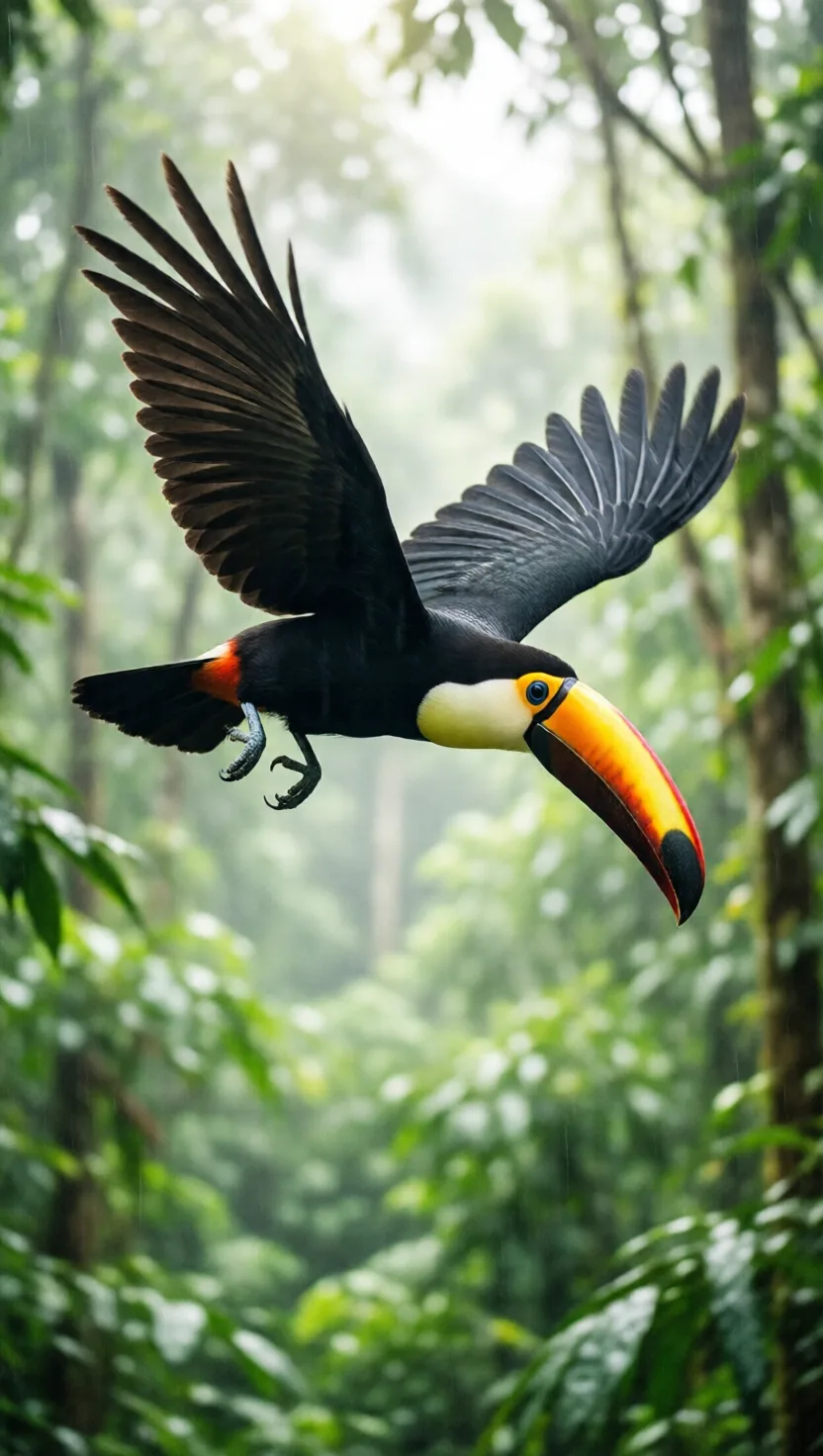
For all its size, a toucan is a poor flier. It beats its wings hard a handful of times, then glides with the heavy bill pulling it downward, rarely crossing more than about 100 metres at a stretch. The bill even blunts its depth perception, so judging a landing is awkward. Toucans get around the canopy mostly by hopping and climbing rather than committing to long flights.
Chicks hatch bald, blind and beakless

Chicks hatch bald, blind and beakless

A newly hatched toucan looks nothing like the adult: pink, naked, blind, and with no trace of the famous bill, which takes months to grow to full size. The chicks even have spiky pads on their heels to shield their feet against the bare, rough floor of the nest cavity — and those pads simply slough away once the young bird is ready to leave the hollow.
The fruit-lover is also a nest robber

The fruit-lover is also a nest robber

Toucans look like gentle fruit-eaters, and they really are vital seed-spreaders — but they are omnivores at heart. With that long bill they probe other birds' nests and eat the eggs and nestlings, and they will take insects, lizards and other small prey too. The extra protein matters most in breeding season. Even another toucan's nest is not safe from them.
tap →swipe ↑ for depthswipe ↓ to exit