Why handicapping a model on purpose makes it generalize.

SRC·23 Source
It aces every practice run, then flunks the real world.

It aces every practice run, then flunks the real world.

A model with room to spare doesn't understand its training data — it memorizes it, flaws and coincidences and all. Like a hothouse bloom raised under perfect glass, it looks flawless until the moment it meets real weather. The cure sounds backwards: cripple it on purpose while it learns.

The trap: neurons quietly conspire.

The trap: neurons quietly conspire.

Left alone, units strike private deals — one learns to lean on the exact output of another. Like a human pyramid: every body braces against precise others, and it stands only while no one moves. Pull one out and the whole structure drops. The model isn't learning the signal — it's memorizing a fragile arrangement that only holds on the data it saw.
The fix: silence a random half, every step.

The fix: silence a random half, every step.

h~=rh,rjBernoulli(p)\tilde{\mathbf{h}} = \mathbf{r} \odot \mathbf{h}, \qquad r_j \sim \mathrm{Bernoulli}(p)
Dropout flips a coin for every unit each step and zeroes the losers — keep each with probability p, drop the rest (⊙ multiplies the mask in). Like a kitchen line where random stations go dark mid-service: no dish can lean on one cook always being there, so each learns to carry its own weight. That's noise, injected on purpose — a unit that might vanish can't be relied on.
A hidden bonus: you trained a whole crowd.

A hidden bonus: you trained a whole crowd.

h~j=rjphj,E ⁣[h~j]=hj\tilde{h}_j = \frac{r_j}{p}\, h_j, \qquad \mathbb{E}\!\left[\tilde{h}_j\right] = h_j
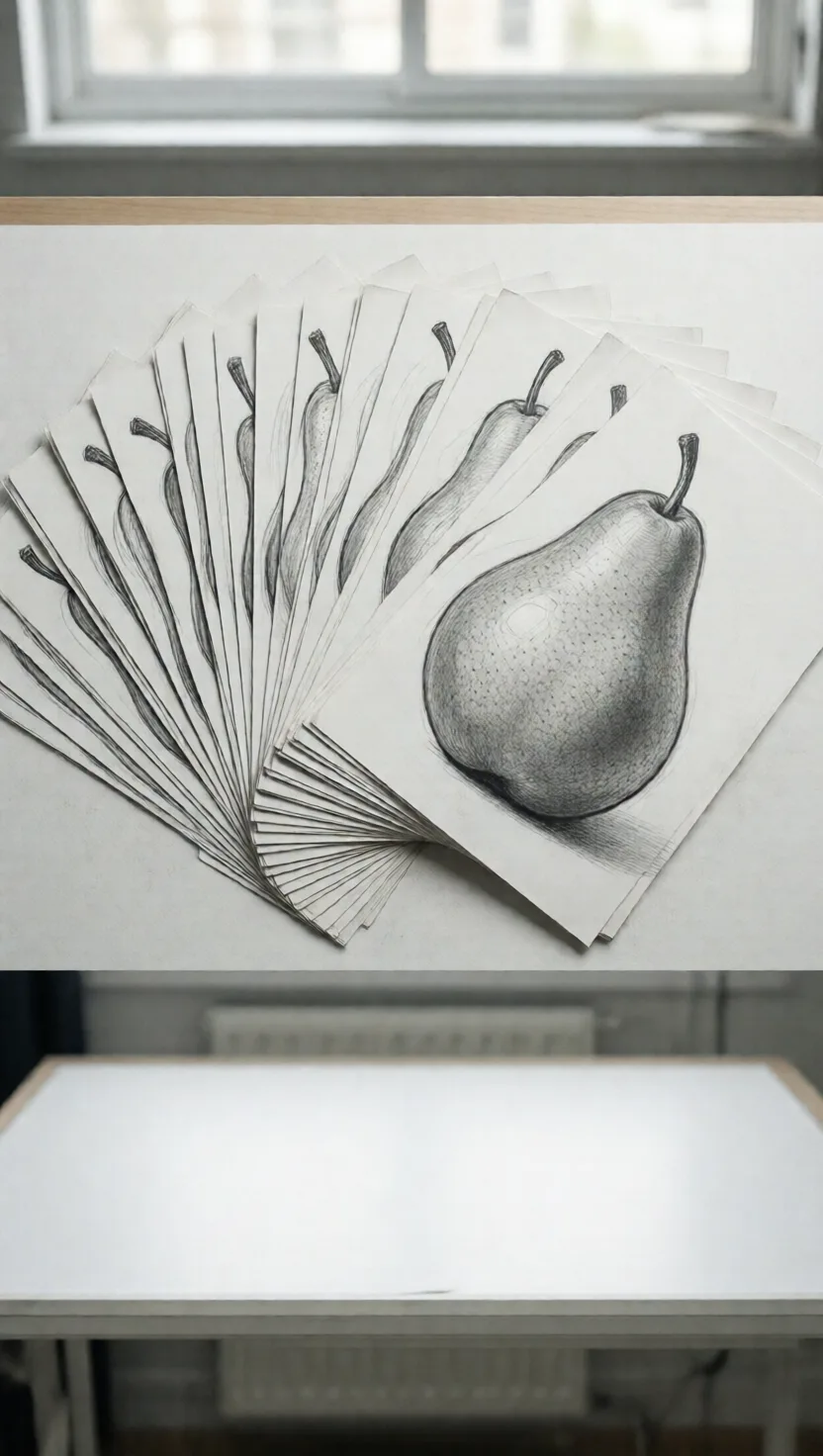
Every random mask is a different thinned network — over training you quietly drilled 2ⁿ of them, all sharing one set of weights. Like overlaying many rough sketches: each is slightly wrong, but stacked, their errors cancel into one steady likeness. To keep the books balanced, divide the survivors by p; then at test you switch everyone on and the full net averages the whole crowd at once.
Another lever: charge a fee for big weights.

Another lever: charge a fee for big weights.

L~(w)=L(w)+λ2w22    w(1ηλ)wηL\tilde{L}(\mathbf{w}) = L(\mathbf{w}) + \frac{\lambda}{2}\lVert \mathbf{w}\rVert_2^2 \;\Rightarrow\; \mathbf{w} \leftarrow (1-\eta\lambda)\,\mathbf{w} - \eta\,\nabla L
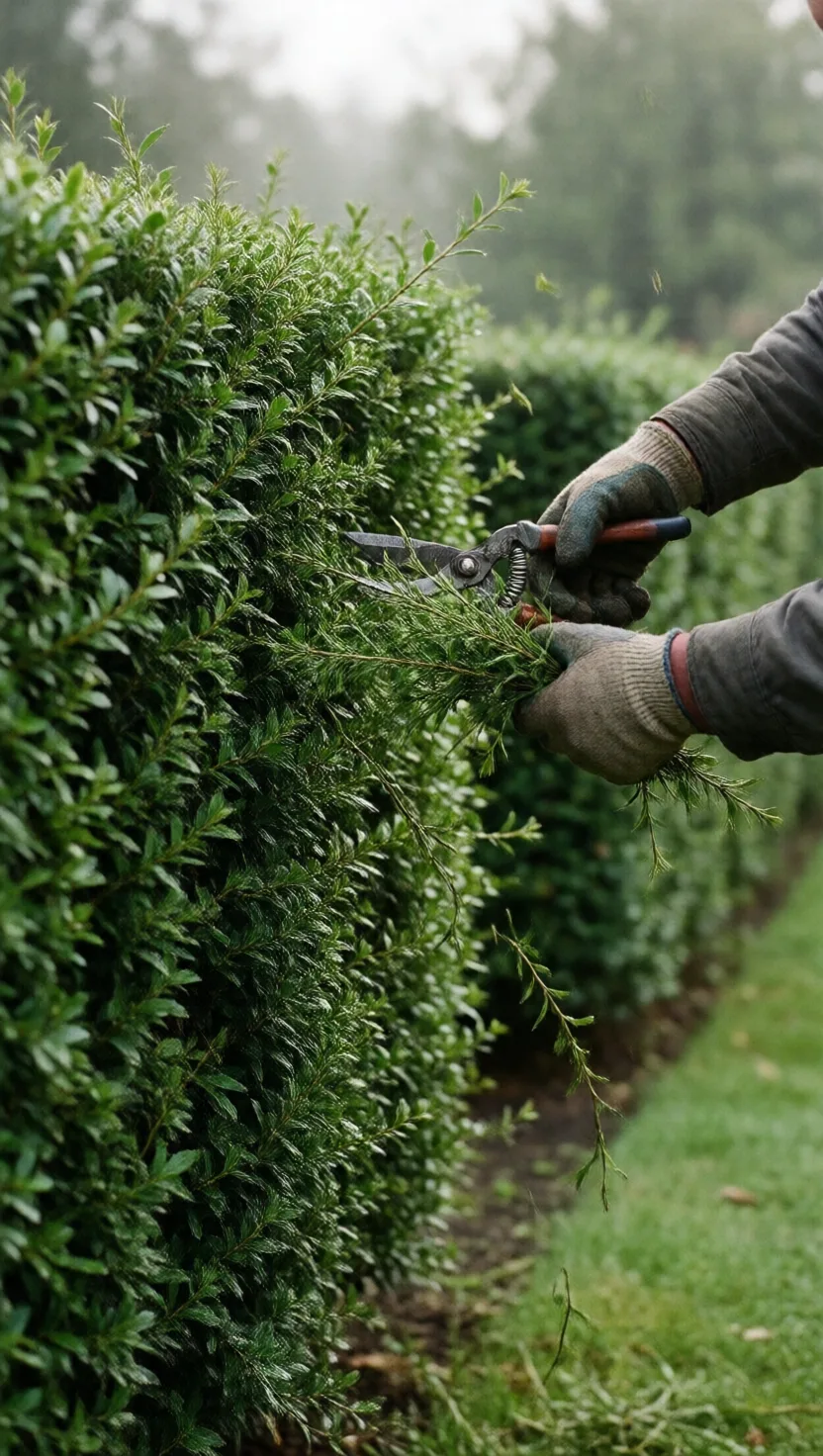
Weight decay adds a price to the loss for letting any weight grow large, so each step also nudges every weight a little toward zero — that's the (1−ηλ) factor. Like pruning a hedge: trim back the runaway growth and a clean, simple shape emerges. A model kept small can't bet everything on a few loud coincidences; it must spread its trust across small, shared evidence.
One bet under all of them.

One bet under all of them.

minθ  Ldata(θ)+λΩ(θ)\min_{\theta}\; L_{\text{data}}(\theta) + \lambda\,\Omega(\theta)
Strip away the names and every regularizer makes the same wager: fit the data, but pay for complexity (that's Ω). Like packing a single carry-on: the fixed small space forces you to drop everything that won't earn its place on any trip — so you keep only what travels well. The dial λ sets the exchange rate: turn it up and you buy simplicity, down and you buy memorizing.
The lesson: a handicap in training is strength in the wild.

The lesson: a handicap in training is strength in the wild.

Noise, dropped units, capped weights — each one makes training harder on purpose. Like running in a weighted vest: every stride costs more now, so on race day, unburdened, you're far stronger and steadier. A model that learns to perform while half-blinded and constrained is exactly the one that holds up when the real, unseen world arrives.
We made it forget on purpose. And it understood more.

We made it forget on purpose. And it understood more.

🌱 We didn't make it bigger or feed it more. We made parts of it go dark, at random — and it understood more. So maybe forgetting isn't the enemy of understanding, but the price of it. And beneath every trick sits one quiet bet: that the simplest story which fits is the truest one. But what if it isn't — what if some truths were never meant to be simple?
tap →swipe ↑ for depthswipe ↓ to exit