How a model improves at all — one small step downhill.

SRC·08 Source
A model isn't written. It's nudged downhill, one step at a time.

A model isn't written. It's nudged downhill, one step at a time.

Nobody hand-codes a model's billions of settings. It finds them — by measuring how wrong it is, then nudging every knob a hair toward less wrong. Do that a million times and a blank network becomes a mind. The method has a plain name: gradient descent — walking downhill on your own mistakes.

One number says how wrong it is. And a billion knobs to turn.

One number says how wrong it is. And a billion knobs to turn.

Training crushes every mistake into a single score — the loss. Lower is better, and it depends on all the knobs at once. Like a wall of identical valves stretching out of sight: turning them one at a time, trying combinations, would outlast the universe. You can't search this. You need a direction — which way each knob should turn, right now.
Which way is downhill? Ask the slope.

Which way is downhill? Ask the slope.

L(θ)=(Lθ1, , Lθn)\nabla L(\theta) = \left( \dfrac{\partial L}{\partial \theta_1},\ \dots,\ \dfrac{\partial L}{\partial \theta_n} \right)
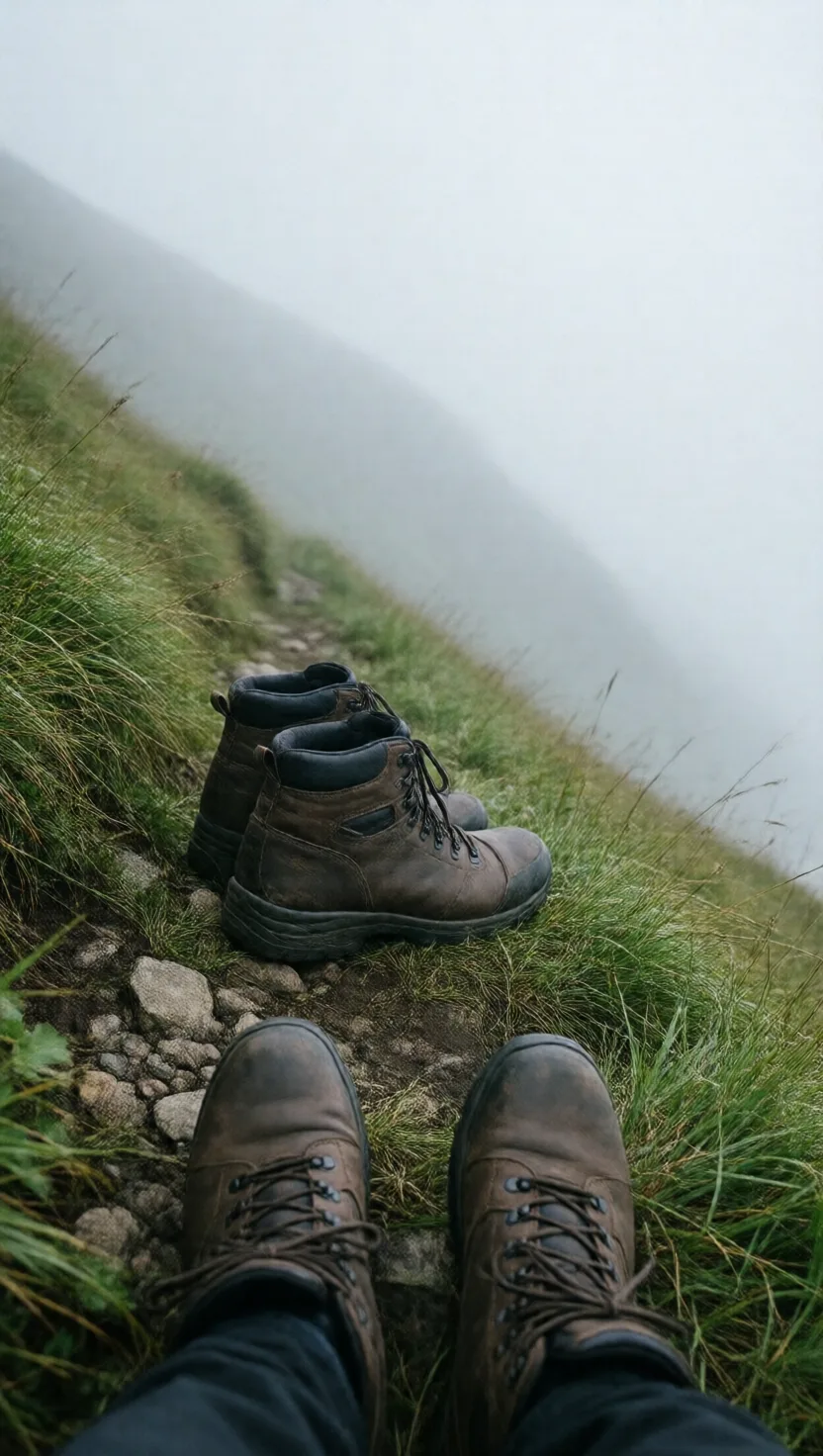
For one knob, its slope tells you which way the loss climbs, and how steeply. Bundle every knob's slope into a single arrow and you have the gradient — the steepest way uphill. Like reading a slope through your boots in fog: blind to the whole mountain, your feet still feel exactly which way the ground tilts. In plain words: the gradient is every knob's slope at once, packed into one arrow pointing at the fastest climb.
Want to go down? Step against the arrow.

Want to go down? Step against the arrow.

θt+1=θtηL(θt)\theta_{t+1} = \theta_t - \eta\, \nabla L(\theta_t)
The gradient points uphill — the last place we want to be. So flip it: take the knobs you have and step a little the opposite way. Then again. And again. Like tuning a guitar: too sharp, loosen a hair; too flat, tighten a hair — never yanking, always nudging toward the note. In plain words: new knobs = old knobs minus a small step (the η) down the slope. That one line, run a million times, is learning.
The step size is everything. Too big or too small, both fail.

The step size is everything. Too big or too small, both fail.

L(θηL)L(θ)ηL2L(\theta - \eta \nabla L) \approx L(\theta) - \eta\, \lVert \nabla L \rVert^{2}
That step size — η, the learning rate — is the most important dial in training. In plain words: one small step downhill lowers the loss by about (step size) × (steepness)², honest, predictable progress — but only while the step stays small enough that this straight-line estimate holds. Like a putt: rap it too hard and you race clean past the hole; tap it too soft and you stop short. The right pace drops it in.
Can't weigh every example each step. So take a handful.

Can't weigh every example each step. So take a handful.

L(θ)1BiBLi(θ)\nabla L(\theta) \approx \dfrac{1}{|B|} \sum_{i \in B} \nabla L_i(\theta)
The true slope means running every training example — far too slow to do each step. So grab a small random batch and average just their slopes. Like judging a sack of coffee by one handful: you don't pour out the whole sack — one honest scoop estimates the rest. In plain words: a cheap, jittery guess at the slope — and the jitter even helps shake you out of shallow ruts. This is stochastic gradient descent.
That's the whole engine. You're done when the ground goes flat.

That's the whole engine. You're done when the ground goes flat.

L(θ)=0\nabla L(\theta^{*}) = 0
Strip off the names and learning is four moves on a loop: measure how wrong, read the slope, step against it, repeat. Billions of knobs, one rule. In plain words: you've arrived when the gradient hits zero — no slope left, the ground is flat, nowhere down to go. That flat spot is the bottom the whole walk was bending toward. A blank network became a mind, and this — patient, blind, relentless descent — is the only thing that put it there.
🌱 But which bottom? It depends on where you began.

🌱 But which bottom? It depends on where you began.

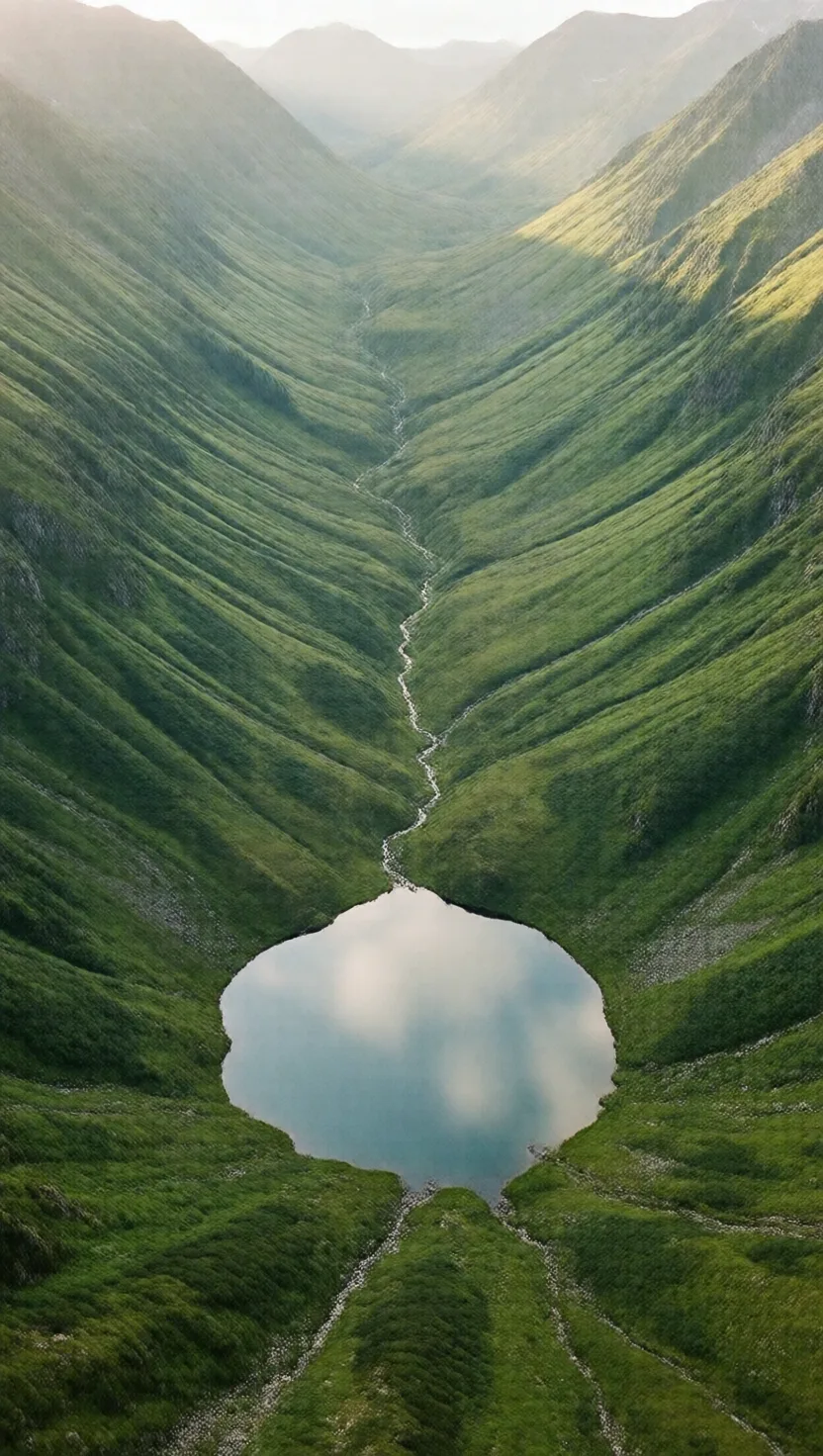
🌱 A landscape this vast has many valleys, not one. Flat ground only means a bottom, not the bottom — start somewhere else, step a little differently, and you come to rest in a wholly different basin. So the model you get isn't the only one that fit; it's the one your path happened to settle into. Is there a single true answer waiting down there at all — or only the hollow you rolled into, and the road that took you there?
tap →swipe ↑ for depthswipe ↓ to exit