Eight things about the only gem an animal grows

DC·206 Deep Cuts
The grain-of-sand pearl story is a myth

The grain-of-sand pearl story is a myth

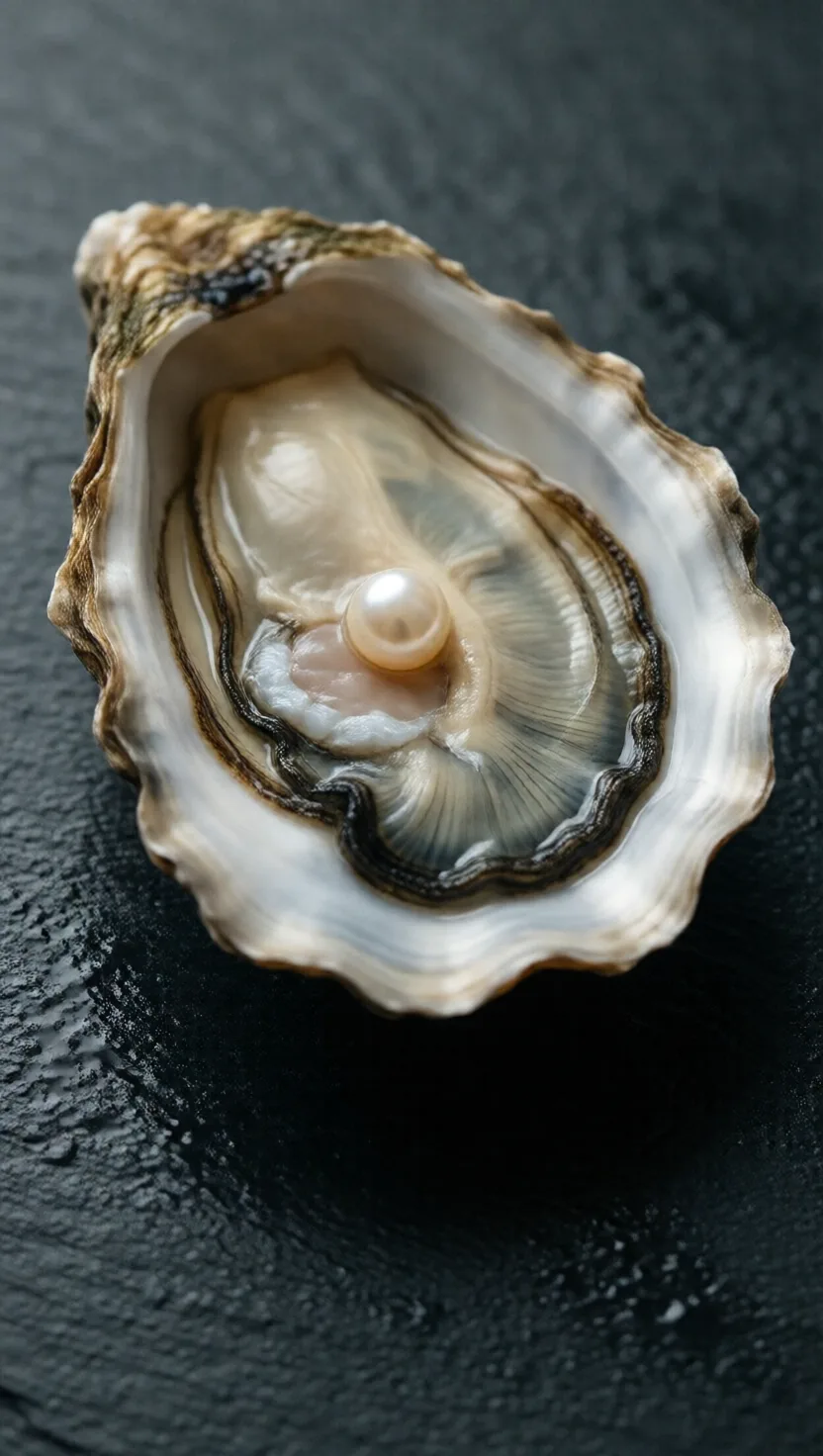
Everyone is told a pearl grows around a grain of sand that worked its way in, but it almost never happens that way. Sand is inert and slips back out without provoking anything. Real pearls usually begin with a parasite boring in, or a stray fragment of the mollusc's own soft mantle tissue getting displaced inside the body. Those living cells multiply into a sealed pocket, the pearl sac, which secretes layer after layer of nacre to wall the intruder off. Because it depends on chance, a natural gem pearl is genuinely rare.
Most pearls start as a bead from a river mussel

Most pearls start as a bead from a river mussel

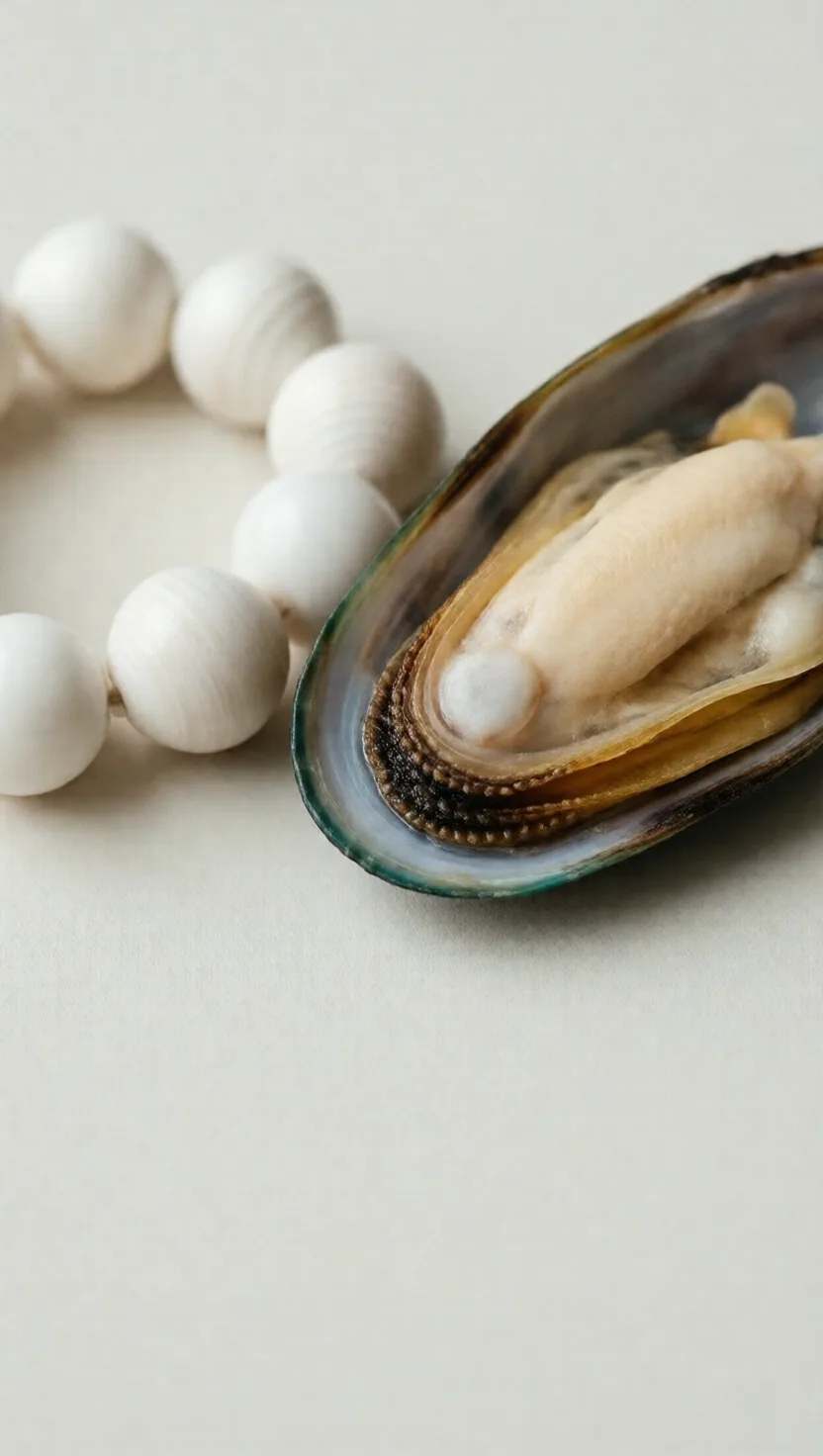
The round centre of a cultured pearl is usually not exotic at all: it is a polished bead cut from the thick shell of a freshwater mussel from the Mississippi river basin. Since the 1950s these American shells have been shipped to pearl farms in Japan and beyond, because the dense shell rarely cracks when the finished pearl is drilled for stringing, and oysters are far less likely to reject a bead of this familiar material than any substitute.
This pink pearl holds a flame and no shell-shine

This pink pearl holds a flame and no shell-shine

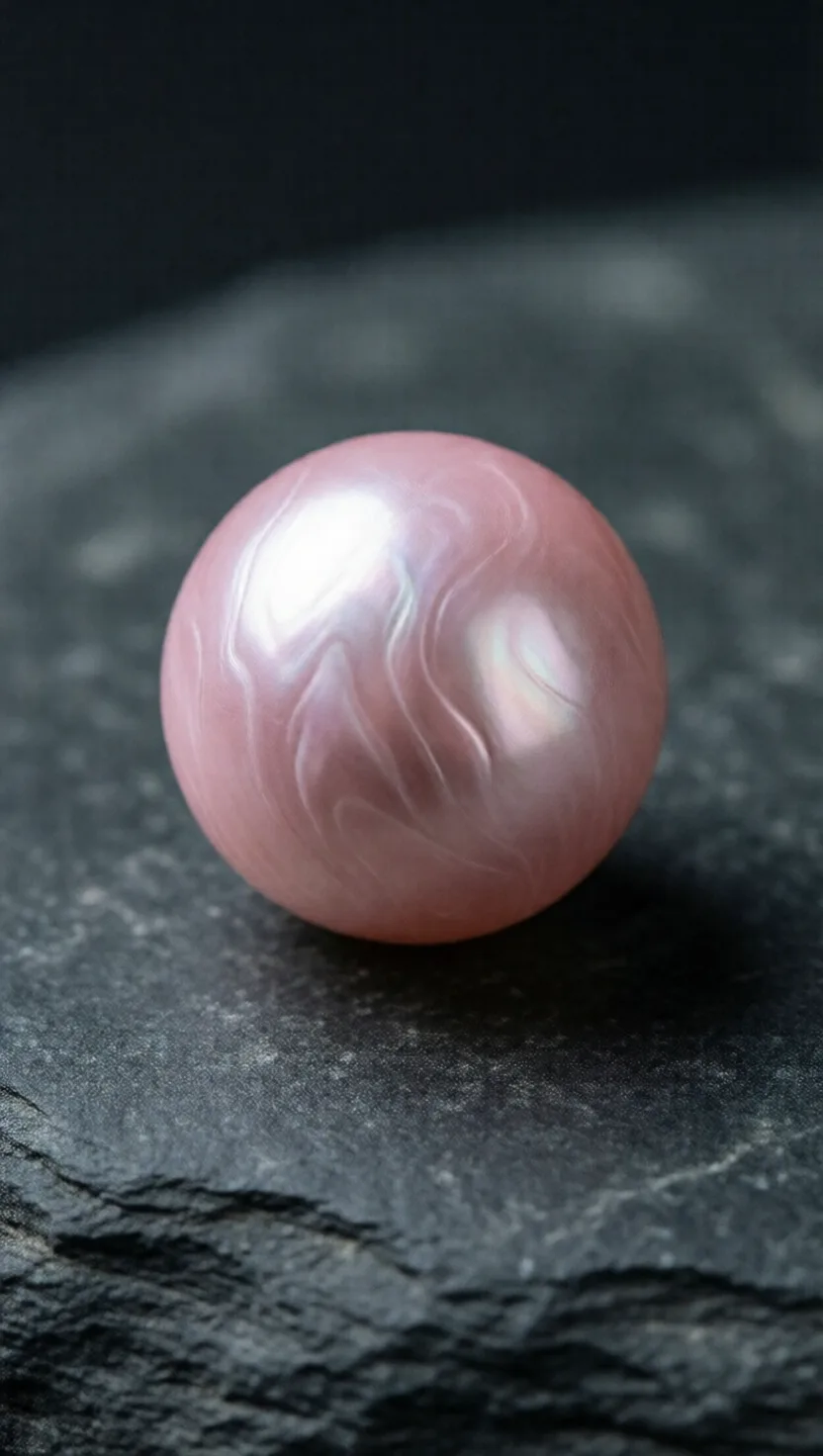
Not every pearl is iridescent. The queen conch, a big Caribbean sea snail, makes a pearl that is porcelain-smooth and pink rather than pearly, with a shimmering surface pattern that looks like licking flame. It has no nacre at all, so it never gained the rainbow lustre of an oyster pearl. For most of the last century nobody could farm them; reliable culturing of conch pearls was only worked out around 2009, which is why fine pink ones remain among the rarest gems.
A pearl's sheen is the same trick as a soap bubble

A pearl's sheen is the same trick as a soap bubble

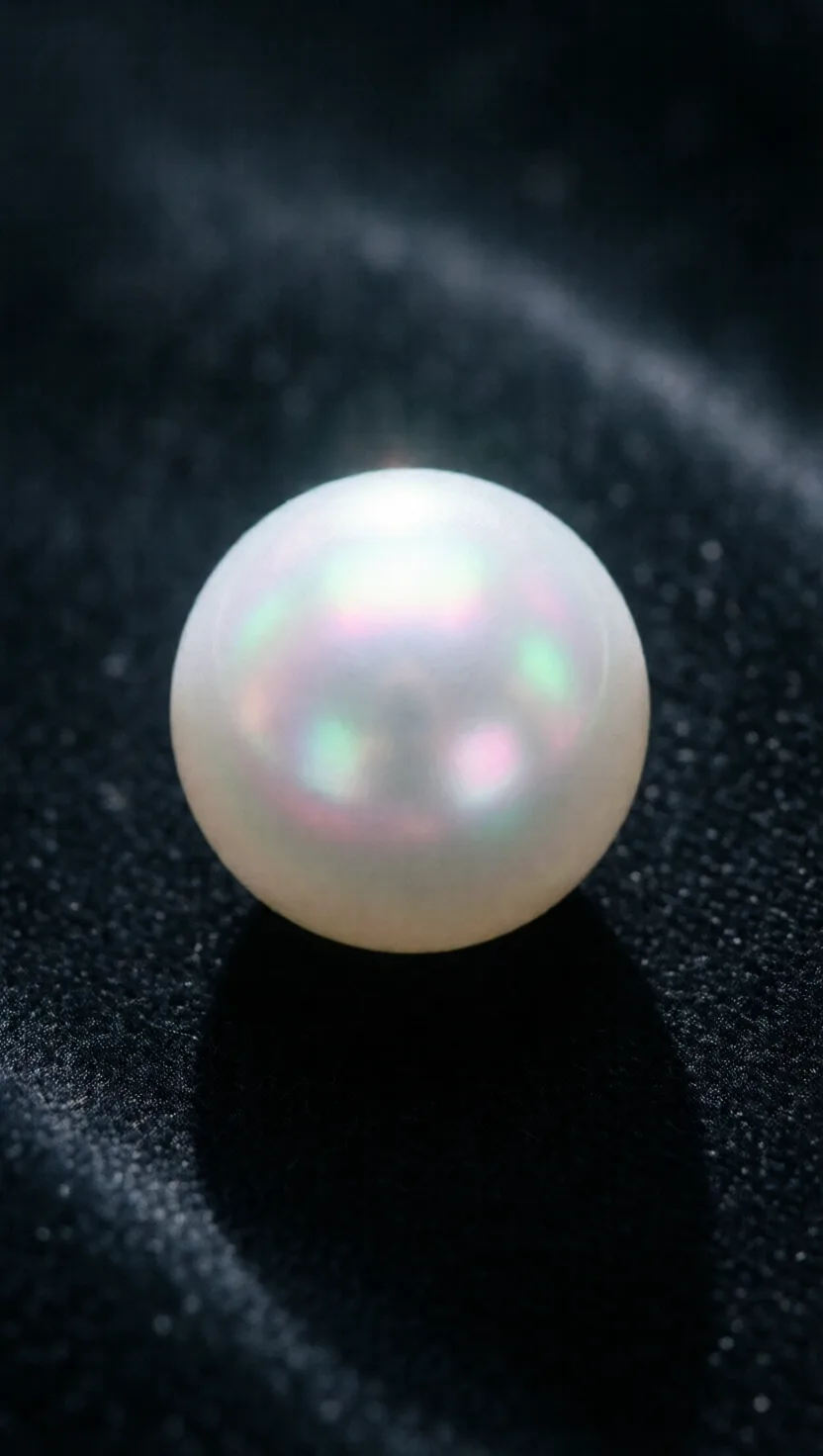
The soft glowing colours that seem to float just under a fine pearl's surface, called its orient, are not pigment. Nacre is built from countless flat tiles of aragonite, each only about 0.3 to 1.5 micrometres thick, close to the wavelength of visible light itself. Light bouncing off these stacked, translucent layers interferes and bends, reinforcing some colours and cancelling others depending on the angle, exactly the structural play of colour you see in a soap film or an oil slick.
Some pearls are pure nacre with nothing at the core

Some pearls are pure nacre with nothing at the core

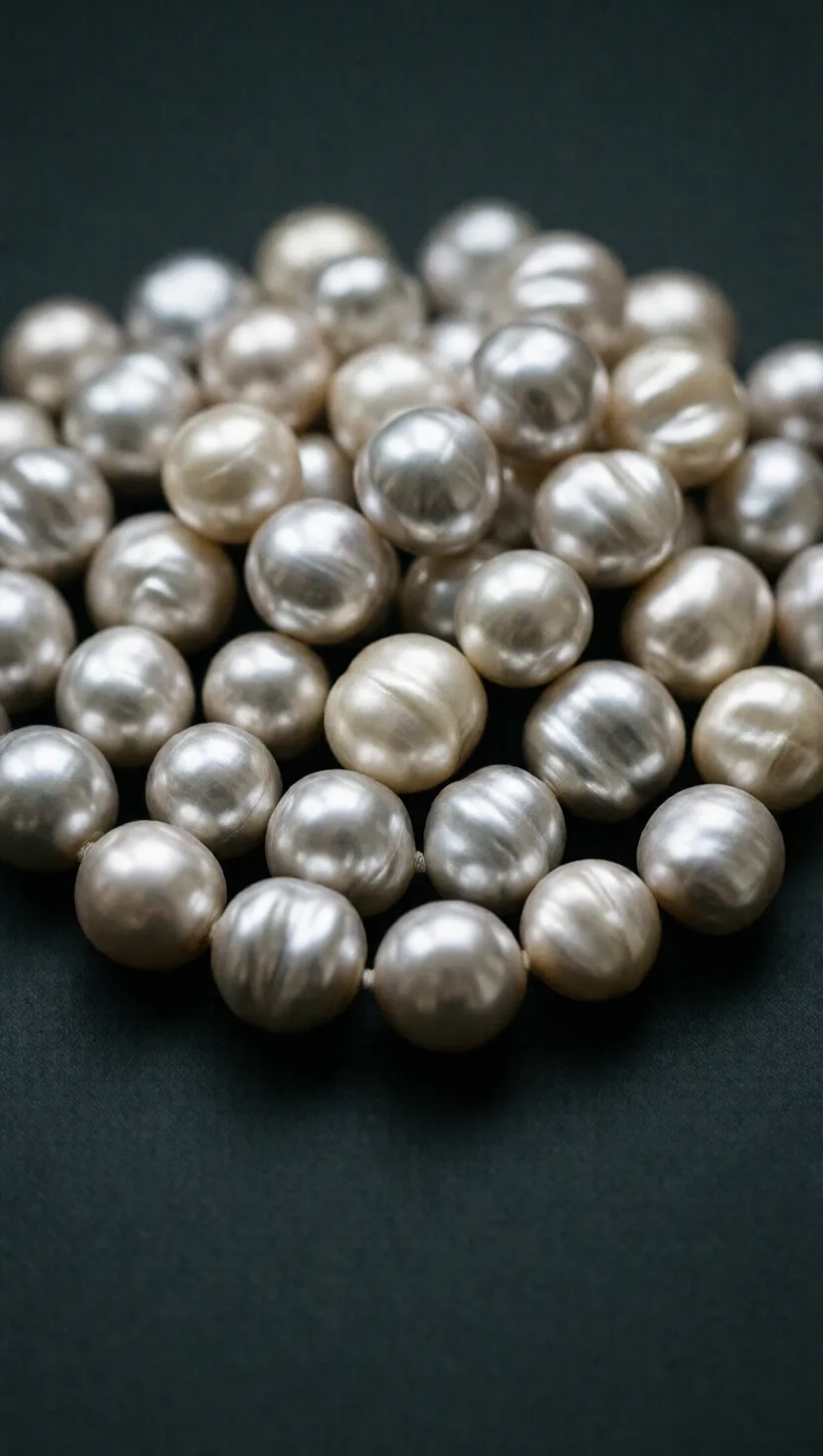
Keshi pearls, named with the Japanese word for poppy seed, form by accident on a pearl farm. When the bead nucleus is implanted along with a sliver of mantle tissue, that tissue can break free and form its own little pearl sac with no bead inside it. The result is a small, often baroque pearl made entirely of nacre, with no foreign core at all. Because it is solid nacre through and through, a keshi often shows unusually intense lustre and orient.
The biggest pearl weighs as much as a grown adult

The biggest pearl weighs as much as a grown adult

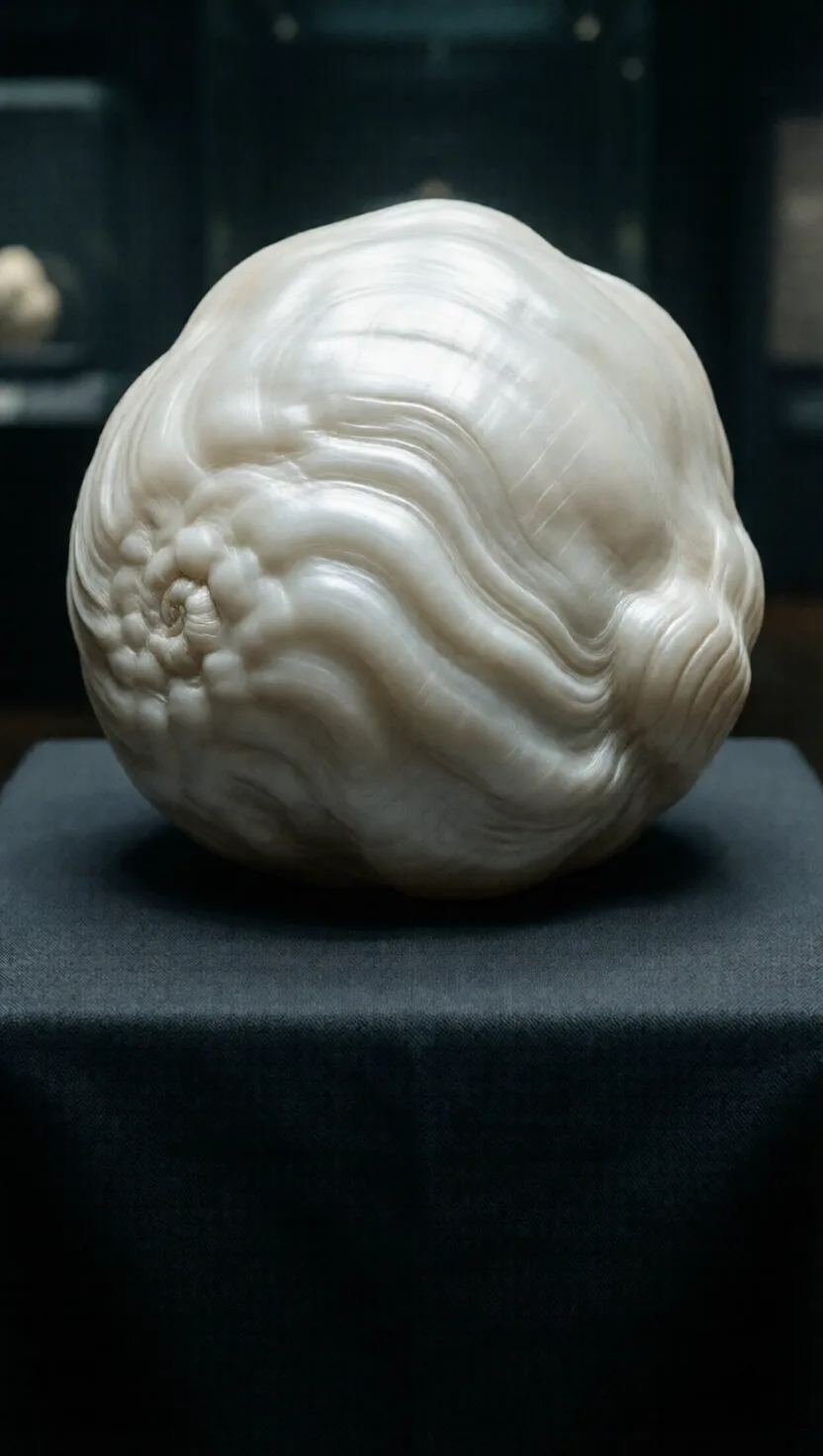
Pearls don't only come from oysters. A giant clam can grow an enormous one, and the largest known weighs about 34 kilograms, roughly 75 pounds and over half a metre across. Found off Palawan in the Philippines, it is non-nacreous, a matte, milky mass rather than a glossy gem. For a decade its owner, a fisherman, kept it tucked under his bed as a good-luck charm, with no idea he was sleeping above a record-breaking pearl.
A truly black pearl is dark by nature, not dye

A truly black pearl is dark by nature, not dye

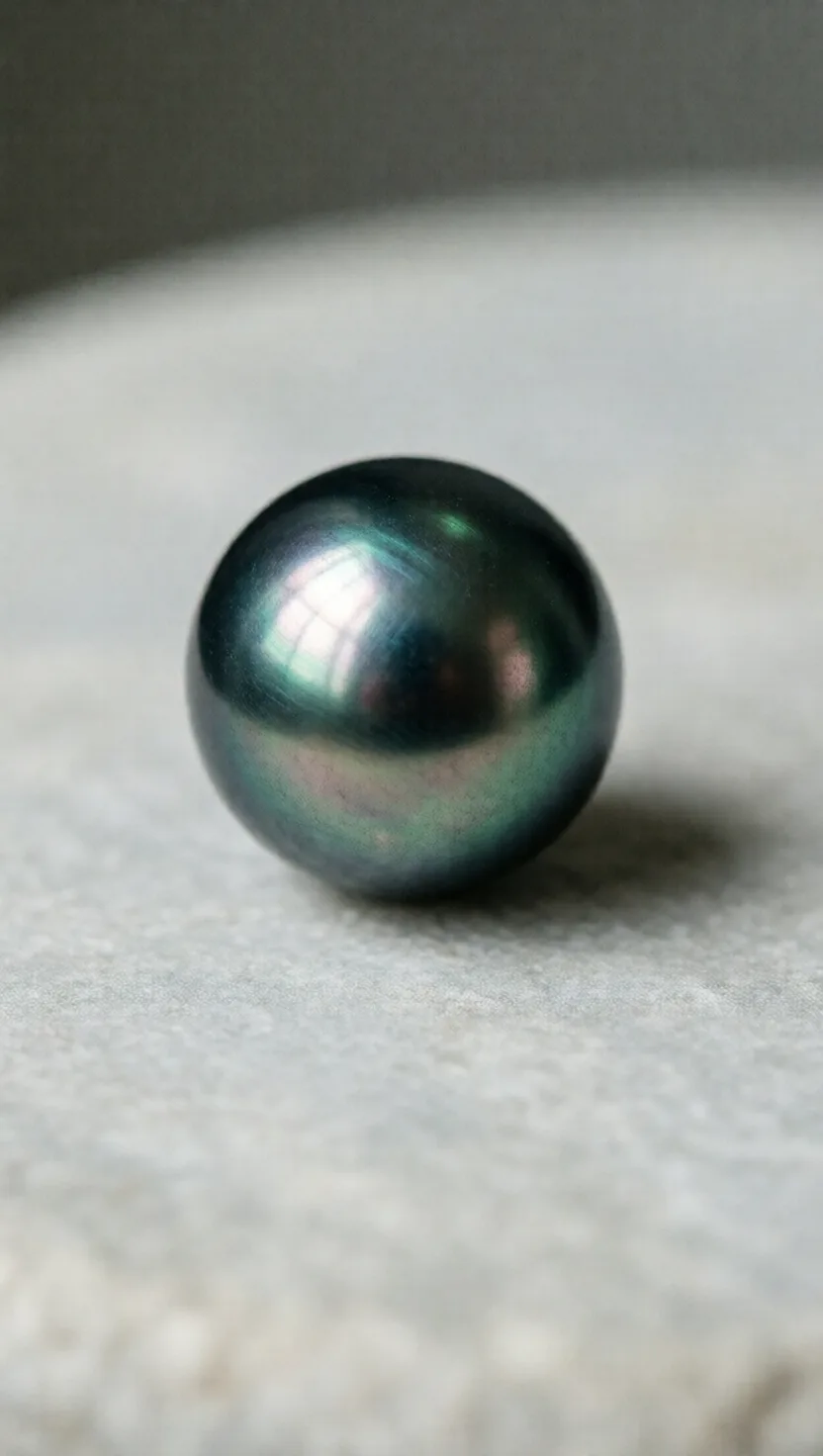
A genuinely black pearl is one of the few that gets its colour honestly. It comes from the black-lipped oyster of the South Pacific, whose dark shell lining tints the nacre it lays down, producing deep natural shades nicknamed peacock, aubergine and pistachio. The giveaway is the overtone: real ones glint with green, blue and rose. Almost every other 'black' pearl on the market, the cheaper akoya and freshwater kinds, has simply been dyed.
A pearl is softer than a copper coin

A pearl is softer than a copper coin

For all their value, pearls are surprisingly fragile. On the mineral hardness scale a pearl rates only about 2.5 to 3, softer than a copper coin and easily scratched, because it is an organic gem, just stacked calcium carbonate bound with protein and water rather than a hard crystal. Worse, acids eat it: perfume, hairspray, sweat and cosmetics all dull and pit the surface over time. The old jeweller's rule is to make pearls the last thing you put on and the first thing you take off.
tap →swipe ↑ for depthswipe ↓ to exit