Eight things humming inside the cells we never think about

DC·200 Deep Cuts
The first battery was a stack of coins

The first battery was a stack of coins

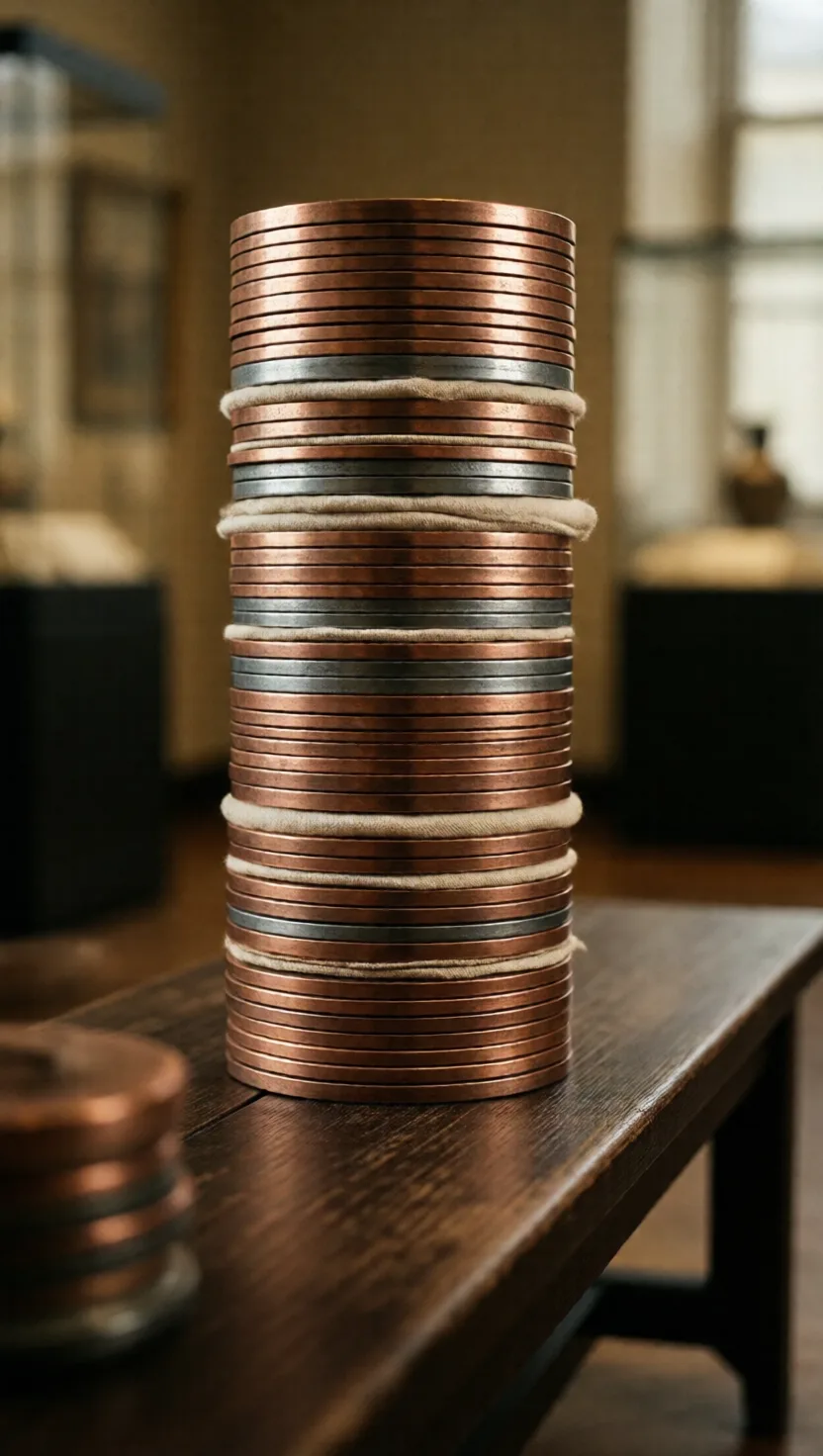
Before 1800, electricity came only in brief, useless sparks. Then Alessandro Volta stacked discs of two different metals, zinc and copper, separating each pair with cloth soaked in salt water. Touch a wire to the top and bottom of the pile and, for the first time, a steady current flowed and kept flowing. He called it an artificial electric organ. That simple column of damp metal discs was the first true battery, and the unit of voltage now carries his name.
A battery doesn't store electricity

A battery doesn't store electricity

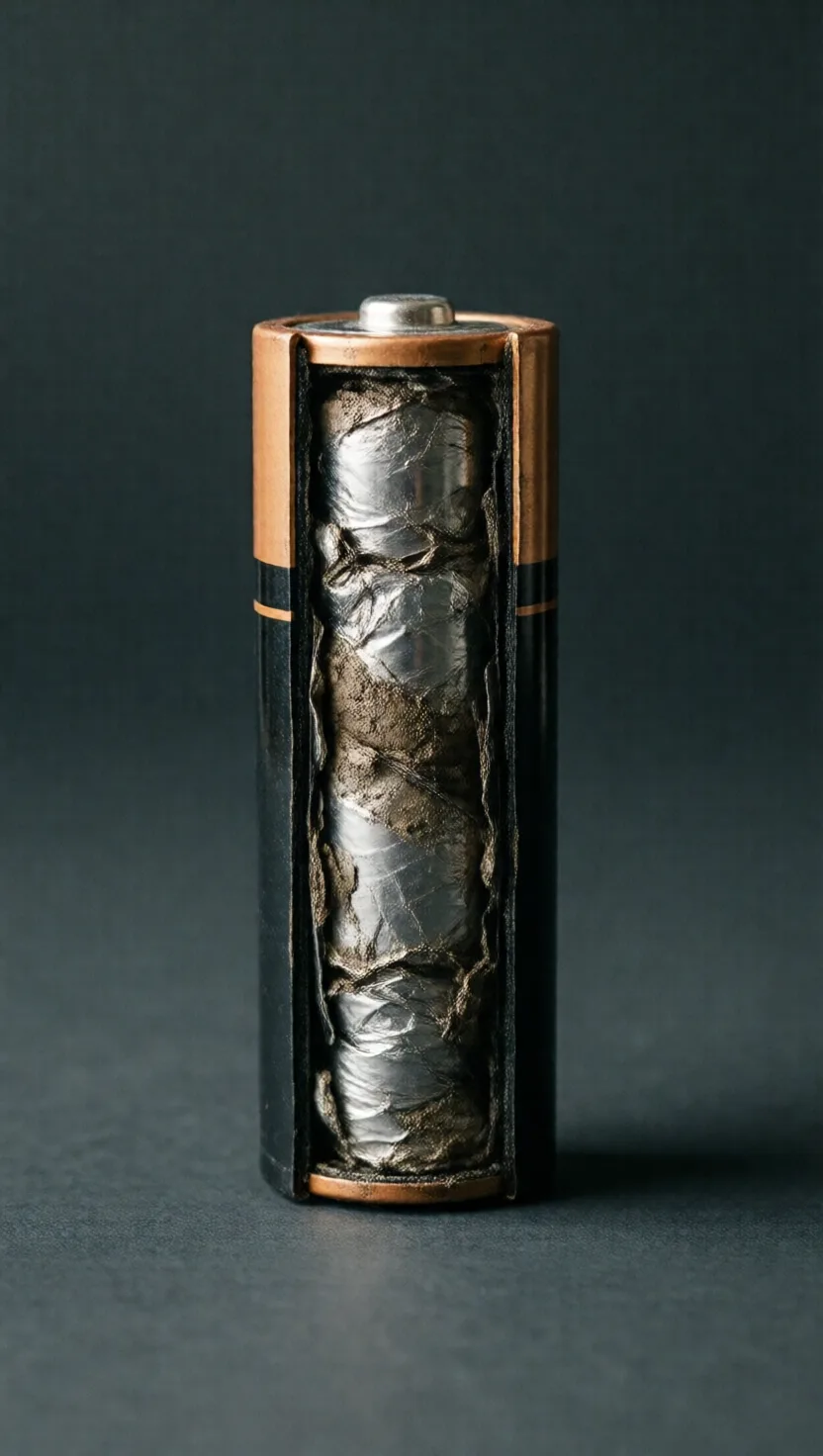
It feels like a battery is a tiny tank of electricity, but it holds none. What it stores is chemical energy, locked in the metals and paste inside. When you complete a circuit, a reaction begins: at one electrode metal atoms give up electrons and slowly dissolve, and those freed electrons are what flow through your wire as current. A battery is really a controlled, useful kind of corrosion, and when the reactive metal is eaten away, it goes flat.
The lemon barely powers a lemon battery

The lemon barely powers a lemon battery

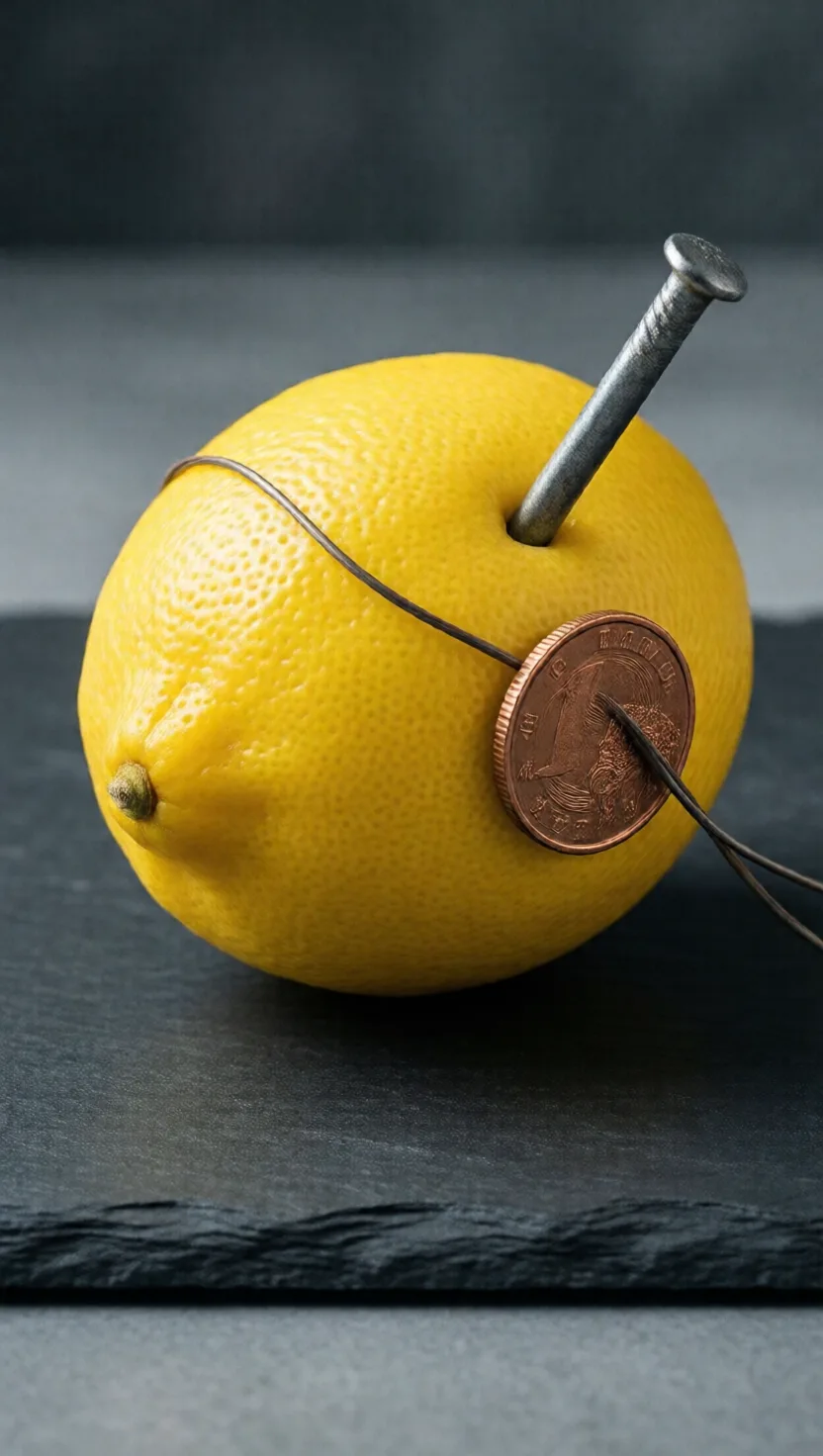
Push a copper coin and a galvanised, zinc-coated nail into a lemon, wire them up, and you get nearly a volt. The surprise is that the lemon supplies almost none of the energy. The juice is only an electrolyte, a wet path for charge. The real fuel is the zinc nail itself, slowly dissolving as it gives up electrons. Swap in fresh metals and the same tired lemon works again; let the zinc corrode away and even a fresh lemon goes dead.
A tiny cell and a giant one share a voltage

A tiny cell and a giant one share a voltage

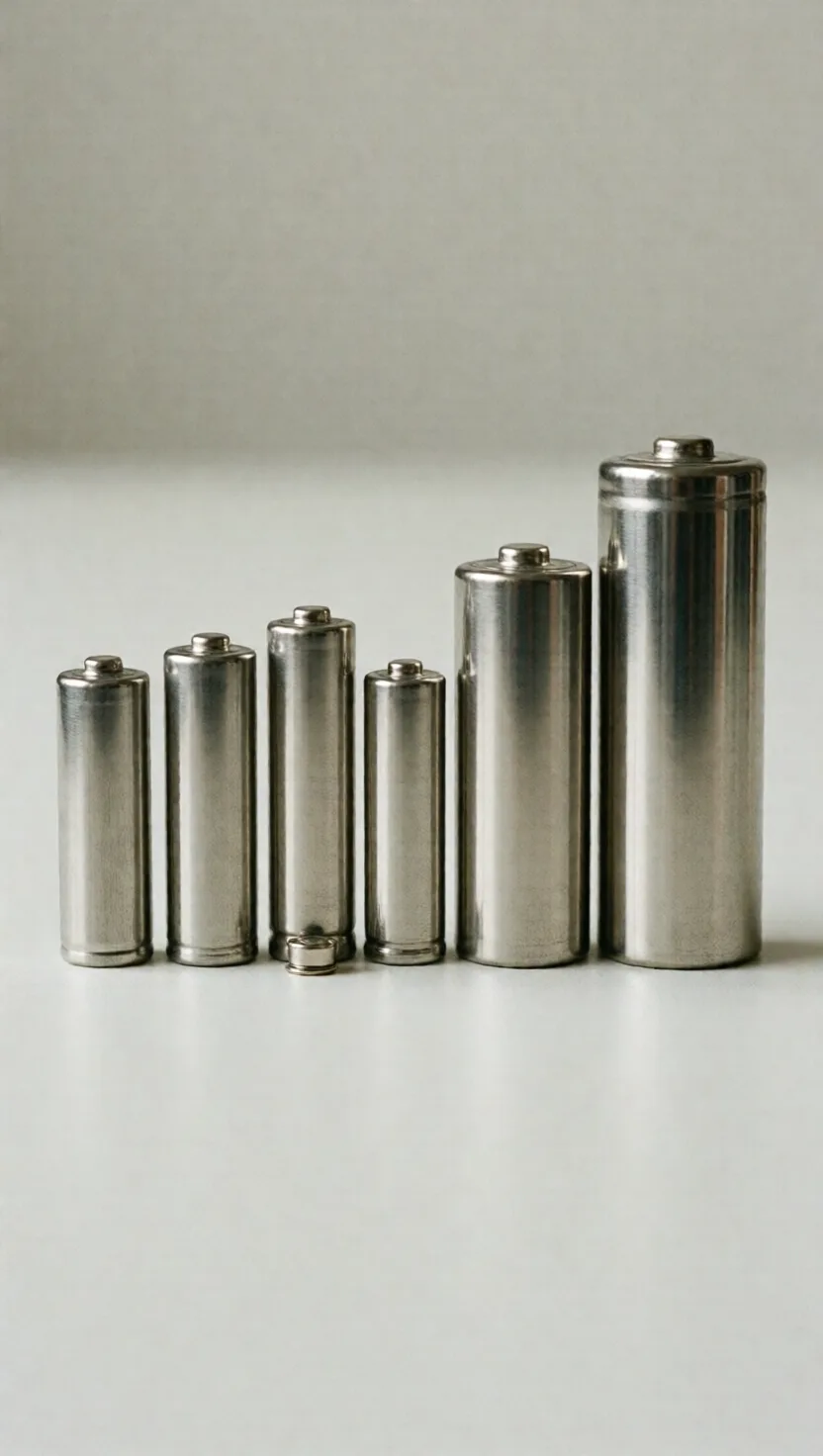
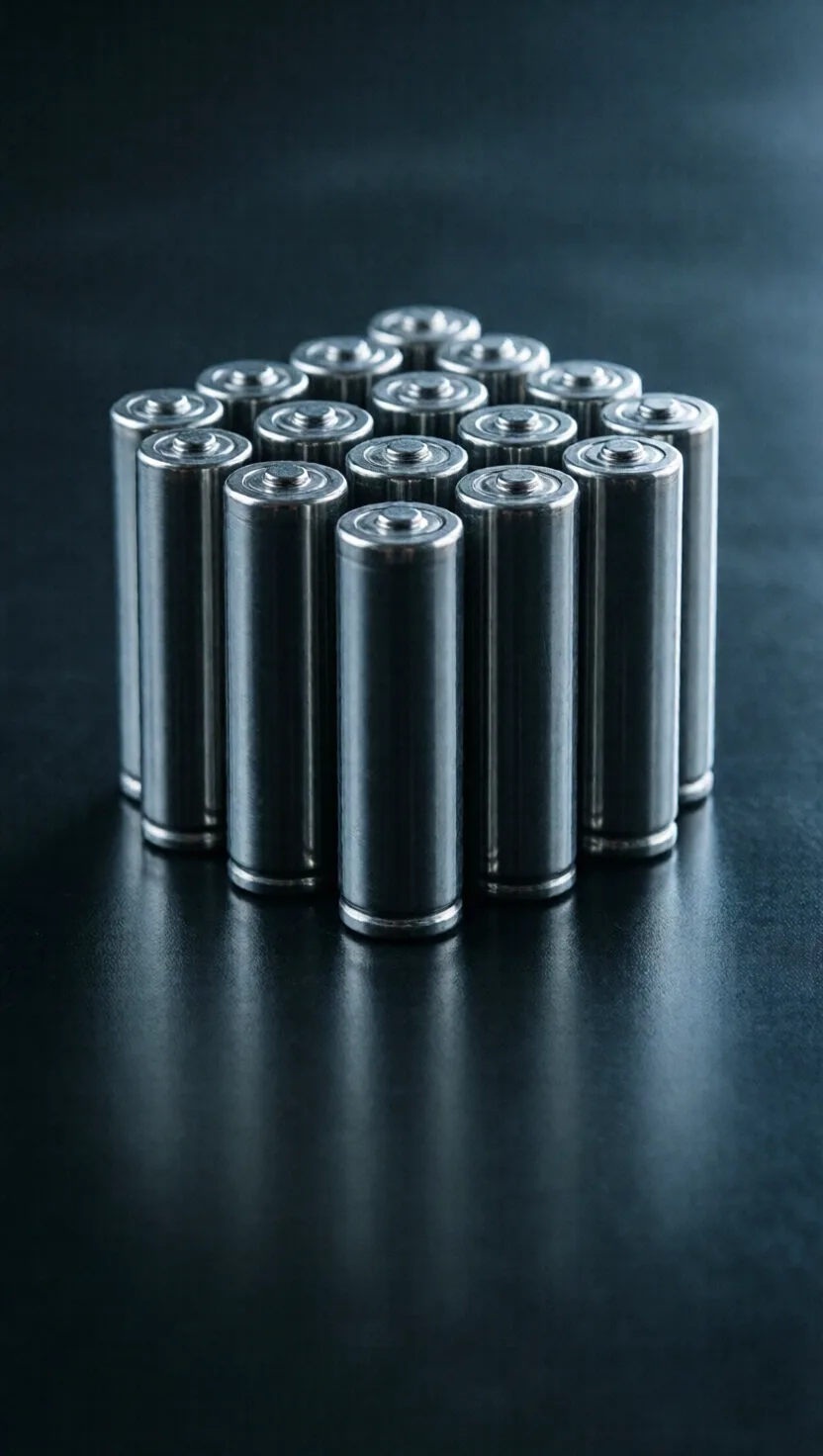
A watch button and a big D cell look worlds apart, yet both read about 1.5 volts. That is because a cell's voltage is fixed by its chemistry, which two materials are reacting, and not at all by its size. Make a cell bigger and you don't raise the voltage; you only add fuel, so it lasts longer or pushes more current. To get a higher voltage you must either change the chemistry or stack several cells in a row.
The car battery is Victorian tech

The car battery is Victorian tech

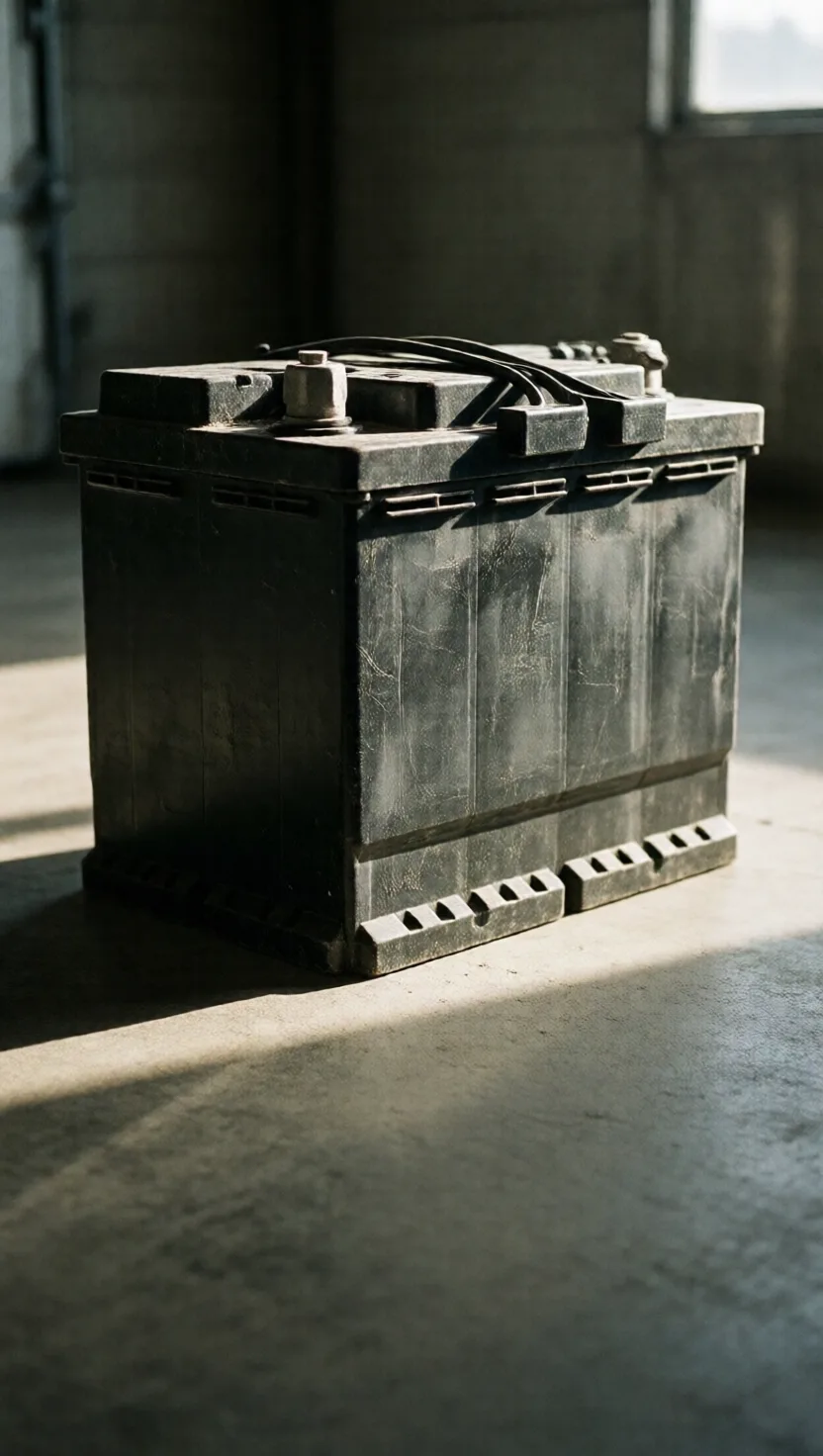
The battery that still starts almost every car was invented in 1859 by Gaston Plante, the first that could be recharged by pushing current back through it. It works by shuttling lead and lead-oxide plates through sulfuric acid, and each cell delivers about two volts, so six cells in one case make the familiar twelve. Heavy and old-fashioned, it survives because it can dump the huge burst of current a cold starter motor needs.
The hearing-aid battery breathes air

The hearing-aid battery breathes air

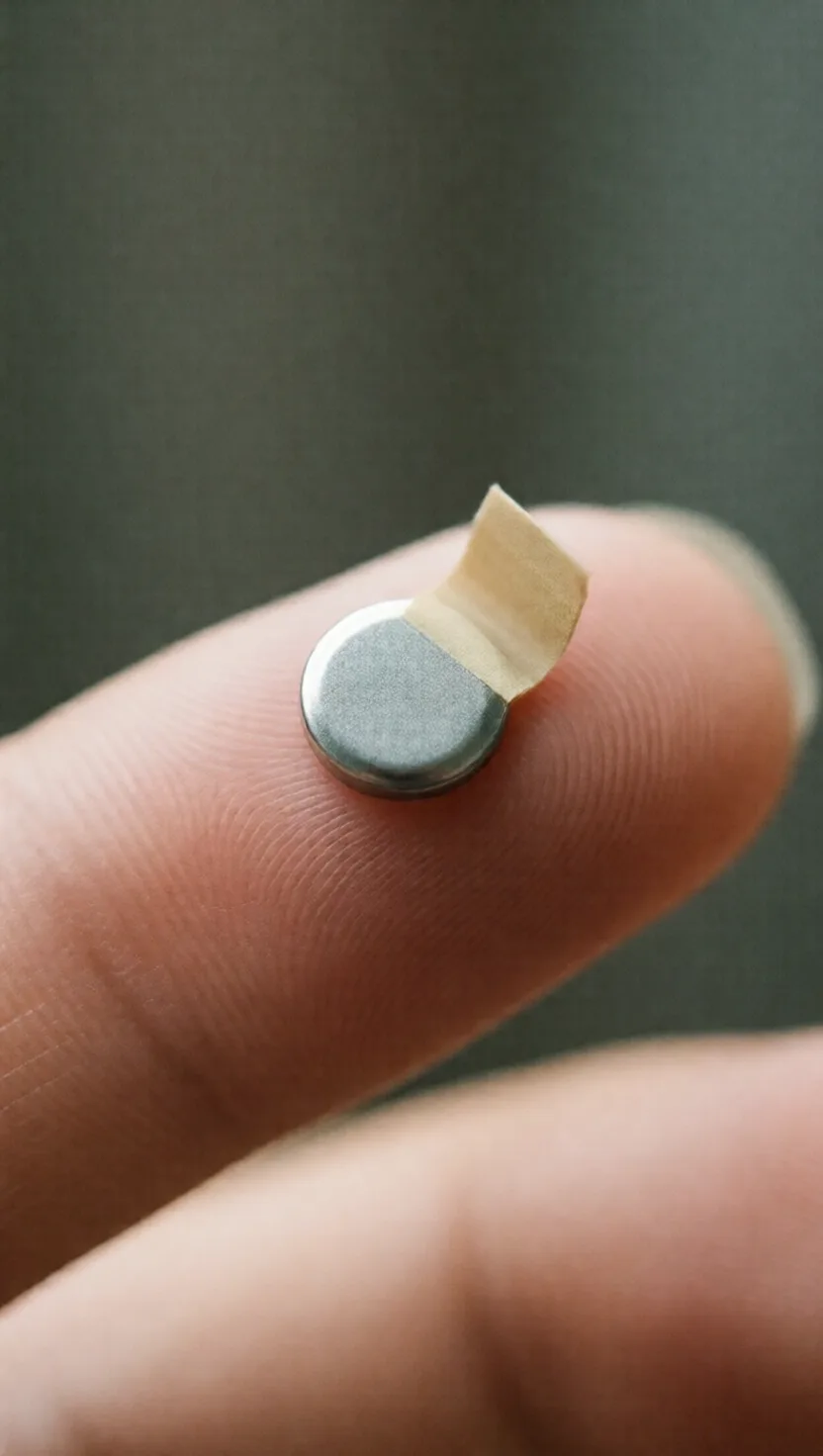
A hearing-aid cell is a zinc-air battery, and part of it comes from outside: the air. Oxygen drawn through tiny holes is one of its ingredients, reacting with zinc inside to make power. That is why a fresh one wears a little sticker tab. While the tab seals the holes the cell sleeps, barely draining; peel it off and air rushes in, so you wait about a minute for the battery to breathe up to full strength before fitting it. Once started, it cannot be paused.
What makes a battery catch fire

What makes a battery catch fire

Lithium is the lightest of all metals and one of the most reactive, which is what makes lithium batteries store so much energy for their weight. That same eagerness is the danger. Charge a cell too fast or too cold and lithium can build up as microscopic needle-like crystals called dendrites. Over many cycles a dendrite can grow until it stabs through the thin separator between the electrodes, creating an internal short that dumps the stored energy as sudden heat, and fire.
A 9-volt hides six batteries inside

A 9-volt hides six batteries inside

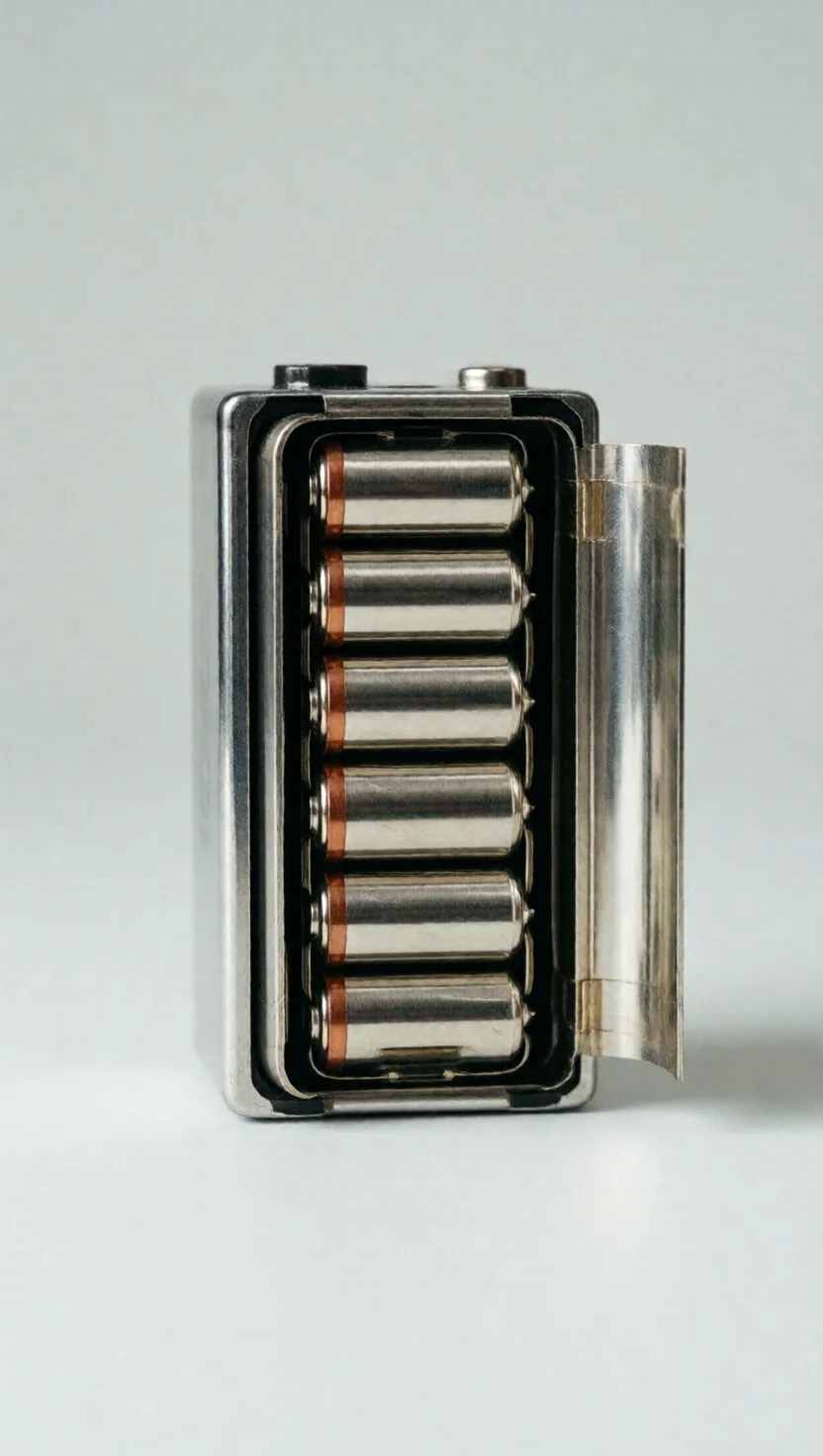
The word battery was borrowed from the army, where a battery of cannon meant a group of guns working together, and Benjamin Franklin used it for a row of linked electrical jars. Strictly, a single unit is a cell, and a battery is several cells joined up. That history is literally inside the little rectangular nine-volt block: crack one open and you find six small 1.5-volt cells stacked in a line, their voltages adding up to nine.
tap →swipe ↑ for depthswipe ↓ to exit