Eight things hidden inside a stone of solid green

DC·196 Deep Cuts
This green stone is basically copper rusting

This green stone is basically copper rusting

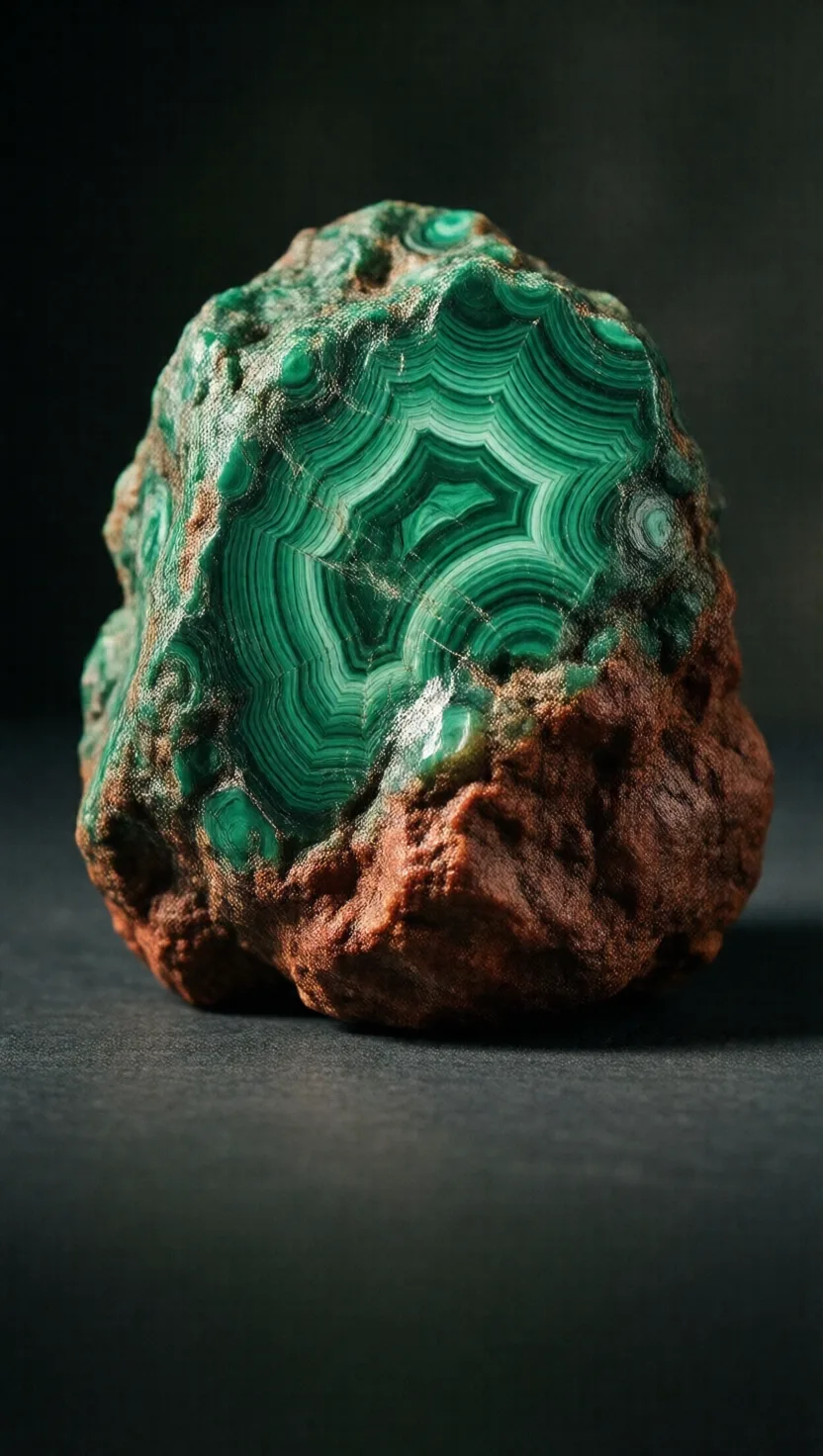
Malachite is what copper 'rusts' into. Where copper ore sits near the surface, oxygen- and carbon-dioxide-rich groundwater slowly eats at it, and the dissolved copper recombines into a new green mineral — copper carbonate hydroxide. It grows in the weathered cap above almost every copper deposit, painting crusts and kidney-shaped lumps a vivid green. The colour is the copper itself, not a stain, so it never fades.
It grows in green bubbles, like clustered grapes

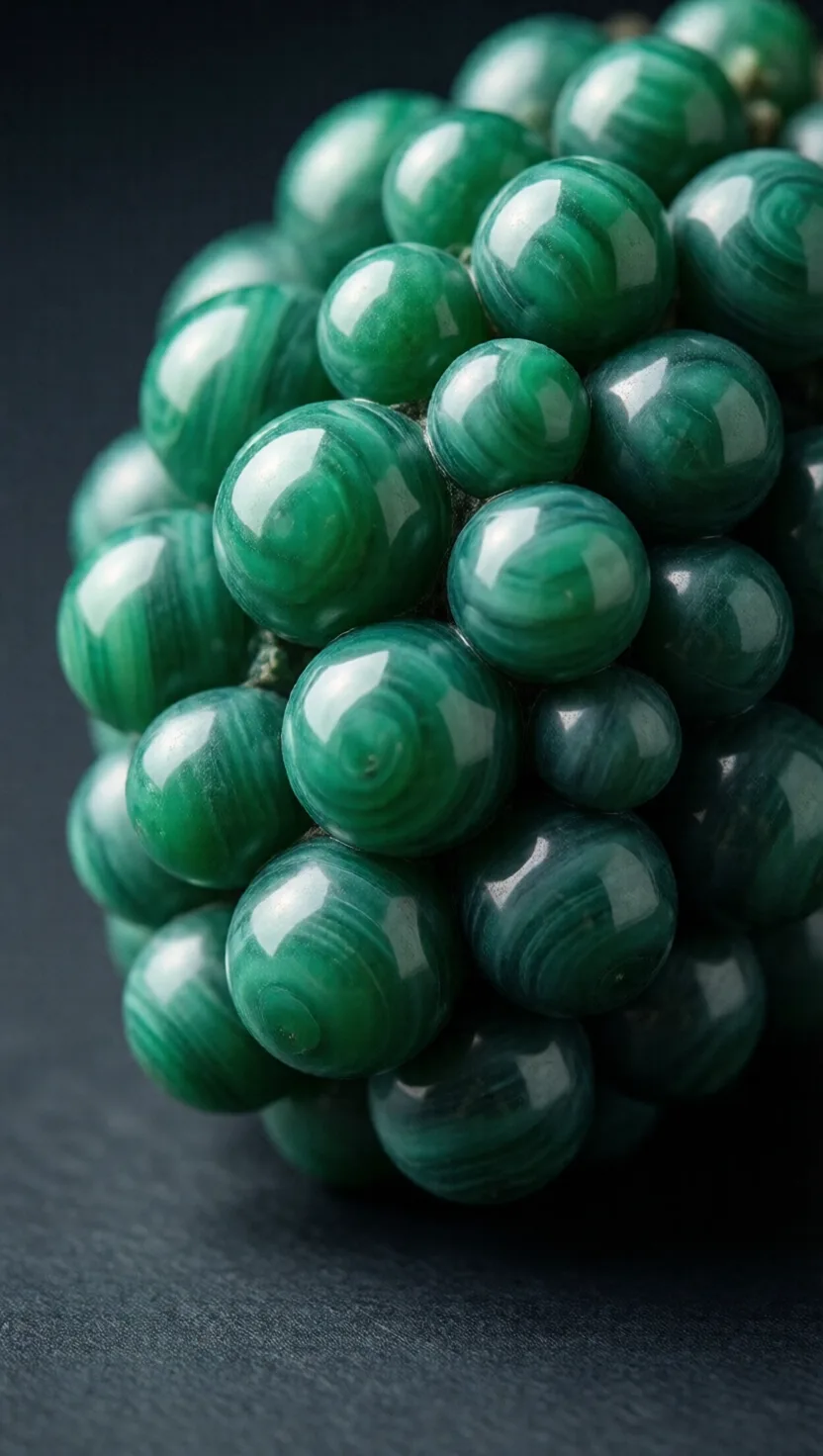
It grows in green bubbles, like clustered grapes

Malachite rarely forms sharp crystals. Instead it piles up in botryoidal masses — rounded, knobbly surfaces that look like clusters of green grapes or frozen foam. Each bump is built from countless tiny needle-like crystals radiating outward from a centre, layer over layer, as mineral-rich water seeps and drips through cavities in the rock over very long spans of time.
Some green crystals were blue once, and changed

Some green crystals were blue once, and changed

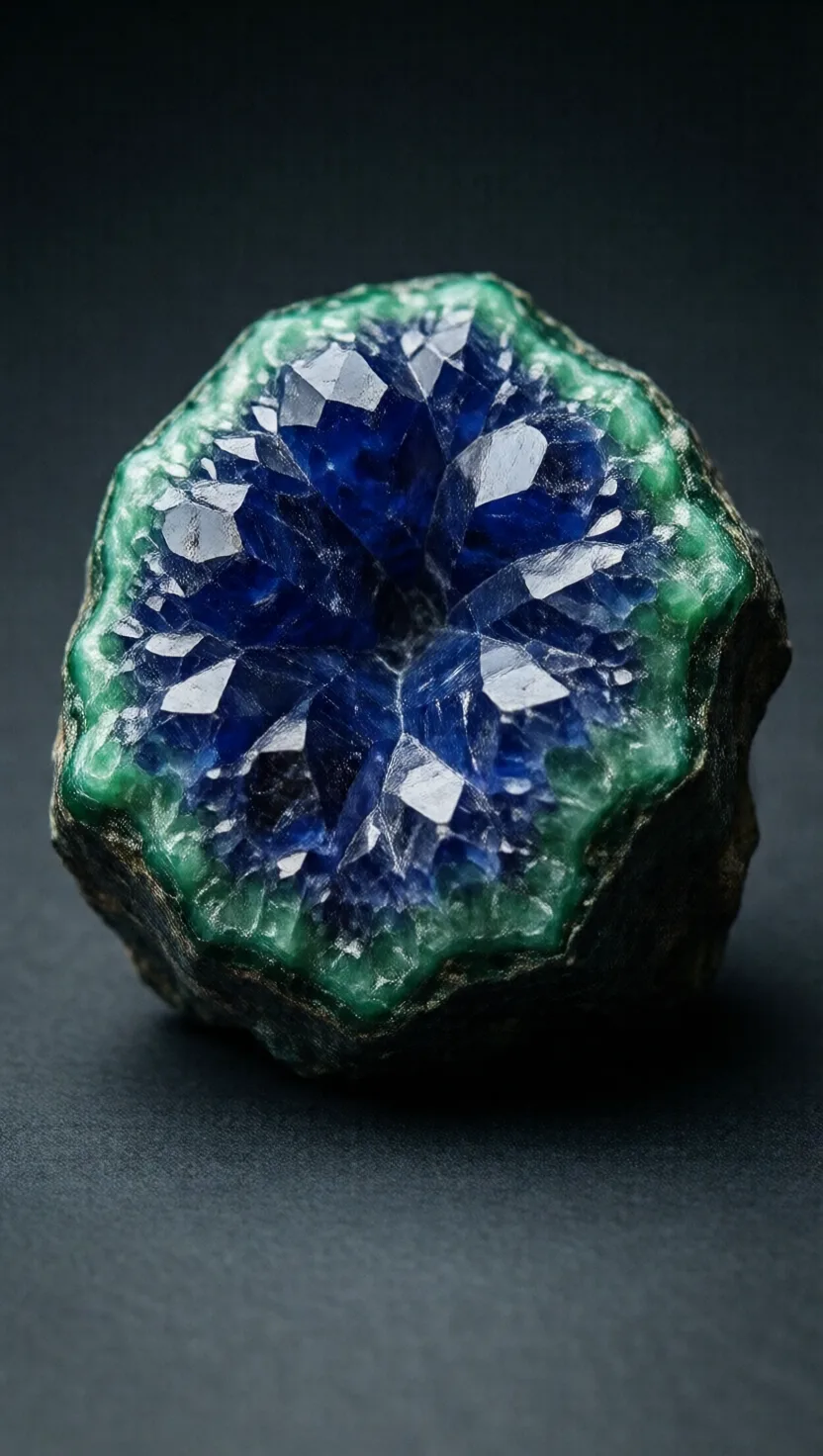
Malachite has a blue cousin, azurite, made of the same copper, carbon and oxygen in a different recipe. Azurite is the less stable of the two, and over time it can take up water and quietly rebuild itself into green malachite — while keeping azurite's original blocky crystal shape. Collectors prize these 'pseudomorphs': deep-blue crystals turned green throughout, a frozen record of one mineral becoming another.
The oldest green paint was ground from this rock

The oldest green paint was ground from this rock

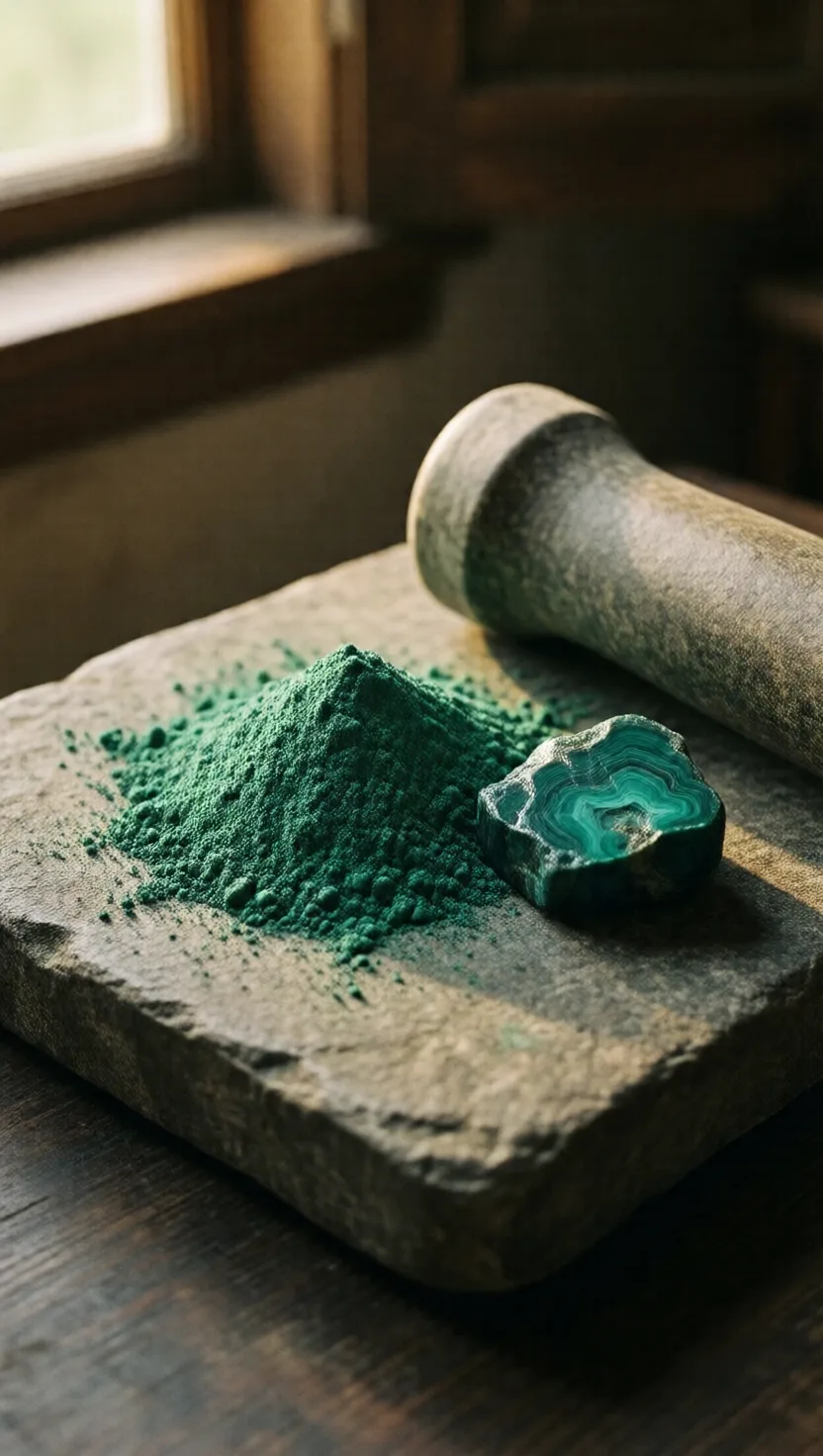
Long before synthetic colours, painters made green by crushing malachite into powder — it may be the oldest green pigment known. Ground coarse it gives a rich green; ground too fine it turns pale and weak. In predynastic Egypt, more than 5,000 years ago, the same green powder was worn as eye paint, and traces still cling to ancient skulls. Malachite stayed a leading green in East Asian and European painting until around 1800.
Those solid green columns are an illusion 3mm thick

Those solid green columns are an illusion 3mm thick

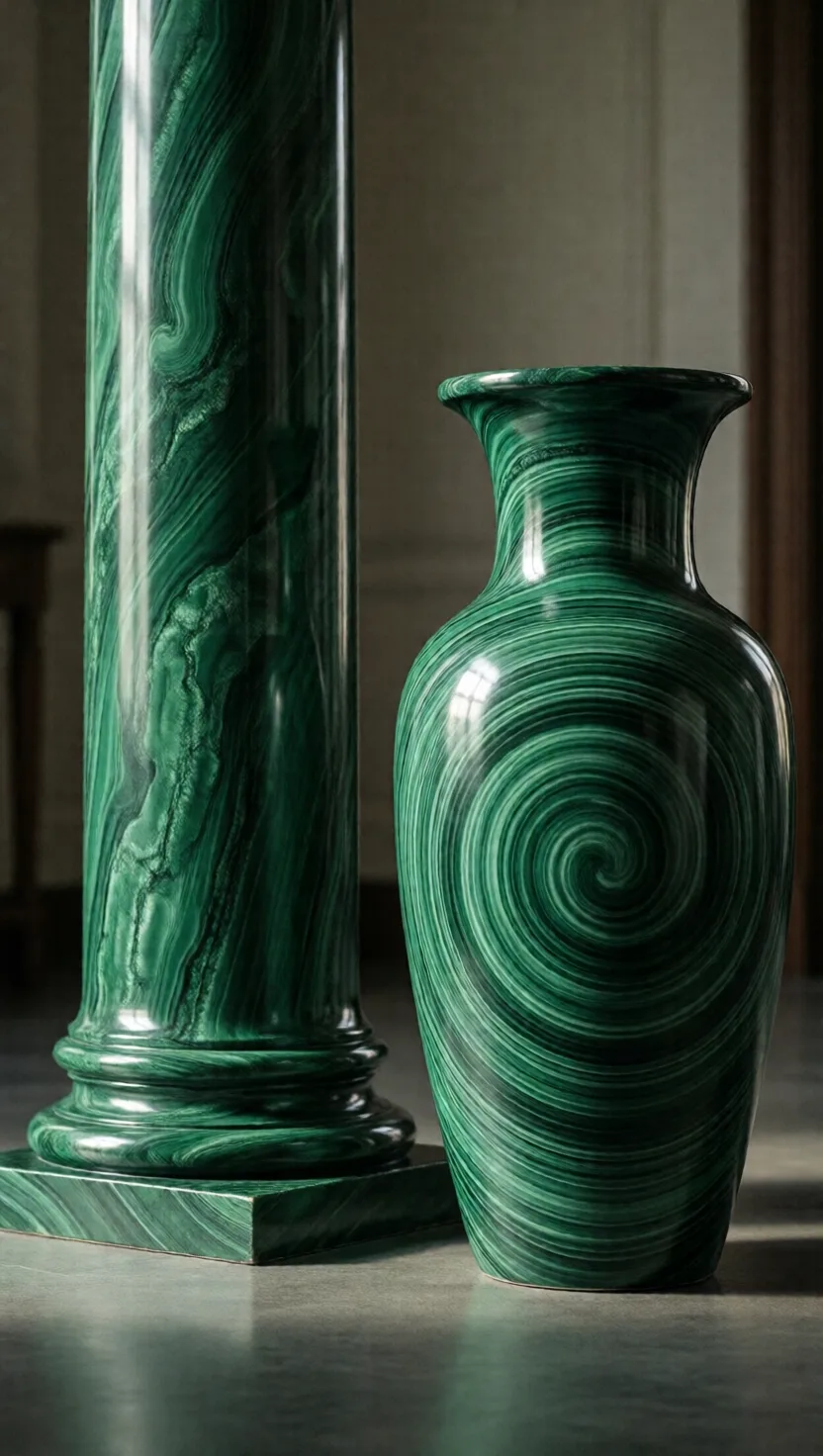
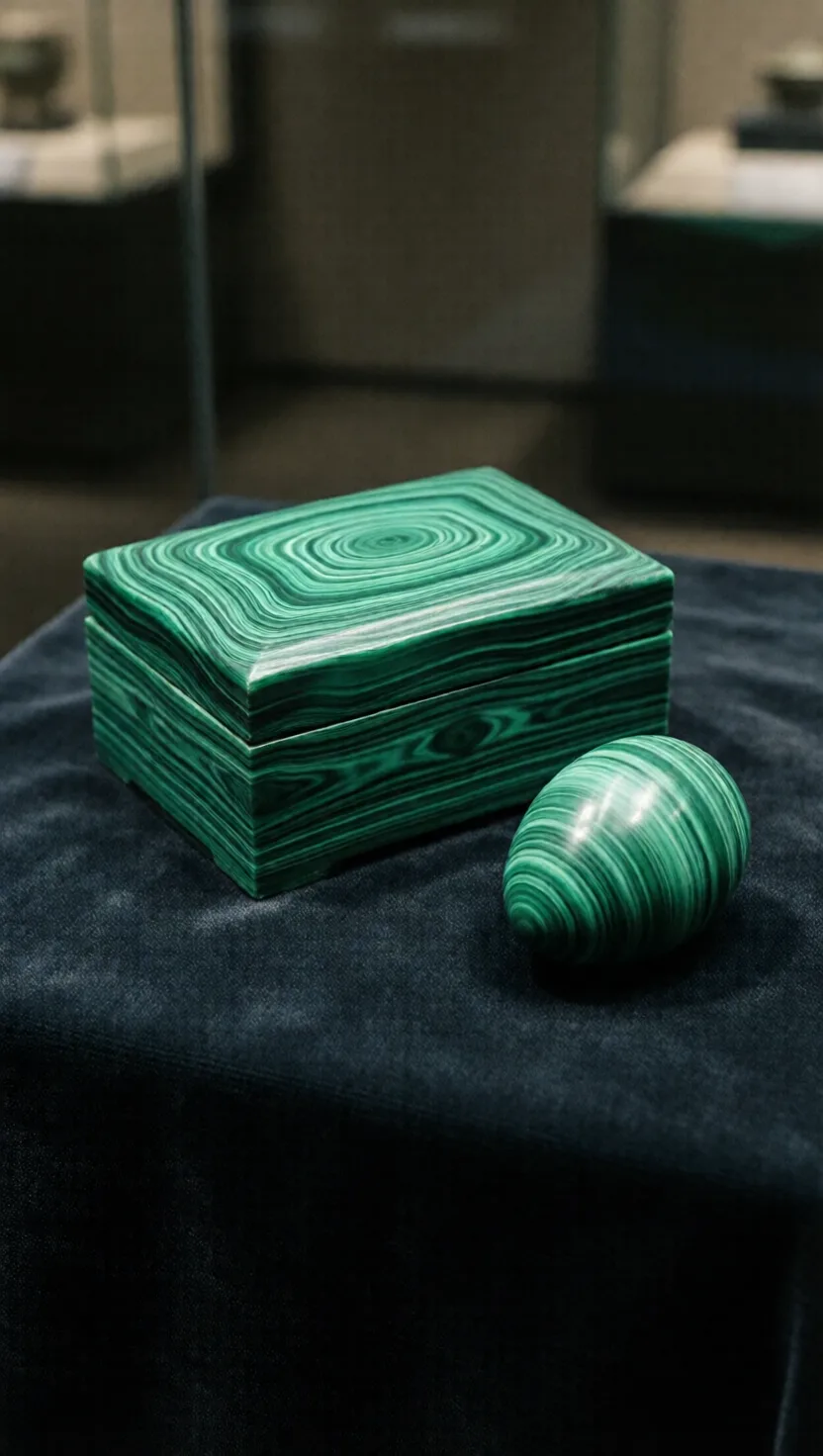
Big blocks of flawless malachite barely exist, yet European palaces show columns, tabletops and metre-tall vases that look carved from solid green stone. The trick is the 'Russian mosaic': craftsmen sawed the stone into veneers just 2 to 4 millimetres thick, matched the banding edge to edge over a plain core, and filled the seams with green cement. The famous Malachite Room in St Petersburg dresses eight whole columns this way.
A green smear on bare rock means copper below

A green smear on bare rock means copper below

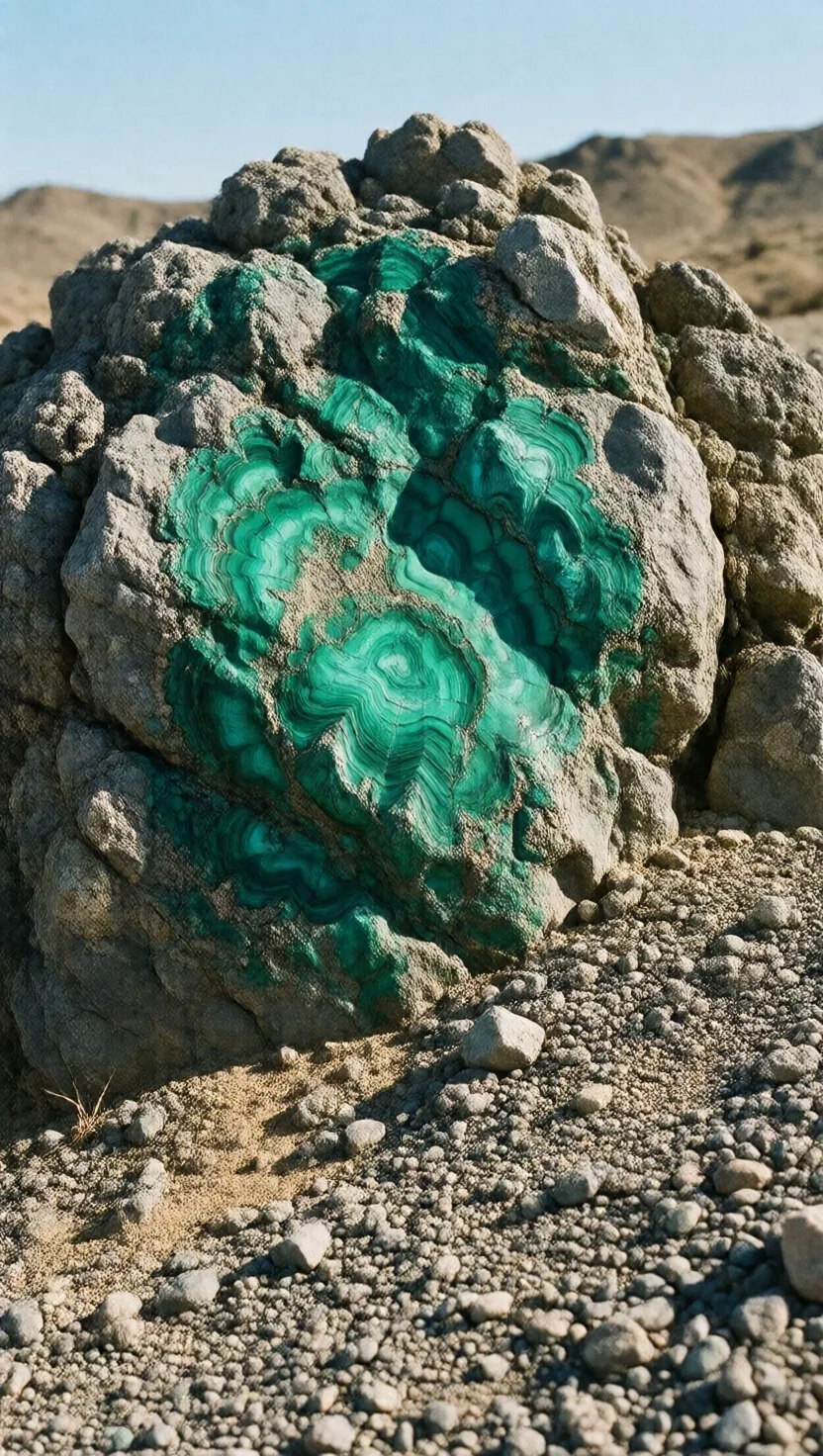
Because malachite forms only in the weathered cap above copper ore, prospectors have long read its green stain as a signpost. A streak of malachite on a bare outcrop says copper sulphides sit somewhere beneath — and the green 'halo' can spread wider than the ore body itself, giving searchers a bigger target. The mineral has also been smelted for its copper for thousands of years.
Slice it open and every layer is a different green

Slice it open and every layer is a different green

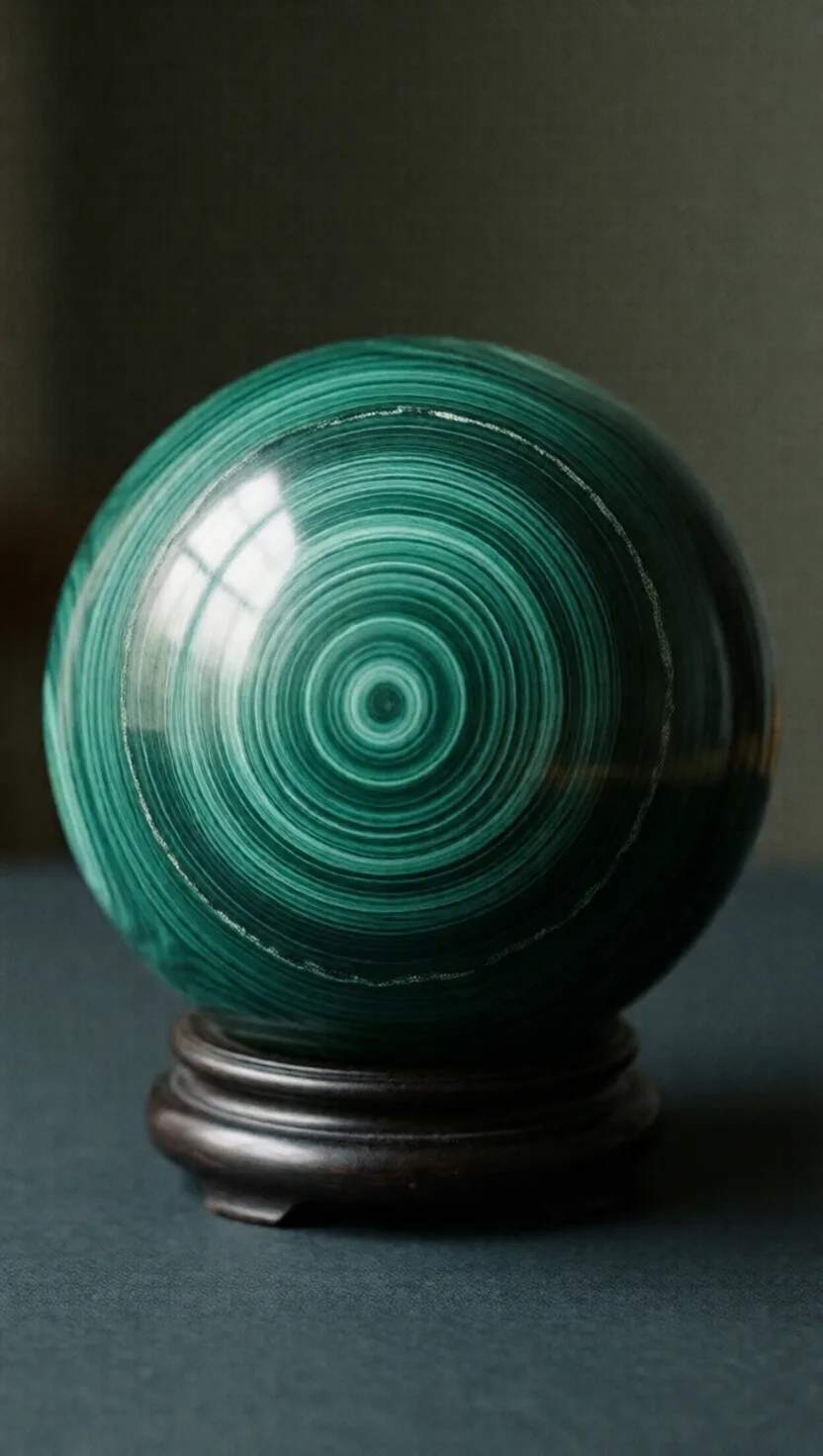
Malachite builds up in waves, each pulse of copper-rich water laying a fresh skin over the last. Saw through a lump and those skins appear as concentric bands — light and dark green rings, swirls and bullseyes, with no two patterns ever the same. Polished into a sphere, the layers read like the growth rings of a tree: a record of how the stone slowly accreted in a hidden cavity.
Gorgeous, but too soft and fragile to wear daily

Gorgeous, but too soft and fragile to wear daily

For all its richness, malachite is a delicate stone. It rates only about 3.5 to 4 on the ten-point Mohs hardness scale — soft enough to scratch with a steel knife — and it reacts to weak acids, heat and even ammonia cleaners, which dull its shine. So craftsmen carve it into boxes, beads, eggs and inlay rather than rings that get knocked about, and warn against ever cleaning it with anything acidic.
tap →swipe ↑ for depthswipe ↓ to exit