Eight things flamingos hide behind the pink

DC·177 Deep Cuts
A flamingo's one-leg stance uses zero muscle

A flamingo's one-leg stance uses zero muscle

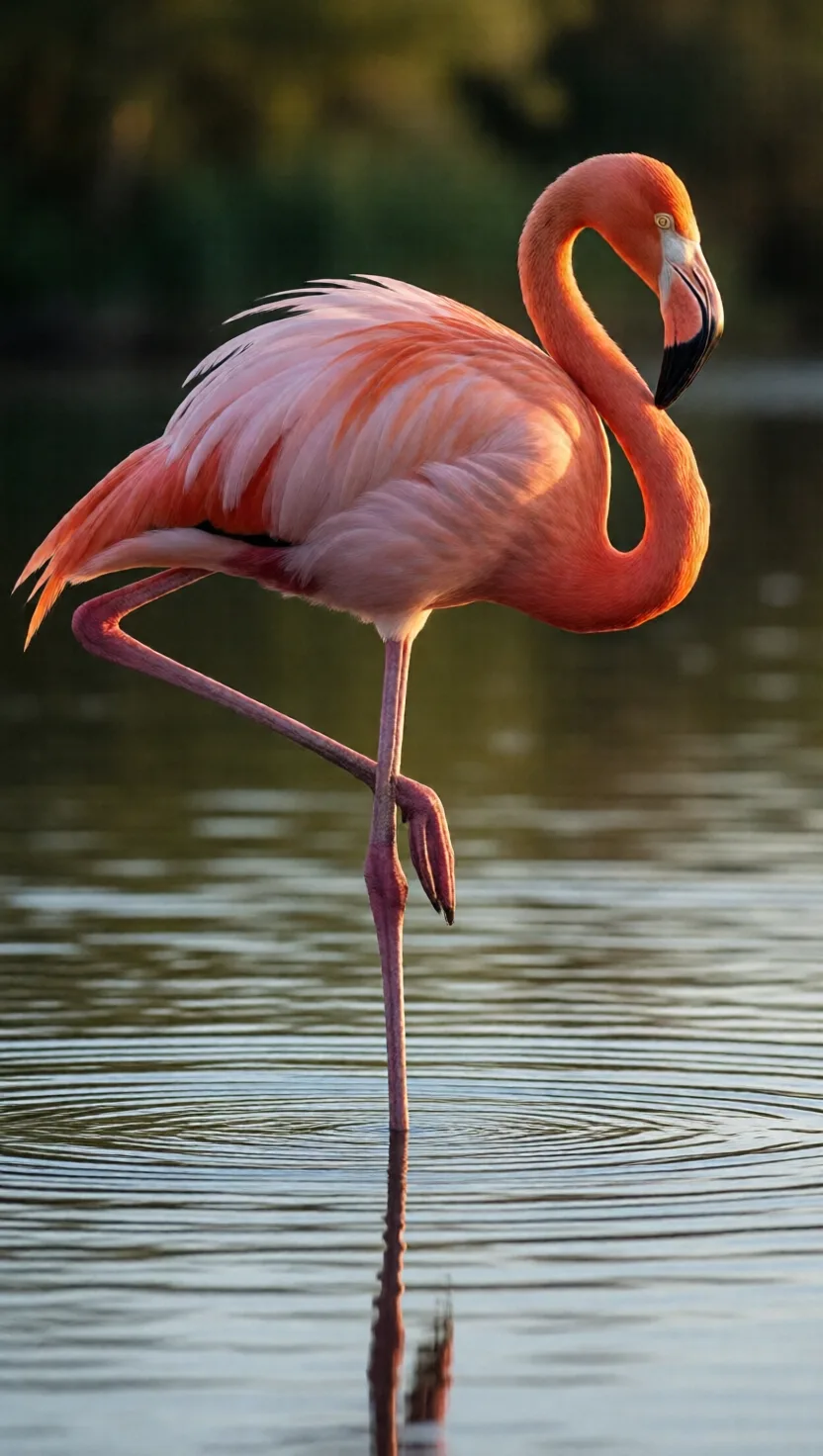
It looks tiring, but standing on one leg actually costs a flamingo almost nothing. In a 2017 study, researchers showed that a flamingo body could balance on a single leg with no muscle activity at all, locking into a stable, passive stay as the weight settles directly over the planted foot. The joints simply click into place under gravity. Oddly, holding a two-legged pose took more active effort. So the one-legged habit isn't strain, it's rest.
Flamingo parents feed chicks bright red milk

Flamingo parents feed chicks bright red milk

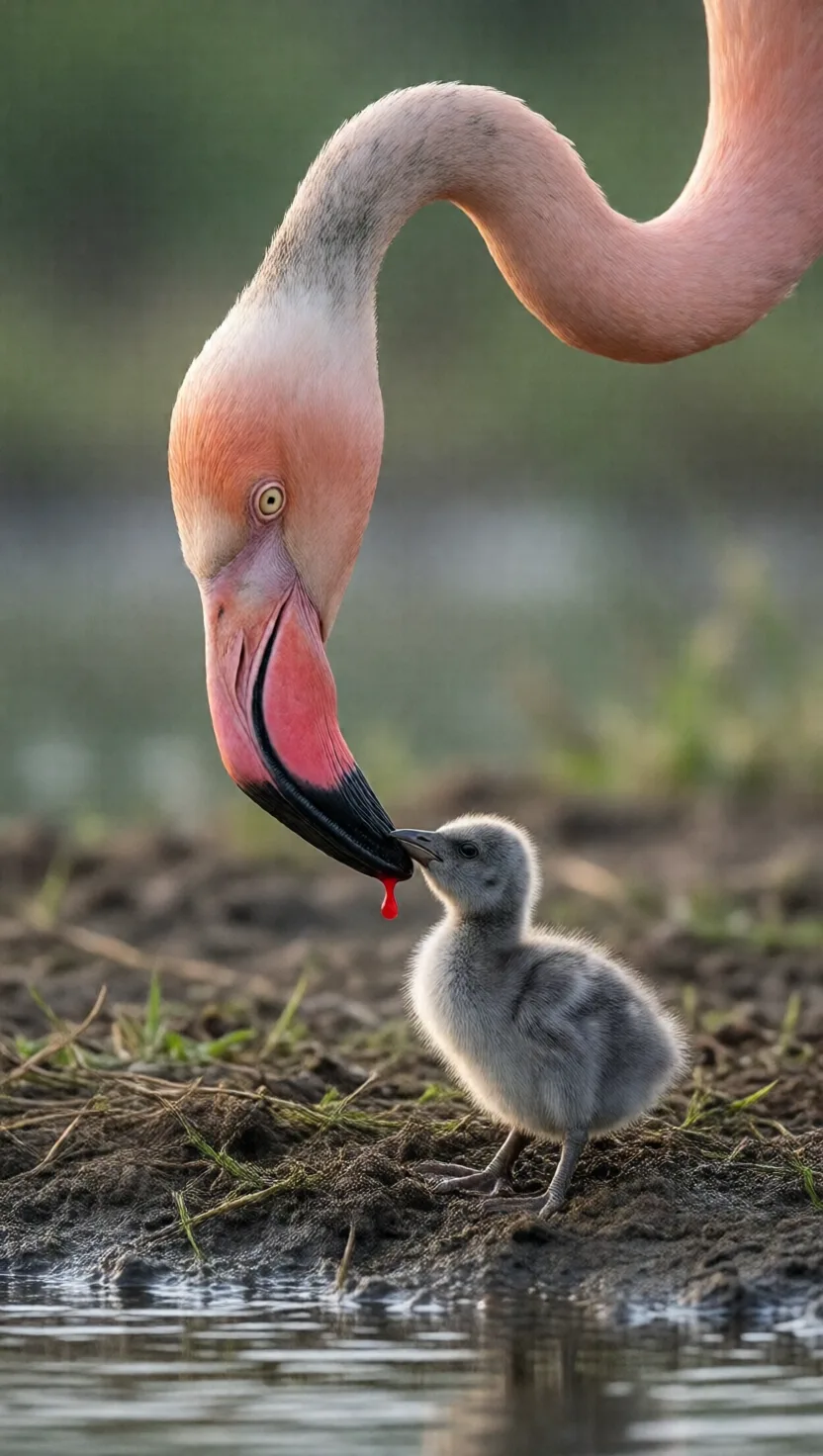
Both the mother and father produce a vivid red crop milk from their upper digestive tract, triggered by the hormone prolactin, the same one behind milk in mammals. It runs red because it is packed with carotenoids, the pigments that color the adults pink, along with blood cells. Feeding it is so draining that the parents fade toward pale white as their own color drains into the chick. The grey hatchling cannot filter-feed yet, so this scarlet milk is its entire diet for weeks.
Flamingos thrive in water hot enough to scald

Flamingos thrive in water hot enough to scald

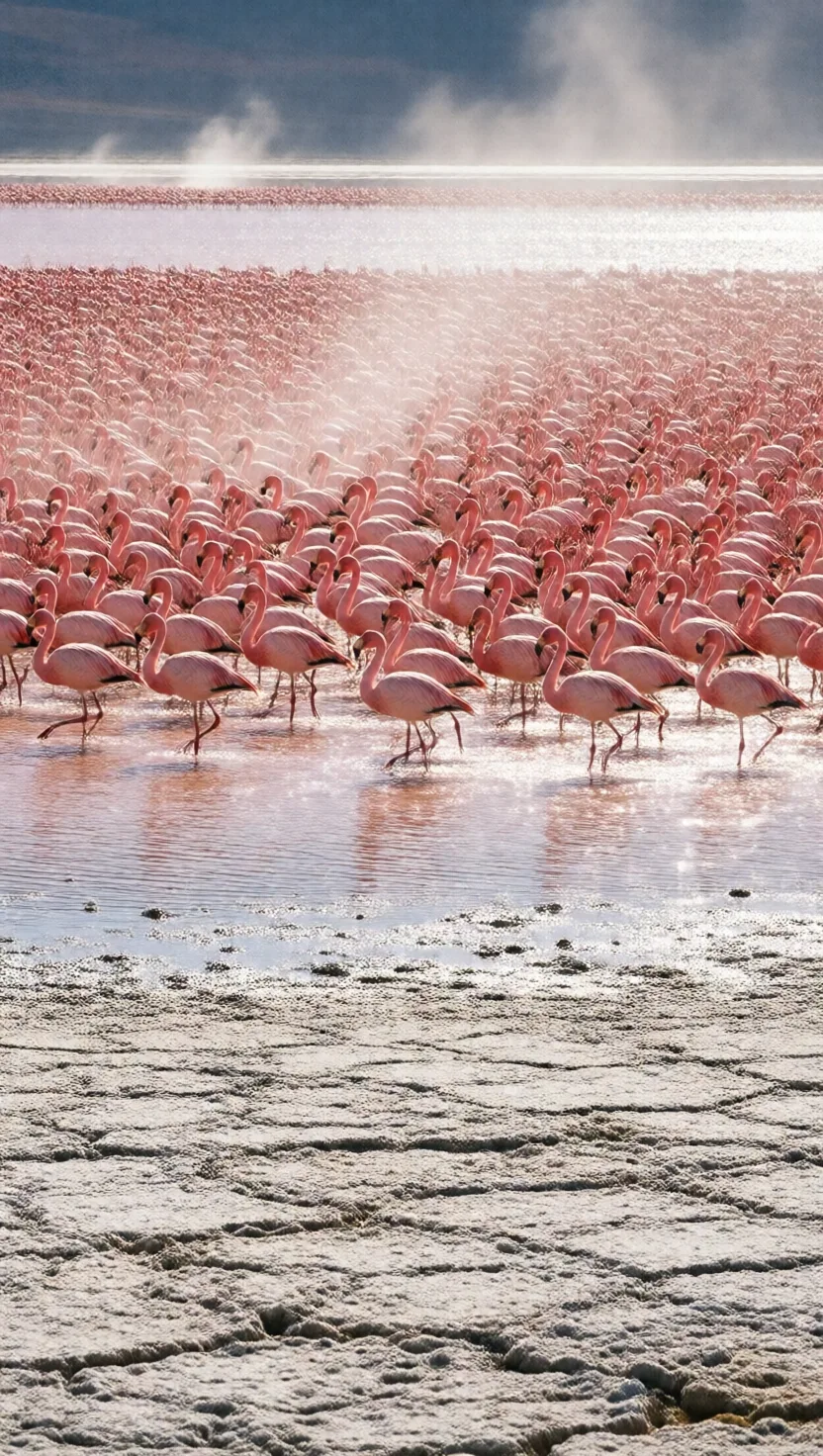
Lake Natron in Tanzania is one of the harshest waters on Earth, alkaline with a pH around 9 to 10.5 and temperatures that can reach 60 degrees Celsius, caustic enough to burn the skin of most animals. Yet about 75 percent of the world's lesser flamingos are hatched there. The very hostility is the point: predators cannot cross the soda flats, so the birds nest safely on evaporite islands and filter the red-pigmented cyanobacteria that bloom in the deadly water.
Flamingos rub on their own pink makeup

Flamingos rub on their own pink makeup

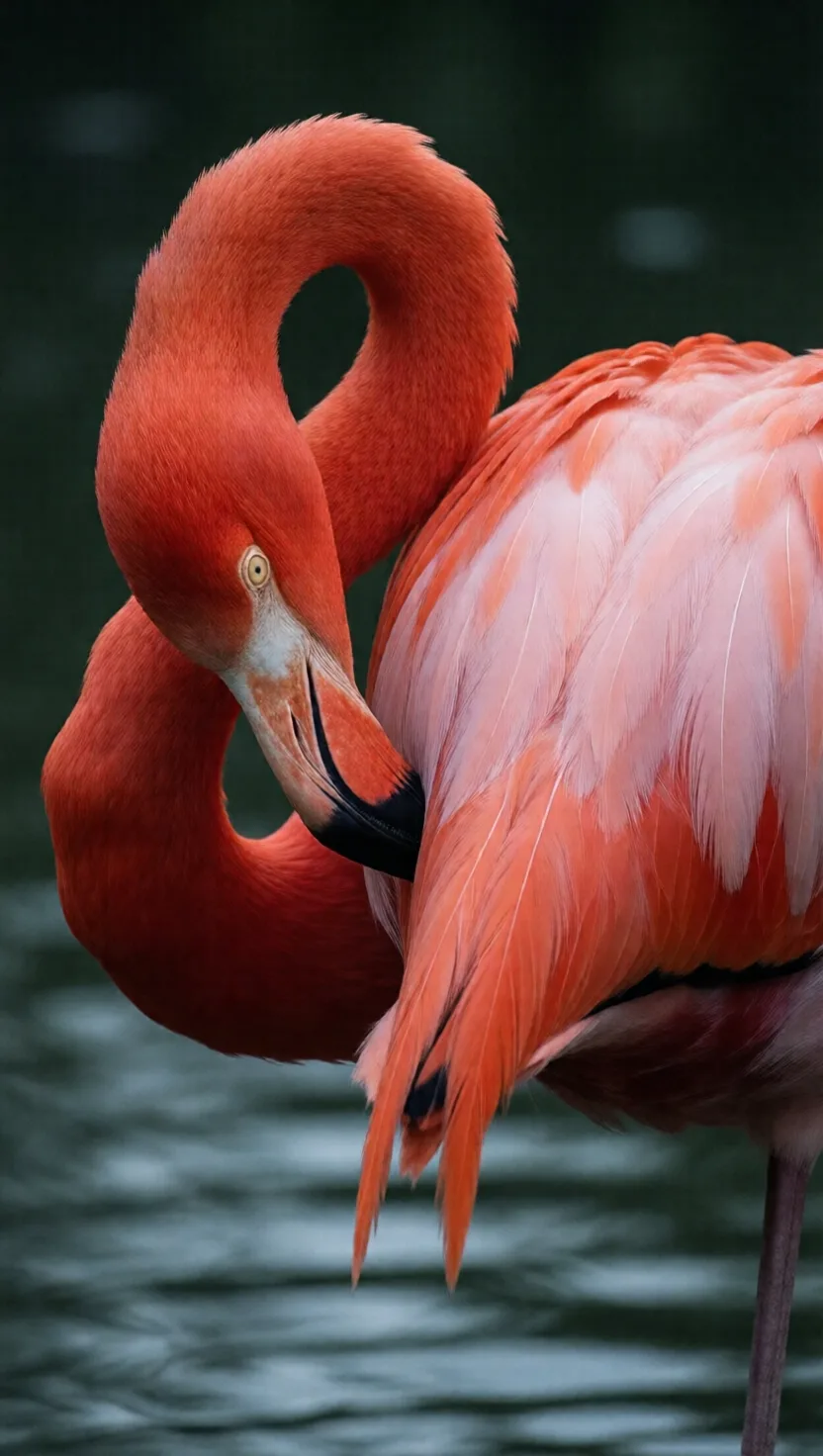
Flamingos do not just eat their way to color, they cosmetically touch it up. A gland near the base of the tail, the uropygial gland, secretes an oil loaded with carotenoid pigments, and the birds rub their cheeks in it then smear it across their neck, breast and back feathers. Researchers found in 2010 and 2011 that they apply it most heavily during the courtship display season and that feather color fades when they stop. It is, in effect, seasonal blush worn to attract a mate.
That backward 'knee' is really an ankle

That backward 'knee' is really an ankle

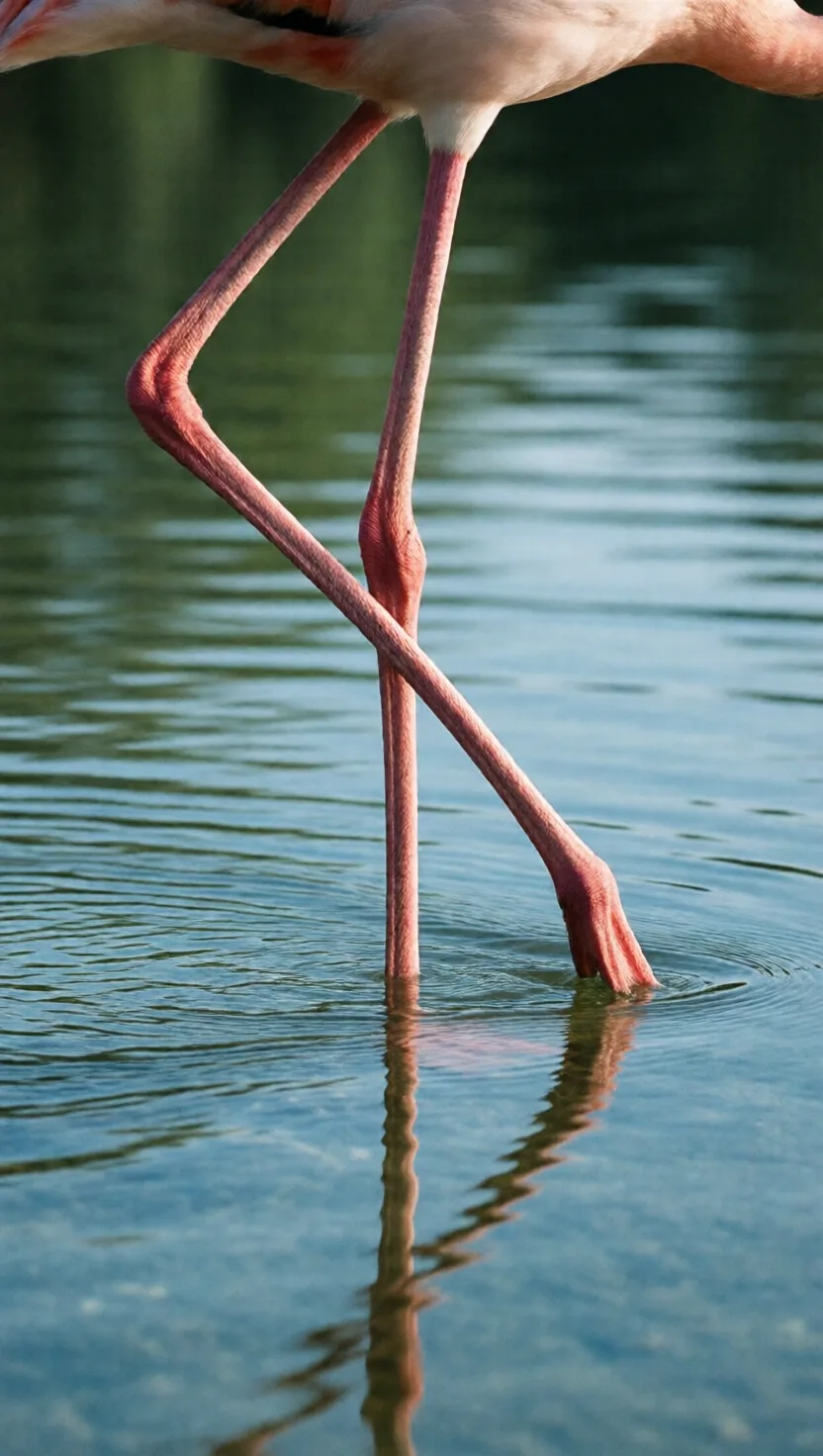
The joint that bends the wrong way halfway up a flamingo's leg is not a knee at all, it is the ankle. What looks like a backward knee is the hock, and everything below it that resembles a shin is actually an elongated foot, so the bird is essentially standing on tiptoe. The true knee bends forward just like ours, but it sits high up against the body, hidden under feathers. Once you see it as an ankle, the strange leg suddenly makes perfect sense.
Flamingos hatch grey with a straight beak

Flamingos hatch grey with a straight beak

A newborn flamingo looks almost nothing like its parents. Chicks hatch covered in white-grey down with a small, perfectly straight bill, no pink and no hook. The signature downward bend develops gradually over the first weeks, reaching its full curve by around eleven weeks, which is exactly what the chick needs before it can filter-feed on its own. The famous pink takes far longer, building up from carotenoids in the diet over two to three years.
Flamingos stir tiny tornadoes to trap food

Flamingos stir tiny tornadoes to trap food

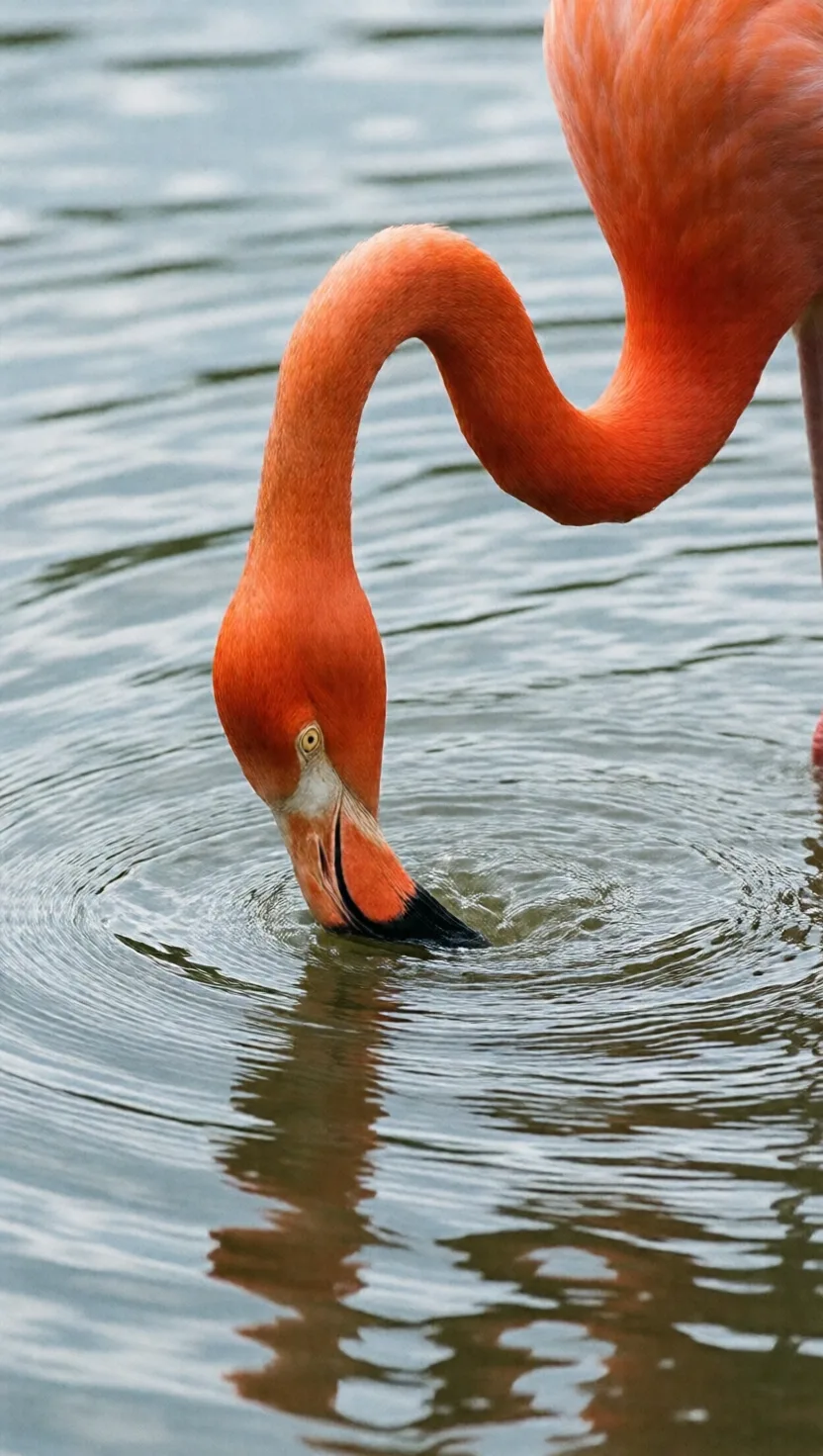
Filter-feeding flamingos are not passively straining water, they are engineering it. A 2025 study showed they stamp their webbed feet and jerk their upside-down heads upward like plungers to whip up swirling underwater tornadoes that pull food off the bottom and concentrate it. Then their L-shaped bill goes to work: the lower beak chatters about 12 times per second, spinning smaller vortices that funnel prey inward. The trick raises the number of brine shrimp captured by roughly seven times.
A flamingo's wings hide a band of jet black

A flamingo's wings hide a band of jet black

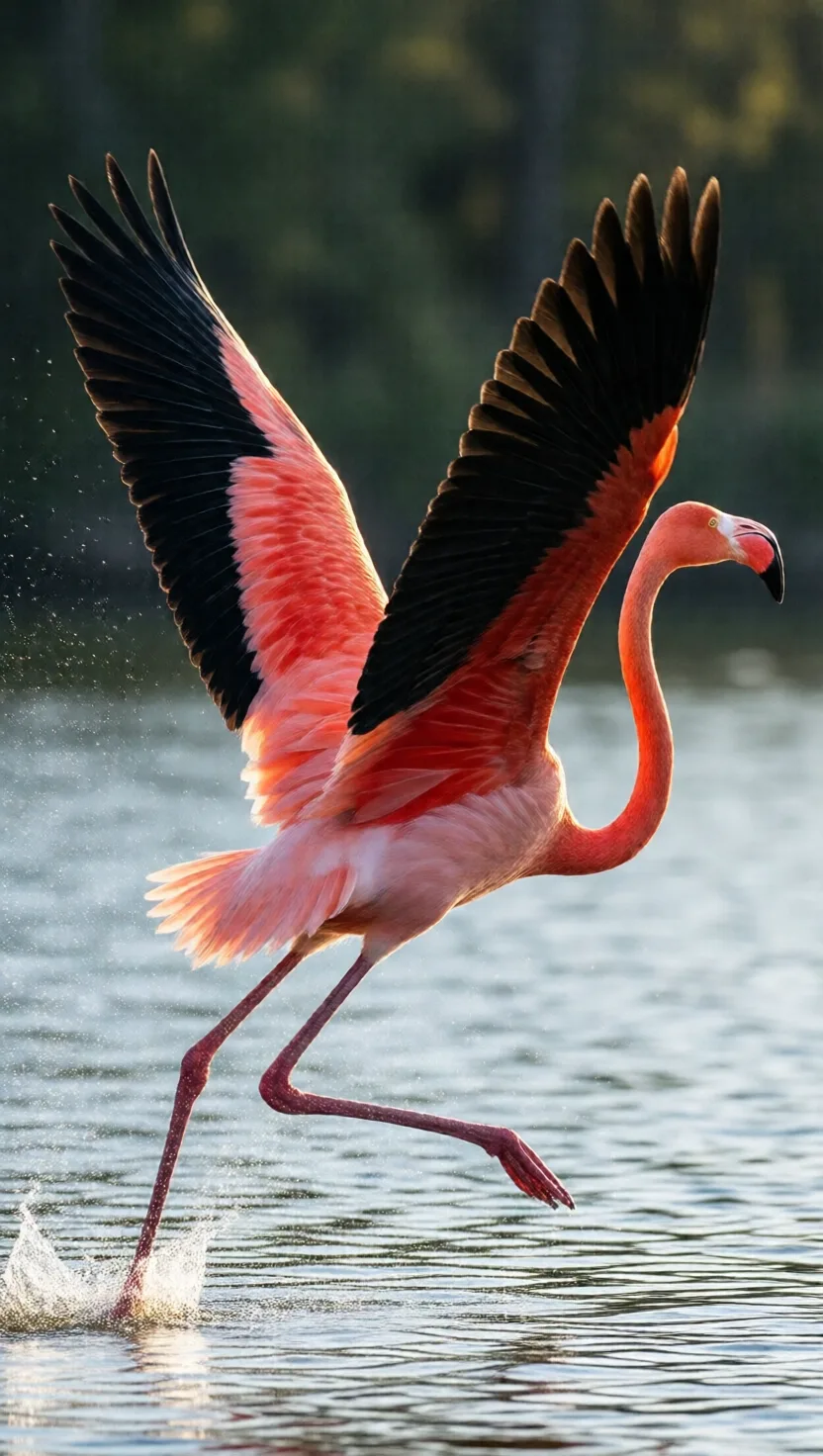
A standing flamingo looks entirely pink, but it is hiding a secret. Each wing carries about 12 main flight feathers that are pure black, tucked out of sight when the wings are folded. The instant a flamingo opens up to fly, a bold black band flashes along the trailing edge of each wing against the pink, one of the most dramatic color contrasts in the bird world. The black comes from melanin, which also makes those feathers tougher against the wear of flight.
tap →swipe ↑ for depthswipe ↓ to exit