Eight things hidden inside a glassy crystal

DC·162 Deep Cuts
The mineral that bleeds the world's only wild fluorine gas

The mineral that bleeds the world's only wild fluorine gas

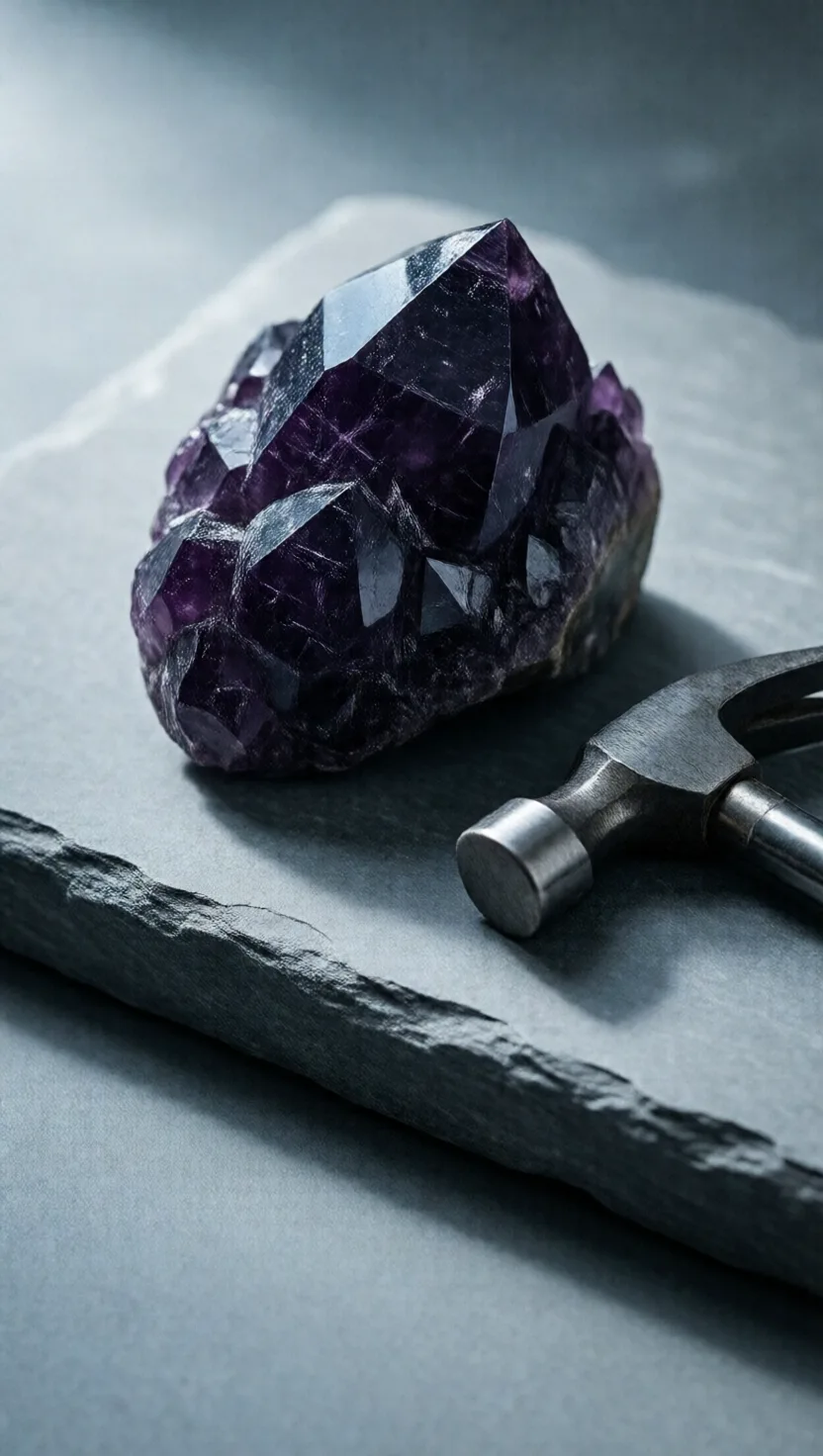
Antozonite, a dark radioactive fluorite from Woelsendorf in Bavaria (first noted in 1841), traps pockets of pure fluorine gas inside the crystal. Uranium impurities emit radiation that slowly splits the calcium fluoride into calcium metal and free fluorine, which collects in tiny shielded enclaves. Fluorine is so reactive that chemists long insisted it could not exist uncombined in nature, until a 2012 study proved it hiding here. Crush a piece and the released gas gives off a sharp, foul stink, the origin of its nickname, fetid fluorite.
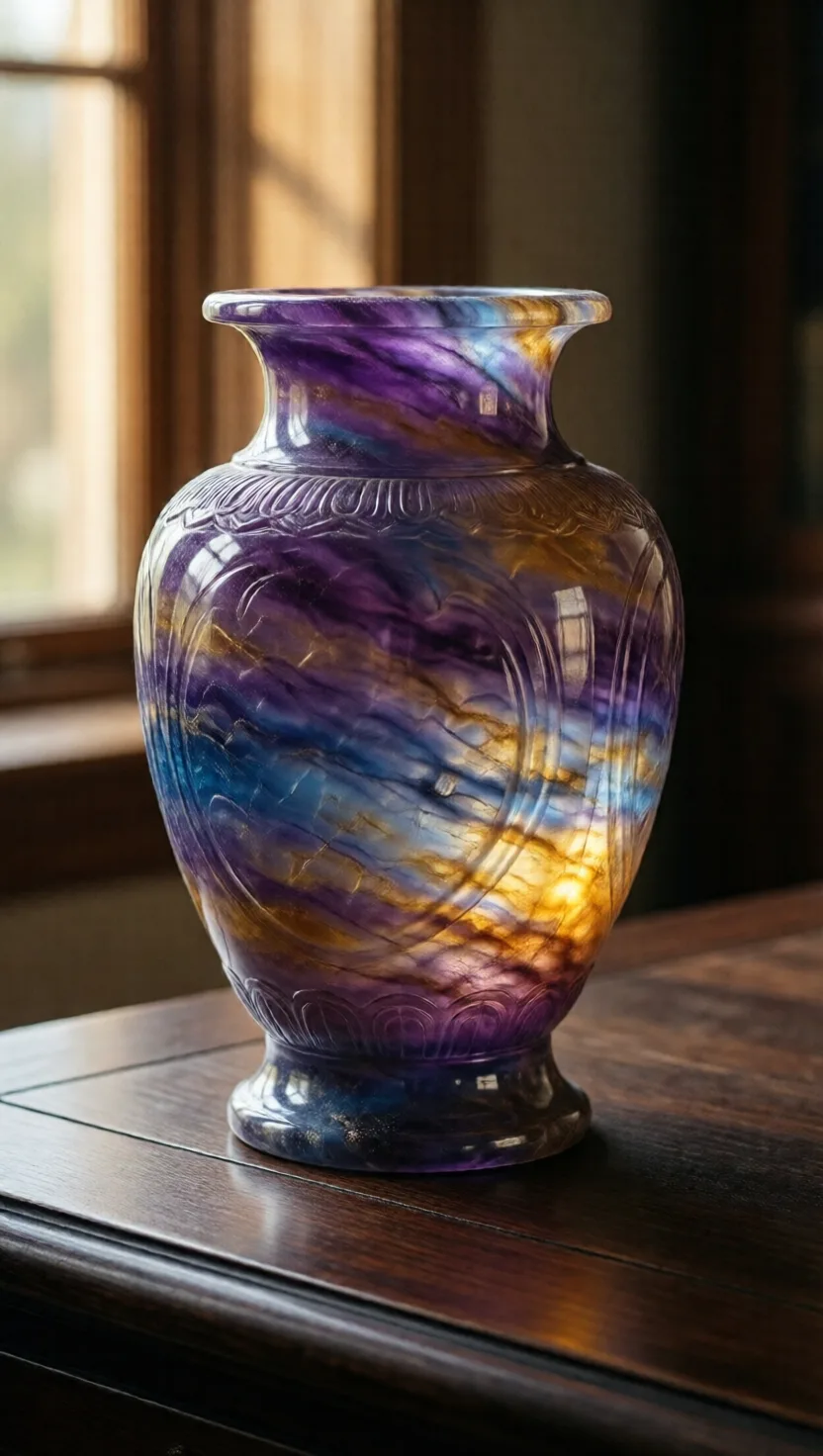
This banded purple stone comes from one English hillside

This banded purple stone comes from one English hillside

Blue John is a rare banded variety of fluorite with sweeping purple, blue and amber-yellow zones. Genuine Blue John is confined to about one cubic kilometre of Carboniferous limestone beneath Treak Cliff, just outside Castleton in Derbyshire, England, where it has been mined and carved into vases and bowls since the 1700s. The banding records slow changes in the groundwater and trace chemistry as the crystals grew. Only a few hundred kilograms are now extracted each year to protect the tiny remaining seams.
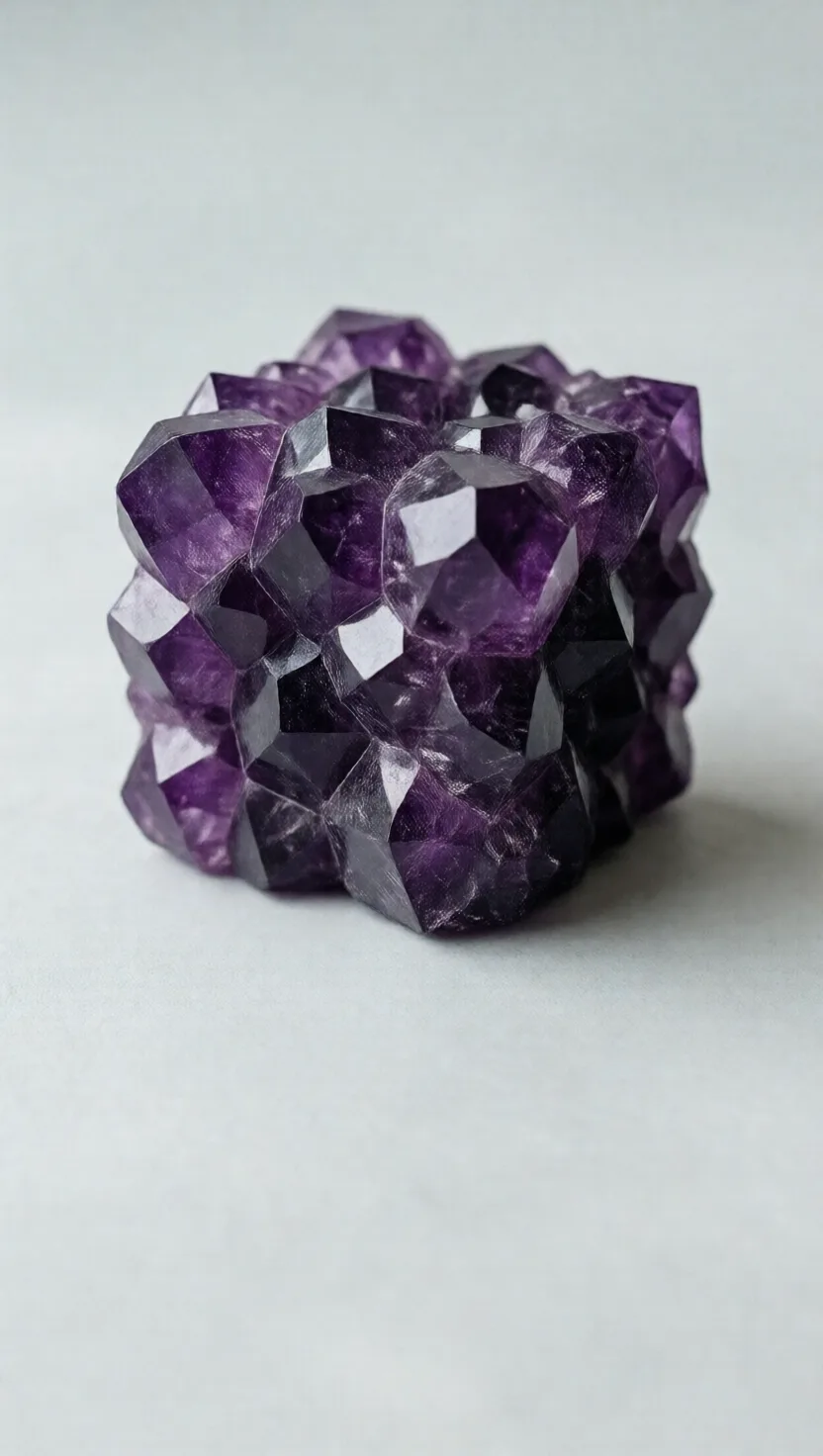
Tap a cube of it and it shatters into perfect octahedra

Tap a cube of it and it shatters into perfect octahedra

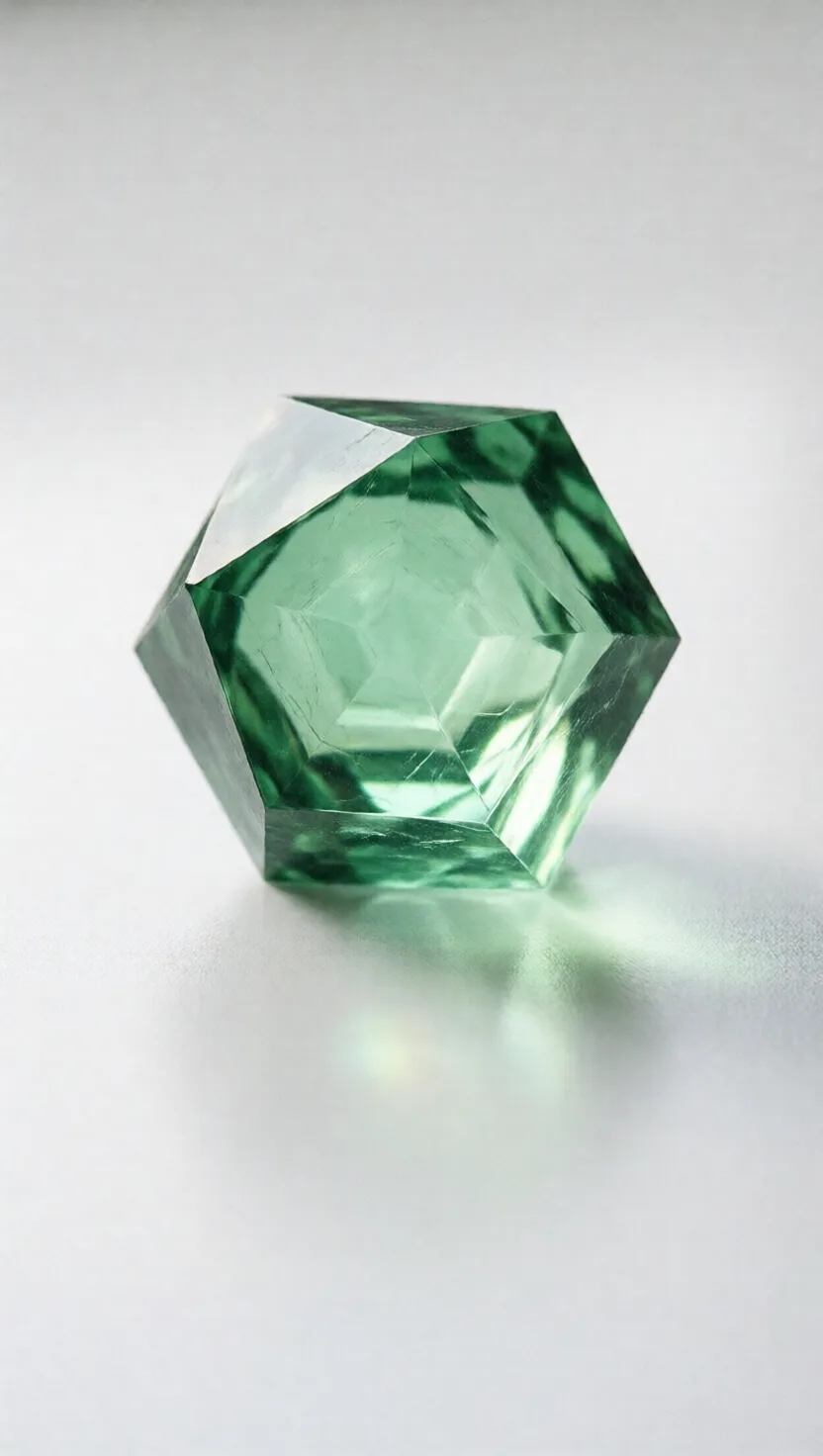
Fluorite has four directions of perfect cleavage along its octahedral planes, the only common mineral that does. Because those four planes are arranged symmetrically, a sharp tap makes a crystal split cleanly into eight-sided octahedral fragments with mirror-flat faces meeting at consistent angles. Many of the green and purple octahedron specimens sold to collectors are not natural crystal shapes at all, but pieces cleaved from larger blocks along these planes, exploiting a geometry built into the calcium fluoride lattice itself.
It's the official benchmark for hardness number 4

It's the official benchmark for hardness number 4

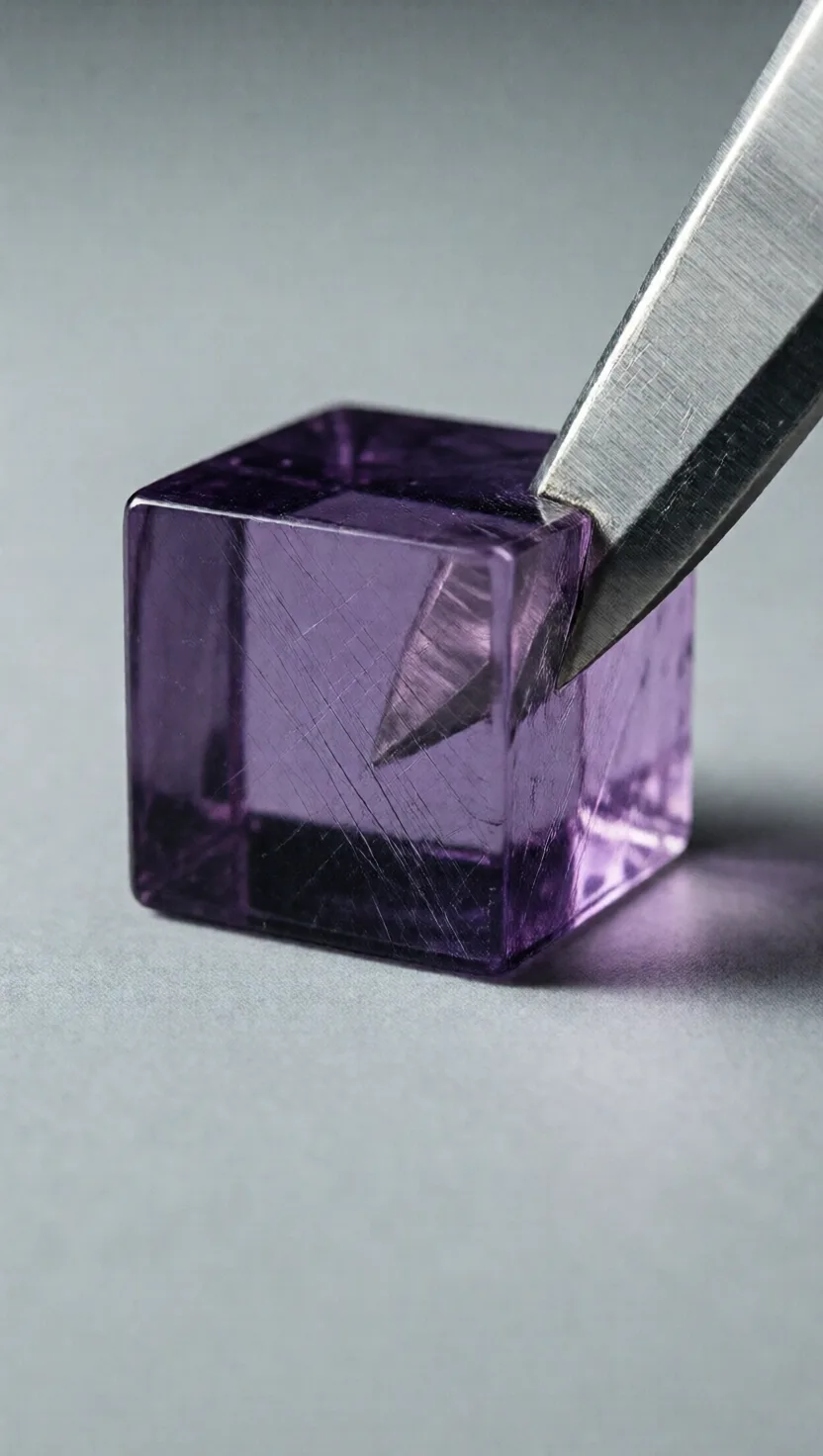
When Friedrich Mohs built his 1812 hardness scale from ten reference minerals, fluorite was chosen to define the value 4, sitting between calcite at 3 and apatite at 5. The scale is purely about scratch resistance: fluorite will scratch calcite but is itself scratched by apatite. A steel knife blade, around 5 to 5.5, easily marks a fluorite crystal, which is why despite its glassy beauty the mineral is too soft for everyday gemstone jewellery and is prized mainly by collectors and carvers.
Its name means 'to flow', and that's its job in steel

Its name means 'to flow', and that's its job in steel

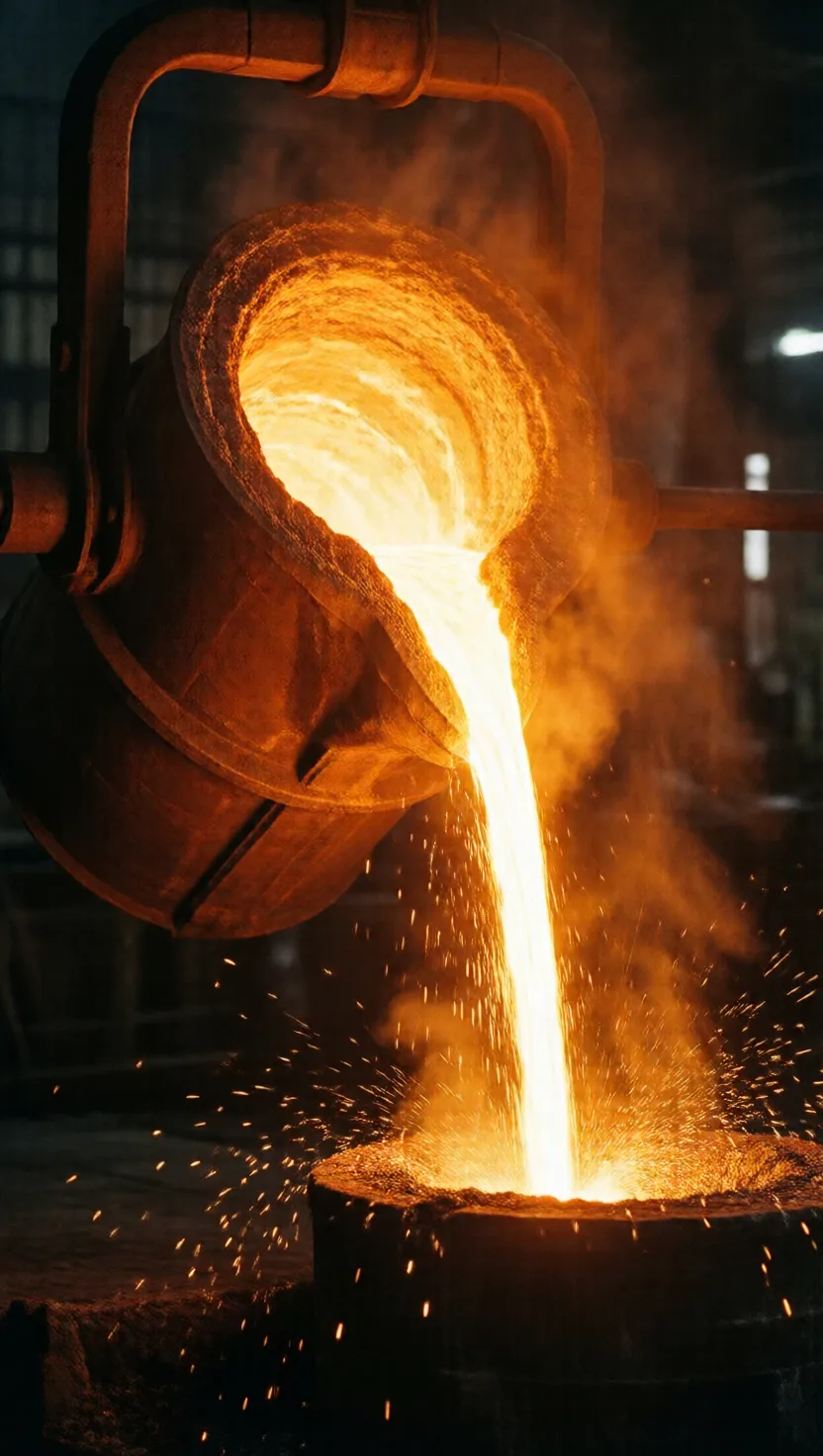
Fluorite's industrial name, fluorspar, and the word fluorine both come from the Latin fluere, to flow, recorded by Agricola in 1530 for a mineral added to ores to make them melt and run more easily. In modern steelmaking, fluorspar is still thrown into the furnace as a flux: it lowers the melting point of the slag and thins it so impurities separate cleanly. Plants use roughly 1 to 5 kilograms of fluorspar per tonne of iron, a quiet workhorse far from the collector's display case.
Grown into crystals, it sharpens premium camera lenses

Grown into crystals, it sharpens premium camera lenses

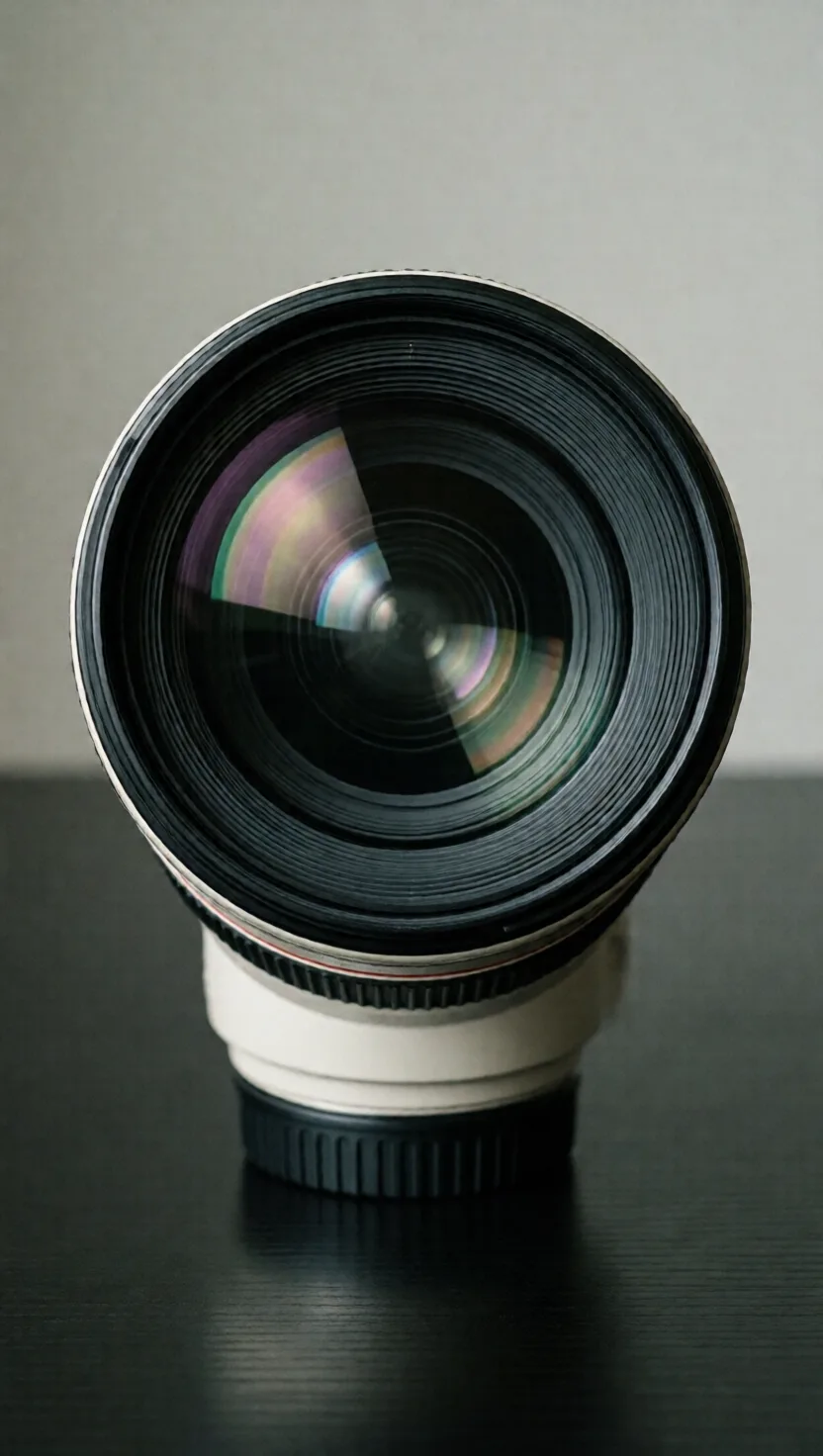
Calcium fluoride bends light with unusually low and anomalous dispersion, meaning it spreads colors far less than ordinary glass. Its Abbe number reaches about 95, against 30 to 60 for typical optical glass. Paired with a high-dispersion element, a fluorite lens brings red, green and blue light to nearly the same focus, killing the color fringing called chromatic aberration. Natural crystals are too flawed, so optical-grade fluorite is grown synthetically and used in apochromatic telescope and telephoto objectives.
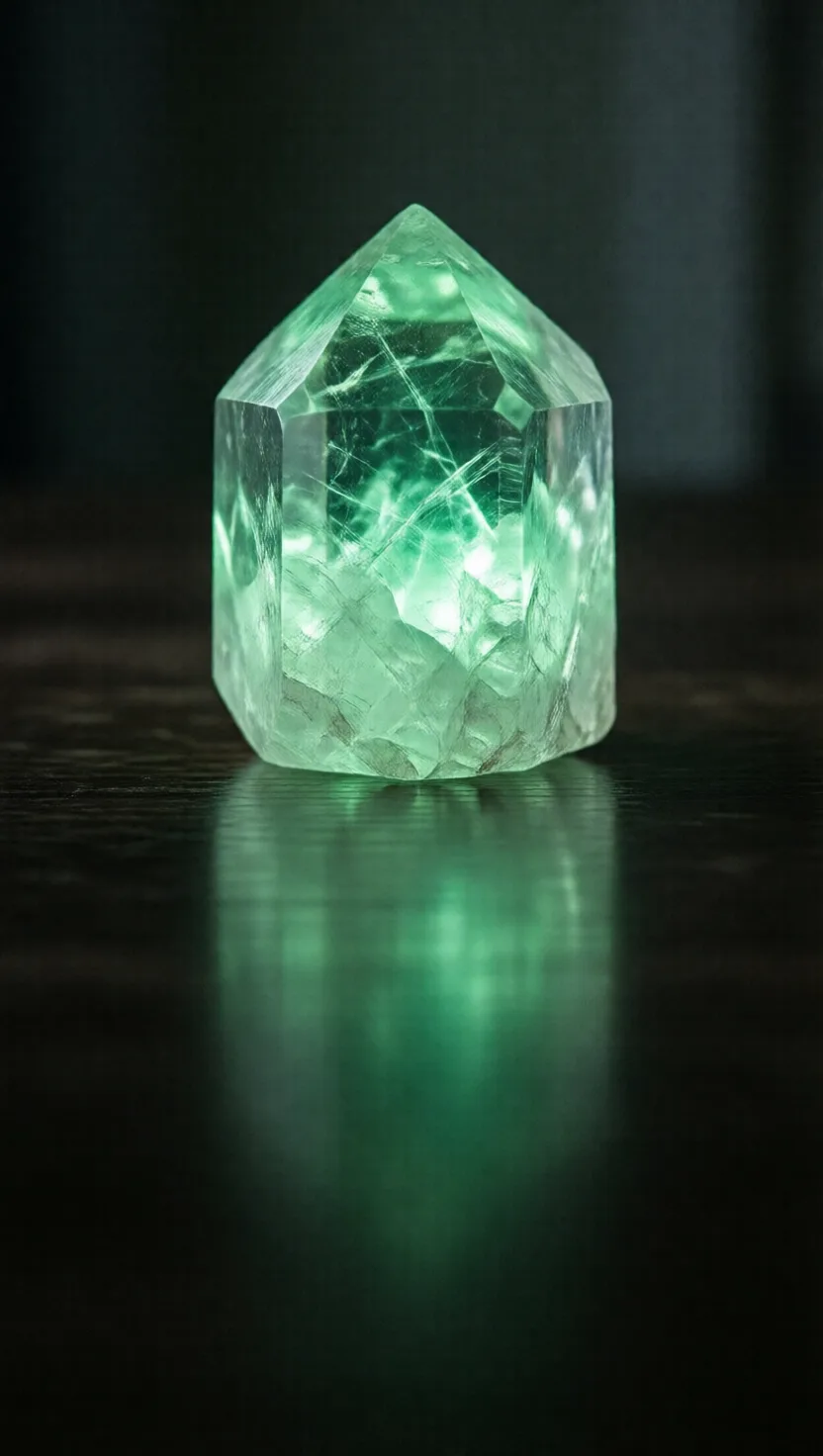
Warm this fluorite gently and it glows emerald green

Warm this fluorite gently and it glows emerald green

Chlorophane is a variety of fluorite so thermoluminescent that heat alone makes it shine. Energy stored in defects in the crystal lattice, trapped over long ages, is released as emerald-green light when the mineral is warmed, with a bright glow appearing between about 200 and 300 degrees Celsius. The effect is one-shot: once the stored energy is spent the glow fades and will not return until the crystal is re-energised. Fine examples come from Franklin, New Jersey, and a handful of other localities.
Its deep purple is a scar left by natural radiation

Its deep purple is a scar left by natural radiation

Pure calcium fluoride is colorless, so fluorite's famous violet comes from damage, not chemistry alone. Radiation from nearby uranium and thorium knocks fluoride ions out of the lattice; the empty sites trap electrons and tiny clumps of calcium atoms form, creating defects called color centers. These absorb light near 570 nanometres, leaving the eye to see purple. Heating the crystal can repair the defects and erase the color, and fresh irradiation can bring it back, a record of geology written in hue.
tap →swipe ↑ for depthswipe ↓ to exit