Eight things a swinging weight reveals

DC·107 Deep Cuts
At the equator, this Earth-tracking pendulum never turns

At the equator, this Earth-tracking pendulum never turns

In 1851 a swinging weight on a long wire became the first proof, visible in a single room, that the Earth turns. As the planet rotates beneath it, the pendulum's swing plane appears to slowly sweep around, knocking over markers one by one. The strange part is how the speed depends on where you stand: a full turn takes about 24 hours divided by the sine of your latitude, so it is fastest at the poles, and at the equator the plane never rotates at all.
Why a Newton's cradle sends out one ball, not two

Why a Newton's cradle sends out one ball, not two

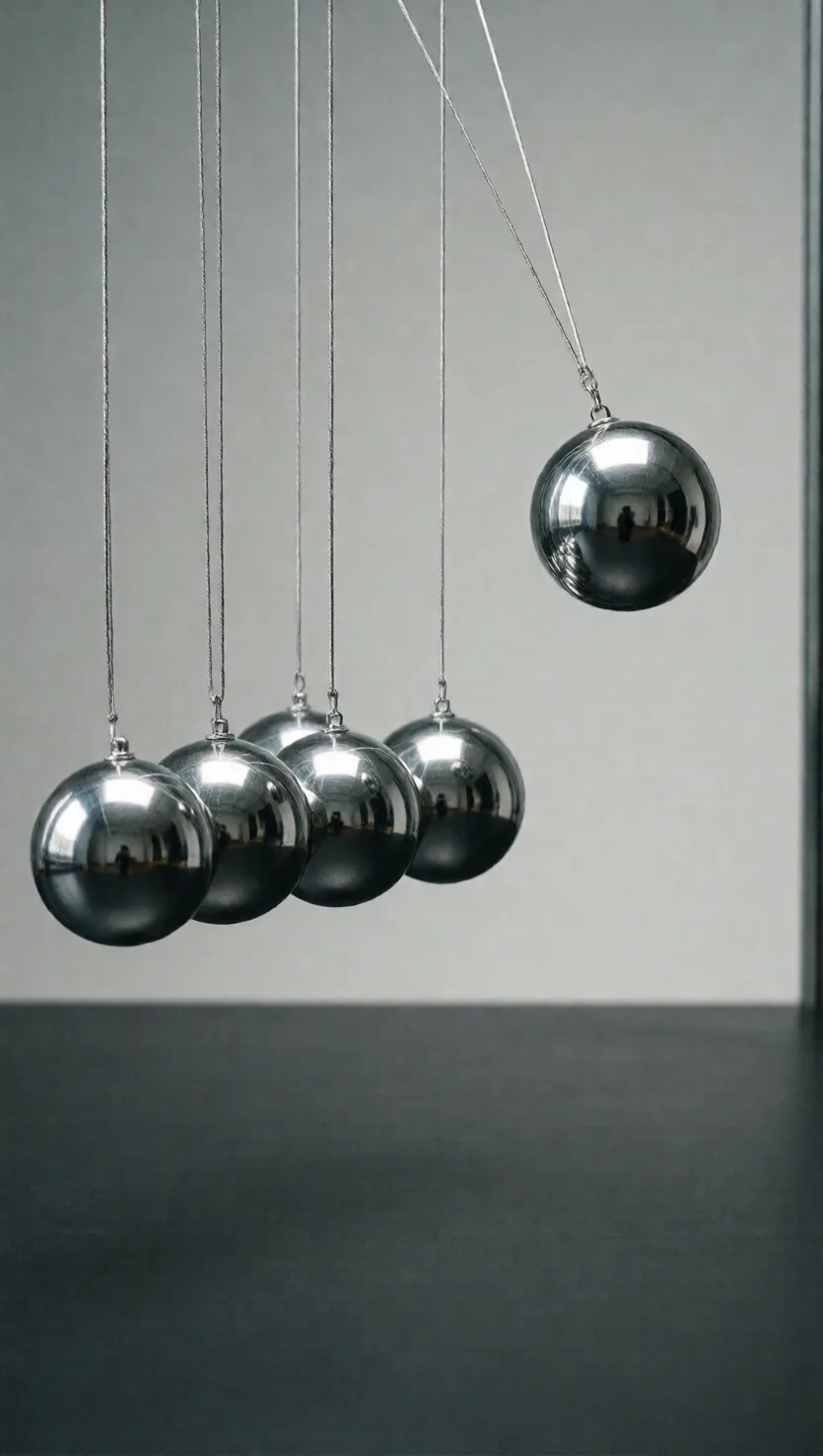
Lift one steel ball of a Newton's cradle and let it strike the row, and exactly one ball swings out the far side at the same speed. Why not two balls at half the speed? That outcome would still balance the momentum, but it would quietly lose energy, because energy depends on speed squared, not just speed. Only the one-ball-out result satisfies conservation of momentum and conservation of energy at once. It takes two laws, not one, to explain the click.
A perfect clock ran slow near the equator

A perfect clock ran slow near the equator

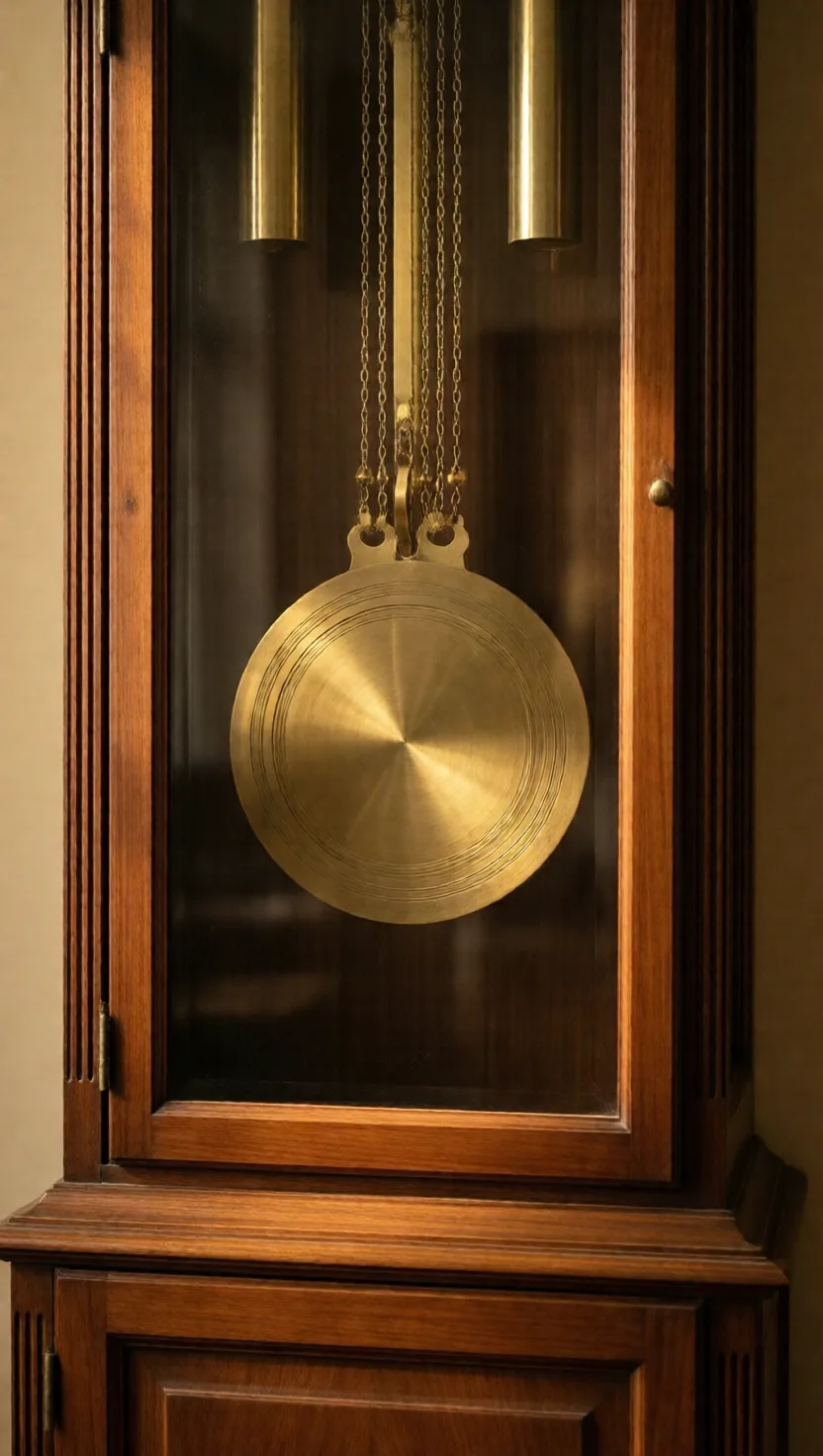
In 1672 an astronomer carried a finely tuned pendulum clock from Paris to Cayenne, near the equator, and found it fell behind by about two and a half minutes a day. The pendulum had not broken; gravity was simply weaker there, so it swung a touch slower. The clue revealed something about the whole planet: the Earth is not a perfect sphere but bulges at the equator, leaving the surface there farther from the centre and the pull of gravity slightly reduced.
Before electronics, a swinging block clocked a bullet

Before electronics, a swinging block clocked a bullet

How fast does a bullet fly? Before stopwatches and sensors could be made quick enough, the answer came from a heavy block hung on cords. Fire a projectile into the block and it absorbs the impact, swinging back and upward; from how high it rises you can calculate the speed the bullet must have carried. Invented in 1742, this swinging block was the first reliable way to measure projectile velocity, and it turned gunnery into a real science.
The metre was nearly the length of a one-second swing

The metre was nearly the length of a one-second swing

A pendulum's swing depends only on its length and gravity, not on its weight, and one with a half-swing of exactly one second turns out to be just under a metre long, about 0.994 m. In 1790 this near-coincidence inspired a proposal to define the metre itself as the length of a one-second pendulum. It was rejected for a subtle reason: gravity varies from place to place, so the same pendulum would set a slightly different metre in Paris than at the equator.
Add one joint and a pendulum becomes pure chaos

Add one joint and a pendulum becomes pure chaos

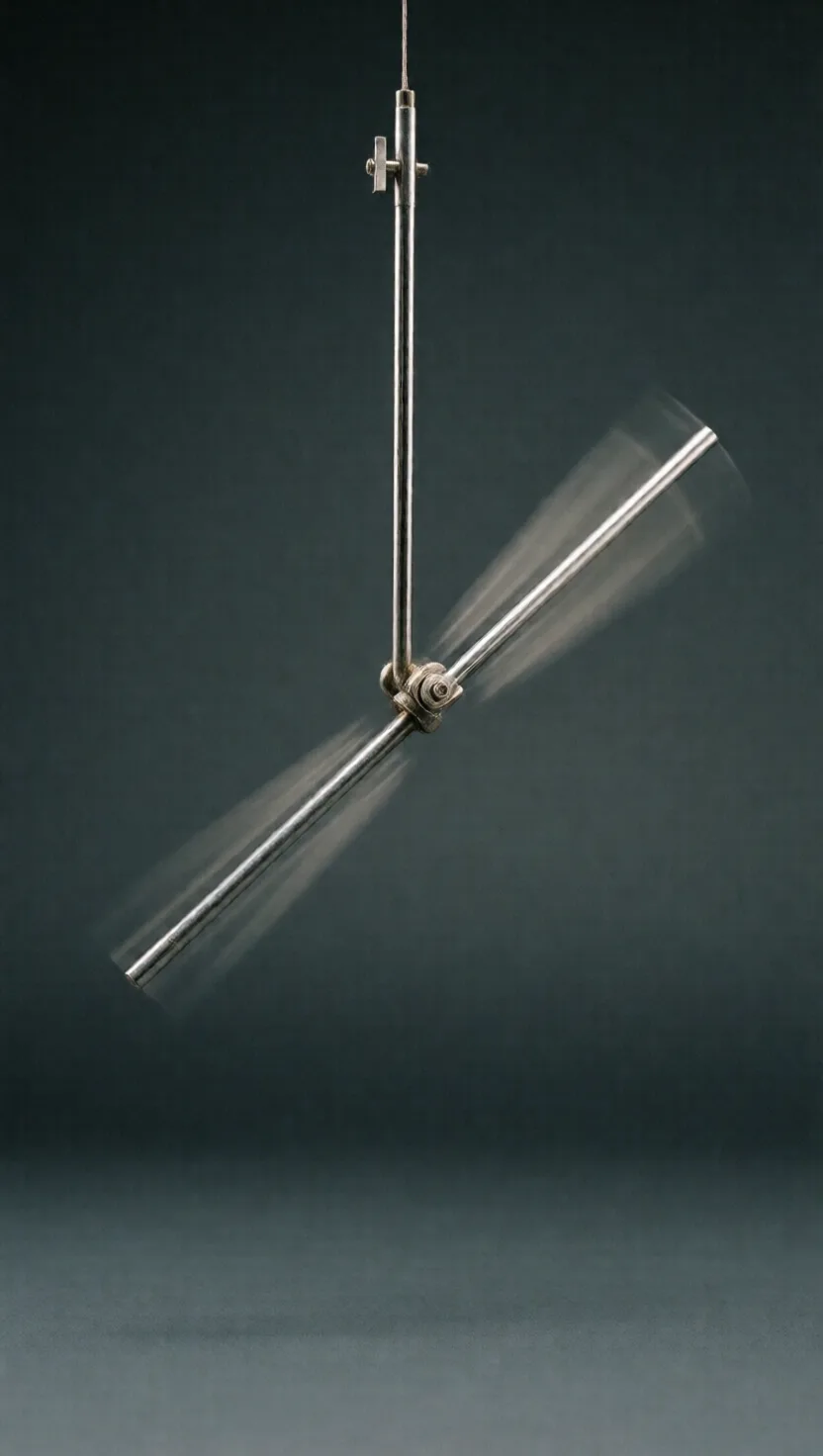
A single pendulum swings in a smooth, predictable arc. Join a second arm to the end of the first, and the tidy motion collapses into chaos. The double pendulum is a classic example of a deterministic system that is still unpredictable: it follows exact physical laws, yet two releases from almost identical positions diverge wildly within seconds, so its long-term path can never be forecast. The tiniest difference at the start grows without limit.
A giant hanging ball keeps a tower from swaying

A giant hanging ball keeps a tower from swaying

Tall towers sway in high winds, so some are steadied by a pendulum hidden inside. A massive sphere, in one famous case around 660 tonnes of welded steel plates, hangs near the top on thick cables. When the building leans one way, the heavy sphere swings the other, lagging behind the structure and pulling against its motion. Tuned to match the tower's natural sway, this single pendulum can cut the building's movement by up to 40 percent.
A metronome ticks slow with its weight up top

A metronome ticks slow with its weight up top

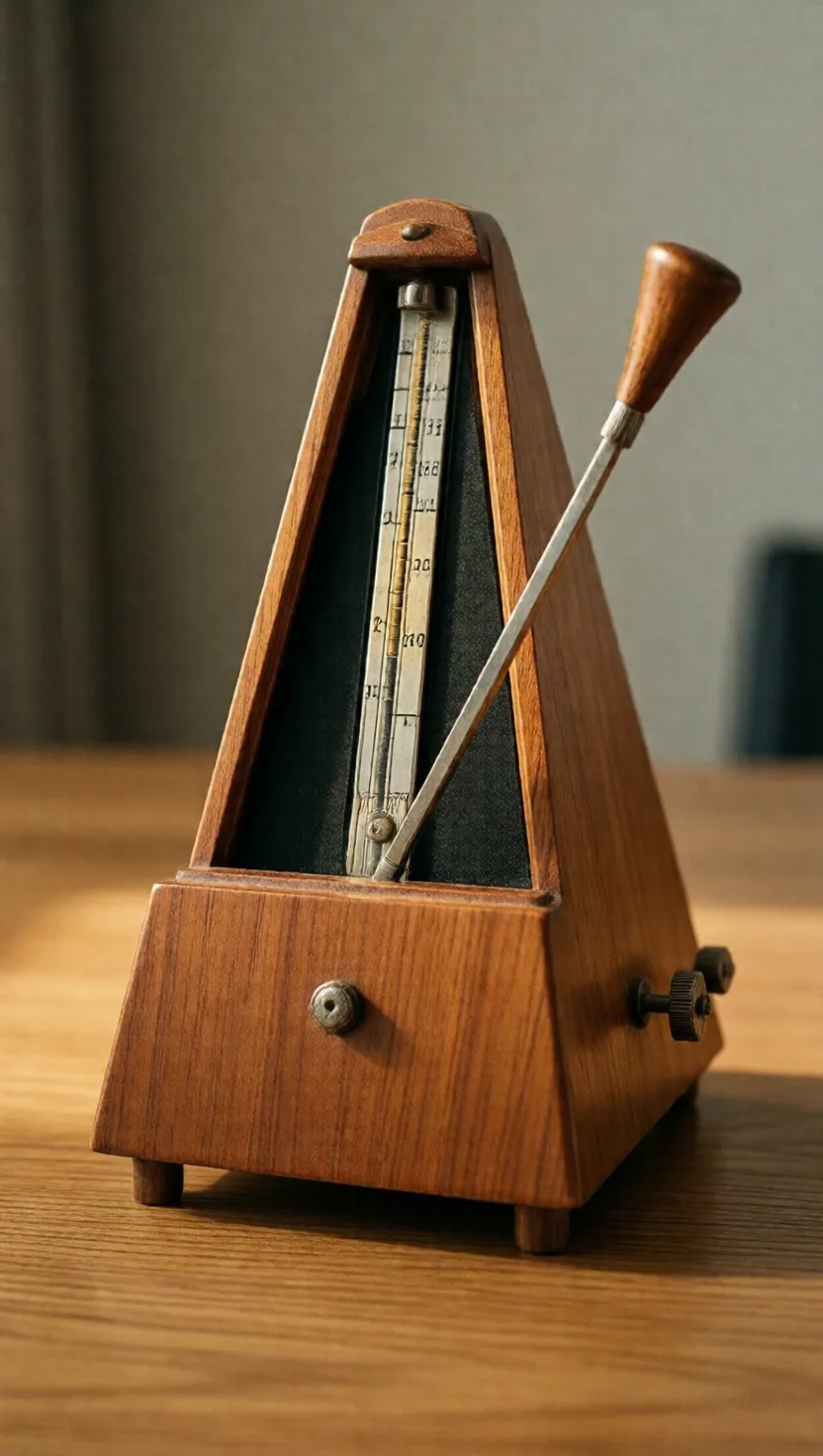
A pendulum normally swings faster the shorter it is, so a small desk-sized one should tick far too quickly for music. The metronome cheats by being upside down: its swinging rod is weighted below the pivot and carries a second sliding weight above it. Raising that upper weight slows the beat dramatically, letting a compact device tick as slowly as 40 beats a minute and as fast as 208, simply by moving the slider up or down.
tap →swipe ↑ for depthswipe ↓ to exit