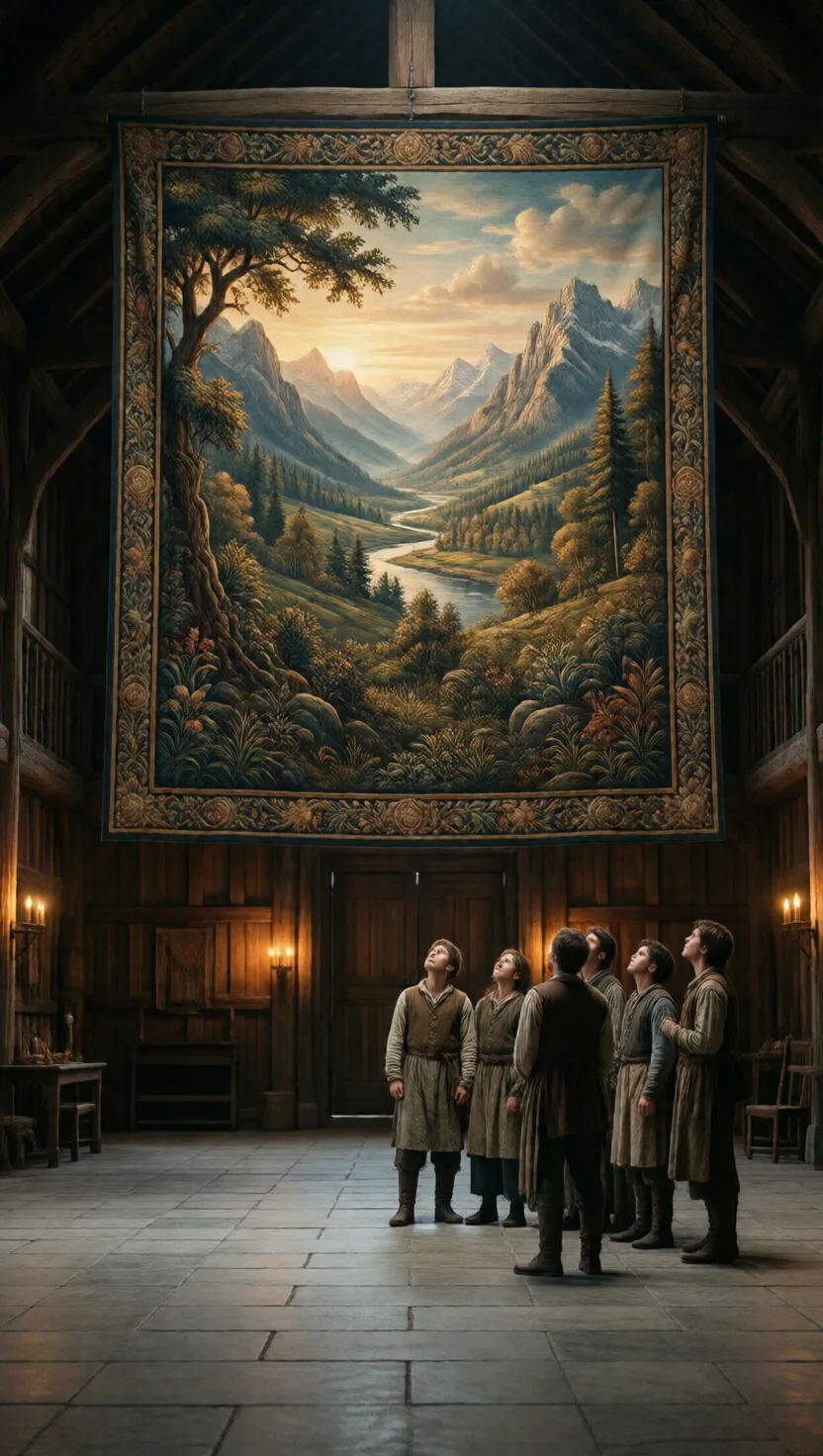
The million-knot tapestry that was secretly a few patterns.

SRC·96 Source
Copy the master's tapestry — all million crossings of it

Copy the master's tapestry — all million crossings of it

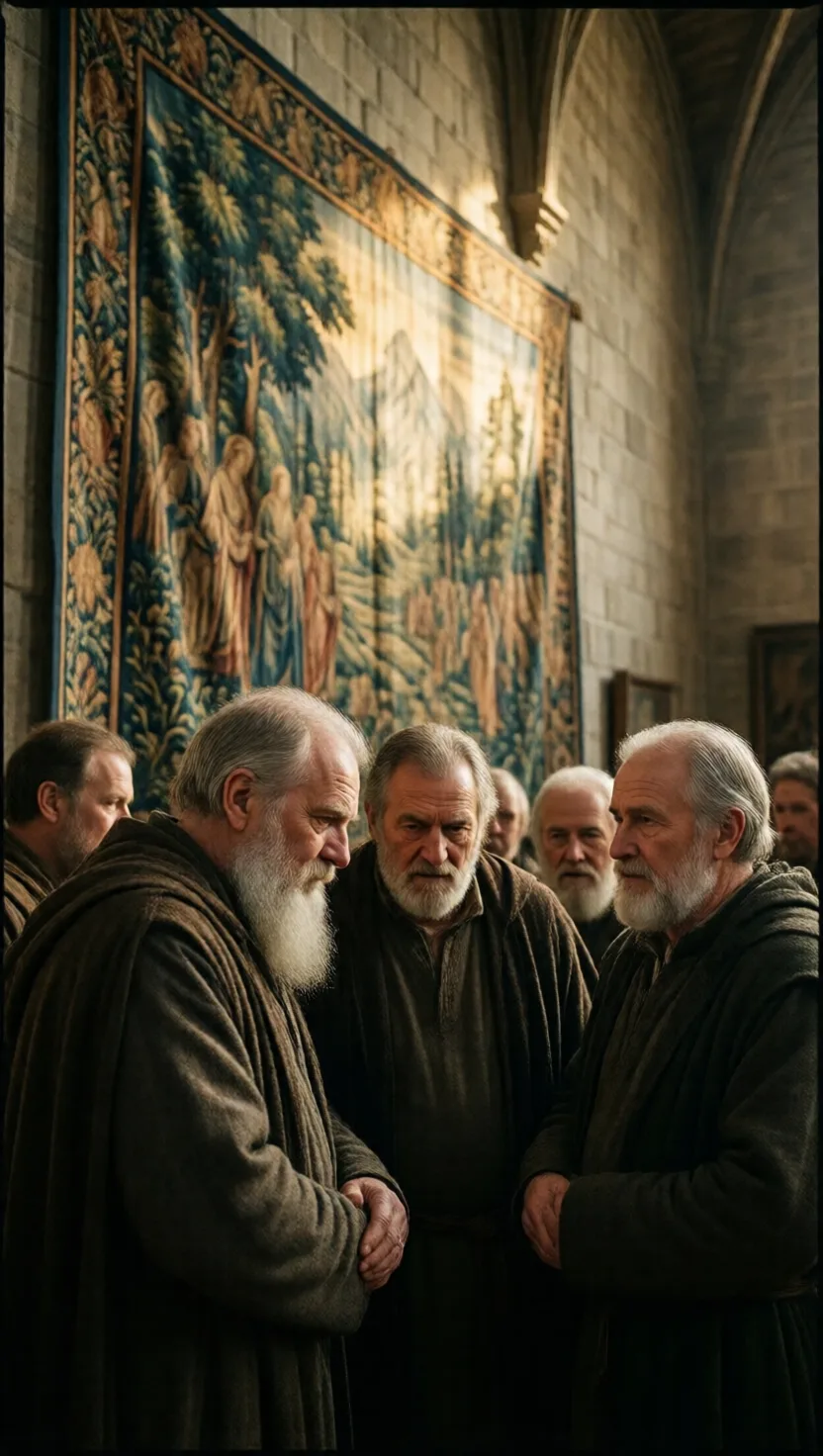
In the guild hall hangs the old master's last tapestry: a whole valley at dawn, a thousand threads wide, a thousand tall. He is gone, and the guild wants a copy. The apprentices do the arithmetic and go pale — a million crossings, each its own choice of thread. A lifetime of knots. Yet the master wove it in a single winter. How?
Knot by knot, the copy crawls

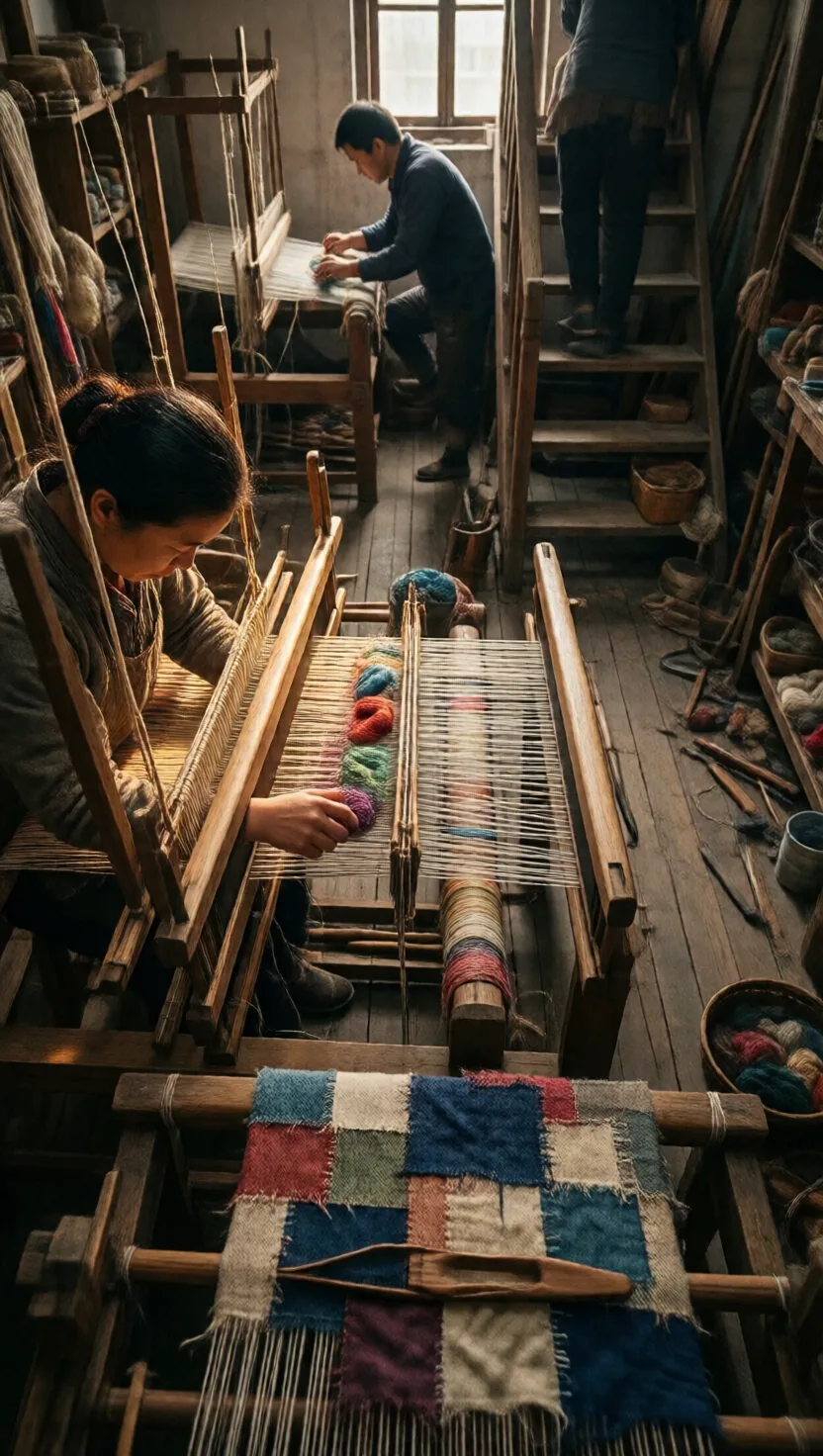
Knot by knot, the copy crawls

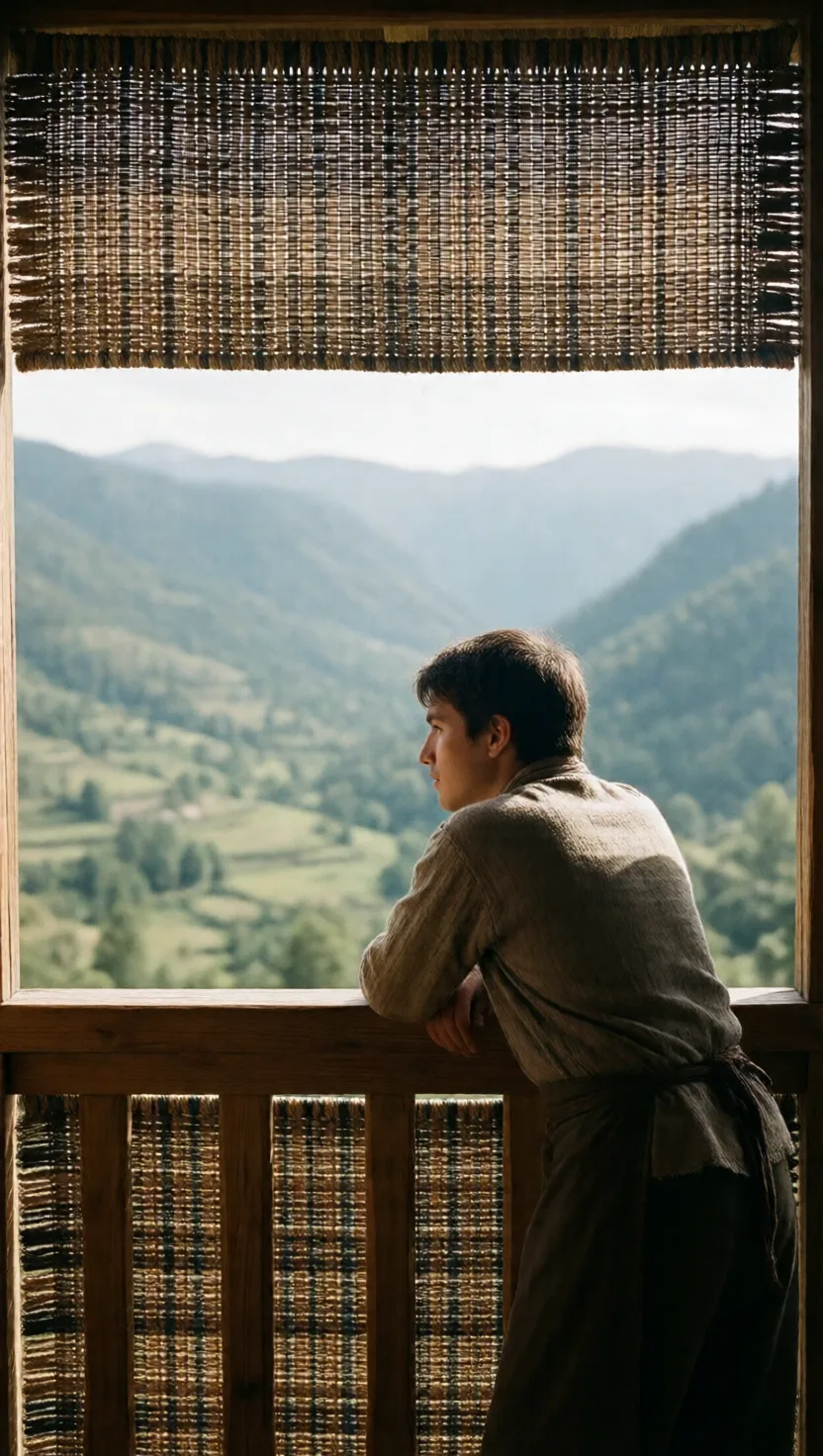
They divide the cloth into patches and copy it crossing by crossing. Weeks pass; each apprentice has a hand's width of weave, and where the patches meet, the colors argue. A million separate decisions, every one to be gotten right on its own. Then the youngest, sent up to the balcony to judge the work from afar, sees something nobody sees up close…
From the balcony, the million knots dissolve

From the balcony, the million knots dissolve

From above, the tapestry's sky is not a thousand stubborn rows — it is one rhythm running left to right, crossed with one rhythm running top to bottom. Where strong meets strong, deep color; where faint meets faint, almost nothing. One row-pattern against one column-pattern paints a field-sized wash in a single gesture. But the valley beneath that sky is richer than any one wash…
Washes laid over washes, loudest first

Washes laid over washes, loudest first

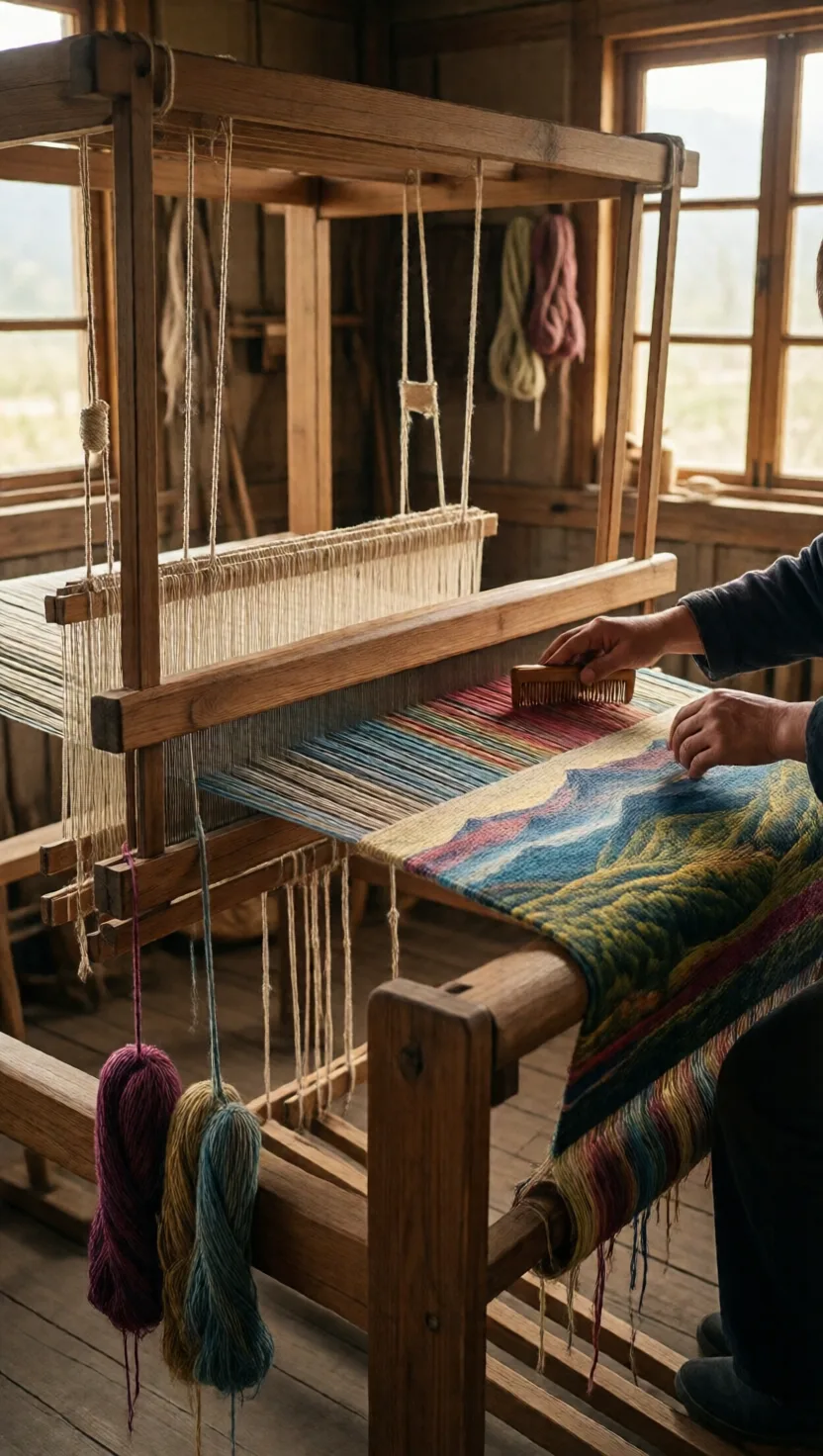
They try it at the loom. First the sky-wash. Over it a second — a ridge-rhythm crossed with a slope-rhythm, the long diagonal of the hillside. A third for the river's glint. Each layer is one row-pattern crossed with one column-pattern, and the layers are not equals: a few are loud as weather, most are whispers. Sort them loudest first, and a question appears — how many does a copy truly need?
Keep five layers, and the valley is almost itself

Keep five layers, and the valley is almost itself

They weave only the strongest few. Five layers in, the guild elders squint from any honest distance and cannot tell copy from original — everything missing is fainter than the wool's own fuzz. And the price collapses: each layer is just one strip of row-choices and one of column-choices. Thousands of decisions instead of a million — a hundred times lighter. So what, all those years, was the master keeping in his head?
A giant made of a few patterns has a name: low-rank

A giant made of a few patterns has a name: low-rank

Aσ1u1v1+σ2u2v2++σkukvkA \approx \sigma_1 u_1 v_1^{\top} + \sigma_2 u_2 v_2^{\top} + \cdots + \sigma_k u_k v_k^{\top}
The master's secret is low-rank: a grid that is secretly a few row-patterns crossed with a few column-patterns, added up. The loom that finds the layers is the singular value decomposition — the equation reads 'the cloth is k washes, each a column-habit u crossed with a row-habit v, weighted by its strength σ'. Keep the strongest k; no copy so thin can be more faithful. The giant grids inside learning machines? Again and again, exactly this.
🌱 How many layers are you?

🌱 How many layers are you?

That night the youngest apprentice sits alone by the still loom, thinking about people. A friend's taste in music, a town's habits, your own year of choices — each looks like a million independent knots. But so did the valley. If someone patient unpicked you into washes, loudest first — how many would it take before you were recognizably you, and what would the first one be?
tap →swipe ↑ for depthswipe ↓ to exit