No single fold makes a crane.

SRC·95 Source
The apprentice tries to fold the crane in one move

The apprentice tries to fold the crane in one move

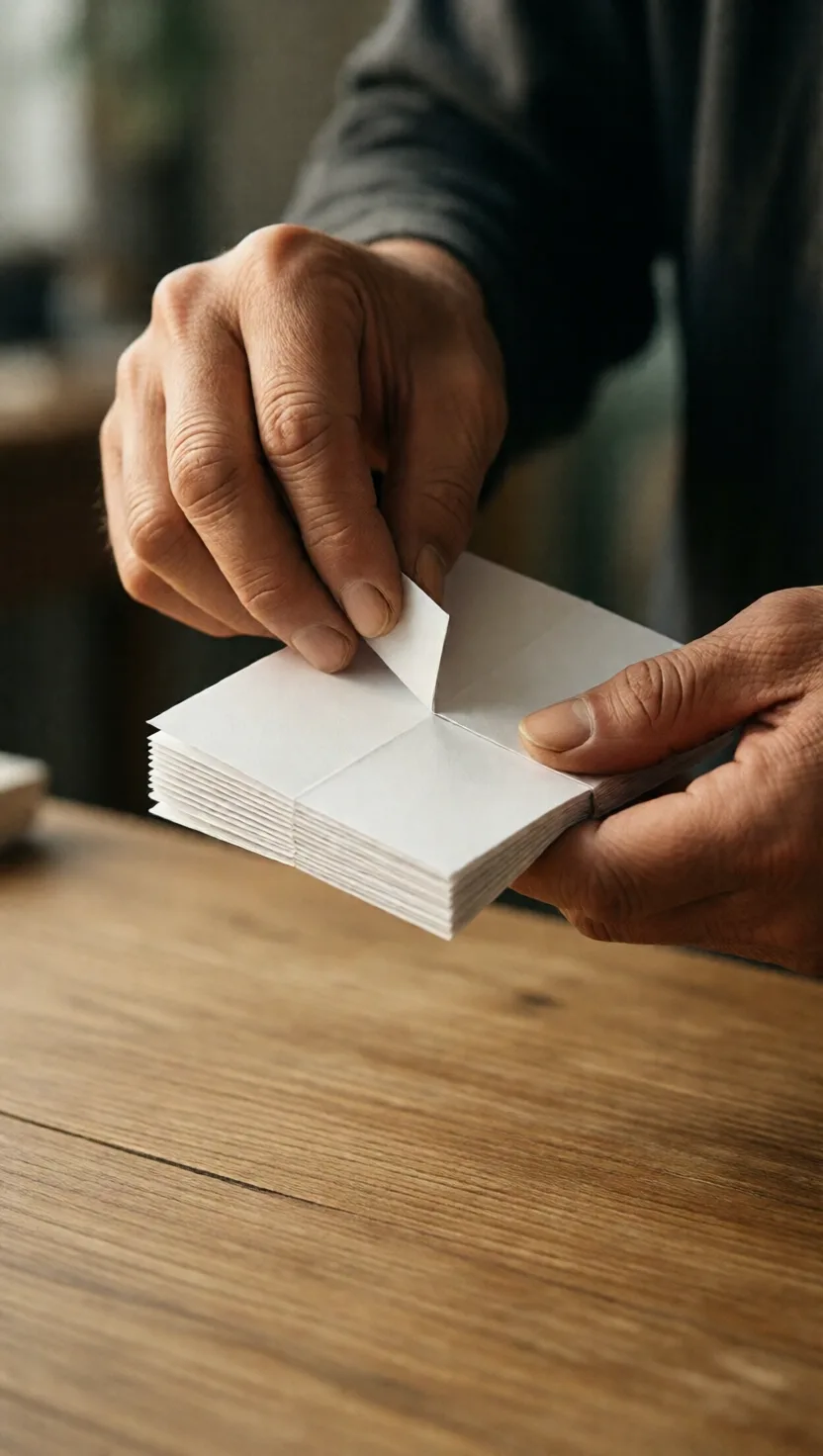
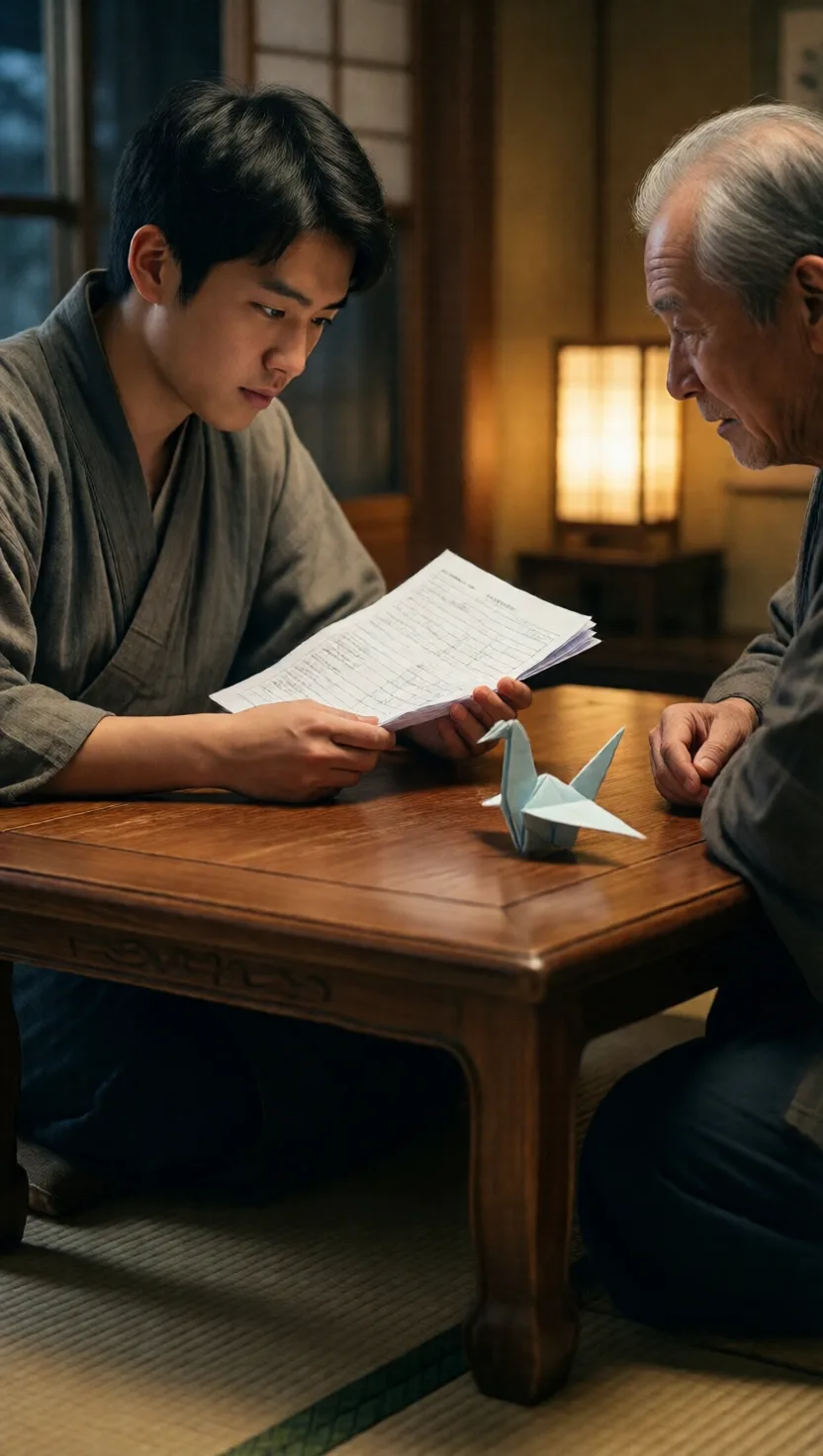
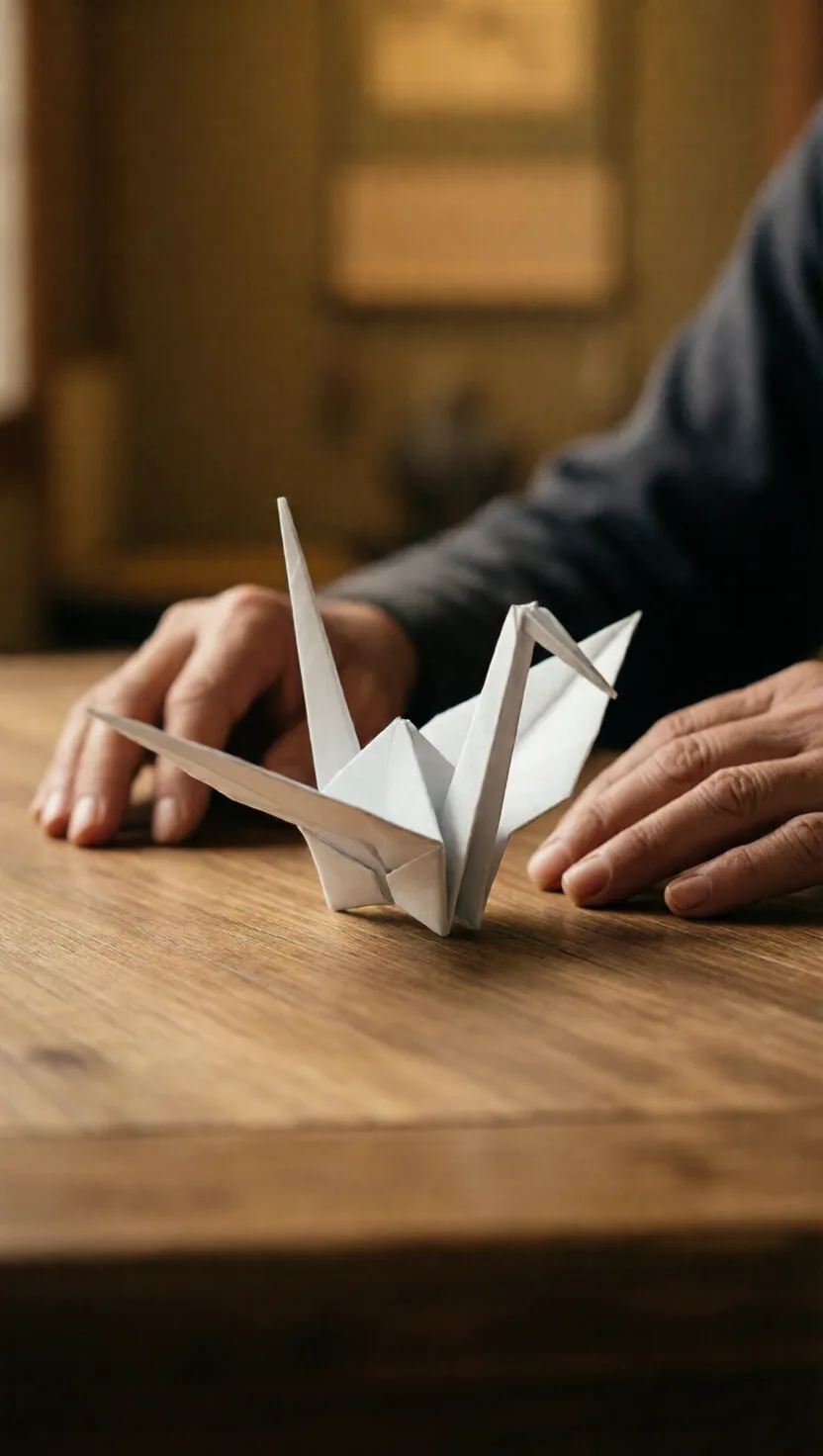
In the paper studio, the old master folds a plain square twenty times, and a crane stands up in her palm. Her apprentice, Ren, is sure there must be a shortcut. He presses, curls, forces the whole bird into one grand gesture — and gets a bent sheet, then a torn one. The crane refuses to exist in a single move. Why should twenty small folds hold what no one big fold can?

Moves without a bend add up to no bend at all

Moves without a bend add up to no bend at all

W2(W1x)=(W2W1)xW_2(W_1 x) = (W_2 W_1)\,x
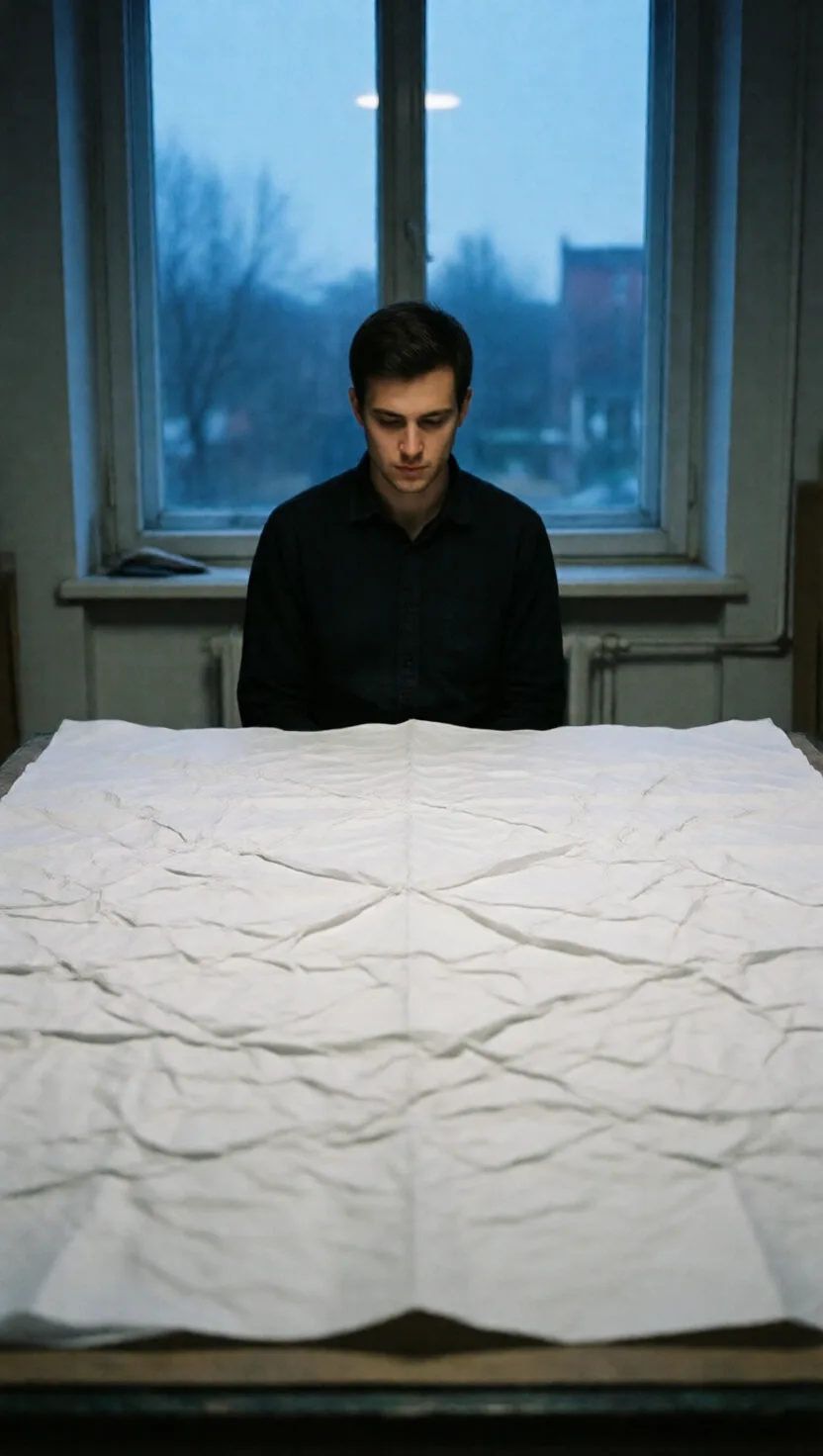
Ren tries elegance instead: he slides the sheet, turns it, slides it again — a whole afternoon of graceful motion. The paper ends exactly as it began: flat. Chain as many bend-less moves as you like; they always collapse into one bend-less move, as if the afternoon never happened. So the crease is everything. Yet a single crease is almost nothing — one straight line in flat paper. Where does the bird come from?
Every fold lands on the folds before it

Every fold lands on the folds before it

The master shows him fold five: one straight crease — but pressed through paper already layered by four earlier folds. Unfolded, that single bend turns out to be many bends, repeated wherever the layers lay. Each new fold multiplies the work of everything beneath it: creases build on creases, the way a wing can only be shaped on a body that already exists. So Ren, testing the idea, shuffles the order…
The same twenty folds, shuffled, make a crumple

The same twenty folds, shuffled, make a crumple

Ren repeats all twenty folds faithfully — in the wrong order. He gets a crumpled pocket, not a bird. A crease landing on layered paper does different work than on flat, so each fold's meaning depends on every fold before it. The recipe is not a bag of moves: the sequence is part of the design. Humbled, Ren asks the obvious question — couldn't a big enough sheet just skip all this?
The flat way exists — and it costs a fortune

The flat way exists — and it costs a fortune

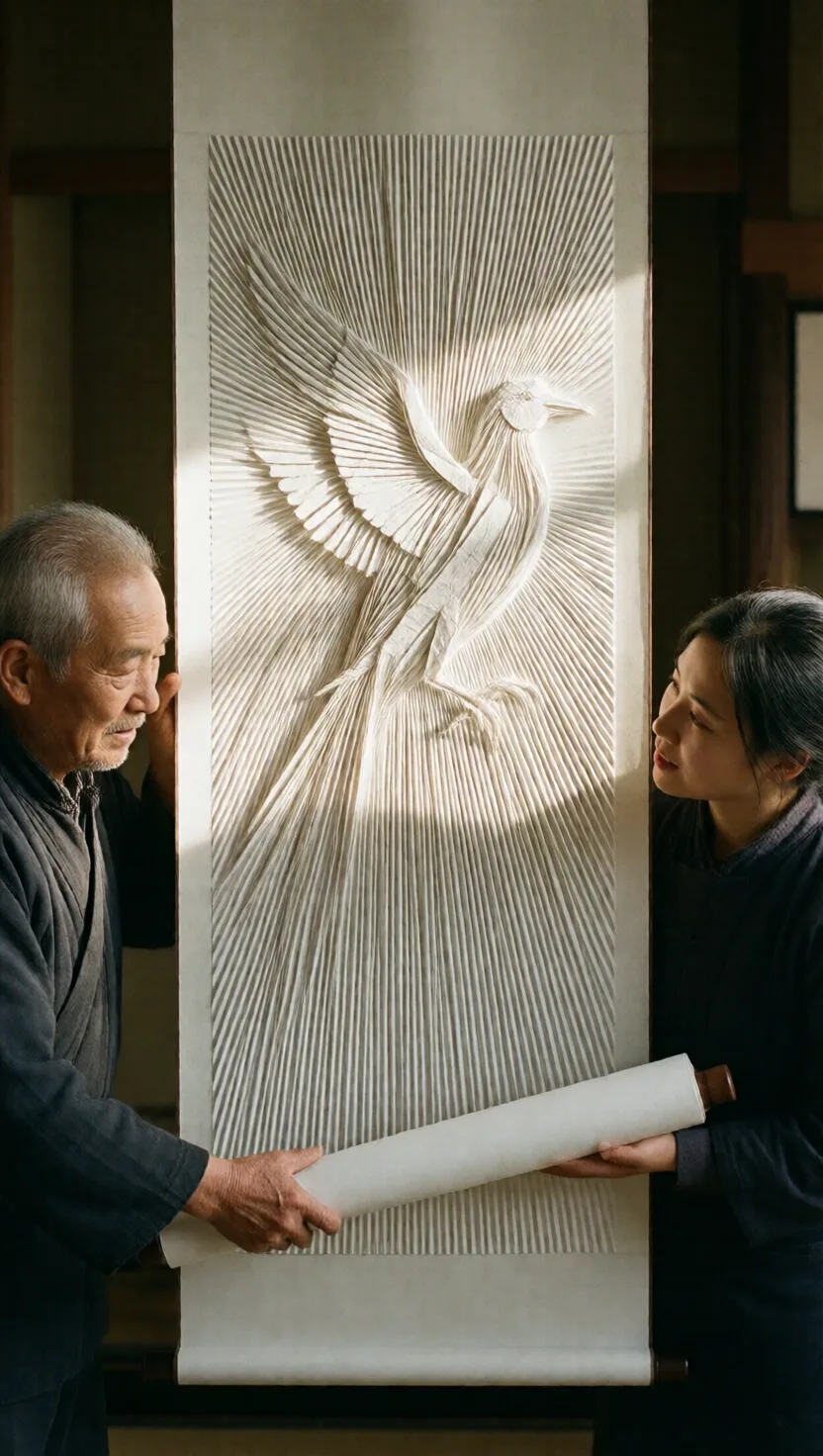
The master unrolls a wall piece made the flat way: no folds upon folds, only thousands of tiny parallel pleats, each nudging the outline by a hair. From across the room it can fake any silhouette you ask of it. Up close it is an ocean of creases that took her a whole season — and taught the paper nothing it could reuse. Some shapes are a handful of folds deep, and an absurd explosion of pleats shallow…
The crane's secret has a name: depth

The crane's secret has a name: depth

f(x)=f20(f2(f1(x)))f(x) = f_{20}(\cdots f_2(f_1(x))\cdots)
A layered network works like the crane. Each layer is one simple bend of its input, applied to what earlier layers already bent: twenty small functions, each acting on the result of all the ones before. Stacked bends compose shapes no single bend can make, and a few folded layers build what one flat, wide layer could only imitate at absurd cost. That power is depth. The master smiles: the paper was never the point…
🌱 Which of your skills is a crane?

🌱 Which of your skills is a crane?

At dusk, Ren sits alone and unfolds a finished crane, crease by crease, watching the bird disappear into ordinary lines. No single fold was the crane; the crane lived in their order. Perhaps most things you do well are built this way — simple moves stacked on simple moves until something appears that none of them contains. Which of your skills is a crane, and what were its first three folds?
tap →swipe ↑ for depthswipe ↓ to exit