The threads the dough can stretch but never turn.

SRC·87 Source
Two threads that refuse to turn

Two threads that refuse to turn

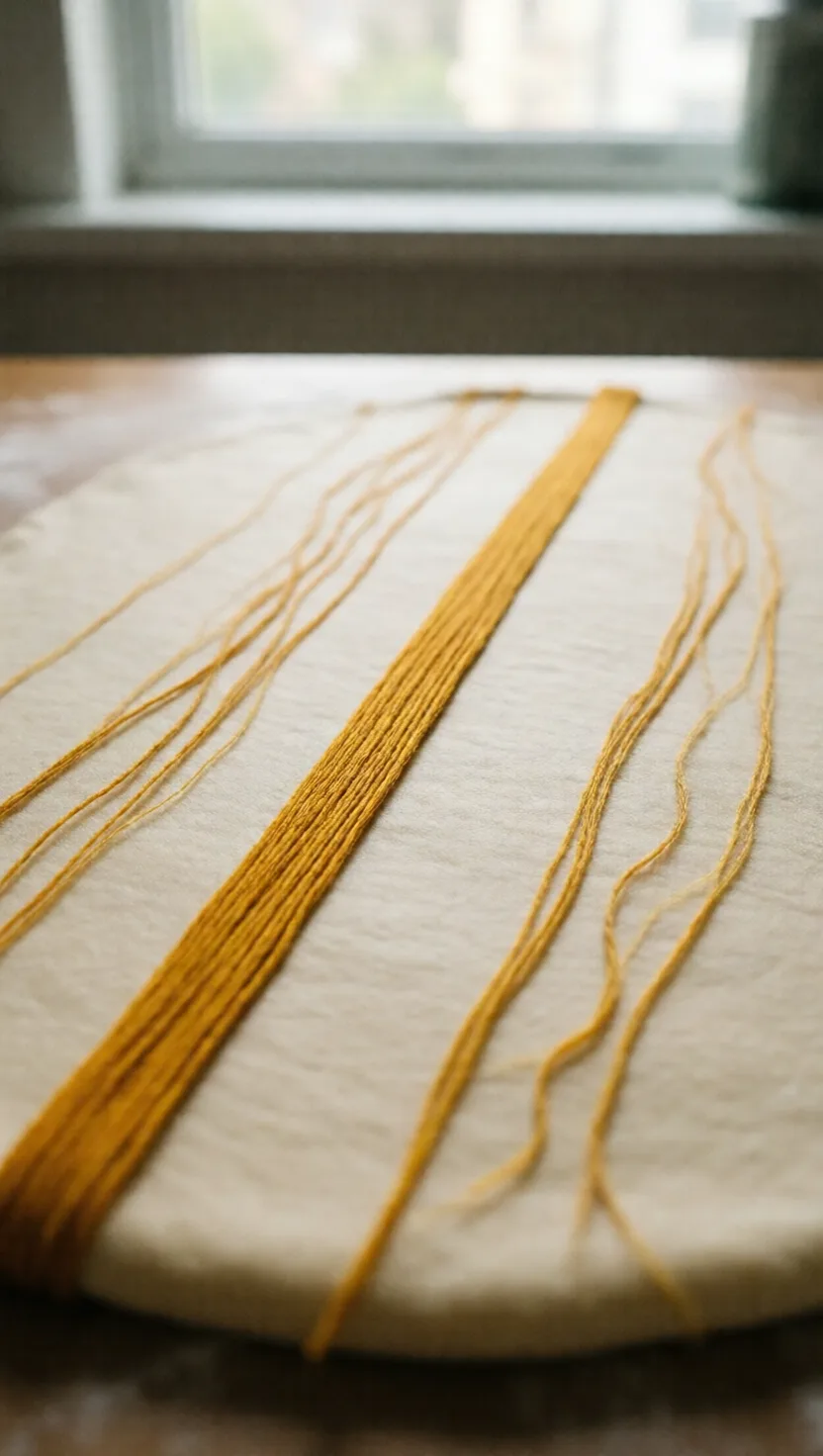
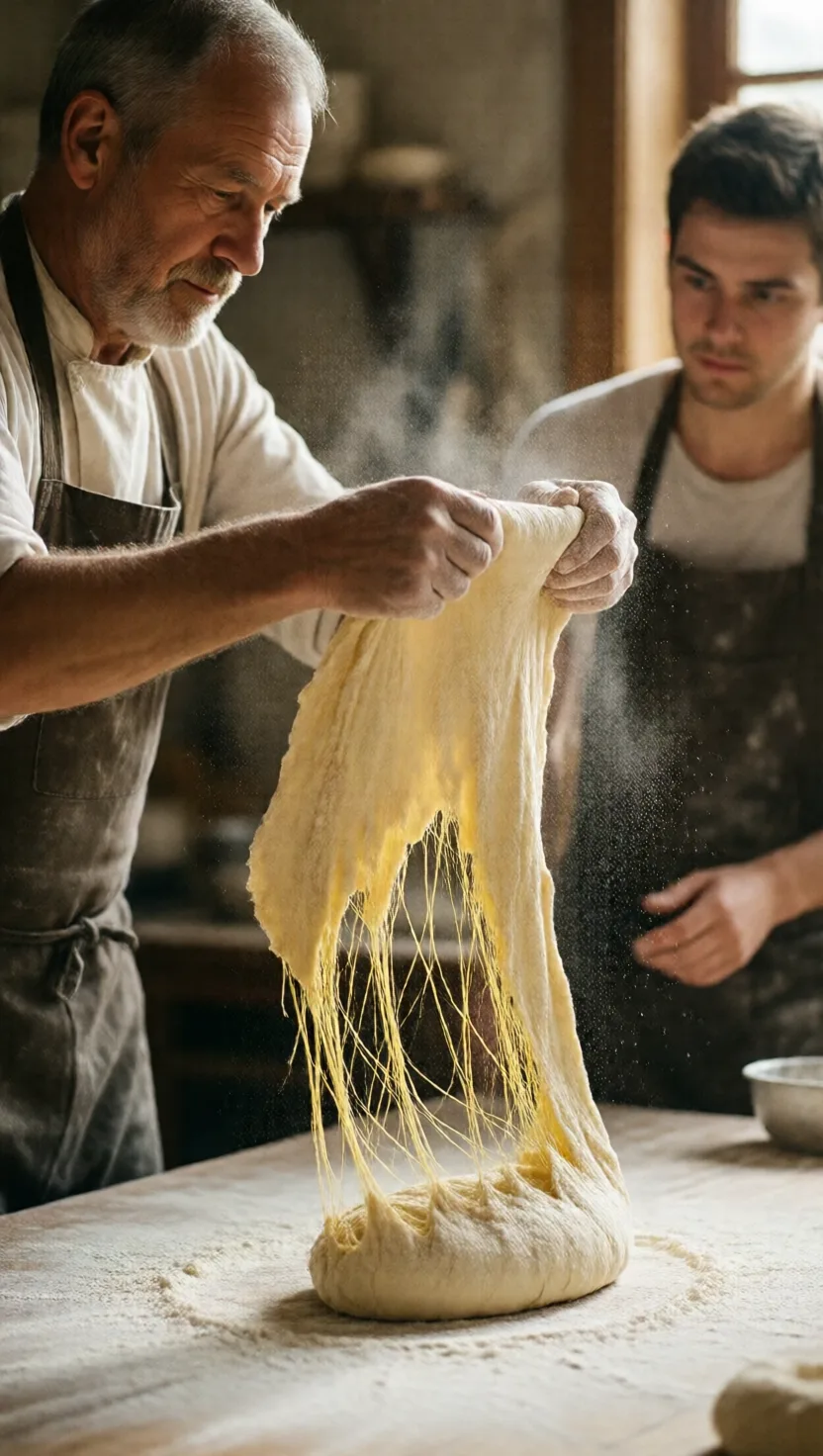
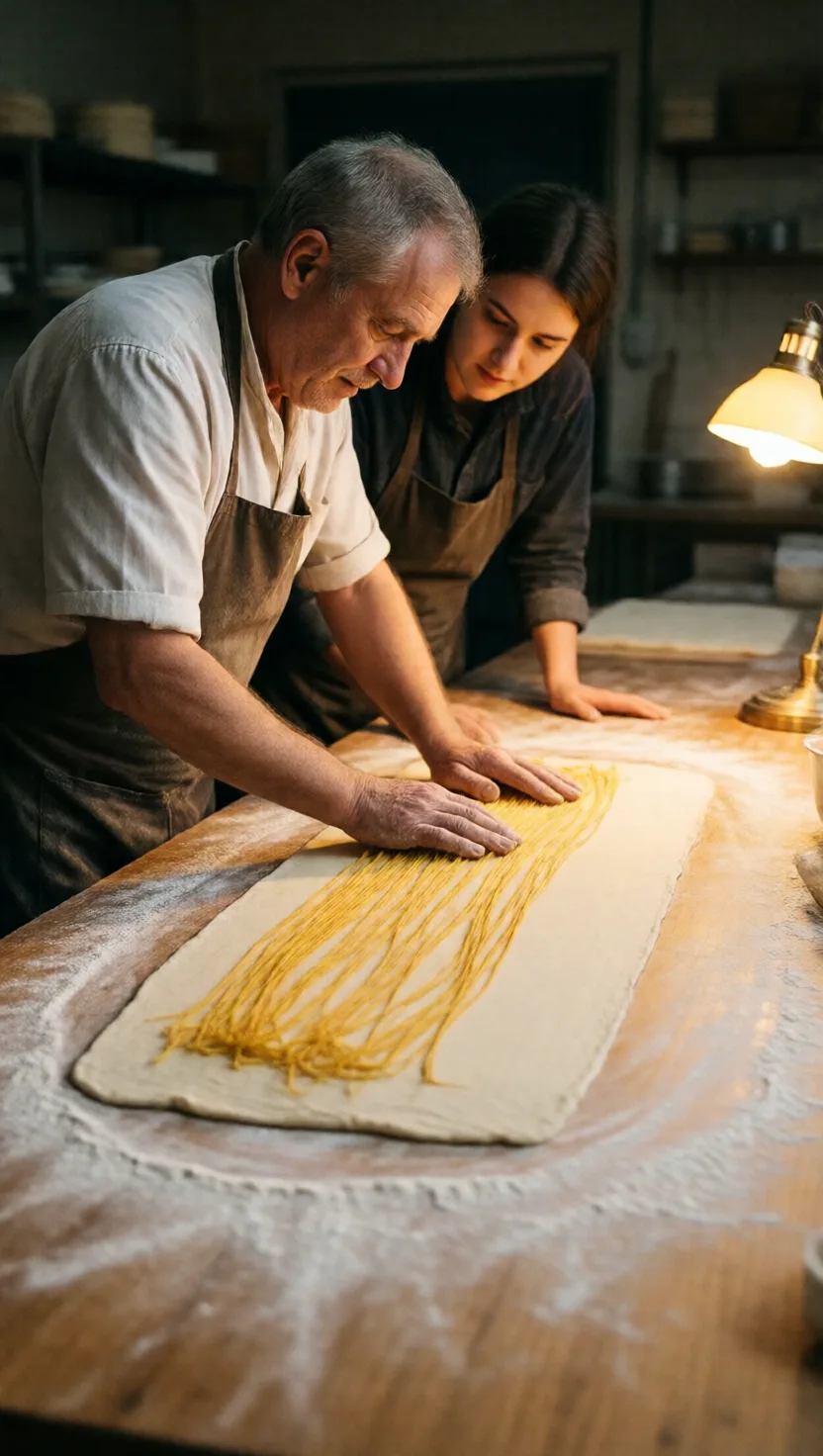
Before dawn, the old baker presses thin threads of saffron-dyed dough into the pale slab, pointing them wherever his apprentice chooses. Then one long, always-identical stretch. Most threads come out swung to new angles — but now and then a thread comes out pointing exactly where it started, only longer. She wants to know what makes those directions special.
The same stretch, tried in every direction

The same stretch, tried in every direction

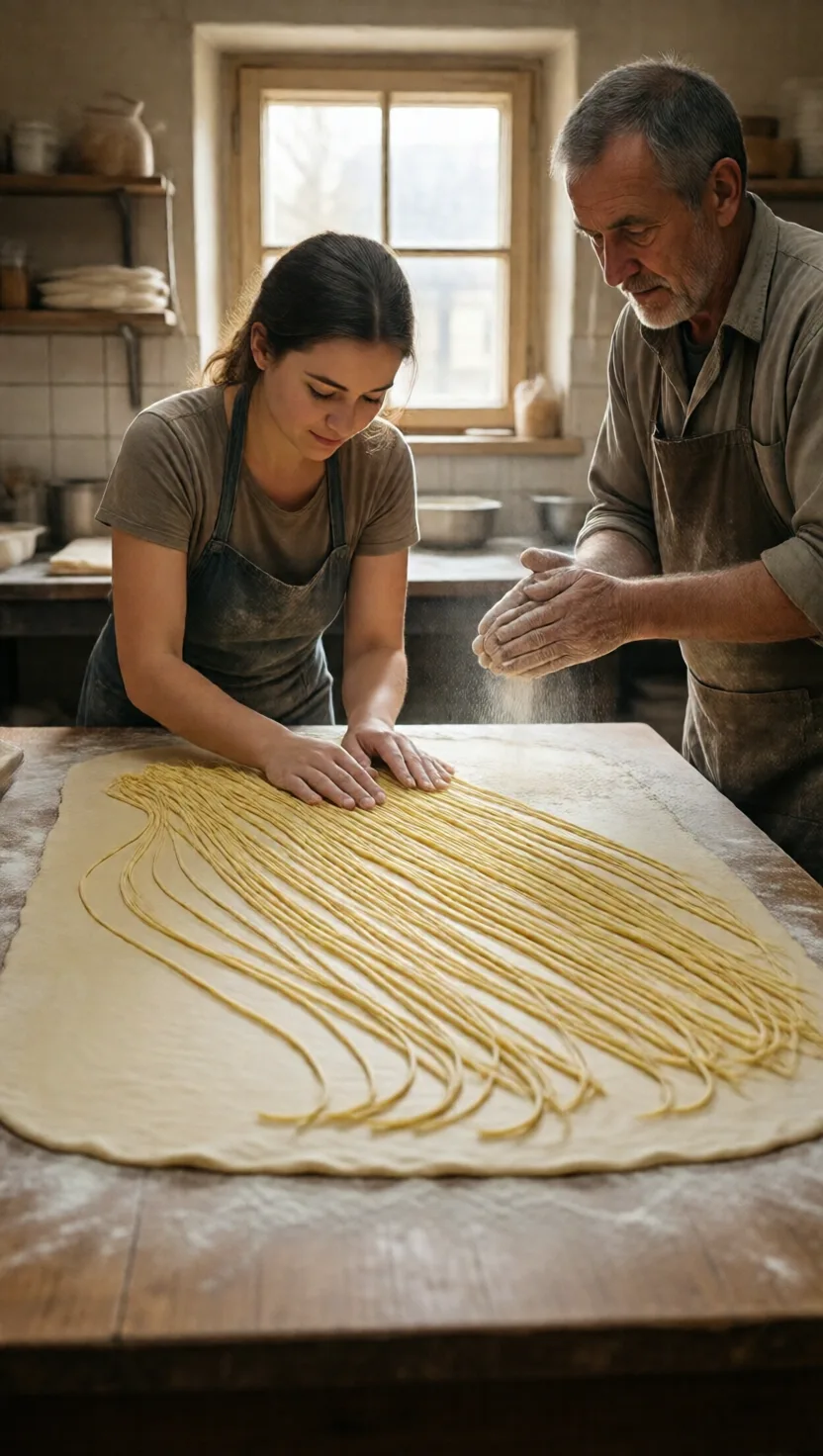
The apprentice turns it into a game. Each morning she lays her threads at new angles, and the baker performs the exact same stretch — same hands, same pull, same fold. The threads rotate as they lengthen, each swinging by its own amount, as if the dough hid a current dragging them somewhere. Except along two particular lines…
The lines the pull cannot turn

The lines the pull cannot turn

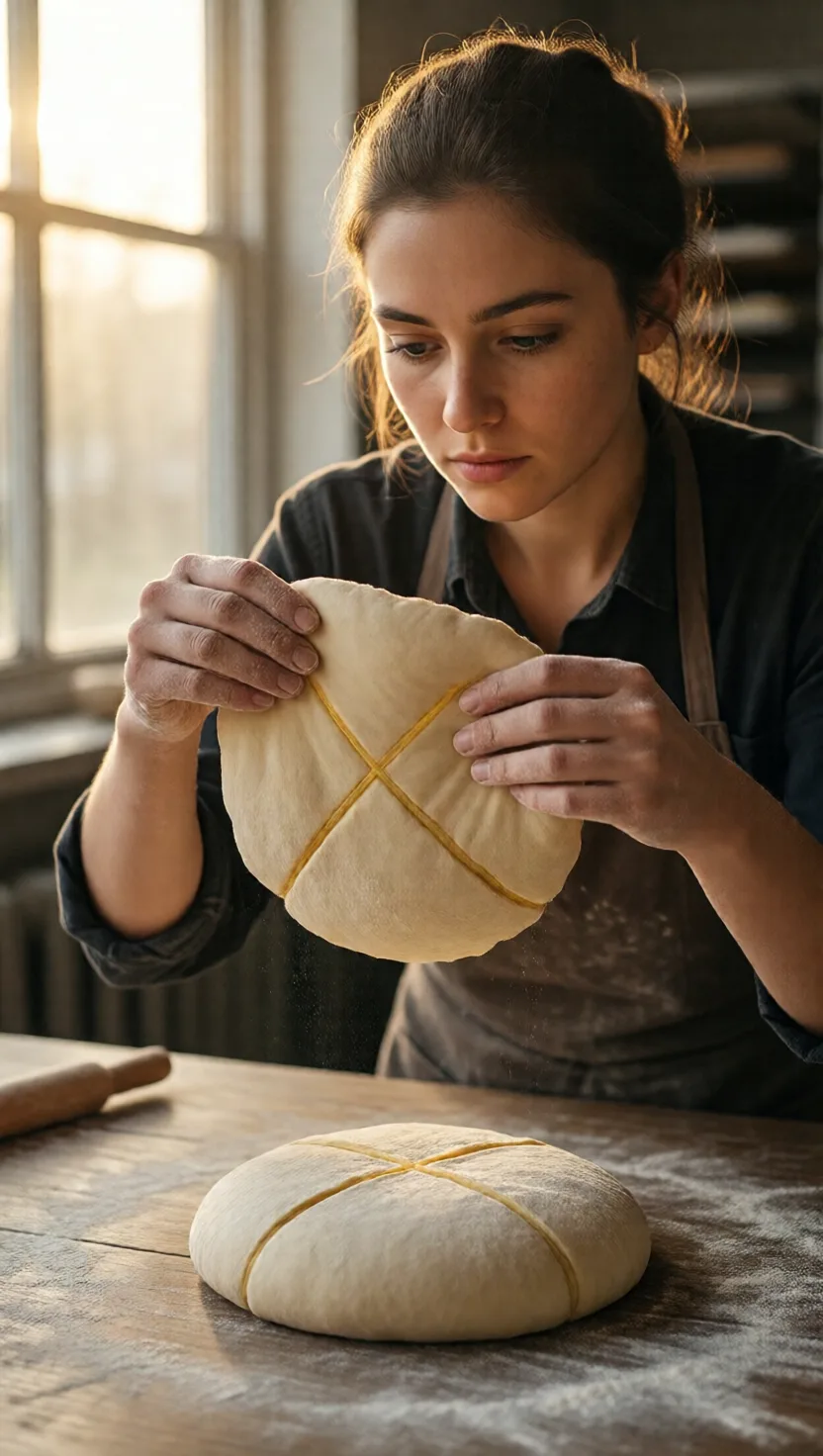
A thread laid on the slab's long axis returns doubled in length, pointing exactly where it lay. A thread on a second, crosswise line comes back squeezed shorter — and still unturned. On those two lines the whole complicated stretch acts like plain multiplication: double here, halve there. Every other thread is caught partway between them. So she tries stretching again and again…
Stretch after stretch, one direction wins

Stretch after stretch, one direction wins

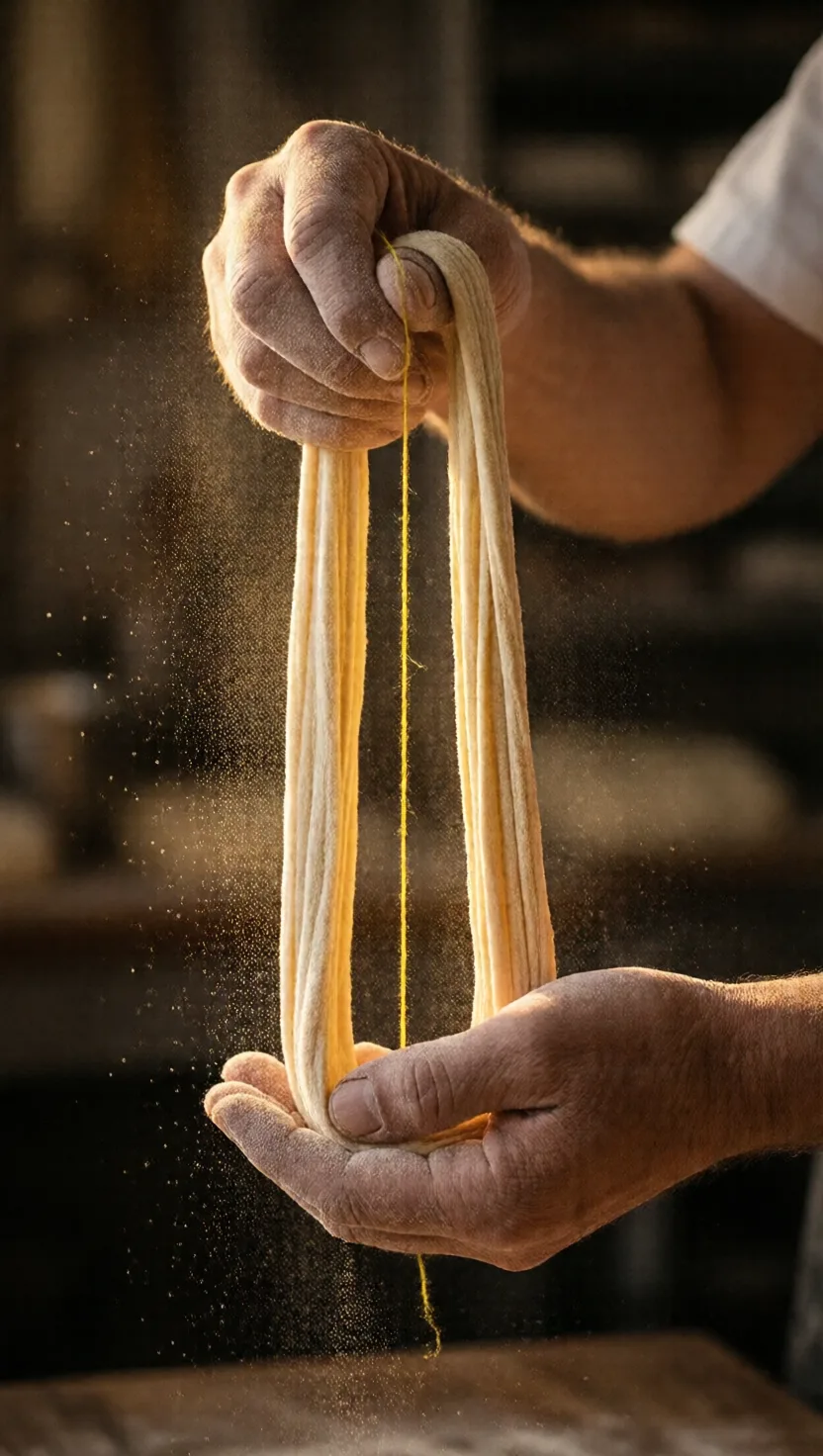
She repeats the same stretch five, ten times and watches the threads: with each pass, every thread not already on a special line swings a little closer to the strongest one, the line that doubles. Soon the whole slab's threads lie nearly along that single direction — the biggest stretch factor quietly dominates. So the baker's pull was never chaos…
Two lines and two numbers tell the whole pull

Two lines and two numbers tell the whole pull

The apprentice realizes she can describe the baker's entire stretch with almost nothing: the two unturnable lines and their two stretch factors — twice as long on one, half on the other. Every thread's fate is a mix of those. A move that shifts every speck of dough, summed up by two directions and two numbers. Such directions have earned a name…
The unturnable directions: eigenvectors

The unturnable directions: eigenvectors

Av=λvA\,v = \lambda\,v
A direction a transformation cannot turn — only stretch or shrink — is an eigenvector, and its stretch factor is its eigenvalue. Along those lines a complicated map is just multiplication by a number, and repeating the map hands victory to the largest factor. The equation says it plainly: applying A to v leaves its direction alone and multiplies its length by λ.
🌱 What does your routine stretch and never turn?

🌱 What does your routine stretch and never turn?

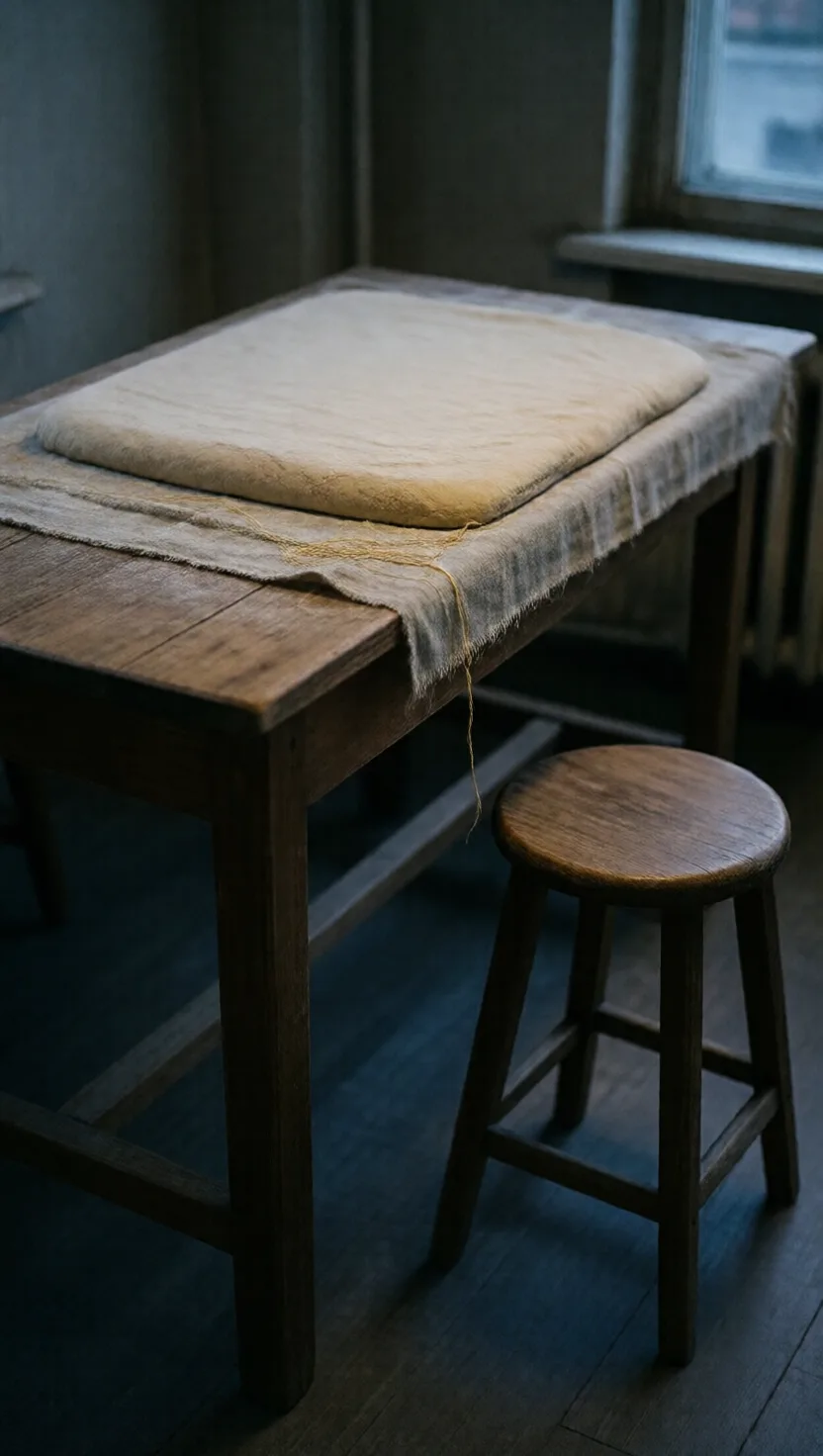
The bakery is quiet, the slab resting under a cloth, two faint golden lines still running through it. The apprentice thinks of other pulls repeated daily — habits, commutes, conversations — each with directions it swings and, maybe, a few it can only lengthen. If the same push lands on you every day, which of your directions is it quietly making longer?
tap →swipe ↑ for depthswipe ↓ to exit