A number, a direction, a nudge — that's all training is.

SRC·83 Source
Blindfolded free throws, and a coach who says one number

Blindfolded free throws, and a coach who says one number

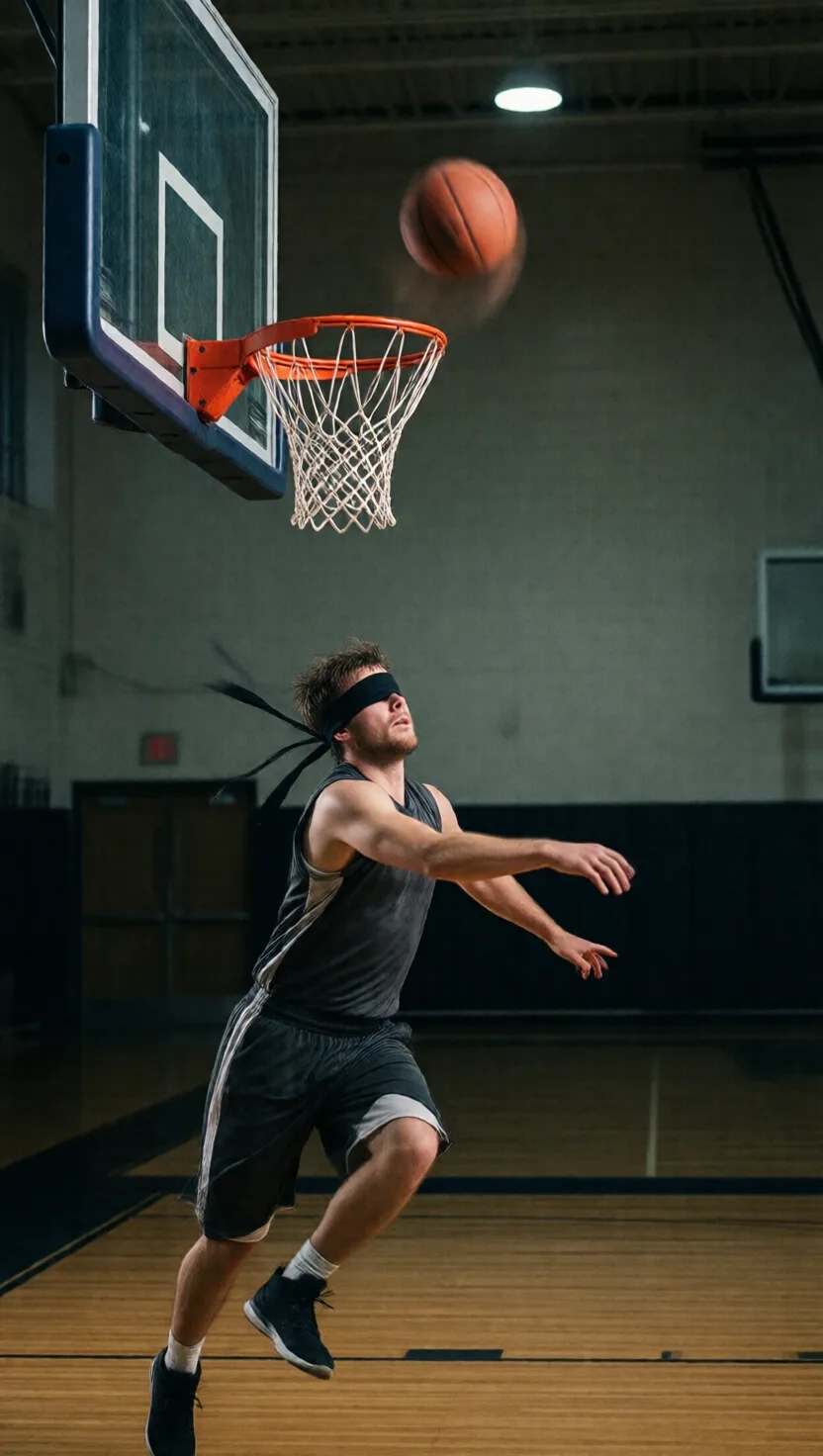
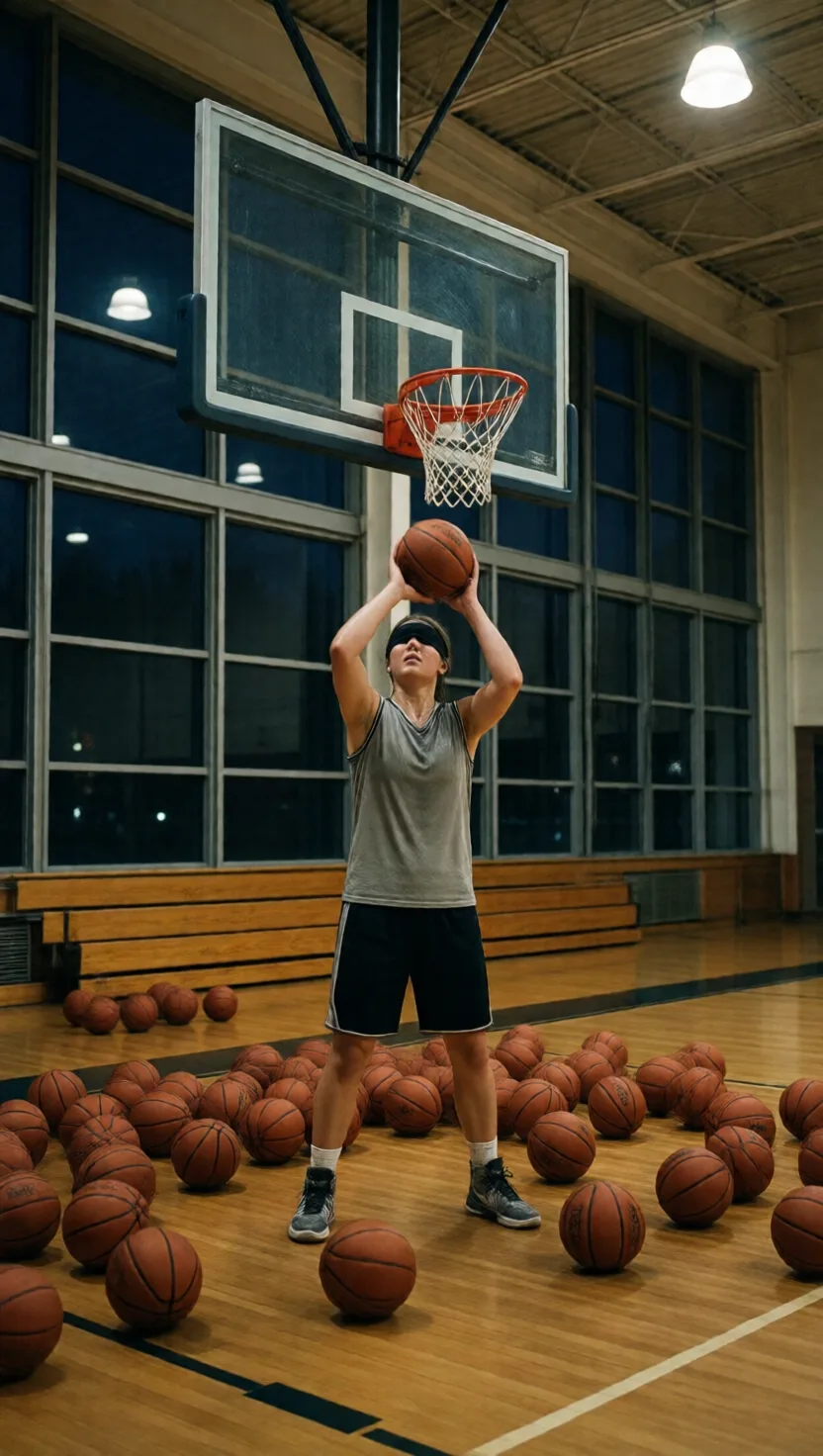
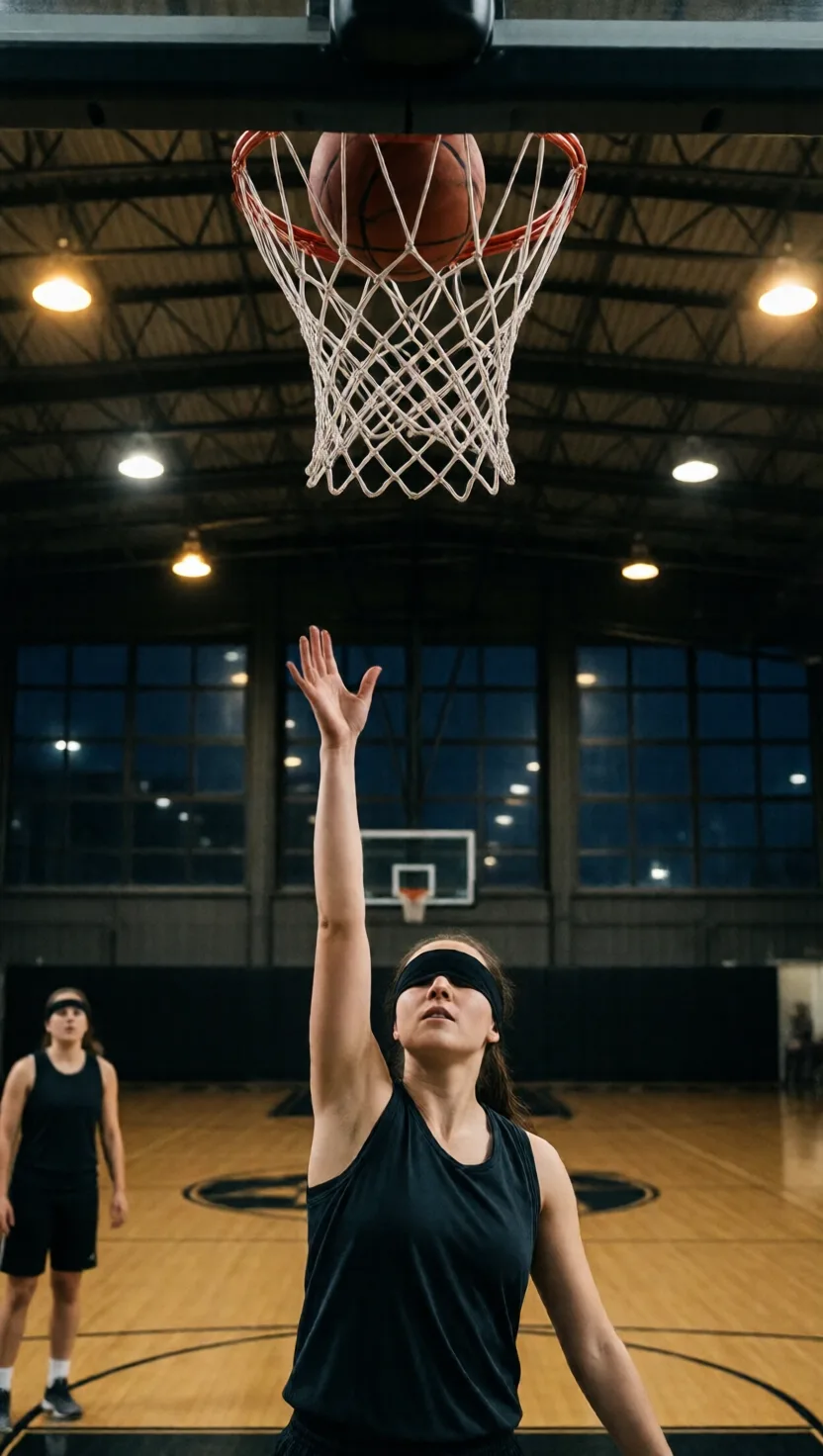
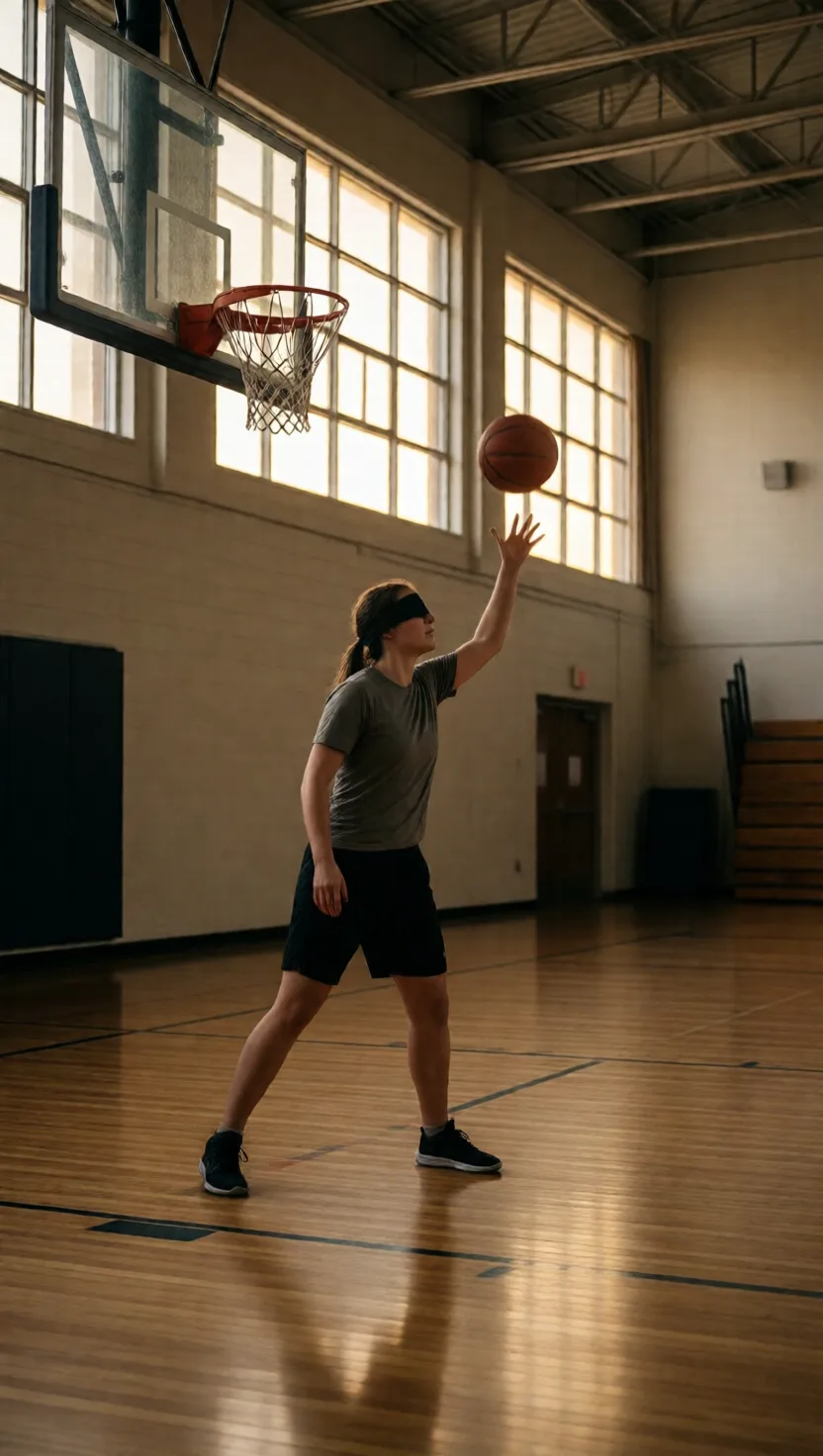
An empty gym at dusk. She ties on a blindfold, toes the free-throw line, shoots. From under the rim, the coach calls out a single number — how far the ball missed. Not left, not short: just how far wrong. She'll never see the hoop tonight. Yet by midnight she is barely missing at all. What can one lonely number teach a body?
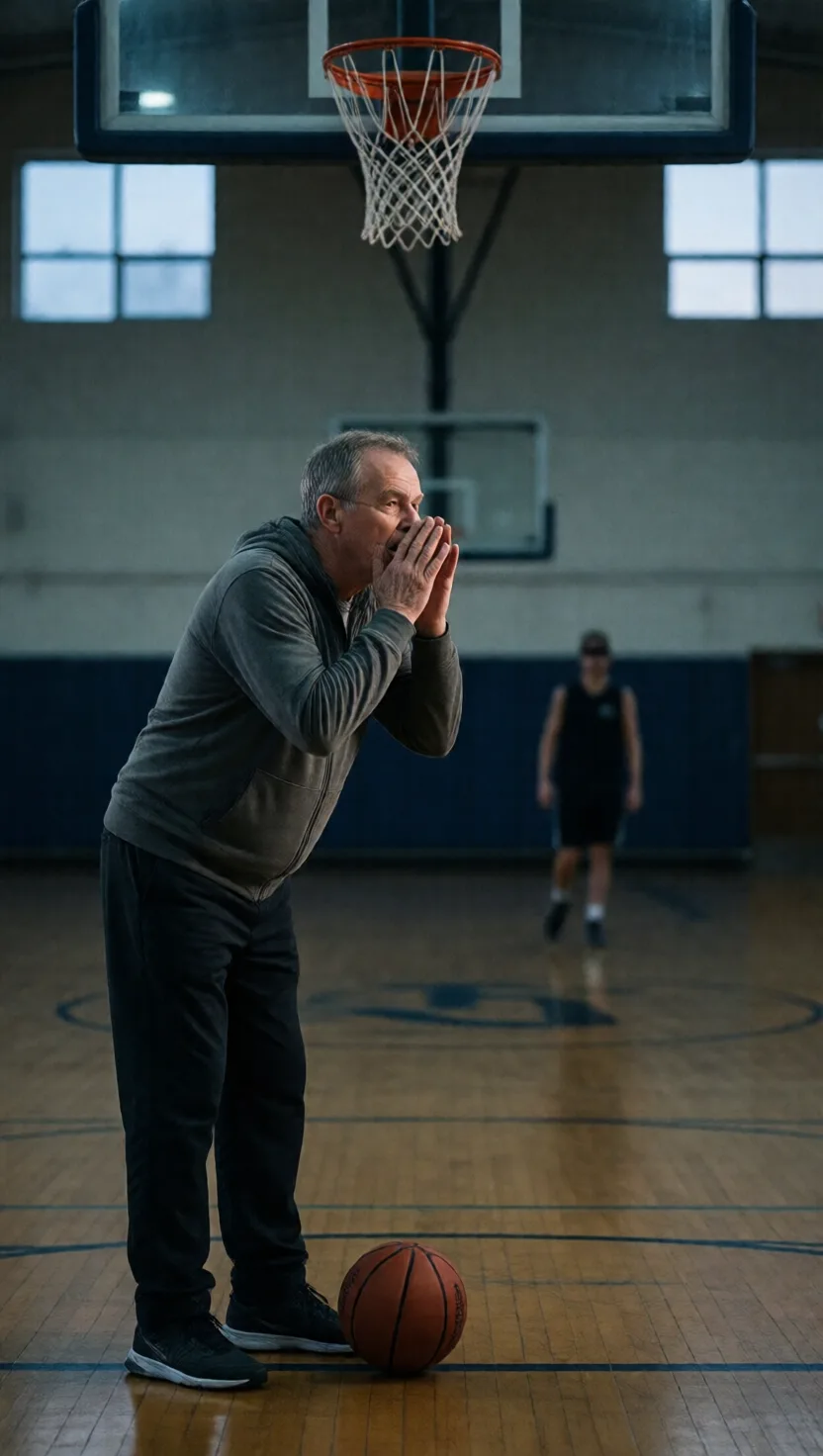
One honest number for how wrong

One honest number for how wrong

The number is the whole deal. Every attempt — any arc, any spin — gets scored the same blunt way: the distance by which it missed. That single honest score is the loss. It makes better and worse mean the same thing across ten thousand different shots, and it shrinks her craft to one instruction: make it smaller. But a score says that you're wrong — never what to change.
Which tiny change would help the most?

Which tiny change would help the most?

L(θ+d)L(θ)+LdL(\theta + d) \approx L(\theta) + \nabla L \cdot d
At the line, she can feel it: a hair more arc helps a lot, a touch less push a little, the wrist barely matters. Rank every tiny adjustment by how much it shrinks the miss and one direction wins — the steepest downhill. That is the gradient. The equation says a tiny tweak shifts the miss in proportion to the slope, a promise good only near where you stand. So why not leap?
Adjust a little — never a lot

Adjust a little — never a lot

Because the slope is a local promise. A whisker more arc helps from here; double the arc and the ball smacks the backboard, each big correction overshooting worse than the last. So she moves a small fraction of what the slope suggests. That fraction is the learning rate: too timid and the night is wasted, too bold and she spirals. One careful nudge, though, fixes almost nothing…
Miss, listen, nudge — ten thousand times

Miss, listen, nudge — ten thousand times

θθηL\theta \leftarrow \theta - \eta\, \nabla L
The ritual: shoot, hear the number, feel the helpful direction, move a little that way. Then again, from the slightly better body the last loop left. No pass is clever; the repeat is. The equation is the loop in one line: new form = old form minus a small multiple of the slope. A thousand loops grind the miss from a shout to a murmur — and something in her quietly changes.
That loop is what 'training' means

That loop is what 'training' means

She never saw the hoop once. A wrongness score, a best tiny change, a modest move — loss, gradient, step — repeated until dawn. That loop is gradient descent, and it is all that 'training' a model means: no insight, no lessons, just millions of small corrected misses. Every skill a trained network has was ground out this way. Unless, that is, the coach's number was never quite exact.
🌱 Could a noisy coach teach better?

🌱 Could a noisy coach teach better?

Some nights the echo garbles the call: the number arrives slightly wrong, and her nudges wander. Yet the wandering seems to shake her out of comfortable ruts a perfectly tidy coach might have left her in — and the form it finds feels sturdier in a strange new gym. Is noise in the lesson a flaw to engineer away… or the very thing that makes learning stick?
tap →swipe ↑ for depthswipe ↓ to exit