How a model finishes a pattern it saw once.

SRC·44 Source
It meets a pattern once — then finishes it for you.

It meets a pattern once — then finishes it for you.

Show it “A then B” just once. A few words later it sees “A then ___” and lands on B — a pattern it learned seconds ago, from this very text. Like a knitter: glance at the rows already on the needle and the next stitch is all but forced. No new training, no stored fact — just the run in front of it, continued. This is the little engine behind learning on the fly.
First trick: stamp every spot with the one just before it.

First trick: stamp every spot with the one just before it.

Aijprev1[j=i1],hiprevWOVxi1A^{\text{prev}}_{ij}\approx \mathbb{1}[\,j=i-1\,],\qquad h^{\text{prev}}_{i}\approx W_{OV}\,x_{i-1}
To copy what came after A, the model first needs every position to know what came just before it. So an early head does one humble job: look exactly one step back and carry that neighbour forward. Like a surveyor: each new stake is fixed by sighting back to the last one, so every point quietly records its predecessor. In plain words: it attends only to the slot right behind, and stamps that token onto the present one.
Then: find where this token appeared before.

Then: find where this token appeared before.

Aijind=softmaxj ⁣(qikjd) peaks where tj1=tiA^{\text{ind}}_{ij}=\operatorname{softmax}_{j}\!\left(\frac{q_i^{\top}k_j}{\sqrt{d}}\right)\ \text{peaks where}\ t_{j-1}=t_i
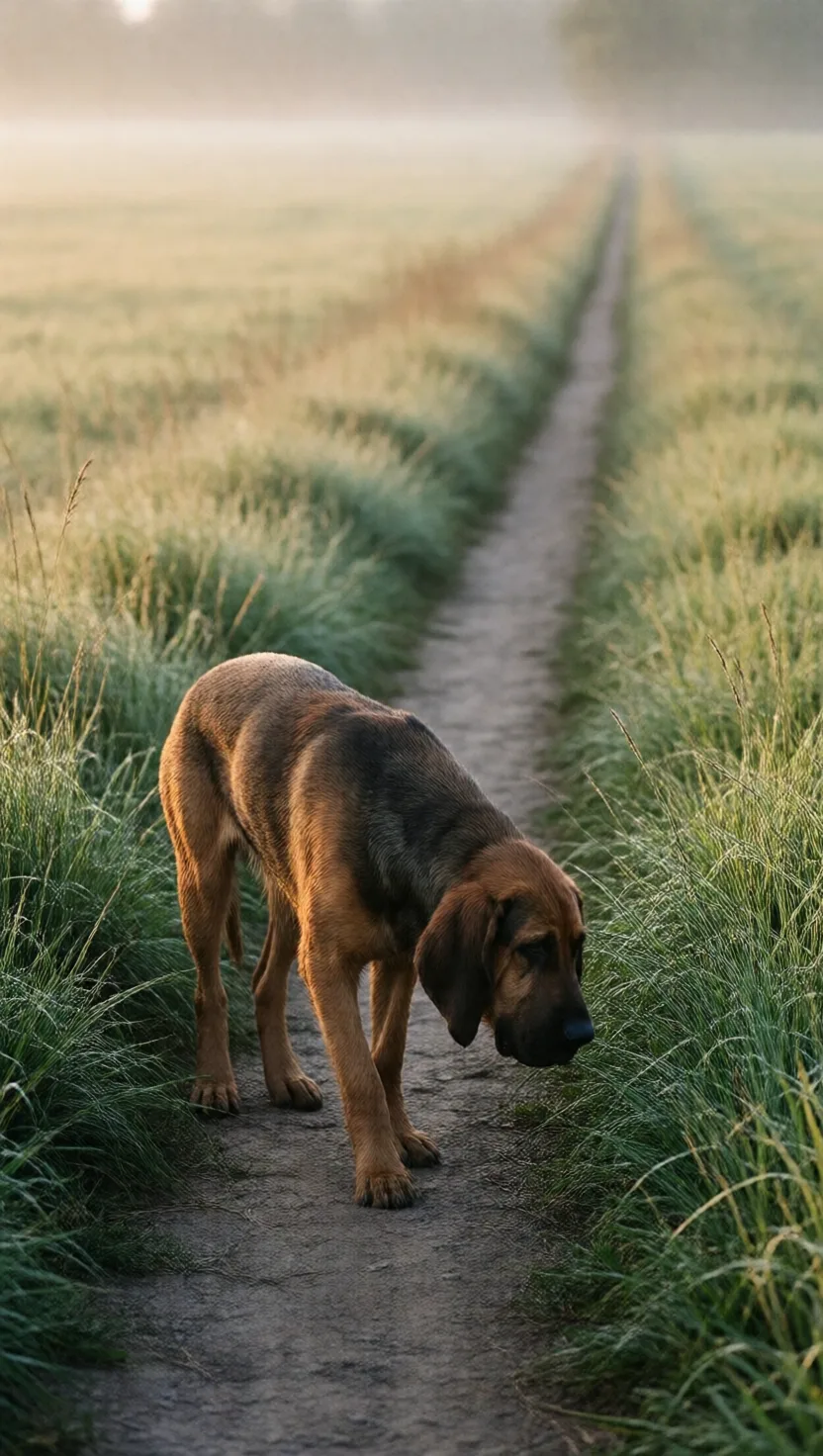
Now a second head goes hunting. Its question, at the word it's on: “where was I preceded by this same token?” Thanks to those stamps, it locks onto the one spot whose predecessor matches — the place right after the last time this token showed up. Like a bloodhound: carry one scent, ignore the whole field, and stop dead at the single place it matches. In plain words: it aims at the token that followed a previous copy of the current one.
Locked on — now copy that token to the output.

Locked on — now copy that token to the output.

t^i+1=tj,j=argmaxjAijind,diag ⁣(WUWOVWE)0\hat{t}_{i+1}=t_{j^{\star}},\qquad j^{\star}=\arg\max_{j} A^{\text{ind}}_{ij},\qquad \operatorname{diag}\!\big(W_{U}W_{OV}W_{E}\big)\gg 0
Found the spot? The head does the obvious thing: it copies that very token straight into its prediction. Whatever it looks at, it votes for — so out comes B, the word that followed A last time. Like a pantograph: trace the master shape with one arm and a second arm carves an exact copy, faithful line for line. In plain words: the copy circuit pushes up the logit of exactly the token it attended to.
It memorised no words — only the rule “repeat it.”

It memorised no words — only the rule “repeat it.”

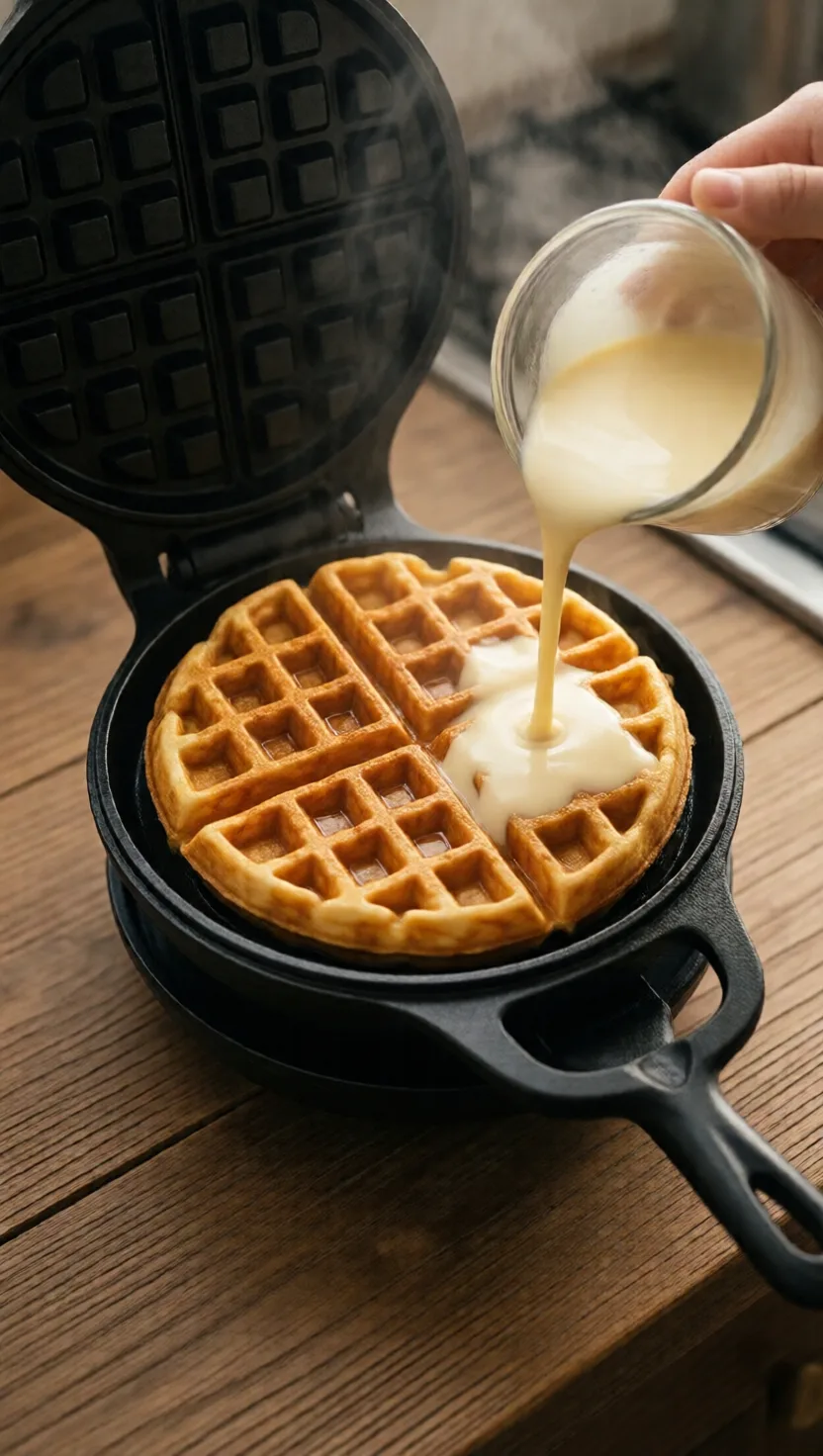
Here's the quiet marvel: the circuit doesn't store A or B. It copies a relationship — “whatever followed last time, say again” — so it fires on symbols it has never met, a nonsense pair invented this second, even a near-match rather than an exact one. Like a waffle iron: pour in any batter it's never tasted and the same pattern presses out. The tokens are interchangeable; only the rule is fixed.
It doesn't fade in. One moment, it's just there.

It doesn't fade in. One moment, it's just there.

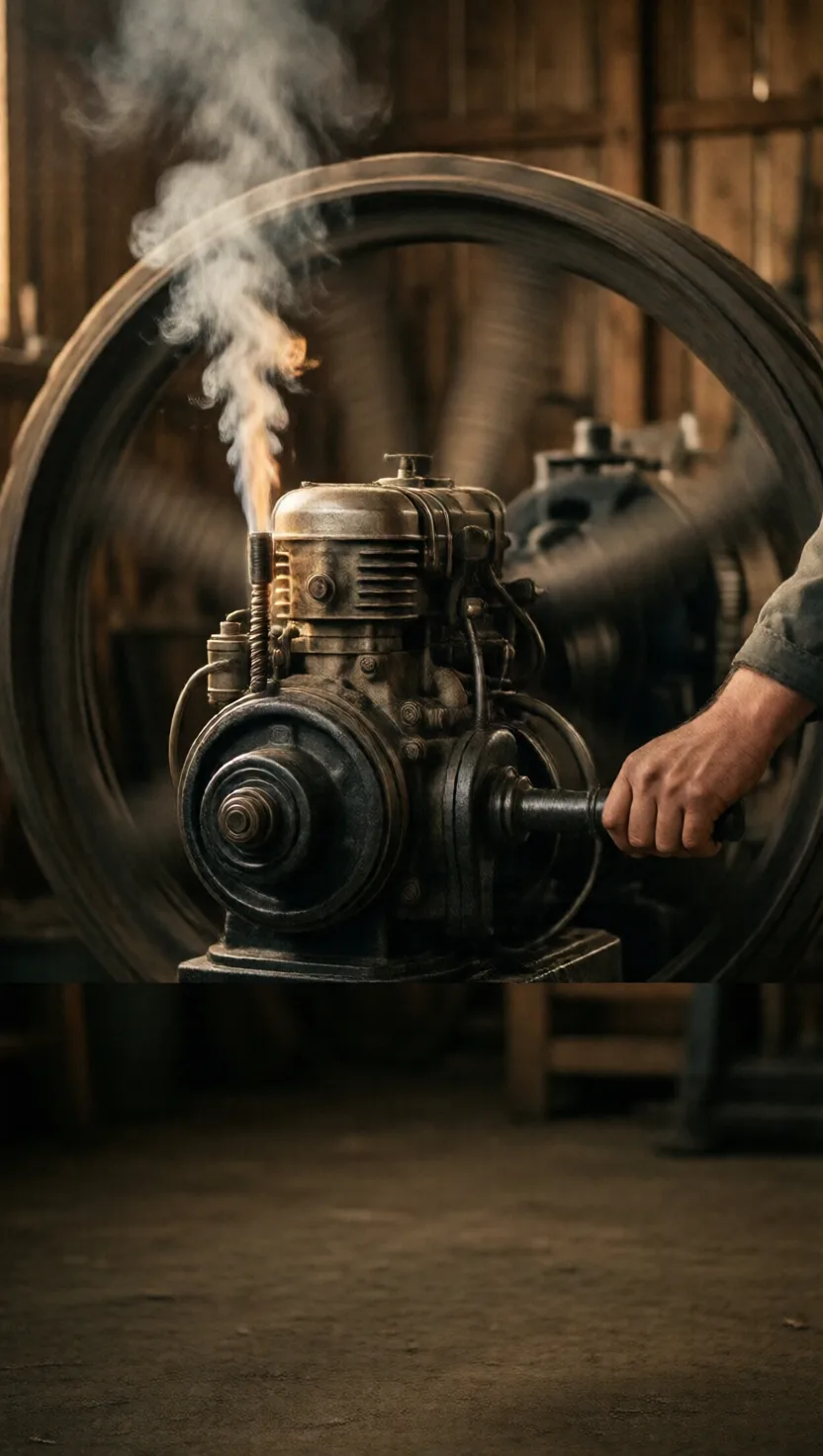
Watch it form during training and you don't see a slow ramp. For a long stretch — nothing. Then, in a narrow window, the two heads click into place and the model's knack for learning from the prompt jumps with them. Like an old engine: you crank and crank, dead silence, then it catches all at once and runs. The honest caveat: this sudden bump is most of that skill, not provably all of it.
This tiny pair carries the weight of learning on the fly.

This tiny pair carries the weight of learning on the fly.

Step back and the scale is startling: a huge share of “it picked up the task from a few examples” rides on this one copy-the-continuation circuit. The model isn't reaching into stored knowledge — it's running a small matching trick on the text in front of it. Like a keystone: one modest wedge of stone, and the whole arch stands because of it. Pull it, and the span comes down.
🌱 Is meeting a new idea just finding where it happened before?

🌱 Is meeting a new idea just finding where it happened before?

So much of understanding a fresh instruction turns out to be: find the last time this happened, and echo what came next. Like a weathervane: it settles, again, to the bearing the wind already set. If reading something new is mostly retracing a precedent we've just seen — is that comprehension, or a very fast memory of a moment ago?
tap →swipe ↑ for depthswipe ↓ to exit